Missouri Notice of Lease for Recording
What is this form?
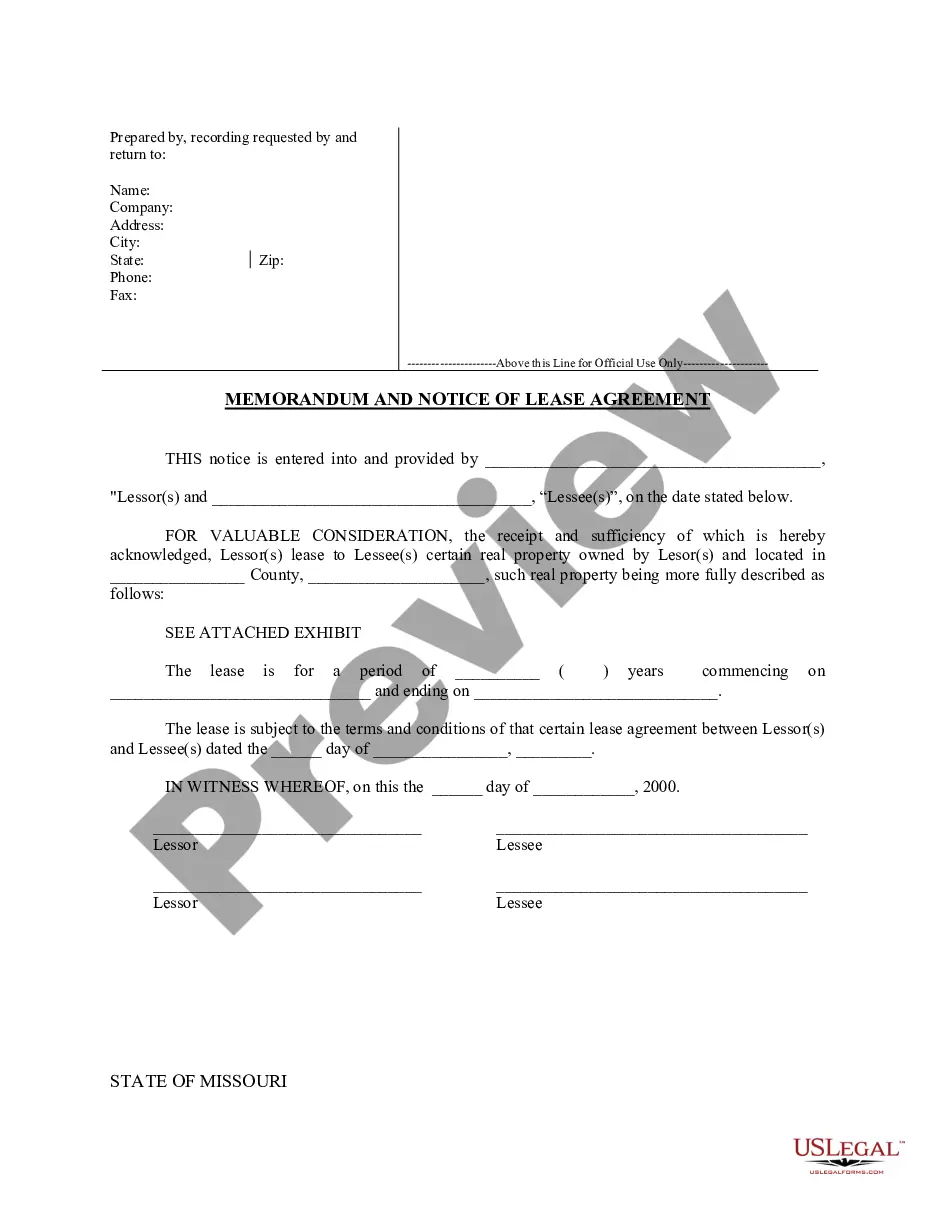
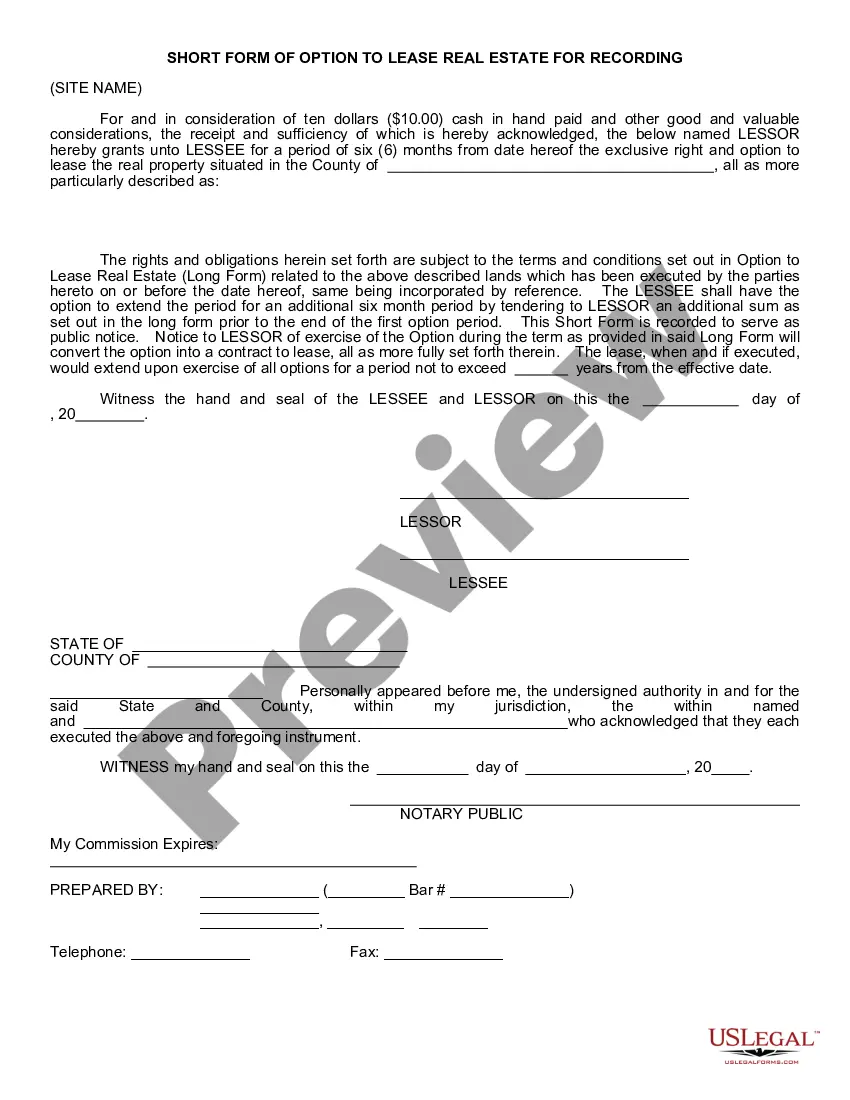
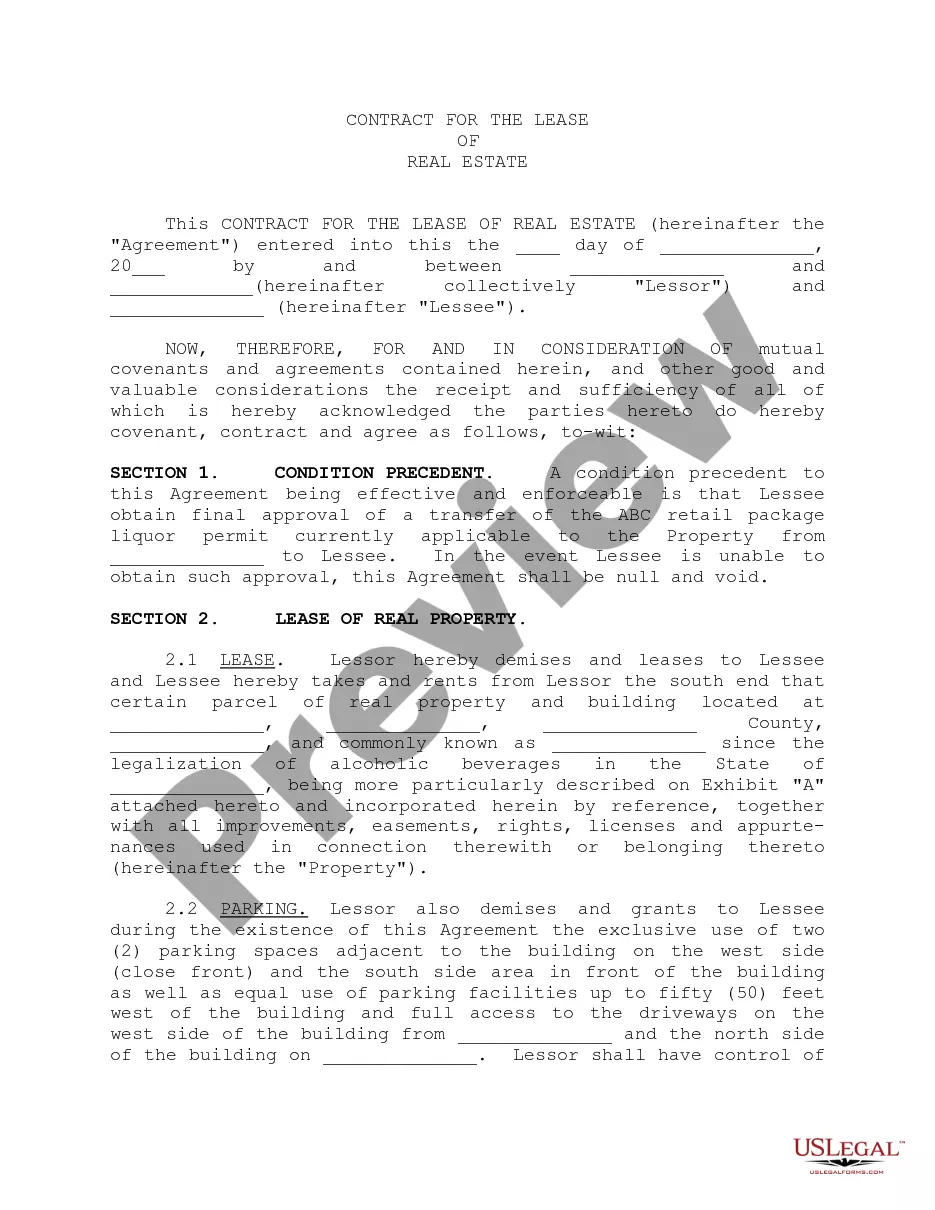
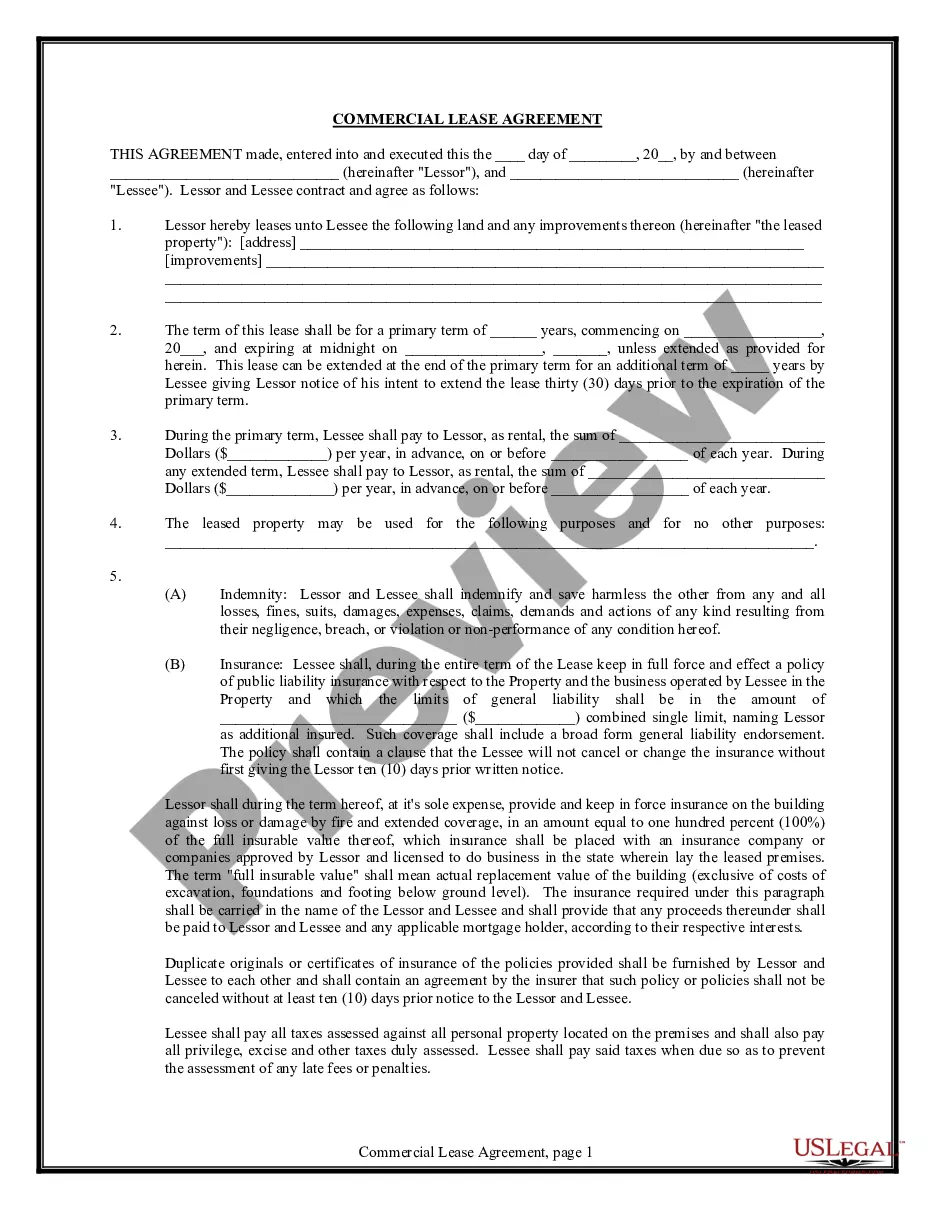
The Notice of Lease for Recording is a legal document that serves to notify the public of an existing lease on a specific real estate property. Unlike recording the entire lease agreement, this notice provides essential details while preserving privacy. It is designed to be recorded in official property records, ensuring that all interested parties are aware of the lease's existence.
What’s included in this form
- Prepared by, recording requested by, and return to information
- Identification of the lessor(s) and lessee(s)
- Description of the leased property
- Duration of the lease, including start and end dates
- Reference to the original lease agreement
- Signature lines for lessor(s) and lessee(s)
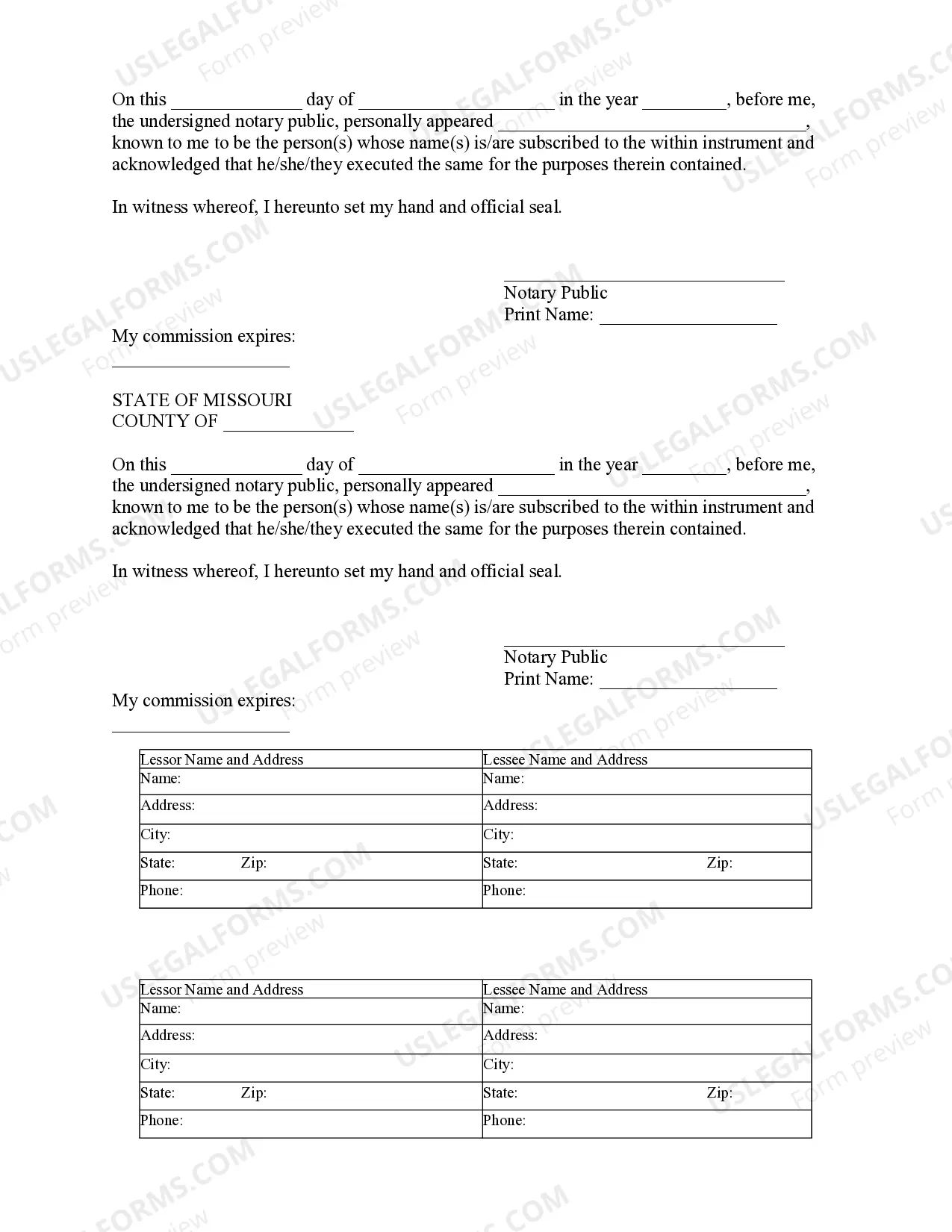
- Notary acknowledgment section


Situations where this form applies
This form is used when a lessor wants to officially record a lease agreement without revealing its entire contents. It is typically employed in circumstances where the lessor aims to secure their interest in the property and inform potential buyers or lenders that a lease exists. Use this notice to protect rights and establish priorities in real property transactions.
Who should use this form
- Landlords or lessors wishing to formally record a lease
- Tenants or lessees who want to confirm their lease rights
- Real estate professionals handling property transactions
- Attorneys managing lease agreements on behalf of clients
How to complete this form
- Fill in the names and addresses of the lessor(s) and lessee(s).
- Provide a detailed description of the leased property.
- Specify the duration of the lease, including the start and end dates.
- Indicate the date of the original lease agreement.
- Ensure all parties sign the document in front of a notary public.
Is notarization required?
This form must be notarized to be legally valid. US Legal Forms provides secure online notarization powered by Notarize, allowing you to complete the process through a verified video call.
Get your form ready online
Our built-in tools help you complete, sign, share, and store your documents in one place.
Make edits, fill in missing information, and update formatting in US Legal Forms—just like you would in MS Word.
Download a copy, print it, send it by email, or mail it via USPS—whatever works best for your next step.
Sign and collect signatures with our SignNow integration. Send to multiple recipients, set reminders, and more. Go Premium to unlock E-Sign.
If this form requires notarization, complete it online through a secure video call—no need to meet a notary in person or wait for an appointment.
We protect your documents and personal data by following strict security and privacy standards.

Make edits, fill in missing information, and update formatting in US Legal Forms—just like you would in MS Word.

Download a copy, print it, send it by email, or mail it via USPS—whatever works best for your next step.

Sign and collect signatures with our SignNow integration. Send to multiple recipients, set reminders, and more. Go Premium to unlock E-Sign.

If this form requires notarization, complete it online through a secure video call—no need to meet a notary in person or wait for an appointment.

We protect your documents and personal data by following strict security and privacy standards.
Common mistakes
- Failing to provide a complete property description.
- Omitting dates or signatures from the form.
- Not having the form notarized when required.
- Using incorrect or incomplete names for the parties involved.
Benefits of completing this form online
- Instant access to ready-to-use templates prepared by licensed attorneys.
- Convenience of downloading and customizing forms at your own pace.
- Reliability in ensuring that legal documents are up-to-date and compliant.
- Time-saving by avoiding paperwork delays associated with manual processes.
Looking for another form?
Form popularity
FAQ
In Missouri, it is generally legal to record a conversation without the other party's consent if you are a participant in that conversation. However, there are exceptions, especially regarding private conversations. When addressing issues related to the Missouri Notice of Lease for Recording, it is wise to consult legal guidance to ensure compliance and protect your rights.
Recording an assignment of lease is not legally required in Missouri, but it is highly advisable. Recording provides public notice of the new lease agreement, protecting the rights of the assignee. Using the Missouri Notice of Lease for Recording can help ensure that your assignment is recognized and enforceable, safeguarding your interests in the property.
A 14/30 notice in Missouri refers to the notice period required for terminating a lease agreement. A landlord must provide a 14-day notice for lease violations, while a 30-day notice applies for terminating a month-to-month lease. Understanding these notices is essential when preparing the Missouri Notice of Lease for Recording, as they can dictate your rights and responsibilities.
Yes, you may have grounds to sue someone for recording you without your consent in certain situations. Missouri law protects individuals' rights to privacy, and unauthorized recordings can violate that privacy. If you believe your rights have been breached, consider seeking legal advice to navigate your options effectively, especially in relation to the Missouri Notice of Lease for Recording.
In Missouri, you are not legally required to inform someone that you are recording them if it is a conversation that does not occur in a private setting. However, ethical considerations encourage transparency. When dealing with the Missouri Notice of Lease for Recording, ensure that all parties involved are aware of the recording to maintain trust and legality.
The statute 610.021 3 in Missouri pertains to the confidentiality of certain records. It allows public governmental bodies to close records that reveal personal information about individuals. Understanding this statute is crucial when dealing with the Missouri Notice of Lease for Recording, as it can impact what information can be disclosed during the lease recording process.
In the notice, you have to provide details of the transaction for which the cheque was issued, details of the cheque, details of dishonor, etc. through a lawyer. Notice to be signed by both lawyer and payee. Notice to be sent through registered post.
If you don't move out by the day in the notice, the landlord can ask the NSW Civil and Administrative Tribunal (NCAT) for a termination order. A termination order means the rental agreement is ended. The order will state the day when you must give vacant possession that is, you move out and return the keys.
You should say something like: I am giving 1 month's notice to end my tenancy, as required by law. I will be leaving the property on (date xxxxx). I would like you to be at the property on the day I move out to check the premises and for me to return the keys.
An eviction can stay on your public record for at least seven years. After this period, evictions fall off your public records, including your credit report and rental history.