Missouri Marital Domestic Separation and Property Settlement Agreement for persons with No Children, No Joint Property or Debts where Divorce Action Filed
About this form
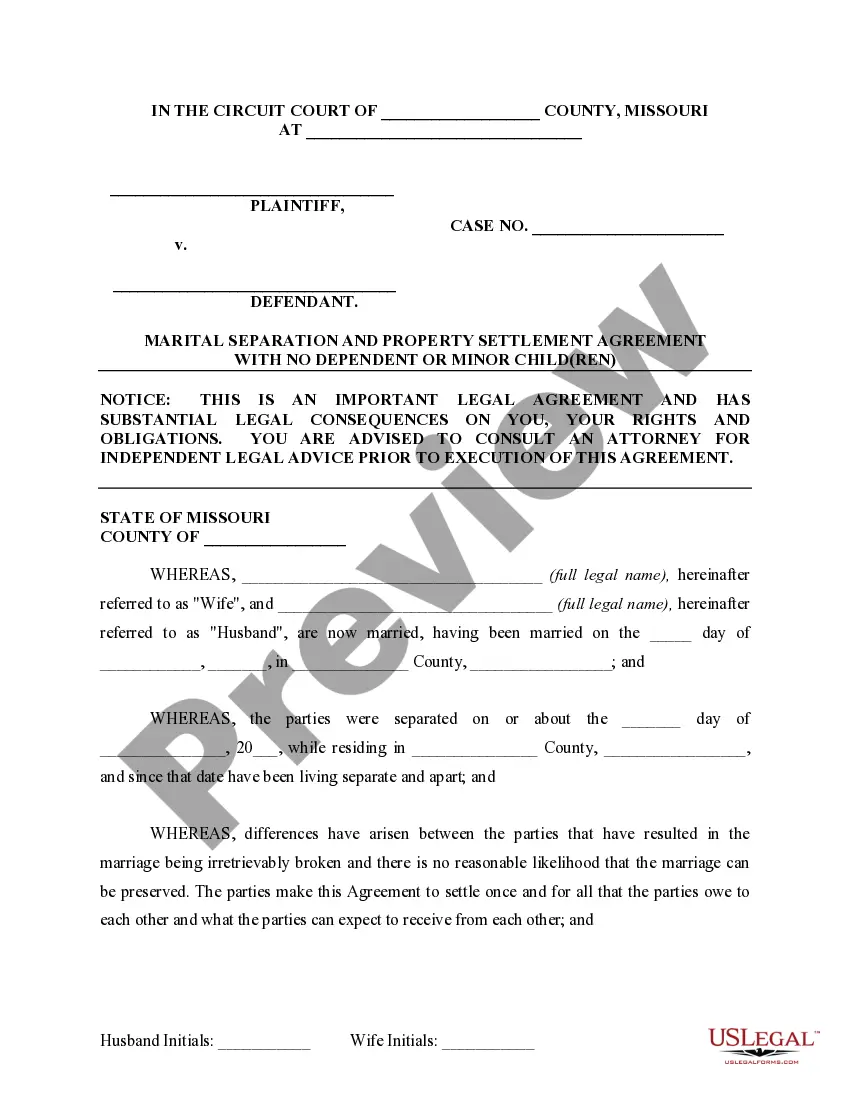
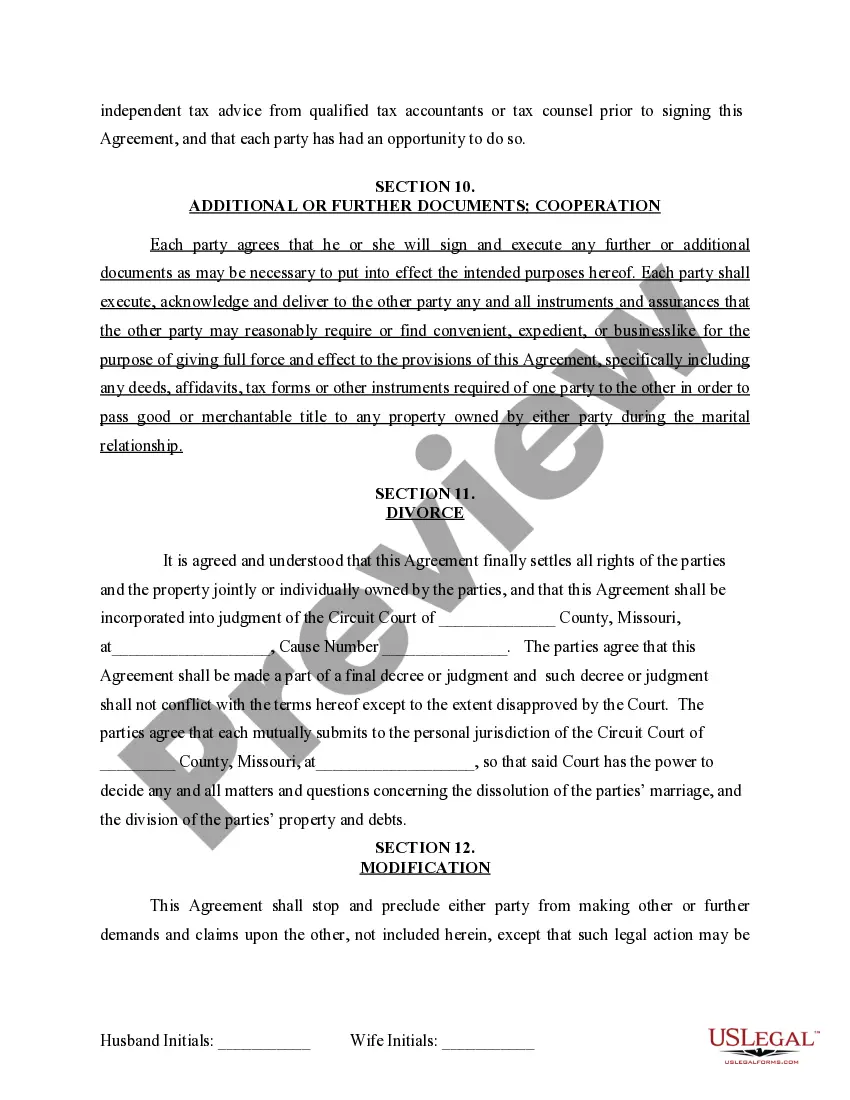
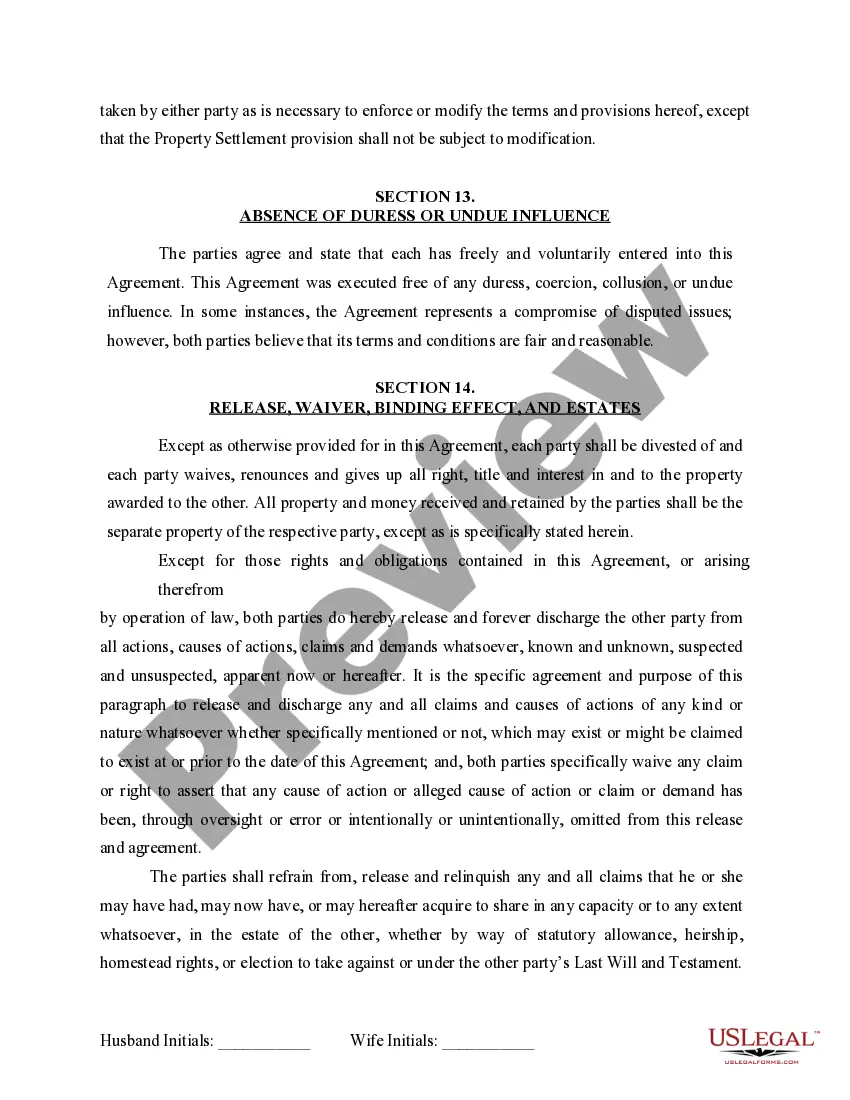
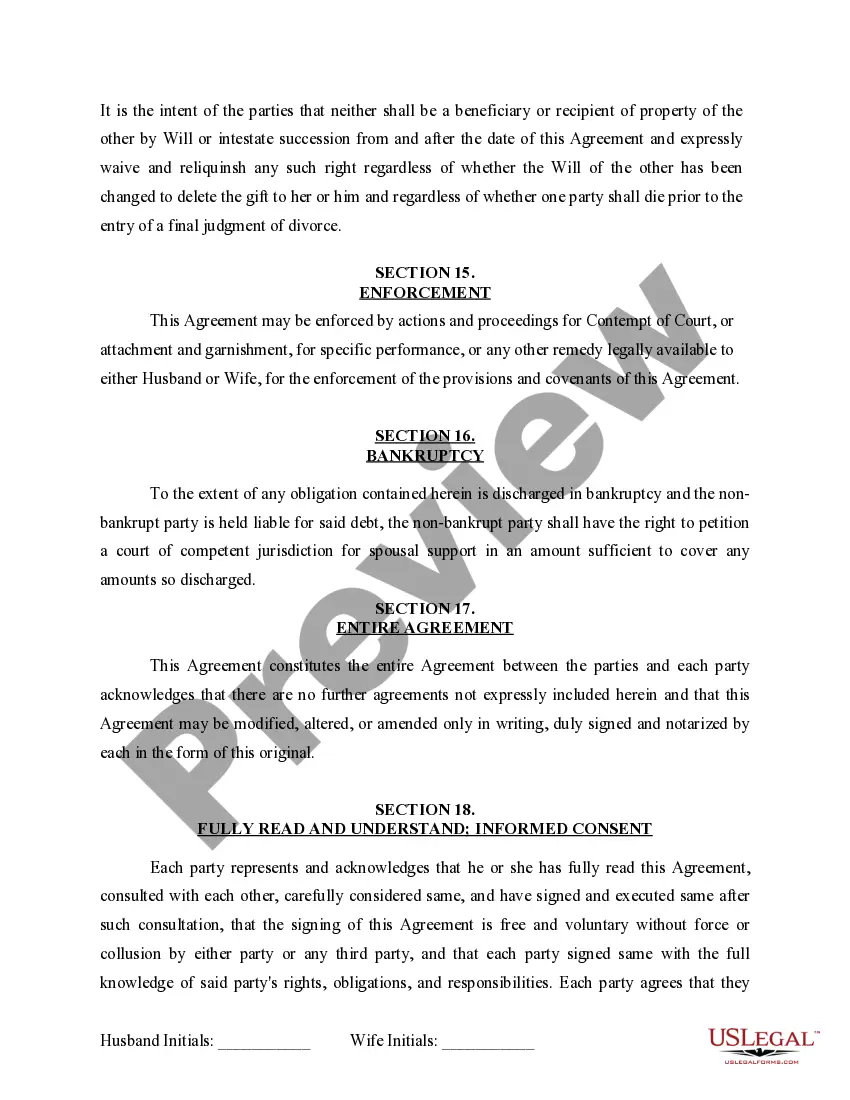
This Marital Domestic Separation and Property Settlement Agreement is a legal document intended for married individuals without children or joint property or debts, who are undergoing a divorce action. This form is specifically designed to assist in settling the terms of the separation, detailing the division of assets and the responsibilities concerning any liabilities. Unlike other separation agreements, this document caters to couples who have opted for a divorce and ensures that both parties have a clear understanding of their rights and obligations moving forward.
Key components of this form
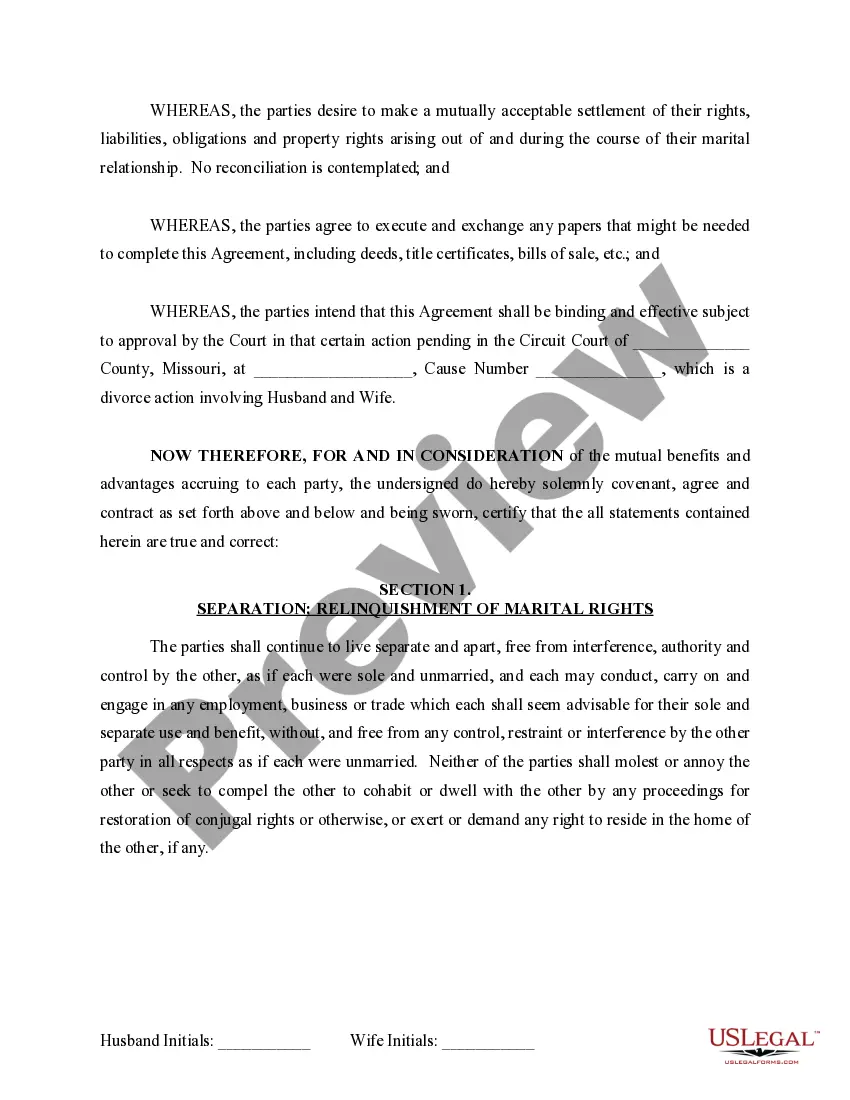
- Detailed provisions outlining the separation and relinquishment of marital rights.
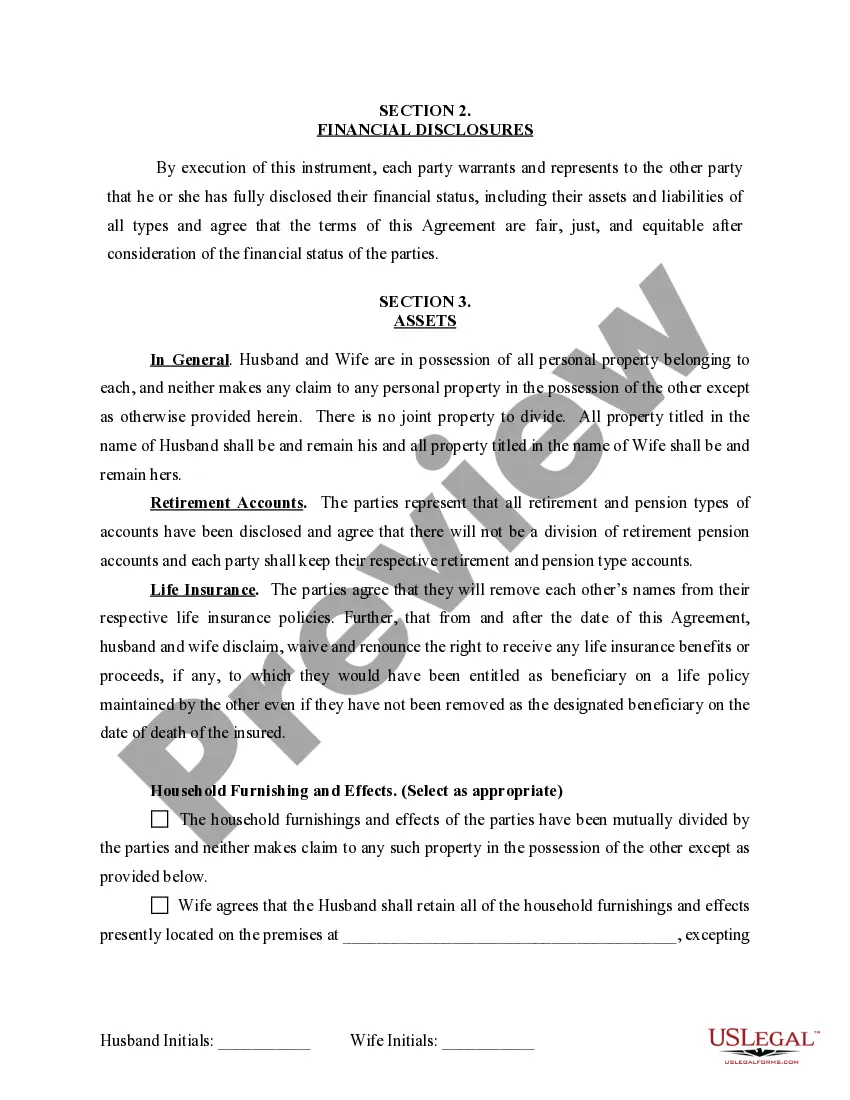
- Section for financial disclosures, ensuring both parties are aware of assets and debts.
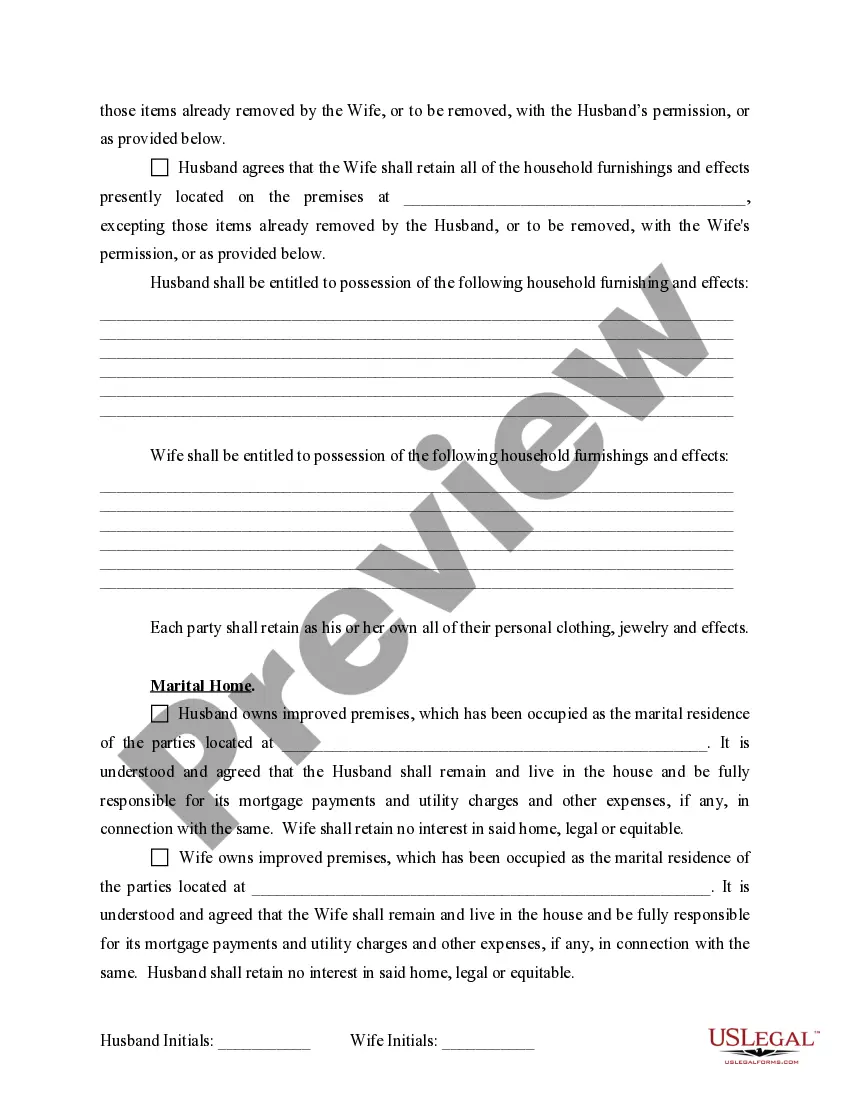
- Clear identification and division of personal assets without joint claims.
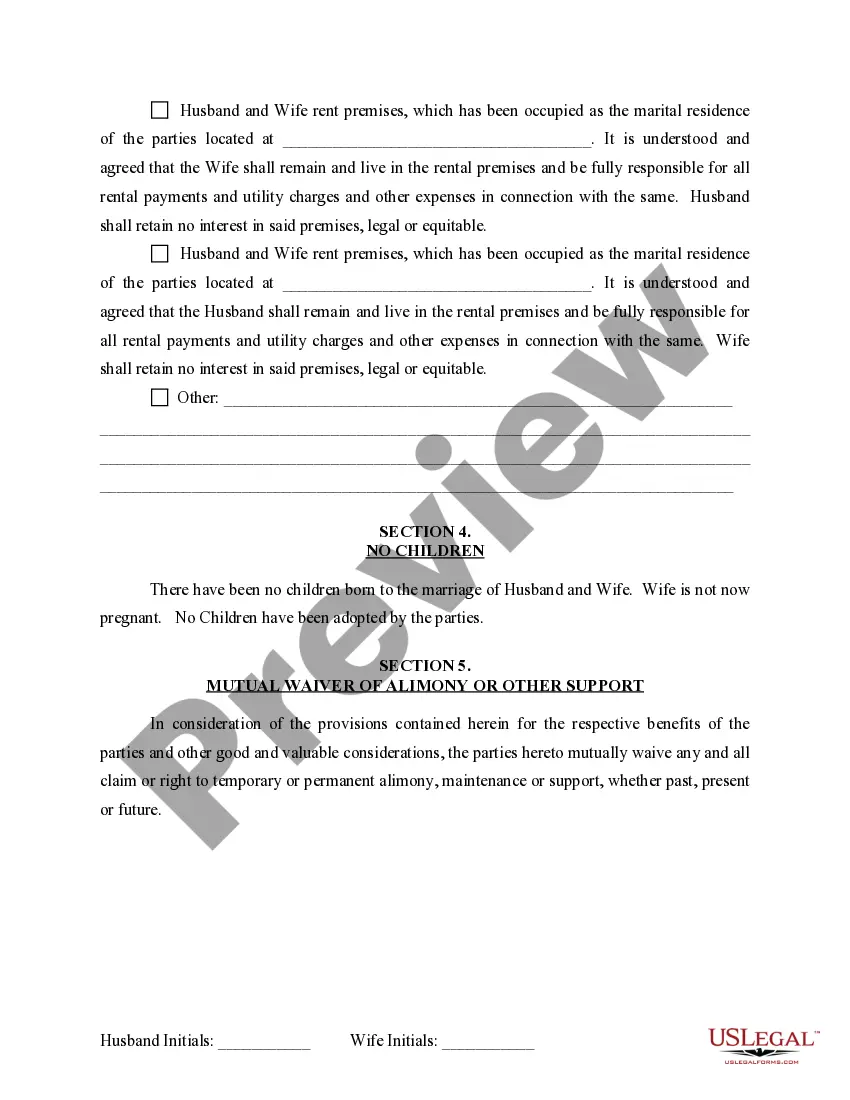
- Mutual waiver of alimony and support obligations.
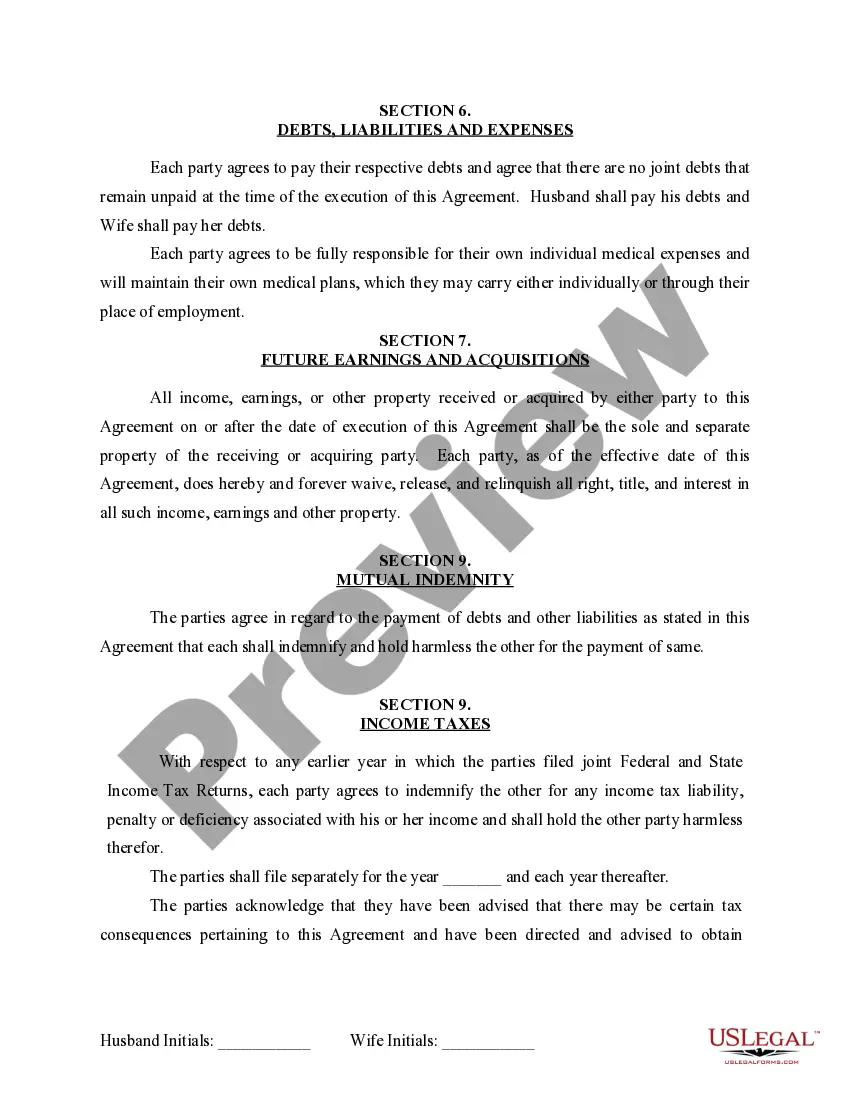
- Indemnity clauses related to debts and expenses incurred before and after the agreement.
- Provisions regarding the incorporation of this agreement into divorce proceedings.


Situations where this form applies
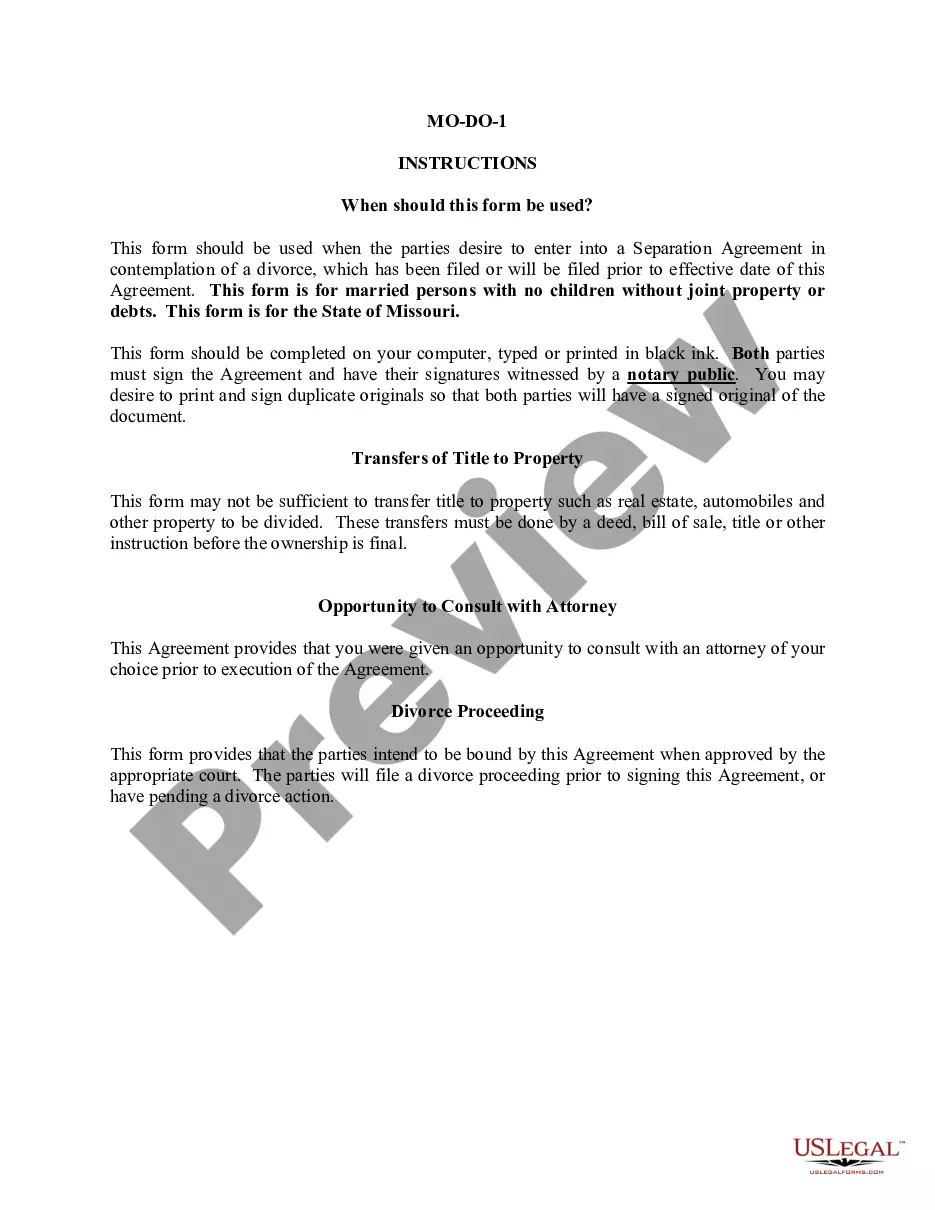
This form should be utilized when two married individuals, who have already filed or intend to file for divorce, wish to clarify the terms of their separation. It is specifically relevant for couples without children and no shared property or debts, simplifying the divorce process by establishing clear agreements on asset division and liabilities ahead of court proceedings.
Who this form is for
- Married couples in Missouri filing for divorce.
- Couples without children who do not possess joint property or debts.
- Individuals seeking to settle their financial arrangements before finalizing a divorce.
How to complete this form
- Identify the full legal names of both parties involved in the agreement.
- Complete the sections detailing personal assets and liabilities, ensuring accuracy in financial disclosures.
- Explicitly state any agreements regarding property division and future financial responsibilities.
- Sign the document in the presence of a notary public to ensure its legality.
- Make copies of the signed agreement for both parties.
Notarization requirements for this form
This document requires notarization to meet legal standards. US Legal Forms provides secure online notarization powered by Notarize, allowing you to complete the process through a verified video call, available 24/7.
Get your form ready online
Our built-in tools help you complete, sign, share, and store your documents in one place.
Make edits, fill in missing information, and update formatting in US Legal Forms—just like you would in MS Word.
Download a copy, print it, send it by email, or mail it via USPS—whatever works best for your next step.
Sign and collect signatures with our SignNow integration. Send to multiple recipients, set reminders, and more. Go Premium to unlock E-Sign.
If this form requires notarization, complete it online through a secure video call—no need to meet a notary in person or wait for an appointment.
We protect your documents and personal data by following strict security and privacy standards.
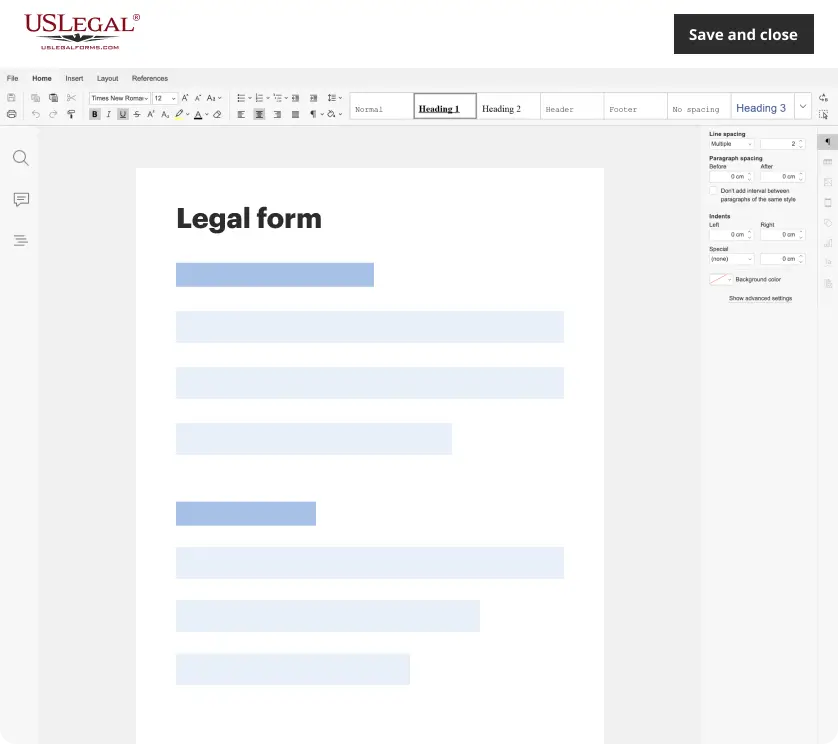
Make edits, fill in missing information, and update formatting in US Legal Forms—just like you would in MS Word.
Download a copy, print it, send it by email, or mail it via USPS—whatever works best for your next step.
Sign and collect signatures with our SignNow integration. Send to multiple recipients, set reminders, and more. Go Premium to unlock E-Sign.

If this form requires notarization, complete it online through a secure video call—no need to meet a notary in person or wait for an appointment.
We protect your documents and personal data by following strict security and privacy standards.
Common mistakes
- Failing to fully disclose financial information, which can lead to disputes later.
- Not having the agreement notarized, which can affect its enforceability.
- Omitting specific details concerning the division of personal belongings or financial obligations.
Benefits of completing this form online
- Convenient access to legal documents from the comfort of your home.
- Editable templates that allow customization to meet specific circumstances.
- Reliability, with forms drafted by licensed attorneys to ensure compliance with legal standards.
Legal use & context
- This agreement serves to clearly define the financial responsibilities and rights of each party in a divorce scenario.
- It is enforceable in a court of law, provided it is approved by the appropriate legal authority.
- Ensures that both parties relinquish any claims against each other's estates and financial interests.
What to keep in mind
- Important for couples without children or joint property during divorce proceedings.
- Requires full disclosure of financial status from both parties.
- Signing and notarization are critical for the legal enforceability of the agreement.
Looking for another form?
Form popularity
FAQ
While it is not legally required to have a lawyer draft a Missouri Marital Domestic Separation and Property Settlement Agreement for persons with No Children, No Joint Property or Debts where Divorce Action Filed, it is highly beneficial. Engaging a lawyer can help ensure that the agreement addresses all necessary legal elements and protects your rights. Additionally, a lawyer can provide guidance on the implications of the agreement and help you avoid potential pitfalls. If you choose to draft the agreement yourself, consider using platforms like US Legal Forms for templates and resources to simplify the process.
The three types of separation generally include legal separation, trial separation, and permanent separation. Legal separation allows couples to live apart while still being legally married, which can help in negotiating terms like the Missouri Marital Domestic Separation and Property Settlement Agreement for persons with No Children, No Joint Property or Debts where Divorce Action Filed. Trial separation involves living apart to assess the relationship without legal implications, while permanent separation means the couple has decided to live apart indefinitely. Each type has its own implications, so understanding them can help you make informed decisions.
In Missouri, a wife may be entitled to a fair distribution of marital property during a divorce. This includes any assets acquired during the marriage, even if there are no children, joint property, or debts involved. The Missouri Marital Domestic Separation and Property Settlement Agreement for persons with No Children, No Joint Property or Debts where Divorce Action Filed can help clarify these entitlements. It’s essential to understand your rights and seek guidance to ensure a just settlement.
In Missouri, the grounds for a legal separation are the irretrievable breakdown of the marriage that may also include adultery, abandonment, separation caused by misconduct in the year before filing, spousal behavior that the other partner cannot reasonably be expected to live with, and living apart and separate for
Missouri recognizes legal separation and, in fact, encourages couples to choose it before filing for divorce. Missouri law states that legal separation is designed to give couples the opportunity to resolve their differences while apart.
Couples who are separated, whether informally or legally, are still married in the eyes of the law, regardless of how independent their lives have become. This means that if either spouse has a sexual relationship with another person during the separation period, they have probably committed adultery.
Missouri also allows a marriage to end if the two parties have lived apart for at least two years before they file for divorce. Legal separation Missouri does recognize legal separation. This means you can legally separate from your spouse without actually ending the marriage.
In Missouri, the grounds for a legal separation are the irretrievable breakdown of the marriage that may also include adultery, abandonment, separation caused by misconduct in the year before filing, spousal behavior that the other partner cannot reasonably be expected to live with, and living apart and separate for
Don't assume that because you are separated, you can start dating other people. Although Missouri is a no-fault divorce state, that does not mean that having an affair can't impact your divorce agreement and hurt you financially. And dating while separated may fall into that category.
In Missouri, the grounds for a legal separation are the irretrievable breakdown of the marriage that may also include adultery, abandonment, separation caused by misconduct in the year before filing, spousal behavior that the other partner cannot reasonably be expected to live with, and living apart and separate for