Missouri Commercial Sublease
What is this form?
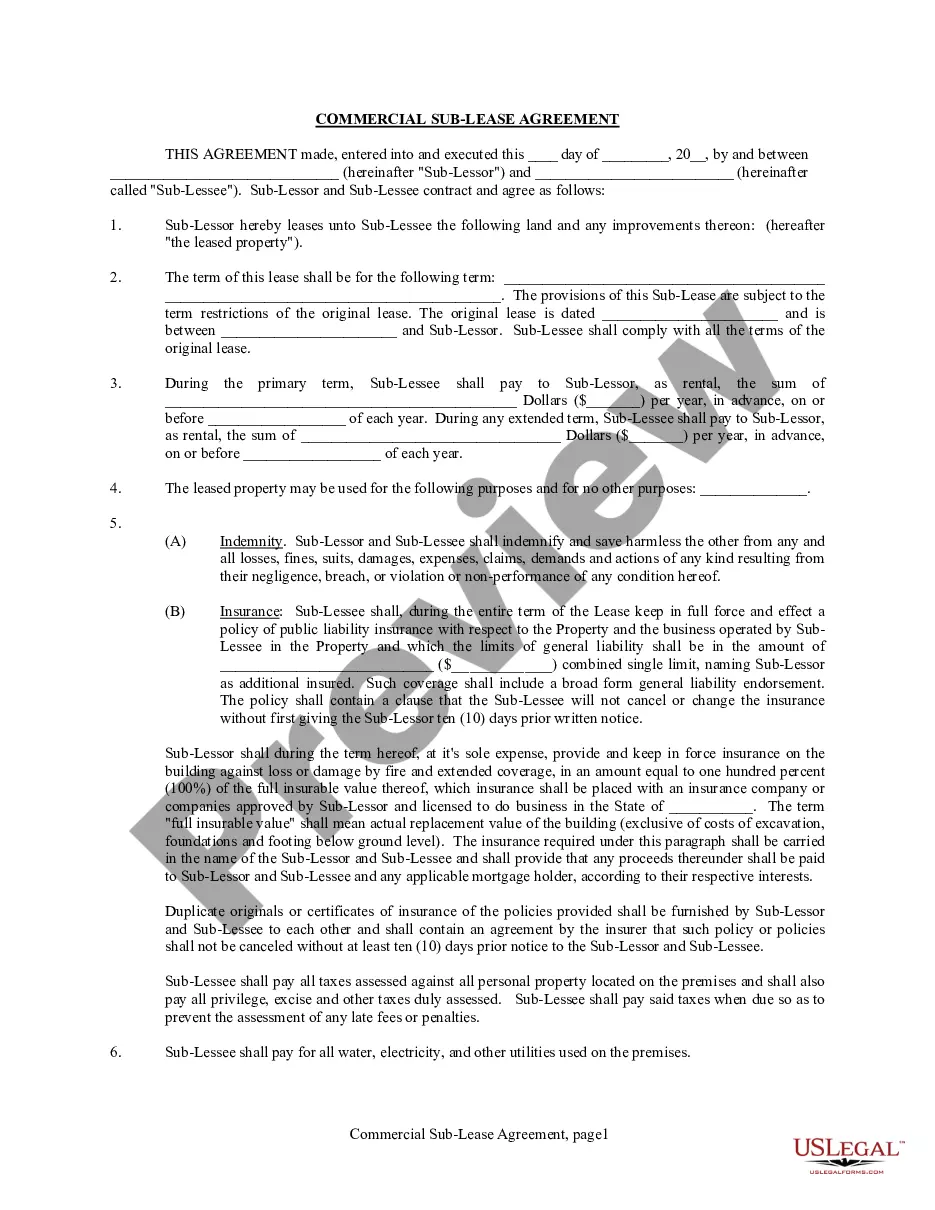
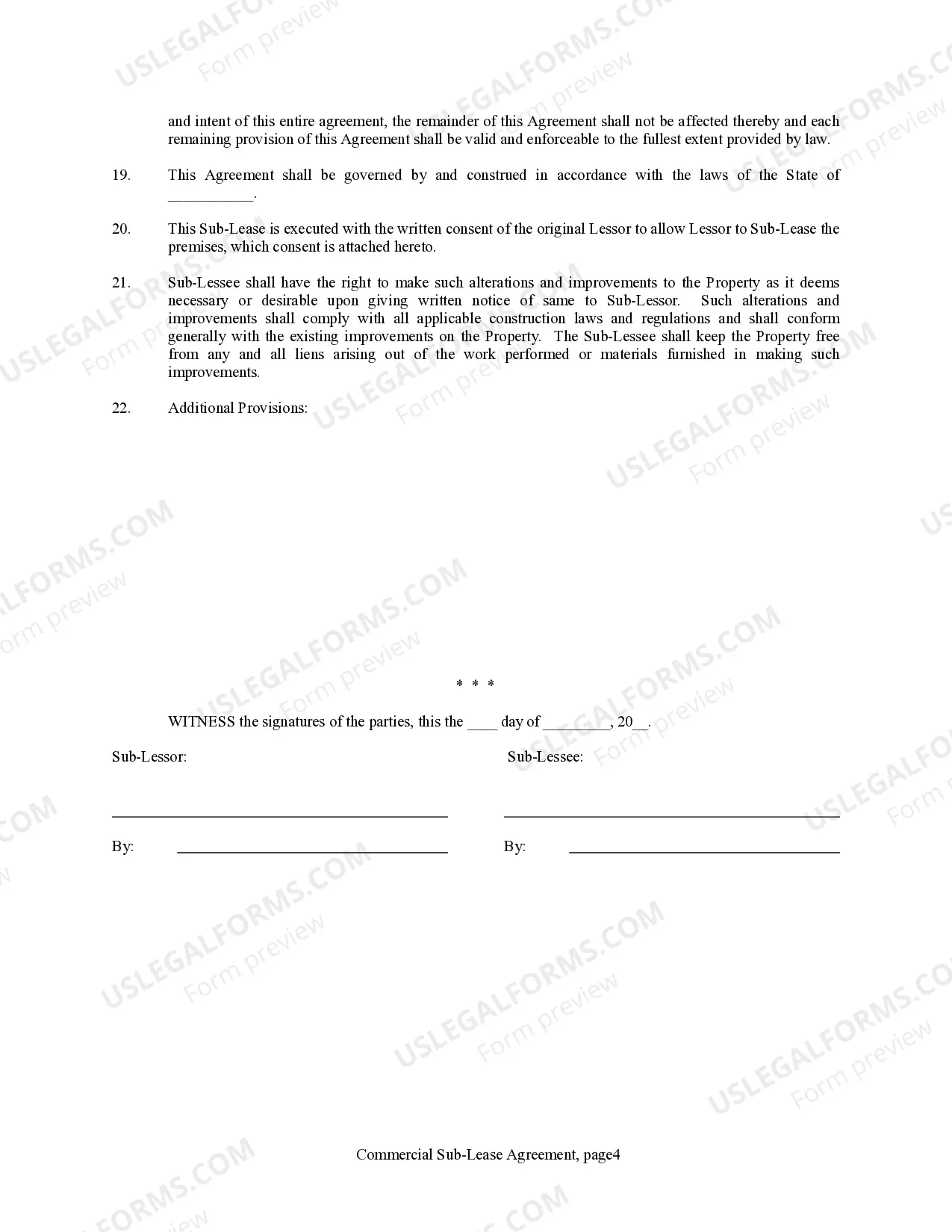
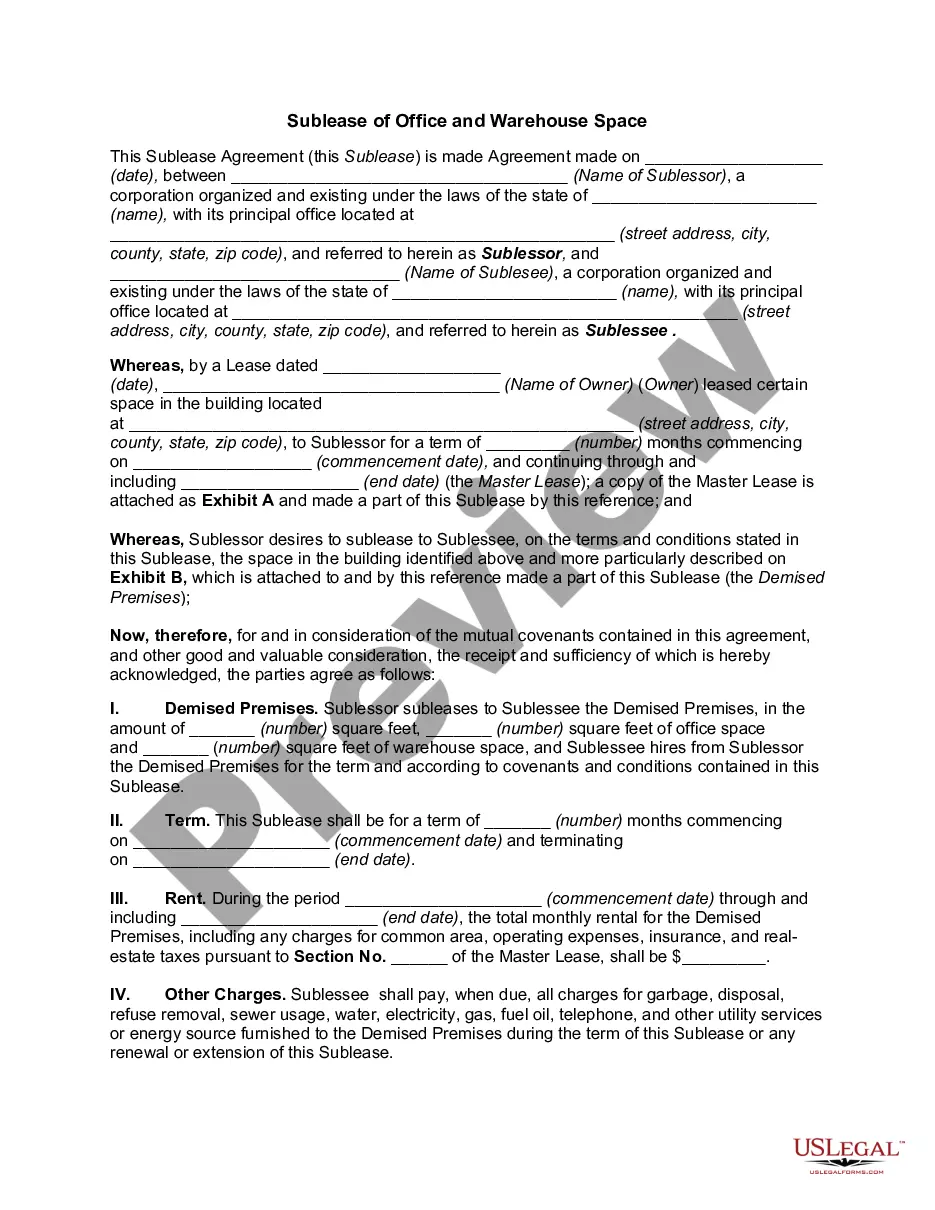
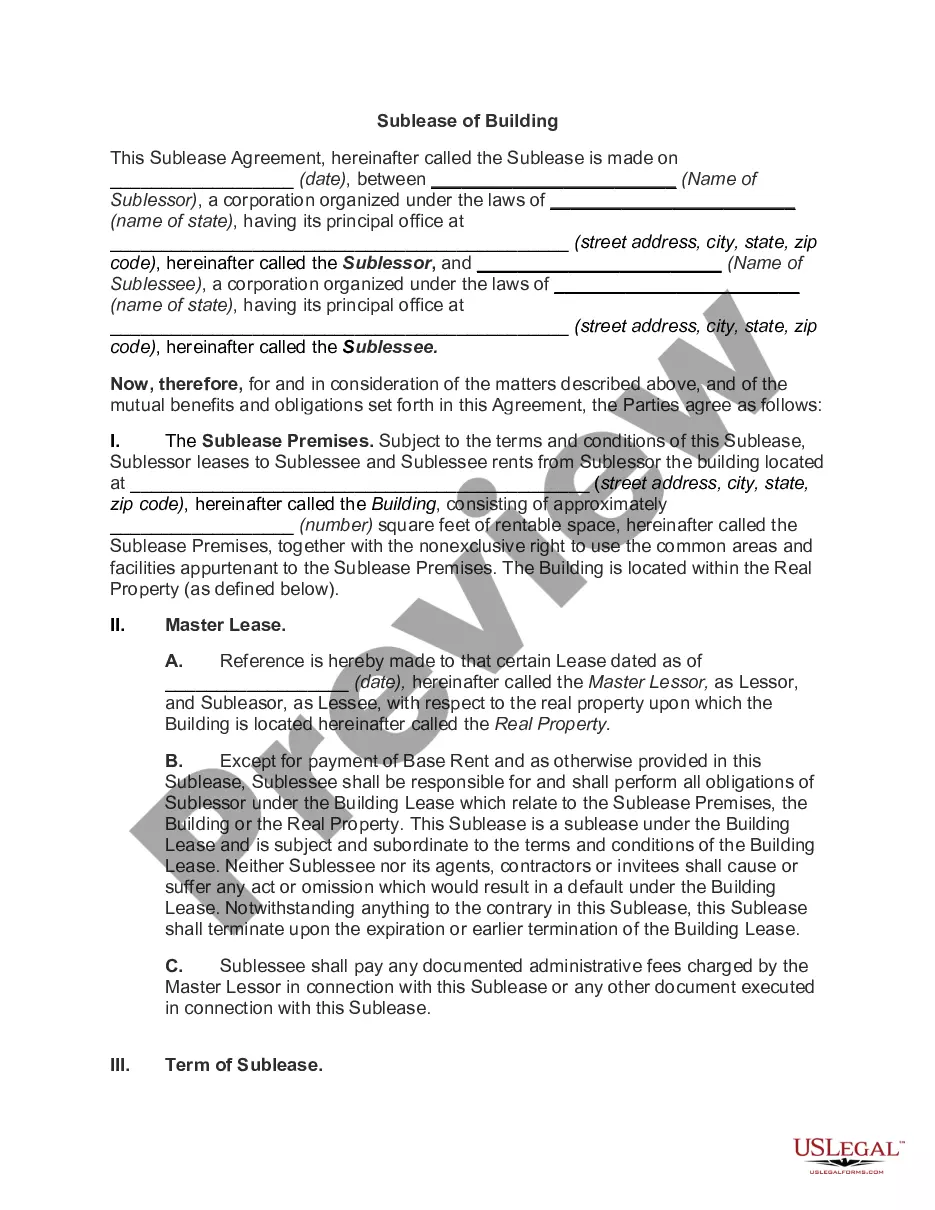
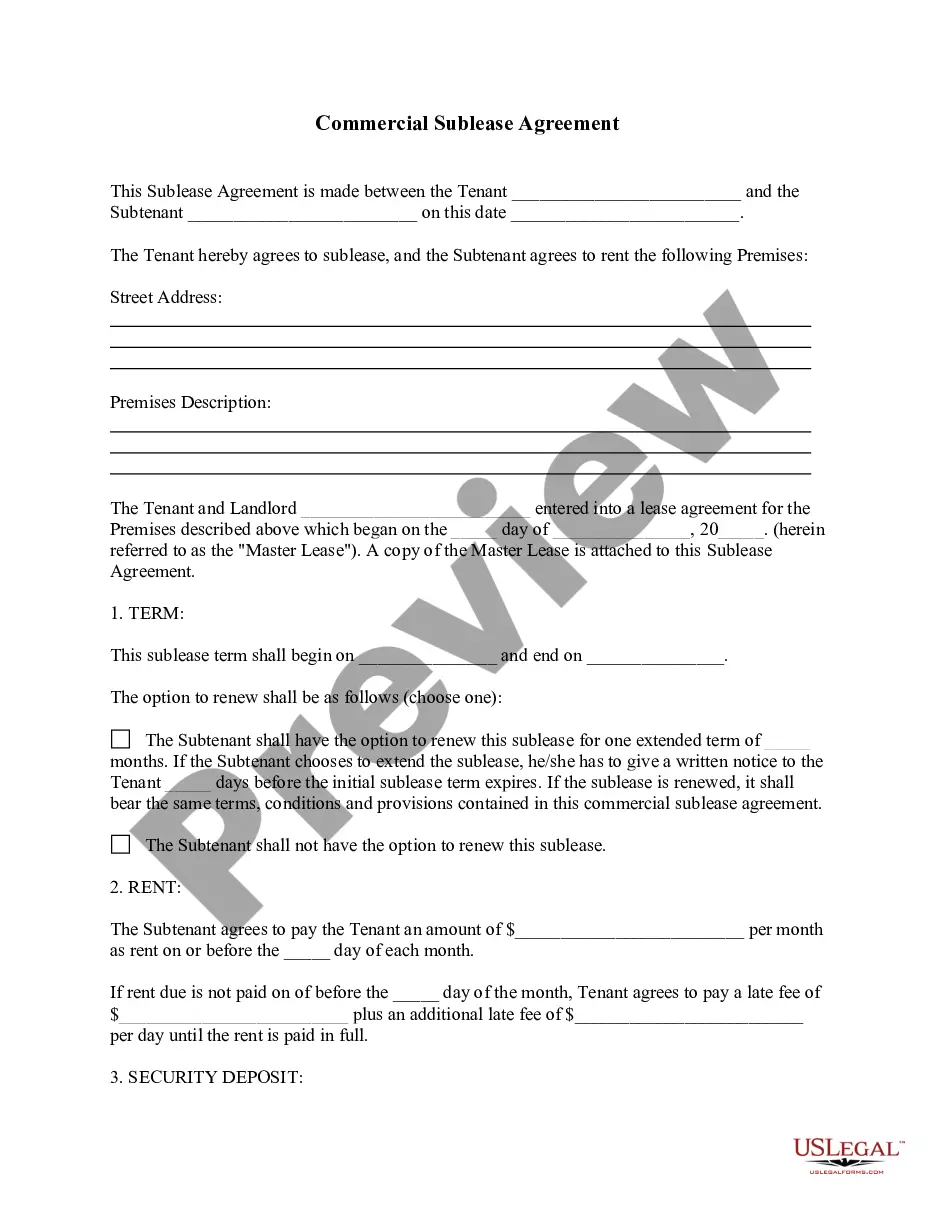
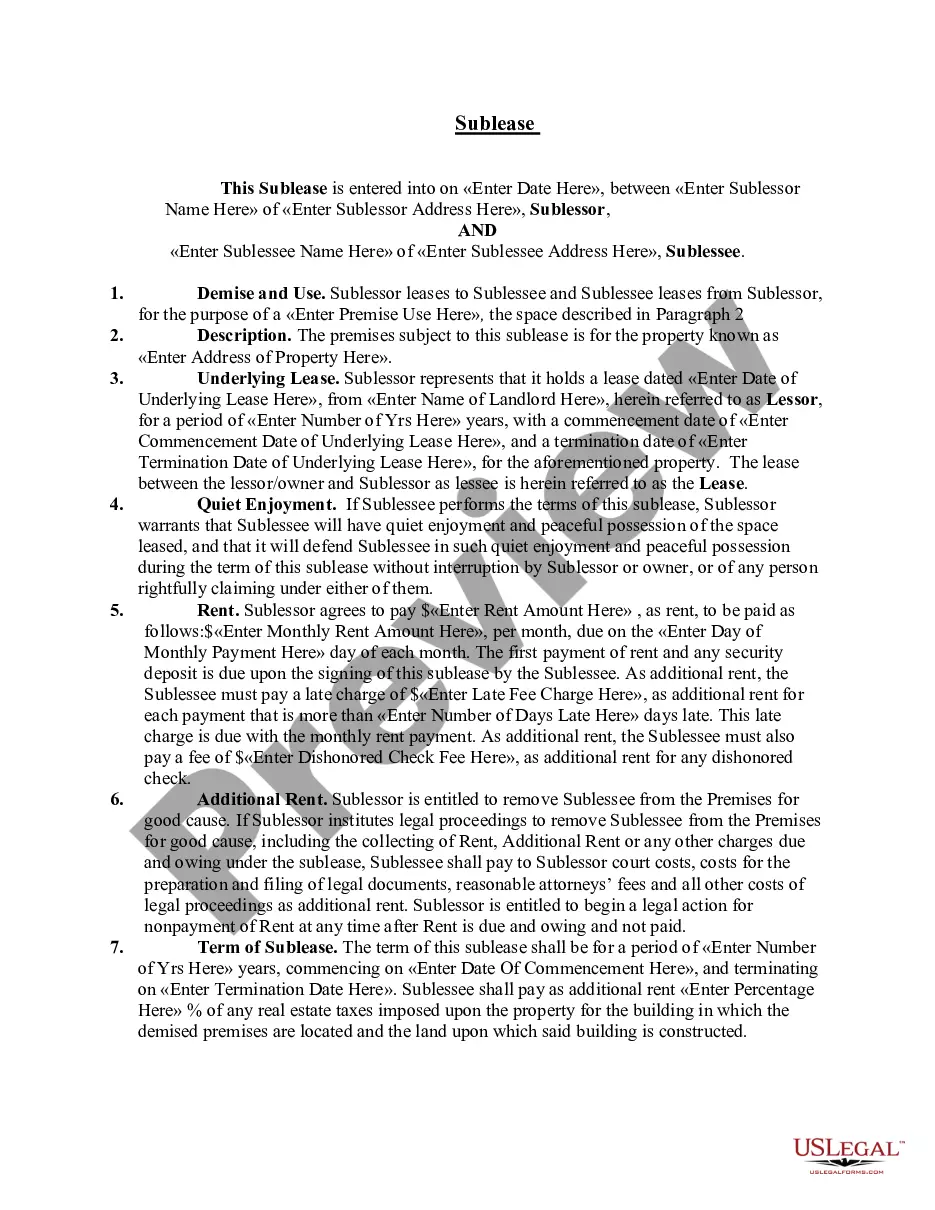
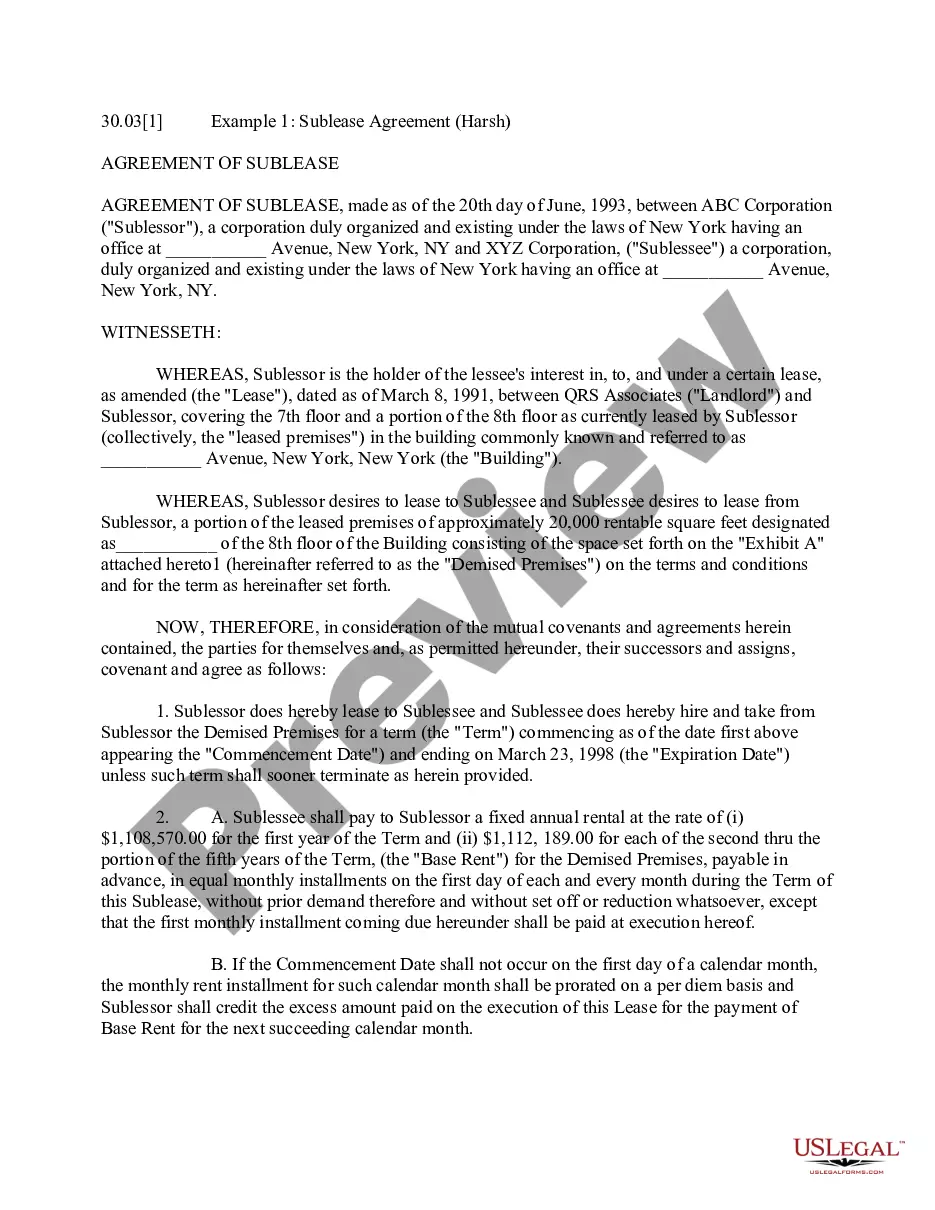
The Commercial Sublease is a legal document that allows a tenant (Sub-Lessor) to lease their rented commercial property to another tenant (Sub-Lessee). This agreement outlines the terms of the sublease, ensuring that all provisions comply with the original lease. It is specifically designed for renting commercial spaces, distinguishing it from residential subleases and ensuring both parties understand their rights and responsibilities.
Main sections of this form
- Identification of parties: Clearly states the names and roles of Sub-Lessor and Sub-Lessee.
- Leased property description: Details the land and improvements being sublet.
- Rental terms: Specifies the rental amount due, payment schedule, and conditions for extensions.
- Use of property: Outlines permitted uses of the leased space.
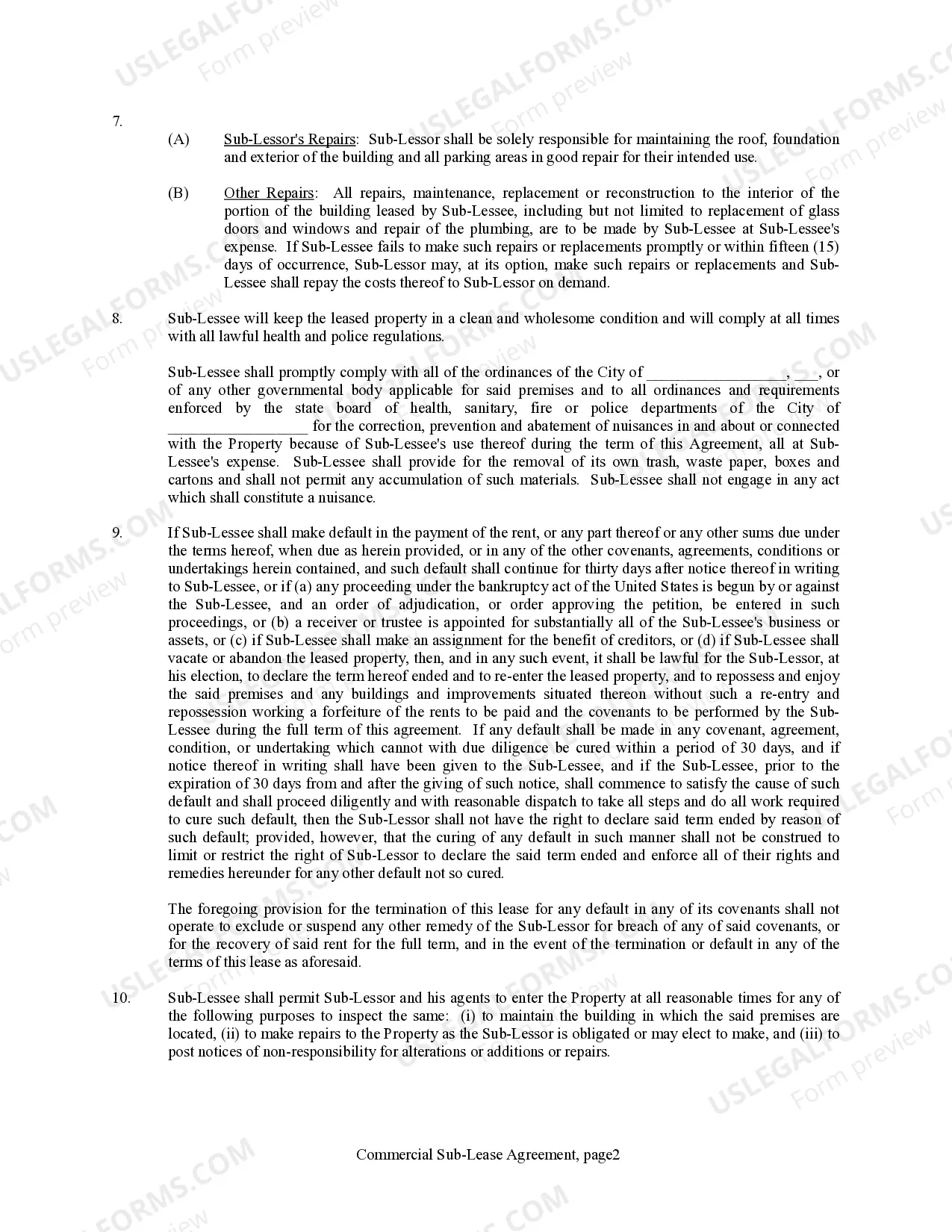
- Repair responsibilities: Clarifies maintenance obligations for both parties.
- Indemnity and insurance clauses: Details liability coverage and responsibilities regarding damages.
Situations where this form applies
This form should be used when a tenant who holds a commercial lease wishes to sublet the property to another party. It is applicable in various scenarios, such as a business needing to downsize, share space with another entity, or temporarily relocate. The Commercial Sublease helps ensure compliance with the original lease terms while providing a clear legal framework for the new tenancy.
Who can use this document
This form is intended for:
- Current tenants of commercial properties looking to sublet part or all of their leased space.
- Landlords or property owners seeking to understand the framework of subleasing arrangements.
- Business owners who need flexibility in their lease agreements while ensuring compliance with legal requirements.
Completing this form step by step
Steps to complete this form:
- Identify the parties involved: Enter the full names of the Sub-Lessor and Sub-Lessee.
- Describe the property: Specify the address and any improvements included in the lease.
- Enter the lease term: Define the duration for which the property is subleased.
- Specify rental payments: Detail the amount due and the payment frequency.
- Outline the permissible use: Clearly state what the Sub-Lessee can use the property for.
- Include indemnity and insurance provisions: Fill in necessary terms regarding liability and insurance coverage.
Does this document require notarization?
This form does not typically require notarization unless specified by local law. However, having it notarized can provide an additional level of legal assurance for both parties, confirming their identities and signatures.
Get your form ready online
Our built-in tools help you complete, sign, share, and store your documents in one place.
Make edits, fill in missing information, and update formatting in US Legal Forms—just like you would in MS Word.
Download a copy, print it, send it by email, or mail it via USPS—whatever works best for your next step.
Sign and collect signatures with our SignNow integration. Send to multiple recipients, set reminders, and more. Go Premium to unlock E-Sign.
If this form requires notarization, complete it online through a secure video call—no need to meet a notary in person or wait for an appointment.
We protect your documents and personal data by following strict security and privacy standards.

Make edits, fill in missing information, and update formatting in US Legal Forms—just like you would in MS Word.

Download a copy, print it, send it by email, or mail it via USPS—whatever works best for your next step.

Sign and collect signatures with our SignNow integration. Send to multiple recipients, set reminders, and more. Go Premium to unlock E-Sign.

If this form requires notarization, complete it online through a secure video call—no need to meet a notary in person or wait for an appointment.

We protect your documents and personal data by following strict security and privacy standards.
Mistakes to watch out for
- Failing to obtain landlord consent for the sublease, which might violate the original lease.
- Not specifying the duration of the sublease clearly, leading to misunderstandings.
- Neglecting to outline responsibilities for property maintenance and repairs.
Why complete this form online
- Convenience: Downloadable and editable templates save time compared to drafting from scratch.
- Reliability: Legal forms created by licensed attorneys ensure compliance with applicable laws.
- Ease of use: Users can easily fill in the necessary fields without legal jargon.
- The Commercial Sublease is enforceable as long as it adheres to the terms of the original lease.
- Understanding local laws regarding subleasing can prevent legal issues and disputes.
Main things to remember
- The Commercial Sublease formalizes the agreement between a tenant and a subtenant.
- Both parties should clearly understand their responsibilities regarding the property and lease terms.
- Consulting the original lease agreement is crucial to avoid any conflicts.
Looking for another form?
Form popularity
FAQ
To sublet a commercial lease, start by reviewing your existing lease for any subleasing provisions. Next, communicate with your landlord to obtain approval if required, and then find a suitable subtenant. Draft a comprehensive Missouri Commercial Sublease agreement that outlines terms, responsibilities, and duration. Platforms like US Legal Forms can be invaluable, offering customizable templates and legal advice to help you through the entire subletting process.
In Missouri, subleasing rules primarily depend on your original lease agreement. It's important to ensure that your lease allows for a Missouri Commercial Sublease and that you comply with any required notifications to your landlord. Additionally, local laws may dictate certain tenant rights and responsibilities, so understanding these is essential. US Legal Forms can provide you with the necessary documents and insights to navigate these rules effectively.
Yes, you can sublease your commercial property, but it's essential to review your lease agreement first. Many agreements contain specific clauses regarding subleasing, so understanding these terms is crucial. If permitted, a Missouri Commercial Sublease allows you to transfer your leasing rights to another party, potentially benefiting both you and your subtenant. Online resources, like US Legal Forms, offer useful templates and information to guide you through the subleasing process.
Getting a sublease can vary in difficulty depending on your circumstances. If you have a clear understanding of your original lease agreement and communicate effectively with your landlord, you can simplify the process. In many cases, a Missouri Commercial Sublease can be arranged smoothly with the right documentation and permissions. Utilizing platforms like US Legal Forms can help you access the necessary templates and guidance to ensure a successful subleasing experience.
A sublet, sometimes called a sublease, is a contract under which a tenant rents out their apartment to another individual while their name is still on the lease.When subleasing, only the original tenant's name is on the lease. In a roommate situation, all tenants are named on the lease.
In short, subletting allows a new renter to take over the lease directly with the landlord, while subleasing involves renting all or part of the space to another renter through the original renter.
A commercial sublease is an agreement between a tenant currently leasing a property, a new tenant looking for space, and the property owner. When you sublease your space you are the sublessor (or sublandlord) and your new tenant is the sublessee (or subtenant).
If the commercial tenant is a shell corporation and/or does not have any assets of value, the commercial tenant may choose to walk away from its commercial lease obligations.Often the landlord will require guarantees in order to prevent a commercial tenant from walking away from its lease obligations.
A sublease is a legally binding contract made between a tenant and a new tenant (also known as a subtenant or a sublessee).Usually, the first tenant must get consent from the landlord before he/she is allowed to sublease the premises.
Can the landlord refuse consent to an Assignment? Most leases will say that the Landlord cannot unreasonably withhold consent. According to section 19 (1A) of the Landlord and Tenant Act 1927 the landlord can insert conditions in the lease, which need to be met in the case of an assignment.