Missouri Mutual Wills containing Last Will and Testaments for Man and Woman living together not Married with No Children
What is this form?
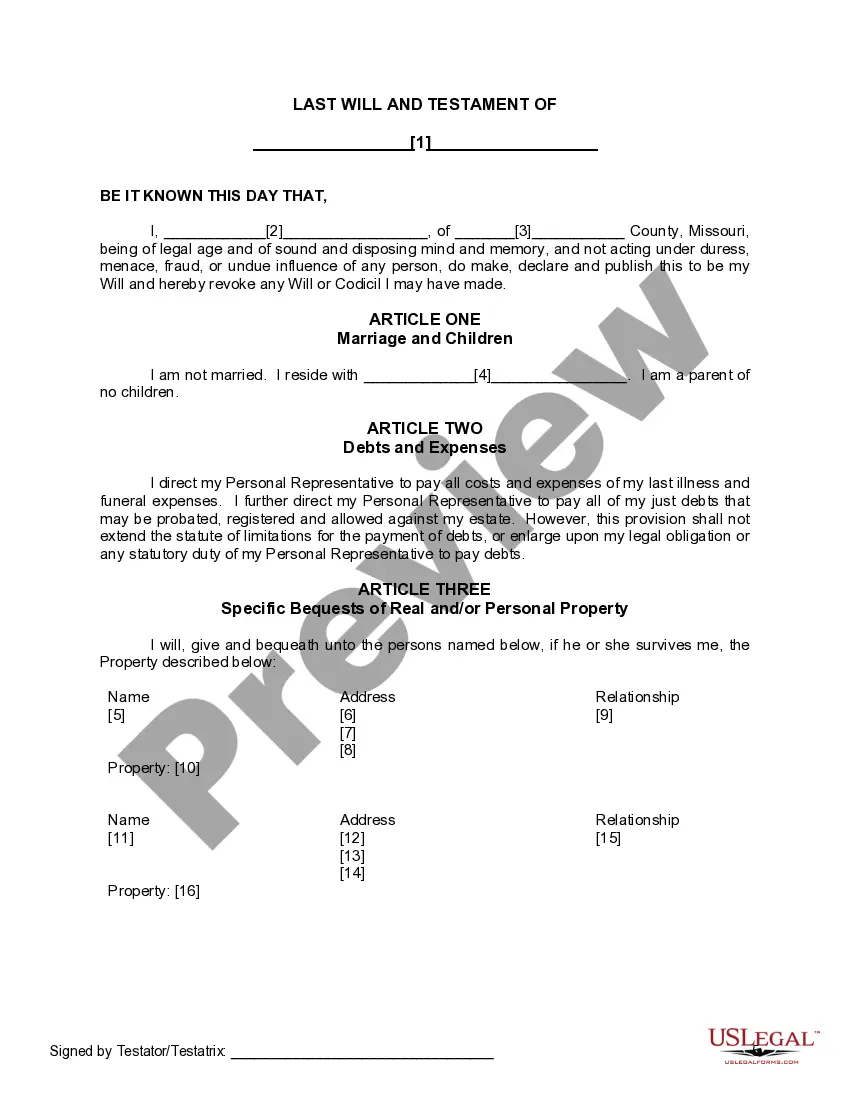
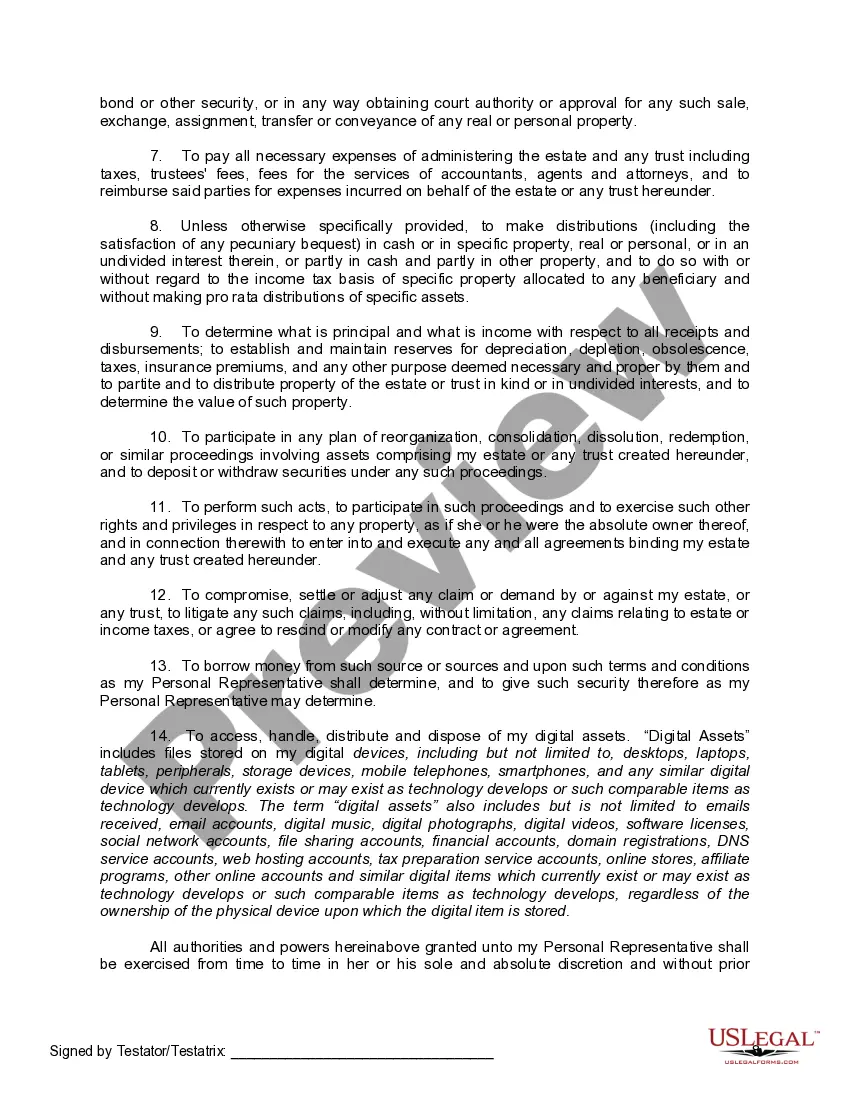
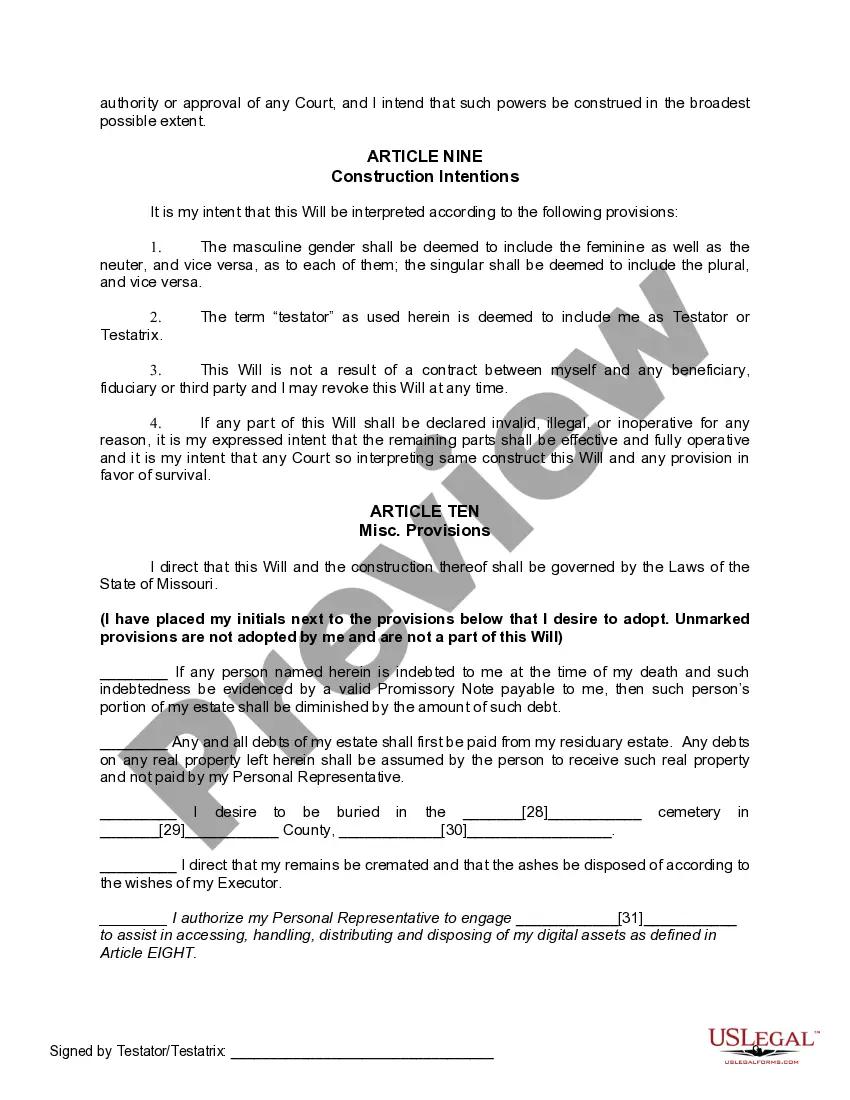
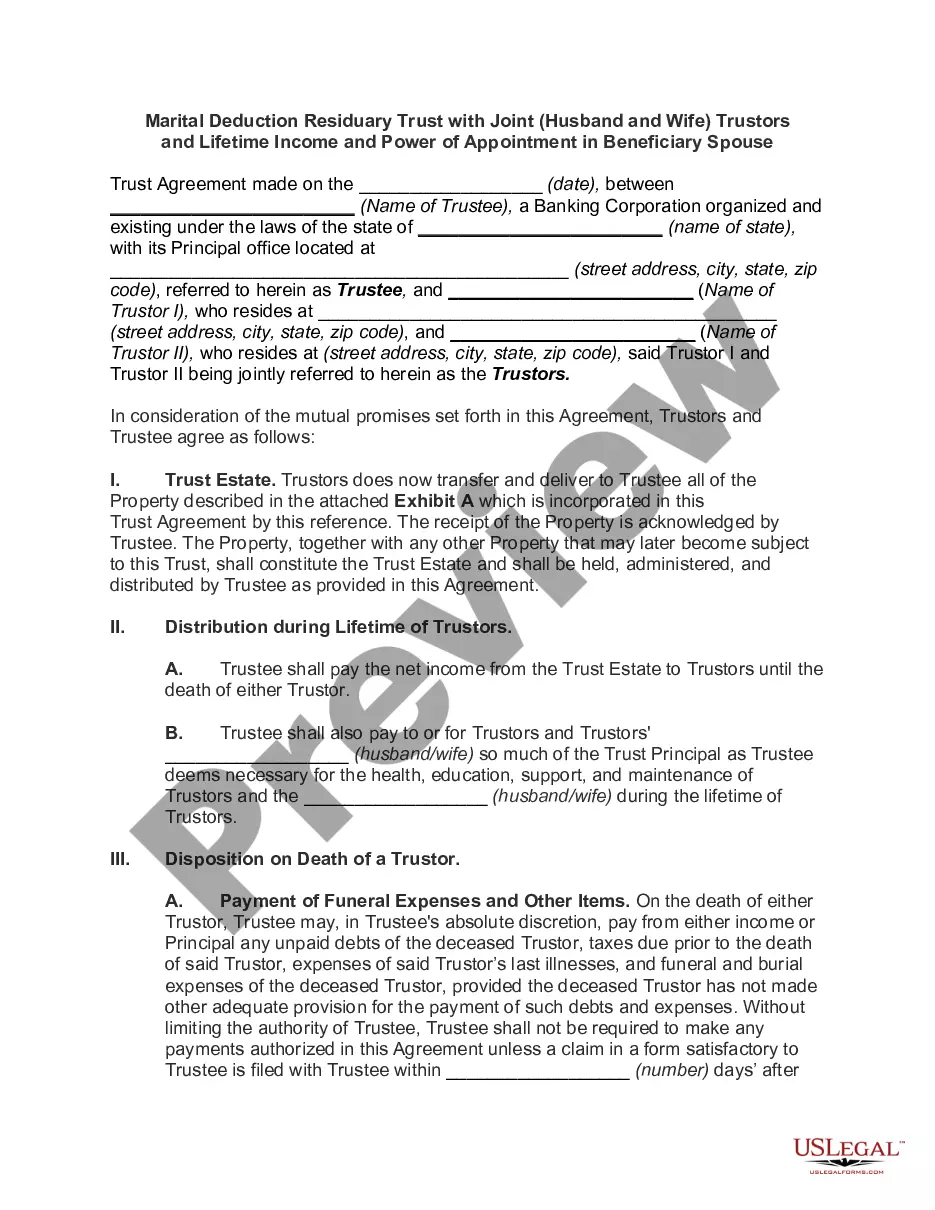
This Mutual Wills package includes two Last Will and Testament forms specifically designed for a man and woman living together but not married, without children. It allows each partner to allocate property to the other, ensuring that their wishes are respected in the event of death. This form differs from standard wills by emphasizing the mutual agreement between partners to provide for one another despite not being legally married.
Main sections of this form
- Personal details: Input names and addresses of both partners.
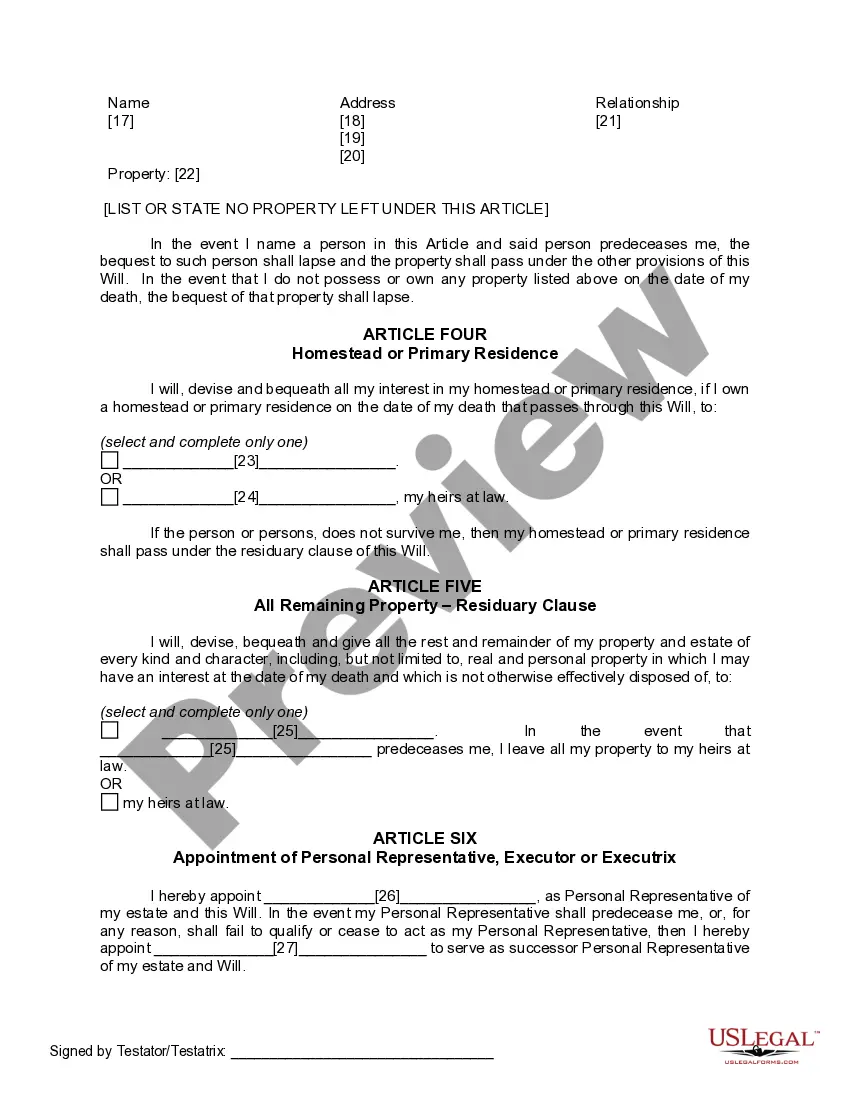
- Specific bequests: Outline any specific property or assets intended for each other.
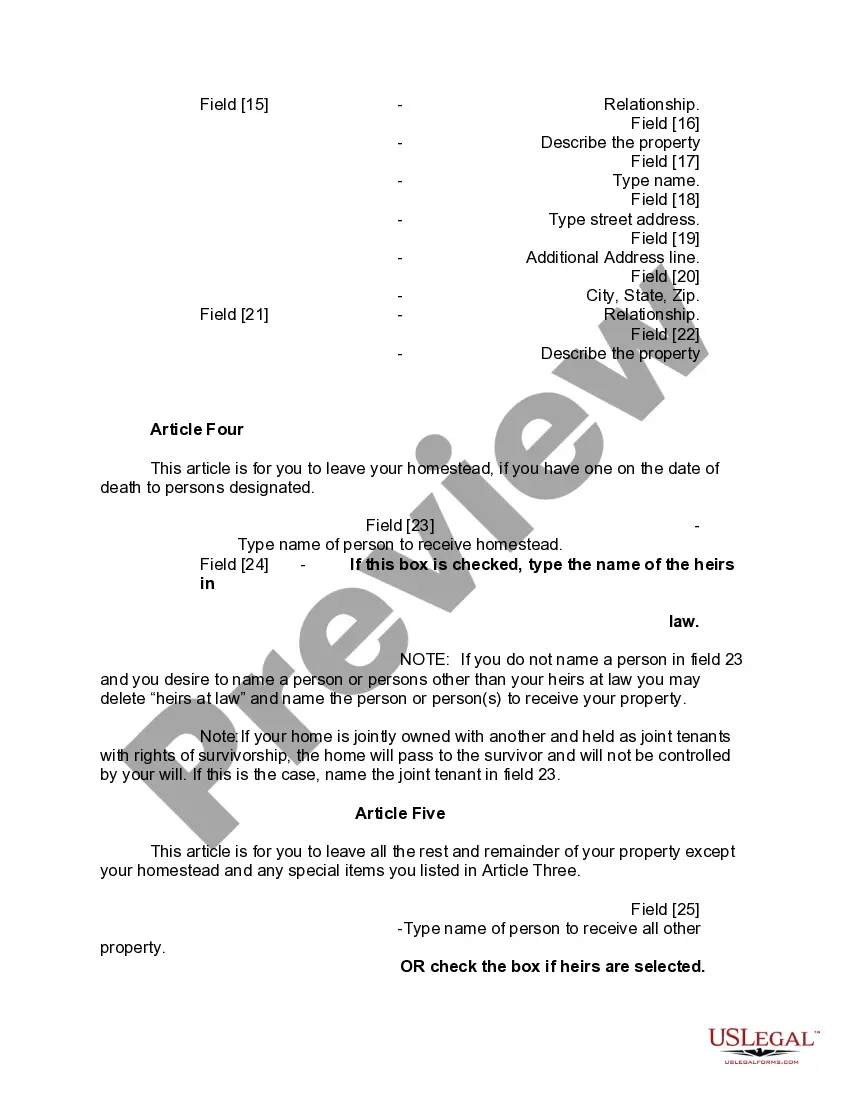
- Homestead provisions: Clarify which party will inherit the primary residence.
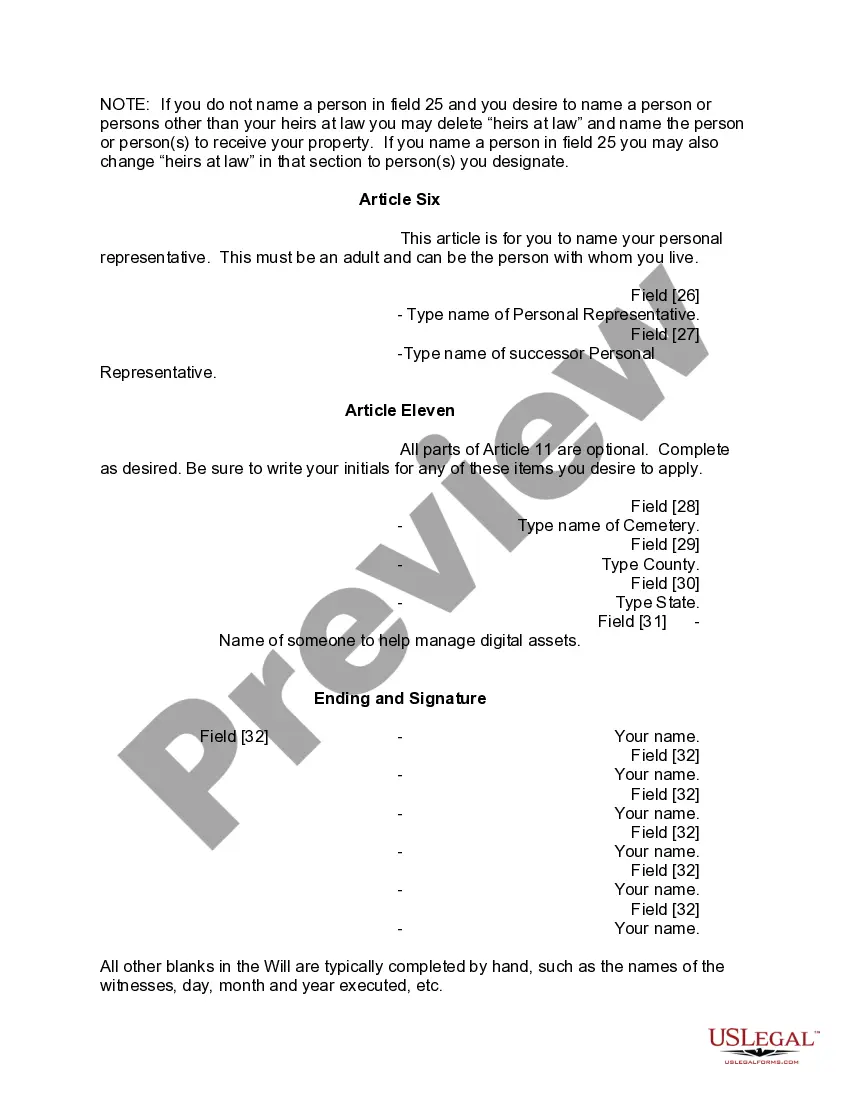
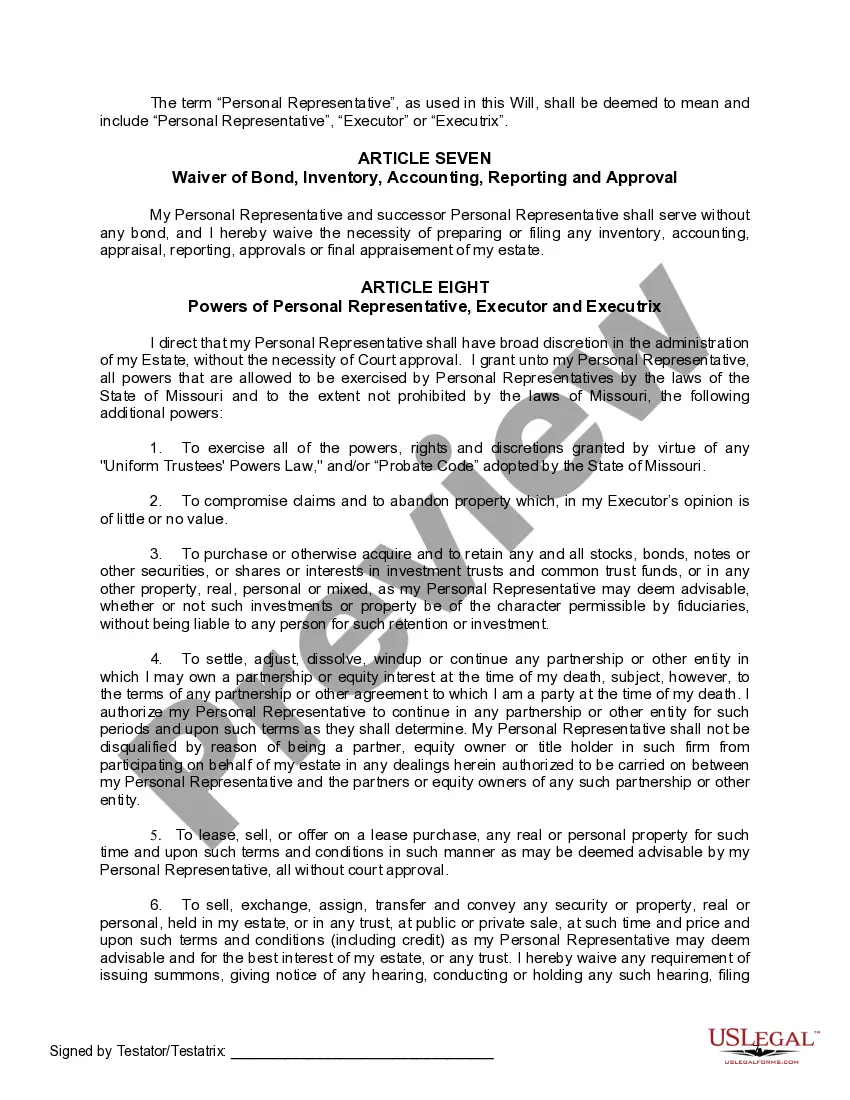
- Appointment of a Personal Representative: Designate who will manage the estate after death.
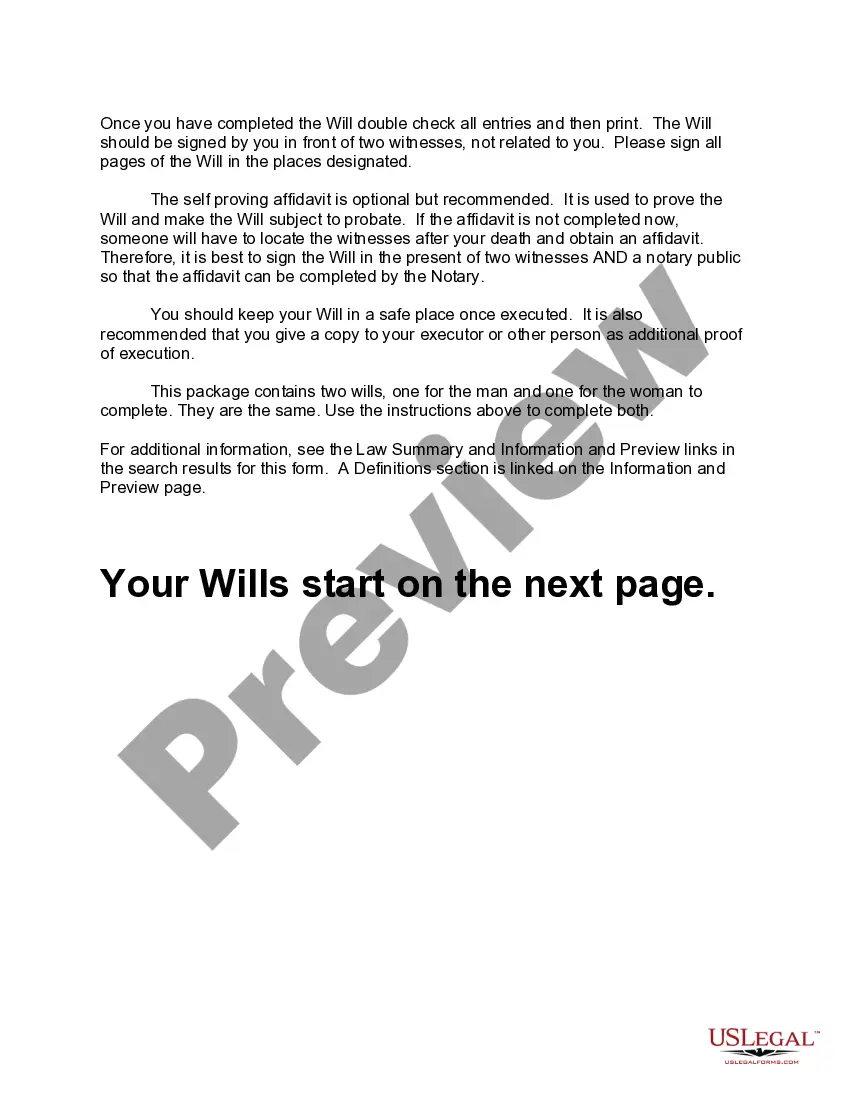
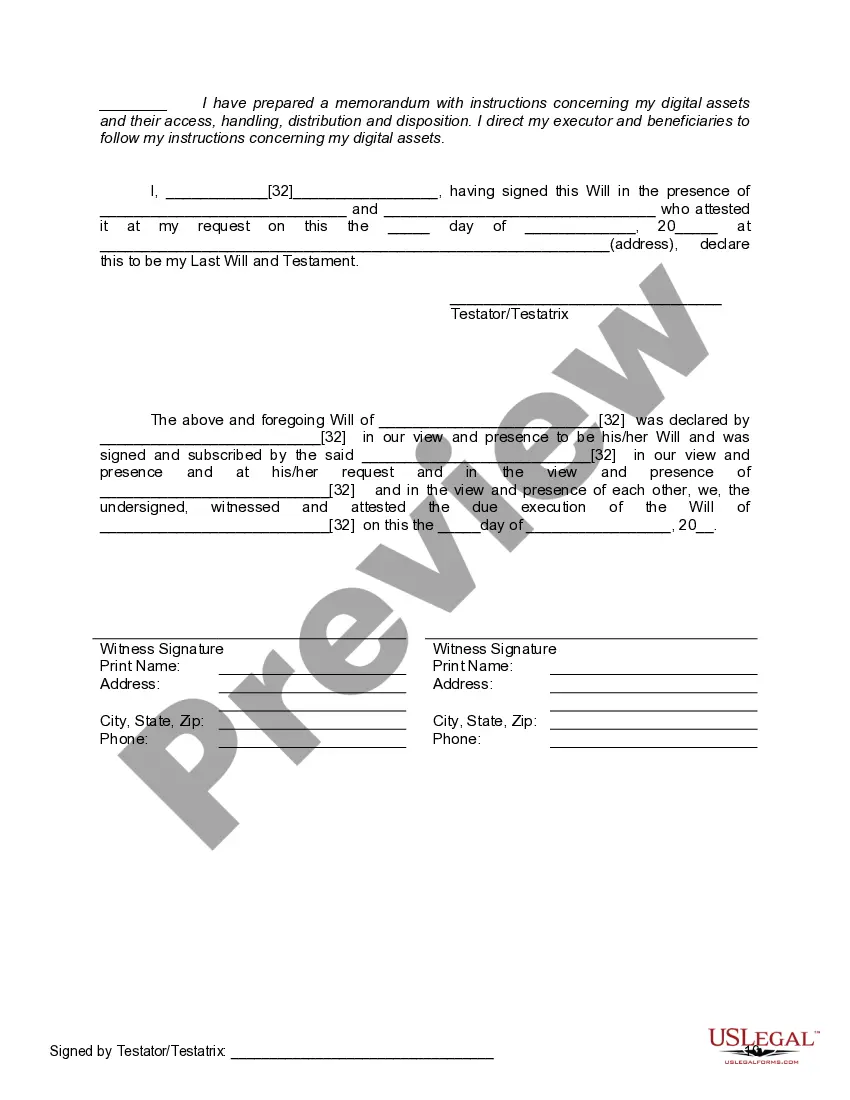
- Signature and witness requirements: Ensure the wills are signed in the presence of two non-related witnesses.




When to use this document
This form is suitable when a couple living together wishes to ensure their assets are passed to one another after death, regardless of their marital status. It is particularly useful for partners who want to establish mutual obligations similar to those typically defined in a marriage, enabling them to express their last wishes effectively.
Who should use this form
- Couples living together who are not married.
- Partners who want to ensure their property is transferred to one another.
- Individuals with no children wishing to designate an alternative heir.
Completing this form step by step
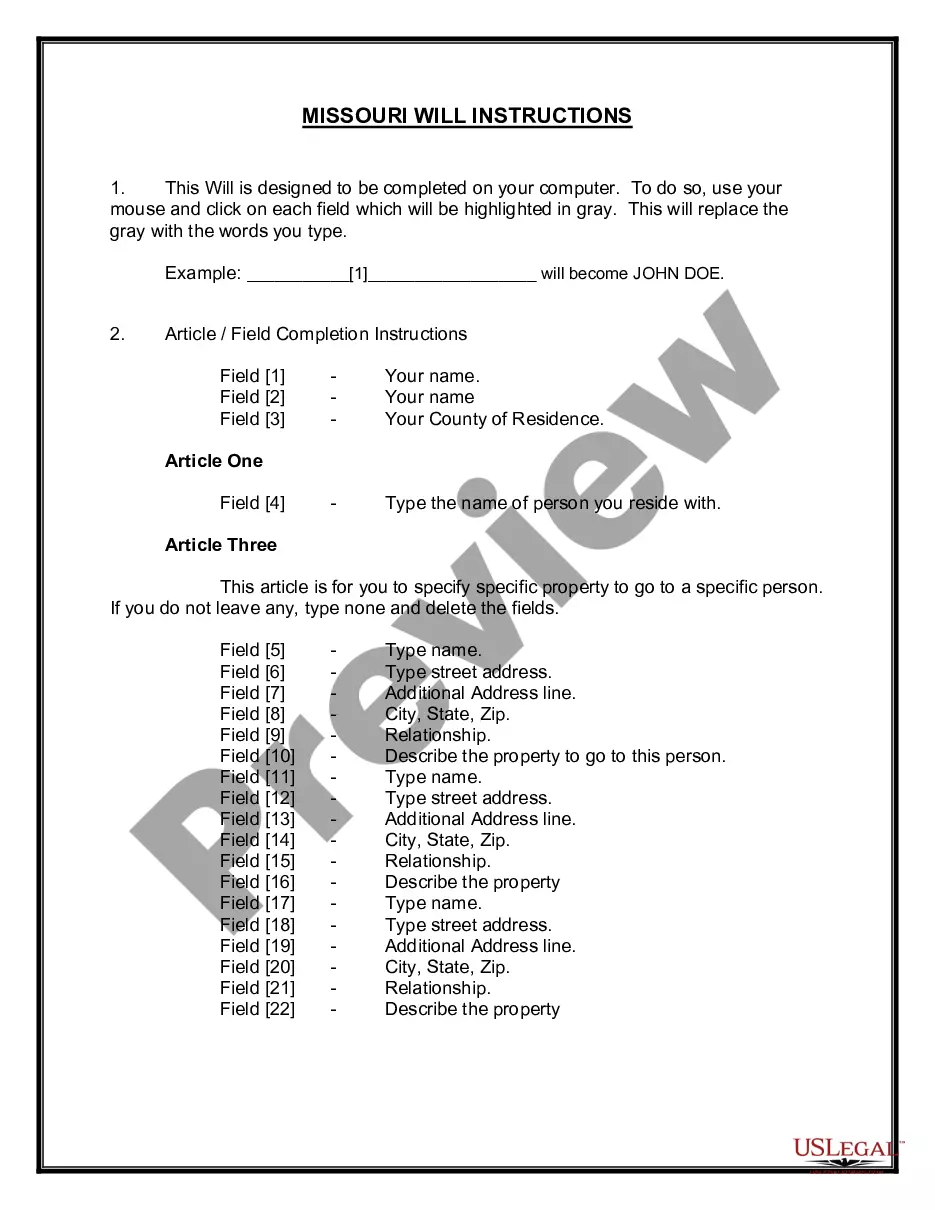
- Identify the parties by entering the names and addresses of both partners.
- Specify the specific property you wish to bequeath to your partner.
- Designate a Personal Representative to manage your estate after your passing.
- Ensure the wills are signed in front of two witnesses who are not related to either partner.
- Complete the optional self-proving affidavit if desired for stronger legal validity.
Does this form need to be notarized?
Yes, this form must be notarized to be legally valid. Having the wills notarized and signed in the presence of witnesses strengthens their enforceability and simplifies the probate process. US Legal Forms offers integrated online notarization services, making the process efficient and secure without the need for in-person appointments.
Get your form ready online
Our built-in tools help you complete, sign, share, and store your documents in one place.
Make edits, fill in missing information, and update formatting in US Legal Forms—just like you would in MS Word.
Download a copy, print it, send it by email, or mail it via USPS—whatever works best for your next step.
Sign and collect signatures with our SignNow integration. Send to multiple recipients, set reminders, and more. Go Premium to unlock E-Sign.
If this form requires notarization, complete it online through a secure video call—no need to meet a notary in person or wait for an appointment.
We protect your documents and personal data by following strict security and privacy standards.

Make edits, fill in missing information, and update formatting in US Legal Forms—just like you would in MS Word.

Download a copy, print it, send it by email, or mail it via USPS—whatever works best for your next step.

Sign and collect signatures with our SignNow integration. Send to multiple recipients, set reminders, and more. Go Premium to unlock E-Sign.

If this form requires notarization, complete it online through a secure video call—no need to meet a notary in person or wait for an appointment.

We protect your documents and personal data by following strict security and privacy standards.
Typical mistakes to avoid
- Failing to have both wills signed in the presence of appropriate witnesses.
- Not clearly specifying assets or leaving sections incomplete.
- Neglecting to update the wills as circumstances change (e.g., moving, acquiring new assets).
Why complete this form online
- Convenience of filling out the form at your own pace from anywhere.
- Editability allows for easy adjustments as your circumstances or wishes change.
- Access to legal expertise, ensuring that the forms are properly structured and compliant with state laws.
Looking for another form?
Form popularity
FAQ
When your partner dies and you are not married, you may find yourself with limited legal rights to their estate. In Missouri, without a will, the law typically favors relatives over partners, which can lead to complications in asset distribution. To avoid this situation, create Missouri Mutual Wills containing Last Will and Testaments for Man and Woman living together not Married with No Children to clearly outline your wishes and protect your interests. Platforms like uslegalforms can assist you in crafting the right documents.
If your partner dies and you are not married, you may face significant challenges regarding inheritance and asset distribution. In Missouri, without a will, the default laws dictate that your partner's assets go to their relatives, leaving you without claims to shared property. This is why establishing Missouri Mutual Wills containing Last Will and Testaments for Man and Woman living together not Married with No Children is vital for ensuring that your wishes are honored. Consider using uslegalforms to simplify the process.
Unmarried couples in Missouri do not have the same legal rights as married couples. This means that without a will, your partner may not inherit any of your property if you pass away. However, creating Missouri Mutual Wills containing Last Will and Testaments for Man and Woman living together not Married with No Children can establish clear rights and intentions regarding asset distribution. It's crucial to take proactive steps to ensure your partner's rights are protected.
Yes, a will can provide protection for unmarried couples in Missouri. By creating a Missouri Mutual Will, you can specify how your assets should be distributed upon your death, ensuring that your partner is taken care of according to your wishes. This is especially important for couples who are living together but not married, as intestacy laws do not automatically grant rights to unmarried partners. Utilize platforms like uslegalforms to easily draft a will that secures your partner's rights.
In Missouri, a will may be deemed invalid for several reasons. If it lacks the necessary signatures, does not follow the required format, or if the testator was not of sound mind when creating it, the will could be challenged. Additionally, if there is evidence of undue influence or fraud in the creation of the will, it might not hold up in court. To ensure your Missouri Mutual Wills containing Last Will and Testaments for Man and Woman living together not Married with No Children are valid, consider consulting legal resources.
To make a will self-proved in Missouri, the testator and witnesses must sign a self proving affidavit before a notary public. An affidavit is a sworn statement, and a notary public is an officer of the court. Therefore, an affidavit before a notary public is like making a statement in court.
Community Property Laws At the death of one spouse, his or her half of the community property goes to the surviving spouse unless there is a valid will that directs otherwise. Married people can still own separate property. For example, property inherited by just one spouse belongs to that spouse alone.
California is a community property state, which means that following the death of a spouse, the surviving spouse will have entitlement to one-half of the community property (i.e., property that was acquired over the course of the marriage, regardless of which spouse acquired it).
Property owned by the deceased husband alone: Any asset that is owned by the husband in his name alone becomes part of his estate. Intestacy: If a deceased husband had no will, then his estate passes by intestacy.and also no living parent, does the wife receive her husband's whole estate.
Although Missouri does not require a will to be notarized, most Missouri practitioners use two witnesses and a notary to make the will self-proving (see Drafting Note, Self-Proving Affidavit).