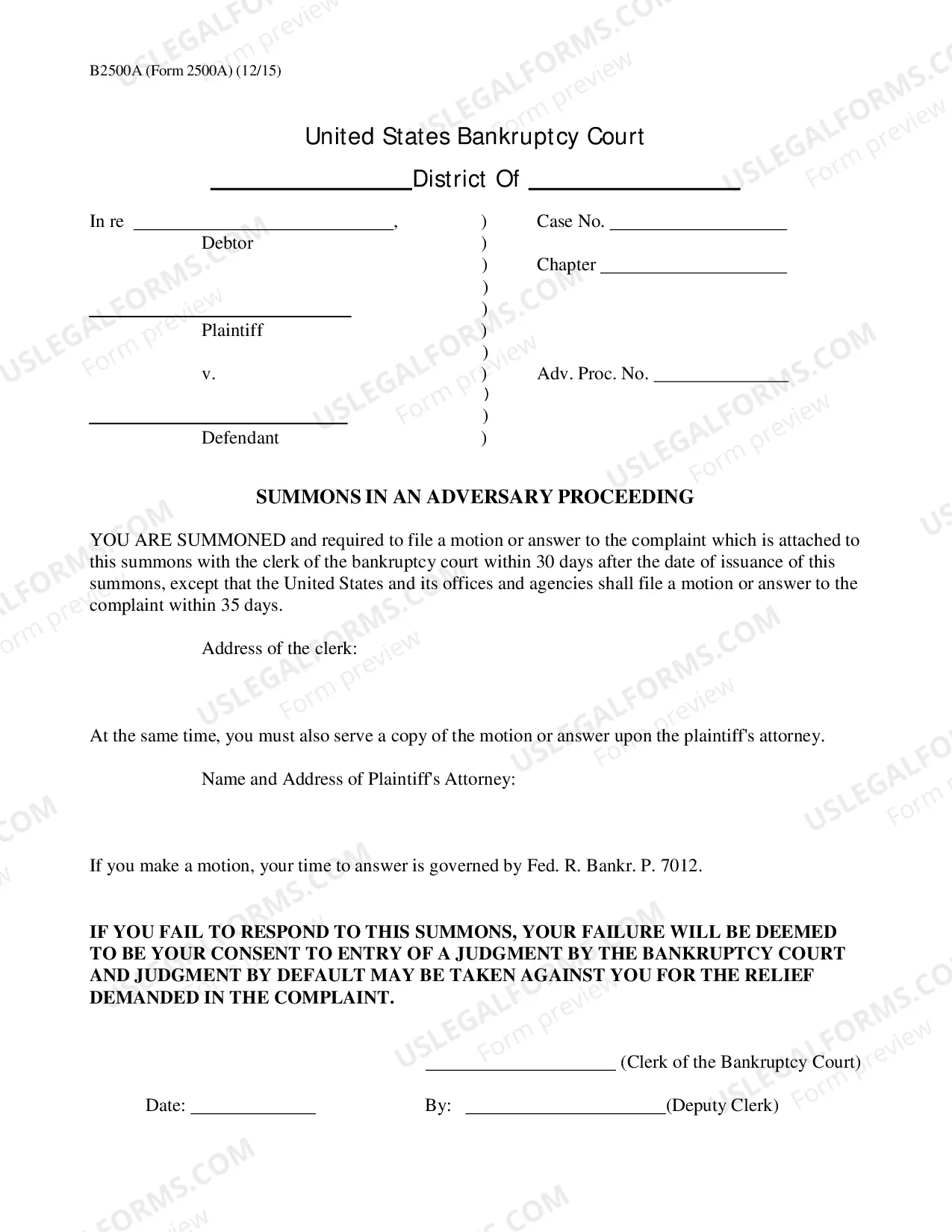
Missouri Notice of Breach of Written Lease for Violating Specific Provisions of Lease with No Right to Cure for Nonresidential Property from Landlord to Tenant
What this document covers
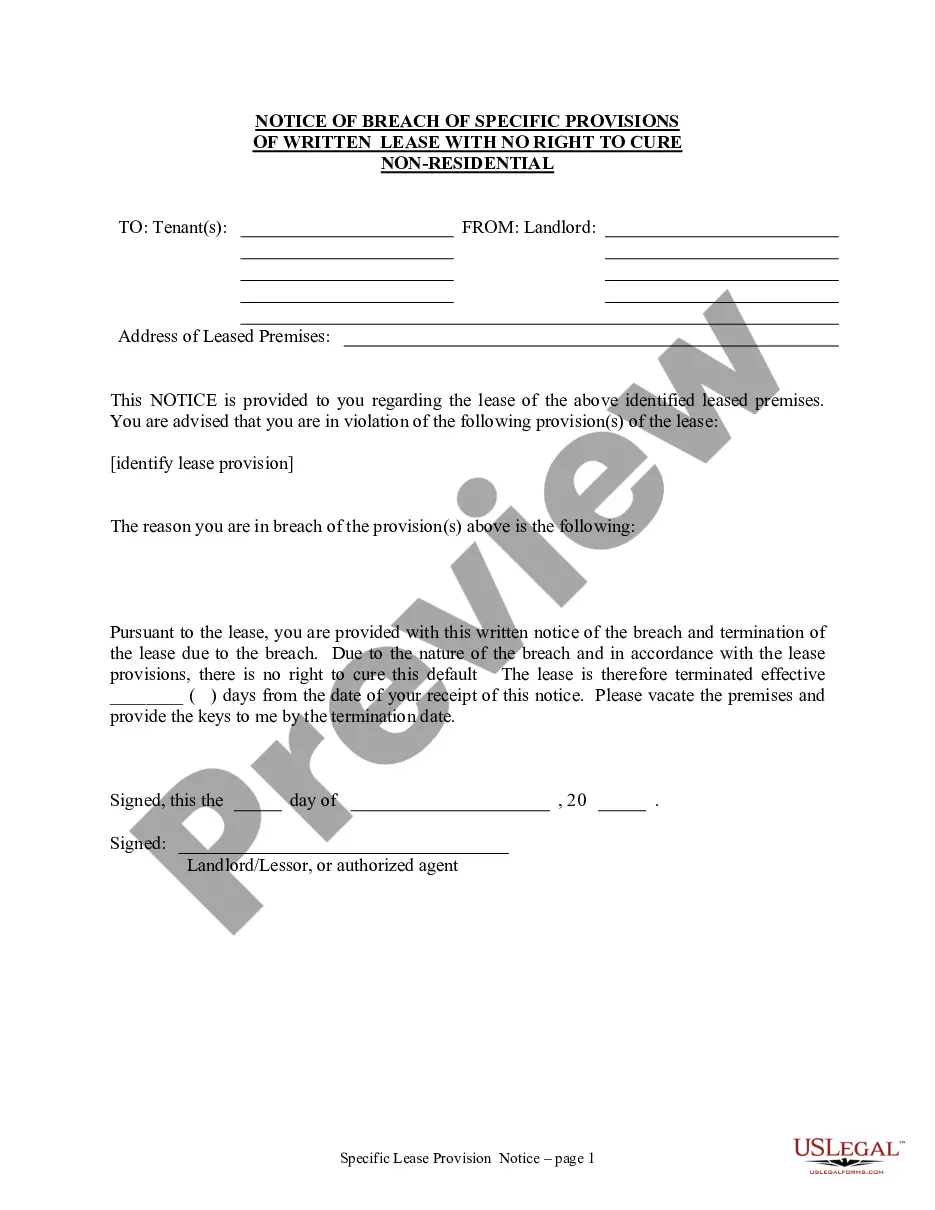
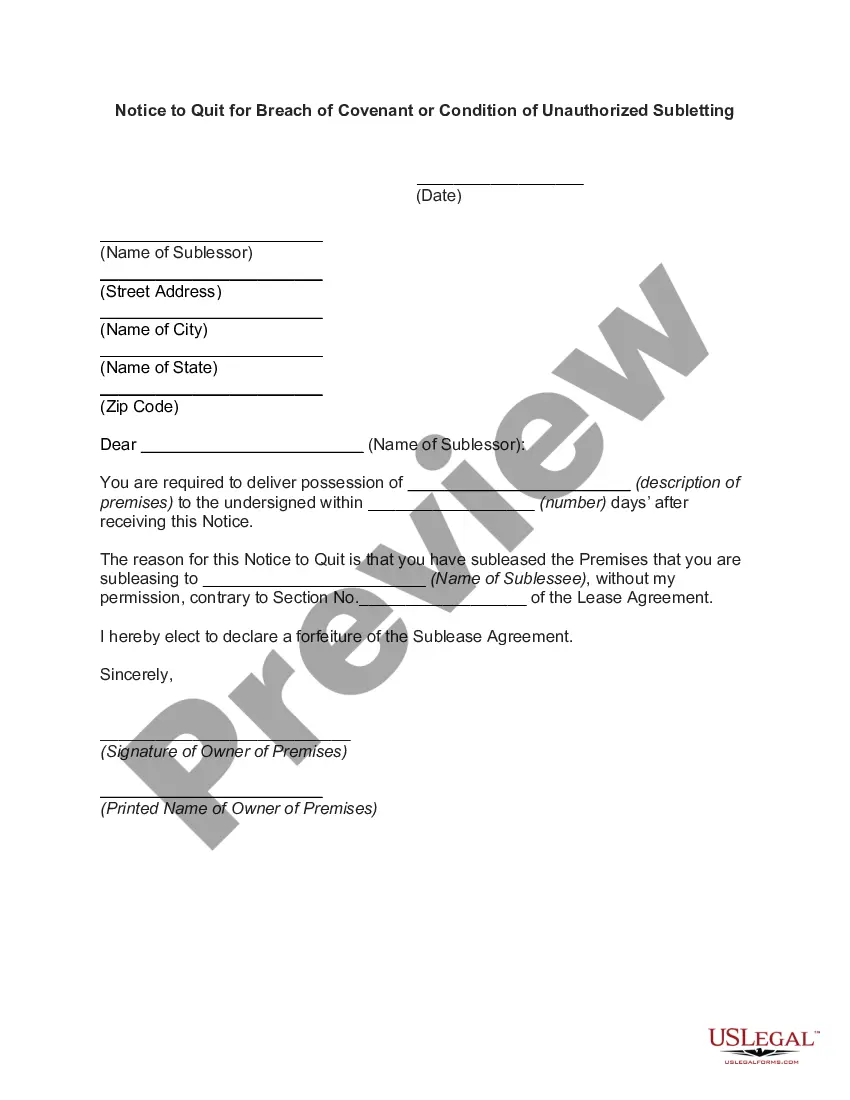
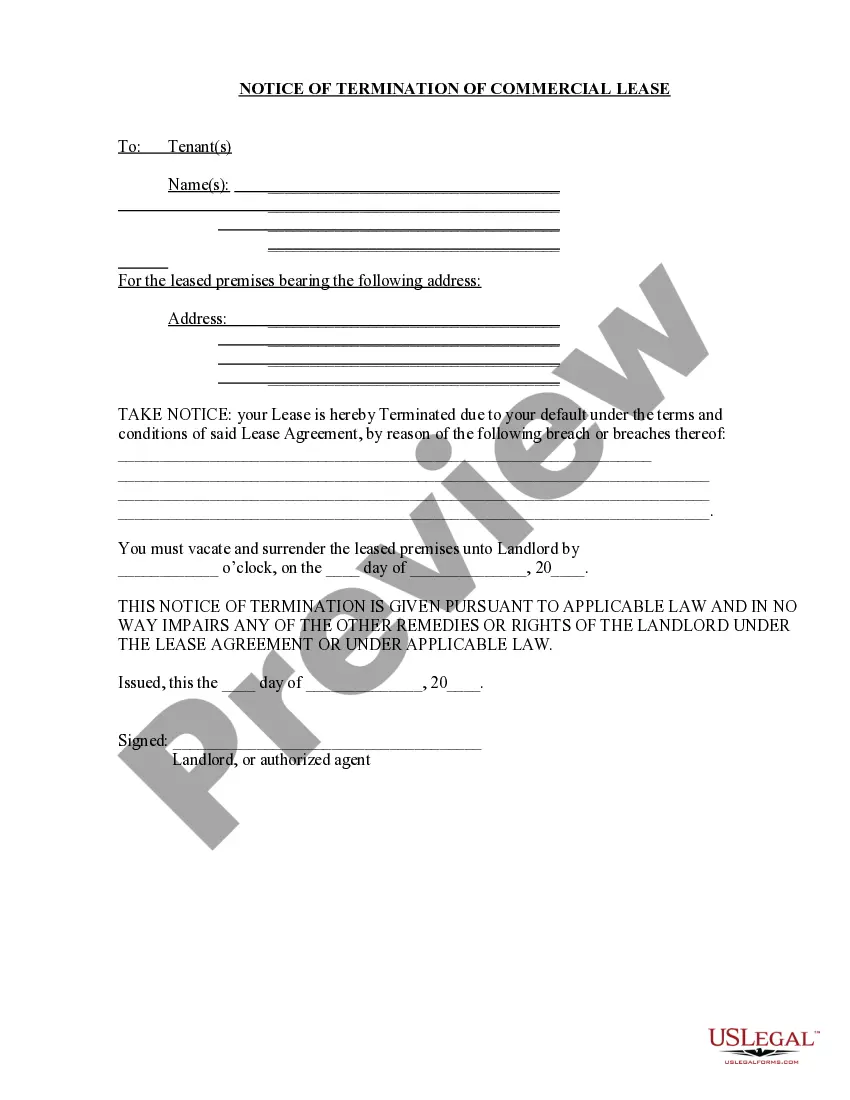
The Notice of Breach of Written Lease for Violating Specific Provisions of Lease with No Right to Cure for Nonresidential Property is a legal document that allows a landlord to formally notify a tenant of their breach of lease terms that cannot be corrected. Unlike other breach notices, this form emphasizes that the specific violations cannot be cured or remedied, which leads to immediate lease termination. It is designed specifically for non-residential leases, making it essential for landlords in commercial property situations.
What’s included in this form
- Addresses of the landlord and tenant, ensuring clarity on parties involved.
- Identification of the specific lease provision violated.
- Explanation of the reason for the breach.
- Notice of lease termination effective date, providing a clear vacate timeline.
- Signature section for the landlord or authorized agent.
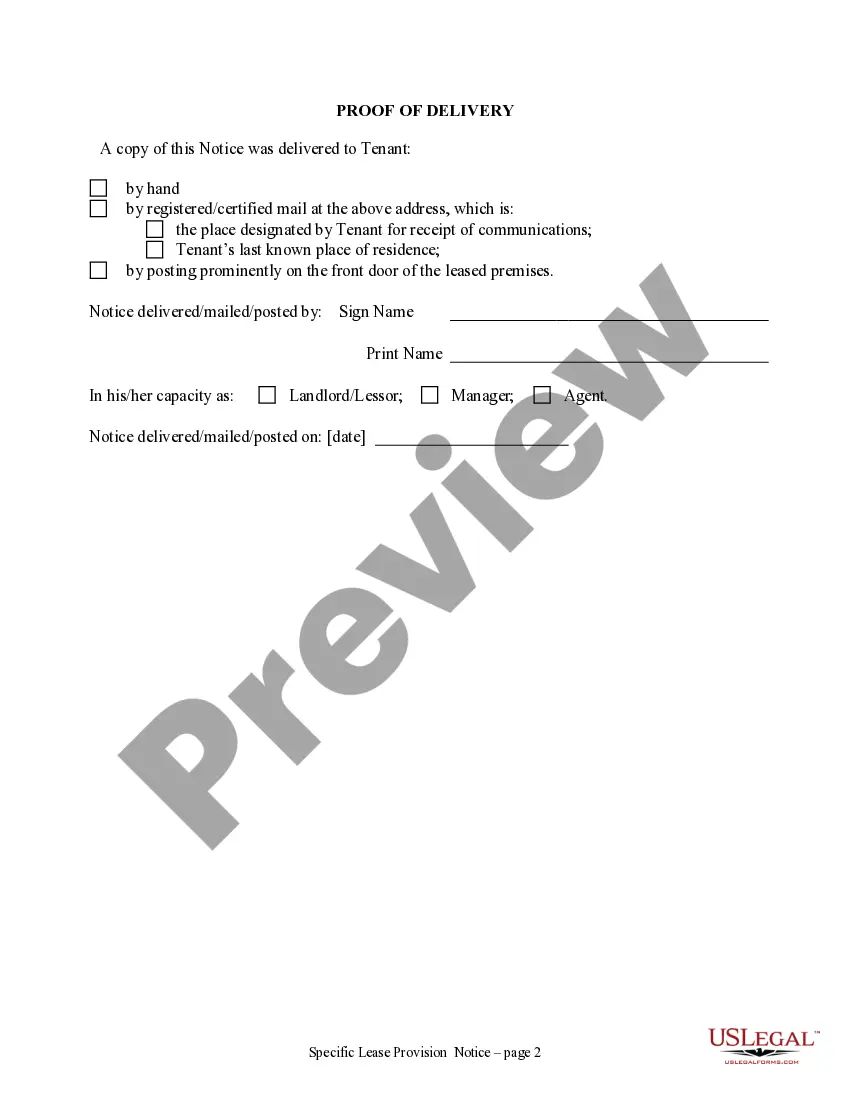
- Proof of delivery section, documenting how the notice was delivered to the tenant.


When this form is needed
This form should be used when a landlord needs to inform a tenant of a lease violation that is serious enough to warrant termination without any option for correction. Common scenarios include non-payment of rent, unauthorized alterations to the property, or violations of use restrictions that the lease expressly states are non-curable. This notice ensures that the landlord follows legal protocols to terminate the lease effectively.
Who should use this form
- Landlords of non-residential properties who need to address specific lease violations.
- Property managers acting on behalf of landlords.
- Business owners renting commercial space who are responsible for lease terms compliance.
How to prepare this document
- Identify the landlord and tenant by entering their respective names and addresses.
- Clearly specify the lease provision(s) that the tenant has violated.
- Provide a concise explanation of the breach and why it cannot be cured.
- Indicate the effective date of lease termination based on the notice period stipulated in the lease.
- Sign and date the form as the landlord or authorized agent.
- Complete the proof of delivery section to confirm how the notice was given to the tenant.
Notarization requirements for this form
In most cases, this form does not require notarization. However, some jurisdictions or signing circumstances might. US Legal Forms offers online notarization powered by Notarize, accessible 24/7 for a quick, remote process.
Get your form ready online
Our built-in tools help you complete, sign, share, and store your documents in one place.
Make edits, fill in missing information, and update formatting in US Legal Forms—just like you would in MS Word.
Download a copy, print it, send it by email, or mail it via USPS—whatever works best for your next step.
Sign and collect signatures with our SignNow integration. Send to multiple recipients, set reminders, and more. Go Premium to unlock E-Sign.
If this form requires notarization, complete it online through a secure video call—no need to meet a notary in person or wait for an appointment.
We protect your documents and personal data by following strict security and privacy standards.

Make edits, fill in missing information, and update formatting in US Legal Forms—just like you would in MS Word.

Download a copy, print it, send it by email, or mail it via USPS—whatever works best for your next step.

Sign and collect signatures with our SignNow integration. Send to multiple recipients, set reminders, and more. Go Premium to unlock E-Sign.

If this form requires notarization, complete it online through a secure video call—no need to meet a notary in person or wait for an appointment.

We protect your documents and personal data by following strict security and privacy standards.
Mistakes to watch out for
- Failing to specify the exact lease provision that has been breached.
- Not providing a clear explanation for the breach.
- Overlooking the required notice period before lease termination.
- Not signing the form before delivering it to the tenant.
- Neglecting to complete the proof of delivery section accurately.
Why use this form online
- Convenience of downloading and completing the form at your own pace.
- Editable templates that allow for customization to fit your specific situation.
- Forms drafted by licensed attorneys ensuring legal compliance and reliability.
Legal use & context
This form serves as a crucial element in ensuring landlords are following legal procedures for lease enforcement. Failing to use such a form can lead to disputes and potential legal consequences, as tenants may argue that they were not properly notified of lease violations.
Looking for another form?

Form popularity
FAQ
Missouri law 441.060 addresses lease agreements, specifically regarding breaches and the rights of tenants and landlords. This law outlines the procedure for issuing a Missouri Notice of Breach of Written Lease for Violating Specific Provisions of Lease with No Right to Cure for Nonresidential Property from Landlord to Tenant. Understanding this law is crucial, as it can guide you on how to address lease violations and enforce your rights. For detailed assistance, consider using resources available on the uslegalforms platform.
When a landlord breaches a lease, first review your lease agreement to understand your rights and responsibilities. You may send a Missouri Notice of Breach of Written Lease for Violating Specific Provisions of Lease with No Right to Cure for Nonresidential Property from Landlord to Tenant, outlining the specific violations. This formal notification can help resolve the issue amicably or serve as evidence if you need to take legal action. Keeping thorough records will support your case if further steps are necessary.
If you encounter a breach of lease, you have several options. You can issue a Missouri Notice of Breach of Written Lease for Violating Specific Provisions of Lease with No Right to Cure for Nonresidential Property from Landlord to Tenant, informing the landlord of the violation. Additionally, you may seek to terminate the lease or pursue damages through the courts. It’s essential to document the breach and consider consulting a legal expert to explore your best course of action.
A lease is automatically void when it is against the law, such as a lease for an illegal purpose. In other circumstances, like fraud or duress, a lease can be declared void at the request of one party but not the other.
When Breaking a Lease is Not Legally Justified in the State of Missouri. Generally, if you break your lease early, you are required to continue paying the remaining rent until the lease period ends.
In many cases, the lease may give the tenant the option to pay an early termination fee. If this is the case, tenants can expect to pay one to two months' rent in order to exit the lease agreement.
A tenant must pay the rent up to and including the day their termination notice period ends and they vacate the property. If a tenant does not owe the landlord money at the end of their tenancy and there is no damage to the property, the bond paid at the beginning of the tenancy should be refunded in full.
In some circumstances, a tenant can break a fixed-term agreement early without penalty. A tenant can give 14 days' written notice to end an agreement early without penalty if: they have accepted an offer of social housing (e.g. from DCJ Housing)
If a tenant fails to pay rent, breaks a rule, or significantly damages the property, then it is considered breach of contract and you have grounds for eviction. If there are people living in the unit that are not on the lease, then that is also breach of contract and you have grounds to evict them.
If a resident fails to abide by the agreed-upon terms, legal action can be taken. If an eviction is the end-result of this action, it will stay listed on the resident's record for up to seven years. The most common reason evictions are requested involves failure to pay rent.