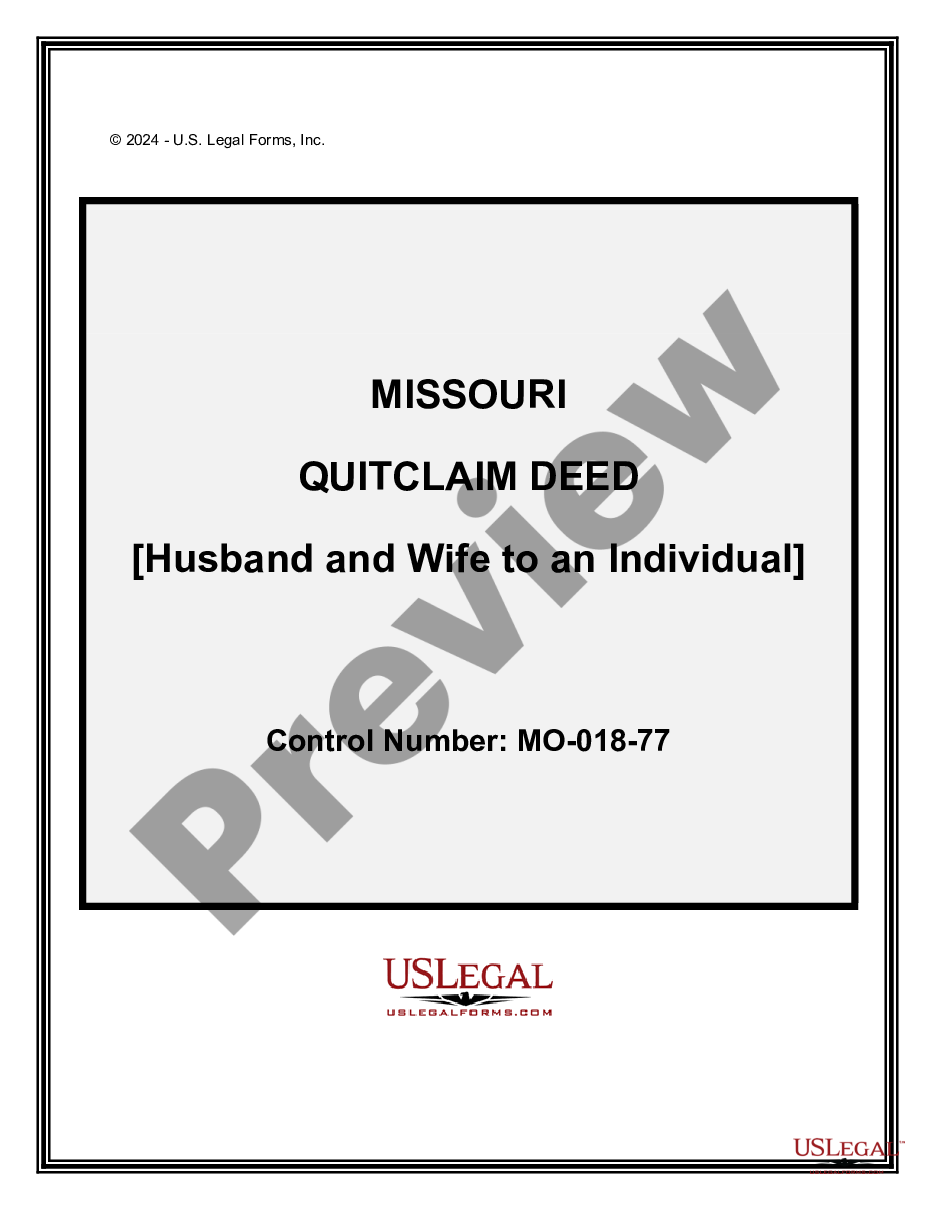
Missouri Quitclaim Deed from Husband and Wife to an Individual
About this form
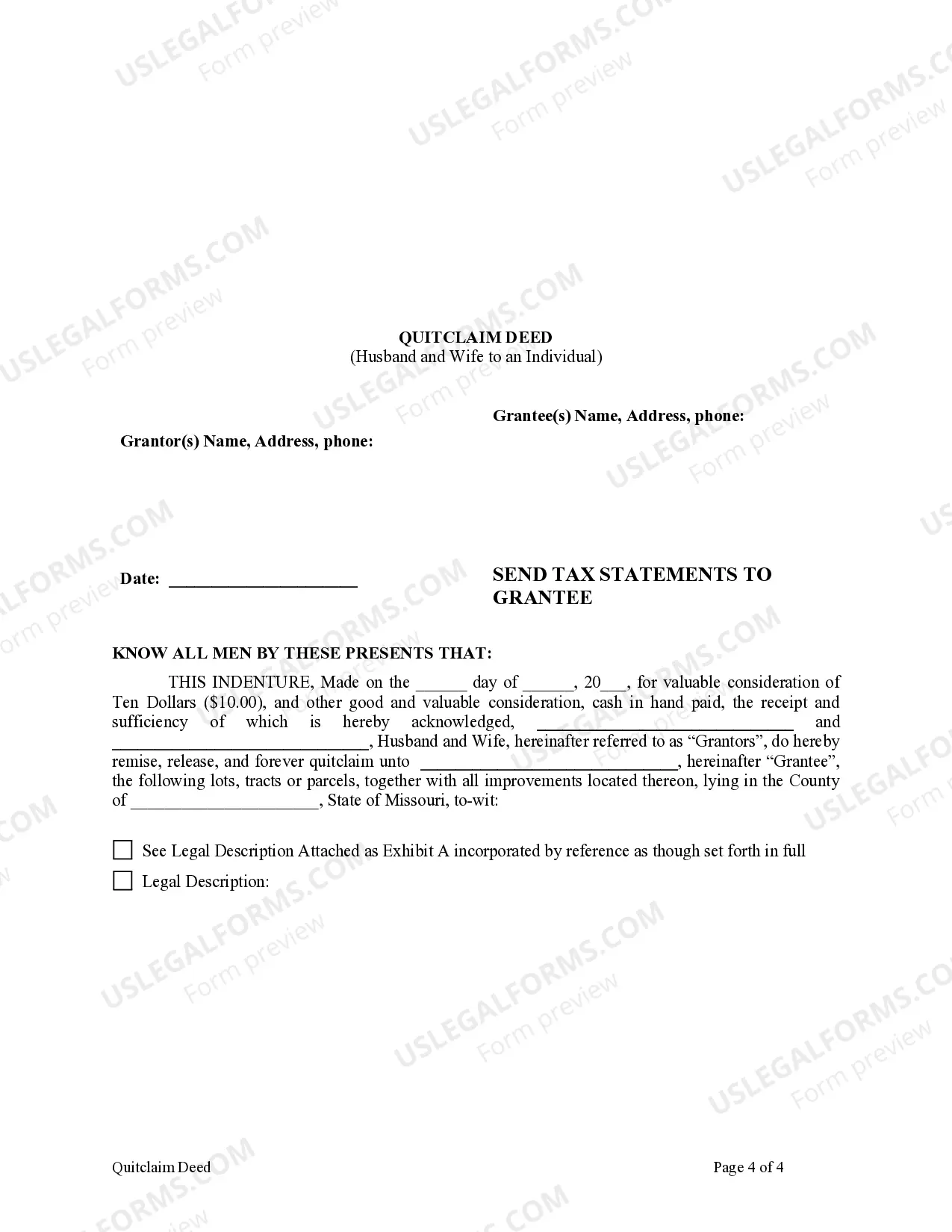
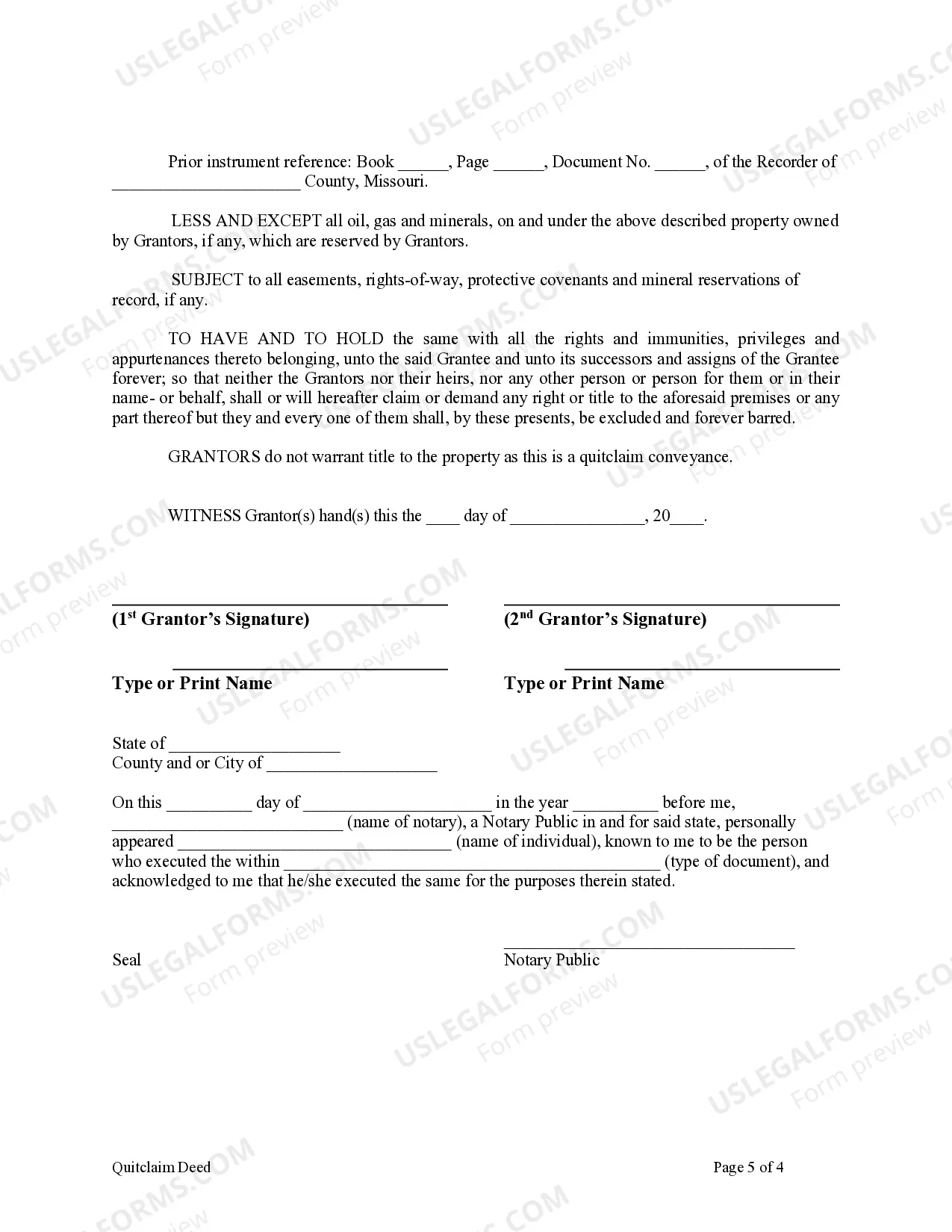
The Quitclaim Deed from Husband and Wife to an Individual is a legal document that allows a married couple to transfer their ownership interest in a property to a single individual. This type of deed is often used when a property is being given as a gift or sold between family members, or during a divorce settlement. Unlike a warranty deed, a quitclaim deed does not guarantee that the grantors hold clear title, making it essential to understand its implications before use.
Key components of this form
- Grantors and Grantee Information: Names and details of the husband and wife transferring the property and the individual receiving it.
- Property Description: A precise description of the property being transferred to ensure clear identification.
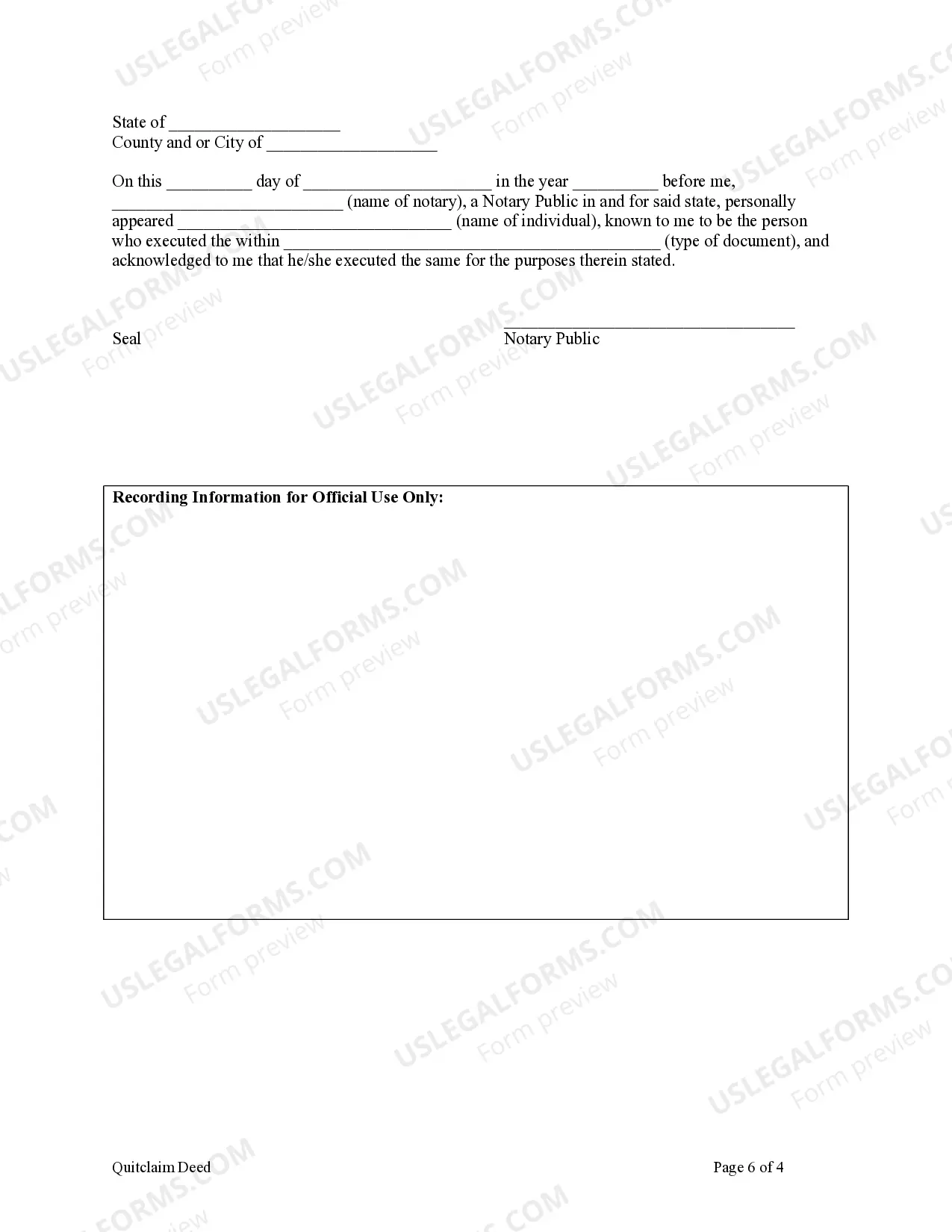
- Reservation Clause: Clarifies that all oil, gas, and mineral rights are retained by the grantors.
- Notary Section: Space for notarization to verify the identities of the signers and the legal execution of the deed.
- Exhibit A: Additional details or legal descriptions affecting the property or conditions related to the deed.








When to use this document
This form is useful in several scenarios, including transferring property ownership between relatives, handling property distribution during divorce settlements, or giving property as a gift. Because it does not provide warranties, it is typically used when the parties know each other and trust that the grantors have the right to convey the property, but the grantee should conduct due diligence regarding the title.
Who can use this document
This form is intended for:
- Married couples wishing to transfer property to another individual.
- Individuals involved in property-related agreements with family members.
- Those looking to simplify property transfers without involving lawyers for complex title guarantees.
Completing this form step by step
- Identify the parties involved: Fill in the names of the husband and wife as the grantors and the individual as the grantee.
- Specify the property: Provide a detailed description of the property being conveyed, including its address and any legal identifiers.
- Complete the reservation clause: Confirm that all oil, gas, and mineral rights are being retained by the grantors.
- Include notarization: Ensure the document is signed in the presence of a notary public for verification.
- Attach Exhibit A: Include any additional details necessary for the full legal description of the property.
Is notarization required?
Yes, this form must be notarized to be legally valid. The notary public will verify the identities of the signers and the execution of the document. U.S. Legal Forms offers an integrated online notarization service with secure video calls available 24/7.
Get your form ready online
Our built-in tools help you complete, sign, share, and store your documents in one place.
Make edits, fill in missing information, and update formatting in US Legal Forms—just like you would in MS Word.
Download a copy, print it, send it by email, or mail it via USPS—whatever works best for your next step.
Sign and collect signatures with our SignNow integration. Send to multiple recipients, set reminders, and more. Go Premium to unlock E-Sign.
If this form requires notarization, complete it online through a secure video call—no need to meet a notary in person or wait for an appointment.
We protect your documents and personal data by following strict security and privacy standards.

Make edits, fill in missing information, and update formatting in US Legal Forms—just like you would in MS Word.

Download a copy, print it, send it by email, or mail it via USPS—whatever works best for your next step.

Sign and collect signatures with our SignNow integration. Send to multiple recipients, set reminders, and more. Go Premium to unlock E-Sign.

If this form requires notarization, complete it online through a secure video call—no need to meet a notary in person or wait for an appointment.

We protect your documents and personal data by following strict security and privacy standards.
Mistakes to watch out for
- Failing to provide a complete property description can lead to confusion or disputes.
- Not having the deed notarized, which could affect its legal standing.
- Omitting the reservation clause, leading to unintended loss of rights to minerals or resources beneath the property.
Benefits of using this form online
- Convenience: Download and complete the form at your own pace from anywhere.
- Editability: Easily fill out the form digitally, ensuring accuracy and clarity.
- Reliability: Forms are created based on current legal standards and backed by legal professionals.
Looking for another form?
Form popularity
FAQ
A Missouri Quitclaim Deed from Husband and Wife to an Individual must include specific information to be valid. It should contain the names of the grantors and grantees, a legal description of the property, and the signature of the grantors. Furthermore, notarization is typically required to ensure the deed is legally binding. Utilizing platforms like USLegalForms can help you ensure that all necessary elements are included for a successful transfer.
While a Missouri Quitclaim Deed from Husband and Wife to an Individual can simplify the transfer of property, it does come with some downsides. One significant concern is that this type of deed does not guarantee clear title; it merely transfers whatever interest the grantors have. Additionally, if there are existing liens or claims against the property, the new owner may inherit those issues. Understanding these risks is essential before proceeding with a quitclaim deed.
Yes, you can prepare your own Missouri Quitclaim Deed from Husband and Wife to an Individual. However, it is important to ensure that the deed meets all legal requirements to be valid. You can find templates and resources online, including those offered by USLegalForms, which can guide you through the preparation process. Taking the time to create a properly formatted deed can help avoid potential issues in the future.
When a spouse signs a Missouri Quitclaim Deed from Husband and Wife to an Individual, they effectively transfer their interest in the property to the individual named in the deed. However, this does not automatically eliminate their rights to the property unless explicitly stated. It is important to understand the implications of such a deed, as it may affect future claims or rights to the property. Consulting a legal expert or using services like US Legal Forms can provide clarity and guide you through the process.
A quitclaim deed is a deed (proof of ownership) that is passed from a grantor (the existing property owner) to a grantee (the new property owner) that does not have a warranty.A quitclaim deed has no guarantees for the grantor or grantee.
A person who signs a quitclaim deed to transfer property they do not own results in no title at all being transferred since there is no actual ownership interest. The quitclaim deed only transfers the type of title you own.
A quitclaim deed affects ownership and the name on the deed, not the mortgage. Because quitclaim deeds expose the grantee to certain risks, they are most often used between family members and where there is no exchange of money.Quitclaim deeds transfer title but do not affect mortgages.
The title of the document. The date of the transfer. All grantors' names. Any grantees' names. Statutory addresses. A legal description for the property. References to the page numbers of the reference books, if applicable.
Recording fees for quitclaim deeds vary among counties. In Clay County and Platte County, the fee is $24 for the first page and $3 for each additional page.
To use a Quitclaim Deed to add someone to a property deed or title, you would need to create a Quitclaim Deed and list all of the current owners in the grantor section. In the grantee section, you would list all of the current owners as well as the person you would like to add.