Minnesota Mutual Wills Package with Last Wills and Testaments for Married Couple with Adult and Minor Children
About this form
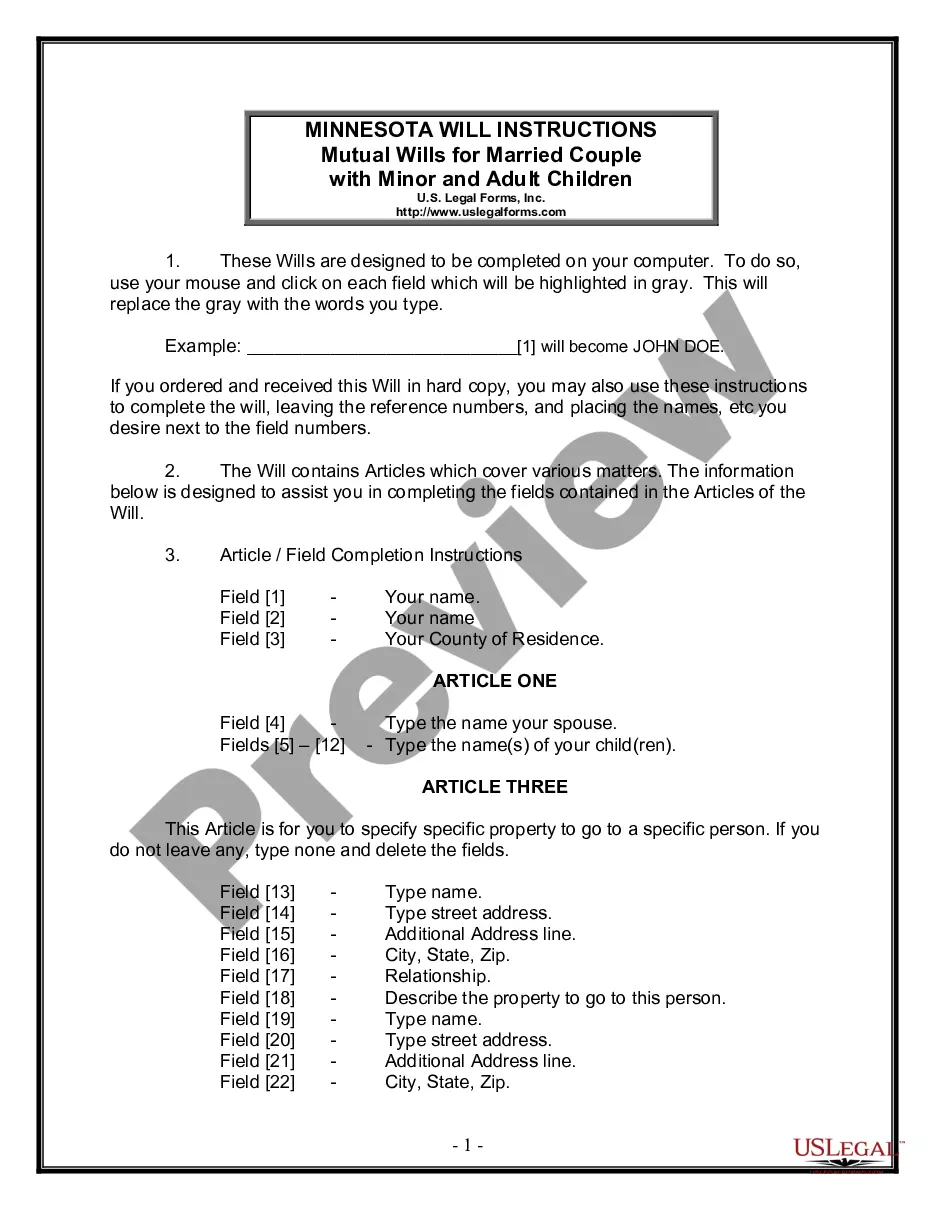
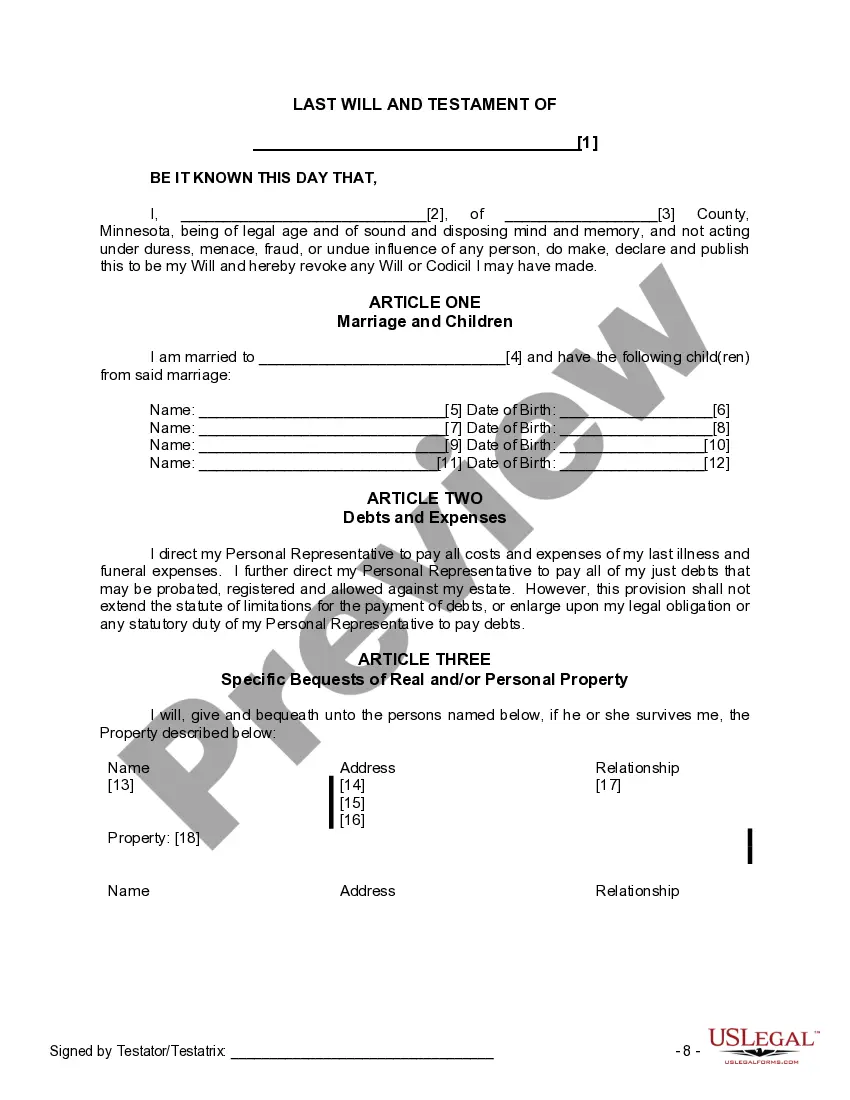
The Mutual Wills Package with Last Wills and Testaments is specifically designed for a married couple with both minor and adult children. This package contains two distinct wills, each tailored for one spouse, ensuring that each individual can appoint a personal representative, designate beneficiaries, and set forth other critical provisions related to their estate. Unlike individual wills, this mutual package allows for coordinated estate planning that takes into account the needs of children and spouses, thereby providing structured support for both adult and minor children.
Key components of this form
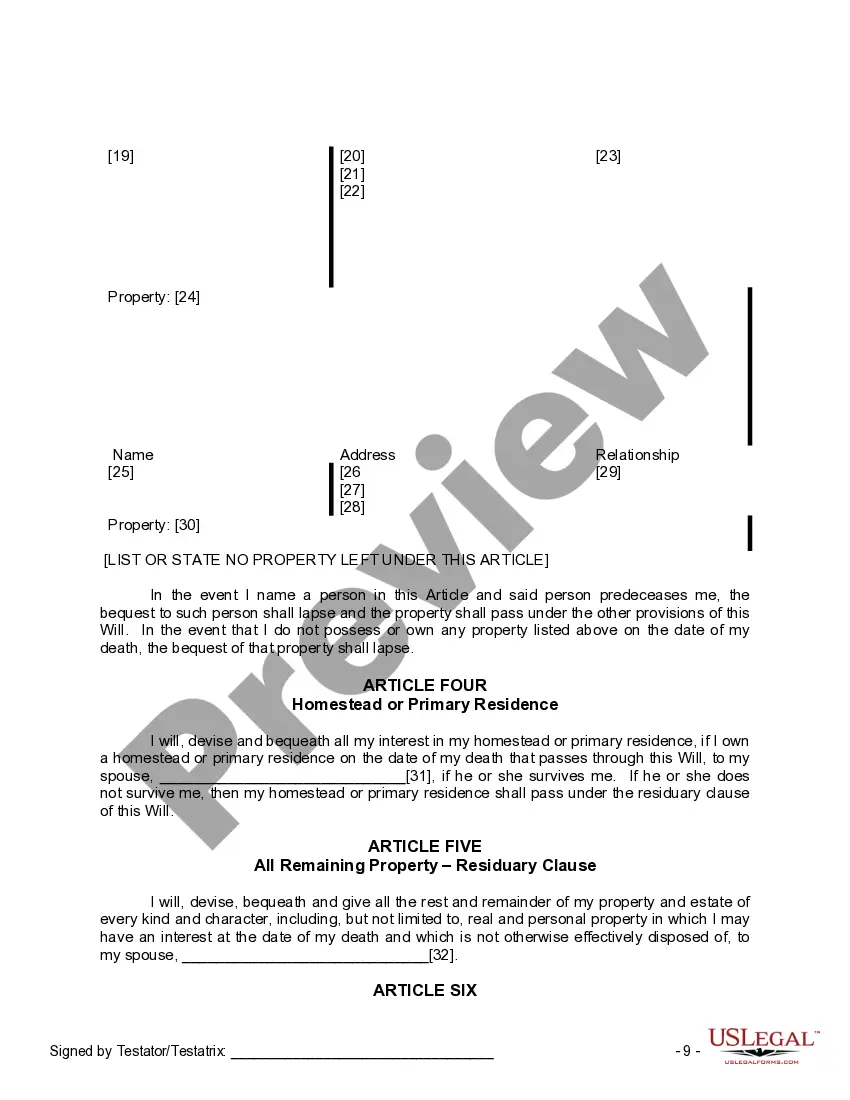
- Appointment of a personal representative or executor for each spouse.
- Specific directives for property distribution to beneficiaries.
- Establishment of a trust for any minor childrenâs inheritance.
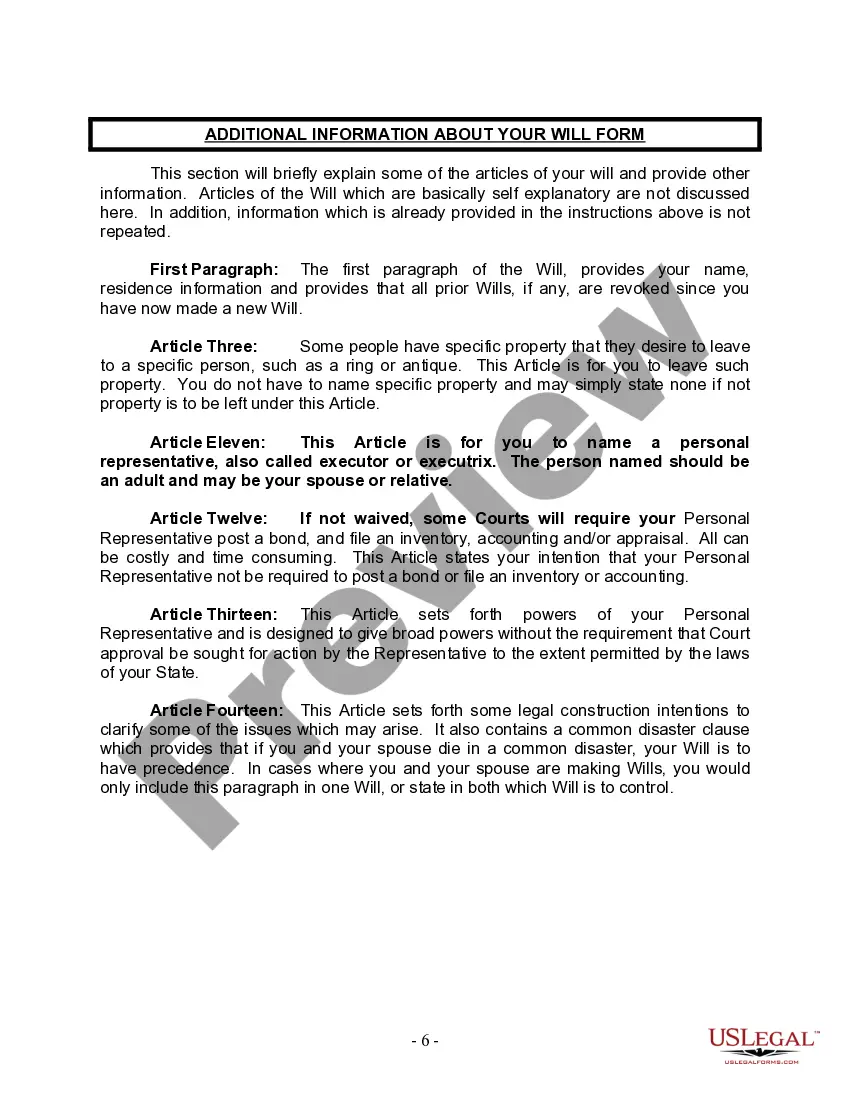
- Provisions to appoint a guardian for minor children.
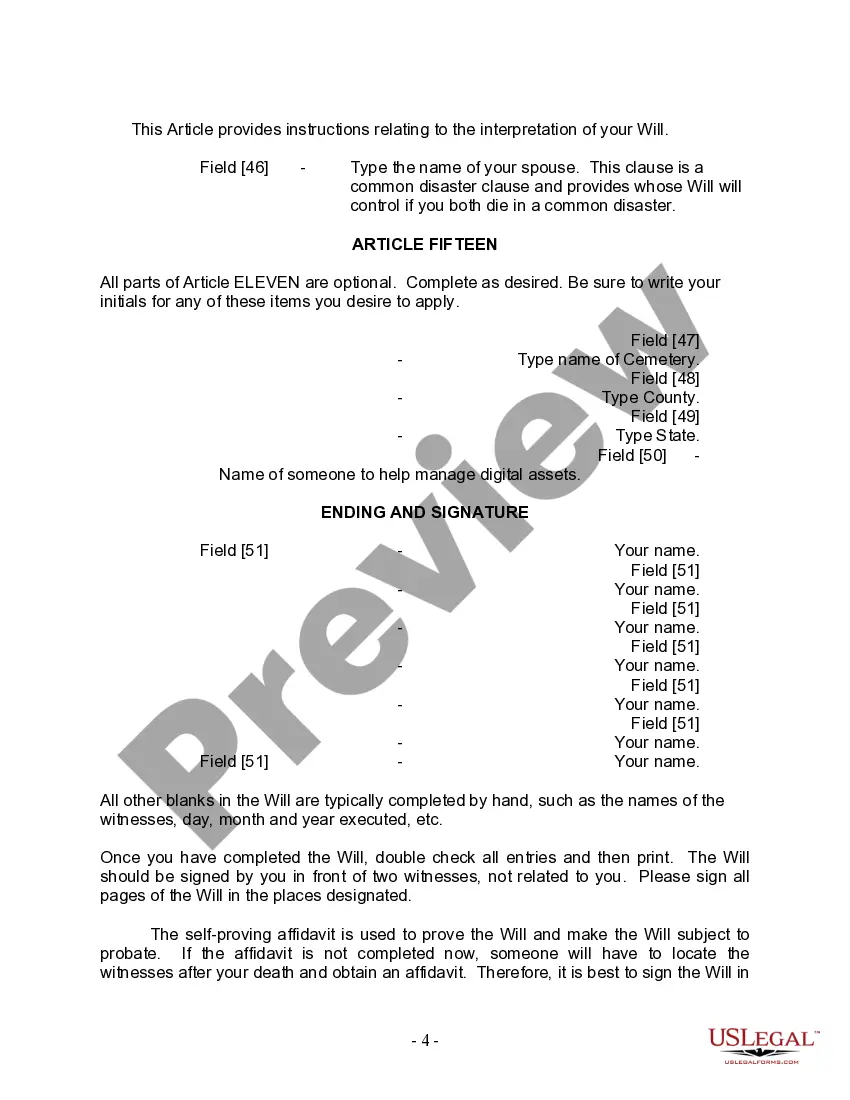
- Instructions on signing and witnessing the wills, including any self-proving affidavit requirements.





When this form is needed
This Mutual Wills Package is ideal in several situations, including when both spouses want to ensure their assets are distributed according to mutual wishes upon death. It is particularly relevant for couples who have minor children and wish to secure their financial future by providing for their education and welfare through trusts. It can also be useful for spouses who want to affirm their shared intentions in estate planning, ensuring clarity and reducing the potential for disputes among heirs.
Who can use this document
- Married couples with both minor and adult children.
- Couples looking for a structured approach to estate planning.
- Parents wanting to ensure their children's financial security after their passing.
- Individuals desiring to coordinate their wills to reflect mutual intent.
- Couples who wish to simplify the probate process for their heirs.
Completing this form step by step
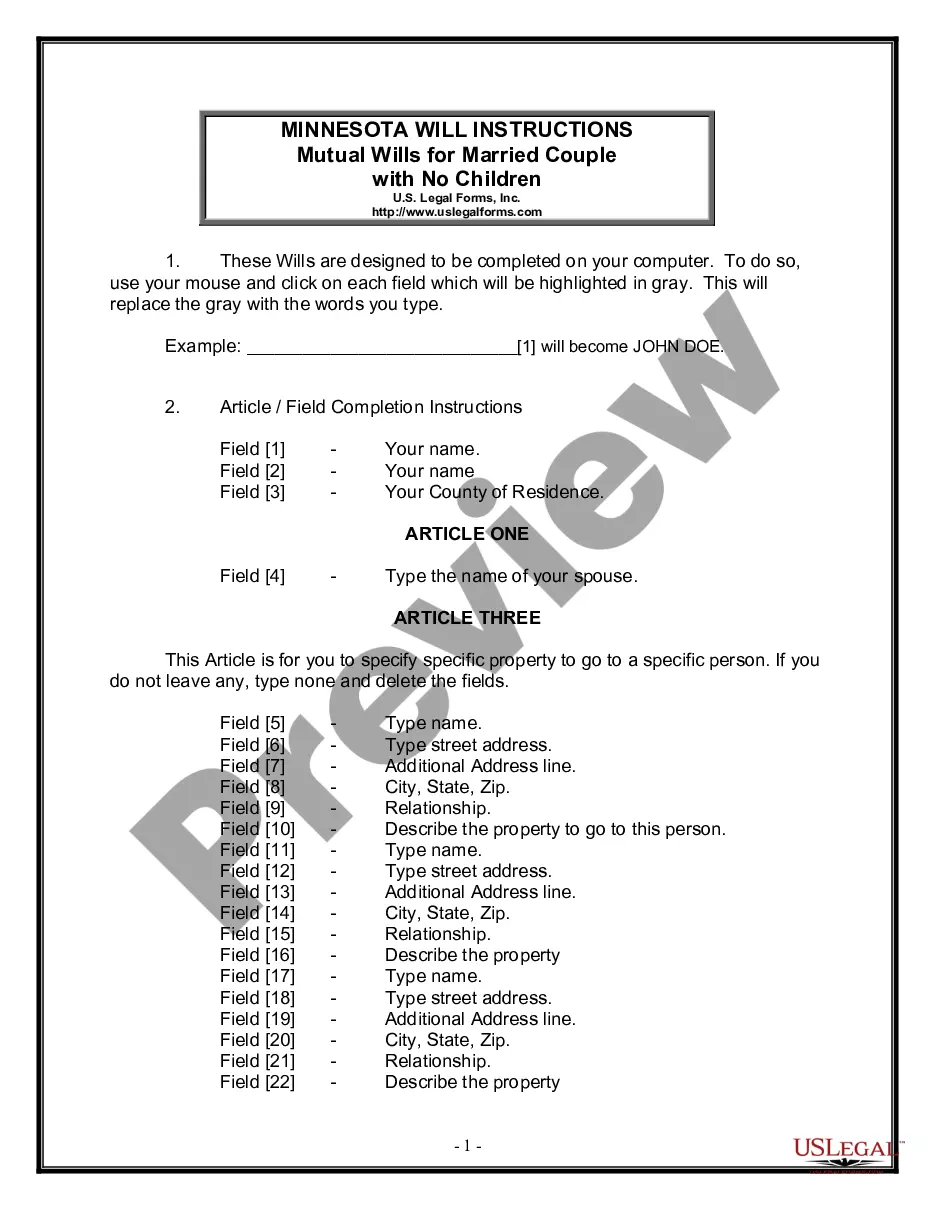
- Start by entering your name and county of residence at the top of each will.
- Designate your spouse and list your childrenâs names along with their dates of birth.
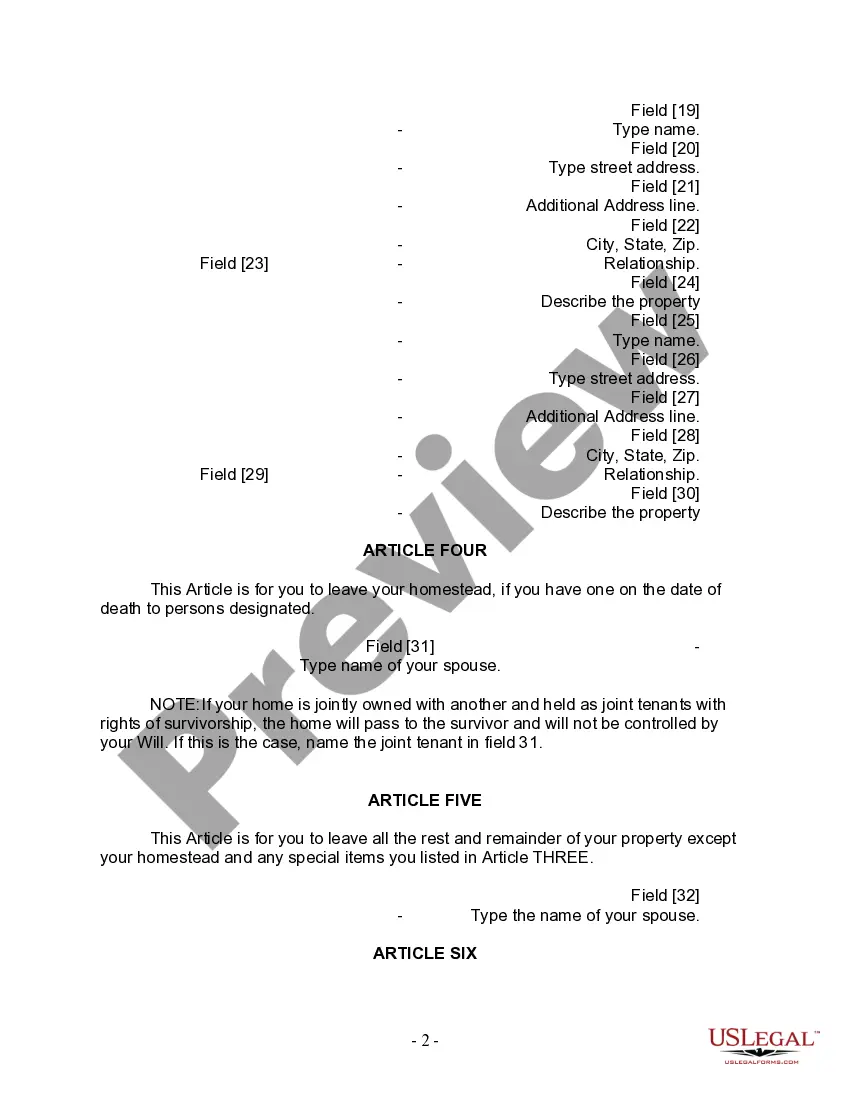
- Specify any individual property you wish to leave to certain individuals in the designated sections.
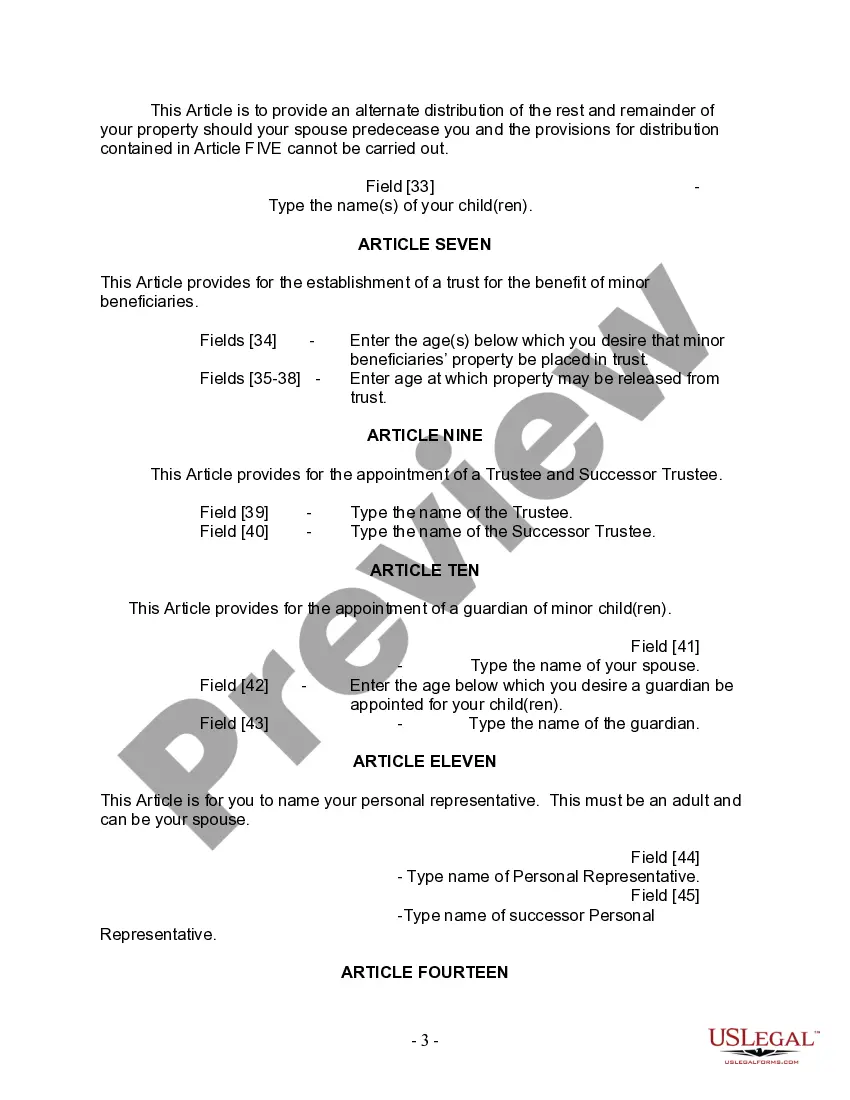
- Fill out details for any trusts for minor children, including ages and conditions for distribution.
- Complete the fields related to guardianship for your minor children and appoint a trustee if necessary.
- After reviewing for accuracy, sign the wills in front of two witnesses and, if applicable, a notary public.
Does this document require notarization?
Yes, this form must be notarized to be legally valid. The package includes provisions for a self-proving affidavit, which requires the signature of a notary public along with the signatures of the witnesses. This process simplifies the probate procedure, allowing the will to be accepted without further testimony of the witnesses, ensuring smoother administration of the estate.
Get your form ready online
Our built-in tools help you complete, sign, share, and store your documents in one place.
Make edits, fill in missing information, and update formatting in US Legal Forms—just like you would in MS Word.
Download a copy, print it, send it by email, or mail it via USPS—whatever works best for your next step.
Sign and collect signatures with our SignNow integration. Send to multiple recipients, set reminders, and more. Go Premium to unlock E-Sign.
If this form requires notarization, complete it online through a secure video call—no need to meet a notary in person or wait for an appointment.
We protect your documents and personal data by following strict security and privacy standards.
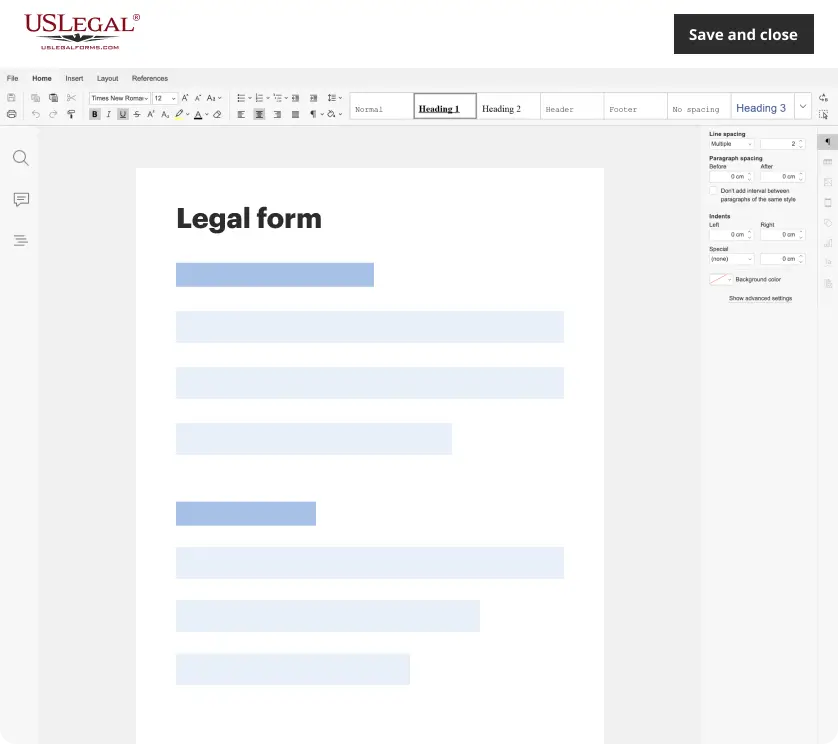
Make edits, fill in missing information, and update formatting in US Legal Forms—just like you would in MS Word.
Download a copy, print it, send it by email, or mail it via USPS—whatever works best for your next step.
Sign and collect signatures with our SignNow integration. Send to multiple recipients, set reminders, and more. Go Premium to unlock E-Sign.

If this form requires notarization, complete it online through a secure video call—no need to meet a notary in person or wait for an appointment.

We protect your documents and personal data by following strict security and privacy standards.
Common mistakes to avoid
- Not having the wills signed in front of the required number of witnesses.
- Failing to appoint a guardian for minor children.
- Leaving out specific property instructions, leading to confusion later on.
- Not updating the wills after major life changes, such as divorce or the birth of additional children.
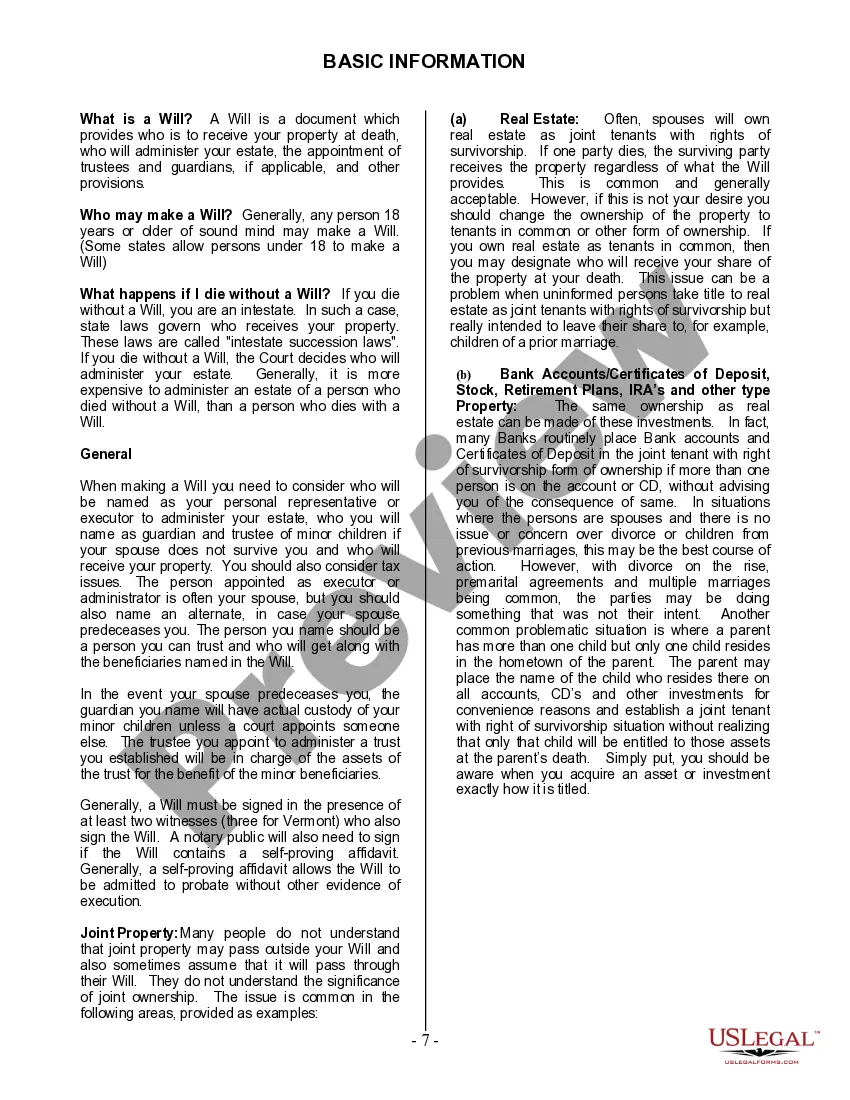
- Assuming joint property will pass according to the will without considering survivorship rules.
Benefits of completing this form online
- Easy to customize according to individual needs and family situations.
- Available for download, allowing immediate access and convenience.
- Drafted by licensed attorneys, ensuring the documents meet legal standards.
Looking for another form?

Form popularity
FAQ
Yes, you can write your own will in Minnesota and have it notarized, provided it meets the state's legal requirements. However, using the Minnesota Mutual Wills Package with Last Wills and Testaments for Married Couple with Adult and Minor Children can help you create a will that is complete and compliant with the law. This package guides you through the necessary steps to ensure your will is valid and reflects your intentions. By following these guidelines, you can avoid potential disputes or issues in the future.
While married couples can have separate wills, it is often beneficial to have a joint will or a mutual will. The Minnesota Mutual Wills Package with Last Wills and Testaments for Married Couple with Adult and Minor Children is designed to accommodate both spouses' wishes in a cohesive document. This approach can ease the planning process and ensure that all aspects of your estate are managed together. Ultimately, the choice depends on your individual circumstances and preferences.
In Minnesota, you do not need a lawyer to create a will, but having one can provide valuable guidance. The Minnesota Mutual Wills Package with Last Wills and Testaments for Married Couple with Adult and Minor Children offers a comprehensive solution that simplifies the process. Using this package, you can ensure your wishes are clearly stated and legally binding. However, consulting a lawyer can help address any specific concerns or complexities in your situation.
Minnesota abolished common law marriage in 1941. In Minnesota a couple is legally married or just living together. Minnesota does, however, recognize common law marriages that were legally created outside of this state.Couples living outside of legal marriage do not have that same benefit.
There's no restriction on being married and filing jointly with different state residences. As long as you and your spouse are married on the last day of the year, the IRS counts you as married for all 12 months. If, say, your divorce becomes final December 31, you file as single for the entire year.
Common-law marriage is a marriage in which there is no license issued by a governmental agency, there is no marriage certificate filed with the government, and there is no solemnization of the marriage in the presence of witnesses.
A common law marriage is one in which the couple lives together for a period of time and holds themselves out to friends, family and the community as "being married," but without ever going through a formal ceremony or getting a marriage license.
The Minnesota marriage credit is designed to reduce the marriage tax penalty under Minnesota's income tax paid by some two-earner married couples without providing or increasing marriage bonuses to other married couples.
The standard deduction amounts will increase to $12,400 for individuals and married couples filing separately, $18,650 for heads of household, and $24,800 for married couples filing jointly and surviving spouses. For 2020, the additional standard deduction amount for the aged or the blind is $1,300.
Minnesota abolished common law marriage in 1941. In Minnesota a couple is legally married or just living together. Minnesota does, however, recognize common law marriages that were legally created outside of this state.Couples living outside of legal marriage do not have that same benefit.