Minnesota Last Will and Testament for Divorced Person Not Remarried with Adult and Minor Children
Overview of this form
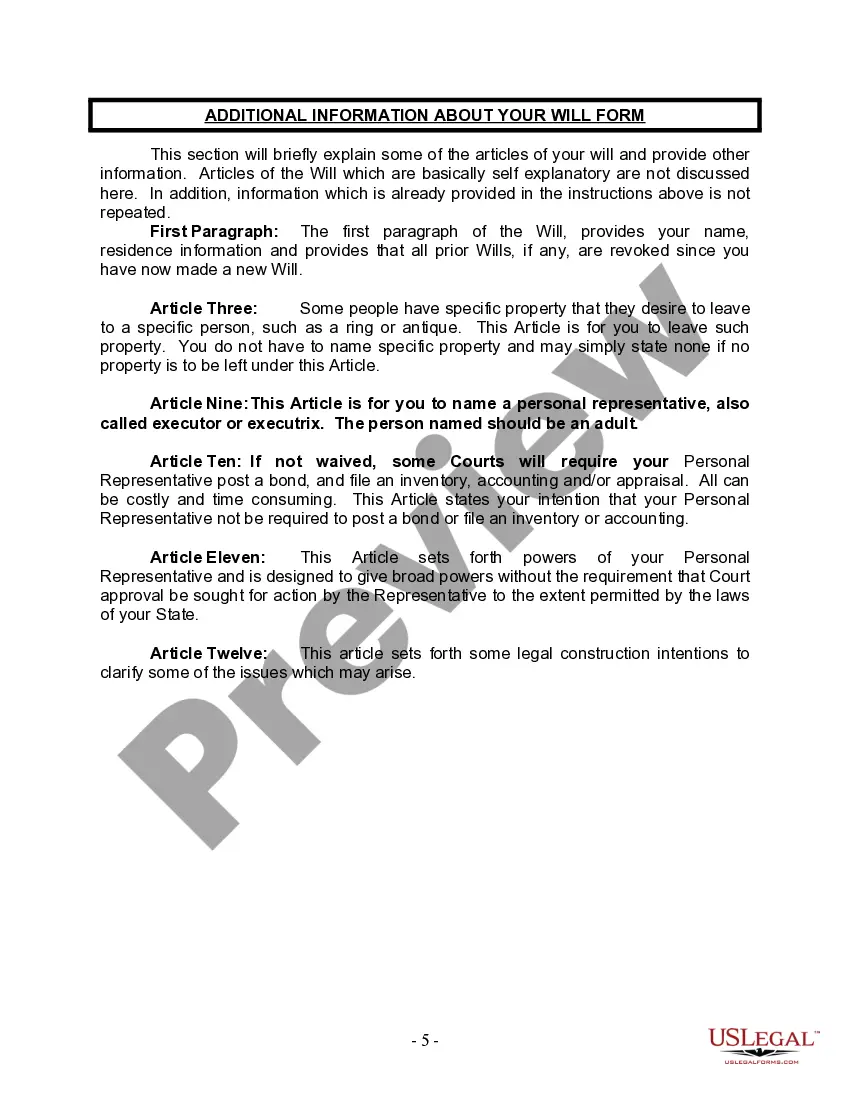
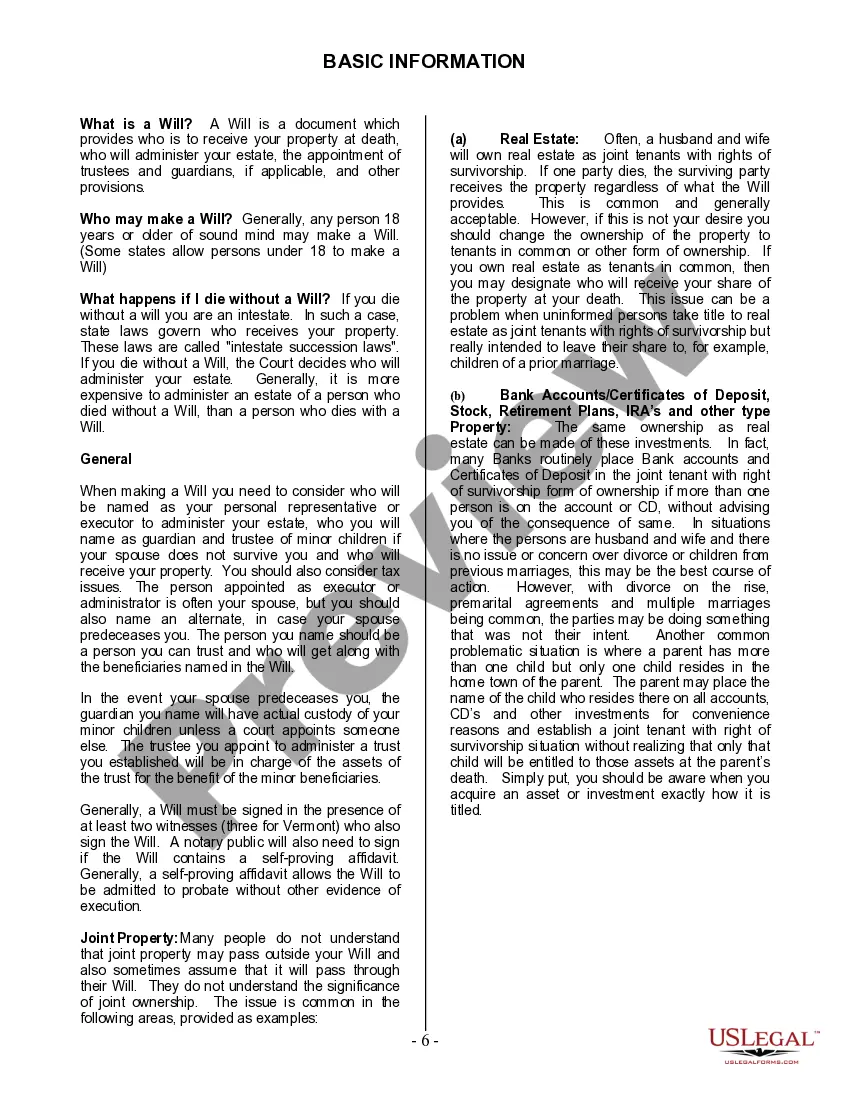
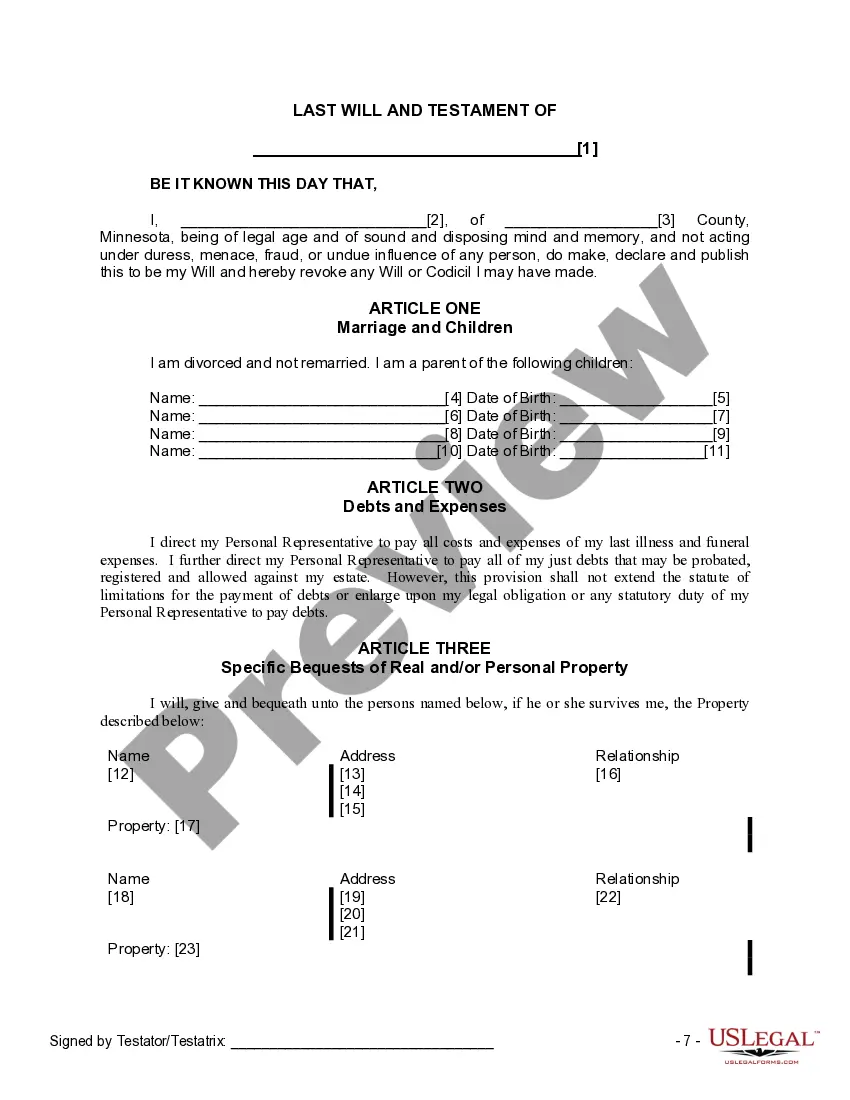
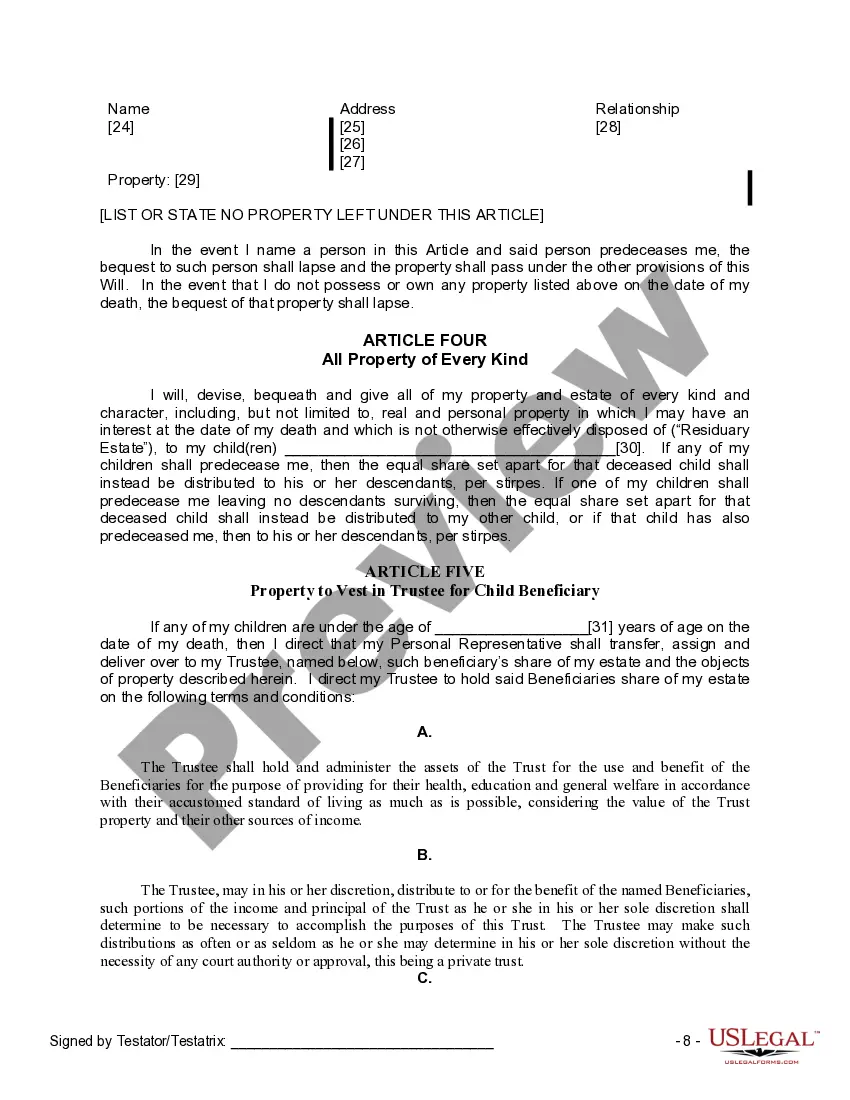
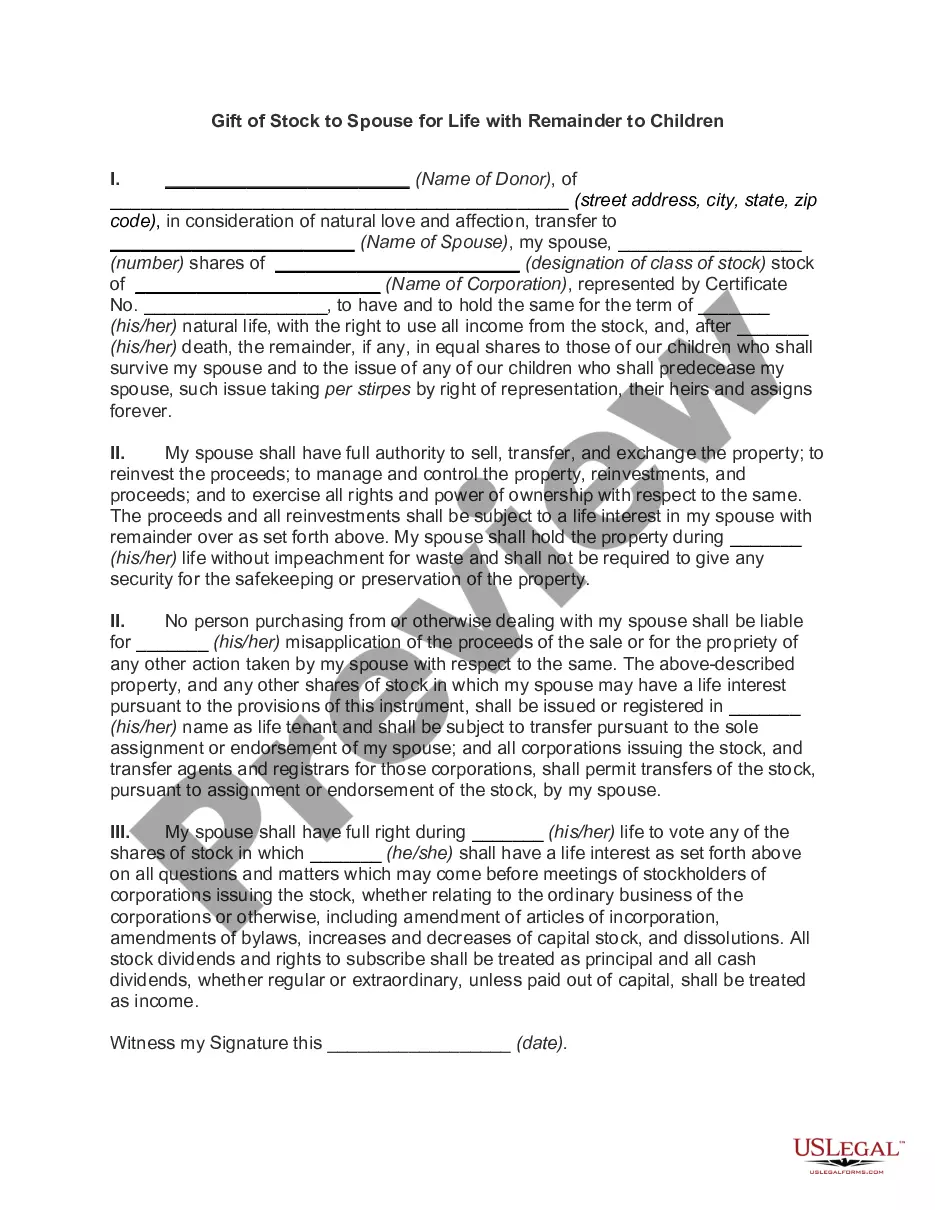
This Last Will and Testament is specifically designed for a divorced person who has not remarried and has both adult and minor children. This legal document lays out your wishes regarding the distribution of your property after death, appoints a personal representative or executor for your estate, and establishes a trust for your minor children to ensure their financial security until they reach adulthood. This will differs from general wills by addressing the unique needs of divorced individuals with dependent children, ensuring both adult and minor children are considered in your estate planning.
Main sections of this form
- Appointment of a personal representative to manage your estate.
- Detailed instructions for the distribution of property among both minor and adult children.
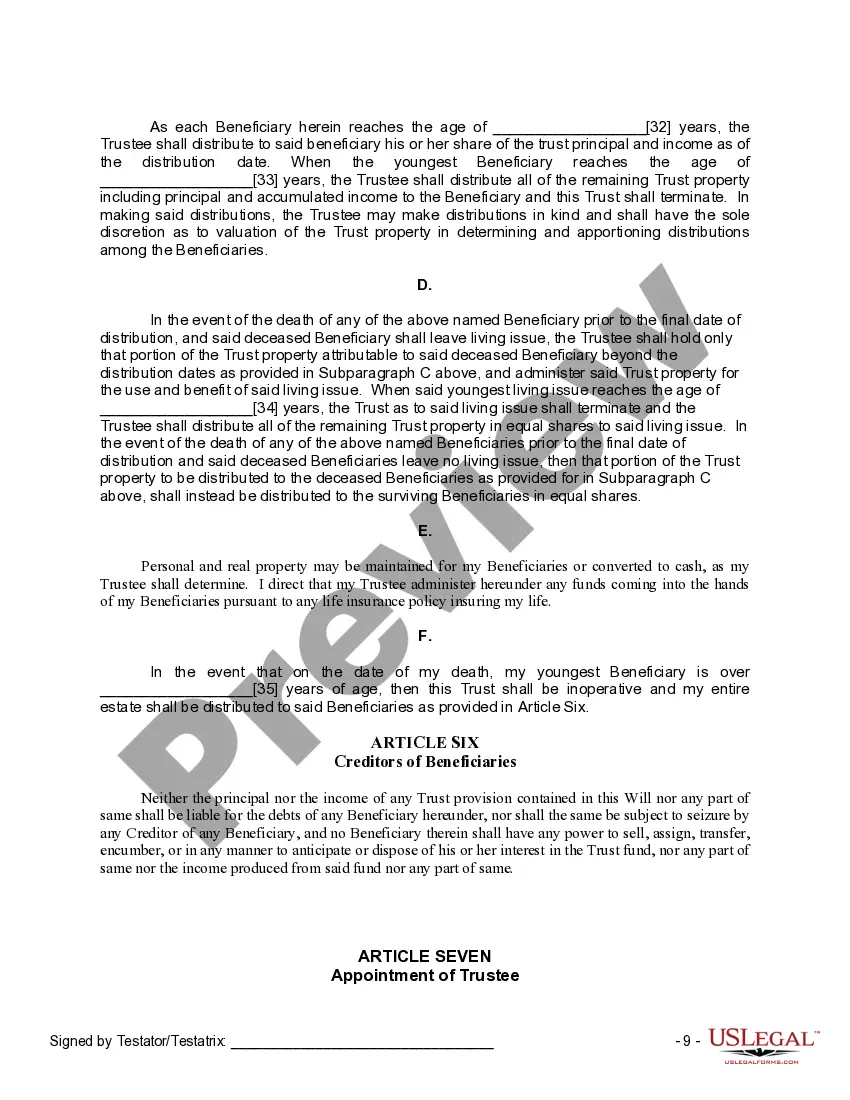
- Establishment of a trust for minor children, specifying terms for fund distribution as they grow.
- Specification of guardianship for minor children if necessary.
- Options for handling debts and funeral expenses of the estate.
- Legal formalities required for proper execution, including witness signatures and possible notarization.




When to use this form
This form should be used when a divorced individual, who has not entered a new marriage, wishes to create a will that clearly defines how their assets will be divided after their death. It is essential when you have both minor and adult children and want to ensure that all beneficiaries are cared for according to your specific wishes. This form is particularly important if there are special considerations for minor children, such as setting up a trust until they reach a specified age.
Who should use this form
- Divorced individuals who have not remarried.
- Parents with children of varying ages, both minor and adult.
- Individuals who wish to ensure their estate is distributed according to their specific wishes.
- Those who want to appoint a guardian for their minor children in case of their death.
- Anyone needing a clear directive on handling debt and funeral expenses within their estate.
Steps to complete this form
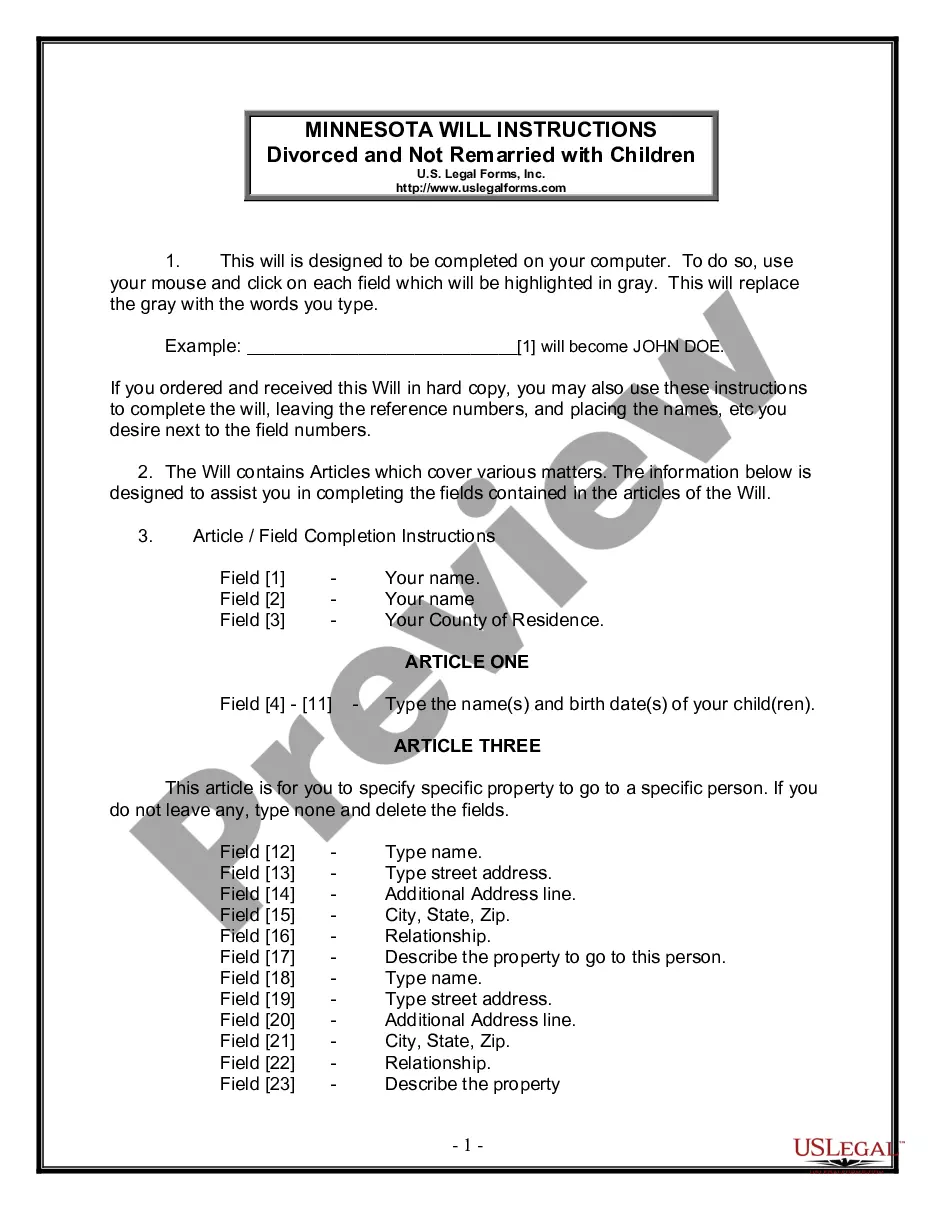
- Enter your full name and county of residence at the beginning of the document.
- List the names and birth dates of all your children in the designated section.
- Identify specific property you wish to bequeath and include the names and relationships of the beneficiaries.
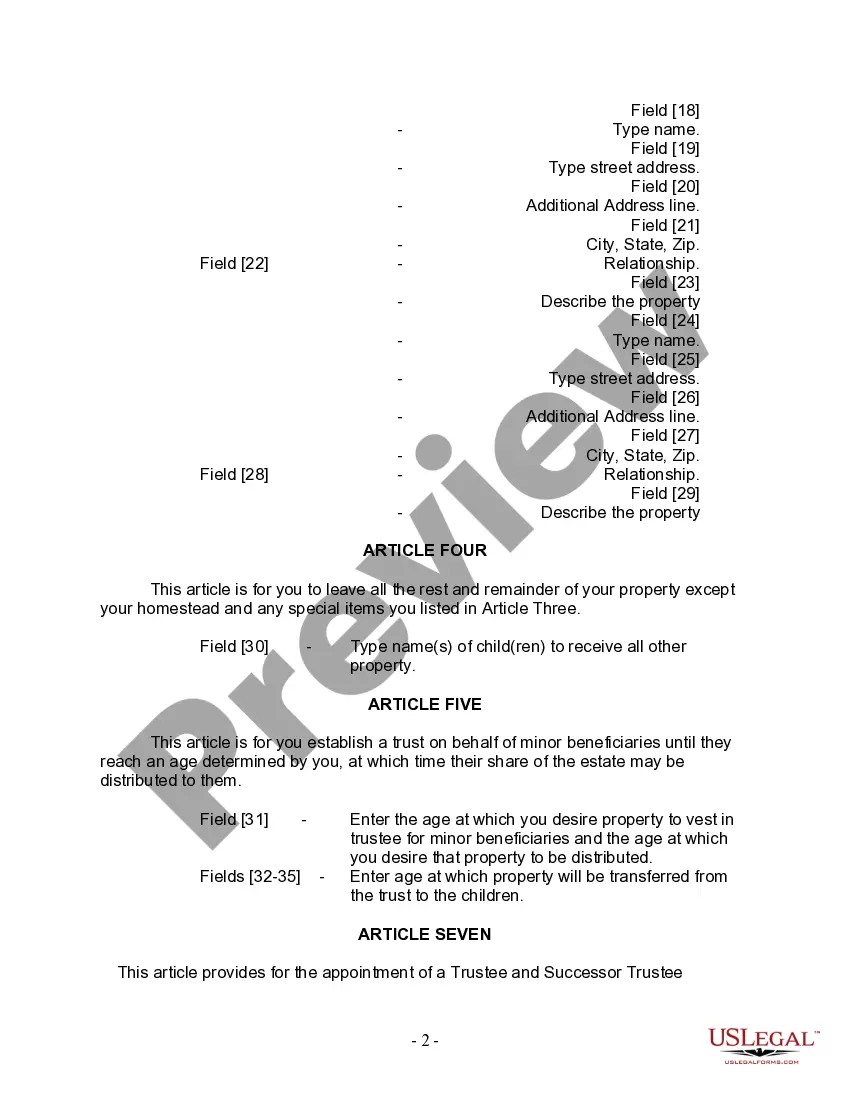
- Designate a trustee for any property held in trust for minor children and specify conditions for distribution.
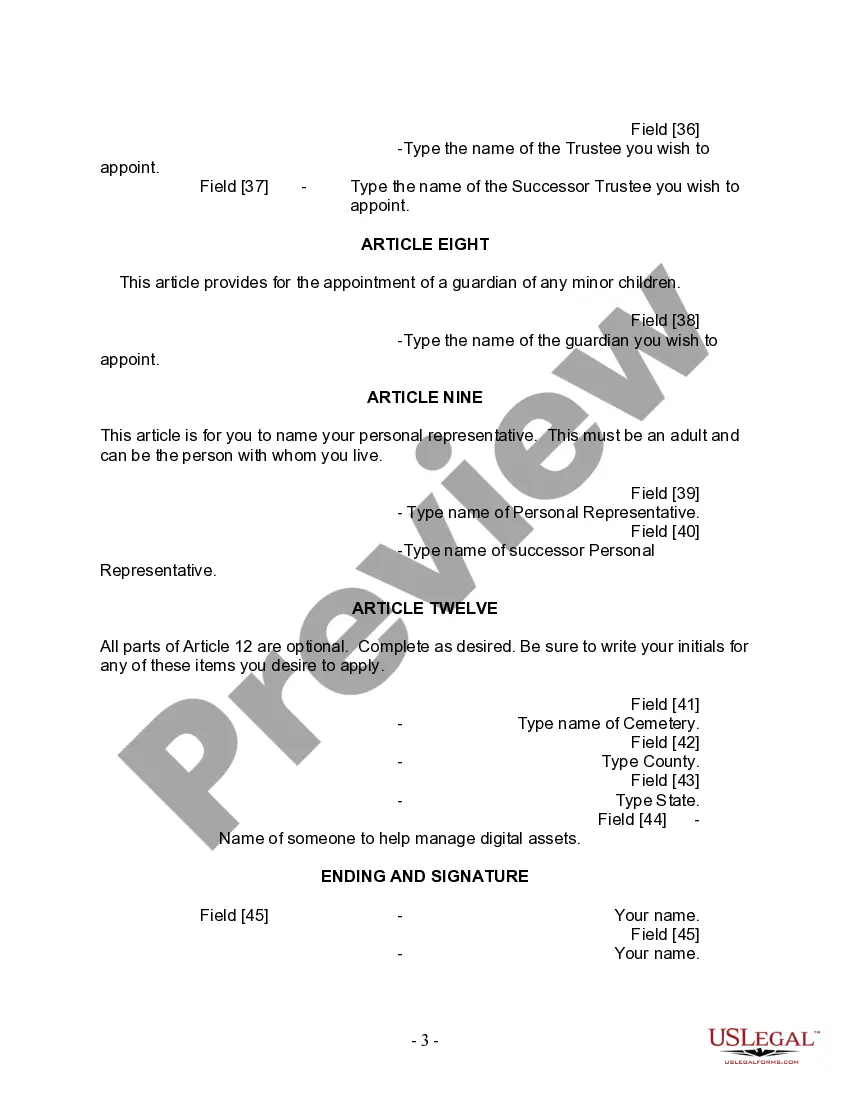
- Provide the names of your chosen personal representative and, if needed, a successor.
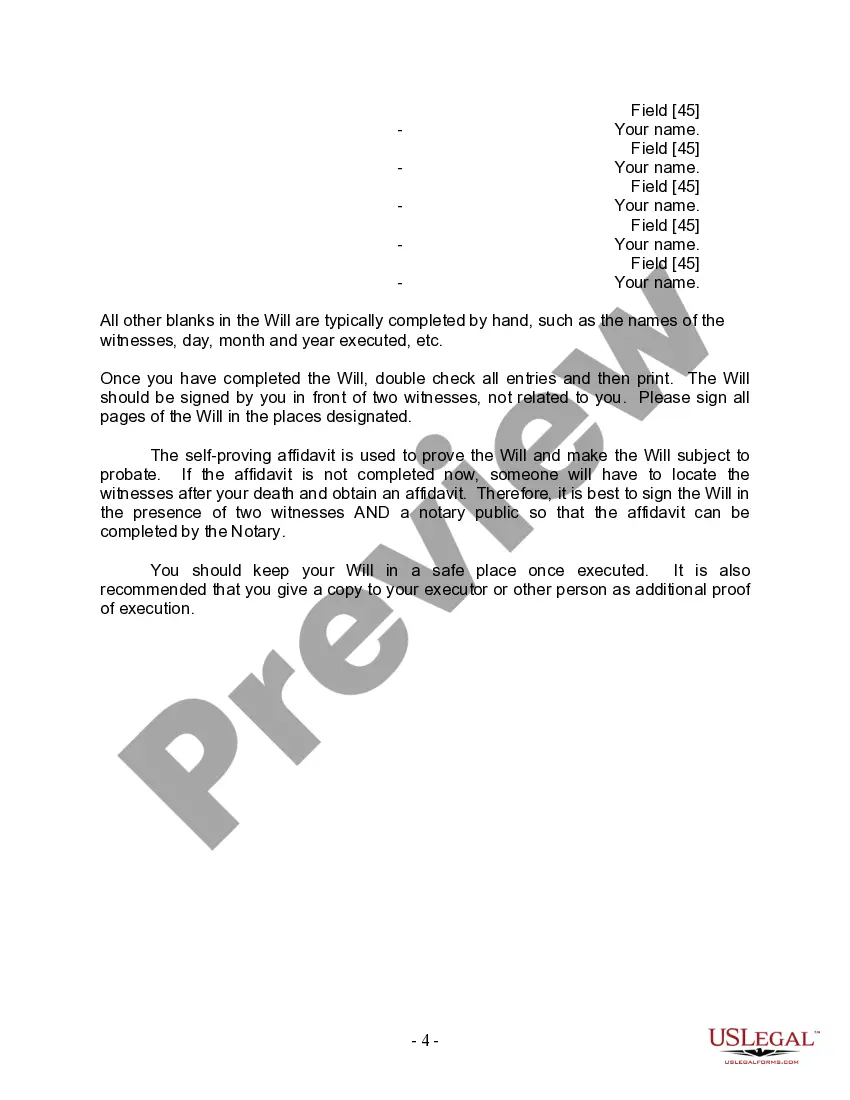
- Sign the document in front of two witnesses and, if applicable, a notary public, to finalize the will.
Notarization guidance
Yes, this form must be notarized to be legally valid in Minnesota if you choose to include a self-proving affidavit. A notary public can help ensure the execution of the will is recognized without needing witnesses to testify in probate court later. US Legal Forms offers a secure online notarization option, available 24/7, to facilitate this process.
Get your form ready online
Our built-in tools help you complete, sign, share, and store your documents in one place.
Make edits, fill in missing information, and update formatting in US Legal Forms—just like you would in MS Word.
Download a copy, print it, send it by email, or mail it via USPS—whatever works best for your next step.
Sign and collect signatures with our SignNow integration. Send to multiple recipients, set reminders, and more. Go Premium to unlock E-Sign.
If this form requires notarization, complete it online through a secure video call—no need to meet a notary in person or wait for an appointment.
We protect your documents and personal data by following strict security and privacy standards.
Make edits, fill in missing information, and update formatting in US Legal Forms—just like you would in MS Word.
Download a copy, print it, send it by email, or mail it via USPS—whatever works best for your next step.
Sign and collect signatures with our SignNow integration. Send to multiple recipients, set reminders, and more. Go Premium to unlock E-Sign.
If this form requires notarization, complete it online through a secure video call—no need to meet a notary in person or wait for an appointment.
We protect your documents and personal data by following strict security and privacy standards.
Mistakes to watch out for
- Failing to ensure the will is properly signed in the presence of witnesses.
- Omitting the designation of a guardian for minor children.
- Not updating the will after significant life changes, such as remarriage or additional children.
- Neglecting to specify trust terms for minor beneficiaries.
Why complete this form online
- Convenience of completing the will from home, at your own pace.
- Editability to customize terms according to your family's specific needs.
- Access to guided completion instructions provided by legal professionals.
- Immediate download for easy storage and access.
Key takeaways
- This Last Will and Testament is tailored for divorced individuals with children.
- It ensures that both minor and adult children are properly considered in your estate plan.
- Important legal provisions, such as the appointment of guardians and trustees, can be established.
- Following proper signing and witnessing procedures is crucial for validity.
Looking for another form?
Form popularity
FAQ
In Minnesota, a divorce automatically revokes any provisions in a will that relate to the former spouse. However, the will itself does not become entirely invalid. For a divorced person not remarried with adult and minor children, it’s vital to update the Minnesota Last Will and Testament to reflect your current wishes. Utilizing a platform like USLegalForms can simplify this process and ensure your estate plan is aligned with your family’s needs.
In Minnesota, you can remarry immediately after your divorce is finalized. There is no waiting period imposed by law. However, it is crucial to consider the implications for your estate planning, especially when drafting a Minnesota Last Will and Testament for Divorced Person Not Remarried with Adult and Minor Children. A well-structured will can protect your interests and ensure your children are provided for.
In Minnesota, the order of inheritance for a last will and testament, especially for a divorced person not remarried with adult and minor children, is clear. If a divorced person passes away without a will, the estate typically goes to the children, both adult and minor. If there is a will, the distribution follows the directives outlined in the Minnesota Last Will and Testament. It’s important to ensure your will reflects your intentions regarding your children.
Loss. As their parents date, develop serious relationships, and eventually decide to remarry, children may be reminded of their original family and of the life they once had with their mother and father.Some children may show signs of increased attachment to the parent who is getting married.
Community Property in California Inheritance LawsCalifornia is a community property state, which is a policy that only applies to spouses and domestic partners.The only property that doesn't become community property automatically are gifts and inheritances that one spouse receives.
If you do not want your son-in-law or daughter-in-law to get any portion of your child's inheritance, consider creating an on-going descendants trust for their benefit. This is often a sensitive subject for many families.
In most states, if you have a will while you are married and then end the marriage, the will is automatically revoked. It's possible to leave an inheritance to your ex, but you have to write a new will that specifically states you are doing so. Disinheriting your spouse.