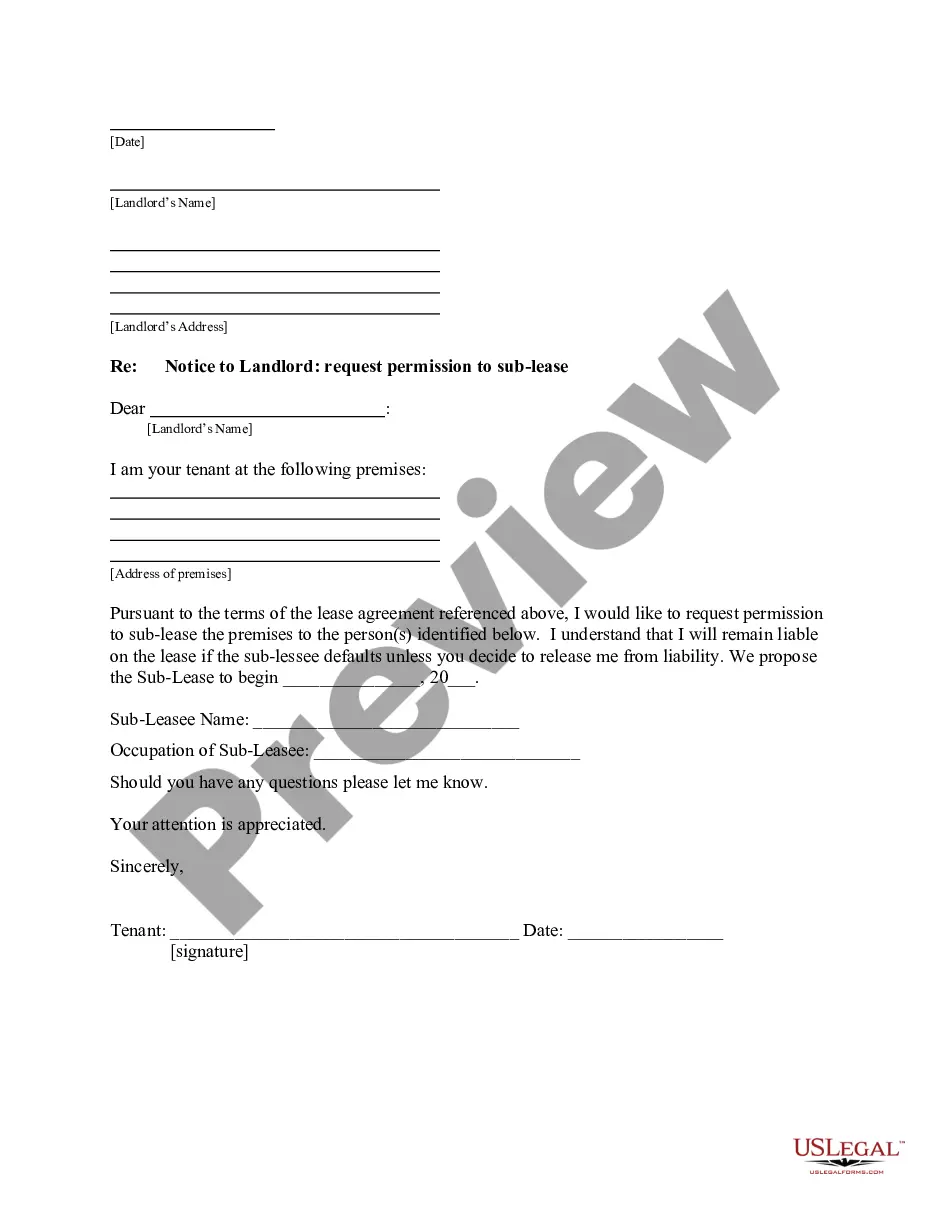
Minnesota Letter from Tenant to Landlord containing Request for permission to sublease
Understanding this form
This form is a letter from a tenant requesting permission from their landlord to sublease the rental property to another individual, known as a subtenant. The letter clarifies that the tenant remains liable for the lease, even if the subtenant defaults on their payment obligations. This legal document ensures that all involved parties are aware of their rights and responsibilities and helps maintain a clear line of communication regarding subleasing arrangements.
What’s included in this form
- Sub-Leasee name and occupation fields to identify the individual being sublet to.
- A declaration that the tenant will remain responsible for the lease obligations.
- A space for the tenant's signature and date to formalize the request.
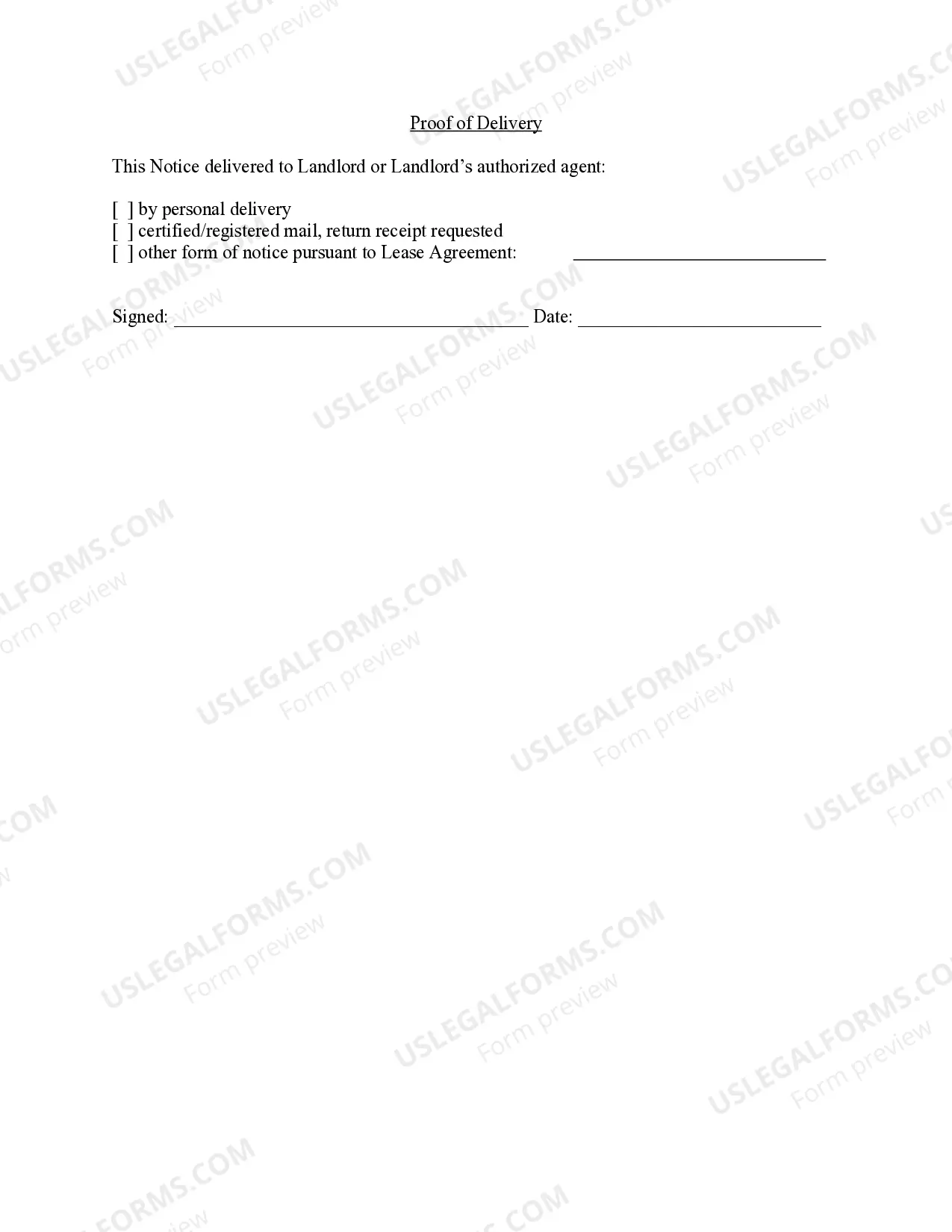
- Proof of delivery options to document how the request was sent to the landlord.
When to use this document
This form should be used when a tenant wants to sublease their rental unit to another party. It is important to obtain the landlord's written permission in such cases to avoid potential disputes. Use this form in situations where the tenant has found a suitable subtenant but needs to ensure compliance with the lease agreement by notifying the landlord formally.
Who can use this document
- Current tenants looking to sublease their rental property.
- Individuals who have a lease agreement requiring landlord approval for subleasing.
- Tenants wanting to clarify their obligations while subletting.
Instructions for completing this form
- Identify the sub-leasor and their occupation by filling out their name and job details.
- Clearly state your request for permission to sublease the property.
- Sign and date the form to indicate acknowledgment of your responsibilities.
- Deliver the letter using one of the provided proof of delivery methods.
Notarization requirements for this form
This form usually doesn’t need to be notarized. However, local laws or specific transactions may require it. Our online notarization service, powered by Notarize, lets you complete it remotely through a secure video session, available 24/7.
Get your form ready online
Our built-in tools help you complete, sign, share, and store your documents in one place.
Make edits, fill in missing information, and update formatting in US Legal Forms—just like you would in MS Word.
Download a copy, print it, send it by email, or mail it via USPS—whatever works best for your next step.
Sign and collect signatures with our SignNow integration. Send to multiple recipients, set reminders, and more. Go Premium to unlock E-Sign.
If this form requires notarization, complete it online through a secure video call—no need to meet a notary in person or wait for an appointment.
We protect your documents and personal data by following strict security and privacy standards.

Make edits, fill in missing information, and update formatting in US Legal Forms—just like you would in MS Word.

Download a copy, print it, send it by email, or mail it via USPS—whatever works best for your next step.

Sign and collect signatures with our SignNow integration. Send to multiple recipients, set reminders, and more. Go Premium to unlock E-Sign.

If this form requires notarization, complete it online through a secure video call—no need to meet a notary in person or wait for an appointment.

We protect your documents and personal data by following strict security and privacy standards.
Typical mistakes to avoid
- Failing to provide accurate information about the sub-leasor.
- Not signing or dating the letter before sending it to the landlord.
- Neglecting to keep a copy of the letter for personal records.
Benefits of using this form online
- Convenient access to a legally vetted template for subleasing requests.
- Edit and personalize the document easily before downloading.
- Ensures compliance with general legal standards surrounding subleasing.
Legal use & context
- The letter serves as a formal request for subleasing permissions, essential for legal documentation.
- It protects the tenant's rights while granting approval to another party to occupy the space.
- Any violations of local subleasing laws can lead to potential legal consequences for both the tenant and the subtenant.
Key takeaways
- This letter is crucial for tenants planning to sublease their rental property.
- It protects the tenant's legal obligations while ensuring that the landlord is informed and involved.
- Ensure compliance with local laws to avoid pitfalls associated with subleasing.
Looking for another form?
Form popularity
FAQ
Landlords may dislike subleasing because it can complicate property management and tenant relationships. They may have concerns about the reliability of the subtenant or potential damage to the property. To alleviate these concerns, present a well-drafted Minnesota Letter from Tenant to Landlord containing Request for permission to sublease, which emphasizes your commitment and responsibility as a tenant.
Filling out a sublease agreement requires you to input essential information such as the names of the primary tenant and subtenant, the property address, and the lease duration. Specify the rent amount and any regulations that the subtenant must follow. For a smoother process, you may want to use a Minnesota Letter from Tenant to Landlord containing Request for permission to sublease to communicate with your landlord effectively.
Subleasing in Arizona is generally legal, but it depends on the terms of your lease agreement. Some landlords may prohibit subletting altogether, so it's important to check your lease. If your lease permits subleasing, ensure you follow any guidelines provided and consider drafting a Minnesota Letter from Tenant to Landlord containing Request for permission to sublease to keep everything transparent.
Requesting permission to sublet involves writing a formal letter to your landlord. In this letter, include your reasons for subletting, the proposed subtenant's information, and any relevant details about the sublease terms. Utilizing a Minnesota Letter from Tenant to Landlord containing Request for permission to sublease ensures that you provide all necessary information professionally and clearly.
To ask your landlord for permission to sublet, begin with a polite and clear request. Explain your reasons for wanting to sublet, and provide details about the prospective subtenant. A Minnesota Letter from Tenant to Landlord containing Request for permission to sublease can serve as an official document to present your case effectively.
To write a sublease agreement, start by including the names of the original tenant and the subtenant, along with the rental property address. Clearly outline the terms of the lease, including the duration, rent amount, and any responsibilities of both parties. Make sure to reference any existing lease agreements to ensure compliance with the original terms. Using a Minnesota Letter from Tenant to Landlord containing Request for permission to sublease can help formalize this process.
Yes, you must inform your landlord about any sublease arrangements. Most lease agreements require tenants to disclose their intent to sublet. A Minnesota Letter from Tenant to Landlord containing Request for permission to sublease is an effective way to notify your landlord and request their consent. Maintaining open communication helps foster a positive relationship and can prevent misunderstandings.
Subletting without landlord permission can lead to serious consequences, including potential eviction. It's crucial to respect your lease terms and communicate openly with your landlord. Utilizing a Minnesota Letter from Tenant to Landlord containing Request for permission to sublease can help establish transparency and may improve your chances of receiving approval. Always prioritize following the legal requirements to protect your rental rights.
Generally, you cannot sublease your rental property without obtaining landlord approval. Most lease agreements include clauses that require tenants to seek permission before subletting. To navigate this process smoothly, consider using a Minnesota Letter from Tenant to Landlord containing Request for permission to sublease. This letter can formally communicate your request and outline your reasons for wanting to sublet.
Yes, a landlord can refuse permission to sublet your rental property. However, they must provide a valid reason for their decision. In Minnesota, a Letter from Tenant to Landlord containing Request for permission to sublease can help clarify your intentions and may facilitate a more favorable response. It's important to understand your lease agreement, as it may outline specific conditions regarding subleasing.