Minnesota Quitclaim Deed from Individual to Individual
What this document covers
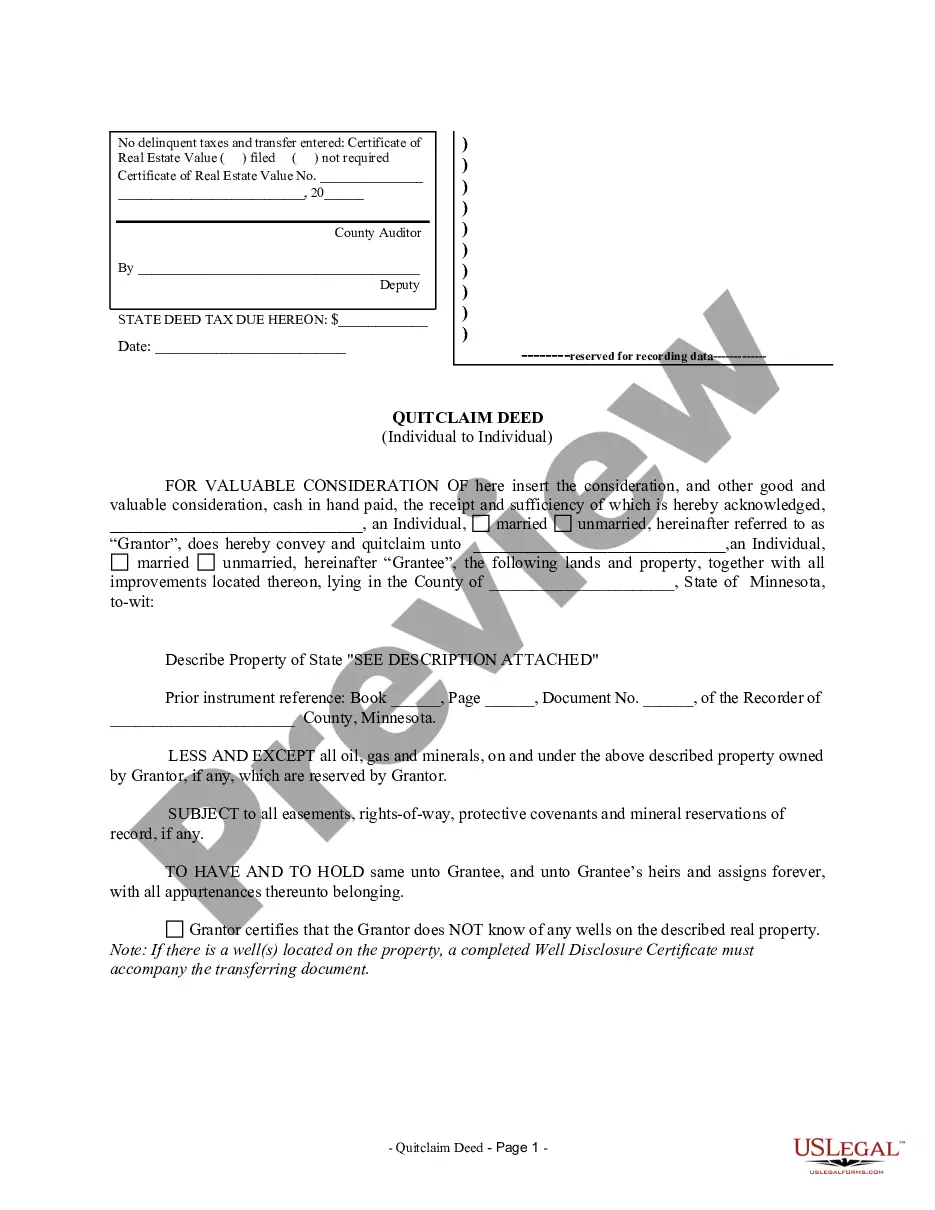
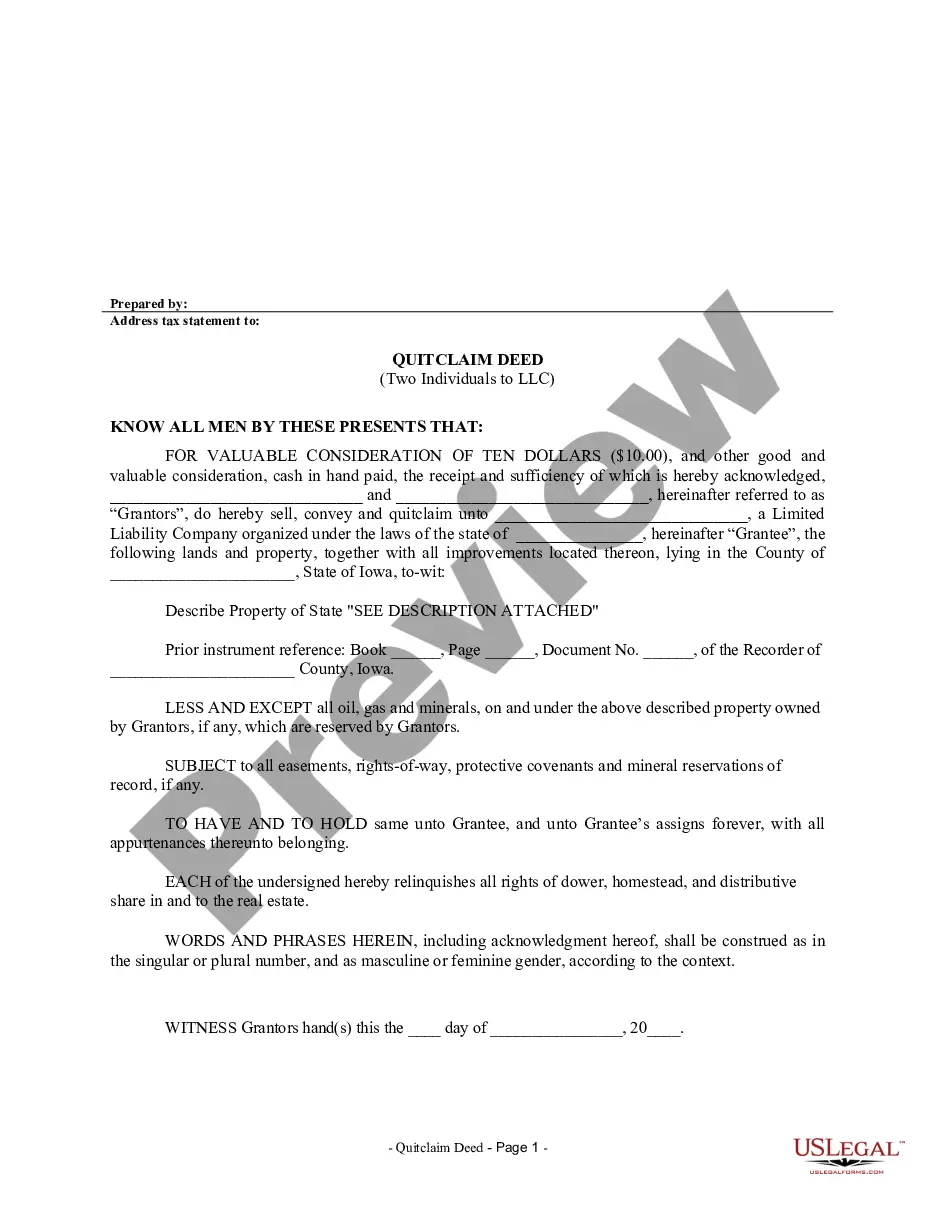
The Quitclaim Deed from Individual to Individual is a legal document used to transfer ownership of real property from one individual (the Grantor) to another individual (the Grantee) without any warranty of title. This form conveys the property as is, which means the Grantor does not guarantee that the title is clear or free of liens. Unlike a warranty deed, a quitclaim deed offers no protections against claims from other parties, making it suitable for transfers between familiar parties, such as between family members or friends.
Main sections of this form
- Identification of parties: Clearly specifies the Grantor and Grantee involved in the property transfer.
- Property description: Details the specific property being conveyed, including any attached legal descriptions.
- Consideration: States the amount of consideration (payment or value) received for the property transfer.
- Reservation clause: Indicates any reservations made by the Grantor, such as the retention of oil, gas, and mineral rights.
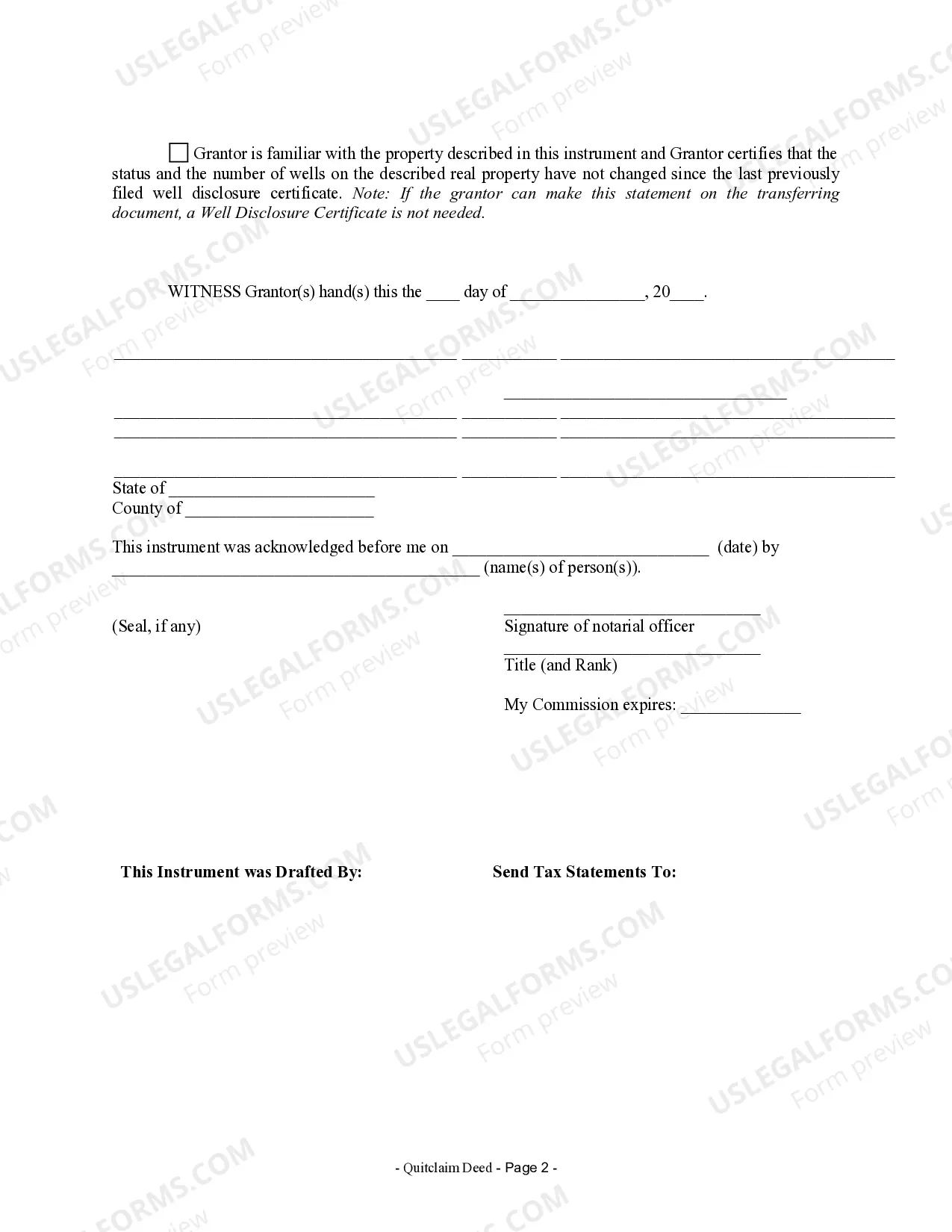
- Signatures: Requires the Grantor's signature and acknowledgment before a notary public for validation.





Situations where this form applies
This form is most suitable when an individual wants to transfer property to another individual without any claims or warranties. Common situations include family transfers, gifting property, or settling an estate. It is also used when the parties involved have a degree of trust in each other, as there is no assurance regarding the state of the title or any potential liens.
Who should use this form
- Individuals transferring property to a family member or friend.
- Heirs or beneficiaries settling an estate and transferring ownership among family members.
- Property owners who want to relinquish interest in a property without the complications of a warranty deed.
Steps to complete this form
- Identify the parties involved by entering the full names of the Grantor and Grantee.
- Provide a detailed description of the property being transferred, including any necessary legal descriptions.
- Insert the amount of consideration for the property, ensuring clarity on the value exchanged.
- Review the reservation clause and confirm if any rights (e.g., mineral rights) are retained by the Grantor.
- Sign and date the form in the presence of a notary public to validate the document.
Does this form need to be notarized?
Yes, this form must be notarized to be legally valid. Notarization helps verify the identity of the Grantor and ensures that the document is executed according to state law. US Legal Forms offers integrated online notarization that is available 24/7, secure through video calls, and legally equivalent to traditional notarization without the need for travel.
Get your form ready online
Our built-in tools help you complete, sign, share, and store your documents in one place.
Make edits, fill in missing information, and update formatting in US Legal Forms—just like you would in MS Word.
Download a copy, print it, send it by email, or mail it via USPS—whatever works best for your next step.
Sign and collect signatures with our SignNow integration. Send to multiple recipients, set reminders, and more. Go Premium to unlock E-Sign.
If this form requires notarization, complete it online through a secure video call—no need to meet a notary in person or wait for an appointment.
We protect your documents and personal data by following strict security and privacy standards.

Make edits, fill in missing information, and update formatting in US Legal Forms—just like you would in MS Word.

Download a copy, print it, send it by email, or mail it via USPS—whatever works best for your next step.

Sign and collect signatures with our SignNow integration. Send to multiple recipients, set reminders, and more. Go Premium to unlock E-Sign.

If this form requires notarization, complete it online through a secure video call—no need to meet a notary in person or wait for an appointment.

We protect your documents and personal data by following strict security and privacy standards.
Mistakes to watch out for
- Not providing a detailed legal description of the property.
- Failing to have the form notarized, which could lead to issues in ownership transfer.
- Omitting the consideration amount, which is necessary for the legality of the transfer.
- Not including any important reservations or rights retained by the Grantor.
Why use this form online
- Convenience of completing the form from home at any time.
- Editability allows for easy corrections before finalizing the document.
- Access to reliable templates drafted by licensed attorneys, ensuring compliance with state laws.
Quick recap
- The quitclaim deed is used to transfer property ownership without warranties.
- It is suitable for informal transfers, especially among individuals who trust each other.
- Proper completion and notarization are crucial for the deed's legality.
Looking for another form?
Form popularity
FAQ
The Minnesota Quitclaim Deed from Individual to Individual transfers property from one person (the Grantor) to another (the Grantee) without any warranty of title. It conveys the property as is and provides no protection against liens or claims. It’s suitable for transfers between family or friends or when settling an estate where title assurances aren’t needed.
To fill out this form, begin with identification of the parties (Grantor and Grantee), then provide a clear property description, state the consideration (amount or value), and include any reservation clauses. Finally, obtain the Grantor’s signature and a notary acknowledgment for validation.
A Minnesota quit claim deed must include identification of the Grantor and Grantee, a description of the property being conveyed, the consideration for the transfer, any reservations by the Grantor, and the Grantor’s signature with acknowledgment before a notary public.
Common mistakes include missing or incorrect identification of the parties, an inaccurate or incomplete property description, omitting the stated consideration, forgetting a reservation clause, failing to sign or to obtain the required notary acknowledgement, and neglecting to properly record the deed after execution.
This form is designed for transfers between individuals, such as family members or friends, or for heirs settling an estate. While it can be used to transfer to another individual, it may not be suitable for transfers to businesses or organizations; consult an attorney for non-individual recipients.
The quitclaim deed conveys title without any warranty of clear title or protections against liens. The Grantor makes no promises about the title's status, unlike a warranty deed, which provides assurances and potential recourse if title issues arise. This form is intended for transfers between trusted individuals and conveys property 'as is.'