Michigan Living Trust for Husband and Wife with Minor and or Adult Children
About this form
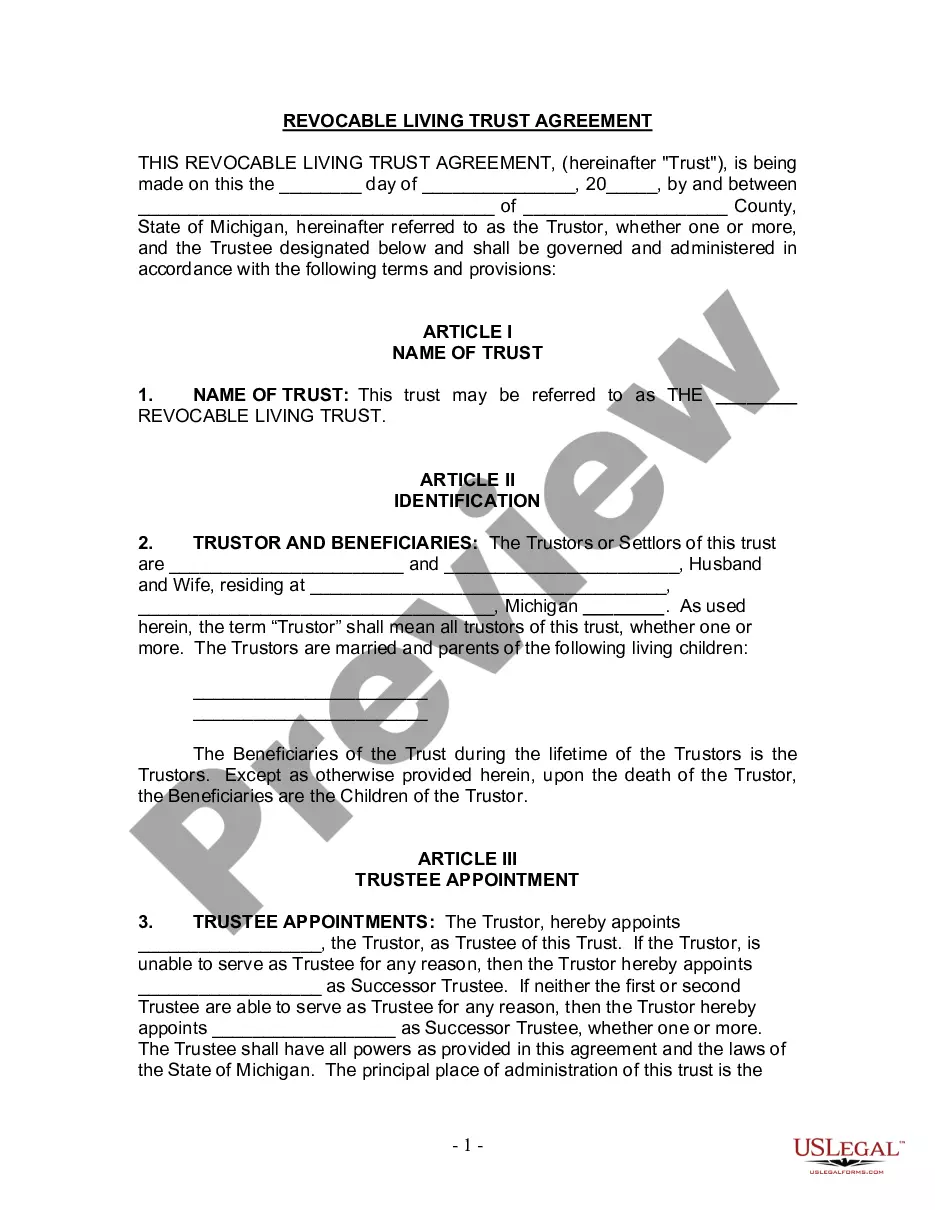
This Living Trust for Husband and Wife with Minor and/or Adult Children is a legal document that establishes a trust during your lifetime. It allows you to manage and control your assets while you are alive and provides a clear plan for distributing your assets upon your death. This trust differs from a last will and testament, as it bypasses the probate process, ensuring your beneficiaries receive their inheritance more quickly and privately.
Form components explained
- Name of the trust: Establishes the official name of your living trust.
- Identification of trustors and beneficiaries: Lists the husband and wife as trustors and outlines who will benefit from the trust.
- Trustee appointments: Designates who will manage the trust assets.
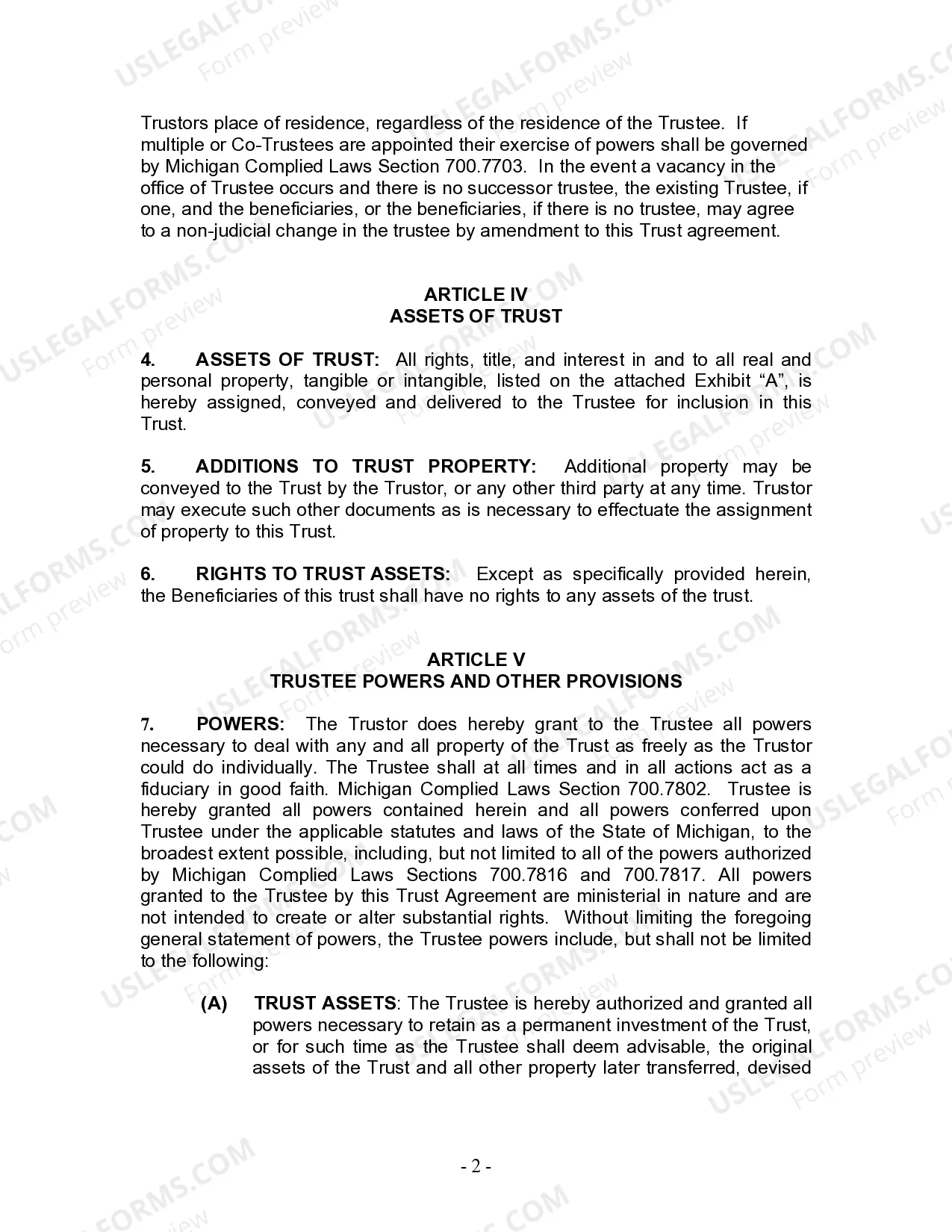
- Assets of the trust: Details which property and assets are included in the trust.
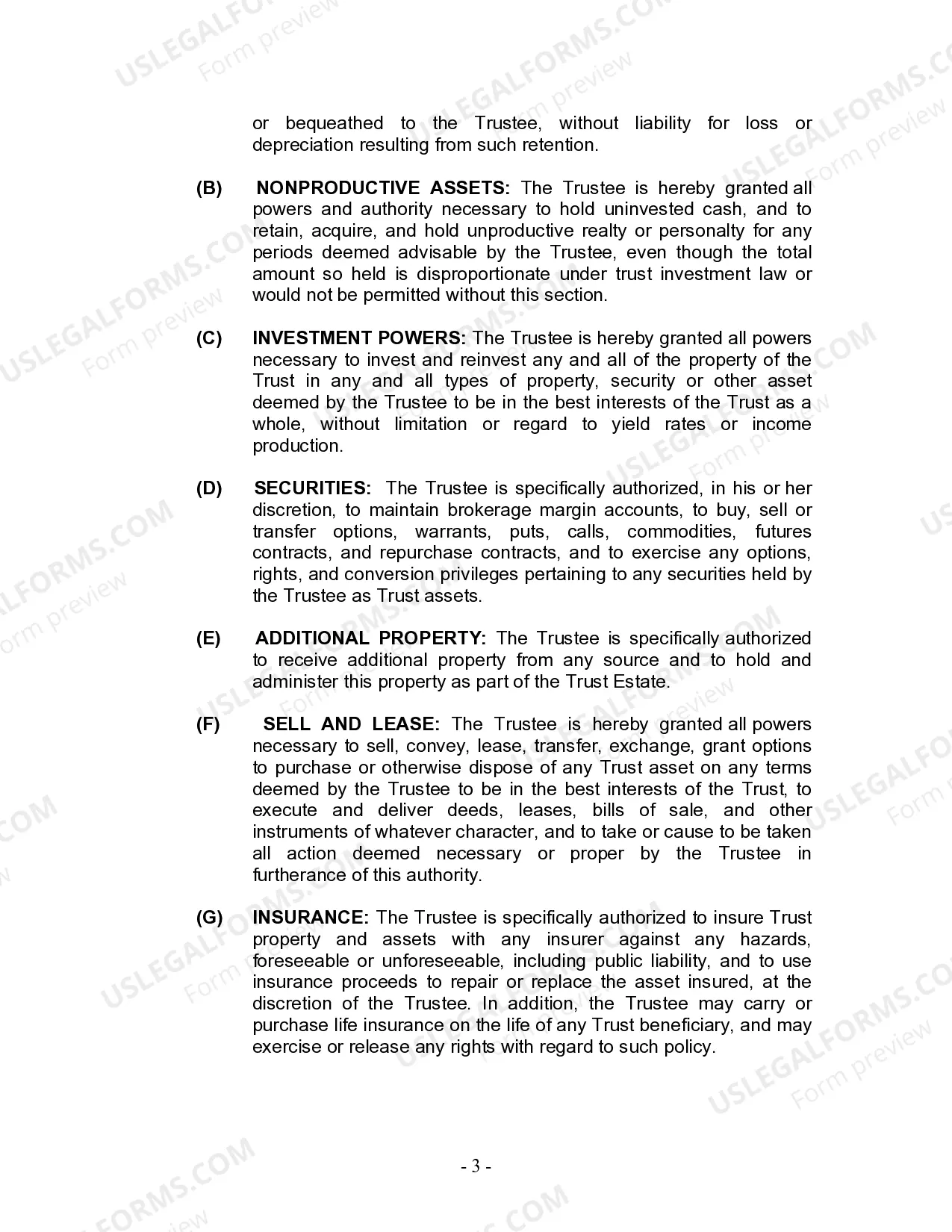
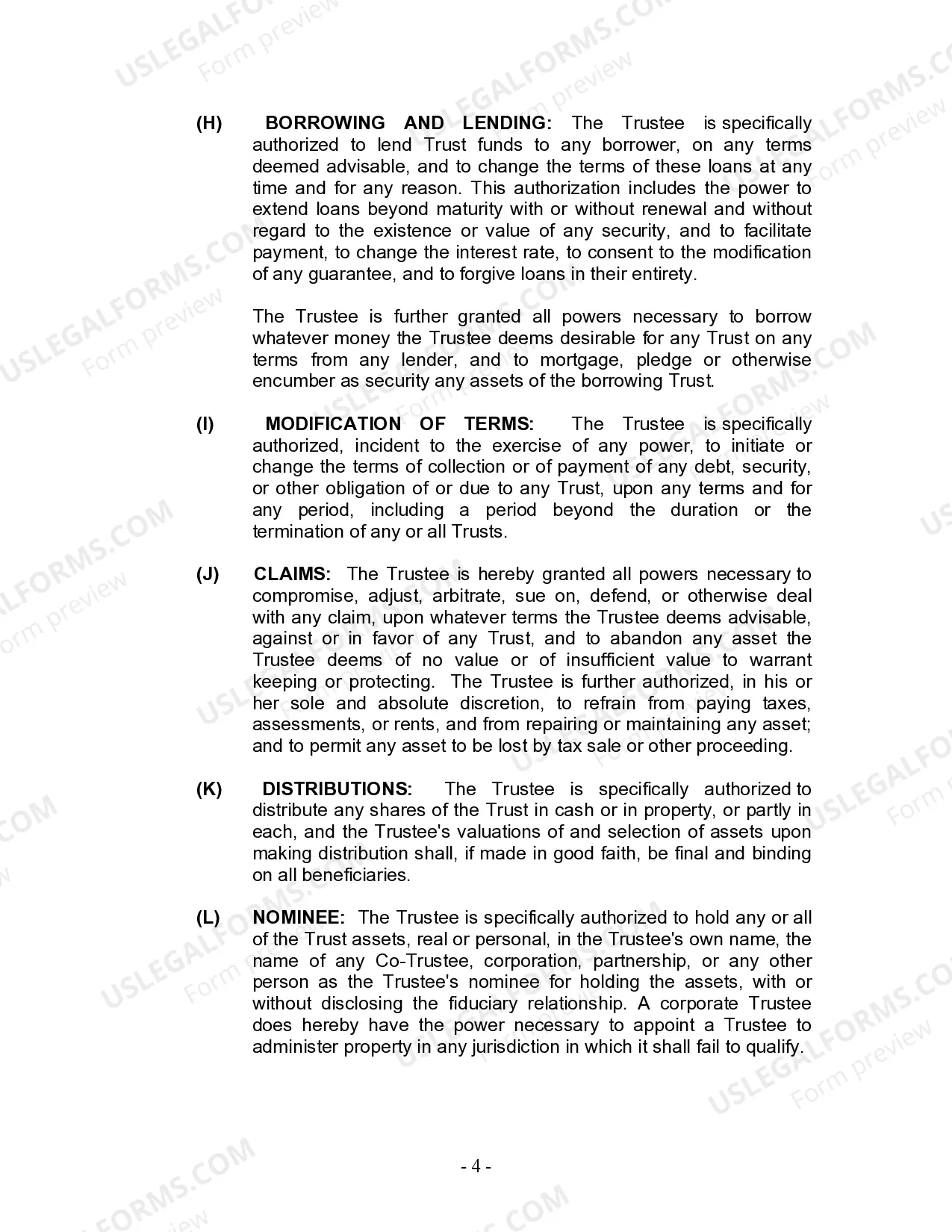
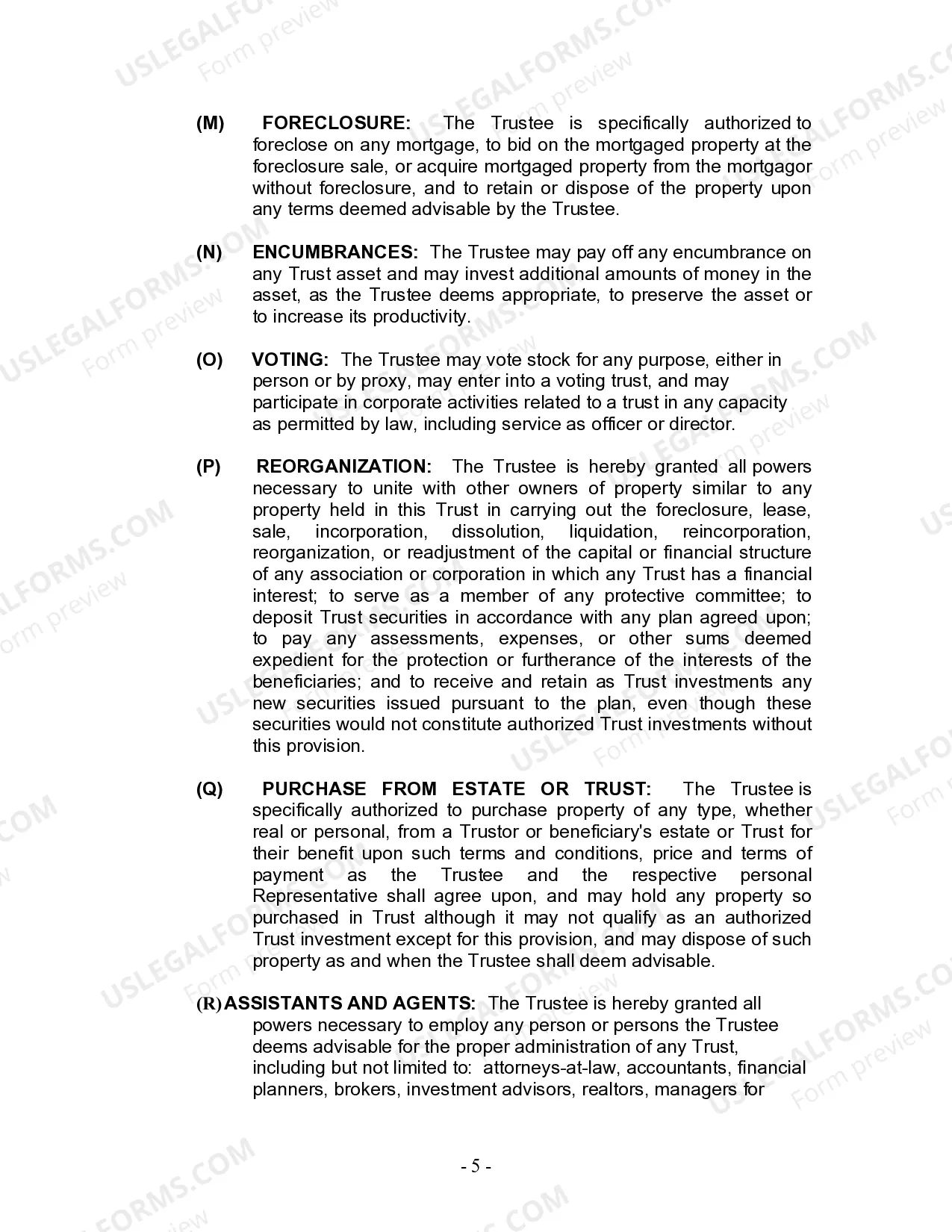
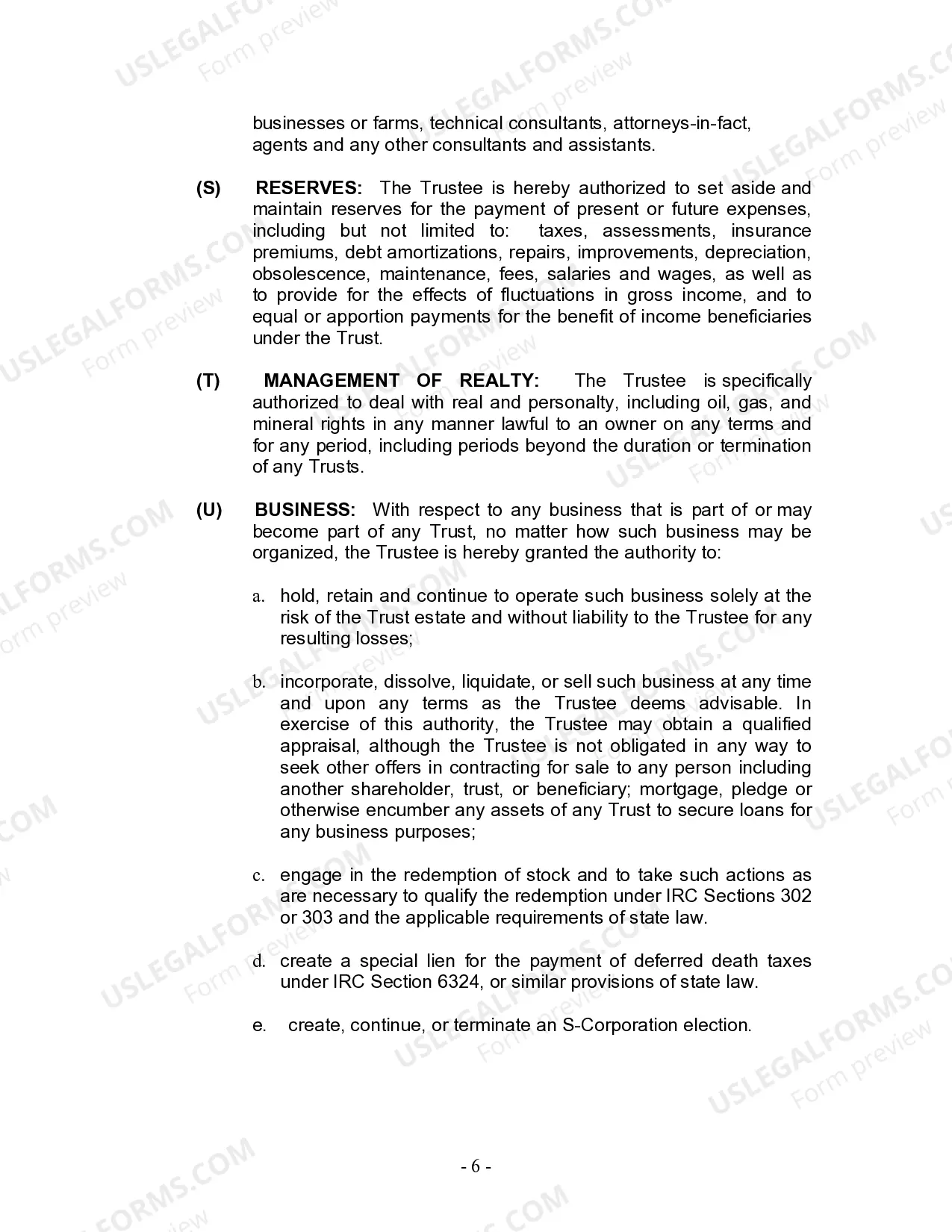
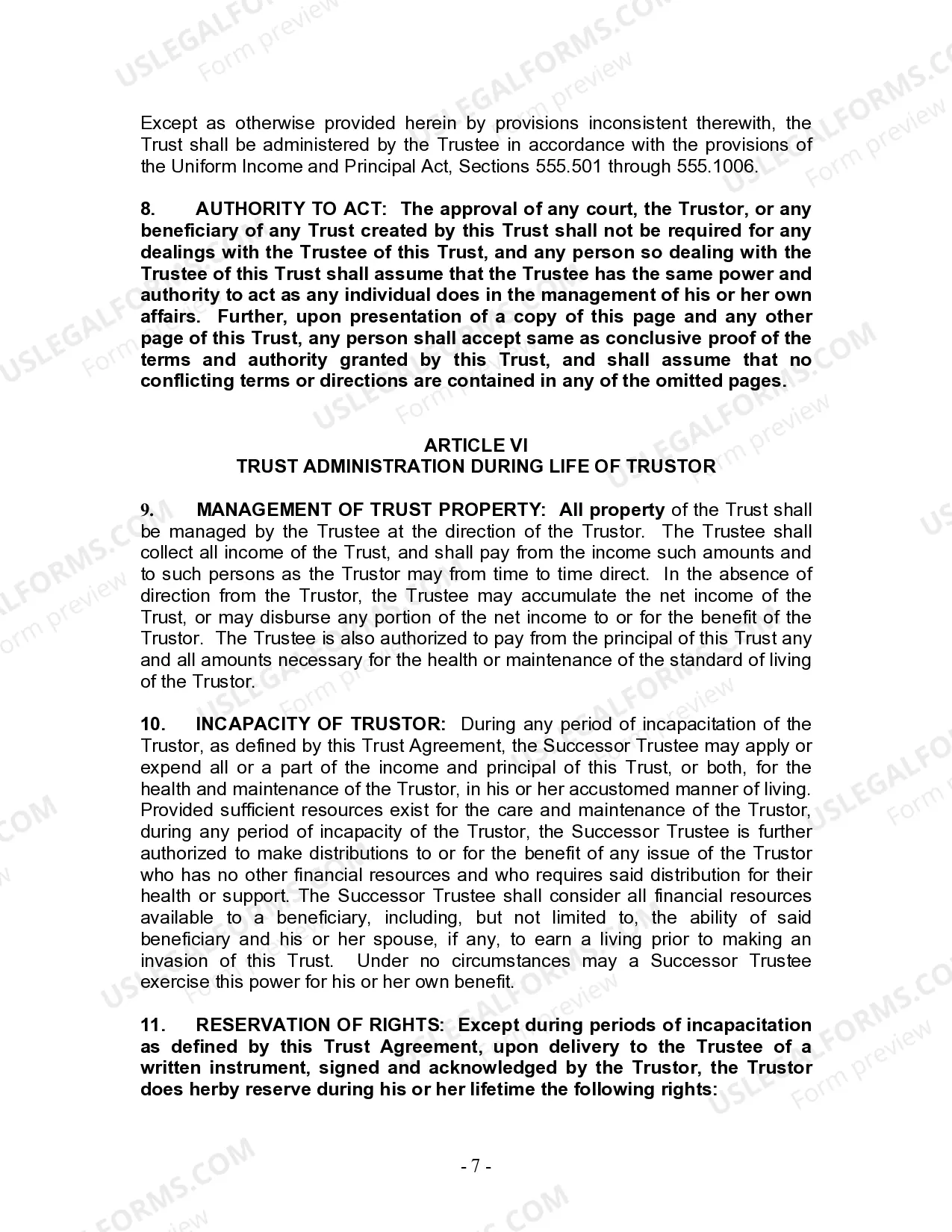
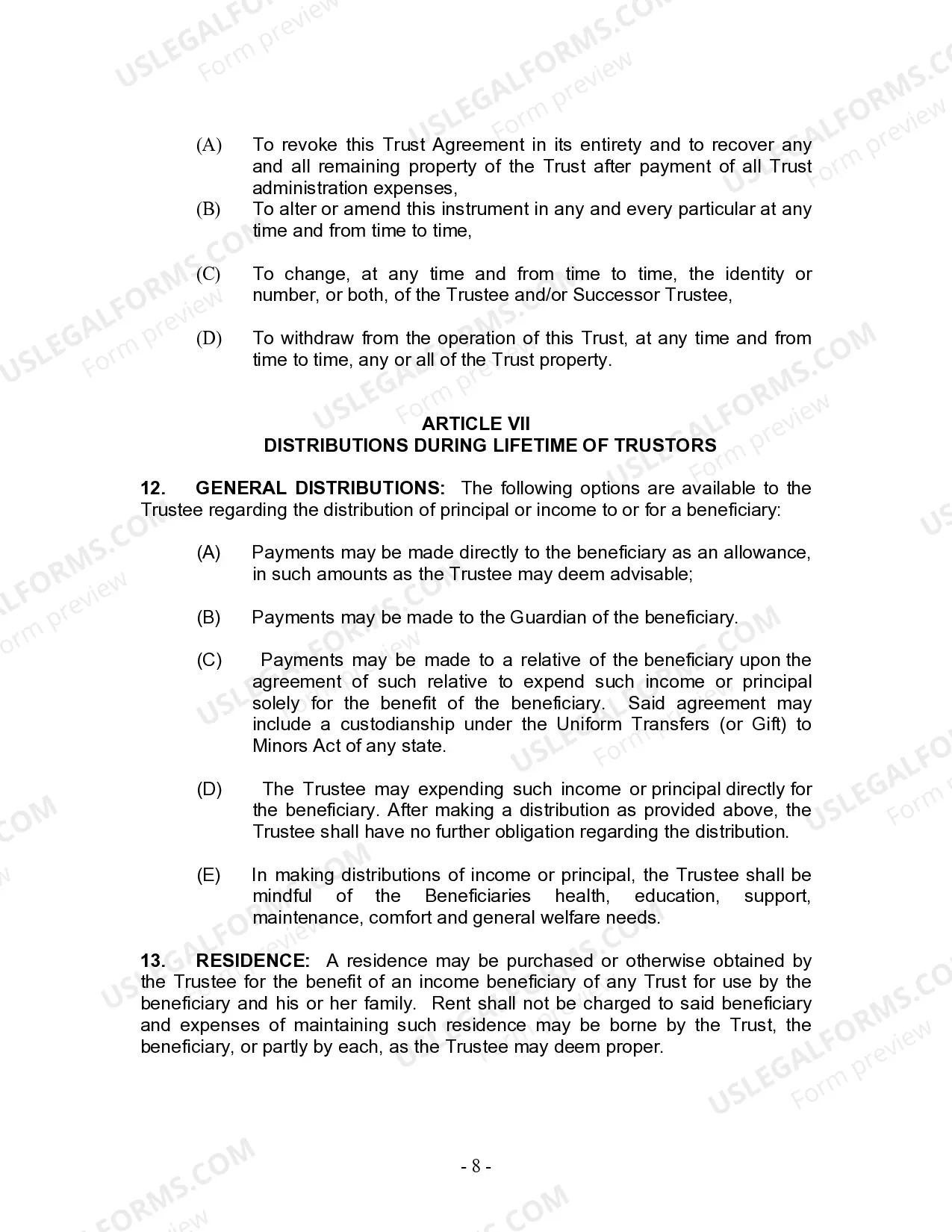
- Trustee powers: Outlines the rights and responsibilities granted to the trustee to manage the trust assets.
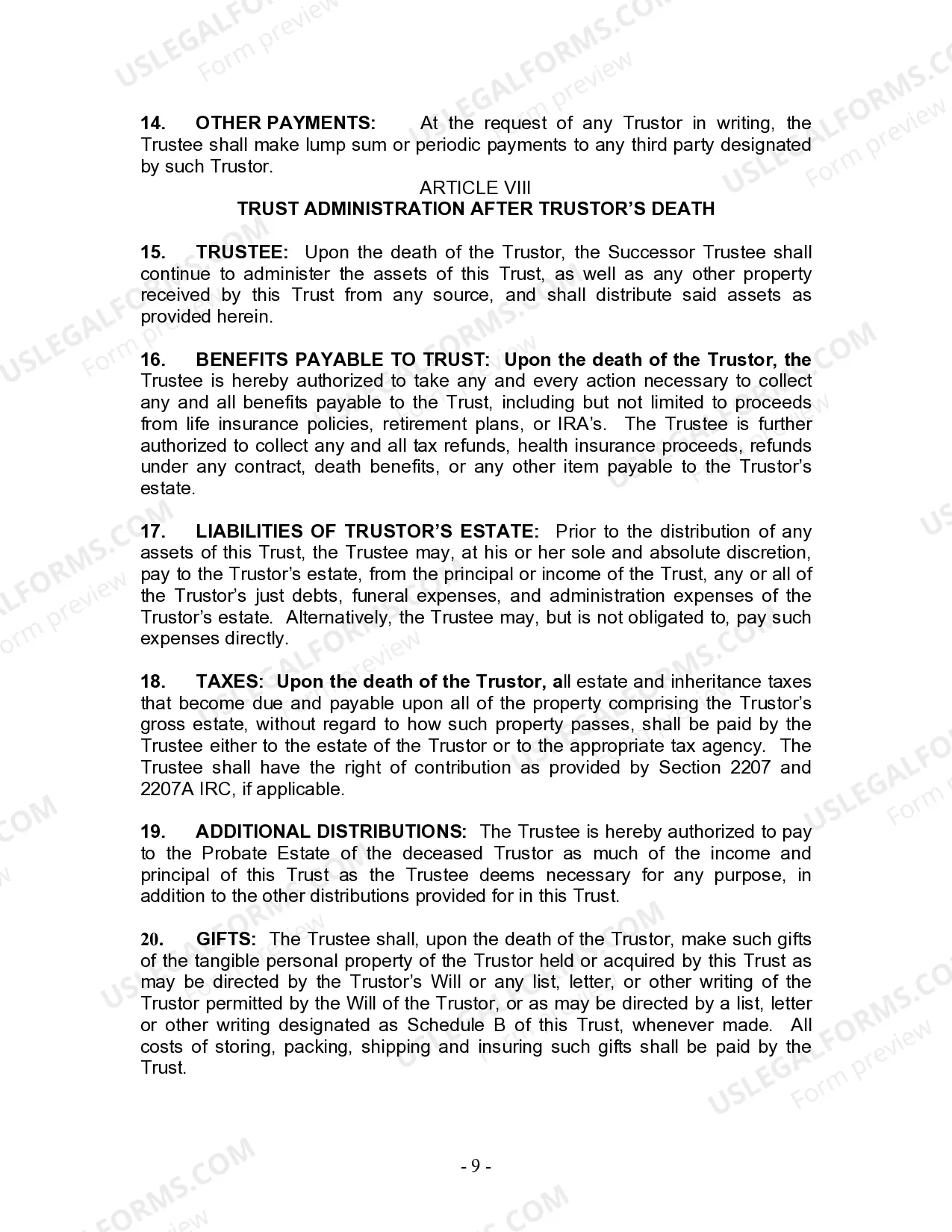
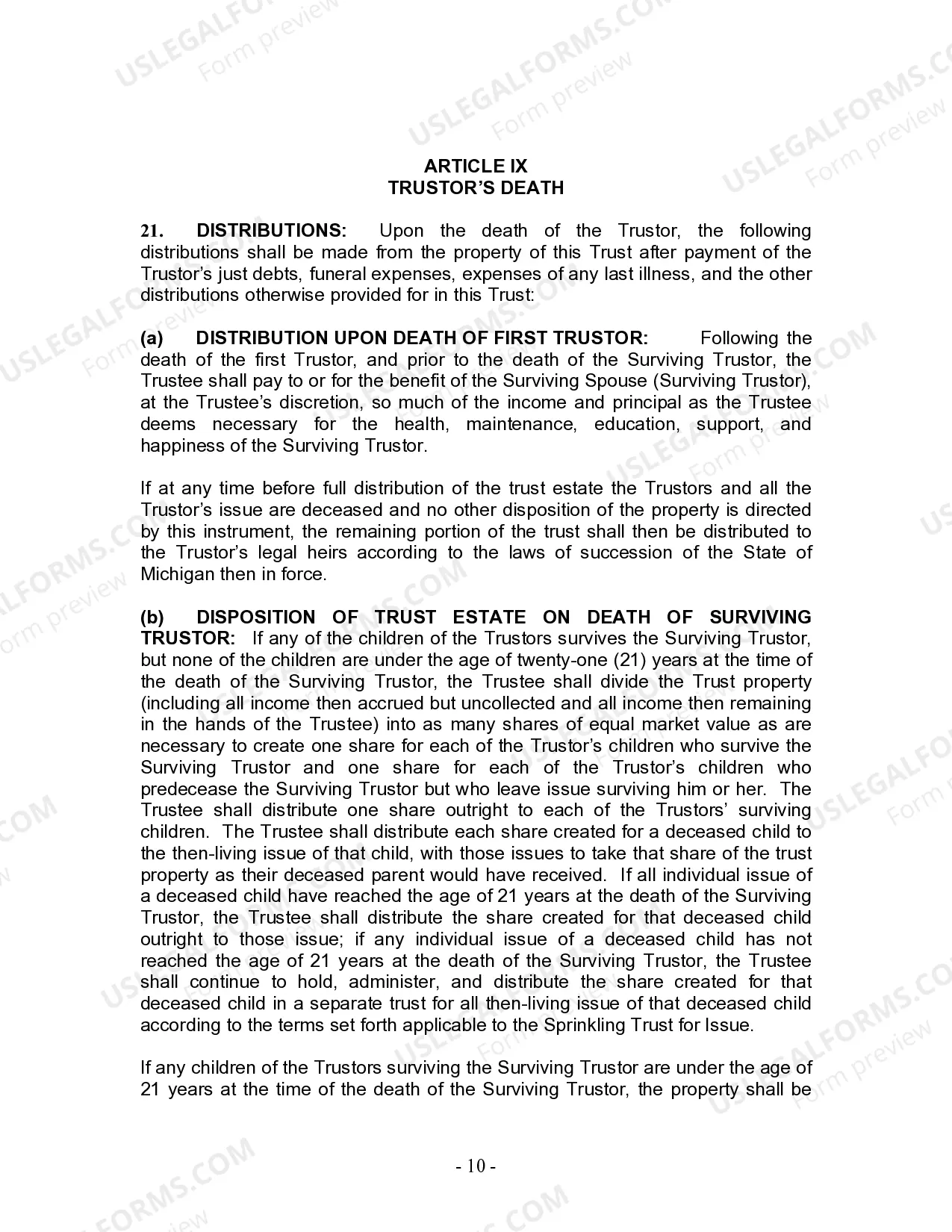
- Distributions upon death: Specifies how assets will be distributed among beneficiaries after the trustors' deaths.





When this form is needed
This form is ideal for married couples looking to establish a living trust to manage their assets and ensure seamless distribution upon their death. Consider using this trust if you have minor or adult children and want to avoid the lengthy probate process, protect your family's financial future, or customize how your assets will be distributed among your beneficiaries.
Who can use this document
This living trust form is intended for:
- Married couples in Michigan with assets to manage
- Couples who want to provide for their children, both minors and adults
- Individuals seeking to avoid probate and streamline the distribution of their estate
- Anyone wanting to maintain privacy regarding their asset distribution
Completing this form step by step
- Identify the parties: Enter the names of the husband and wife serving as trustors.
- Specify the trust name: Provide an official name for the living trust.
- List the trustee(s): Appoint the individual(s) responsible for managing the trust.
- Detail the assets: Include a comprehensive list of assets to be placed in the trust.
- Set the distribution terms: Clarify how and when assets will be distributed to beneficiaries after the death of the trustors.
Does this document require notarization?
This form does not typically require notarization unless specified by local law. However, it is advisable to consult with a legal professional to ensure that all local requirements are met for your living trust to be legally recognized.
Get your form ready online
Our built-in tools help you complete, sign, share, and store your documents in one place.
Make edits, fill in missing information, and update formatting in US Legal Forms—just like you would in MS Word.
Download a copy, print it, send it by email, or mail it via USPS—whatever works best for your next step.
Sign and collect signatures with our SignNow integration. Send to multiple recipients, set reminders, and more. Go Premium to unlock E-Sign.
If this form requires notarization, complete it online through a secure video call—no need to meet a notary in person or wait for an appointment.
We protect your documents and personal data by following strict security and privacy standards.

Make edits, fill in missing information, and update formatting in US Legal Forms—just like you would in MS Word.

Download a copy, print it, send it by email, or mail it via USPS—whatever works best for your next step.

Sign and collect signatures with our SignNow integration. Send to multiple recipients, set reminders, and more. Go Premium to unlock E-Sign.

If this form requires notarization, complete it online through a secure video call—no need to meet a notary in person or wait for an appointment.

We protect your documents and personal data by following strict security and privacy standards.
Typical mistakes to avoid
- Failing to list all relevant assets in the trust document.
- Not designating a successor trustee, which can lead to confusion.
- Overlooking state-specific regulations that might affect the validity of the trust.
- Not updating the trust after significant life events, such as the birth of a child or a change in marital status.
Why use this form online
- Convenience of downloading and filling out the form at your own pace.
- Editability allows customization according to individual asset and family situations.
- Reliability with templates drafted by licensed attorneys ensuring legal compliance.
Legal use & context
- This trust allows you to maintain control over your assets while providing guidance for after your death.
- By setting up this living trust, you can avoid the probate process.
- Trust provisions must comply with Michigan law to remain effective.
Key takeaways
- A living trust is an effective estate planning tool for married couples.
- Utilizing this trust allows asset management during your lifetime and smoother transfer to beneficiaries after death.
- Always consult with a local attorney to ensure compliance with state laws.
Legal terms and meanings
- Trustor: The person(s) creating the trust and placing assets into it.
- Trustee: The individual(s) responsible for managing the trust.
- Beneficiary: A person or entity designated to receive assets from the trust.
- Probate: The legal process of distributing a deceased person's estate under court supervision.
Looking for another form?

Form popularity
FAQ
This living trust is created to manage assets during your lifetime and provide a plan for distributing them after death. It helps you avoid probate and keep estate details private, while allowing both spouses to name trustors, identify beneficiaries, appoint trustees, and specify how assets are distributed to minor or adult children.
One downside is that the trust is effective only if you fund it by transferring assets into it; assets not titled to the trust may still go through probate. It also requires ongoing administration, including updating the trust for life events and changes in beneficiaries.
Including real property like a home is common in this type of trust. Placing the home as a trust asset can help avoid probate and streamline distribution, while allowing you to control who receives it. The setup typically benefits from proper funding and accurate titling during the trust's creation.
This living trust is designed to operate during your lifetime and bypass the probate process after death, allowing assets to be distributed according to the Trust provisions without court oversight. By designating trustees and detailing distributions, it keeps private how assets are allocated among beneficiaries.
This living trust is intended for married couples in Michigan who want to manage assets and provide for children, including minors and adults, while avoiding probate and preserving privacy. It suits those seeking a clear plan for asset distribution and a trusted trustee to manage the trust.
This form is tailored for a married couple with minor and/or adult children in Michigan. It includes components for naming trustors and beneficiaries, selecting trustees, detailing assets and trustee powers, and specifying distributions upon death, providing a lifecycle planning tool beyond a generic living trust.