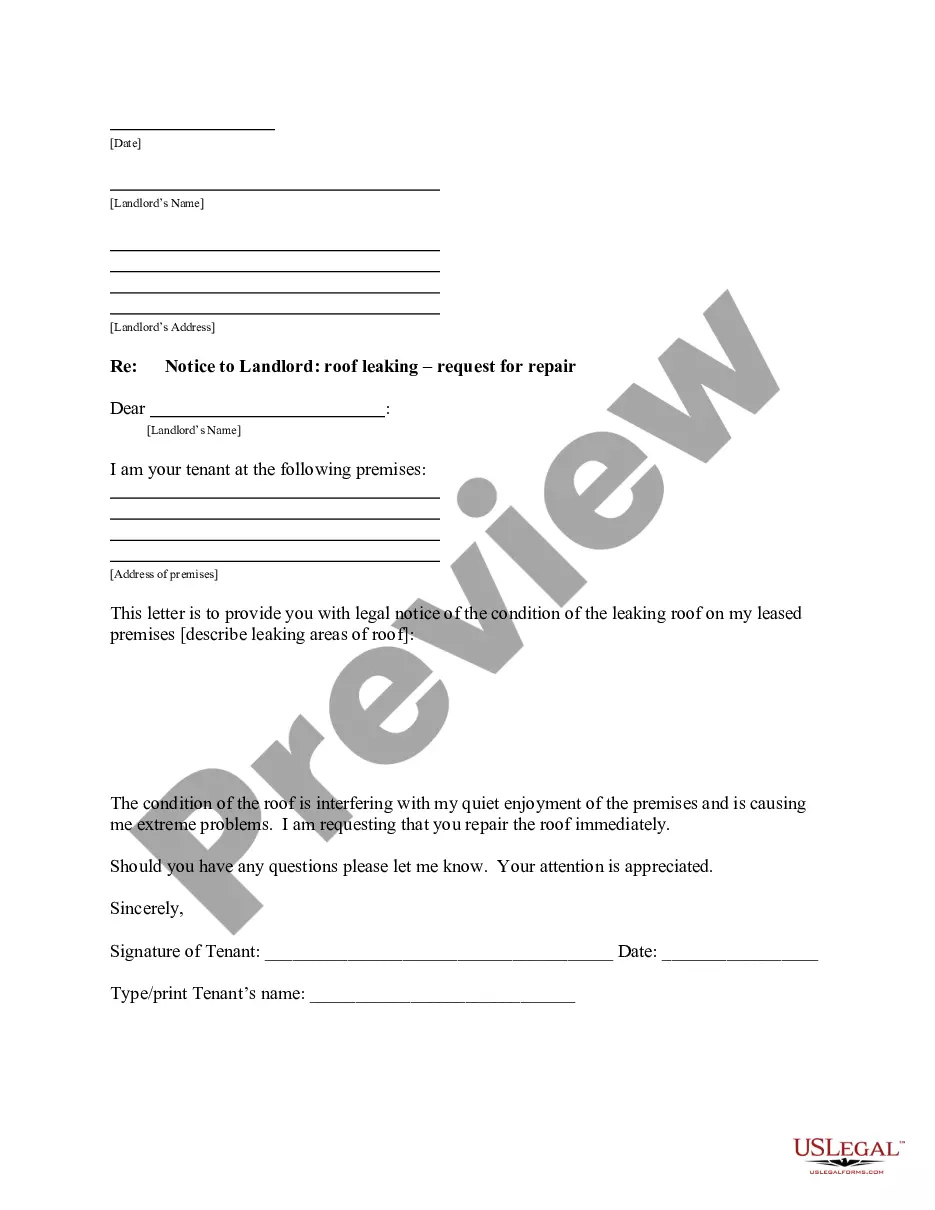
Michigan Residential Real Estate Sales Disclosure Statement
About this form
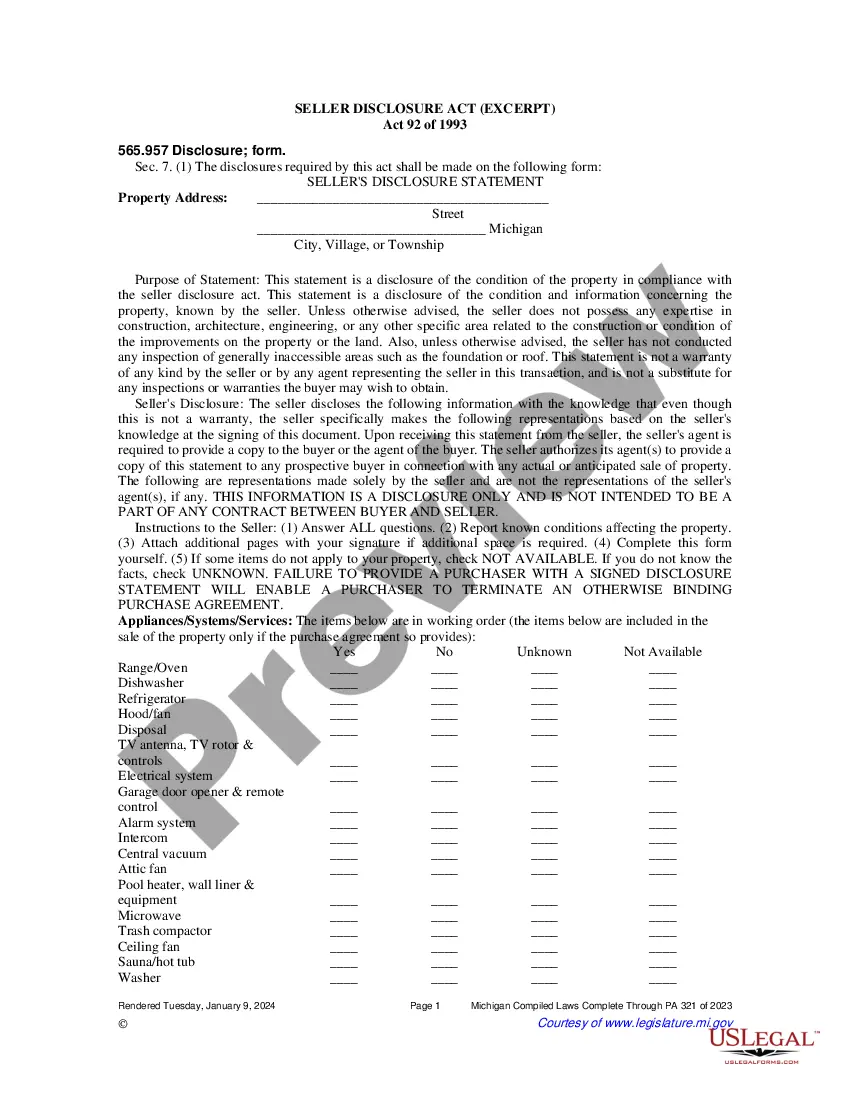
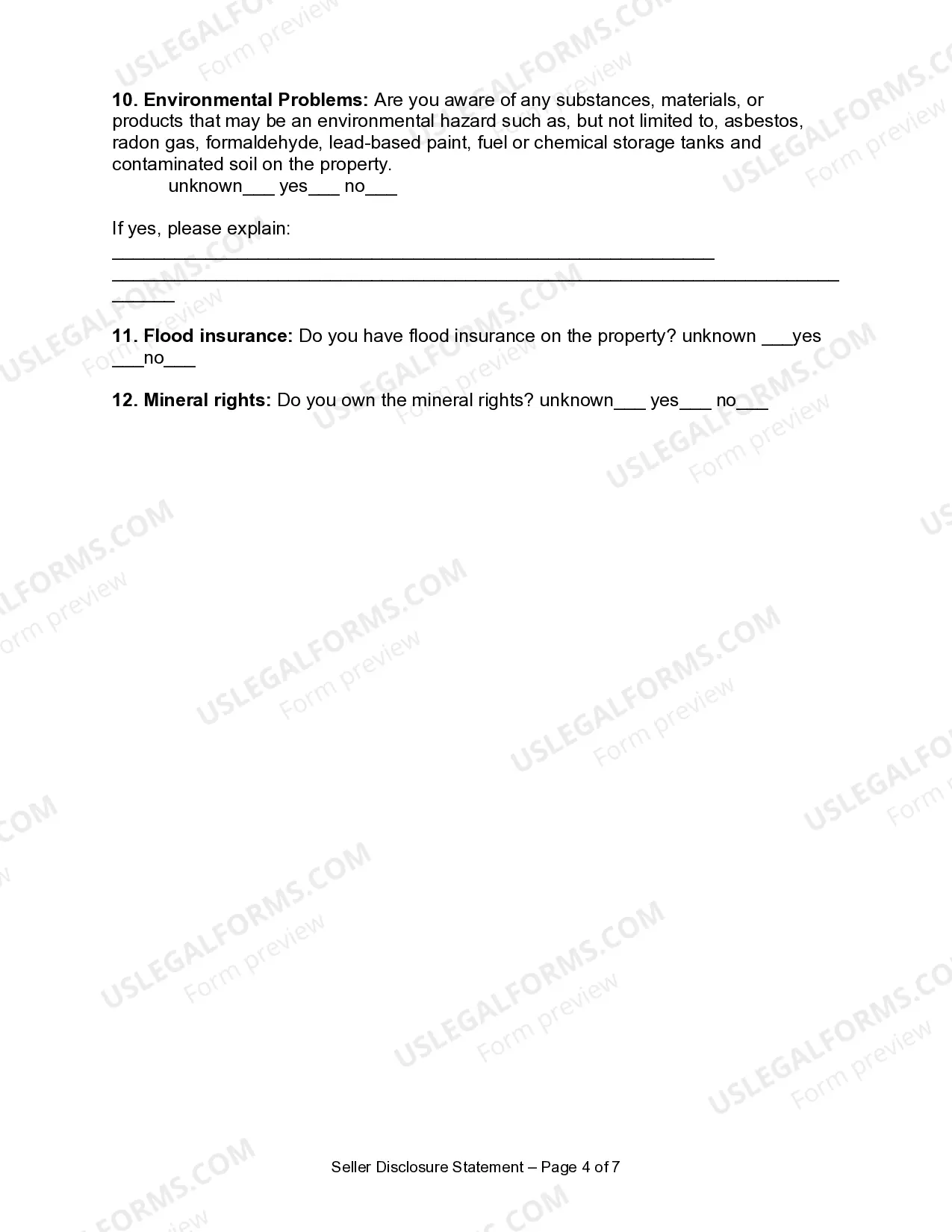
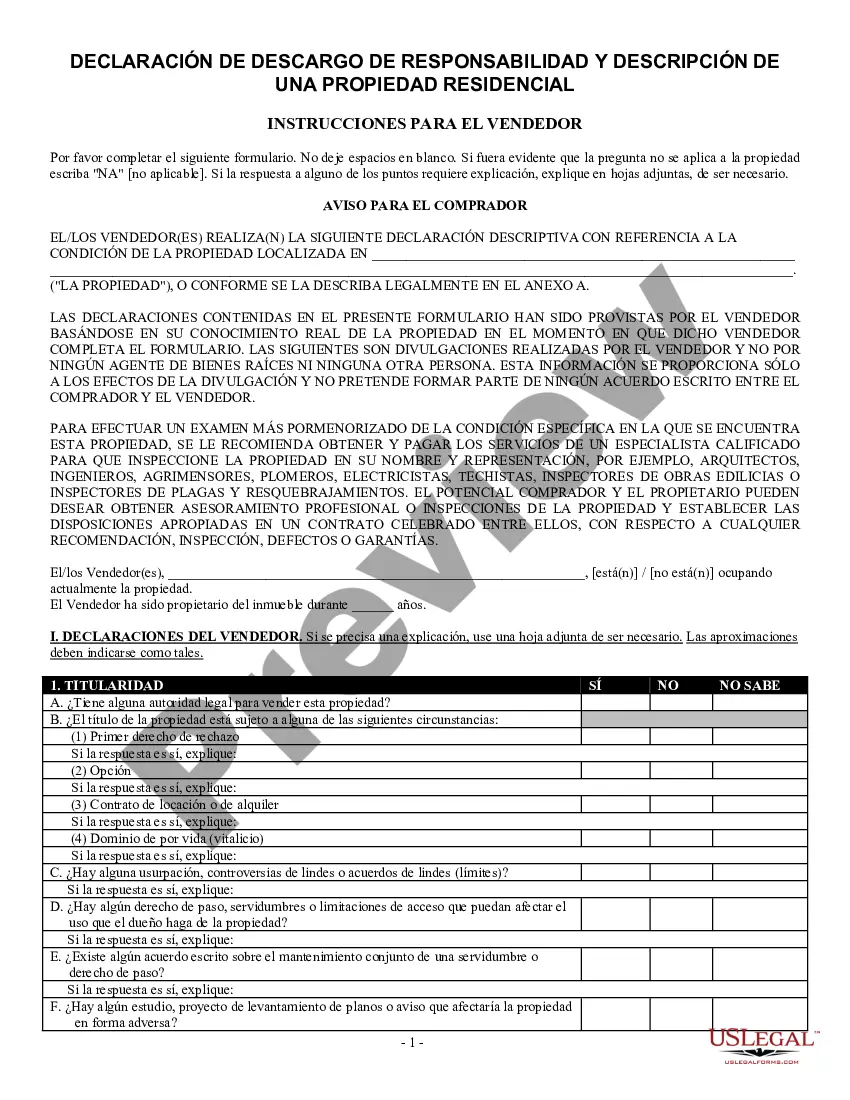
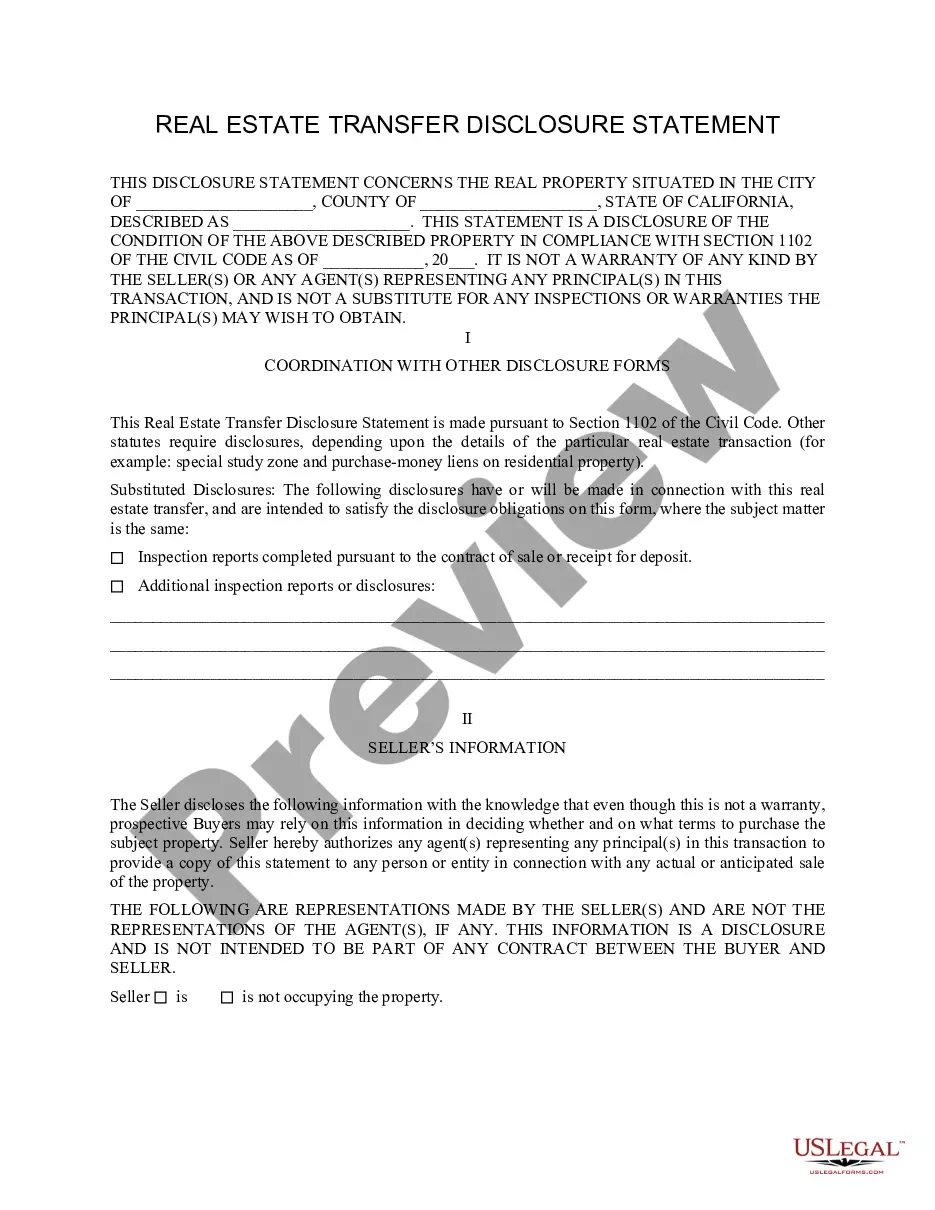
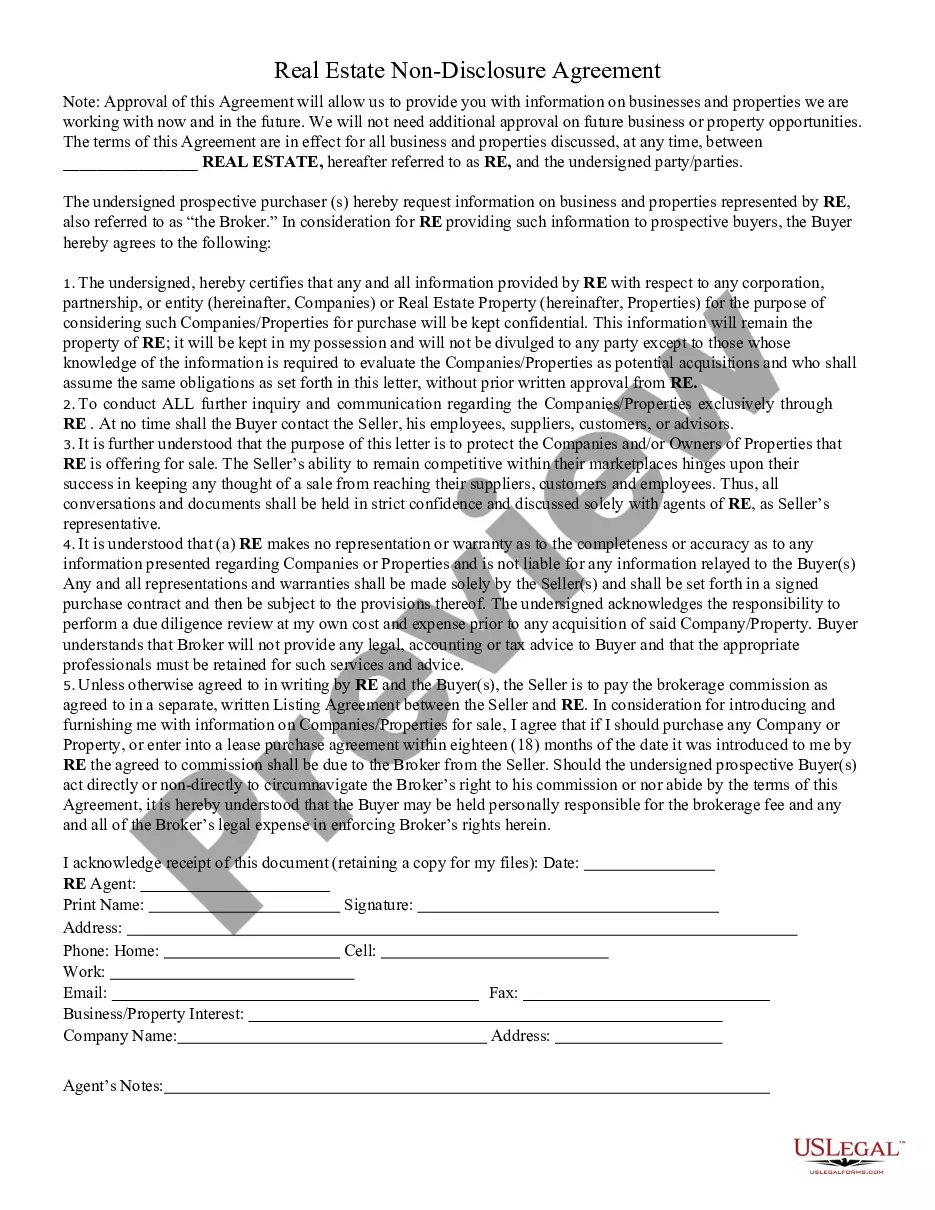
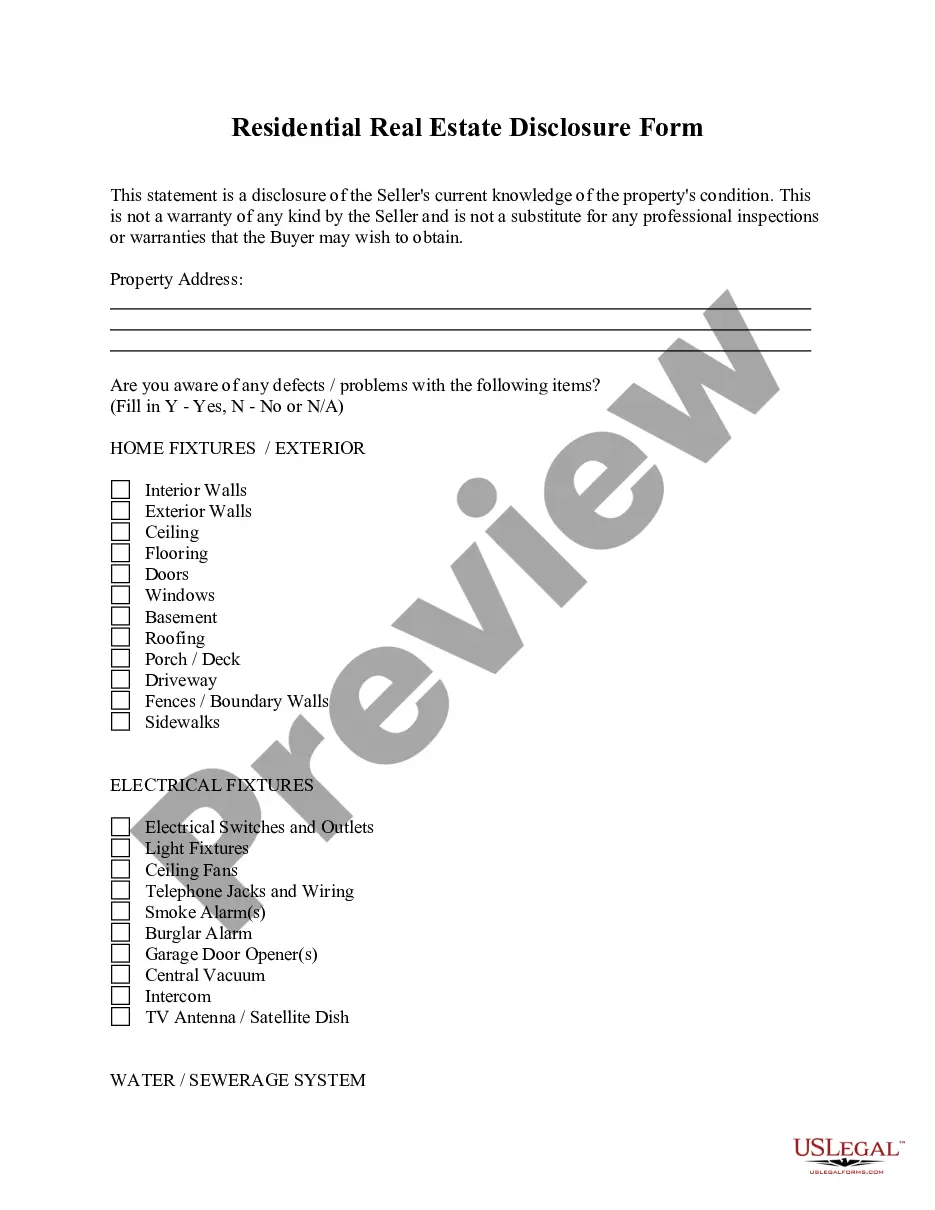
The Residential Real Estate Sales Disclosure Statement is a legal form used by sellers in Michigan to report the condition of a residential property during a sales transaction. This form differs from similar documents by emphasizing that it is a disclosure, not a warranty. Sellers provide information based on their knowledge, helping buyers understand potential concerns regarding the propertyâs condition.
Main sections of this form
- Property address where the disclosure applies.
- Sellerâs disclosure of known conditions affecting the property's value.
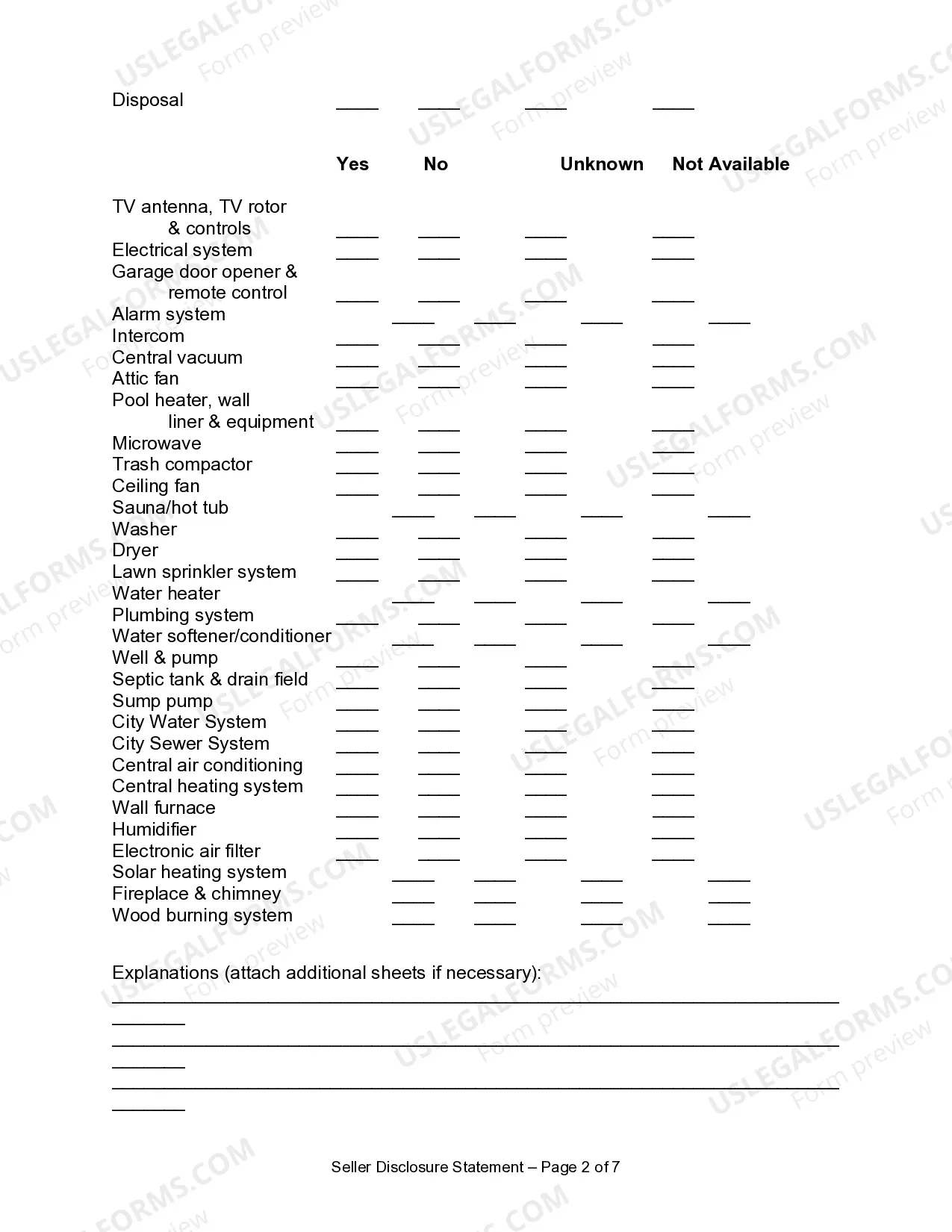
- List of appliances and systems included in the sale and their working status.
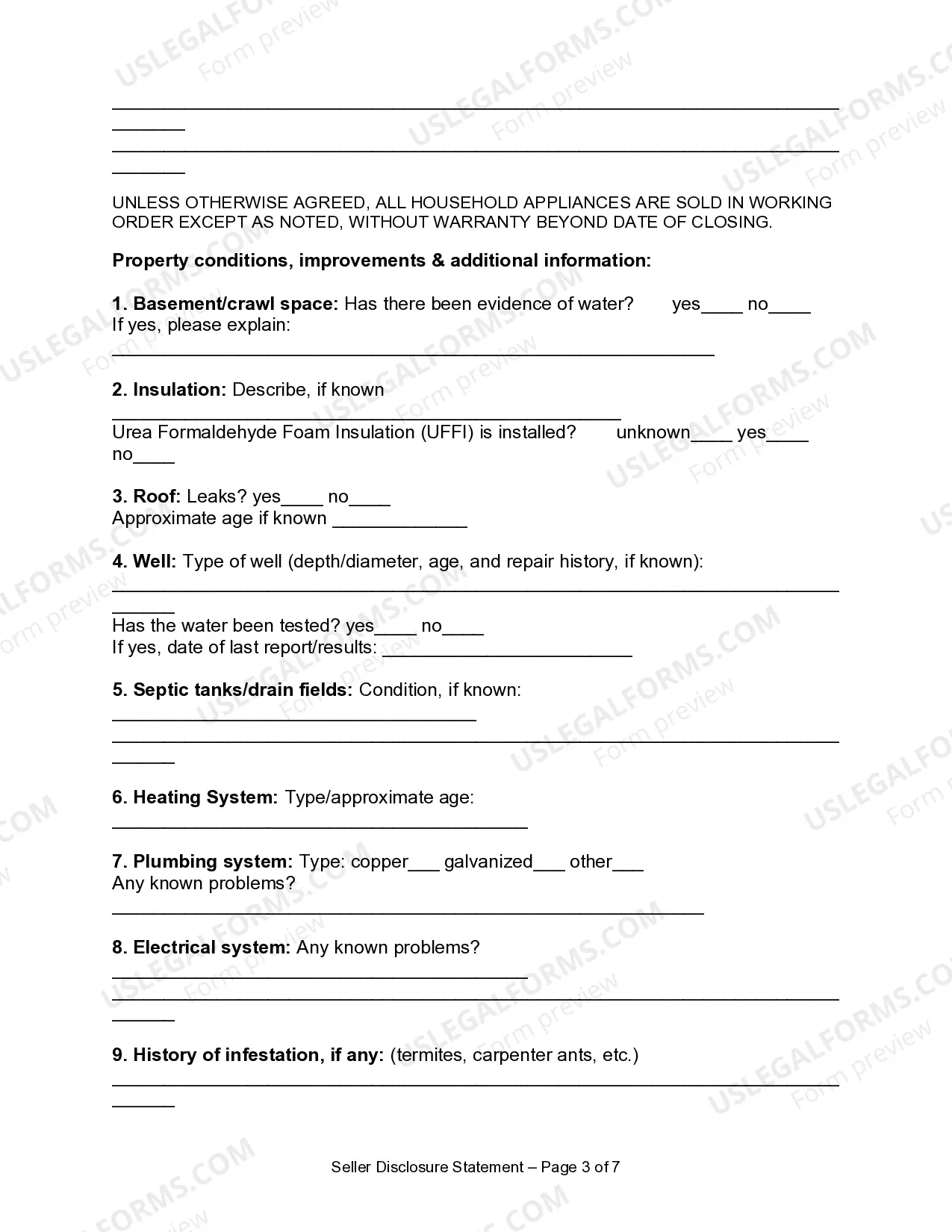
- Detailed questions about property conditions, like water damage and history of infestations.
- Sellerâs certification of the information provided in the statement.
When to use this document
This form should be used when selling residential property in Michigan. It is required before a purchase agreement is finalized, ensuring that buyers receive essential information about the property upfront. The disclosure allows buyers to make informed decisions regarding their potential investment, particularly if there are necessary inspections needed.
Who needs this form
- Homeowners selling residential property in Michigan.
- Real estate agents representing sellers in a transaction.
- Buyers who want to ensure they have a complete understanding of their potential new homeâs condition.
Steps to complete this form
- Fill in the property address and relevant details of the sale.
- Answer all questions about the propertyâs condition, marking items as "Yes," "No," "Unknown," or "Not Available" as appropriate.
- Detail any known issues or conditions affecting the property, including historic problems or required inspections.
- Sign and date the form to certify the accuracy of the information provided.
- Deliver a copy of the completed statement to the buyer or their agent once the form is filled out.
Does this form need to be notarized?
This form does not typically require notarization unless specified by local law. However, it is important to ensure that all signatures are properly executed to avoid disputes during the sale process.
Get your form ready online
Our built-in tools help you complete, sign, share, and store your documents in one place.
Make edits, fill in missing information, and update formatting in US Legal Forms—just like you would in MS Word.
Download a copy, print it, send it by email, or mail it via USPS—whatever works best for your next step.
Sign and collect signatures with our SignNow integration. Send to multiple recipients, set reminders, and more. Go Premium to unlock E-Sign.
If this form requires notarization, complete it online through a secure video call—no need to meet a notary in person or wait for an appointment.
We protect your documents and personal data by following strict security and privacy standards.
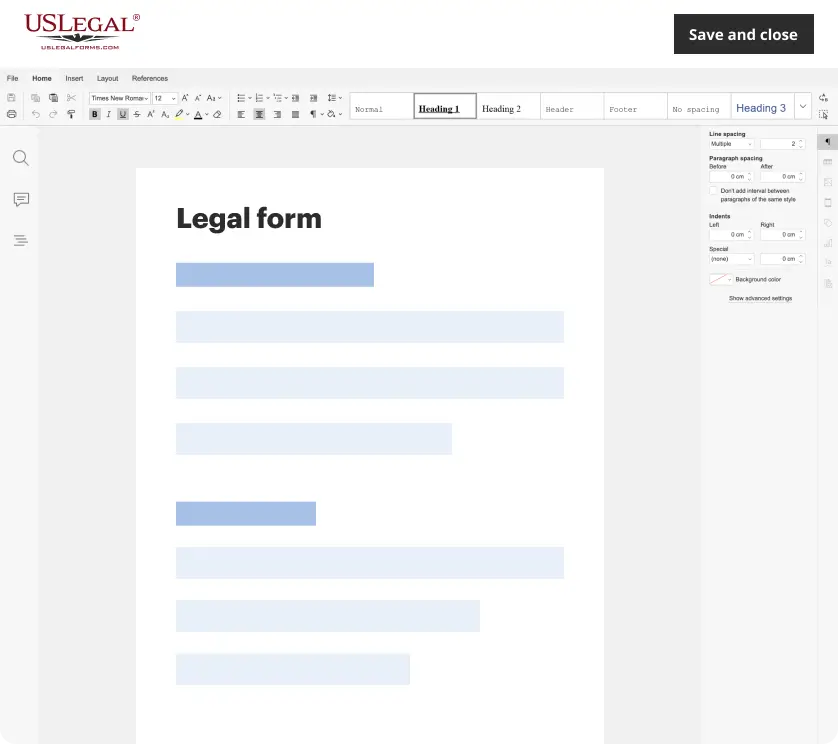
Make edits, fill in missing information, and update formatting in US Legal Forms—just like you would in MS Word.
Download a copy, print it, send it by email, or mail it via USPS—whatever works best for your next step.
Sign and collect signatures with our SignNow integration. Send to multiple recipients, set reminders, and more. Go Premium to unlock E-Sign.

If this form requires notarization, complete it online through a secure video call—no need to meet a notary in person or wait for an appointment.
We protect your documents and personal data by following strict security and privacy standards.
Common mistakes
- Failing to answer all questions completely.
- Providing vague information rather than specific details about property conditions.
- Neglecting to update the disclosure statement if issues arise between the signing date and closing.
Benefits of using this form online
- Convenient access to complete the form at your own pace.
- Editable fields allow sellers to amend answers easily.
- Quick download ensures instant availability for your real estate transaction.
Main things to remember
- Use the Residential Real Estate Sales Disclosure Statement to report the condition of a property in Michigan.
- Ensure all known information about the property's condition is included.
- Buyers should rely on this disclosure to make informed decisions, but are encouraged to conduct their own inspections.
Looking for another form?
Form popularity
FAQ
Whenever you sell real estate, you are obligated to follow local mandatory disclosure laws. This involves informing the buyer about specific hazards or problems affecting the property before the sale is completed.
It includes the name of the organization, the party of the loans, approval, date, and place at which the document was signed, key terms such as tenure of the loan, interest charged, annual percentage rate, total processing fees, loan statement, prepayment terms, and various other information including the terms
California, like many states, requires its residential property sellers to disclose, in writing, details about the property they have on the market.
In general, you have an obligation to disclose potential problems and material defects that could affect the value of the property you're trying to sell. In addition, it is considered illegal in most states to deliberately conceal major defects on your property.
California's Especially Stringent Disclosure Requirements Sellers must fill out and give the buyers a disclosure form listing a broad range of defects, such as a leaky roof, deaths that occurred within three years on the property, neighborhood nuisances such as a dog that barks every night, and more.
In Michigan, seller's of owner occupied residential property up to 4 units, are required by law to complete a Seller's Disclosure Statement.In this statement the seller must disclose the condition of the property and any other information concerning the property that is known to the seller.
Under California law, all material facts that affect the value or desirability of the property must be disclosed to the buyer. There is no specific definition or rule on what is considered to be a material fact.
Michigan disclosure laws require a seller to disclose what is personally known about the home, including any imperfections. This could include things like lead-based paint, water damage, hazardous conditions, pest damage, past repairs, past insurance claims, etc.