Michigan Boarding Stable Agreement - Horse Equine Forms
Overview of this form
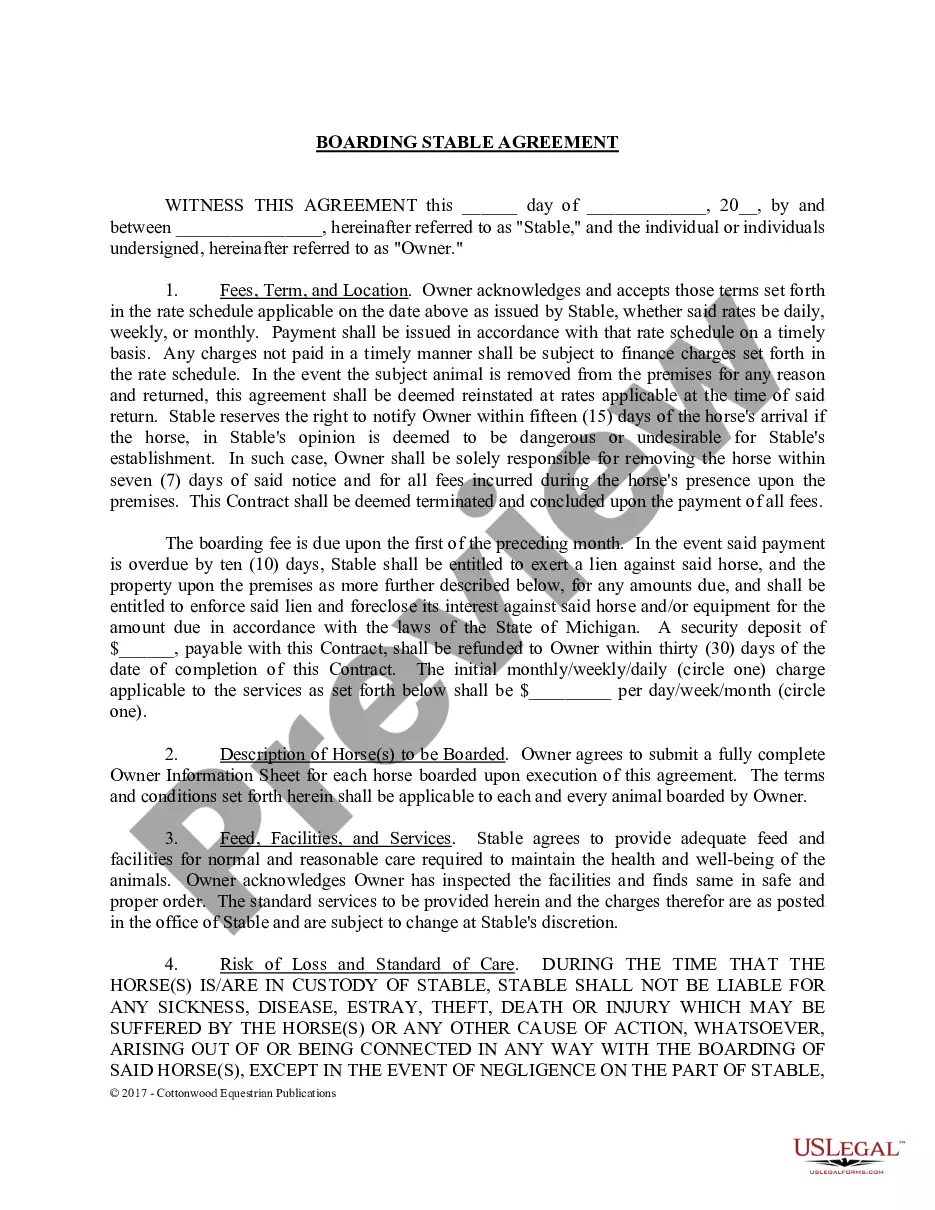
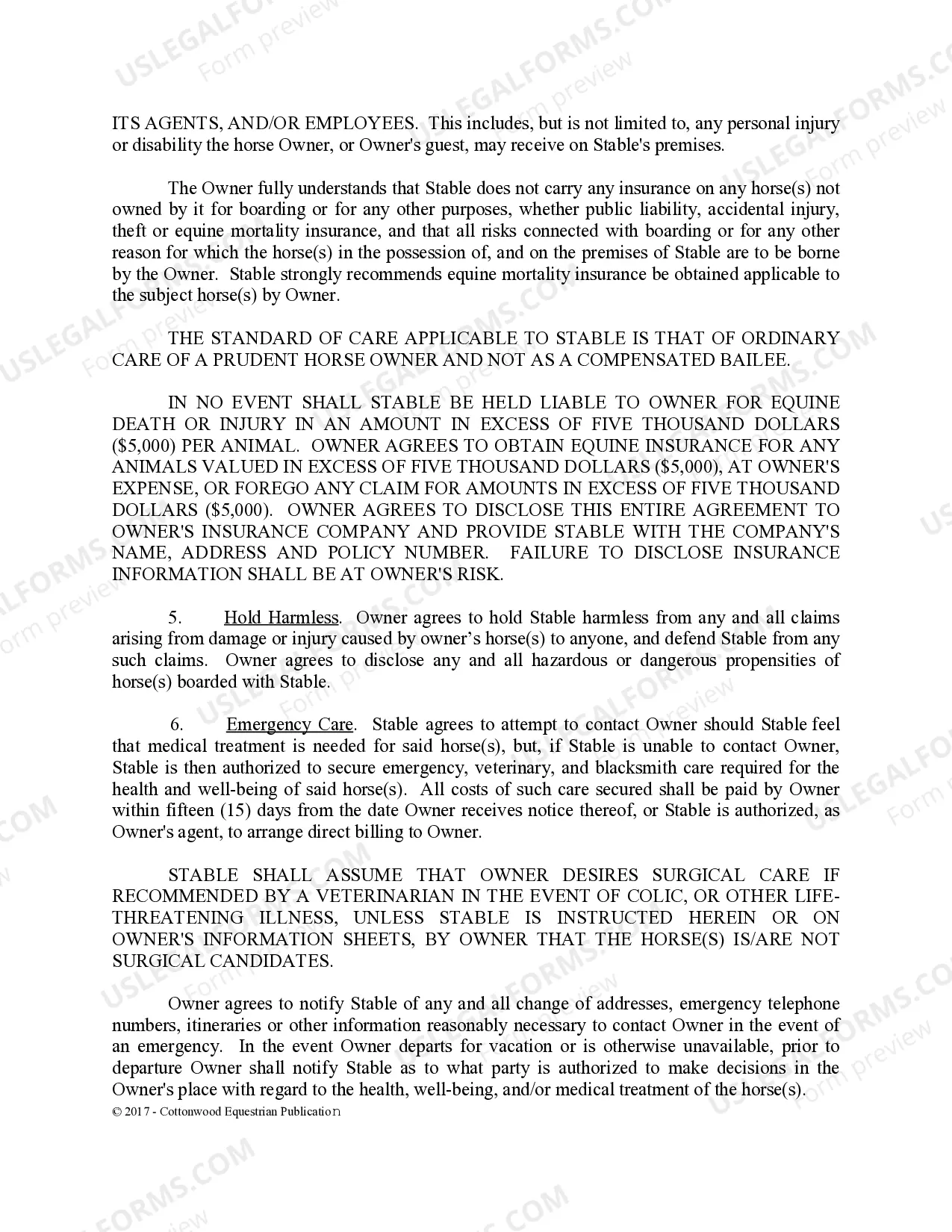
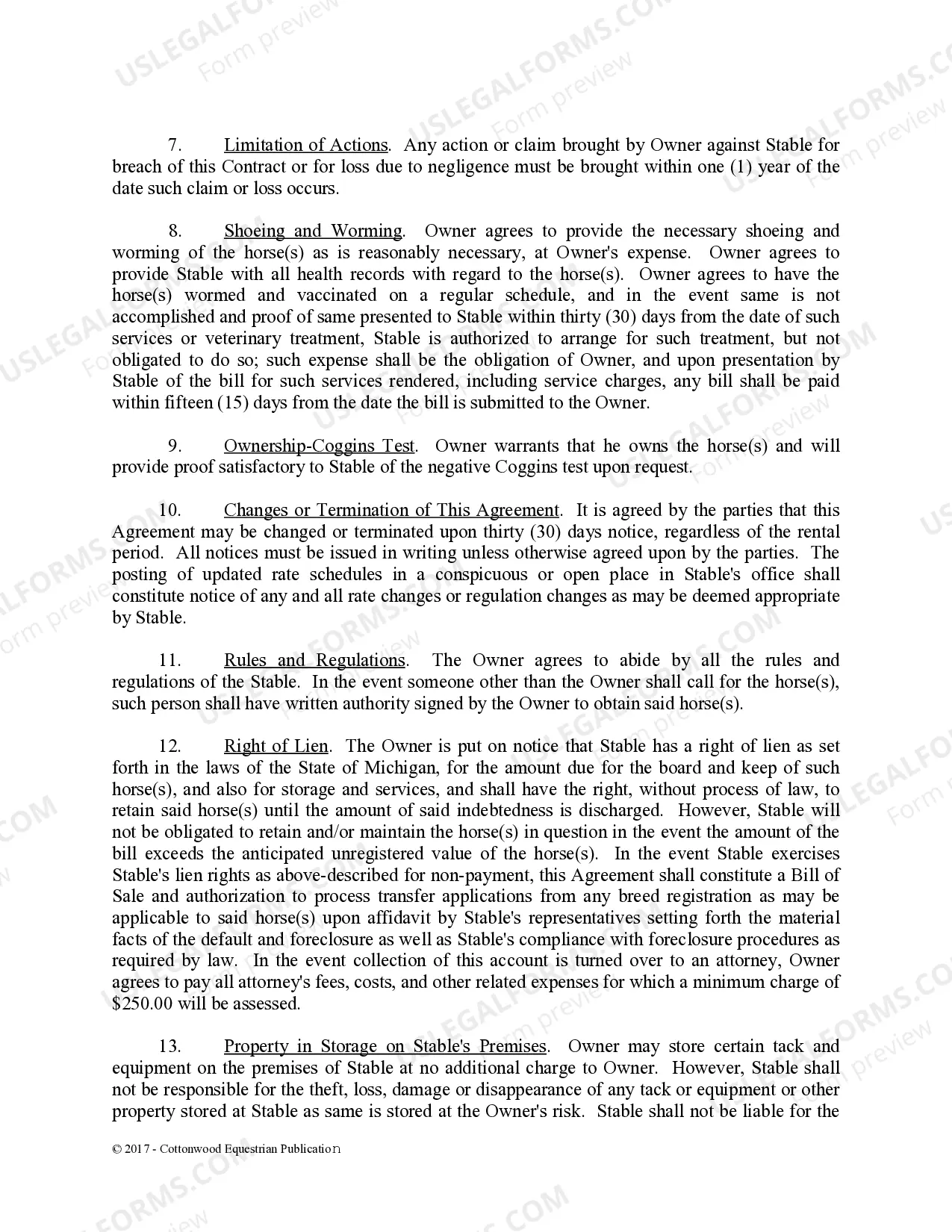
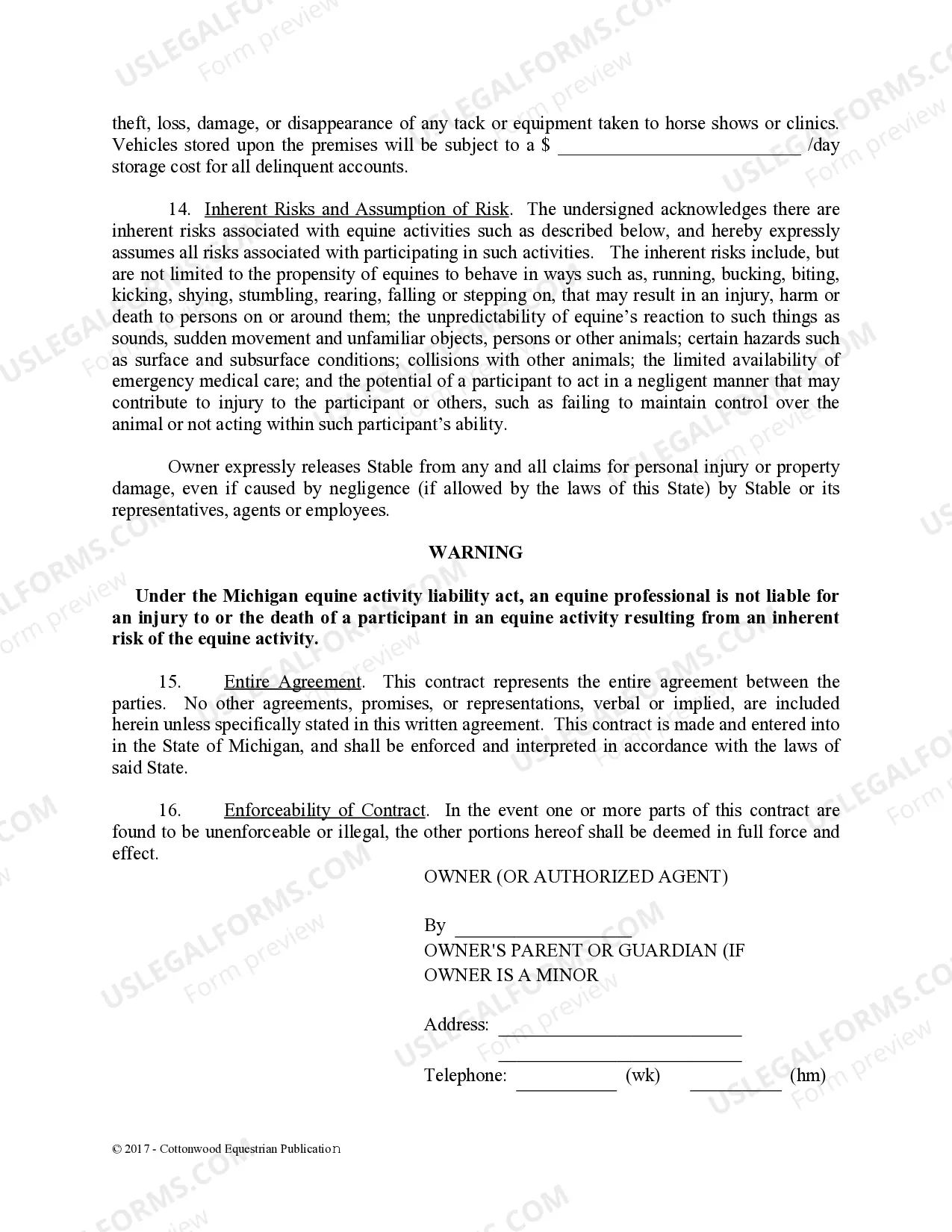
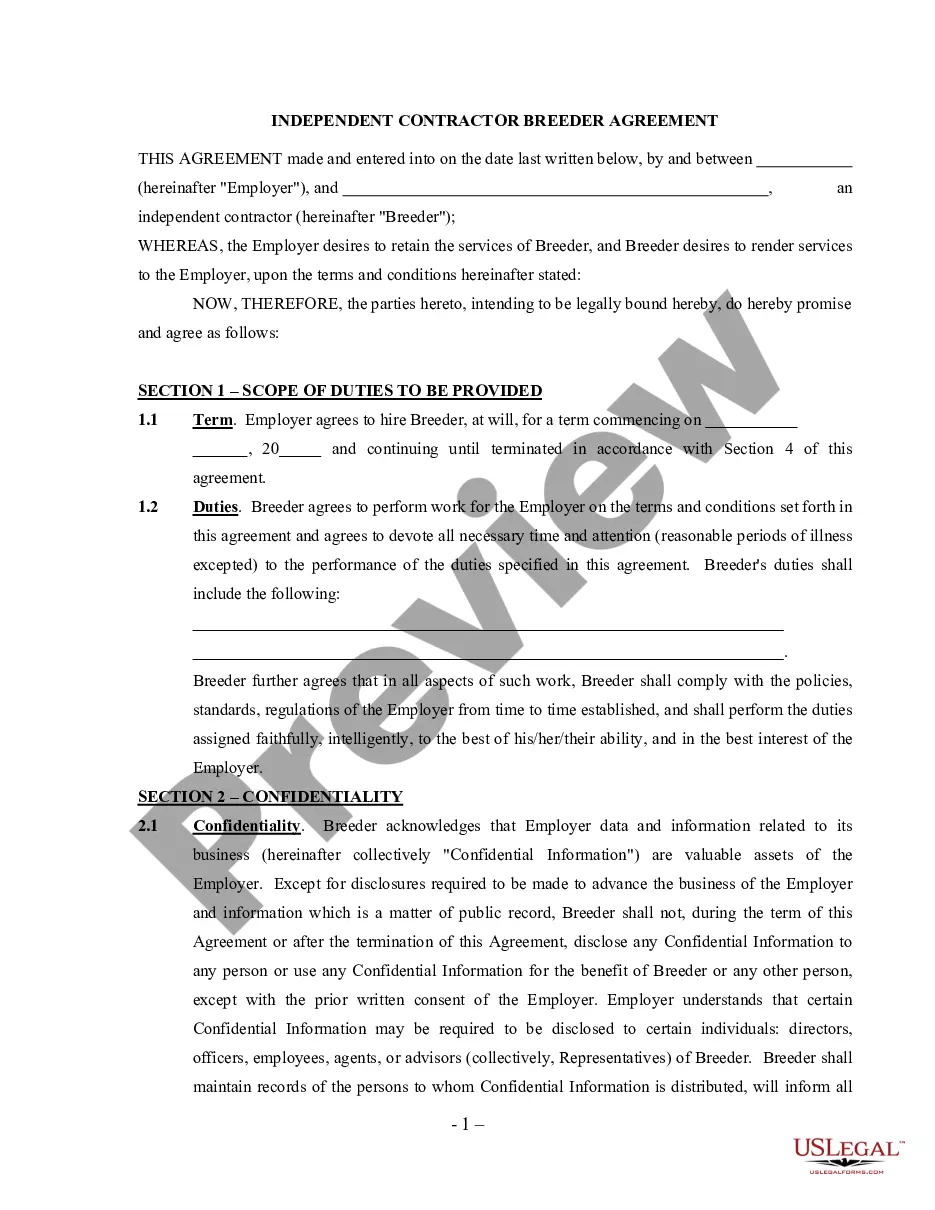
The Boarding Stable Agreement is a legal document that establishes a formal agreement between a stable owner and a horse owner regarding the terms of boarding a horse. This agreement outlines the responsibilities of both parties, including fees, care standards, liabilities, and protocols for emergency situations. It is crucial for ensuring clarity and protecting both parties' interests, distinguishing itself from other equine forms by its detailed provisions tailored for boarding situations.
Key parts of this document
- Fees, term, and location of boarding.
- Description and health requirements of the horse(s).
- Standard of care and liability limitations.
- Emergency medical care protocols.
- Indemnity clause protecting the stable from claims.
- Owner's responsibilities regarding the horse's health and insurance.

When to use this document
This form should be used when a horse owner wishes to board their horse at a stable. It outlines important agreements regarding fees, care standards, and legal responsibilities, serving as a protective measure for both the stable and the horse owner. It's particularly vital when establishing new boarding arrangements or renewing existing ones.
Intended users of this form
This form is suitable for:
- Horse owners seeking a stable for boarding.
- Stable owners providing boarding services.
- Equine professionals managing or operating horse boarding facilities.
How to complete this form
- Identify the parties involved in the agreement: the stable owner and horse owner.
- Complete the fee schedule, indicating payment terms and amounts.
- Provide a description of each horse to be boarded, including health records.
- Specify conditions for emergency medical care, including contact information.
- Ensure all parties sign and date the agreement to acknowledge acceptance of terms.
Is notarization required?
Notarization is generally not required for this form. However, certain states or situations might demand it. You can complete notarization online through US Legal Forms, powered by Notarize, using a verified video call available anytime.
Get your form ready online
Our built-in tools help you complete, sign, share, and store your documents in one place.
Make edits, fill in missing information, and update formatting in US Legal Forms—just like you would in MS Word.
Download a copy, print it, send it by email, or mail it via USPS—whatever works best for your next step.
Sign and collect signatures with our SignNow integration. Send to multiple recipients, set reminders, and more. Go Premium to unlock E-Sign.
If this form requires notarization, complete it online through a secure video call—no need to meet a notary in person or wait for an appointment.
We protect your documents and personal data by following strict security and privacy standards.

Make edits, fill in missing information, and update formatting in US Legal Forms—just like you would in MS Word.

Download a copy, print it, send it by email, or mail it via USPS—whatever works best for your next step.

Sign and collect signatures with our SignNow integration. Send to multiple recipients, set reminders, and more. Go Premium to unlock E-Sign.

If this form requires notarization, complete it online through a secure video call—no need to meet a notary in person or wait for an appointment.

We protect your documents and personal data by following strict security and privacy standards.
Common mistakes
- Failing to provide an accurate description of the horse(s).
- Not disclosing any hazardous behaviors of the horse.
- Overlooking details regarding payment deadlines and late fees.
- Neglecting to communicate changes in contact information for emergencies.
- Not ensuring all parties sign the agreement.
Why use this form online
- Immediate access to professionally drafted legal documentation.
- Ability to customize the agreement to suit specific boarding arrangements.
- Easy download and storage options for future reference.
- Time-saving compared to meeting with an attorney for document creation.
Legal use & context
- This agreement establishes a clear contract between the horse owner and the stable, ensuring both parties understand their rights and obligations.
- It is enforceable under Michigan law, particularly regarding related liability and lien rights.
- Both parties should keep a signed copy for reference in case of any disputes.
Looking for another form?
Form popularity
FAQ
Schedule F is used to report farm income, including specific revenues like horse boarding fees. Any income generated from boarding horses should be included here, alongside related expenses. With the Michigan Boarding Stable Agreement - Horse Equine Forms, you can easily categorize and calculate your income and deductions, making tax preparation more straightforward.
Yes, failing to report rental income, including income from horse boarding, can lead to penalties from the IRS. It is crucial to keep meticulous records and report any income accurately to avoid legal issues. Using the Michigan Boarding Stable Agreement - Horse Equine Forms can help you maintain organized records of your income, ensuring compliance with tax laws.
To start a horse boarding business, you'll need a suitable facility, proper licenses, insurance, and a clear business plan. Additionally, having legal documents, like the Michigan Boarding Stable Agreement - Horse Equine Forms, will help formalize your operations and establish clear agreements with clients, which is vital for maintaining trust and transparency.
Yes, you can claim horse boarding as taxable income on your taxes. It is essential to maintain proper records of all income and expenses related to your boarding activities. Utilizing the Michigan Boarding Stable Agreement - Horse Equine Forms will assist in tracking these details effectively, ensuring you can maximize your deductions.
You should report horse boarding income on your federal tax return. Typically, this income is reported on Schedule F, which is used for farm income. The Michigan Boarding Stable Agreement - Horse Equine Forms can help you organize and document your income accurately, making the reporting process easier.
Yes, a horse boarding business can be profitable with the right management and facilities. Factors such as location, services offered, and the quality of care play significant roles in determining success. A solid Michigan Boarding Stable Agreement - Horse Equine Forms can aid in establishing clear terms and expectations, which is essential for attracting clients. With a focus on customer satisfaction and optimized operations, your boarding business can thrive.
The 20% rule states that horses should consume no more than 20% of their body weight in feed and forage each day. This guideline helps ensure that horses receive proper nutrition without overfeeding, which can lead to health issues. Including this rule in your Michigan Boarding Stable Agreement - Horse Equine Forms can help outline feeding practices for a healthy boarding environment. Proper management should always be a top priority for horse owners.
In Michigan, it is commonly recommended to have at least one to two acres of land for each horse you own. This provides adequate space for grazing, exercise, and stable facilities, promoting the horse’s well-being. When drafting a Michigan Boarding Stable Agreement - Horse Equine Forms, you should take into account land requirements for the best experience for both you and your equine friends. Ultimately, the more space you can provide, the happier and healthier your horse will be.
Yes, it is advisable to have insurance when you board horses. Insurance can protect you from potential liabilities associated with injuries or accidents that may occur while horses are under your care. A well-crafted Michigan Boarding Stable Agreement - Horse Equine Forms can also help clarify the responsibilities and risks involved. Therefore, consider discussing insurance options with your boarding facility.
To create a horse boarding contract, start by outlining the terms of the arrangement. Include details such as the duration of the stay, services provided, and payment terms. Incorporate specific clauses that address responsibilities for both the barn owner and the horse owner, ensuring clarity on care and liability. Utilizing the Michigan Boarding Stable Agreement - Horse Equine Forms can help you develop a comprehensive and legally sound contract.