Maryland Last Will and Testament for Divorced Person Not Remarried with No Children
What this document covers
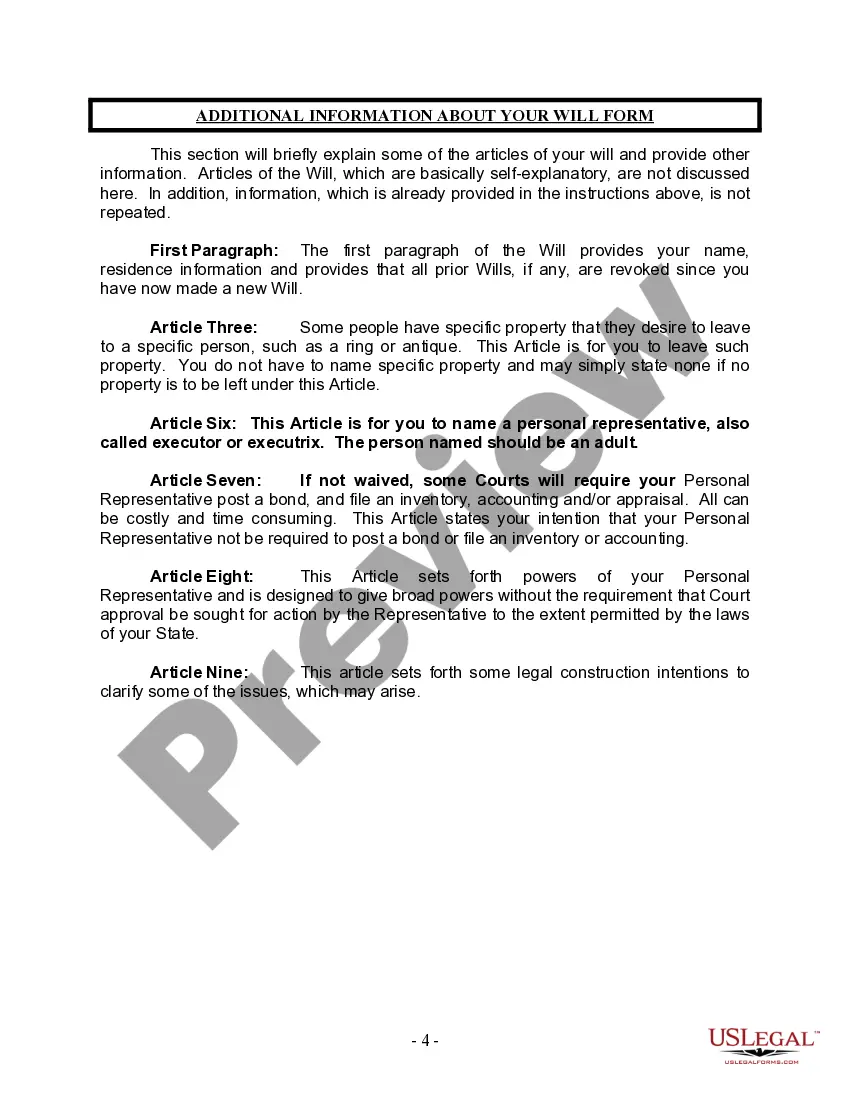
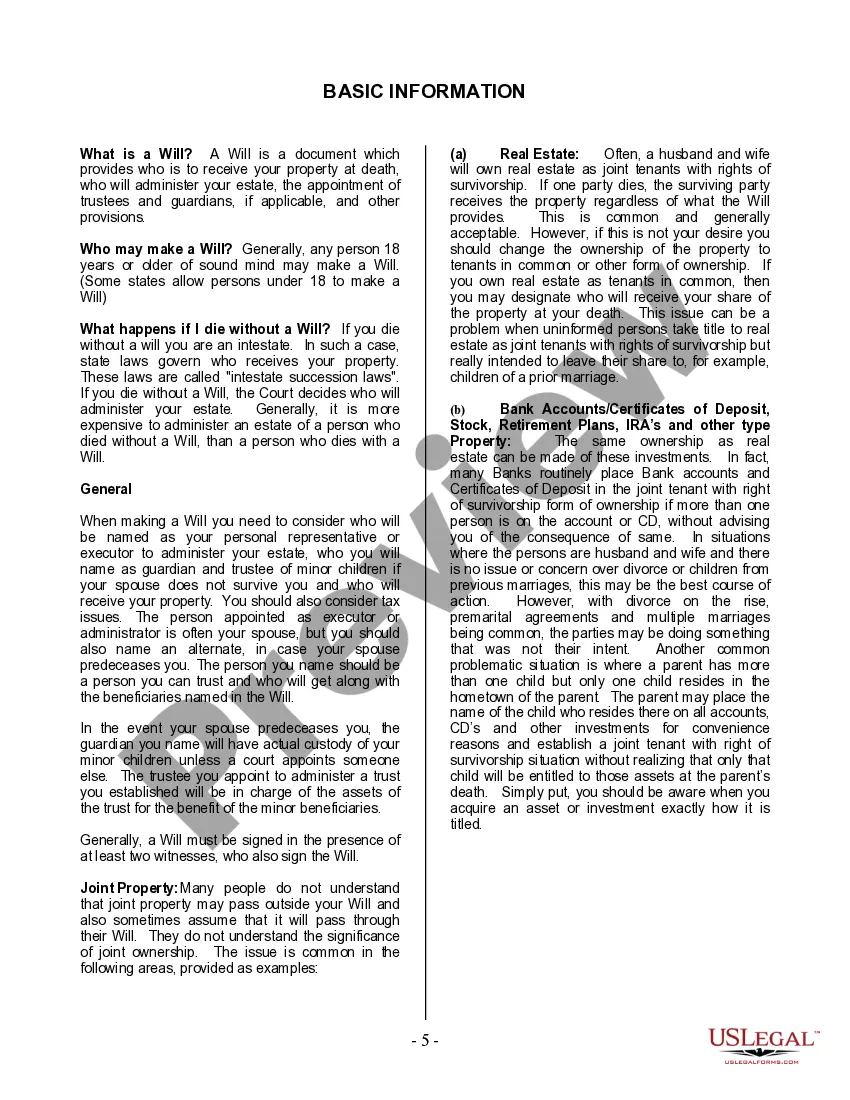
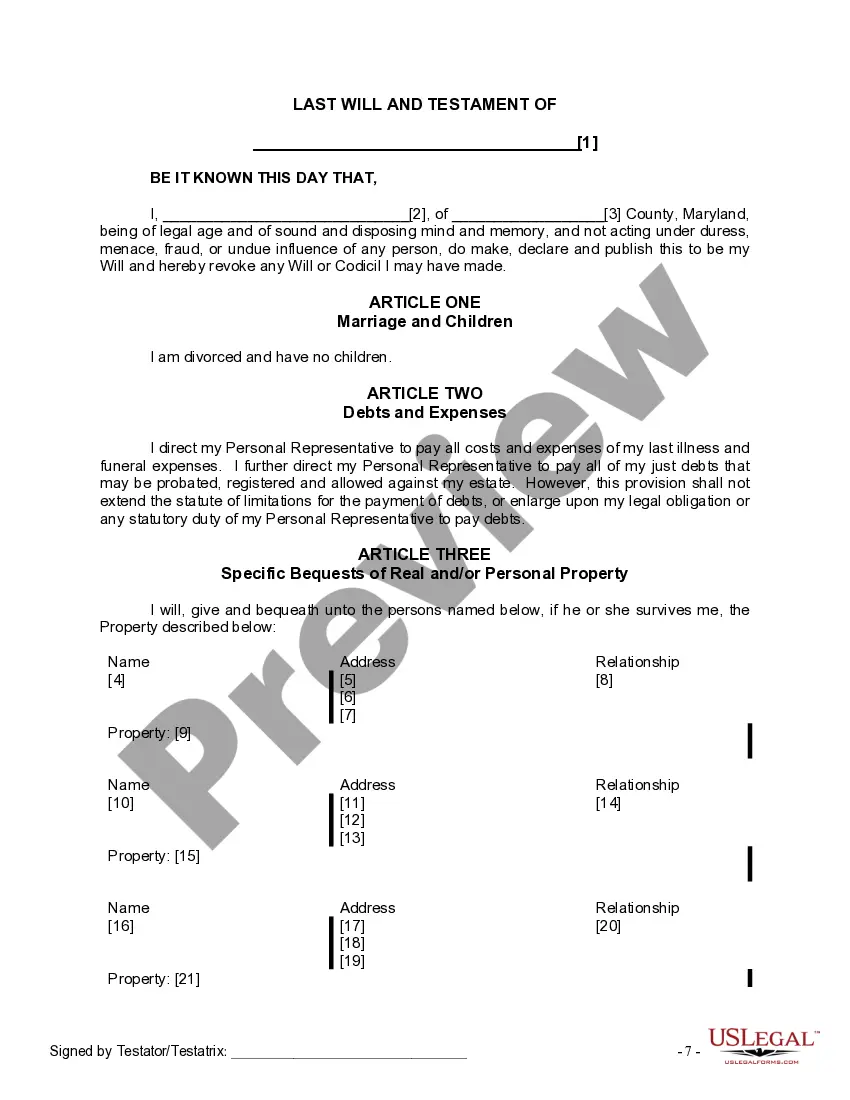
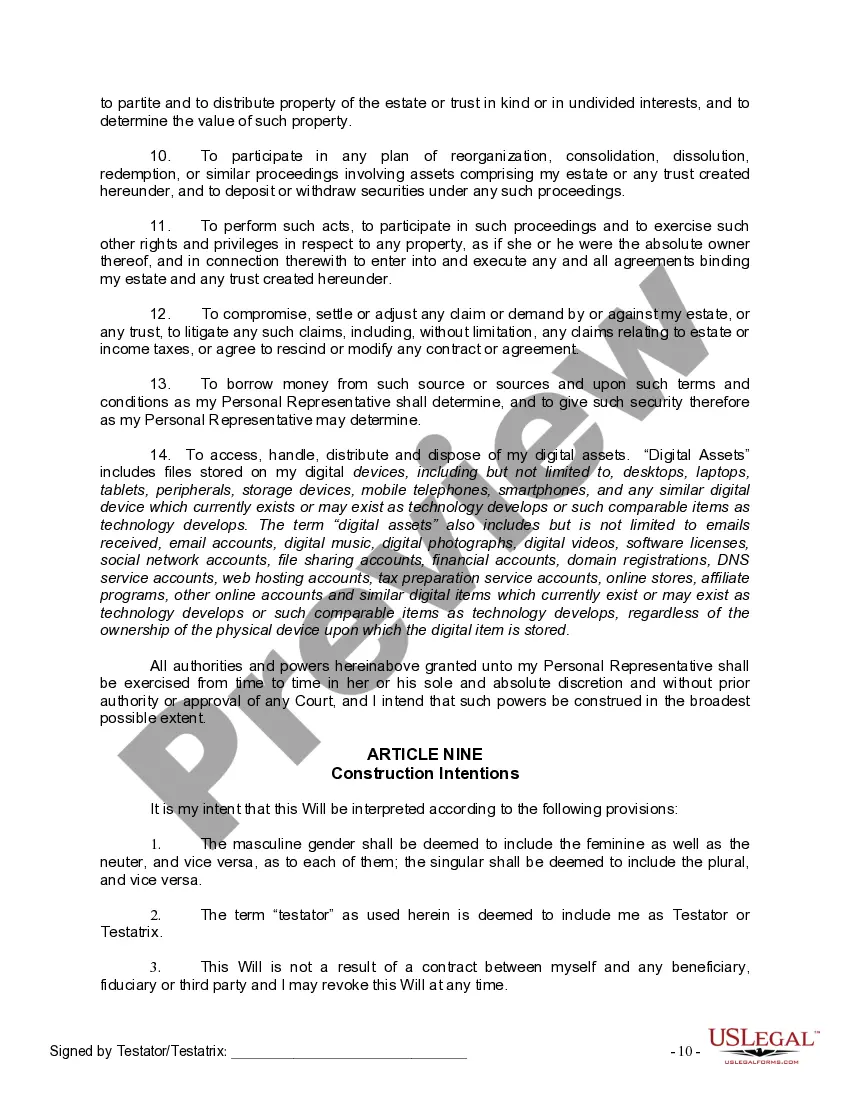
The Last Will and Testament for Divorced Person Not Remarried with No Children is a legal document that specifies how your estate will be distributed after your death. This form is tailored for individuals who have been divorced, are not remarried, and do not have children. It allows you to appoint a personal representative, designate beneficiaries to receive your property, and outline specific wishes regarding your estate. Unlike general wills, this form takes into account your unique situation to ensure your intentions are clearly documented.
Key components of this form
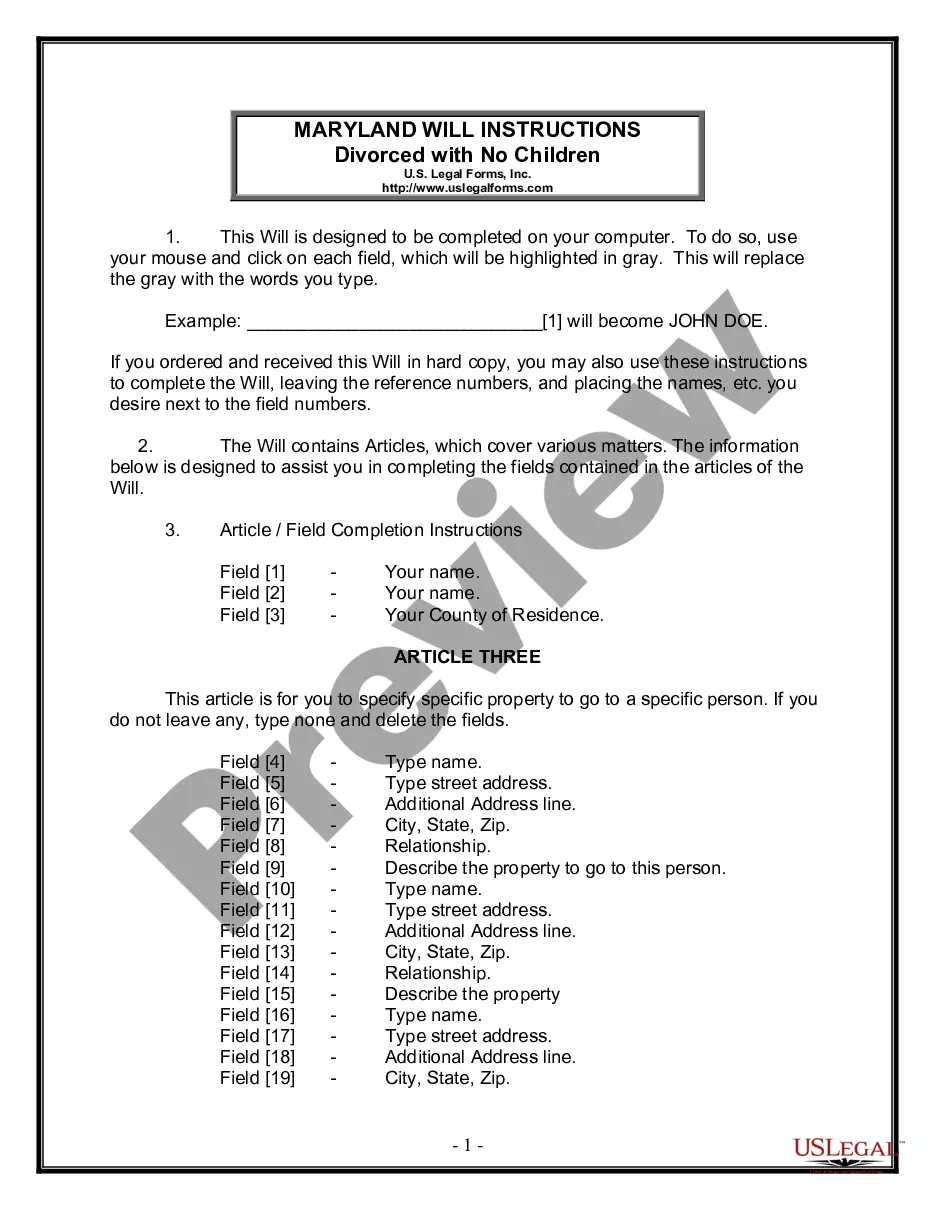
- Personal Information: Includes fields for your name and county of residence.
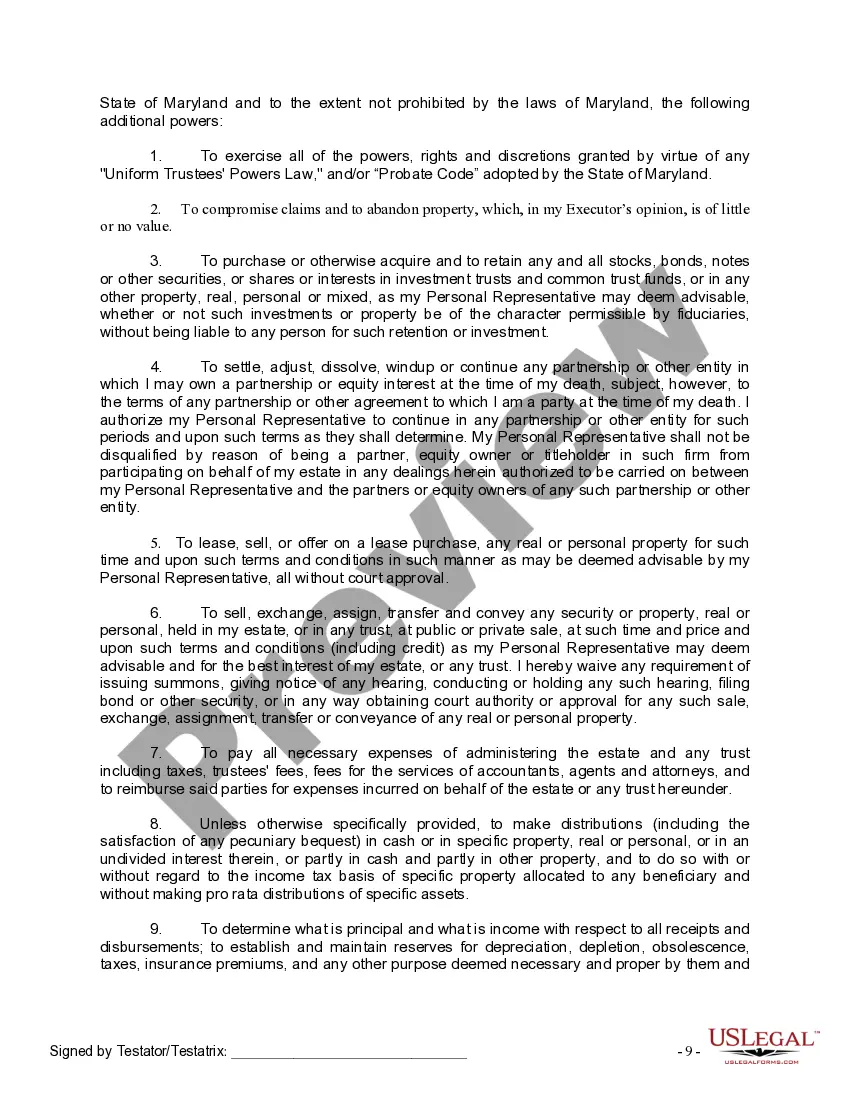
- Specific Bequests: Designates specific property to individuals if desired.
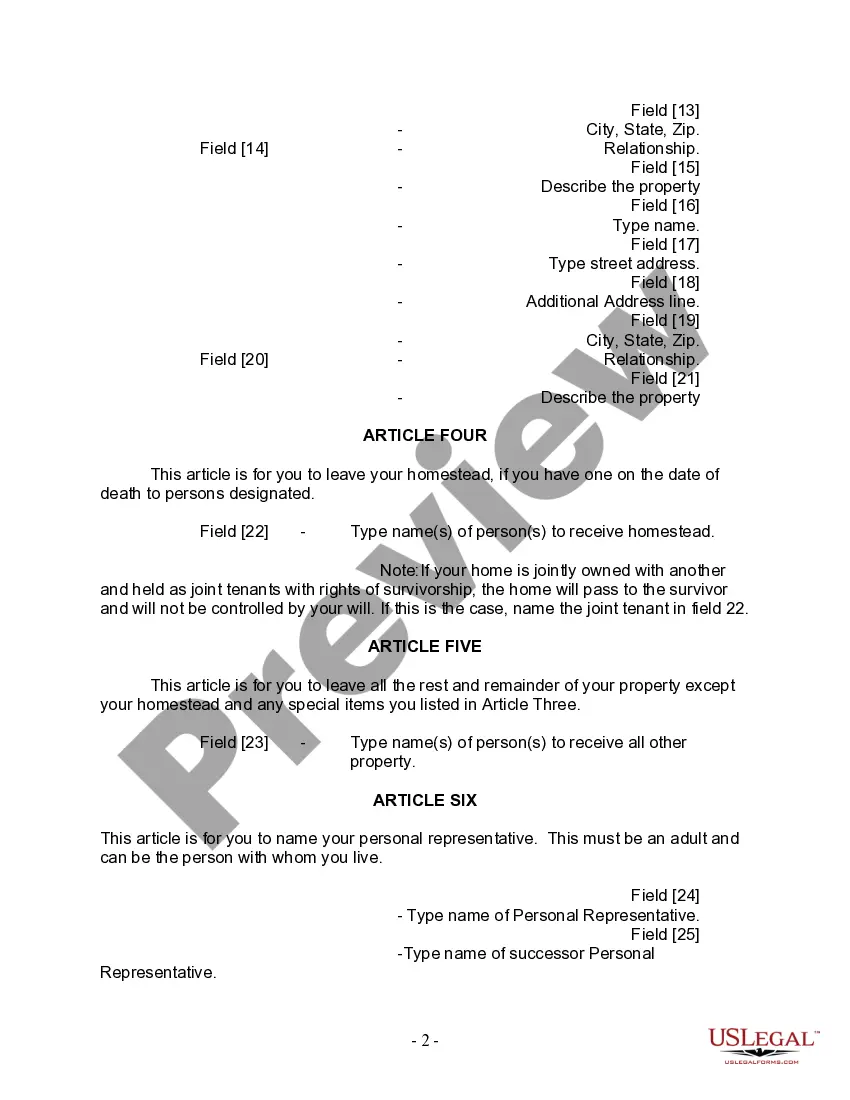
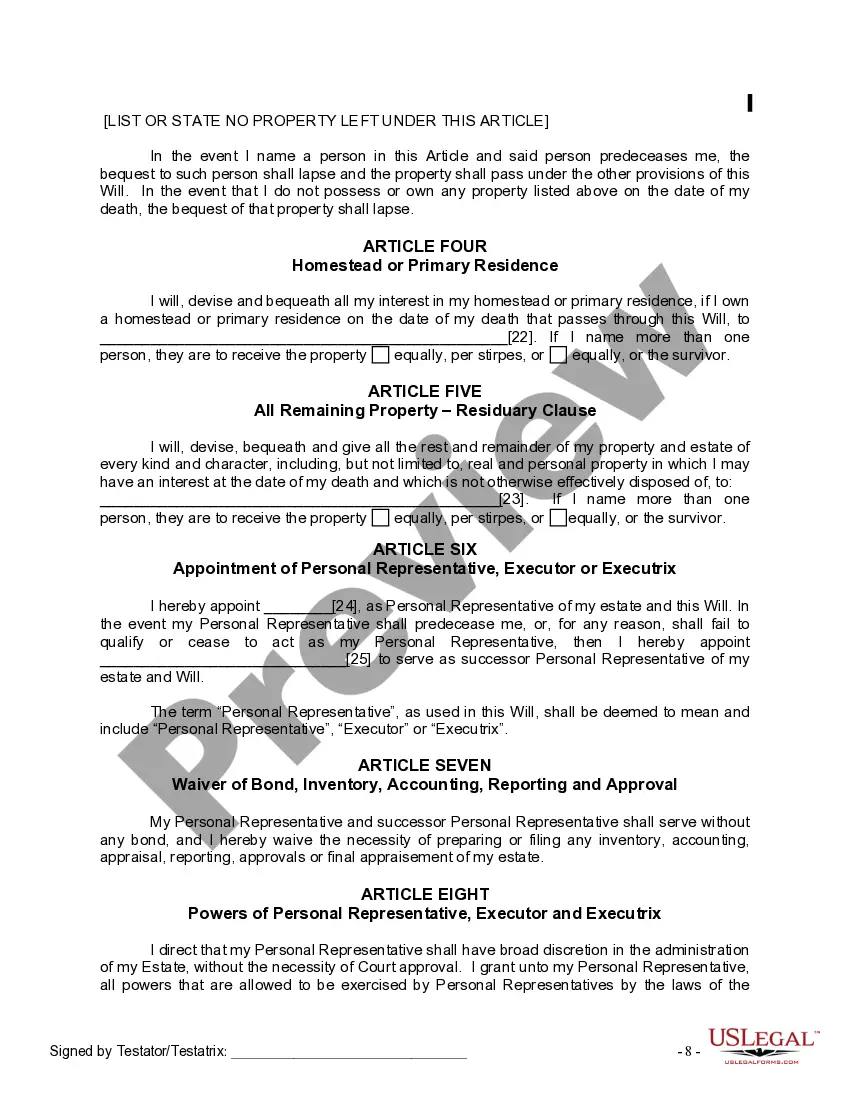
- Homestead Provision: Allows you to leave your primary residence to named individuals.
- Residuary Clause: Distributes all remaining property not specifically bequeathed.
- Personal Representative Appointment: Names an executor to manage your estate.
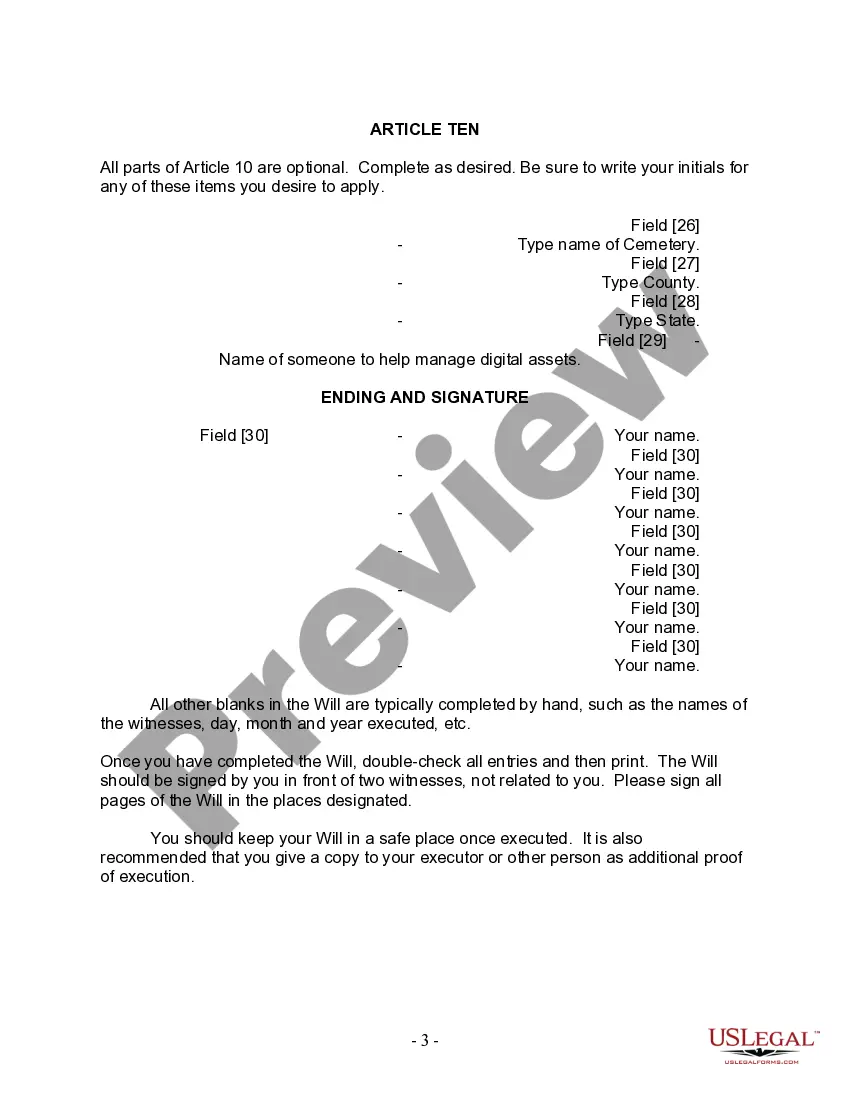
- Optional Provisions: Allows for additional choices regarding burial or cremation instructions.


When this form is needed
This form is suitable for individuals who have experienced a divorce, do not have children, and wish to ensure their assets are distributed according to their wishes after their passing. It is particularly useful if you have specific beneficiaries in mind for your property or wish to appoint someone to manage your estate without the complications of intestate succession.
Who needs this form
- Divorced individuals who have not remarried.
- People with no children who want to designate their property distribution.
- Individuals looking for a simple way to express their final wishes regarding their estate.
How to prepare this document
- Input your personal information, including your name and county of residence.
- Designate any specific property and the names of individuals to receive these items.
- Specify your homestead and beneficiaries for your remaining estate.
- Appoint a personal representative to manage your estate after your passing.
- Sign the will in the presence of two witnesses who are not beneficiaries.
- Store the completed will in a safe location and provide copies to your appointed executor.
Notarization guidance
This form usually doesn’t need to be notarized. However, local laws or specific transactions may require it. Our online notarization service, powered by Notarize, lets you complete it remotely through a secure video session, available 24/7.
Get your form ready online
Our built-in tools help you complete, sign, share, and store your documents in one place.
Make edits, fill in missing information, and update formatting in US Legal Forms—just like you would in MS Word.
Download a copy, print it, send it by email, or mail it via USPS—whatever works best for your next step.
Sign and collect signatures with our SignNow integration. Send to multiple recipients, set reminders, and more. Go Premium to unlock E-Sign.
If this form requires notarization, complete it online through a secure video call—no need to meet a notary in person or wait for an appointment.
We protect your documents and personal data by following strict security and privacy standards.

Make edits, fill in missing information, and update formatting in US Legal Forms—just like you would in MS Word.

Download a copy, print it, send it by email, or mail it via USPS—whatever works best for your next step.

Sign and collect signatures with our SignNow integration. Send to multiple recipients, set reminders, and more. Go Premium to unlock E-Sign.

If this form requires notarization, complete it online through a secure video call—no need to meet a notary in person or wait for an appointment.

We protect your documents and personal data by following strict security and privacy standards.
Mistakes to watch out for
- Not signing the will in front of the required number of witnesses.
- Failure to update the will after significant life changes, such as a new relationship.
- Overlooking specific bequests when assuming all property will pass without addressing it.
- Neglecting to store the will in a secure and accessible location.
Why complete this form online
- Convenience of completing the document from your own home.
- Editability allows you to customize your will easily as your situation changes.
- Fast access to a legally vetted and state-compliant template designed by licensed attorneys.
Summary of main points
- This Last Will and Testament is specifically for divorced individuals with no children.
- It is essential to ensure proper witnessing and potential notarization for legal validity.
- Completing the will correctly can prevent complications regarding your asset distribution after death.
Looking for another form?

Form popularity
FAQ
You Do Not Need Your Spouse's Consent to Obtain a Divorce You have the right to file for divorce in a court that has jurisdiction over your marriage, serve your spouse with the divorce papers, and seek a divorce with or without their permission or participation.
Identify all of your assets and clarify what's yours. Identify your assets. Get copies of all your financial statements. Make copies. Secure some liquid assets. Go to the bank. Know your state's laws. Build a team. Decide what you want and need.
If your spouse won't engage in your divorce, then your only option for ending your marriage will have to be to go to court. Mediation will be a waste of time because your spouse won't participate.Once you get a lawyer onboard, you are going to have to file for divorce and have your husband served with divorce papers.
The fact is that California is a no fault state and you do not need your spouse's signature in order to get a divorce.If your spouse fails to file and serve you with a response, you can file a request for default against your spouse after 30 days. You can also file a proposed judgment for the court to approve.
She can't take everything from you, but only her share of community property that is acquired during marriage. Your separate property won't go to her unless in some specific cases like family businesses. But, it is in your best interest to go...
You and your divorce attorney will simply have to file a Petition for Dissolution of Marriage with the courts. This can be done without a spouse's signature. After filing, the paperwork will be served to your spouse by a process server. Your spouse will then have 20 days to file a response with the court.
Overview: It is not necessary that both the spouses have to agree to file for a divorce. One of them may file for a divorce without the others' consent if they are sure that they have strong grounds for breakdown of the marriage.
Don't Expect to "Win" Your Divorce Case. Don't Make Important Decisions Without Thinking Them Through. You're Getting Divorced: Your Kids Aren't. Don't Believe Everything Other People Tell You About Their Divorce. Forget the Past. Court Is Not All That It's Cracked Up to Be. Consider Alternatives to Court.
You can still get a divorce even if your spouse does not want one. States do not force a couple to stay together if one person no longer wants to be married. However, it can definitely complicate the process if the other party does not want to go through with it.