Maryland Forest Products Timber Sale Contract
About this form
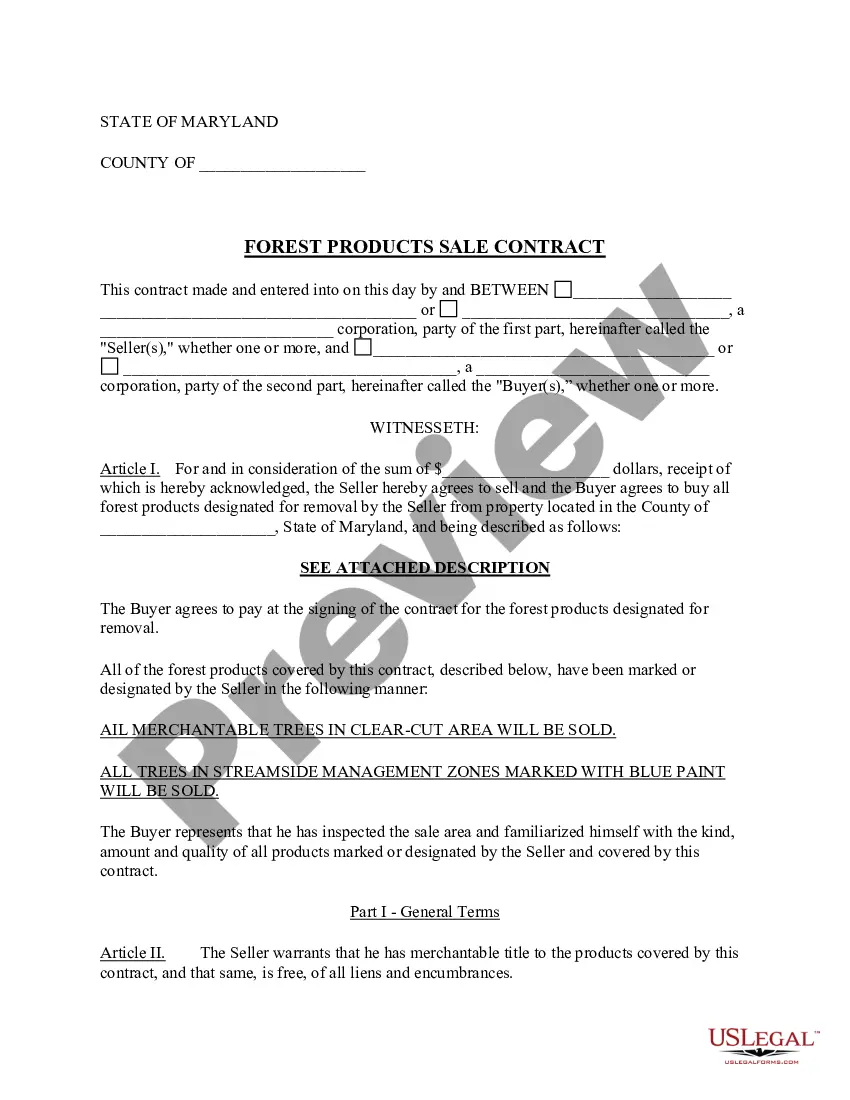
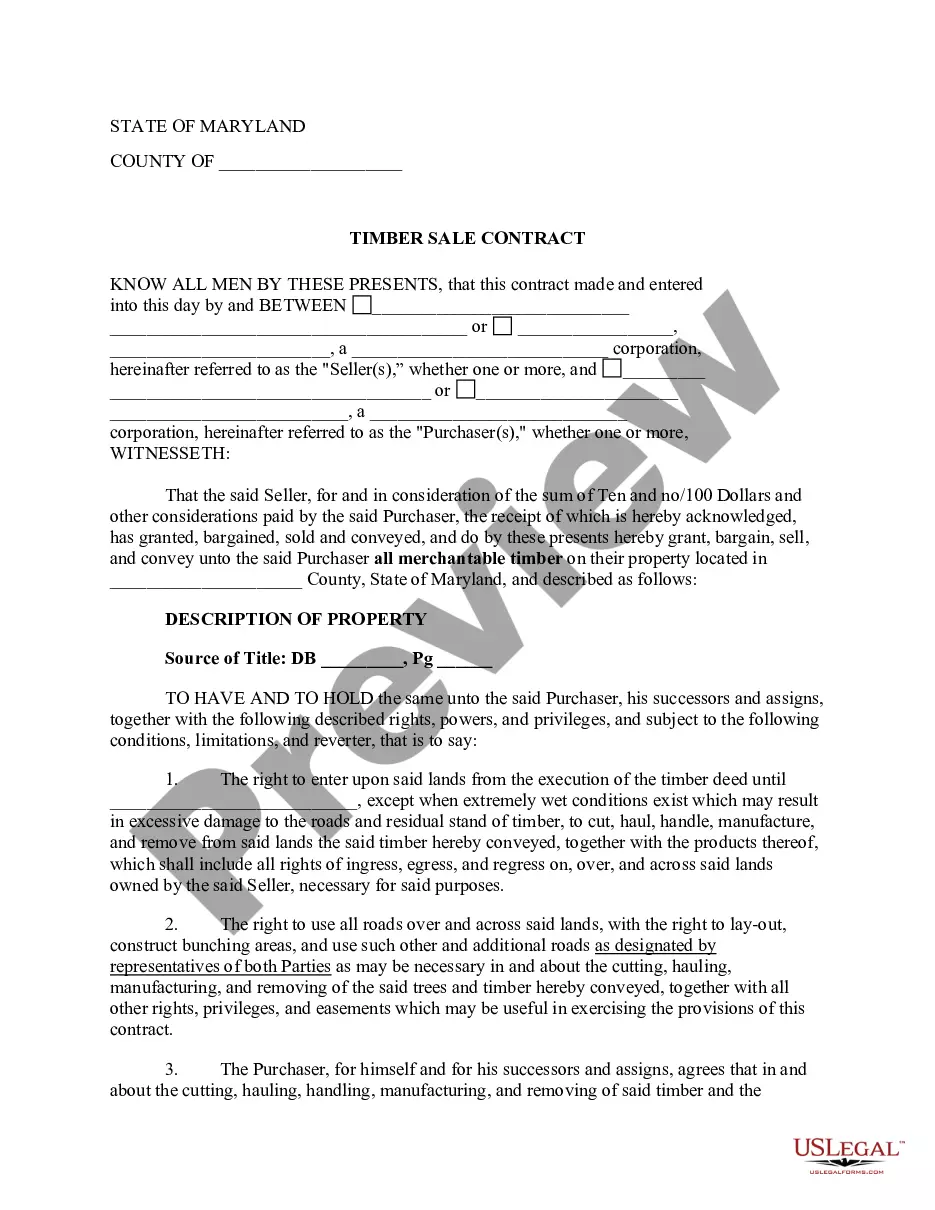
The Maryland Forest Products Timber Sale Contract is a legal agreement where the buyer agrees to purchase specified timber from the seller's property. This contract outlines the rights and responsibilities of both parties regarding the sale, timber removal, and land use. Unlike other contracts for the sale of goods, this agreement is focused specifically on timber and forest products, ensuring clear terms for harvesting, payment, and land management.
Main sections of this form
- Identification of parties: Buyer and seller details, including individual or corporate status.
- Property description: Specific location and details of the timber being sold.
- Purchase terms: Pricing agreement and payment schedule for the timber.
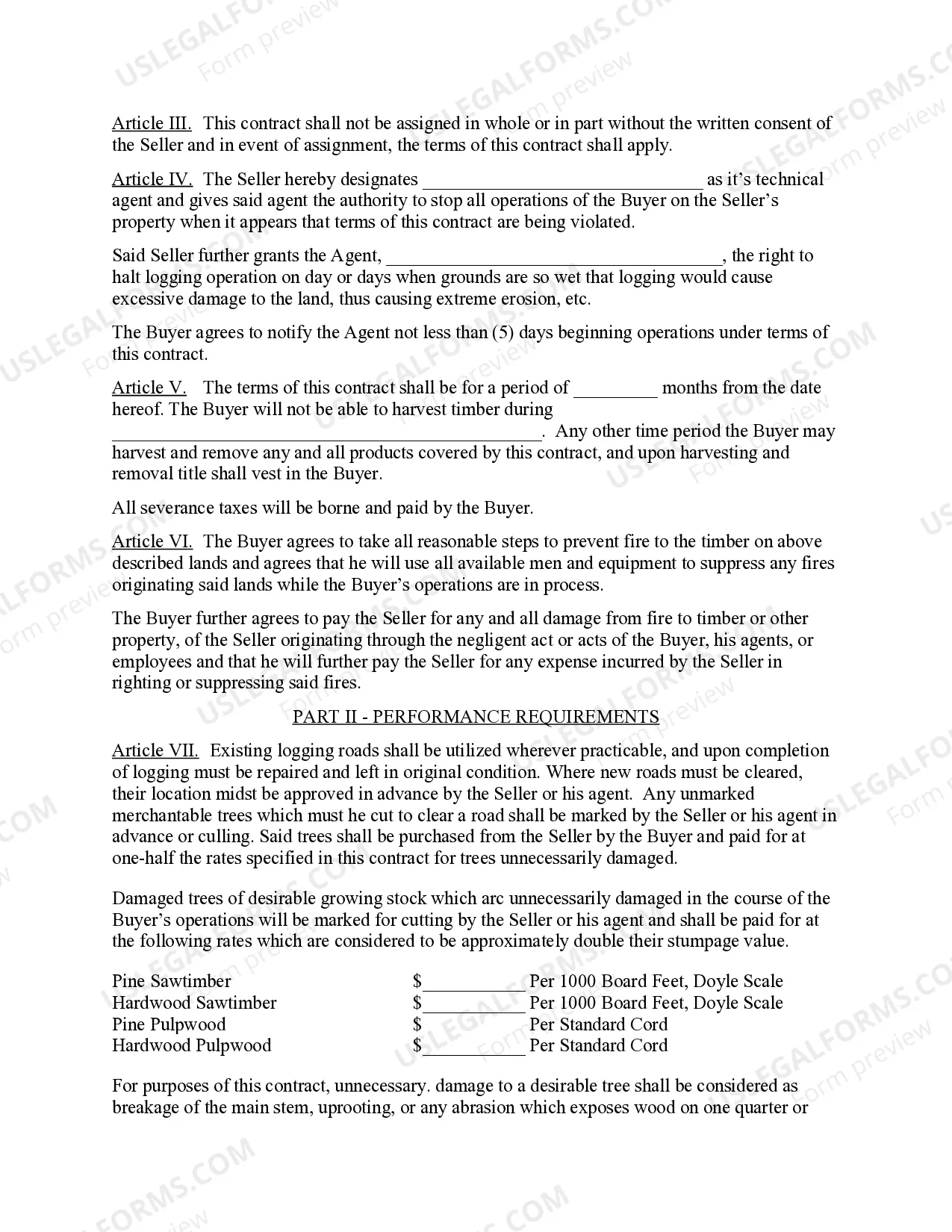
- Ingress and egress rights: Buyerâs access rights for timber removal.
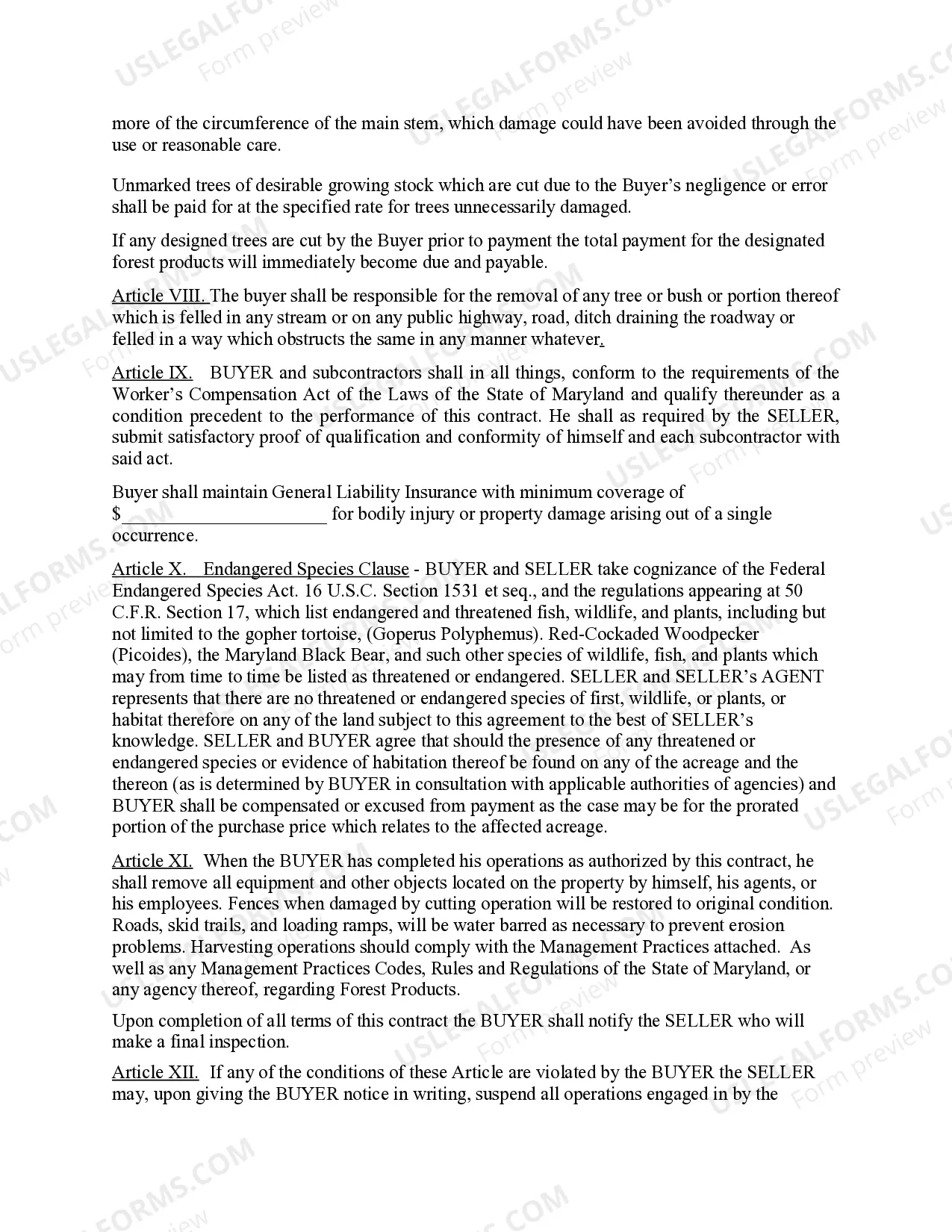
- Conditions for timber management: Specifications for road use and environmental protection.
- Duration of contract: Time period for which the contract is valid and any harvest restrictions.
When this form is needed
This form should be used when a landowner in Maryland wishes to sell timber from their property to a buyer. It is particularly relevant for timber harvesters and companies engaged in forest products, providing a legal framework to ensure compliance with state regulations and protecting both parties' interests.
Who this form is for
- Property owners wishing to sell timber.
- Timber buyers or logging companies looking to acquire rights to harvest timber.
- Forestry professionals involved in timber sales.
- Anyone needing a formal agreement for timber transactions in Maryland.
Instructions for completing this form
- Identify the parties: Enter the names of the seller and buyer at the beginning of the contract.
- Describe the property: Specify the exact location and details of the timber to be sold.
- Fill in purchase terms: State the agreed price for the timber and the payment schedule.
- Specify access rights: Include details about ingress and egress for the buyer to remove timber.
- Define the duration: Indicate the effective period of the contract and any limitations on harvesting.
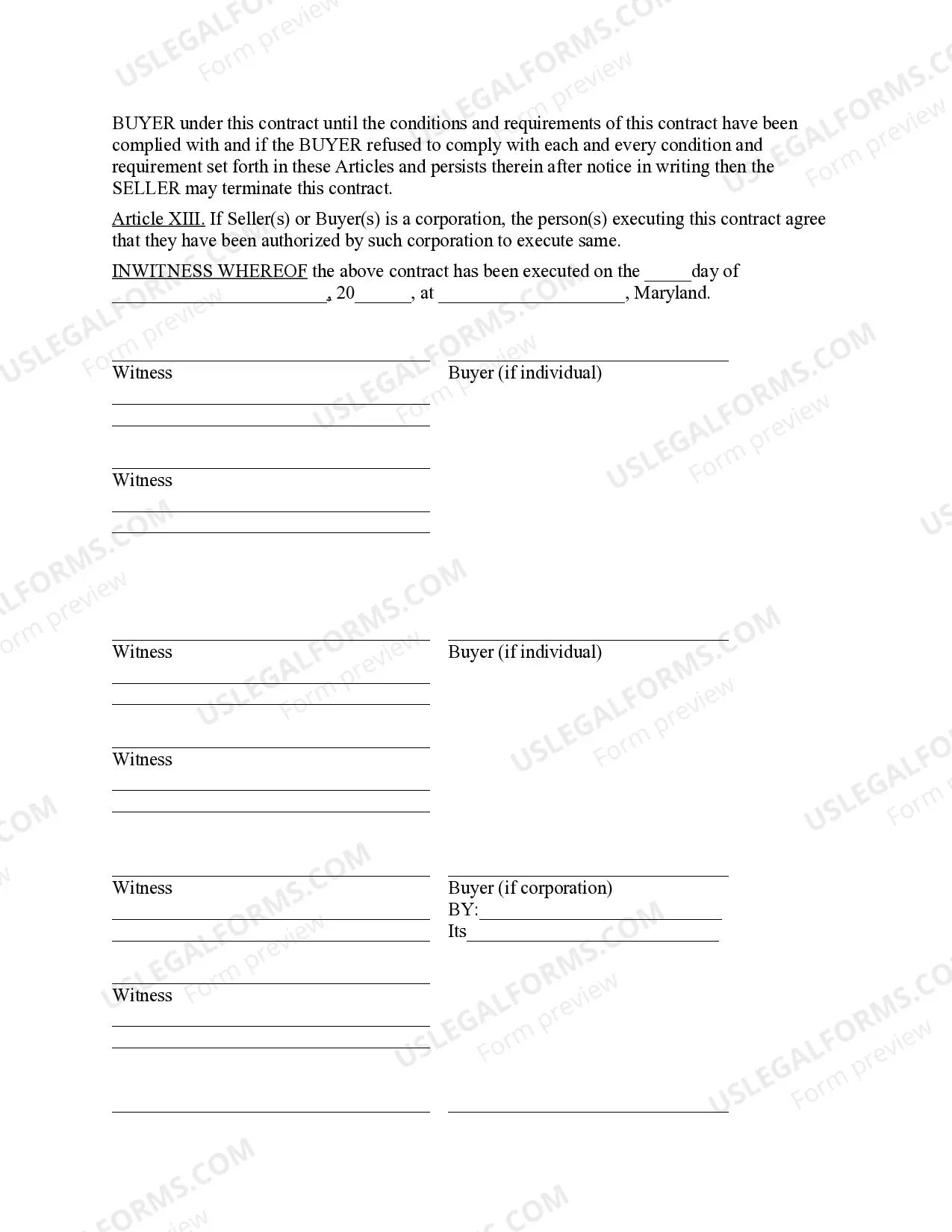
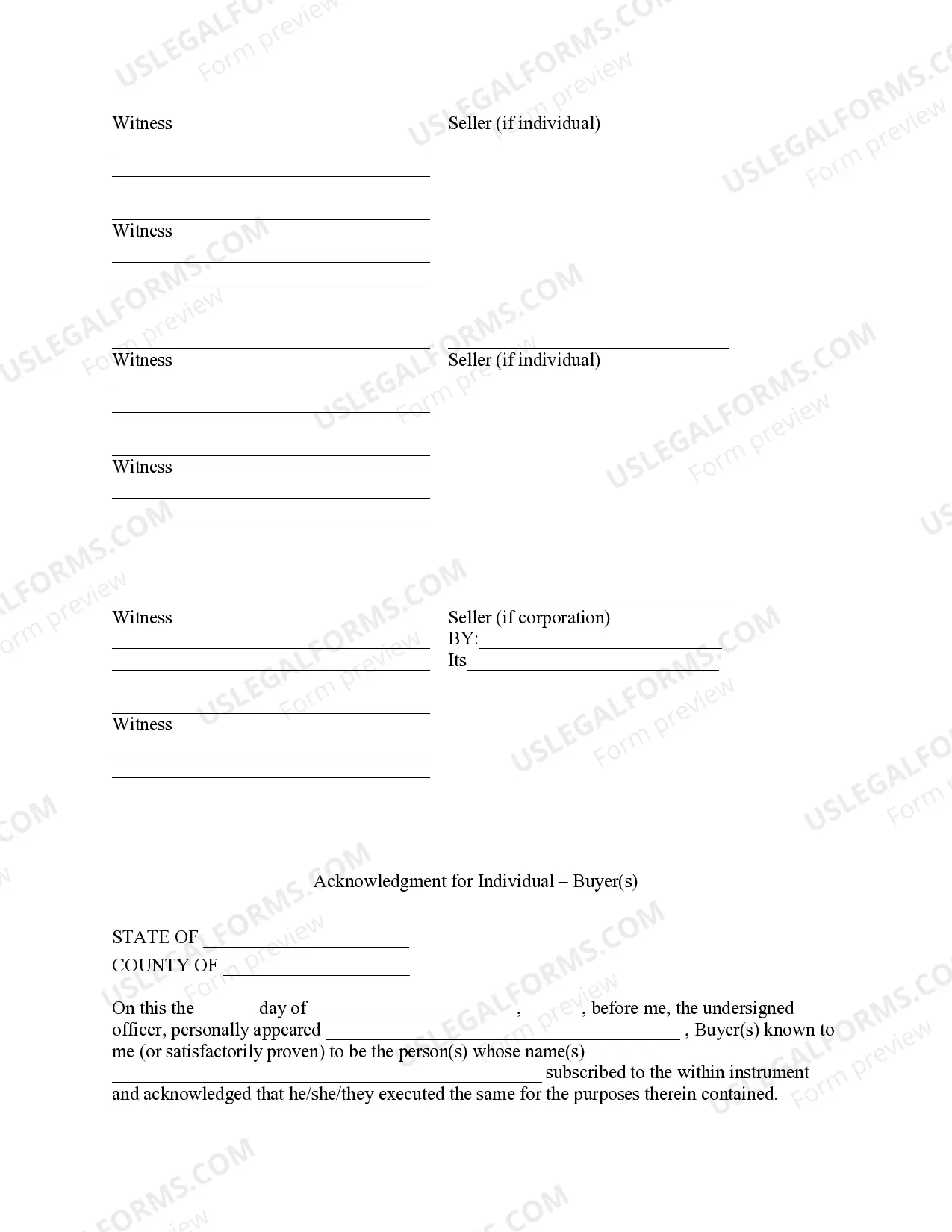
- Sign and date: Ensure all parties sign the contract and provide necessary witness signatures as required.
Notarization guidance
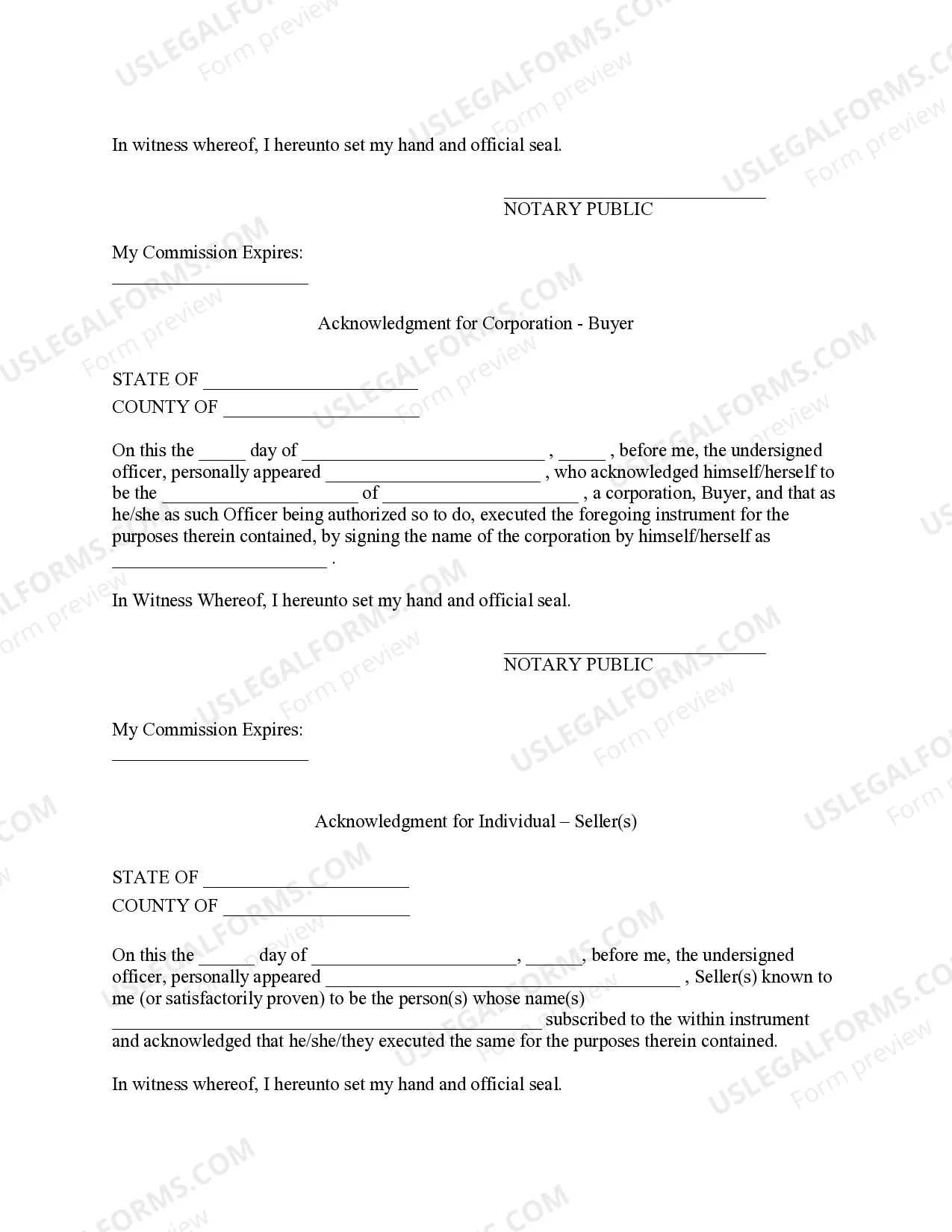
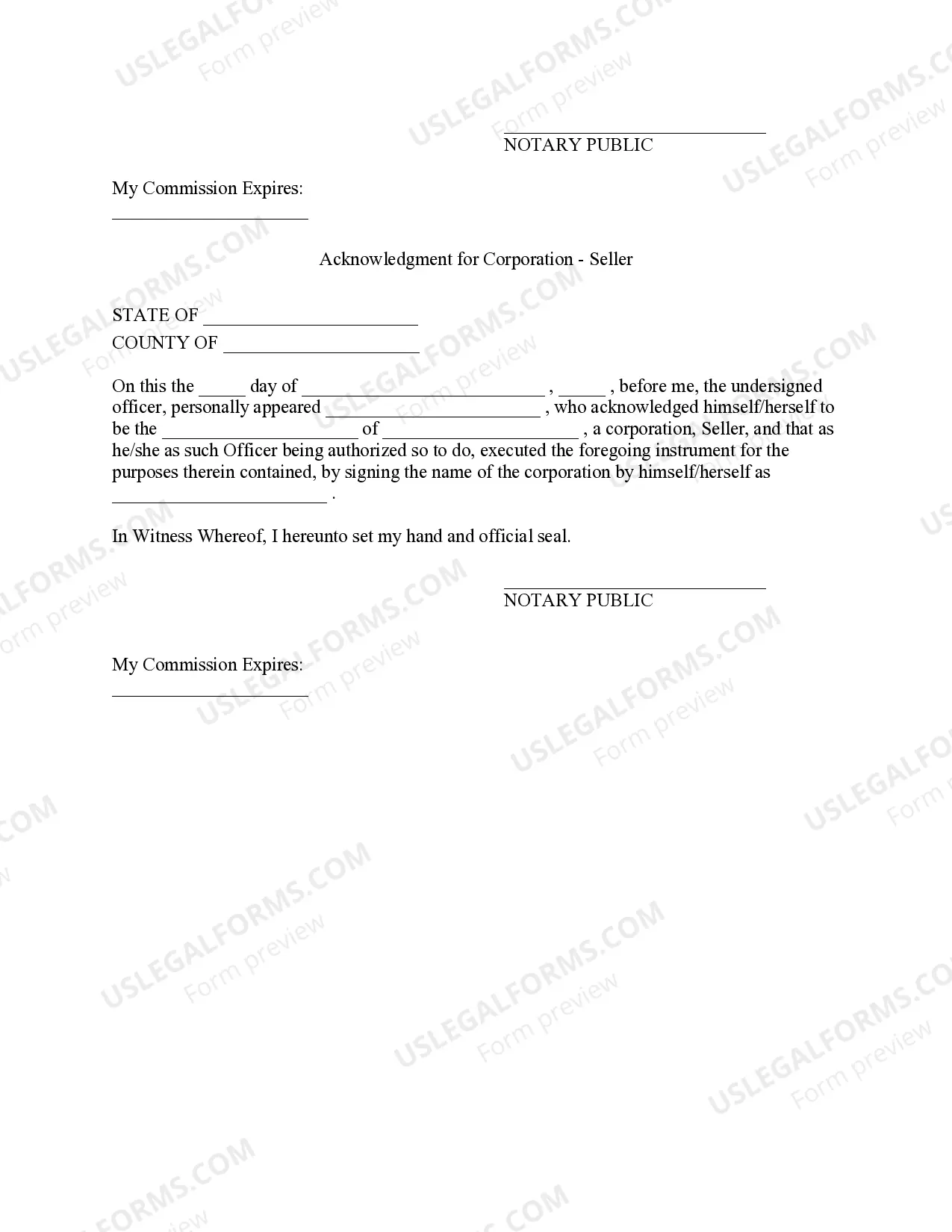
This form does not typically require notarization unless specified by local law. However, it is advisable to have the contract notarized to add an extra layer of legal verification and to ensure all parties' identities are confirmed.
Get your form ready online
Our built-in tools help you complete, sign, share, and store your documents in one place.
Make edits, fill in missing information, and update formatting in US Legal Forms—just like you would in MS Word.
Download a copy, print it, send it by email, or mail it via USPS—whatever works best for your next step.
Sign and collect signatures with our SignNow integration. Send to multiple recipients, set reminders, and more. Go Premium to unlock E-Sign.
If this form requires notarization, complete it online through a secure video call—no need to meet a notary in person or wait for an appointment.
We protect your documents and personal data by following strict security and privacy standards.

Make edits, fill in missing information, and update formatting in US Legal Forms—just like you would in MS Word.

Download a copy, print it, send it by email, or mail it via USPS—whatever works best for your next step.

Sign and collect signatures with our SignNow integration. Send to multiple recipients, set reminders, and more. Go Premium to unlock E-Sign.

If this form requires notarization, complete it online through a secure video call—no need to meet a notary in person or wait for an appointment.

We protect your documents and personal data by following strict security and privacy standards.
Avoid these common issues
- Failing to provide complete property descriptions, which may lead to disputes.
- Omitting necessary signatures or witness validation, resulting in an unenforceable contract.
- Not defining ingress and egress rights adequately, which can restrict timber removal.
Why use this form online
- Convenience of downloading and completing the form at your own pace.
- Editability to tailor the contract to specific needs and terms.
- Access to professionally drafted templates ensuring legal compliance.
Main things to remember
- The Maryland Forest Products Timber Sale Contract governs the sale of timber and access rights for removal.
- It is crucial for both parties to understand their rights and responsibilities to avoid disputes.
- Completing the contract requires accurate information about the parties and property.
- This contract is specific to Maryland law and practices related to timber sales.
Looking for another form?

Form popularity
FAQ
In logging contracts, payment is most often based on either dollars per unit or a percentage of the value of the wood. Historically, loggers have worked on a percentage basis, and 50 percent of the value of the wood was standard operating proce- dure.
It's generally much easier to sell trees in a woodlot harvest, where many trees are sold and harvested at the same time. To cut down your tree, a timber buyer must bring in laborers, a log truck, skidder, loader, and other equipment. The buyer must cut the logs and haul them to the mill to sell.
To estimate the value of your timber, take the volume, divided by 1,000, and multiply it by the price quoted in your states standing timber stumpage report.
To estimate the value of your timber, take the volume, divided by 1,000, and multiply it by the price quoted in your states standing timber stumpage report.
As a guide timber harvesting costs are commonly between $20 and $40 per cubic metre depending on the type of machinery used, the type of the logs and the site conditions. Harvesting costs are generally lower for large plantations of large diameter logs on easy accessible country.
You can sell firewood to your neighbors for only $175 to $225 per cord within a small delivery area. Add fees for delivery and stacking, and your profits will increase.
Would-be lumberjacks should expect to pay $1,000 to $2,000 per acre, plus the value of the timber growing on it, which can add anything from zero to up to $15,000 an acre to the price for stands averaging 50 years of age.
Depending on the type of trees and the market when the timber is sold, you could earn $500 to $2000 per acre (at $1500, you would be looking at $60 per year in income if you were to annualize it over 25 years).