Maryland Bill of Sale without Warranty by Corporate Seller
What this document covers
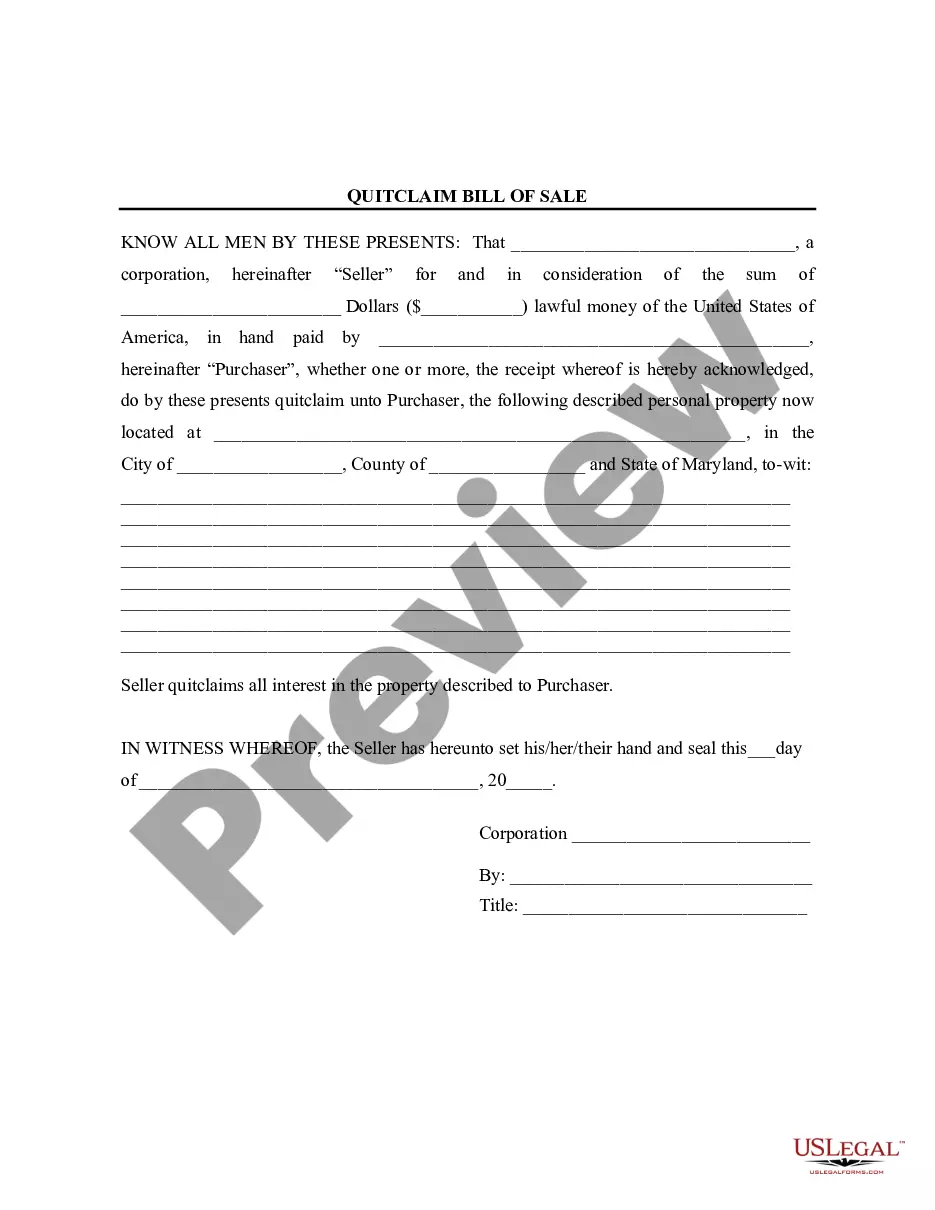
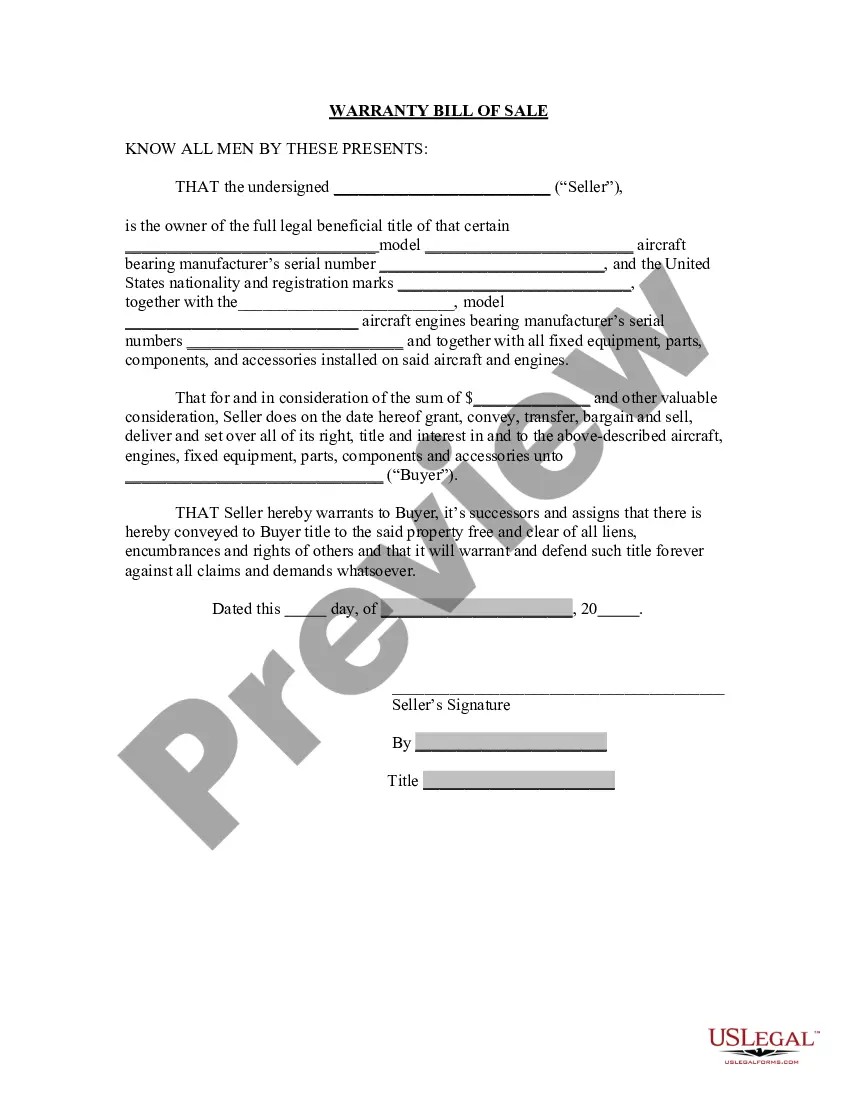
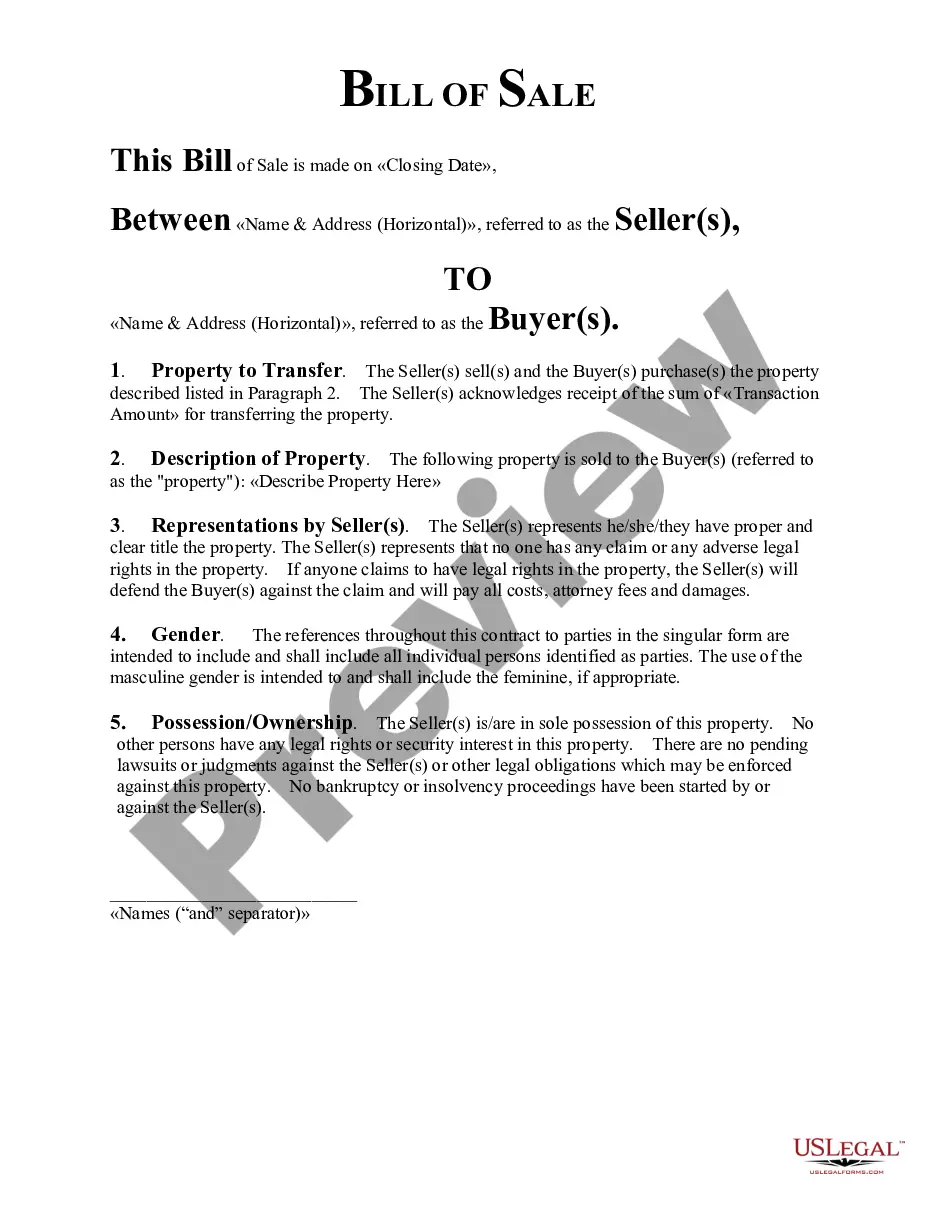
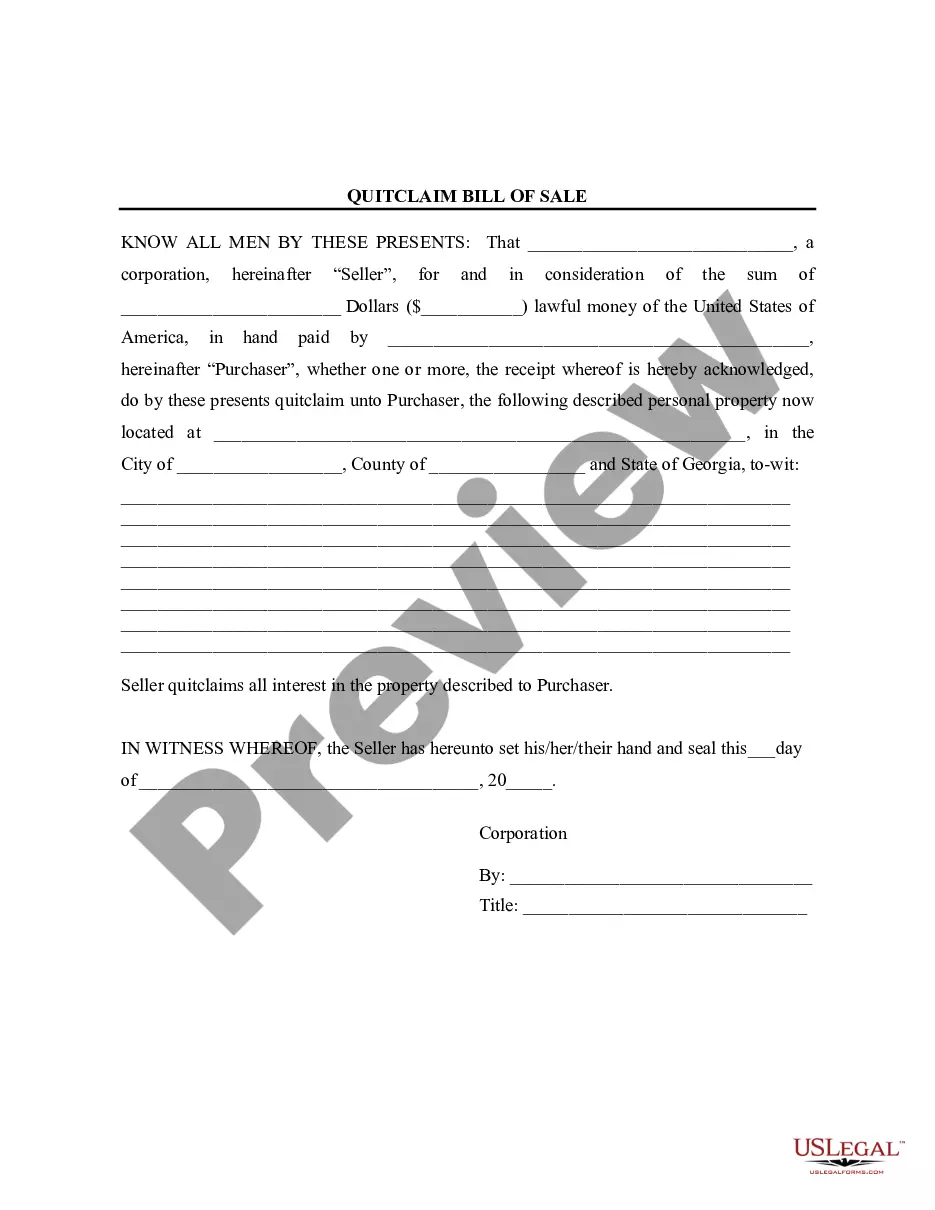
The Bill of Sale without Warranty by Corporate Seller is a legal document used to transfer ownership of personal property from a corporation to a buyer without offering any warranties. This form serves as a quitclaim conveyance, meaning it only transfers the sellerâs interest in the property and does not guarantee the property's condition or rights. This distinguishes it from other sale agreements that may include warranties or guarantees from the seller regarding the property.
What’s included in this form
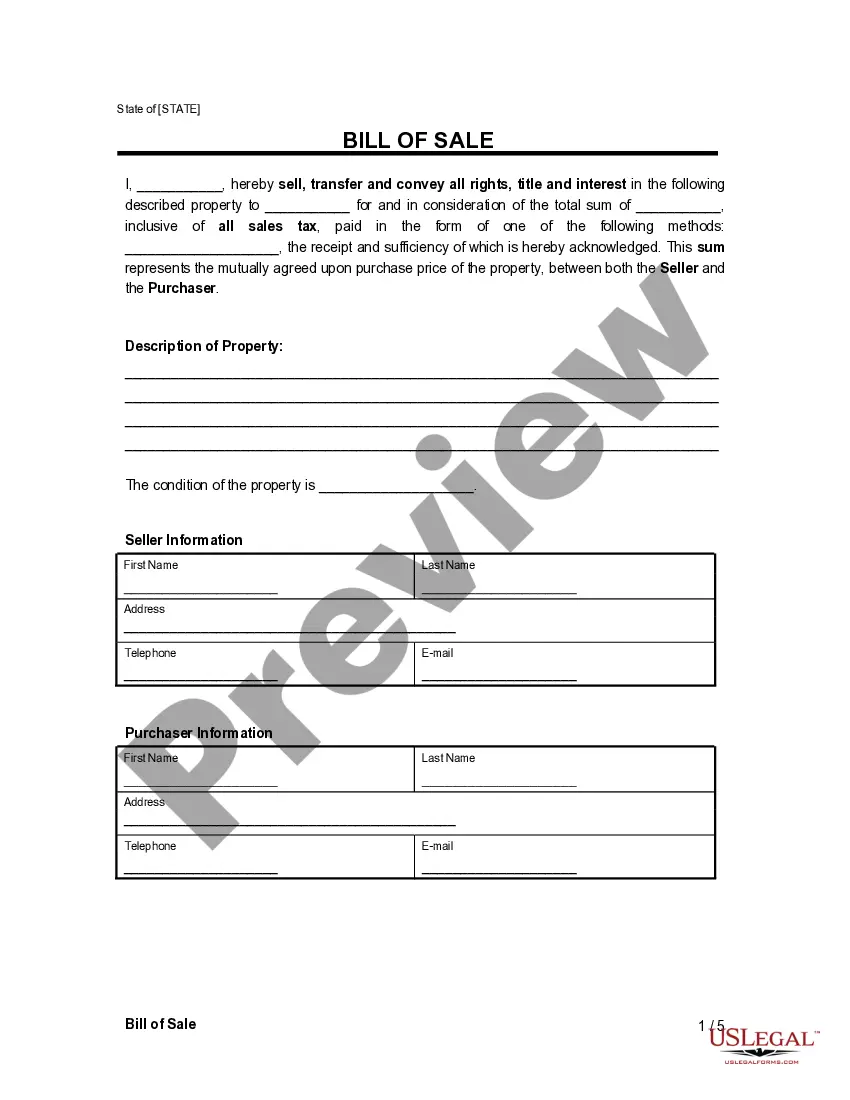
- Identification of the seller corporation and the purchaser.
- Details of the consideration amount paid for the property.
- Description of the personal property being sold.
- Statement of quitclaim, indicating the transfer of interest without warranties.
- Signature of the authorized corporate representative, along with their title.
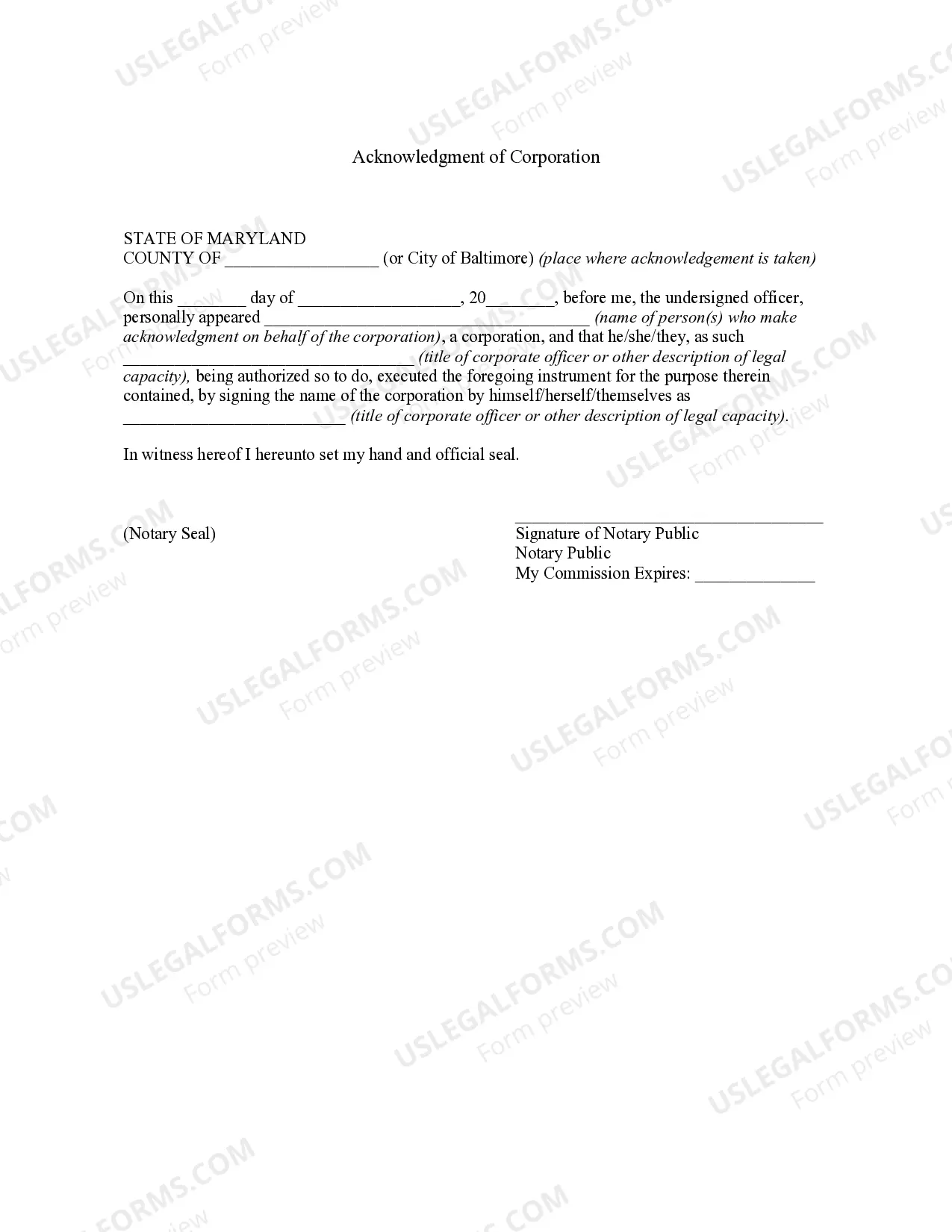
- Notary acknowledgment to validate the document.
When to use this document
This form is useful when a corporation sells personal property and does not want to provide any warranties regarding the property's condition or title. It can be used in situations where the seller wants to quickly transfer ownership, such as in asset liquidation, sale of equipment, or divestiture of company assets.
Who needs this form
- Corporation representatives authorized to sell corporate assets.
- Buyers looking to purchase personal property from a corporation without warranty.
- Businesses engaging in asset sales where warranty coverage is not desired.
How to prepare this document
- Identify the legal name of the corporation selling the property.
- Complete the purchaser's name and specify the total consideration amount.
- Describe the personal property being conveyed in detail.
- Have an authorized corporate representative sign the document.
- Include the date and ensure the notary section is completed.
Notarization requirements for this form
Yes, this form must be notarized to be legally valid. Notarization helps ensure that the identities of the parties are verified and that the document has been executed freely. US Legal Forms provides integrated online notarization services, allowing for a secure video call with a licensed notary public, ensuring a smooth and legal transaction process.
Get your form ready online
Our built-in tools help you complete, sign, share, and store your documents in one place.
Make edits, fill in missing information, and update formatting in US Legal Forms—just like you would in MS Word.
Download a copy, print it, send it by email, or mail it via USPS—whatever works best for your next step.
Sign and collect signatures with our SignNow integration. Send to multiple recipients, set reminders, and more. Go Premium to unlock E-Sign.
If this form requires notarization, complete it online through a secure video call—no need to meet a notary in person or wait for an appointment.
We protect your documents and personal data by following strict security and privacy standards.

Make edits, fill in missing information, and update formatting in US Legal Forms—just like you would in MS Word.

Download a copy, print it, send it by email, or mail it via USPS—whatever works best for your next step.

Sign and collect signatures with our SignNow integration. Send to multiple recipients, set reminders, and more. Go Premium to unlock E-Sign.

If this form requires notarization, complete it online through a secure video call—no need to meet a notary in person or wait for an appointment.

We protect your documents and personal data by following strict security and privacy standards.
Common mistakes
- Failing to accurately describe the personal property being sold.
- Not obtaining a signature from an authorized corporate representative.
- Omitting the date of the transaction.
- Neglecting to complete the notary acknowledgment section.
Benefits of using this form online
- Convenience of completing the form from any location at any time.
- Easy access to state-specific templates and guidance.
- Secure storage and download options for future reference.
- Editability of the form before finalizing the transaction.
What to keep in mind
- This Bill of Sale is used for transferring ownership without warranties.
- Ensure all fields are accurately completed to avoid legal issues.
- Notarization is necessary for the completed document's validity.
- The form is compliant with Maryland state laws.
Looking for another form?
Form popularity
FAQ
Maryland Gun Bill of Sale Though Maryland does not legally require a firearm bill of sale, it is a smart idea to have one and keep it as a receipt of the purchase and transfer of ownership. It protects both the buyer and seller from liability.
You will need the title, signed over to you; the MVA Bill of Sale, if required; the passing inspection report; proof of insurance; and the titling fee.
Alabama. Arkansas. Colorado. Connecticut. Hawaii. Idaho. Maine. Nebraska.
The buyer(s) and seller(s) must sign and print their name(s) on the Maryland Certificate of Title under the Assignment of Ownership section. If there is a co-buyer, he or she must also sign. The buyer's name and address must be recorded in the Assignment of Ownership area on the title to complete the sale.
Both the buyer and seller should receive copies of the bill of sale form. It's important for the buyer to keep the bill of sale with the title of the vehicle for registration and licensing purposes, if necessary. However, all parties should keep them for their own personal records.
A bill of sale does not serve as proof of ownership. Only a title has that legal authority. Bills of sale serve as proof of title transfer, which buyers and sellers need for personal financial and tax records.
There are only nine title-holding states: Kentucky, Maryland, Michigan, Minnesota, Missouri, Montana, New York, Oklahoma, Wisconsin. In the other 41 states, titles are issued to the lien holder of your vehicle until the loan is fully paid off.
Maryland Gun Bill of Sale Though Maryland does not legally require a firearm bill of sale, it is a smart idea to have one and keep it as a receipt of the purchase and transfer of ownership. It protects both the buyer and seller from liability.
Louisiana. Maryland. Nebraska. New Hampshire. West Virginia. Montana.