Maryland Agreement for Payment of Unpaid Rent
What this document covers
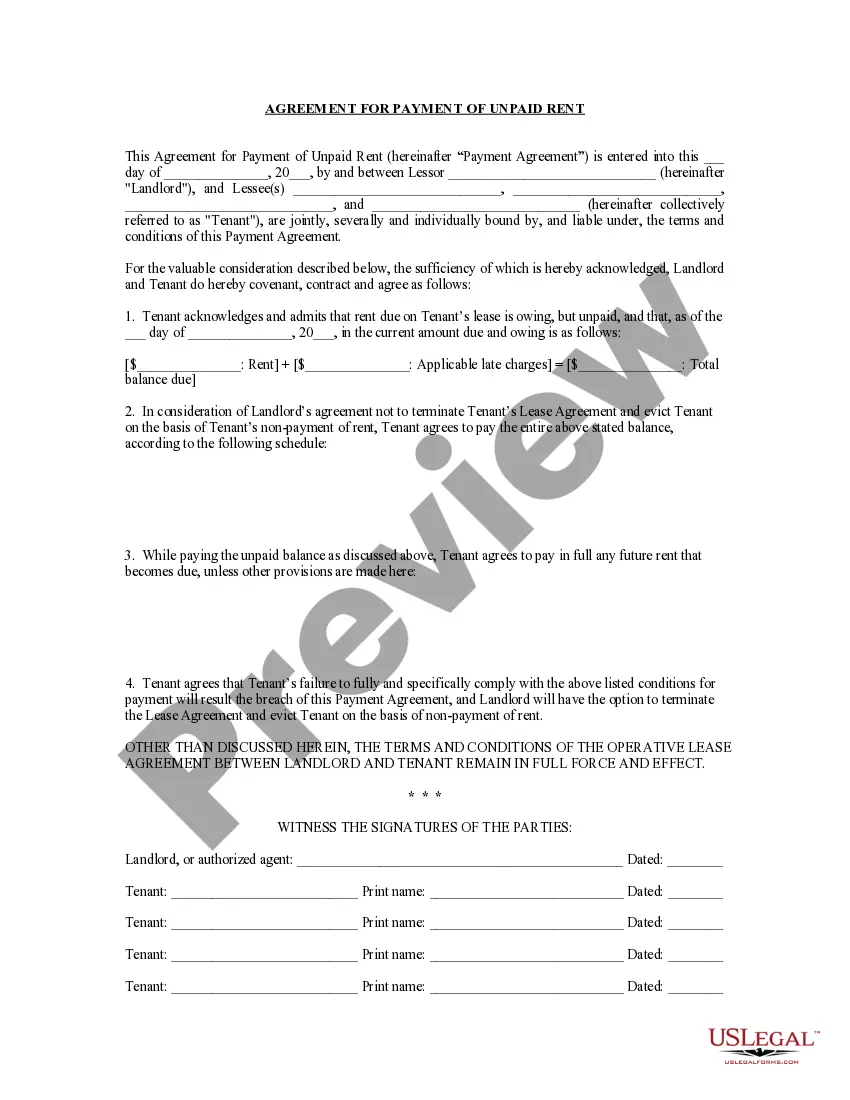
The Agreement for Payment of Unpaid Rent is a legal document created between a landlord and tenant to address overdue rent. This agreement outlines a repayment plan that allows tenants to pay their unpaid rent over a specified period while offering landlords a commitment not to evict the tenant during this time. Unlike other rental agreements, this form is tailored to address specific situations involving overdue payments, ensuring compliance with state law requirements.
Form components explained
- Identification of parties: Includes names of the landlord (Lessor) and tenant (Lessee).
- Statement of overdue rent: Specifies the amount of rent due, applicable late charges, and total balance.
- Acknowledgment of the original lease: Clarifies that all other terms of the lease remain in effect.
- Signatures: Requires signatures from both parties to enforce the agreement.
When to use this document
This form is useful in situations where a tenant has fallen behind on rent payments but both parties wish to avoid eviction. It can be relevant when tenants are facing temporary financial difficulties and seek to establish a repayment plan while ensuring they can remain in their residence. Using this form helps formalize the agreement and clearly delineates responsibilities for both parties.
Who can use this document
- Landlords seeking to negotiate payment terms with tenants who are behind on rent.
- Tenants who wish to formalize a repayment agreement to avoid eviction.
- Property management companies acting on behalf of landlords in managing overdue rent situations.
How to prepare this document
- Identify the parties involved by entering the landlord's and tenant's full names.
- Record the date of the agreement on the specified line.
- Fill in the total amount of unpaid rent, any applicable late charges, and the total balance due.
- Ensure both parties understand that the original lease terms are still in effect.
- Obtain signatures from the landlord (or authorized agent) and all tenants.
Is notarization required?
Notarization is not commonly needed for this form. However, certain documents or local rules may make it necessary. Our notarization service, powered by Notarize, allows you to finalize it securely online anytime, day or night.
Get your form ready online
Our built-in tools help you complete, sign, share, and store your documents in one place.
Make edits, fill in missing information, and update formatting in US Legal Forms—just like you would in MS Word.
Download a copy, print it, send it by email, or mail it via USPS—whatever works best for your next step.
Sign and collect signatures with our SignNow integration. Send to multiple recipients, set reminders, and more. Go Premium to unlock E-Sign.
If this form requires notarization, complete it online through a secure video call—no need to meet a notary in person or wait for an appointment.
We protect your documents and personal data by following strict security and privacy standards.

Make edits, fill in missing information, and update formatting in US Legal Forms—just like you would in MS Word.

Download a copy, print it, send it by email, or mail it via USPS—whatever works best for your next step.

Sign and collect signatures with our SignNow integration. Send to multiple recipients, set reminders, and more. Go Premium to unlock E-Sign.

If this form requires notarization, complete it online through a secure video call—no need to meet a notary in person or wait for an appointment.

We protect your documents and personal data by following strict security and privacy standards.
Common mistakes
- Failing to include all signatures from tenants, which can make the agreement unenforceable.
- Not clearly specifying the total amount due, leading to potential disputes later.
- Omitting the dates, which are crucial for tracking payment timelines.
Why complete this form online
- Convenience of downloading the form any time, from anywhere.
- Editable fields allow for customization to meet specific situations.
- Reliable templates drafted by licensed attorneys ensure compliance with legal standards.
Legal use & context
- This agreement is legally binding once signed by all parties involved.
- It provides documentation of the renegotiated payment terms that can be referenced in future disputes.
- Failure to adhere to the terms of this agreement may lead to eviction proceedings or further legal action.
What to keep in mind
- The Agreement for Payment of Unpaid Rent helps tenants manage overdue payments while preventing eviction.
- Clear terms and parties are essential for legal validity.
- Using this form online provides convenience and reliability compared to traditional methods.
Looking for another form?

Form popularity
FAQ
Going to Court in Maryland The district court will issue a summons to the tenant, informing the tenant of the eviction case and the date for the trial or hearing before a judge. If the landlord is successful, the tenant will have four days to move out of the rental unit after the trial has ended.
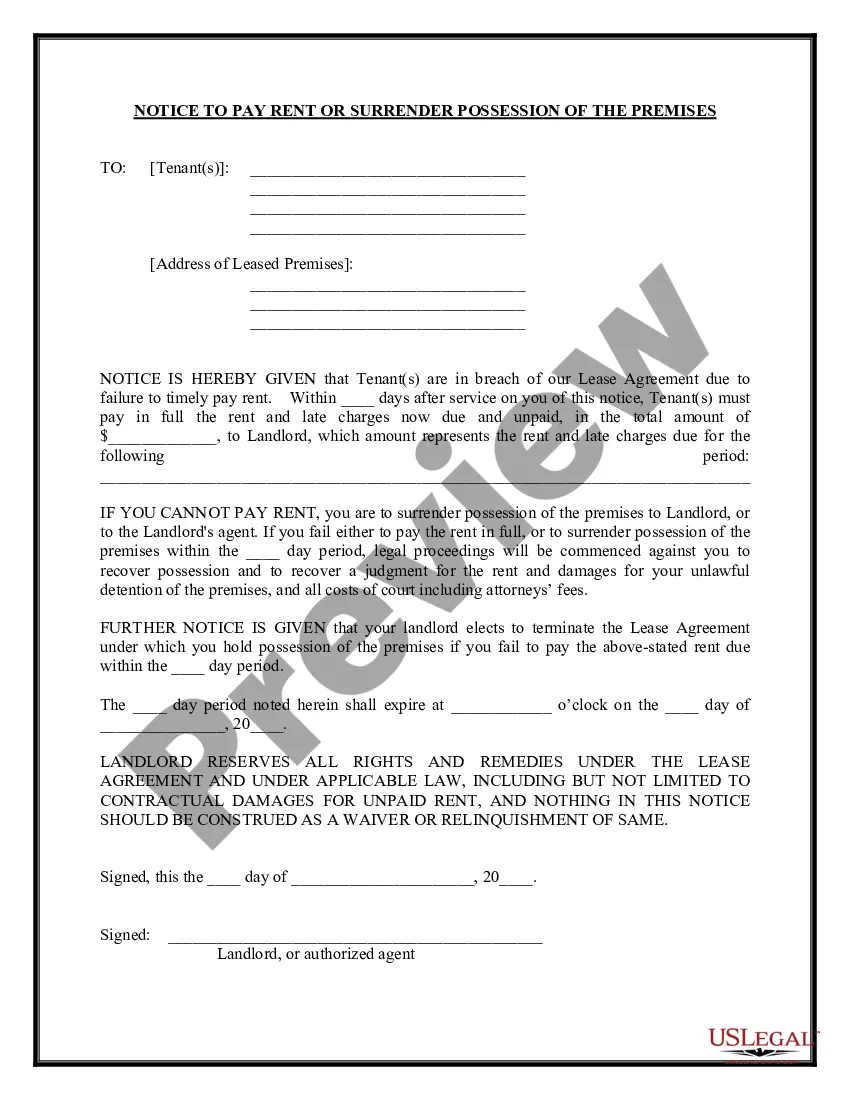
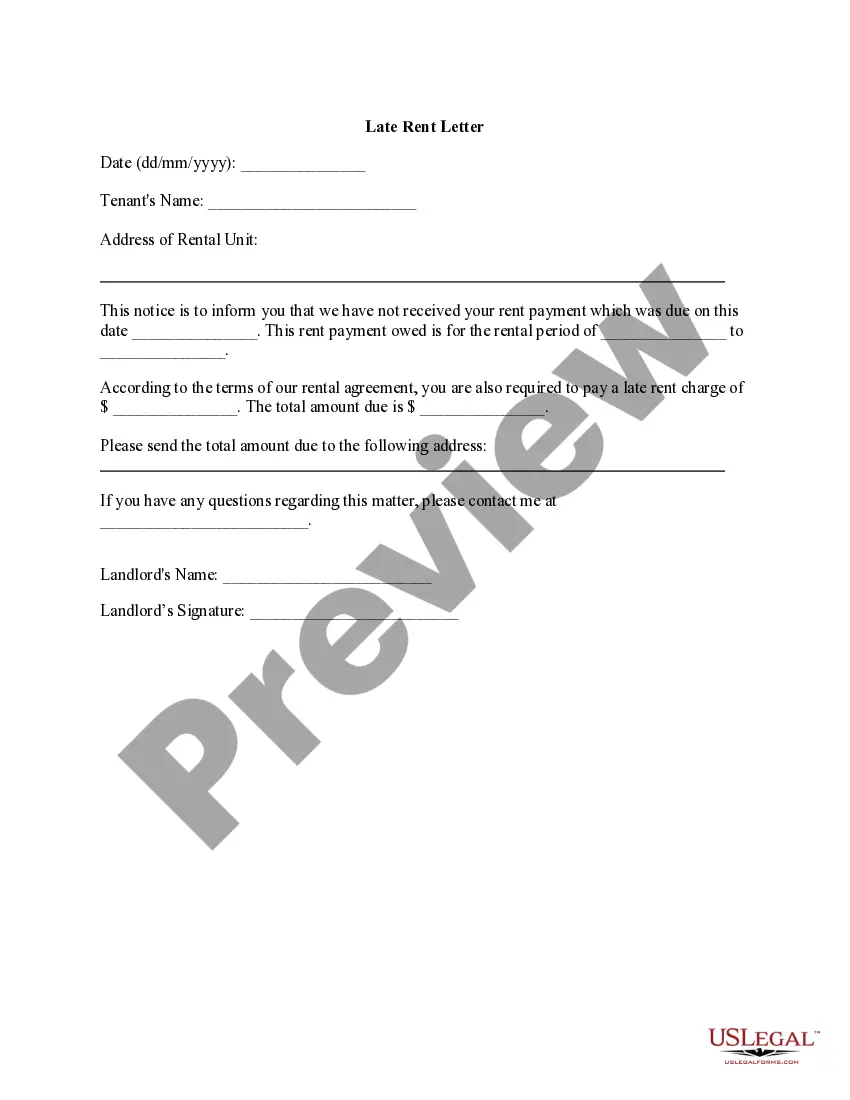
Dear Name of Tenant: This letter is to inform you that as of the date of this notice, I have not received your rental payment that was due on DATE. Because rent is due on the first of the month and will cover the rental unit for the dates of DATE through DATE, you are living in a unit you have not paid for.
Under normal circumstances, when tenants don't pay rent, landlords have the option of terminating the tenancy (by serving the tenant with either a pay rent or quit notice or an unconditional quit notice, depending on the applicable laws).
If you are having problems paying the rent contact your local Housing NSW. They may be able to help you. You can also seek help from a financial counsellor to plan a budget to manage your financial situation.
For failure to pay rent cases the eviction process cannot start until 4 business days have passed from the time the court entered a judgment for possession in favor of the landlord. For breach of lease cases, or tenant holding over cases ( refuses to leave), the landlord may seek eviction immediately.
1) Stay calm and respectful. While dealing with these cases can be extremely stressful, it's important to approach the situation as calmly as possible. 2) Have an in-person meeting with your tenant. 3) Act quickly. 4) Keep proper documentation. 5) Do not accept partial payments if you plan to evict.
Evicting a tenant in Maryland can take around 3 weeks to 5 months, depending on the reason for the eviction. If tenants request a continuance or file an appeal, the process can take longer (read more).
To evict you, a landlord must go to District Court to get a judgment against you.A notice to vacate from your landlord is not a court order. This is the written notice that a landlord must give you at least one month before your lease ends, if they want you to move out at the end of the lease.
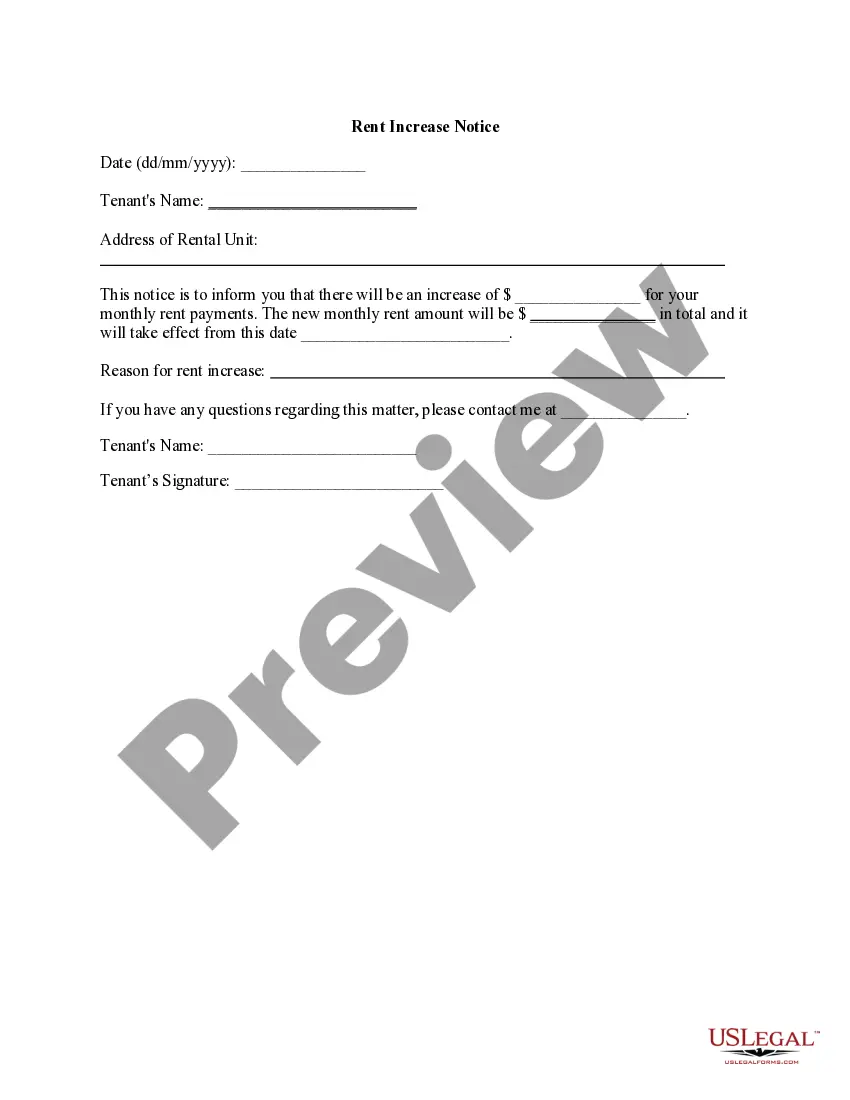
Rent Stabilization in MarylandMaryland has no statewide rent control, but at least one city (Takoma Park) has rent stabilization laws that limit how much rent landlords may charge or the frequency of rent increases.