Assignment of Deed of Trust by Individual Mortgage Holder
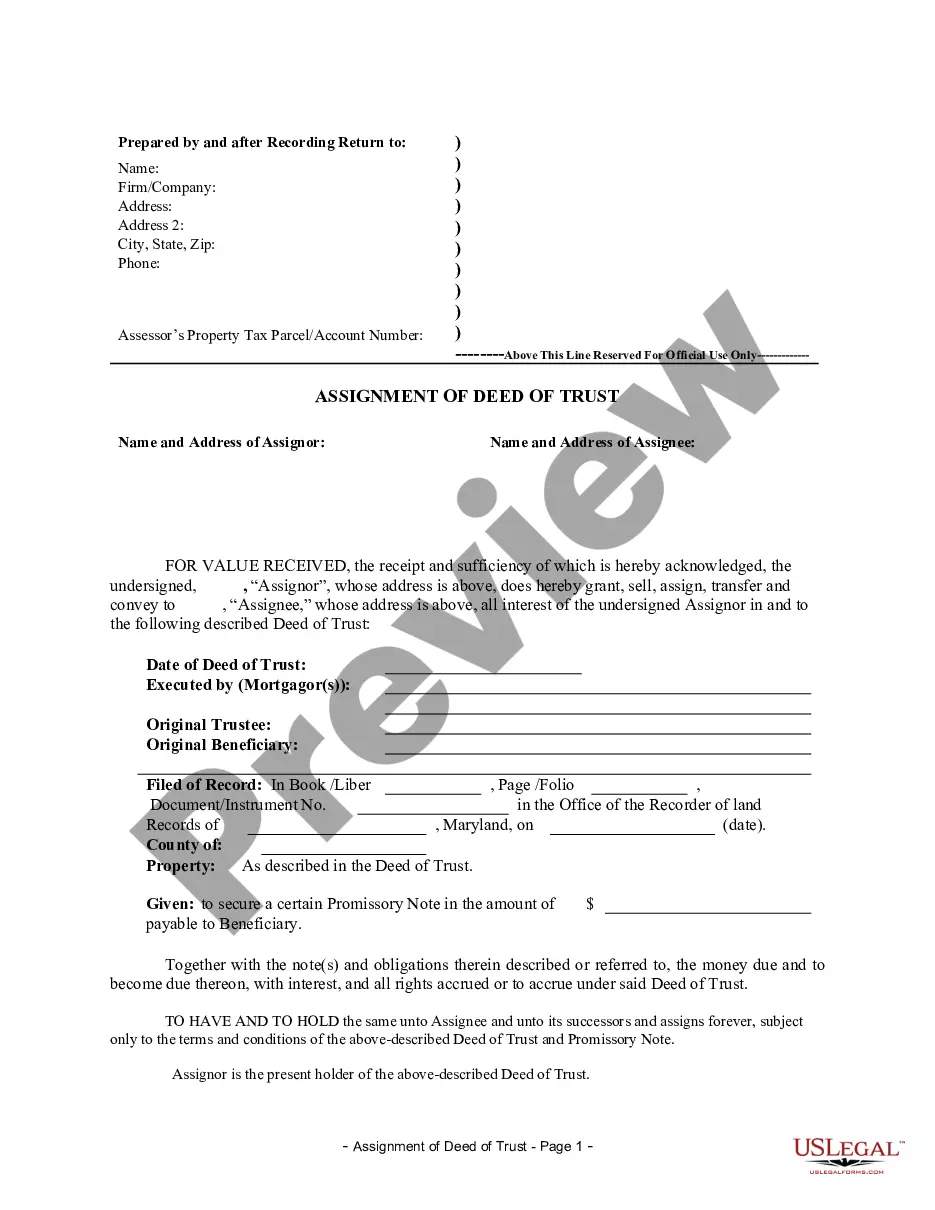
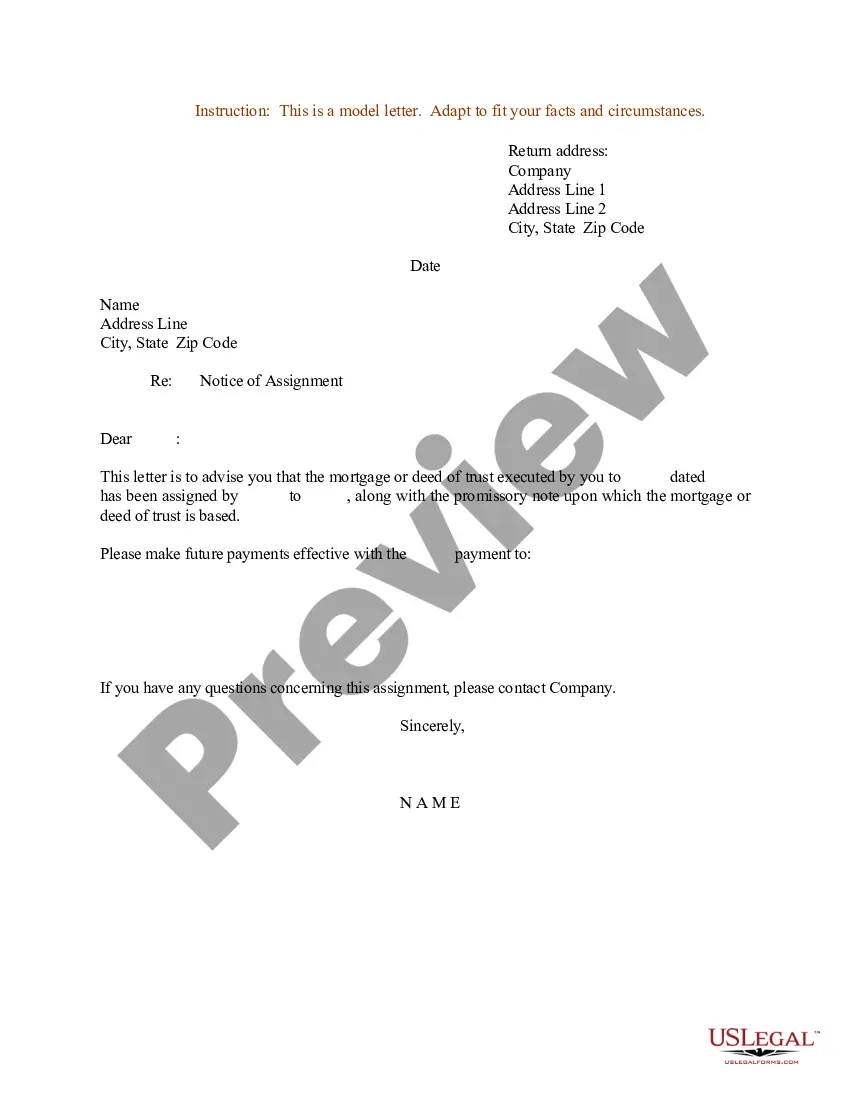
Assignments Generally: Lenders, or holders
of mortgages or deeds of trust, often assign mortgages or deeds of trust
to other lenders, or third parties. When this is done the assignee
(person who received the assignment) steps into the place of the original
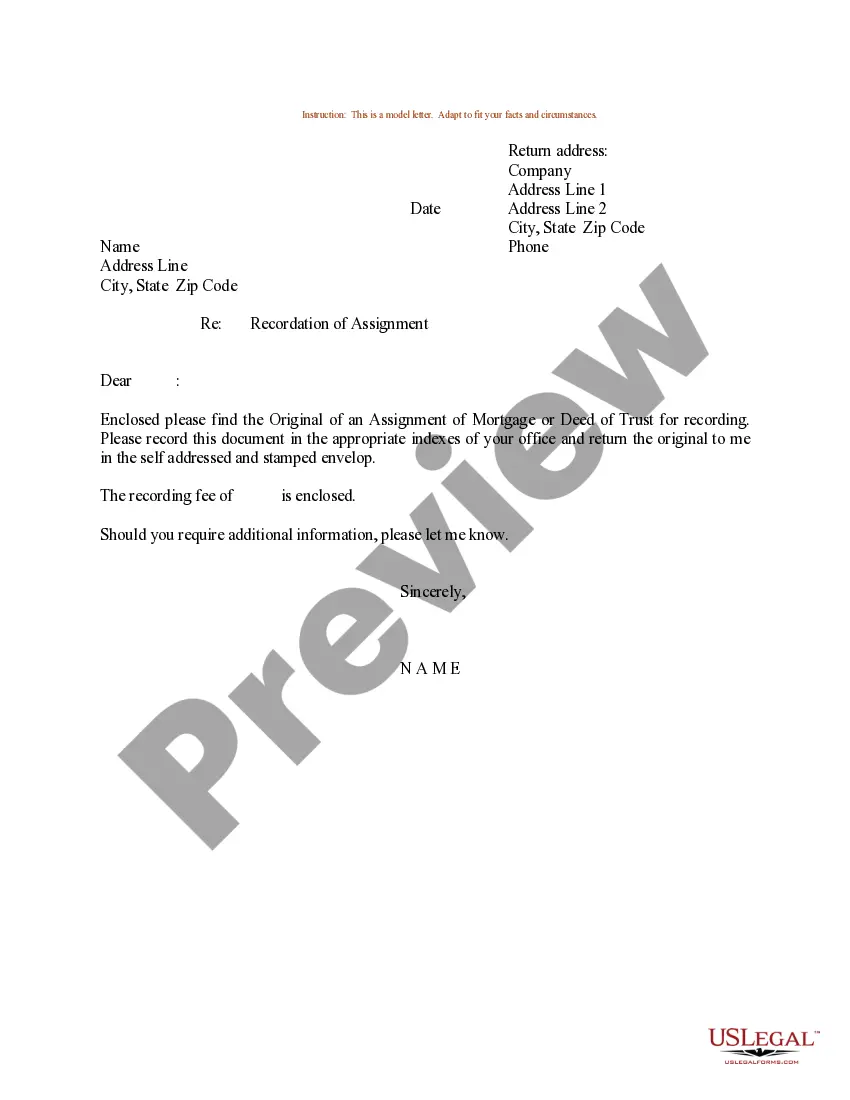
lender or assignor. To effectuate an assignment, the general rules
is that the assignment must be in proper written format and recorded to
provide notice of the assignment.
Satisfactions Generally: Once a mortgage
or deed of trust is paid, the holder of the mortgage is required to satisfy
the mortgage or deed of trust of record to show that the mortgage or deed
of trust is no longer a lien on the property. The general rule is that
the satisfaction must be in proper written format and recorded to provide
notice of the satisfaction. If the lender fails to record a satisfaction
within set time limits, the lender may be responsible for damages set by
statute for failure to timely cancel the lien. Depending on your state,
a satisfaction may be called a Satisfaction, Cancellation, or Reconveyance.
Some states still recognize marginal satisfaction but this is slowly being
phased out. A marginal satisfaction is where the holder of the mortgage
physically goes to the recording office and enters a satisfaction on the
face of the the recorded mortgage, which is attested by the clerk.
Maryland Law
Assignment: An assignment must be in writing
and recorded.
Demand to Satisfy: Mortgagee must record
satisfaction and provide written evidence of same to mortgagor within 30
days of written demand.
Recording Satisfaction: A release may be
endorsed on the original mortgage or deed of trust by the mortgagee or
his assignee, the trustee or his successor under a deed of trust, or by
the holder of the debt or obligation secured by the deed of trust. The
mortgage or the deed of trust, with the endorsed release, then shall be
filed in the office in which the mortgage or deed of trust is recorded.
Marginal Satisfaction: Allowed, either
on the original mortgage document, or on the record of same at the recording
office.
Penalty: If mortgagee fails to satisfy
mortgage of record and provide mortgagee written evidence thereof within
30 days of written demand, mortgagee is liable for the delivery of the
release and for all costs and expenses in connection with the bringing
of the action, including reasonable attorney fees.
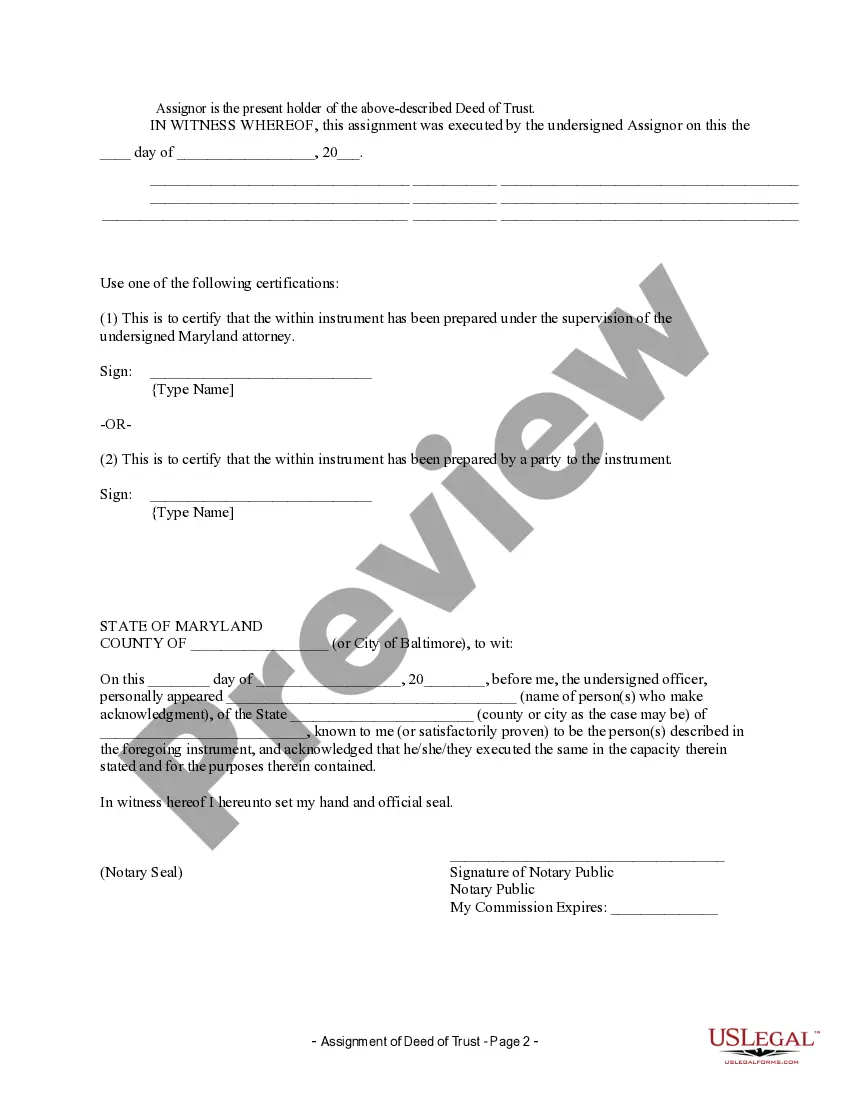
Acknowledgment: An assignment or satisfaction
must contain a proper Maryland acknowledgment, or other acknowledgment
approved by Statute.
Maryland Statutes
Article - Real Property § 3-105.
(a) A mortgage or deed of trust may
be released validly by any procedure enumerated in this section.
(b) A release may be endorsed on the
original mortgage or deed of trust by the mortgagee or his assignee, the
trustee or his successor under a deed of trust, or by the holder of the
debt or obligation secured by the deed of trust. The mortgage or the deed
of trust, with the endorsed release, then shall be filed in the office
in which the mortgage or deed of trust is recorded. The clerk shall record
the release photographically, with an attachment or rider affixed to it
containing the names of the parties as they appear on the original mortgage
or deed of trust, together with a reference to the book and page number
where the mortgage or deed of trust is recorded. When the mortgage or deed
of trust, with the attached release, is filed for the purpose of recording
the release, the clerk shall retain the mortgage or deed of trust in his
office and not permit it to be withdrawn for 25 years, after which time
he may destroy it. If, however, the clerk preserves a photographic copy
of the release, he may permit the original mortgage or deed of trust with
the release to be withdrawn.
(c) At the option of the clerk of
the court in whose office the book form of recording is used, the release
may be written by the mortgagee, or his assignee, or the trustee, or his
successor under a deed of trust, on the record in the office where the
mortgage or deed of trust is recorded and attested by the clerk of the
court. At the time of recording any mortgage or deed of trust, the clerk
of the court in whose office the book form of recording is used shall leave
a blank space at the foot of the mortgage or deed of trust for the purpose
of entering such release.
(d)
(1) When the debt secured by a deed
of trust is paid fully or satisfied, and any bond, note, or other evidence
of the total indebtedness is marked "paid" or "cancelled" by the holder
or his agent, it may be received by the clerk and indexed and recorded
as any other instrument in the nature of a release. The marked note has
the same effect as a release of the property for which it is the security,
as if a release were executed by the named trustees, if there is attached
to or endorsed on the note an affidavit of the holder, the party making
satisfaction, or an agent of either of them, that it has been paid or satisfied,
and specifically setting forth the land record reference where the original
deed of trust is recorded.
(2) When the debt secured by a mortgage
is paid fully or satisfied, and the original mortgage is marked "paid"
or "cancelled" by the mortgagee or his agent, it may be received by the
clerk and indexed and recorded as any other instrument in the nature of
a release. The marked mortgage has the same effect as a release of the
property for which it is the security, as if a release were executed by
the mortgagee, if there is attached to or endorsed on the mortgage an affidavit
of the mortgagee, the mortgagor, the party making satisfaction, or the
agent of any of them, that it has been paid or satisfied, and specifically
setting forth the land record reference where the mortgage is recorded.
(3) When the debt secured by a mortgage
or deed of trust is paid fully or satisfied, and the canceled check evidencing
final payment or, if the canceled check is unavailable, a copy of the canceled
check accompanied by a certificate from the institution on which the check
was drawn stating that the copy is a true and genuine image of the original
check is presented, it may be received by the clerk and indexed and recorded
as any other instrument in the nature of a release. The canceled check
or copy accompanied by the certificate has the same effect as a release
of the property for which the mortgage or deed of trust is the security,
as if a release were executed by the mortgagee or named trustees, if:
(i) The party making satisfaction
of the mortgage or deed of trust has:
1. Allowed at least a 60-day waiting
period, from the date the mortgage or deed of trust is paid fully or is
satisfied, for the party satisfied to provide a release suitable for recording;
2. Sent the party satisfied a copy
of this section and a notice that, unless a release is provided within
30 days, the party making satisfaction will obtain a release by utilizing
the provisions of this paragraph; and
3. Following the mailing of the notice
required under sub-subparagraph 2 of this subparagraph, allowed
an additional waiting period of at least 30 days for the party satisfied
to provide a release suitable for recording; and
(ii) The canceled check or copy accompanied
by the certificate contains the name of the party whose debt is being satisfied,
the debt account number, if any, and words indicating that the check is
intended as payment in full of the debt being satisfied; and
(iii) There is attached to the canceled
check or copy accompanied by the certificate an affidavit made by a member
of the Maryland Bar that the mortgage or deed of trust has been satisfied,
that the notice required under subparagraph (i) of this paragraph has been
sent, and specifically setting forth the land record reference where the
original mortgage or deed of trust is recorded.
(4) When the debt secured by a mortgage
or deed of trust is fully paid or satisfied and the holder or the agent
of the holder of the mortgage or deed of trust note or other obligation
secured by the deed of trust, or the trustee or successor trustee under
the deed of trust, executes and acknowledges a certificate of satisfaction
substantially in the form specified under § 4-203(d) of this article,
containing the name of the debtor, holder, the authorized agent of the
holder, or the trustee or successor trustee under the deed of trust, the
date, and the land record recording reference of the instrument to be released,
it may be received by the clerk and indexed and recorded as any other instrument
in the nature of a release. The certificate of satisfaction shall have
the same effect as a release executed by the holder of a mortgage or the
named trustee under a deed of trust.
(5) When the holder of a mortgage
or deed of trust note or other obligation secured by the deed of trust
has agreed to release certain property from the lien of the mortgage or
deed of trust and the holder or the agent of the holder of the mortgage
or deed of trust note or other obligation secured by the deed of trust,
or the trustee or successor trustee under the deed of trust executes and
acknowledges a certificate of partial satisfaction or partial release substantially
in the form specified under § 4-203(e) of this article, containing
the name of the debtor, holder, the authorized agent of the holder, or
the trustee or successor trustee under the deed of trust, the date, the
land record recording reference of the instrument to be partially released,
and a description of the real property being released, it may be received
by the clerk and indexed and recorded as any other instrument in the nature
of a partial release. The certificate of partial satisfaction or partial
release shall have the same effect as a partial release executed by the
holder of a mortgage, the holder of the debt secured by a deed of trust,
or the named trustee under a deed of trust.
(e) A release of a mortgage or deed
of trust may be made on a separate instrument if it states that the mortgagee,
holder of the debt or obligation secured by the deed of trust, trustee,
or assignee releases the mortgage or deed of trust and states the names
of the parties to the mortgage or deed of trust and the date and recording
reference of the mortgage or deed of trust to be released. In addition,
any form of release that satisfies the requirements of a deed and is recorded
as required by this article is sufficient.
(f)
(1) A holder of a debt secured by
a mortgage or deed of trust, or a successor of a holder, may release part
of the collateral securing the mortgage or deed of trust by executing and
acknowledging a partial release on an instrument separate from the mortgage
or deed of trust.
(2) A partial release shall:
(i) Be executed and acknowledged;
(ii) Contain the names of the parties
to the mortgage or deed of trust, the date, and the land record recording
reference of the instrument subject to the partial release; and
(iii) Otherwise satisfy the requirements
of a valid deed.
(3) The clerk of the court shall accept,
index, and record, as a partial release, an nstrument that complies with
and is filed under this section.
(4) Unless otherwise stated in an
instrument recorded among the land records, a trustee under a deed of trust
may execute, acknowledge, and deliver partial releases.
(g) If a full or partial release of
a mortgage or deed of trust is recorded other than at the foot of the recorded
mortgage or deed of trust, the clerk shall place a reference to the book
and page number or other place where the release is recorded on the recorded
mortgage or deed of trust.
(h) Unless otherwise expressly provided
in the release, a full or partial release that is recorded for a mortgage
or deed of trust that is re-recorded, amended, modified, or otherwise altered
or affected by a supplemental instrument and which cites the released mortgage
or deed of trust by reference to only the original recorded mortgage, deed
of trust, or supplemental instrument to the original mortgage or deed of
trust, shall be effective as a full or partial release of the original
mortgage or deed of trust and all supplemental instruments to the original
mortgage or deed of trust.
(i) Unless otherwise expressly provided
in the release, a full or partial release that is recorded for a mortgage
or deed of trust, or for any re-recording, amendment, modification, or
supplemental instrument to the mortgage or deed of trust shall terminate
or partially release any related financial statements, but only to the
extent that the financing statements describe fixtures that are part of
the collateral described in the full or partial release.
§ 7-106 REAL PROP. Provisions for releases; ...
(a) Prohibition against release fee not specified in instrument.
- No trustee of a deed of trust may charge, demand, or receive any money
or any other item of value exceeding $15 for the partial or complete release
of the deed of trust unless the fee is specified in the instrument. Any
person who violates this section is guilty of a misdemeanor and on conviction
is subject to a fine not exceeding $100.
(b) Mailing or delivering evidence of recorded release of
mortgage or deed of trust. - (1) Subject to the provisions of paragraph
(5) of this subsection a person who has undertaken responsibility for the
disbursement of funds in connection with the grant of title to property,
shall mail or deliver to the vendor and purchaser in the transaction, the
original or a photographic, photostatic, or similarly reproduced copy of
the recorded release of any mortgage or deed of trust which the person
was obliged to obtain and record with all or part of the funds to be disbursed.
If the original or copy of a recorded release is not readily obtainable
at the time of recording, the person may mail or deliver to the purchaser
or vendor the original or a copy of the court's recordation receipt for
the release, or any other certified court document clearly evidencing the
recordation of the release.
(2) The required evidence of a recorded release
shall be mailed or delivered to the vendor and purchaser within 30 days
from the delivery of the deed granting title to the property. However,
if the recording of the release is delayed beyond the 30-day period for
causes not attributable to the neglect, omission, or malfeasance of the
person responsible for the disbursement of funds, a letter explaining the
delay shall be mailed or delivered to the vendor and purchaser within the
30-day period, and the person shall mail or deliver to the vendor and purchaser
the required evidence of the recorded release at the earliest opportunity.
The person shall follow the procedure of mailing or delivering a letter
of explanation every 30 days until the required evidence of a recorded
release is mailed or delivered to the purchaser and vendor.
(3) If the person responsible for the disbursement
of funds does not comply with the provisions of paragraphs (1) and (2),
the vendor, purchaser, or a duly organized bar association of the State
may petition a court of equity to order an audit of the accounts maintained
by the person for funds received in connection with closing transactions
in the State. The petition shall state concisely the facts showing noncompliance
and shall be verified. On receipt of the petition, the court shall issue
an order to the person to show cause within ten days why the audit should
not be conducted. If cause is not shown, the court may order the audit
to be conducted. The court may order other relief as it deems appropriate
under the circumstances of the case.
(4) Prior to delivery of the deed granting title
to the property, the person responsible for the disbursement of funds shall
inform the vendor and purchaser in writing of the provisions of this section.
(5) Unless specifically requested to do so by
either the purchaser or the vendor, a person responsible for the disbursement
of funds in a closing transaction is not required to provide the purchaser
or vendor with the required evidence of a recorded release if the person
properly disburses all funds entrusted to him in the course of the closing
transaction within five days from the date of the delivery of any deed
granting title to the property.
(6) The vendor shall bear the cost of reproducing
and mailing a recorded release under this section unless the parties otherwise
agree.
...
(d) Furnishing original copy of executed release. - Any person
who has a lien on real property in this State, or the agent of the lienholder,
on payment in satisfaction of the lien, on written request, shall furnish
to the person responsible for the disbursement of funds in connection with
the grant of title to that property the original copy of the executed release
of that lien. If the lien instrument is a deed of trust the original promissory
note marked "paid" or "cancelled" in accordance with § 3-105 REAL
PROP. (d) (1) of this article constitutes an executed release. If the lien
instrument is a mortgage, the original mortgage marked "paid" or "cancelled"
in accordance with § 3-105 REAL PROP. (d) (2) of this article constitutes
an executed release. This release shall be mailed or otherwise delivered
to the person responsible for the disbursement of funds:
(1) Within seven days of the receipt, by the
holder of the lien, of currency, a certified or cashier's check, or money
order in satisfaction of the debt, including all amounts due under the
lien instruments and under instruments secured by the lien; or
(2) Within seven days after the clearance of
normal commercial channels of any type of commercial paper, other than
those specified in paragraph (1), received by the holder of the lien in
satisfaction of the outstanding debt, including all amounts due under the
lien instruments and under the instruments secured by the lien.
(e) Enforcement. - If the holder of a lien on real property
or his agent fails to provide the release within 30 days, the person
responsible for the disbursement of funds in connection with the grant
of title to the property, after having made demand therefor, may
bring an action to enforce the provisions of this section in the circuit
court for the county in which the property is located. In the action
the lienholder, or his agent, or both, shall be liable for the delivery
of the release and for all costs and expenses in connection with the bringing
of the action,
including reasonable attorney fees.