Maryland Letter from Landlord to Tenant for Failure to use electrical, plumbing, sanitary, heating, ventilating, air conditioning and other facilities in a reasonable manner
What this document covers
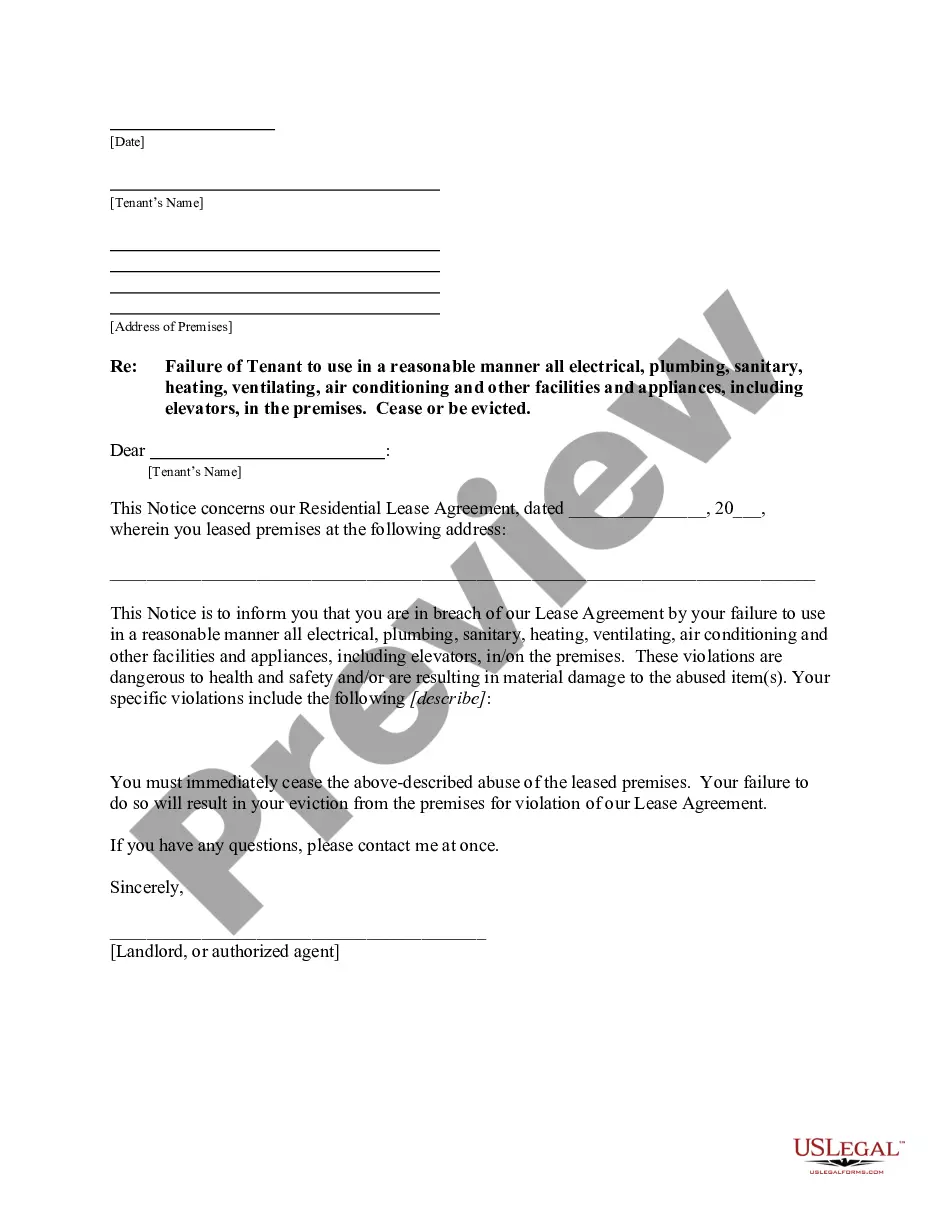
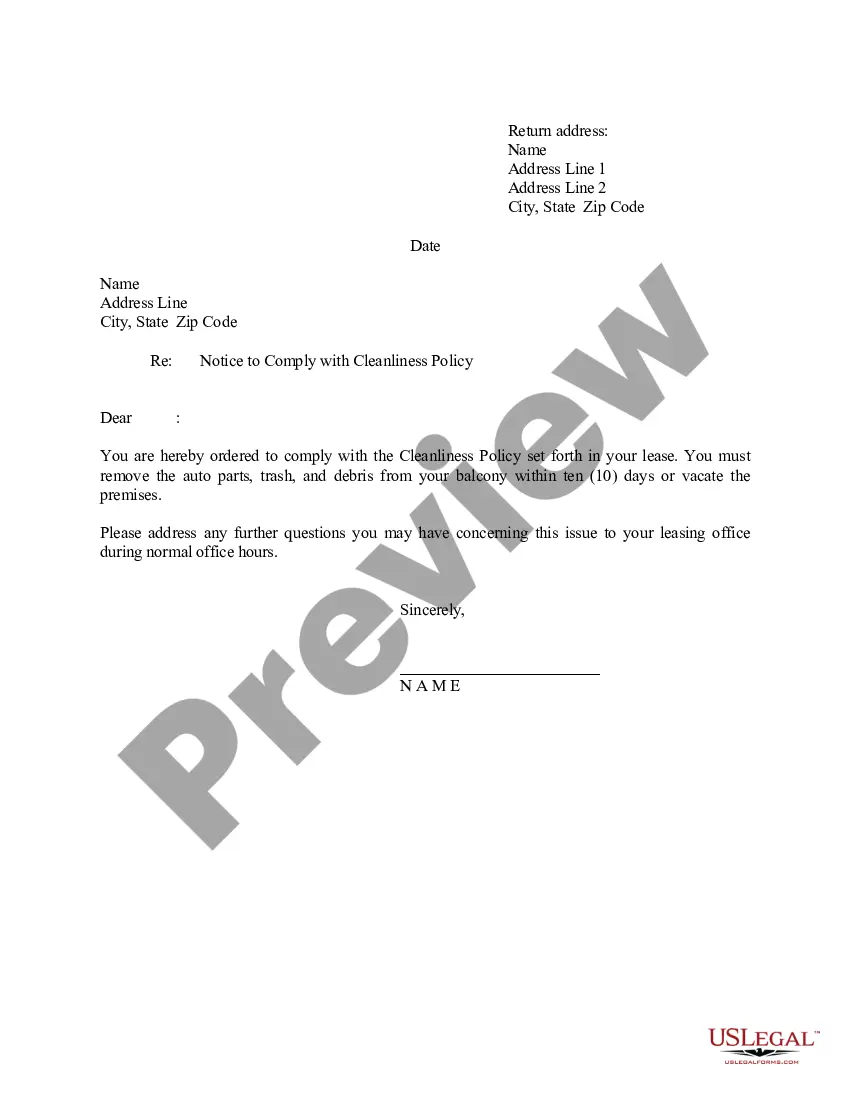
This form is a notice from a landlord to a tenant regarding the tenant's failure to use electrical, plumbing, sanitary, heating, ventilating, air conditioning, and other facilities in a reasonable manner. It serves to inform the tenant of their lease violations and outlines the actions that may be taken if the issues are not remedied. This Letter from Landlord to Tenant for Failure to Use Facilities differs from other eviction notices, as it specifically addresses misuse of facilities rather than broader lease violations.
Main sections of this form
- Identification of the landlord and tenant
- Description of the misuse of facilities
- Statement of actions that may lead to eviction
- Instructions for contact regarding the issue
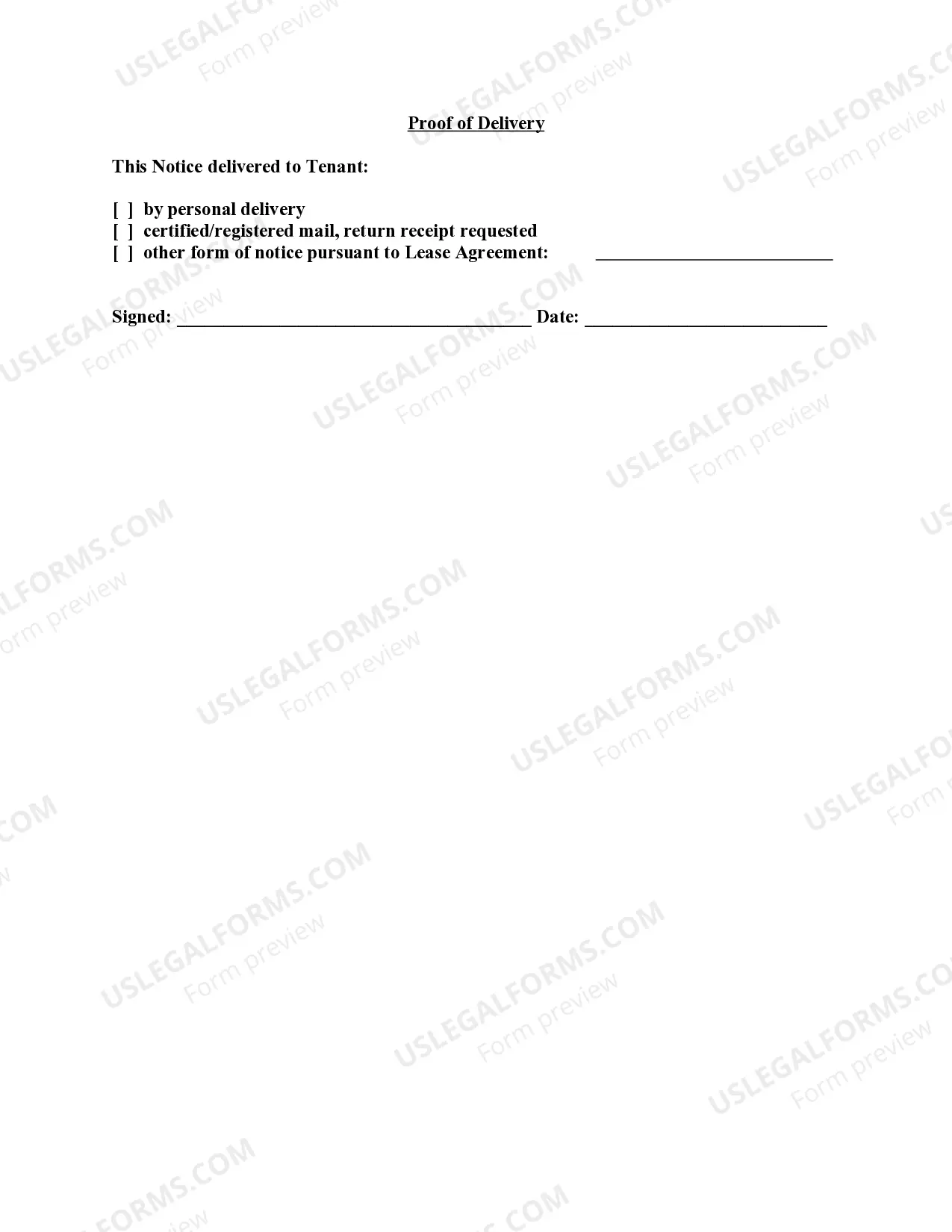
- Proof of delivery section



Situations where this form applies
This form should be used when a tenant has not been using the provided electrical, plumbing, sanitary, heating, ventilation, air conditioning, or any other facilities according to the terms of the lease. For instance, if a tenant is neglecting to properly utilize common appliances, or has caused damage through improper use, a landlord can issue this notice to address the situation before proceeding with eviction.
Who should use this form
- Landlords managing rental properties
- Property managers representing landlords
- Tenants who have received a notice and need clarity on their obligations
How to prepare this document
- Identify the landlord and tenant by entering their names and contact information.
- Clearly describe the specific misuse of facilities and appliances.
- Include a statement expressing the potential for eviction if the issue persists.
- Provide your contact information for any questions the tenant may have.
- Ensure delivery of the notice using personal delivery or certified mail.
Notarization guidance
This form does not typically require notarization unless specified by local law; however, check your jurisdiction for specific requirements to ensure compliance.
Get your form ready online
Our built-in tools help you complete, sign, share, and store your documents in one place.
Make edits, fill in missing information, and update formatting in US Legal Forms—just like you would in MS Word.
Download a copy, print it, send it by email, or mail it via USPS—whatever works best for your next step.
Sign and collect signatures with our SignNow integration. Send to multiple recipients, set reminders, and more. Go Premium to unlock E-Sign.
If this form requires notarization, complete it online through a secure video call—no need to meet a notary in person or wait for an appointment.
We protect your documents and personal data by following strict security and privacy standards.

Make edits, fill in missing information, and update formatting in US Legal Forms—just like you would in MS Word.

Download a copy, print it, send it by email, or mail it via USPS—whatever works best for your next step.

Sign and collect signatures with our SignNow integration. Send to multiple recipients, set reminders, and more. Go Premium to unlock E-Sign.

If this form requires notarization, complete it online through a secure video call—no need to meet a notary in person or wait for an appointment.

We protect your documents and personal data by following strict security and privacy standards.
Common mistakes
- Failing to include complete contact information for both parties.
- Not specifying the misuse of facilities clearly.
- Neglecting to follow up after issuing the notice.
Benefits of completing this form online
- Convenience of downloading and printing immediately.
- Editability to tailor the form to specific situations.
- Reliability, as the form is drafted by licensed attorneys for legal compliance.
Legal use & context
- This letter serves as a formal notification of tenancy issues, which can be looked upon favorably in potential eviction proceedings.
- Properly documenting tenant violations may enhance legal standing in disputes.
Summary of main points
- This form acts as a notice to correct usage of facilities to avoid eviction.
- Clear documentation and proper delivery are crucial for legal enforceability.
- Understanding state-specific regulations is important for compliance.
Looking for another form?



Form popularity
FAQ
Although renters must abide by the Homeowners' Association rules, they still have rights under the law. The property owner must also follow their home state's Landlord-Tenant Laws that include the Fair Housing Act and Fair Credit Reporting Act.
Repairs. Your landlord is always responsible for repairs to: the property's structure and exterior. basins, sinks, baths and other sanitary fittings including pipes and drains.
It means your landlord cannot increase your rent by more than 2.6% during Maryland's coronavirus-related state of emergency or during the 180 days after the emergency ends.
In general, the courts expect that all safety-related repairs will be attended to in 30 days or less. If a landlord fails to act within a reasonable amount of time, the tenant can make an application to the court to commence the escrow process.
A landlord cannot evict a tenant without an adequately obtained eviction notice and sufficient time. A landlord cannot retaliate against a tenant for a complaint. A landlord cannot forego completing necessary repairs or force a tenant to do their own repairs.A landlord cannot remove a tenant's personal belongings.
Under Maryland law, tenants have a right to freedom from housing discrimination, a right to certain security deposit protections, the right to freedom from landlord retaliation, and the right to be protected after domestic violence.
Under Maryland law, tenants have a right to freedom from housing discrimination, a right to certain security deposit protections, the right to freedom from landlord retaliation, and the right to be protected after domestic violence.
As a tenant, you have the right to live in a safe, secure and quiet environment that is managed in accordance with the law. You also have a responsibility to take good care of the property, pay the rent on time, and adhere to the terms of your tenancy agreement.
Tenants can all agree to withhold rent until the landlord makes repairs. A group of tenants can ask a judge to order the landlord to make repairs. If the landlord absolutely refuses to fix the bad conditions, tenants can ask a court to appoint a temporary landlord called a receiver in order to make repairs.