Maryland Letter from Tenant to Landlord for Failure of Landlord to comply with building codes affecting health and safety or resulting in untenantable condition - demand for remedy
Overview of this form
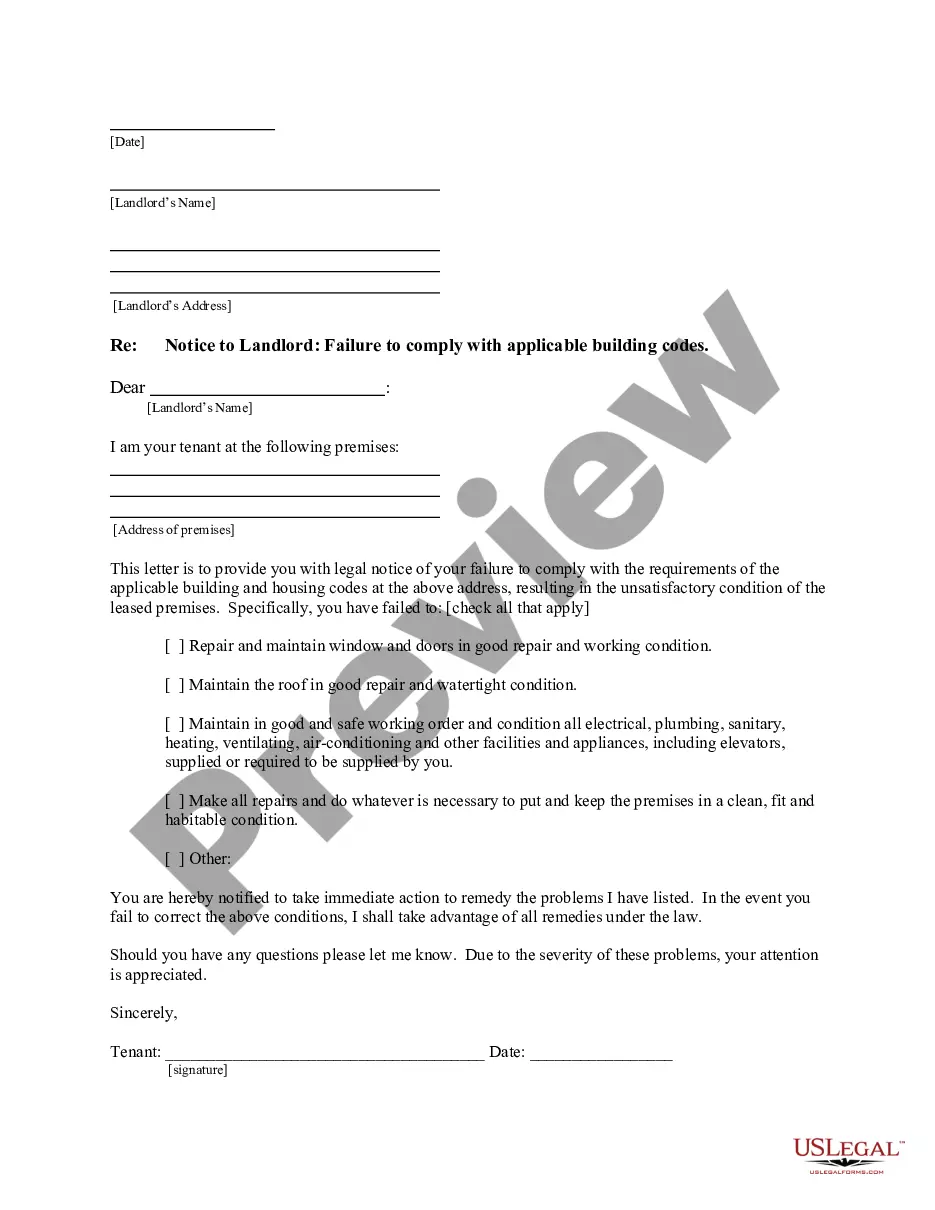
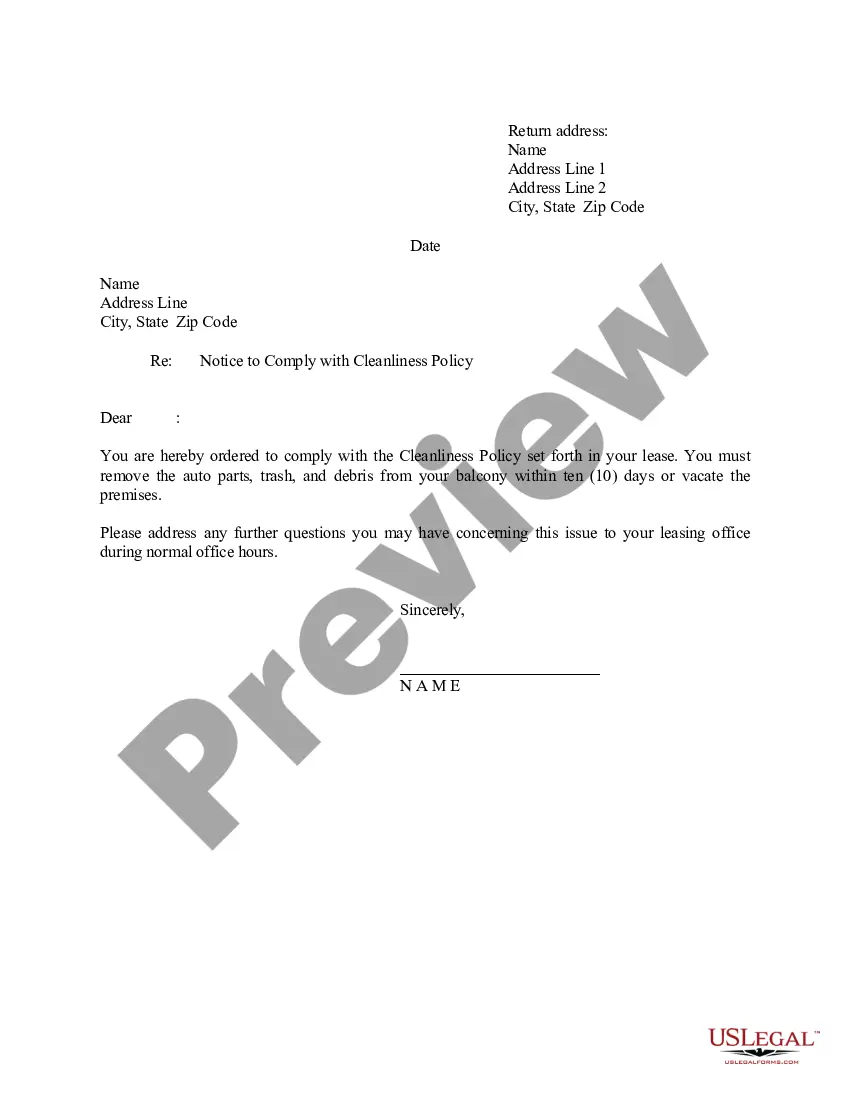
This form is a Letter from Tenant to Landlord for Failure of Landlord to comply with building codes affecting health and safety. It serves as a formal demand for repair or remedy of unsafe or unhealthy conditions within the leased property. Unlike other tenant communications, this letter specifically demands compliance with established building codes and stipulates a deadline for action, fostering a clear and direct approach to resolving housing issues.
Key parts of this document
- Identification of the tenant and landlord.
- Description of the building code violations affecting health and safety.
- Specific repair requests, such as fixing windows, doors, and roofing.
- A demand for remedy to be completed within ten days.
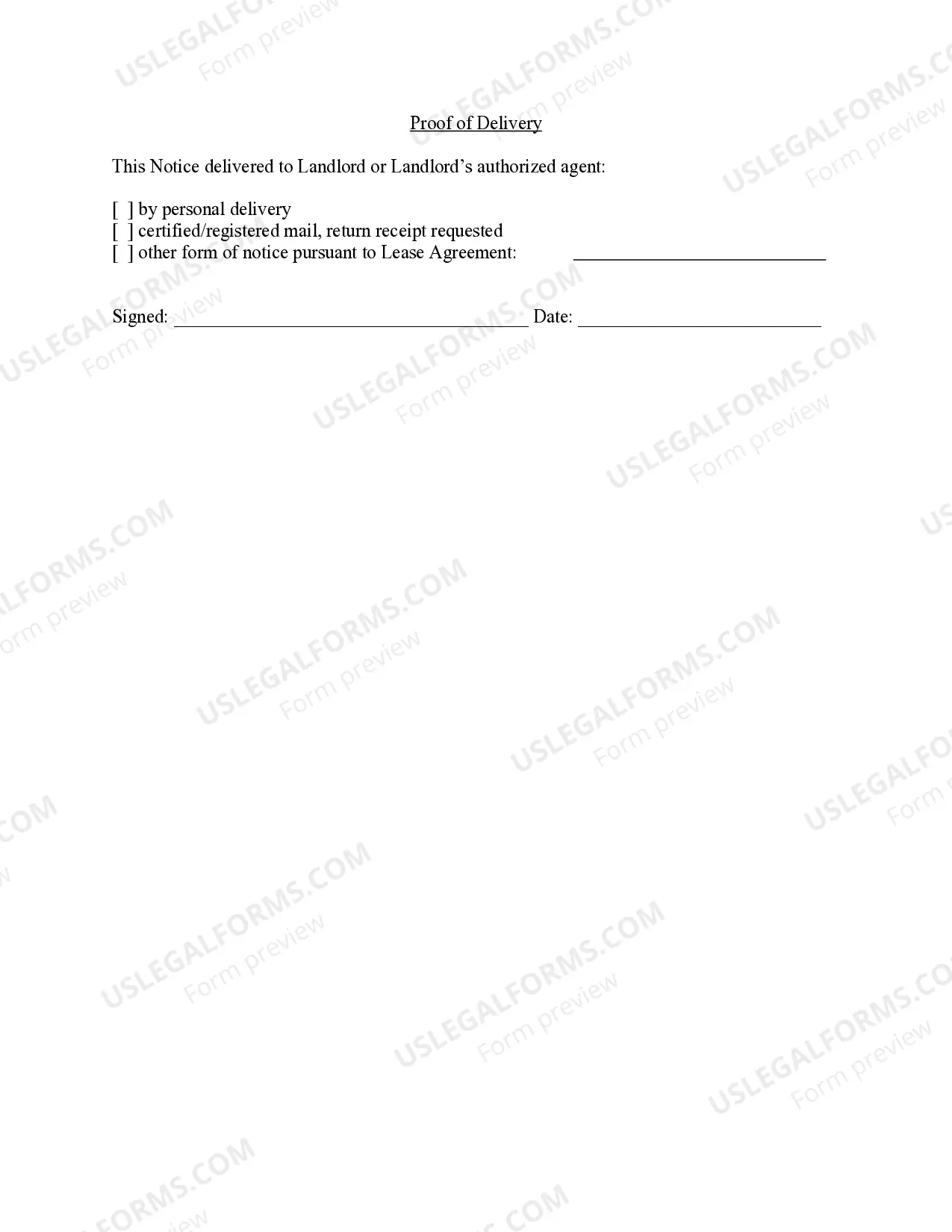
- Proof of delivery to the landlord or their authorized agent.



When to use this form
This form should be used by tenants when they have identified significant health and safety violations in their rental property that have not been addressed by the landlord. It is especially appropriate when the property conditions make it unsafe or uninhabitable, and official notification is needed to prompt the landlord to take corrective action within a defined timeframe.
Intended users of this form
- Tenants living in rental properties experiencing safety or health violations.
- Individuals seeking to formally communicate issues to their landlord.
- Tenants who have previously notified the landlord but have not seen any action taken.
Completing this form step by step
- Identify and enter your name and the landlord's name.
- Describe the specific violations of building codes that make the property unsafe.
- List the repairs needed, ensuring they relate directly to health and safety issues.
- Specify the ten-day deadline for the landlord to respond or take action.
- Sign and date the letter, ensuring delivery to the landlord or their agent.
Is notarization required?
This form usually doesn’t need to be notarized. However, local laws or specific transactions may require it. Our online notarization service, powered by Notarize, lets you complete it remotely through a secure video session, available 24/7.
Get your form ready online
Our built-in tools help you complete, sign, share, and store your documents in one place.
Make edits, fill in missing information, and update formatting in US Legal Forms—just like you would in MS Word.
Download a copy, print it, send it by email, or mail it via USPS—whatever works best for your next step.
Sign and collect signatures with our SignNow integration. Send to multiple recipients, set reminders, and more. Go Premium to unlock E-Sign.
If this form requires notarization, complete it online through a secure video call—no need to meet a notary in person or wait for an appointment.
We protect your documents and personal data by following strict security and privacy standards.

Make edits, fill in missing information, and update formatting in US Legal Forms—just like you would in MS Word.

Download a copy, print it, send it by email, or mail it via USPS—whatever works best for your next step.

Sign and collect signatures with our SignNow integration. Send to multiple recipients, set reminders, and more. Go Premium to unlock E-Sign.

If this form requires notarization, complete it online through a secure video call—no need to meet a notary in person or wait for an appointment.

We protect your documents and personal data by following strict security and privacy standards.
Avoid these common issues
- Failing to provide specific details about the violations or repairs needed.
- Not adhering to the ten-day notice period or miscalculating the deadline.
- Neglecting to keep a copy of the letter for personal records.
- Not delivering the letter to the proper address or authorized agent.
Benefits of completing this form online
- Quick access to a professionally drafted legal template.
- Easy to edit and fill out according to your specific situation.
- Convenient download options for printing or digital use.
- Guidance ensured by the expertise of licensed attorneys.
Legal use & context
- This letter acts as a formal request for the landlord to address health and safety violations.
- A documented notice provides evidence in case of further legal actions or disputes.
- Failure to comply with the letter could result in legal consequences for the landlord.
Key takeaways
- This form is crucial for tenants experiencing unsafe living conditions.
- It formally demands specific repairs within a clear timeframe.
- Adherence to state-specific laws is essential for effectiveness.
- Using this form ensures clear communication between tenants and landlords regarding building code compliance.
Looking for another form?
Form popularity
FAQ
Sue the landlord and whoever for up to $10,000 in small claims court for trespassing, breach of contract, invasion of privacy, and breach of quiet enjoyment; if you are two or more tenants, each can separately sue them for up to $10,000, and a joint action is not required.
Introduce the problem clearly. Begin your letter by stating specifically why you are writing. Provide a brief description of the specific problem, then detail any efforts you have made prior to the letter to notify your landlord of the problem or to fix the problem yourself.
If a landlord will not make necessary repairs to a rental property, contact Housing and Community Development at 240-314-8320. All other complaints can be made by completing the Landlord- Tenant Complaint Form. 111 Maryland Ave. a.m. - p.m.
Under Maryland law, tenants have a right to freedom from housing discrimination, a right to certain security deposit protections, the right to freedom from landlord retaliation, and the right to be protected after domestic violence.
If you're seeking damages for emotional distress caused by a landlord's discrimination, or punitive damages for especially blatant and intentional discrimination, a lawsuit may well be your best bet. Understand what's involved in suing your landlord. You may file a lawsuit in either federal or state court.
Know your state's landlord/tenant laws. Read and respond to the court summons. Try to work out a settlement. Consider legal counsel. Show up for court. Look sharp and provide evidence.
If your landlord breaches the warranty of habitability or the warranty of quiet enjoyment, you may be able to sue her to recover monetary damages.In some states, such as California and Arizona, you may be able to seek emotional distress damages if the landlord's actions were particularly egregious.
The landlord had a duty to reasonably maintain the property; The landlord knew or should have known of the dangerous condition; The landlord breached their duty by failing to repair/fix the dangerous condition;