Massachusetts Letter from Landlord to Tenant for Failure of to dispose all ashes, rubbish, garbage or other waste in a clean and safe manner in compliance with community rules
What is this form?
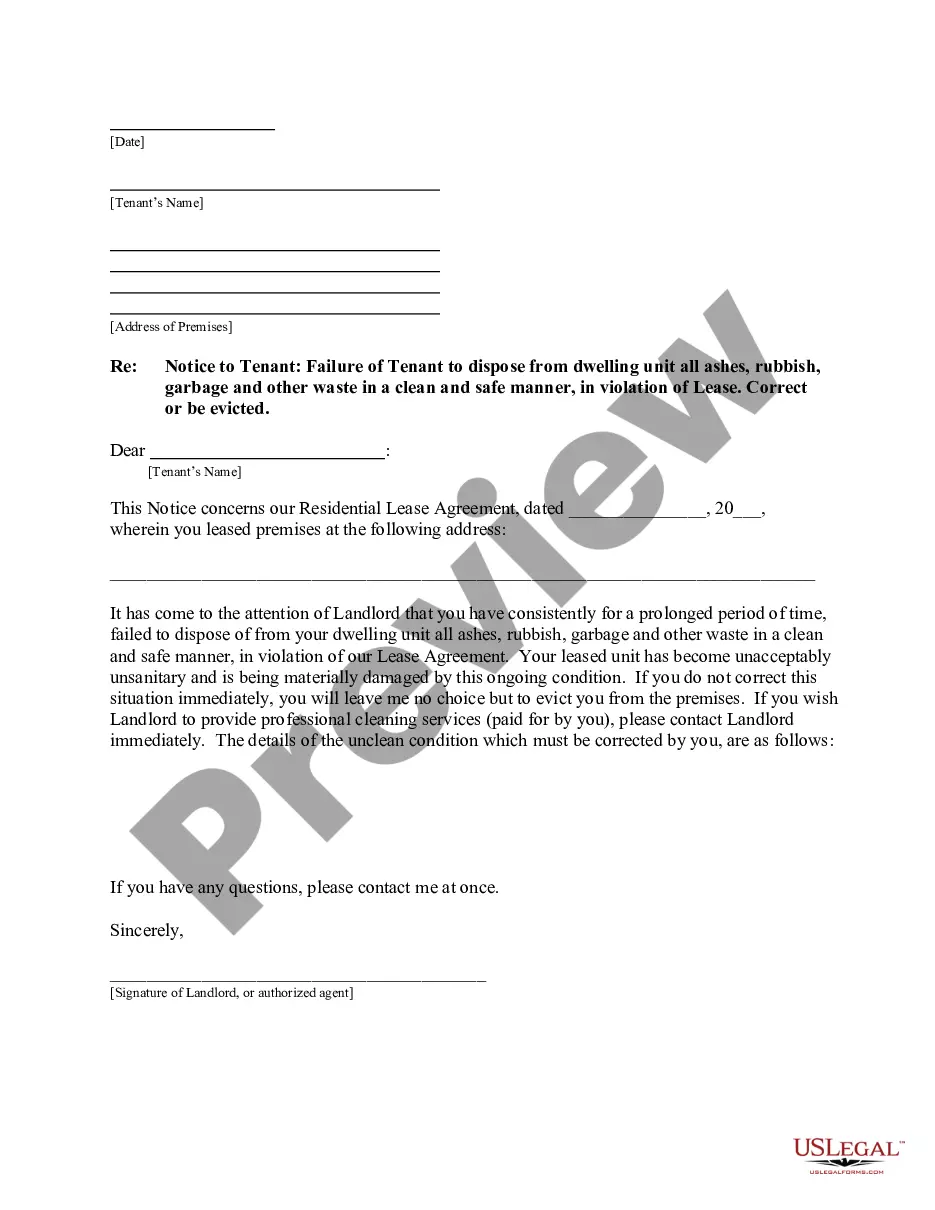
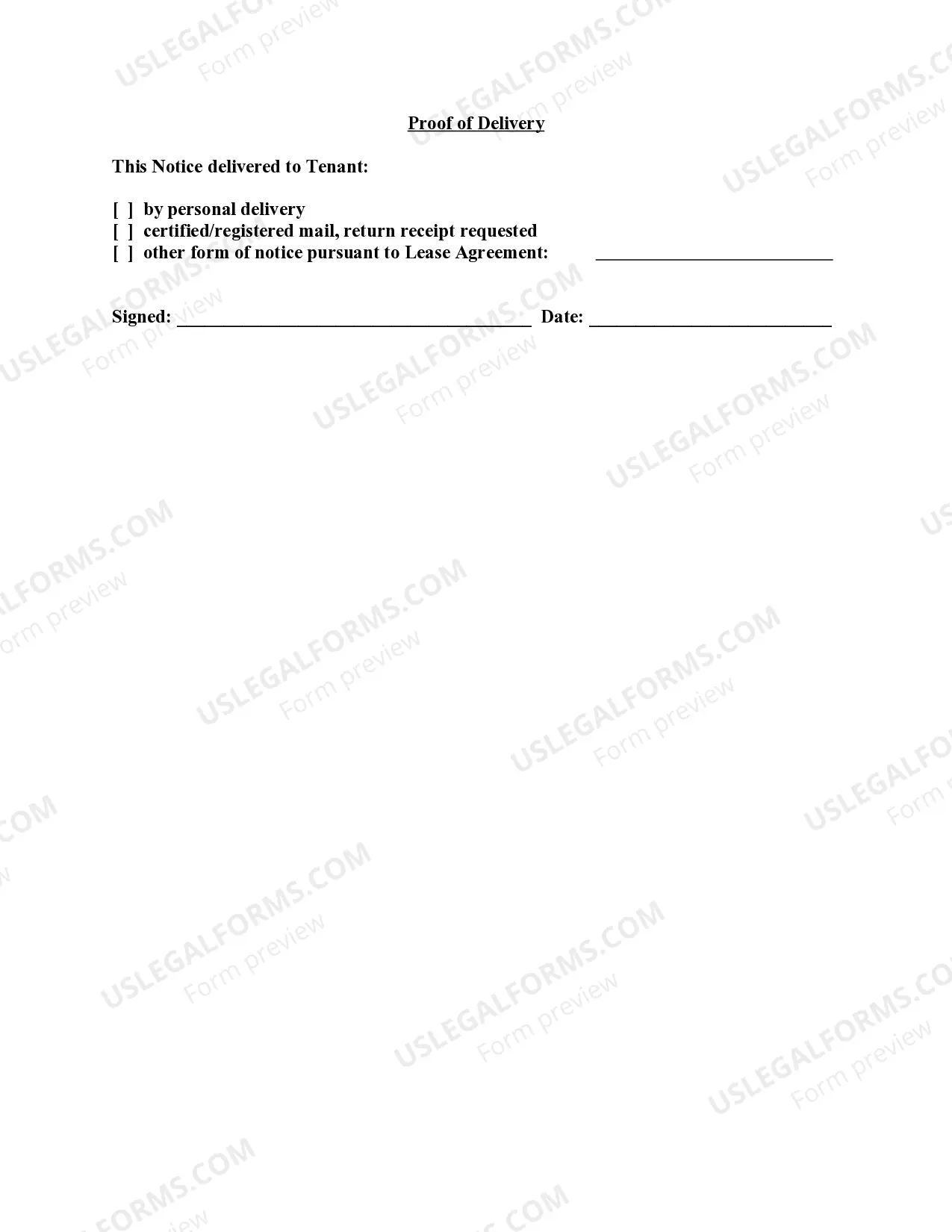
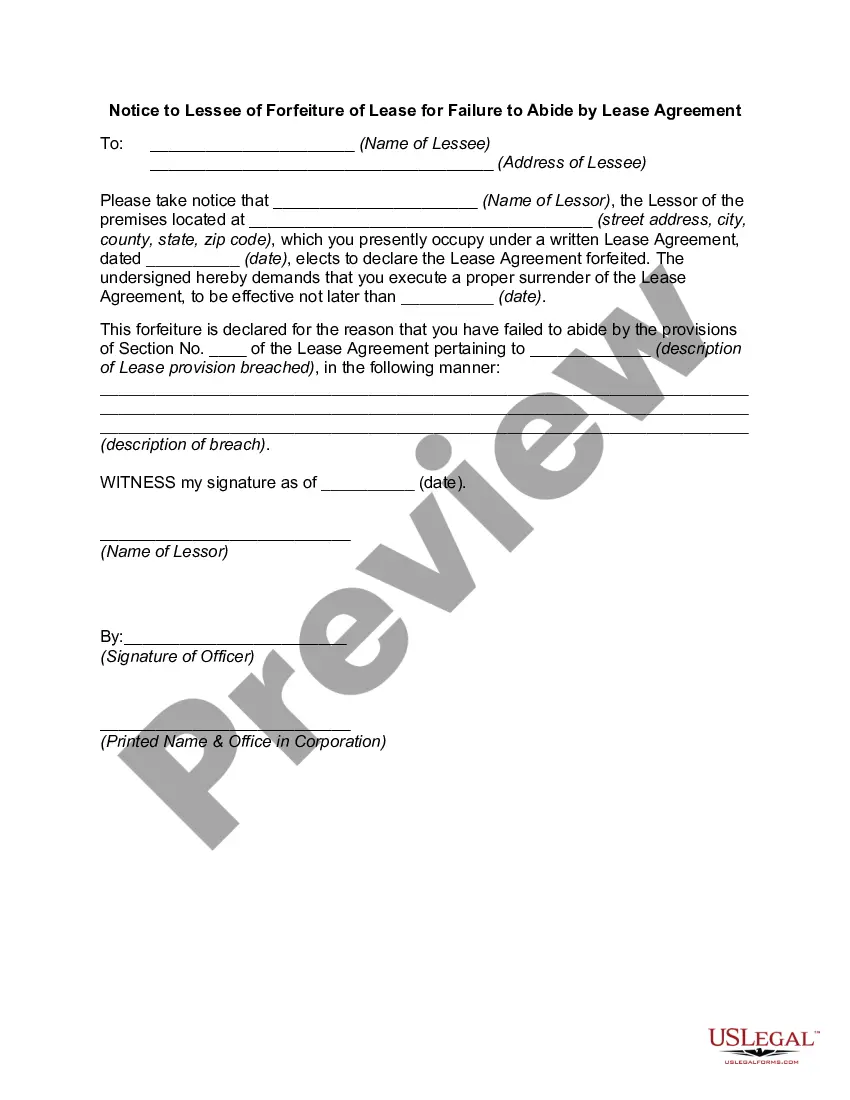
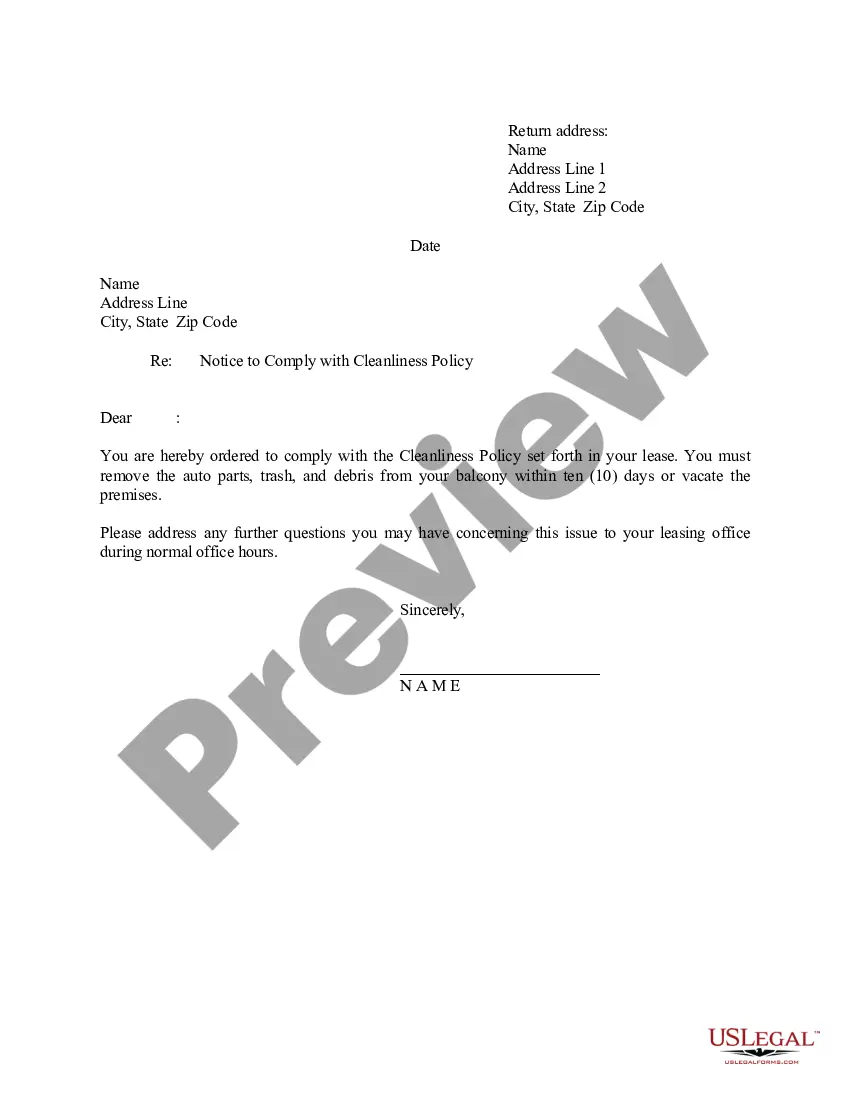
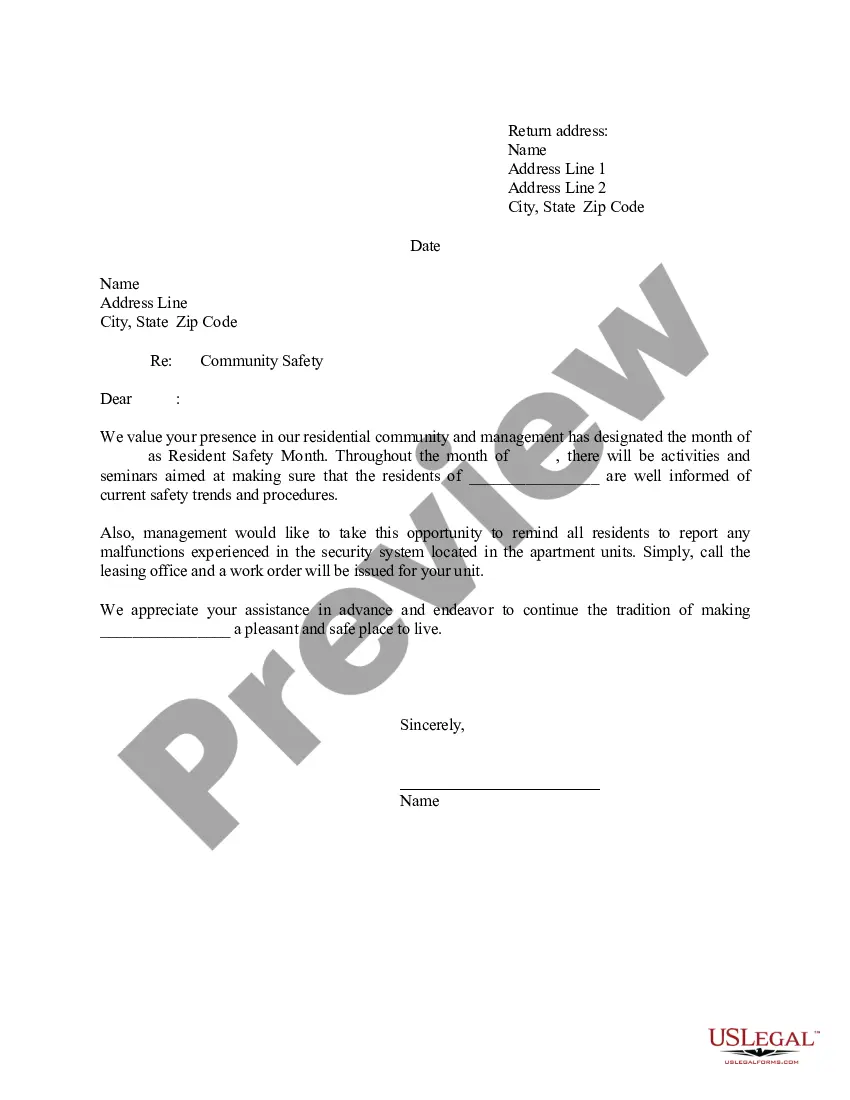
This form is a letter from a landlord to a tenant regarding the failure to dispose of waste in a clean and safe manner. It serves as a formal notice requesting the tenant to address unsanitary conditions that violate the lease agreement. If the tenant fails to comply, this letter may lead to eviction proceedings, making it distinct from other general eviction notices by focusing specifically on waste disposal issues.
Key components of this form
- Identification of the landlord and tenant.
- Description of the unsanitary conditions caused by improper waste disposal.
- Notification of the violation of the lease agreement.
- Instructions for correcting the issue, including options for professional cleaning.
- Consequences for non-compliance, including potential eviction.


Common use cases
This form should be used when a landlord observes that a tenant is not disposing of rubbish, garbage, ashes, or other waste according to community rules. It is appropriate in situations where the landlord has previously communicated with the tenant about these issues but has not seen any improvements. This formal notice is a prerequisite before considering legal actions such as eviction.
Who can use this document
- Landlords managing residential properties.
- Property managers addressing tenant compliance issues.
- Legal representatives working on landlord-tenant disputes.
- Tenants who have received a notice regarding waste disposal violations.
How to prepare this document
- Identify the landlord and tenant by entering their names and contact information.
- Clearly describe the specific instances of improper waste disposal observed.
- Reference the relevant lease agreement provisions that have been violated.
- Specify the action the tenant must take to rectify the situation.
- Include a statement regarding possible eviction if the issue is not resolved.
Does this form need to be notarized?
Notarization is not commonly needed for this form. However, certain documents or local rules may make it necessary. Our notarization service, powered by Notarize, allows you to finalize it securely online anytime, day or night.
Get your form ready online
Our built-in tools help you complete, sign, share, and store your documents in one place.
Make edits, fill in missing information, and update formatting in US Legal Forms—just like you would in MS Word.
Download a copy, print it, send it by email, or mail it via USPS—whatever works best for your next step.
Sign and collect signatures with our SignNow integration. Send to multiple recipients, set reminders, and more. Go Premium to unlock E-Sign.
If this form requires notarization, complete it online through a secure video call—no need to meet a notary in person or wait for an appointment.
We protect your documents and personal data by following strict security and privacy standards.
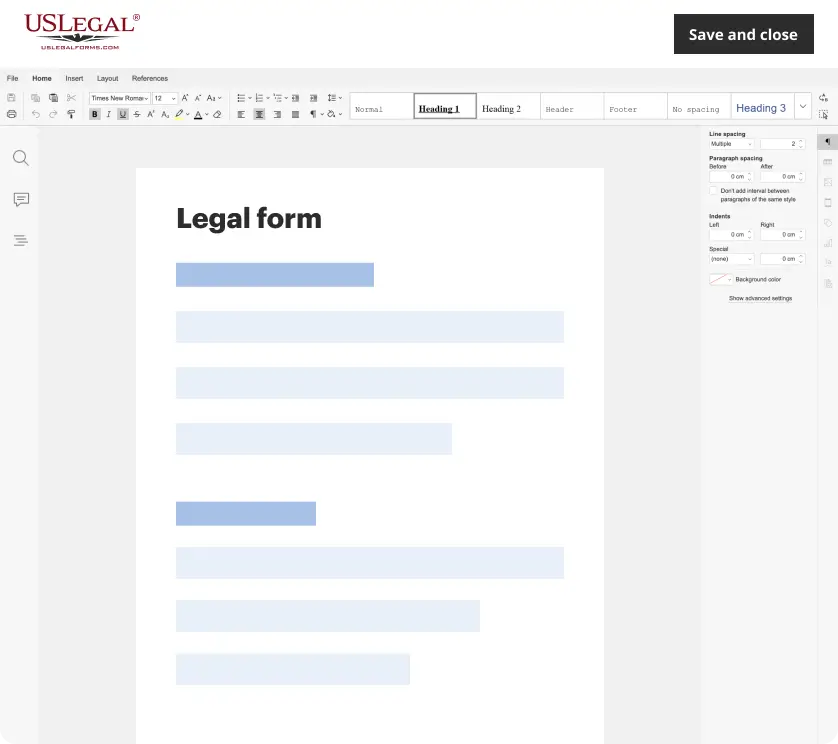
Make edits, fill in missing information, and update formatting in US Legal Forms—just like you would in MS Word.
Download a copy, print it, send it by email, or mail it via USPS—whatever works best for your next step.
Sign and collect signatures with our SignNow integration. Send to multiple recipients, set reminders, and more. Go Premium to unlock E-Sign.
If this form requires notarization, complete it online through a secure video call—no need to meet a notary in person or wait for an appointment.
We protect your documents and personal data by following strict security and privacy standards.
Typical mistakes to avoid
- Failing to provide specific examples of the waste disposal issues.
- Not referencing the lease agreement correctly.
- Omitting contact information for the landlord.
- Neglecting to state the timeline for corrective action.
Why complete this form online
- Convenient access to download and personalize the letter.
- Editable format allows landlords to tailor the document to their specific needs.
- Reliable legal wording crafted by licensed attorneys ensures compliance with laws.
- Time-saving solution compared to drafting a letter from scratch.
Legal use & context
- This form is legally significant as it provides formal notification of lease violations.
- Failure to use this form properly could lead to challenges in eviction proceedings.
- The document establishes a record of communication between the landlord and tenant.
Summary of main points
- This letter serves as an official notice to the tenant regarding waste disposal violations.
- Landlords must provide specific details about the issues observed and give tenants a chance to rectify them.
- Utilizing this form can protect landlords in case of future eviction proceedings.
Looking for another form?
Form popularity
FAQ
Put non-recyclable items in plastic bags and place into trash cans. Place trash items that are not recyclable or compostable into a garbage bag and put it into a trash can.If you live in an area that doesn't offer a trash service, bring your garbage to a local dump.
Typically, local governments are responsible for the collection and disposal of the wastes generated within their jurisdiction, as well as for the operation and maintenance of their equipment. However, local governments usually lack the authority and resources to provide a satisfactory and economically viable service.
Businesses must store their waste safely and securely. They must also keep hazardous waste separate from non-hazardous waste and must not mix different types of hazardous waste or waste oils.
From being an eyesore to releasing toxins, improper waste disposal on any scale can create environmental problems, health problems and even economic concerns. This is also true for older landfill sites, which are often unlined. The lining of landfills prevents toxic substances from being released into the ground water.
Answer. If waste materials are not properly disposed, it may cause floods since it may get stuck in waterways. Hazardous waste may also cause poisoning or diseases.
Benefits of Effective Waste Disposal Environmental protection from pollution or contamination. Money generation companies may buy recyclable materials due to their value. Additionally, the waste management industry creates employment opportunities. Safety irresponsibly disposed of waste can harm people.
Keep separate containers for dry and wet waste in the kitchen. Keep two bags for dry waste collection- paper and plastic , for the rest of the household waste. Keep plastic from the kitchen clean and dry and drop into the dry waste bin.Send wet waste out of the home daily.
These inputs form the basis of policy frameworks that influence solid waste management decisions. In the United States, the Environmental Protection Agency (EPA) regulates household, industrial, manufacturing, and commercial solid and hazardous wastes under the 1976 Resource Conservation and Recovery Act (RCRA).
Over time, such wastes might cause issues such as liver failure, breathing problems or even cancer. Prolonged exposure may even harm off-spring, causing birth defects and reproductive disorders. At worst, failing to dispose of hazardous wastes correctly can even lead to death.