Kentucky Renunciation and Disclaimer of Joint Tenant or Tenancy Interest
Overview of this form
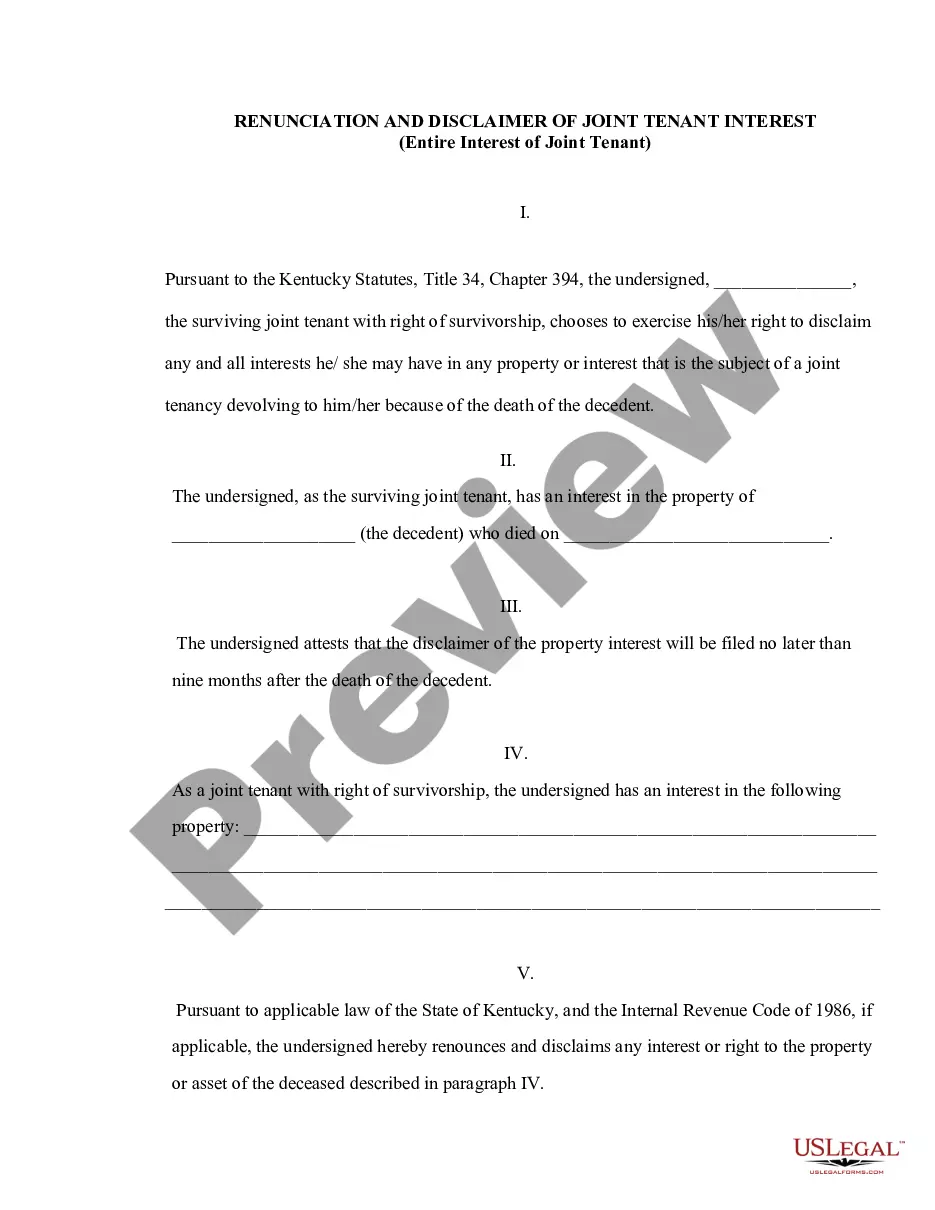
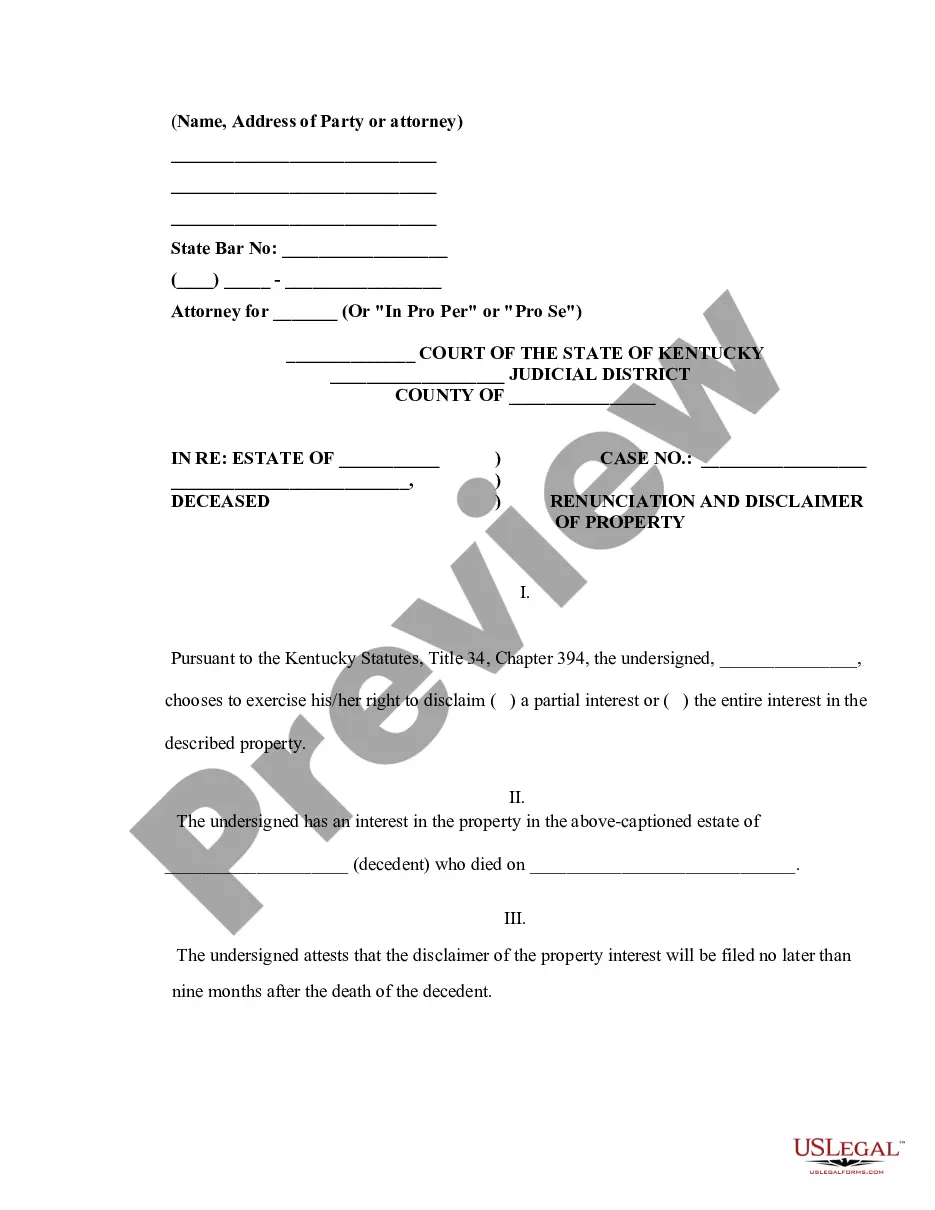
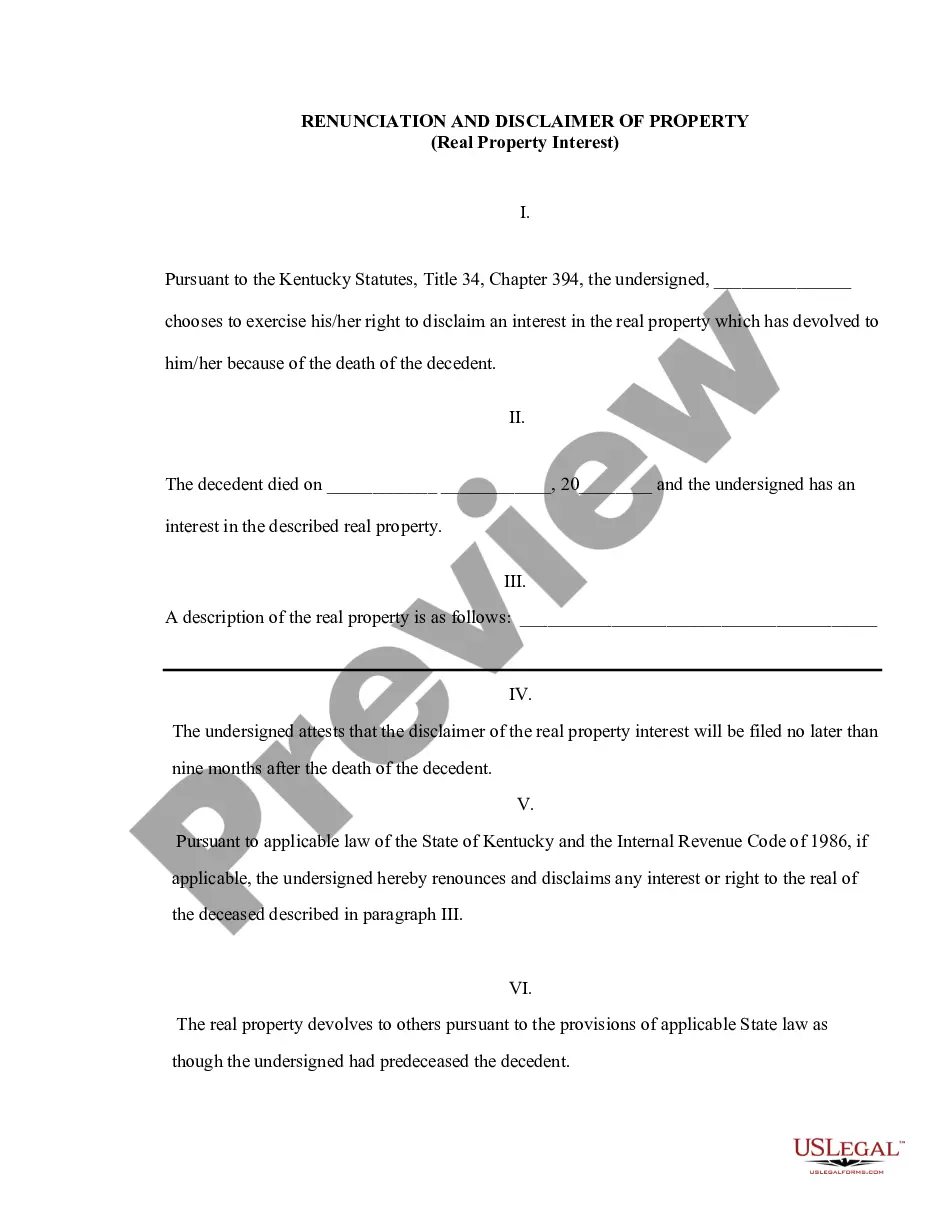
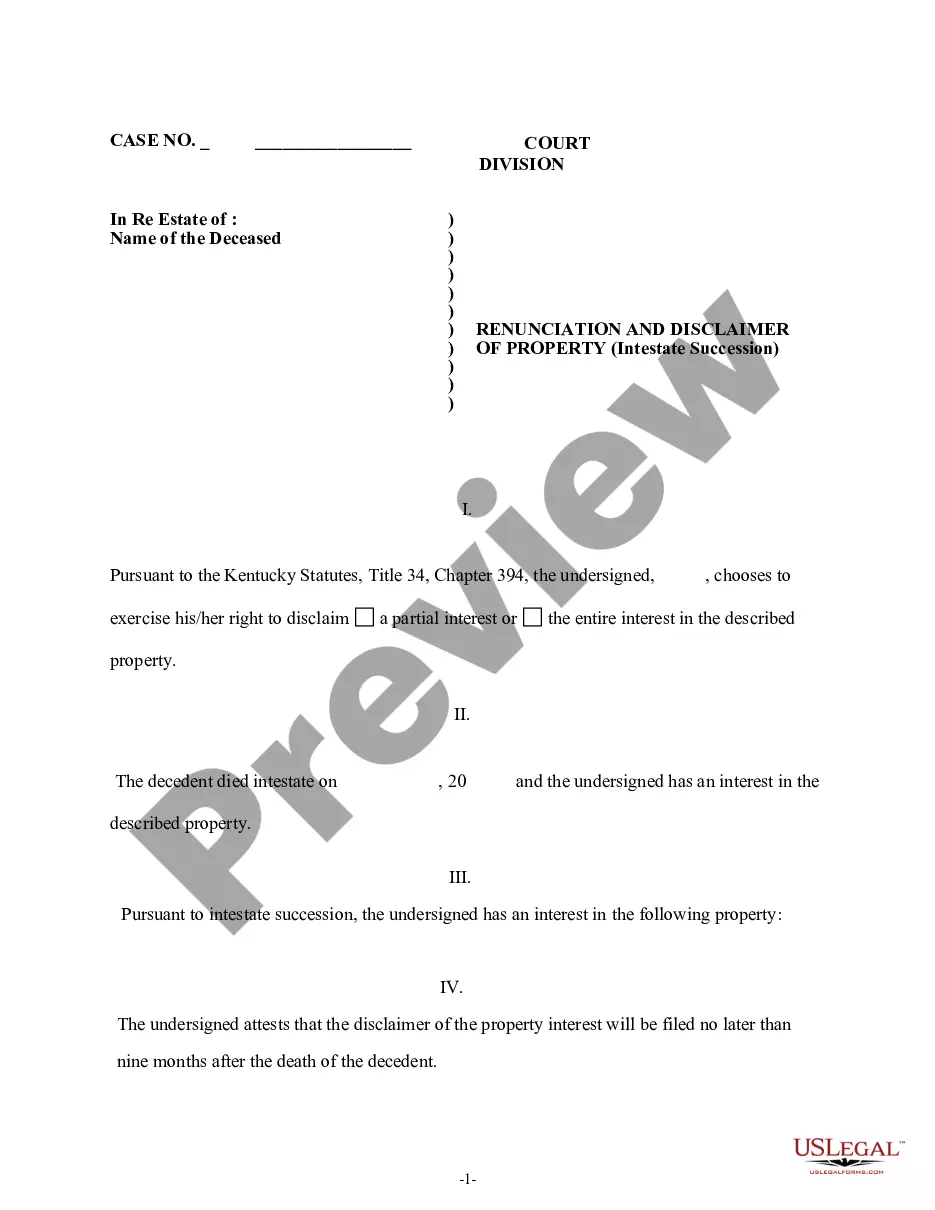
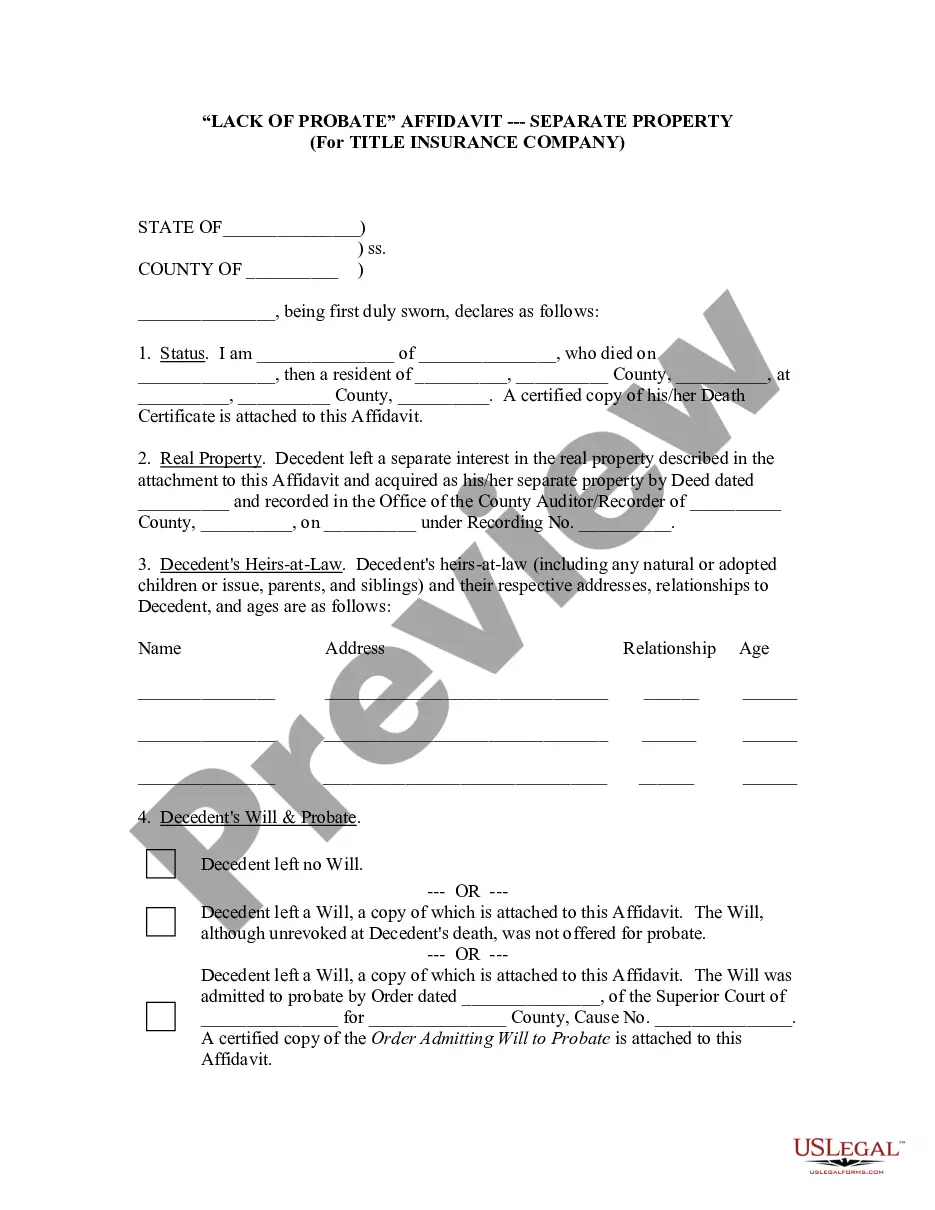
The Kentucky Renunciation and Disclaimer of Joint Tenant or Tenancy Interest is a legal document that allows a surviving joint tenant to renounce their right to inherit property following the death of a co-tenant. This form is essential for individuals who have inherited a joint property interest but wish to decline it, often for personal or financial reasons. By completing this document, the joint tenant effectively states that they do not accept their share of the property, allowing it to be distributed according to state law as if they never had an interest in it.
What’s included in this form
- Identification of the surviving joint tenant and decedent.
- Specification of the property subject to the tenancy.
- A declaration that the disclaimer is filed within nine months after the decedent's death.
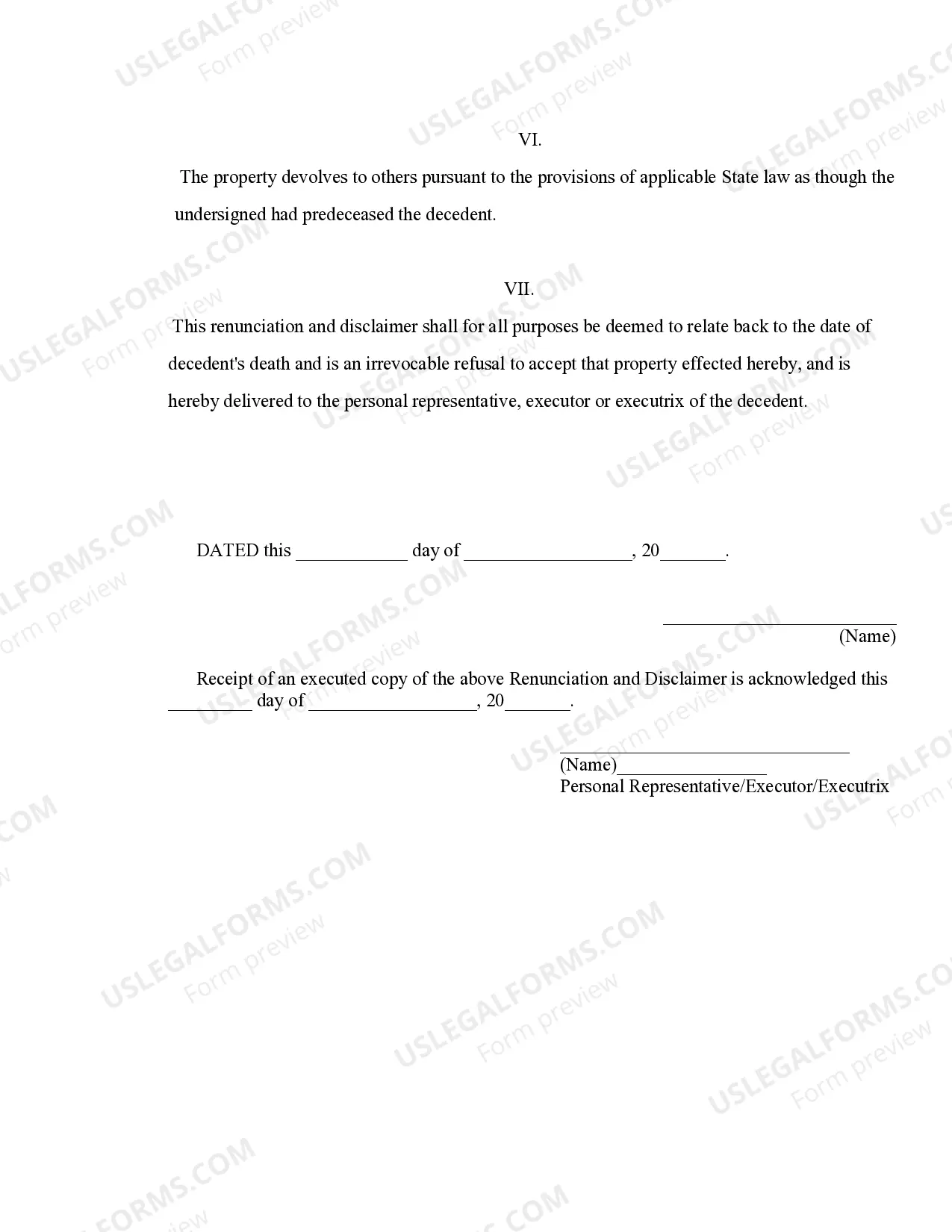
- Irrevocable renunciation of any rights to the property.
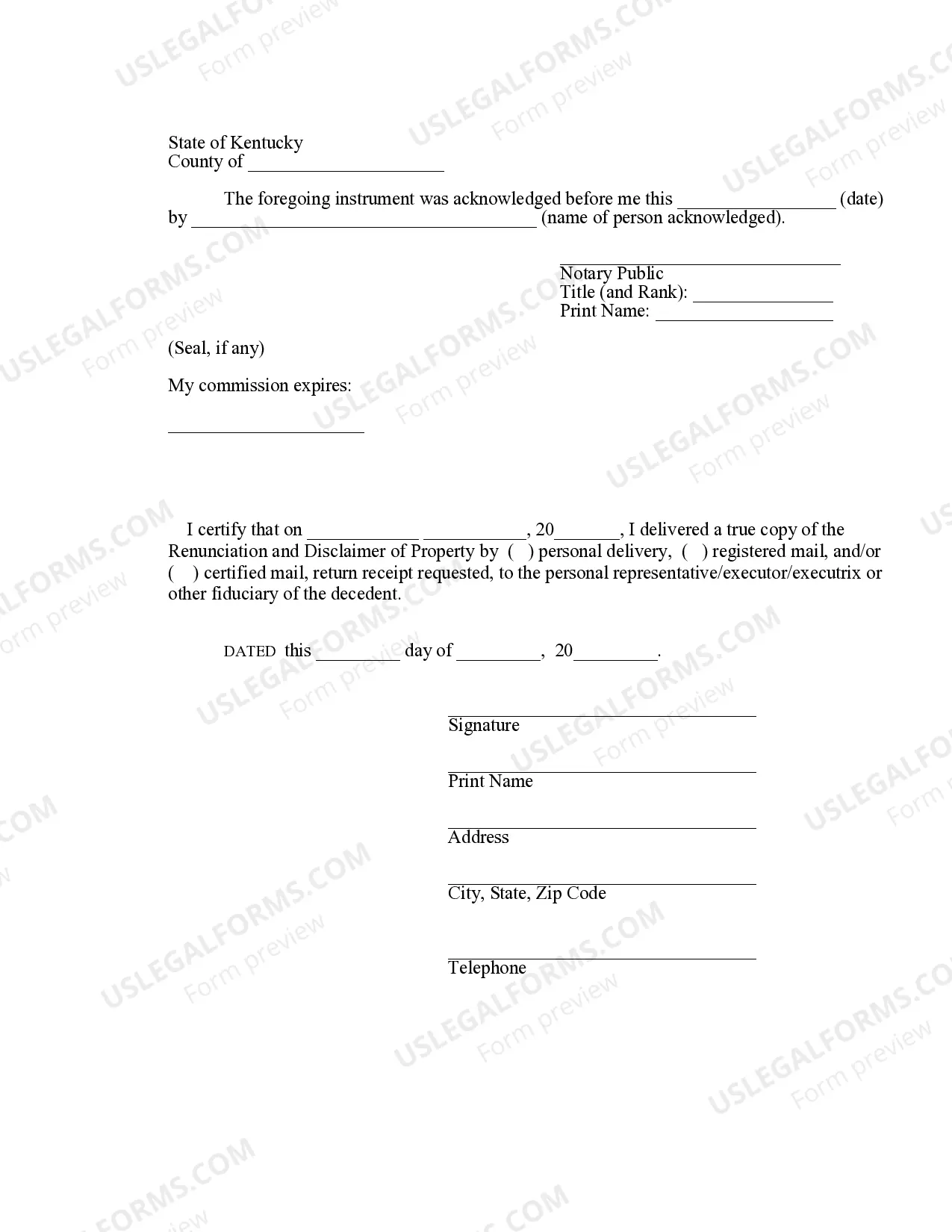
- Verification of document delivery to the deceased's personal representative or executor.
- Acknowledgment by a notary public to validate the document.
When to use this form
This form should be used when a joint tenant wishes to formally disclaim their interest in a property after the death of a co-tenant. It is particularly applicable in situations where the surviving tenant may have financial or personal reasons to avoid accepting the property, such as potential tax liabilities or disputes among heirs. It must be completed and filed within nine months following the decedent's death to be valid under Kentucky law.
Who this form is for
- Surviving joint tenants who inherit property upon the death of a co-tenant.
- Individuals looking to disinherit themselves from a joint property interest.
- Heirs managing estate issues related to joint tenancies.
- Persons who are unsure about accepting inherited property obligations.
How to prepare this document
- Identify the surviving joint tenant and the deceased tenant.
- Specify the property or interest being disclaimed.
- Enter the date of the decedent's death.
- Sign and date the form, certifying the disclaimer will be filed timely.
- Ensure the document is acknowledged by a notary public.
- Deliver a copy of the completed form to the personal representative of the decedent.
Does this document require notarization?
This document requires notarization to meet legal standards. US Legal Forms provides secure online notarization powered by Notarize, allowing you to complete the process through a verified video call, available 24/7.
Get your form ready online
Our built-in tools help you complete, sign, share, and store your documents in one place.
Make edits, fill in missing information, and update formatting in US Legal Forms—just like you would in MS Word.
Download a copy, print it, send it by email, or mail it via USPS—whatever works best for your next step.
Sign and collect signatures with our SignNow integration. Send to multiple recipients, set reminders, and more. Go Premium to unlock E-Sign.
If this form requires notarization, complete it online through a secure video call—no need to meet a notary in person or wait for an appointment.
We protect your documents and personal data by following strict security and privacy standards.
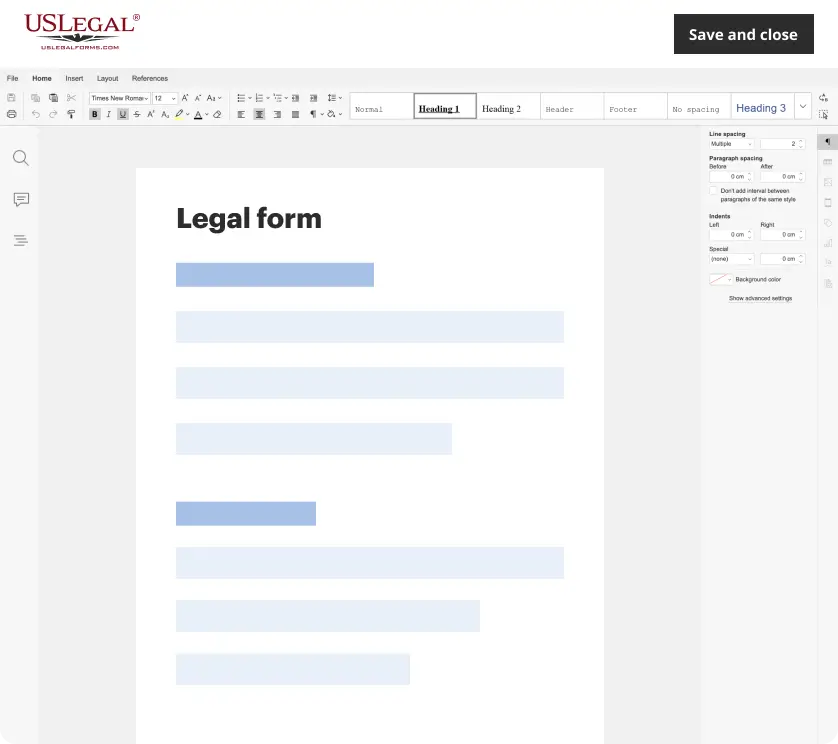
Make edits, fill in missing information, and update formatting in US Legal Forms—just like you would in MS Word.
Download a copy, print it, send it by email, or mail it via USPS—whatever works best for your next step.
Sign and collect signatures with our SignNow integration. Send to multiple recipients, set reminders, and more. Go Premium to unlock E-Sign.

If this form requires notarization, complete it online through a secure video call—no need to meet a notary in person or wait for an appointment.
We protect your documents and personal data by following strict security and privacy standards.
Avoid these common issues
- Failing to file the disclaimer within the nine-month time frame.
- Not properly identifying the property interest being disclaimed.
- Omitting necessary signatures or dates.
- Neglecting to have the document notarized, if required.
Benefits of using this form online
- Convenience of downloading and completing the form at your own pace.
- Access to reliable legal templates drafted by licensed attorneys.
- Easy editing options to tailor the form specific to your needs.
- Secure access to forms which can be saved and printed as needed.
Looking for another form?

Form popularity
FAQ
What is a Deed of Disclaimer? A Deed of Disclaimer is a document that you can execute if you wish to Disclaim an inheritance due via the Rules of Intestacy and you are not applying for probate. A typical example of this is if a spouse of a deceased would prefer the estate passes to the children.
Disclaiming means that you give up your rights to receive the inheritance. If you choose to do so, whatever assets you were meant to receive would be passed along to the next beneficiary in line. It's not typical for people to disclaim inheritance assets.
Disclaim, in a legal sense, refers to the renunciation of an interest in, or an acceptance of, inherited assets, such as property, by way of a legal instrument. A person disclaiming an interest, right, or obligation is known as a disclaimant.
Put the disclaimer in writing. Deliver the disclaimer to the person in control of the estate usually the executor or trustee. Complete the disclaimer within nine months of the death of the person leaving the property. Do not accept any benefit from the property you're disclaiming.
The surviving spouse can serve as the sole trustee, but cannot have any power to direct the beneficial enjoyment of the disclaimed property unless the power is limited by an "ascertainable standard." This is necessary both to qualify the disclaimer and to avoid any taxable general power of appointment.
Property owned in joint tenancy automatically passes, without probate, to the surviving owner(s) when one owner dies. Setting up a joint tenancy is easy, and it doesn't cost a penny.
Jointly owned property is treated as consisting of a both present and a future interest in the jointly owned property. Thus, a surviving spouse may disclaim the future interest in jointly owned property on the death of their spouse, including assets that were held by the spouses as tenants by the entirety.
It must be in writing. It must be made within 9 months of the date of death of the decedent. The disclaimant cannot receive any benefits from the assets.
In New South Wales, the Registrar General is able record the State of New South Wales as the proprietor of disclaimed land. The land will remain subject to any charges and mortgages despite the change in proprietor.