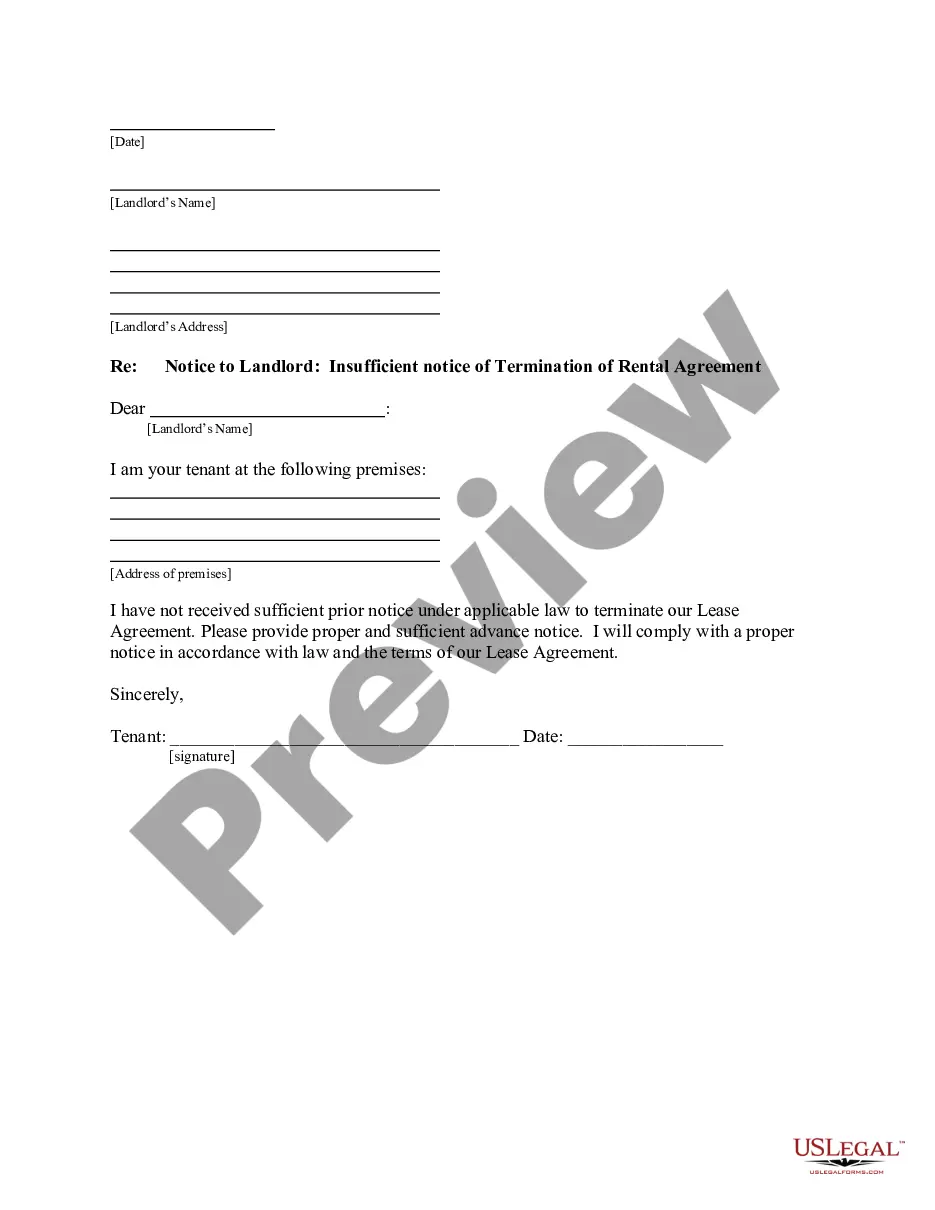
Kansas Letter from Tenant to Landlord about Insufficient Notice to Terminate Rental Agreement
About this form
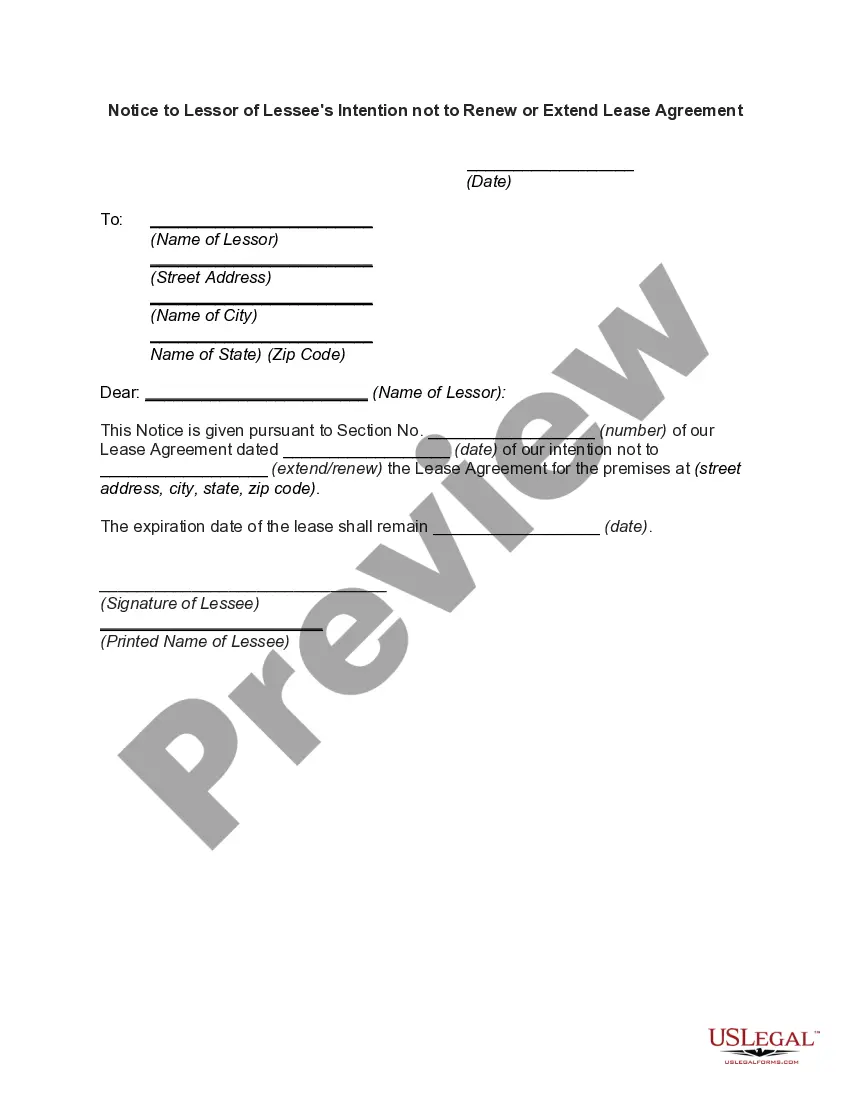
This form is a Letter from Tenant to Landlord about Insufficient Notice to Terminate Rental Agreement. It serves as a legal notice to inform the landlord that they have failed to provide sufficient notice regarding changes to the lease agreement. This letter ensures that the tenant will not comply with these changes until a specified date, thereby protecting the tenant's rights in the rental situation.
What’s included in this form
- Tenant's signature and name.
- Date of the notice.
- Statement regarding insufficient notice.
- Specific date when compliance will be expected.
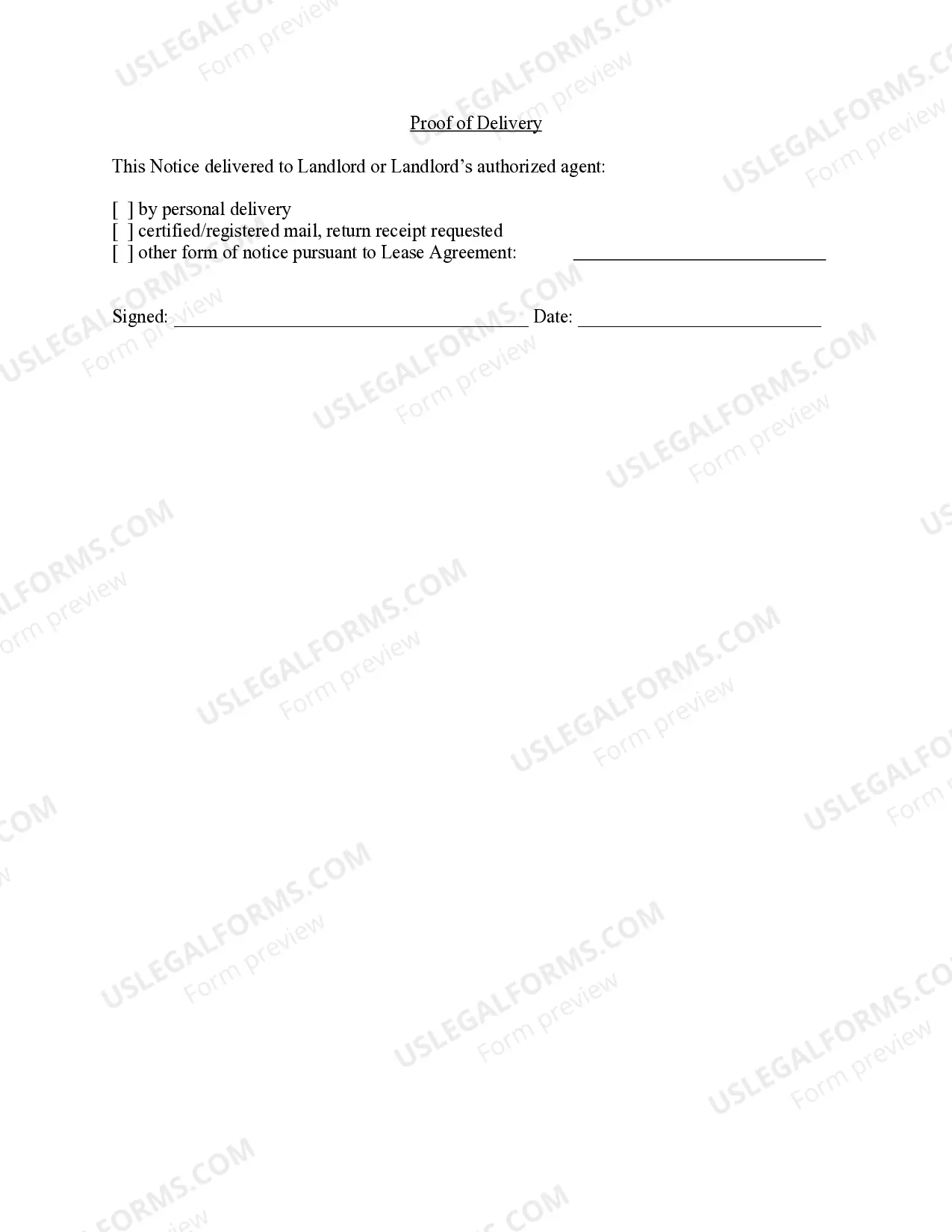
- Proof of delivery section.


When this form is needed
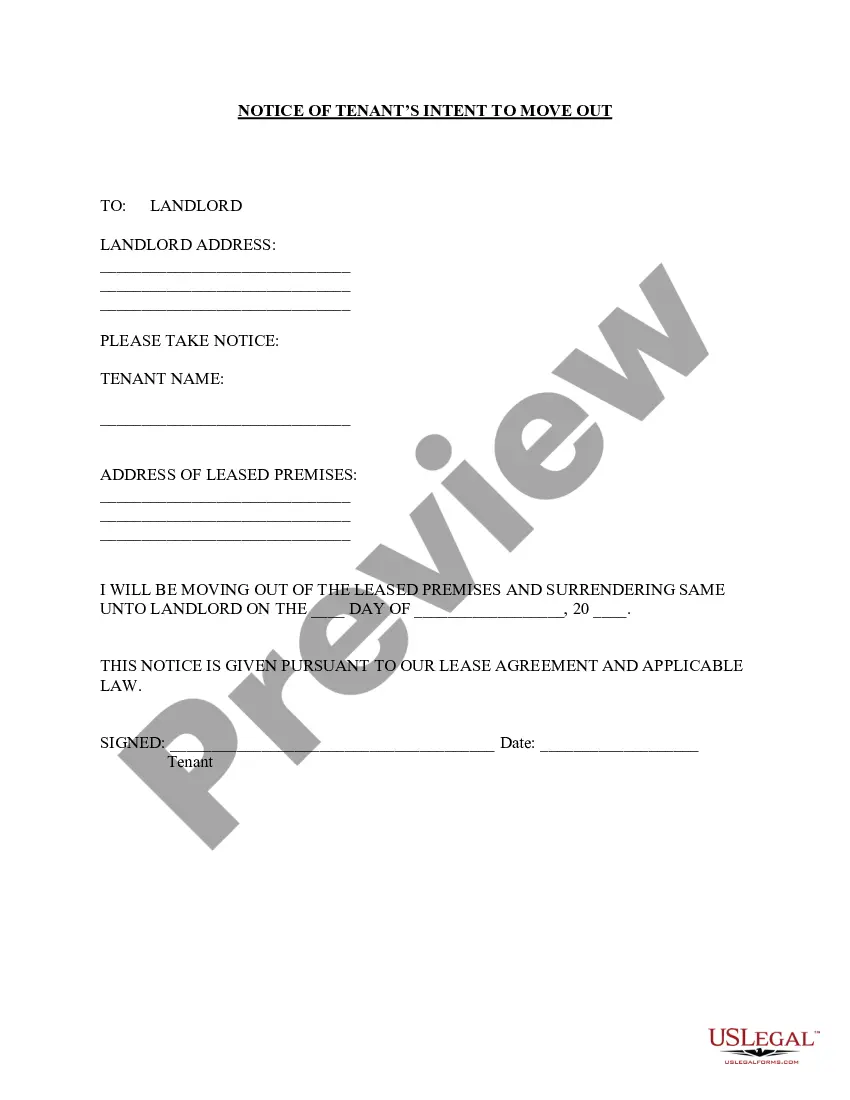
This form should be used when a tenant has received notice from their landlord about changes to the rental agreement but the notice period does not comply with the terms outlined in the lease. It is also applicable when a tenant wishes to formally document their position regarding insufficient notice prior to the changes taking effect.
Intended users of this form
- Tenants who have been notified of changes to their rental agreement.
- Tenants needing to assert their rights regarding notice periods.
- Individuals who want to maintain a formal record of communication with their landlord.
Instructions for completing this form
- Identify the tenant's name and address.
- Specify the landlord's name and address.
- Enter the date of the notice.
- Clearly state the insufficient notice received and any necessary details.
- Sign and date the letter to validate it.
- Choose a proof of delivery method (personal delivery or mail) and document it.
Notarization guidance
This form usually doesn’t need to be notarized. However, local laws or specific transactions may require it. Our online notarization service, powered by Notarize, lets you complete it remotely through a secure video session, available 24/7.
Get your form ready online
Our built-in tools help you complete, sign, share, and store your documents in one place.
Make edits, fill in missing information, and update formatting in US Legal Forms—just like you would in MS Word.
Download a copy, print it, send it by email, or mail it via USPS—whatever works best for your next step.
Sign and collect signatures with our SignNow integration. Send to multiple recipients, set reminders, and more. Go Premium to unlock E-Sign.
If this form requires notarization, complete it online through a secure video call—no need to meet a notary in person or wait for an appointment.
We protect your documents and personal data by following strict security and privacy standards.

Make edits, fill in missing information, and update formatting in US Legal Forms—just like you would in MS Word.

Download a copy, print it, send it by email, or mail it via USPS—whatever works best for your next step.

Sign and collect signatures with our SignNow integration. Send to multiple recipients, set reminders, and more. Go Premium to unlock E-Sign.

If this form requires notarization, complete it online through a secure video call—no need to meet a notary in person or wait for an appointment.

We protect your documents and personal data by following strict security and privacy standards.
Common mistakes to avoid
- Failing to include the correct date of the notice.
- Not clearly stating the reason for the insufficient notice.
- Neglecting to sign the letter.
- Using informal language that may undermine the seriousness of the communication.
Why complete this form online
- Convenient access to legal templates anytime.
- Editability to personalize the letter as needed.
- Reliable formatting based on attorney-drafted standards.
What to keep in mind
- This letter protects your rights as a tenant by formally addressing insufficient notice.
- Clear documentation is critical in disputes regarding rental agreements.
- Using this form helps ensure that your communication with your landlord is legally sound and well-documented.
Looking for another form?
Form popularity
FAQ
Notice to terminate a week-to-week lease. Seven-day written notice. Notice to terminate a month-to-month lease. 30-day written notice. Notice to terminate a yearly lease with no end date.
The 14-day/30-day notice must say how the tenant is breaching the lease and that the lease will automatically terminate 30 days (or more) from the date of the notice unless the tenant fixes the problem within 14 days of the date of the notice.
When a lease ends, a tenant may choose to move, continue to pay rent as a month-to-month tenant, or sign a new lease. If a tenant continues to pay rent after a lease ends, in most states the terms of the expired lease carry over into a month-to-month tenancy.
If you think your landlord is violating the Fair Housing Act, you can get that landlord in trouble by filing a complaint at HUD.gov. Your remedy for breach of quiet enjoyment is to terminate the lease and move or sue in small claims court.
Unfortunately that is not the case. Once a break notice has been served is cannot be unilaterally withdrawn. Even if both parties agree that the notice is withdrawn, service of the notice terminates the existing lease and creates a new tenancy by implication. There are a number of consequences that flow from this.
A landlord CAN evict you by giving you 3 days notice to leave the property. This could be for not paying rent or staying after your lease ends. If you do not leave or pay the rent within 3 days, the landlord will start the eviction lawsuit.
Nebraska Eviction is 3 Days or 30 Days And it must state that the tenant may halt the eviction process by paying the rent or curing the violation within the notice period.
Kansas landlords must provide tenants with a 30-Day Notice to Comply, giving the tenant 14 days to correct the issue. If the issue isn't corrected within 14 days, the tenant will be required to move out at the end of the 30 day notice period.
Kansas Eviction Process Timeline Issuance/Service of Summons and Complaint at least 3 days prior to the eviction hearing. Court Hearing and Ruling on the Eviction 3-28 days, depending on whether a follow-up hearing is held. Issuance of Writ of Restitution A few hours to a few days.