Indiana 3 Month Notice to Terminate Year-to-Year Lease from Landlord to Tenant
About this form
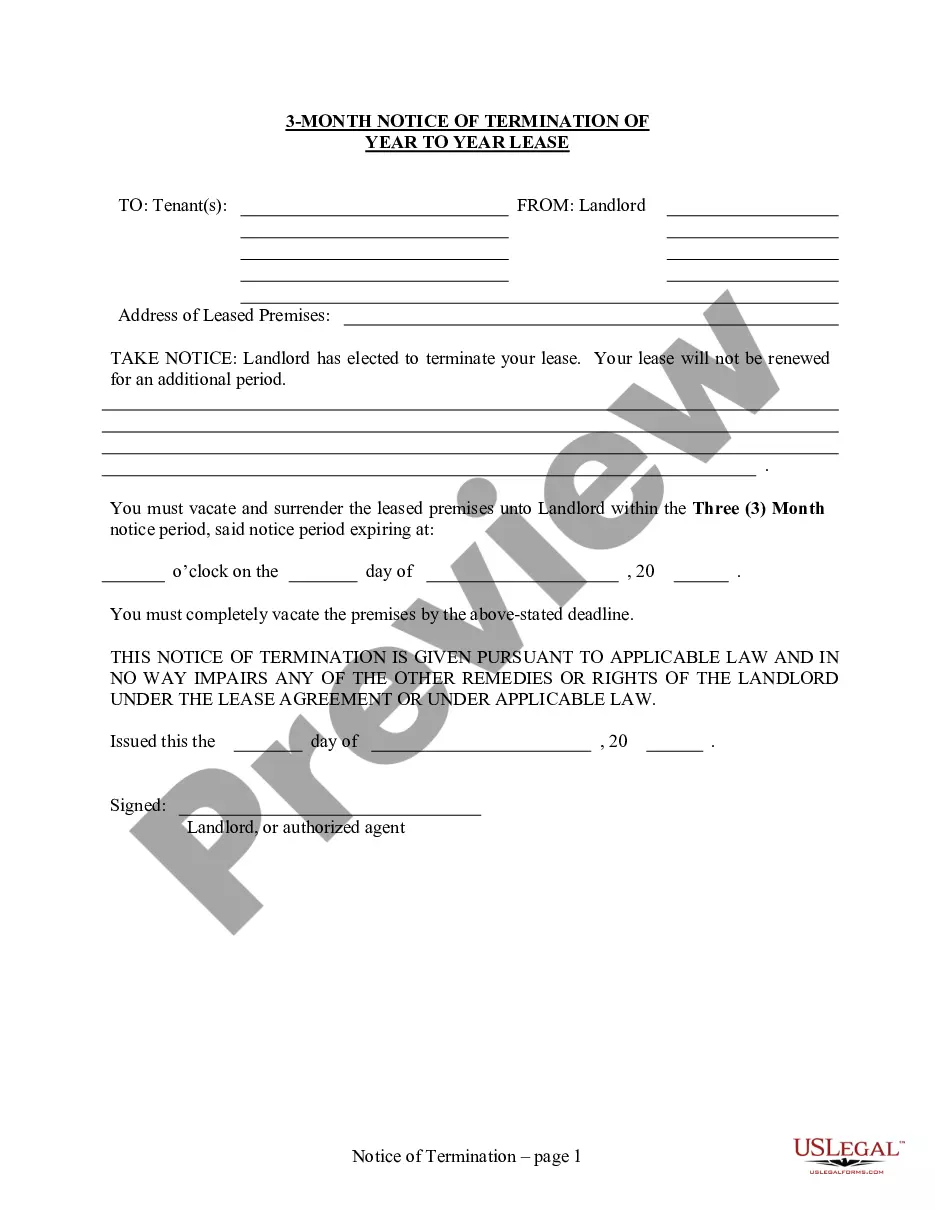
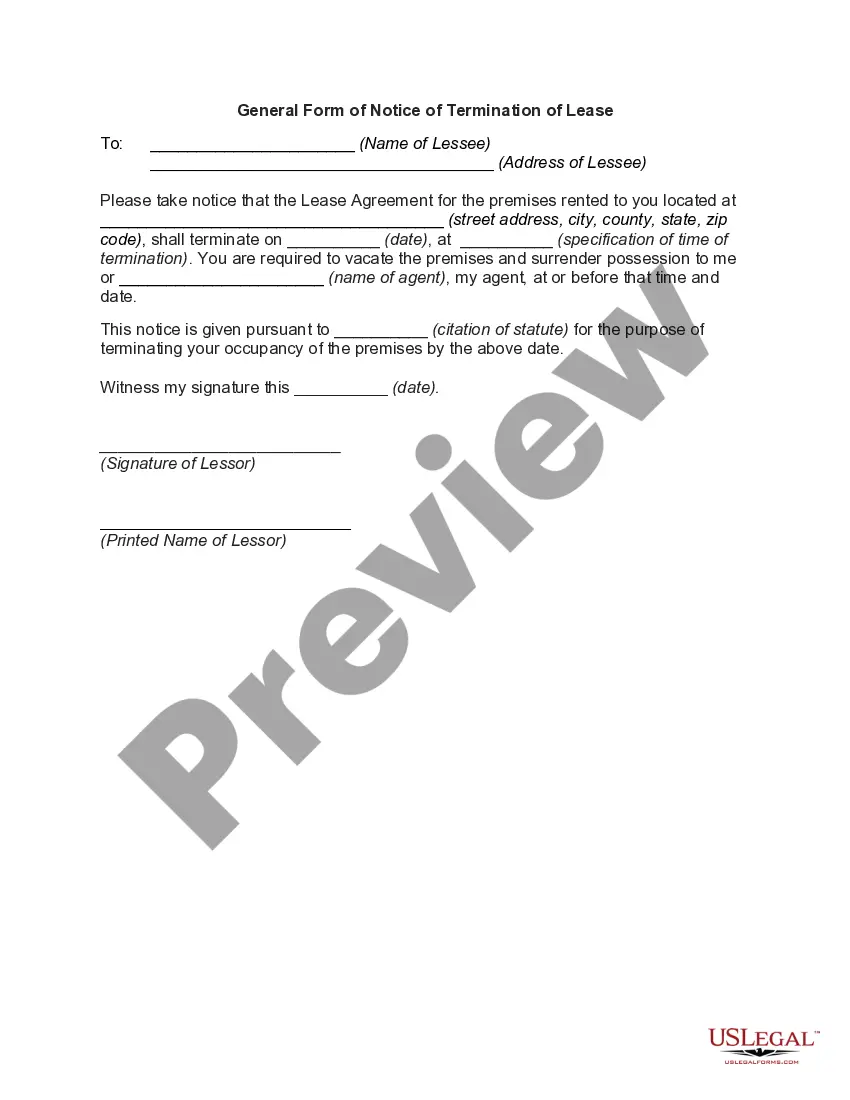
A 3 Month Notice to Terminate Year-to-Year Lease is a legal document used by landlords to inform tenants that their lease agreement will not be renewed after its current term. This form is essential in year-to-year lease situations, where at least three months' notice is required before the lease ends. It serves to clarify the end of the rental agreement and ensures both parties have adequate time to prepare for the transition.
Key parts of this document
- Recipient information: Includes names of landlord and tenant and leased premises address.
- Notice of termination: Clearly states that the lease will not be renewed.
- Deadline for moving out: Specifies the exact date by which the tenant must vacate the property.
- Signatures: Requires the landlord's signature and date of issuance for validity.
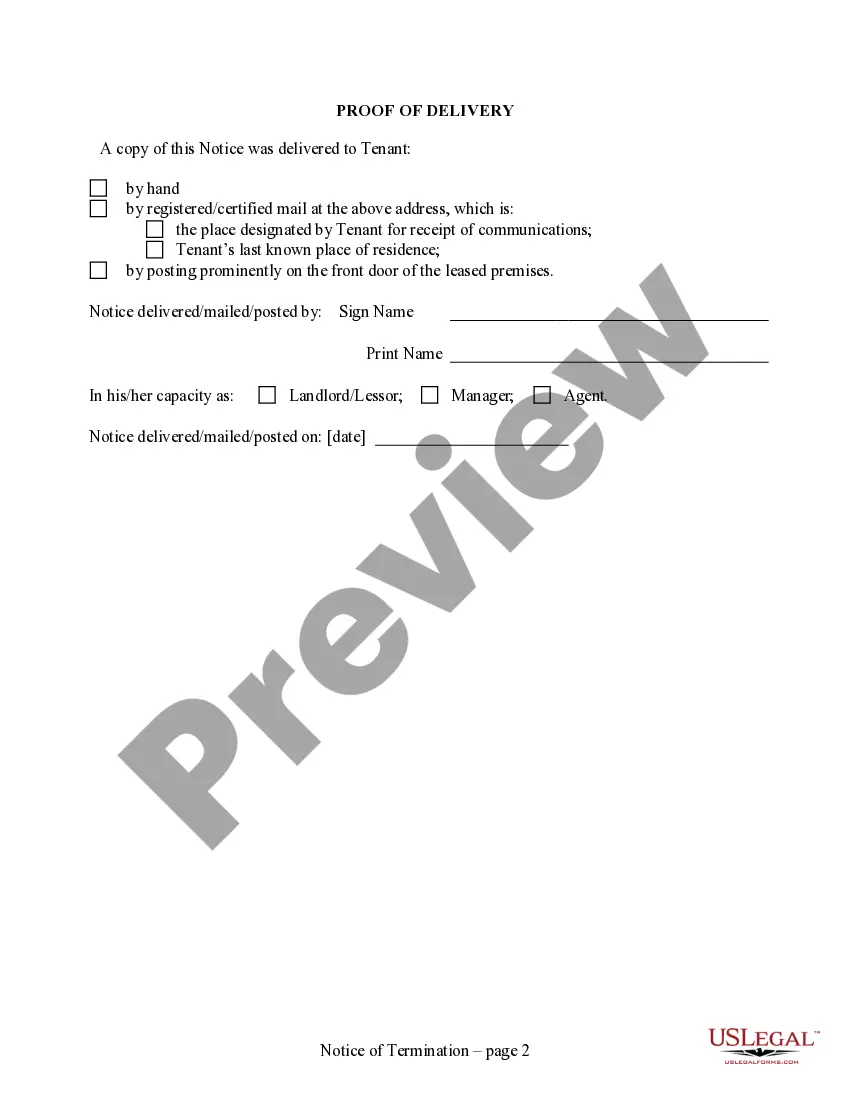
- Proof of delivery option: Provides methods for delivering the notice to the tenant.

When this form is needed
Who can use this document
- Landlords of rental properties under year-to-year lease agreements.
- Property managers acting on behalf of landlords.
- Anyone responsible for managing rental agreements and transitions.
How to prepare this document
- Identify the parties: Fill in the names of the landlord and tenant, along with the property address.
- State the termination notice: Clearly indicate that the lease will not be renewed and include the date the notice is being issued.
- Specify the deadline: Enter the date by which the tenant must vacate the premises.
- Sign the document: The landlord or authorized agent must sign and date the notice.
- Proof of delivery: Choose a method for delivering the notice and record it in the designated section.
Notarization requirements for this form
This form does not typically require notarization unless specified by local law. However, verifying your state's regulations is essential to ensure compliance with lease termination laws.
Get your form ready online
Our built-in tools help you complete, sign, share, and store your documents in one place.
Make edits, fill in missing information, and update formatting in US Legal Forms—just like you would in MS Word.
Download a copy, print it, send it by email, or mail it via USPS—whatever works best for your next step.
Sign and collect signatures with our SignNow integration. Send to multiple recipients, set reminders, and more. Go Premium to unlock E-Sign.
If this form requires notarization, complete it online through a secure video call—no need to meet a notary in person or wait for an appointment.
We protect your documents and personal data by following strict security and privacy standards.

Make edits, fill in missing information, and update formatting in US Legal Forms—just like you would in MS Word.

Download a copy, print it, send it by email, or mail it via USPS—whatever works best for your next step.

Sign and collect signatures with our SignNow integration. Send to multiple recipients, set reminders, and more. Go Premium to unlock E-Sign.

If this form requires notarization, complete it online through a secure video call—no need to meet a notary in person or wait for an appointment.

We protect your documents and personal data by following strict security and privacy standards.
Common mistakes to avoid
- Failure to provide the full three-month notice period.
- Not including all required information, such as dates and signatures.
- Inadequate proof of delivery to the tenant.
Why use this form online
- Convenience of downloading and completing the form from home.
- Editability allows for customization to fit specific agreements and situations.
- Access to professionally drafted templates ensures legal compliance.
Legal use & context
- The notice must be delivered properly to be effective.
- Failure to comply with notice requirements may affect the landlordâs rights to reclaim property.
- Consulting with a legal professional is advisable for specific cases.
Quick recap
- A 3 Month Notice to Terminate Year-to-Year Lease is crucial for legal lease termination.
- Providing notice helps ensure a smooth transition for both landlord and tenant.
- Completing the form accurately is essential to avoid legal complications.
Looking for another form?

Form popularity
FAQ
Pandemic Emergency Unemployment Compensation The difference between PEUC and PUA (described below) is that the PEUC essentially extends benefits by up to 13 weeks for individuals otherwise qualified to receive regular unemployment, but who have exhausted those benefits.
Mail the appeal to 10 North Senate Avenue, Indianapolis, IN 46204; Fax the appeal to (317) 233-6888; Deliver the appeal in person to the Department at 10 N. Senate Ave., Indianapolis, IN 46204. Tell the Indiana Department of Workforce Development representative that you want to file an appeal.
If you are job attached, which means you have been laid off or are working reduced hours and will be called back to your previous time job, you may not have to look for work. However, there is a 16-week limit when collecting unemployment benefits when you are job attached.
"Job-attached" means a relationship between an employer and an employee in which the employee is not actively performing services for the employer, but is still connected to the employer through the payment of remuneration in the form of supplemental unemployment insurance benefits, or by remaining covered under the
While Indiana has no layoff notice requirements of its own, state agencies assist in enforcing the requirements of the federal Worker Adjustment and Retraining Notification Act (WARN Act).The WARN Act requires employers to notify their state dislocated worker unit when layoffs occur.
Union and job attachment are offered so employers can retain their skilled workforce during periods of layoff.When a claimant is out of work, for them to be job attached: 1. they must have a definite or approximate date of hire or recall, and 2. the work must be covered by Unemployment Insurance, and 3.
A Job Attachment issue may be generated if you request to backdate your unemployment claim and more information is needed to verify employment at the date of impact.
A Q&A guide to state versions of the federal Worker Adjustment and Retraining Notification (WARN) Act for private employers in Indiana. For more information and ongoing updates, see COVID-19 and WARN Act Compliance: State Mini-WARN Acts.
The following states or territories have their own versions of the WARN Act that expand on the protections of the federal law, by covering small layoffs or by having fewer exceptions: California, Hawaii, Illinois, Iowa, Maine, New Hampshire, New Jersey, New York, Tennessee, Wisconsin and the Virgin Islands.