Indiana Satisfaction of Judgment
About this form
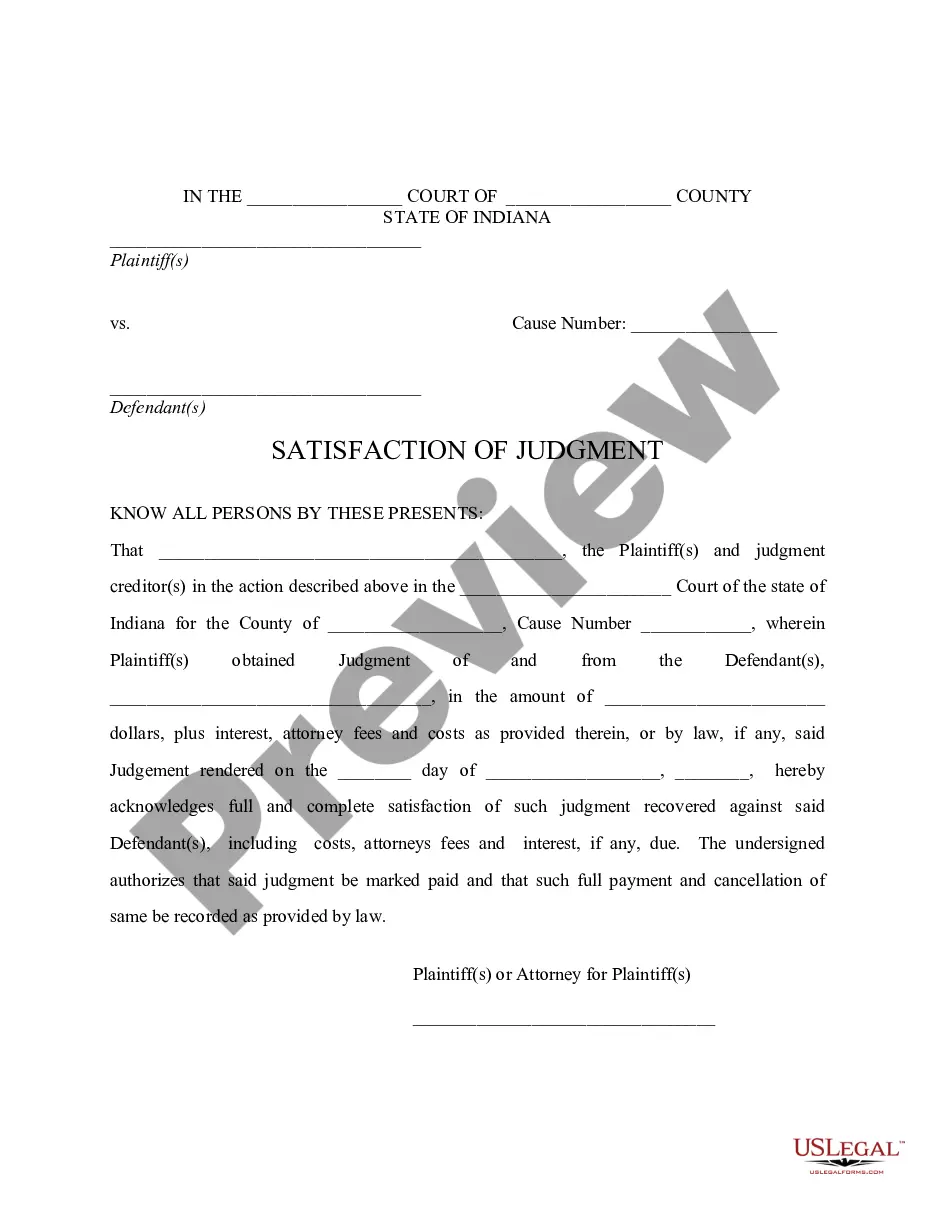
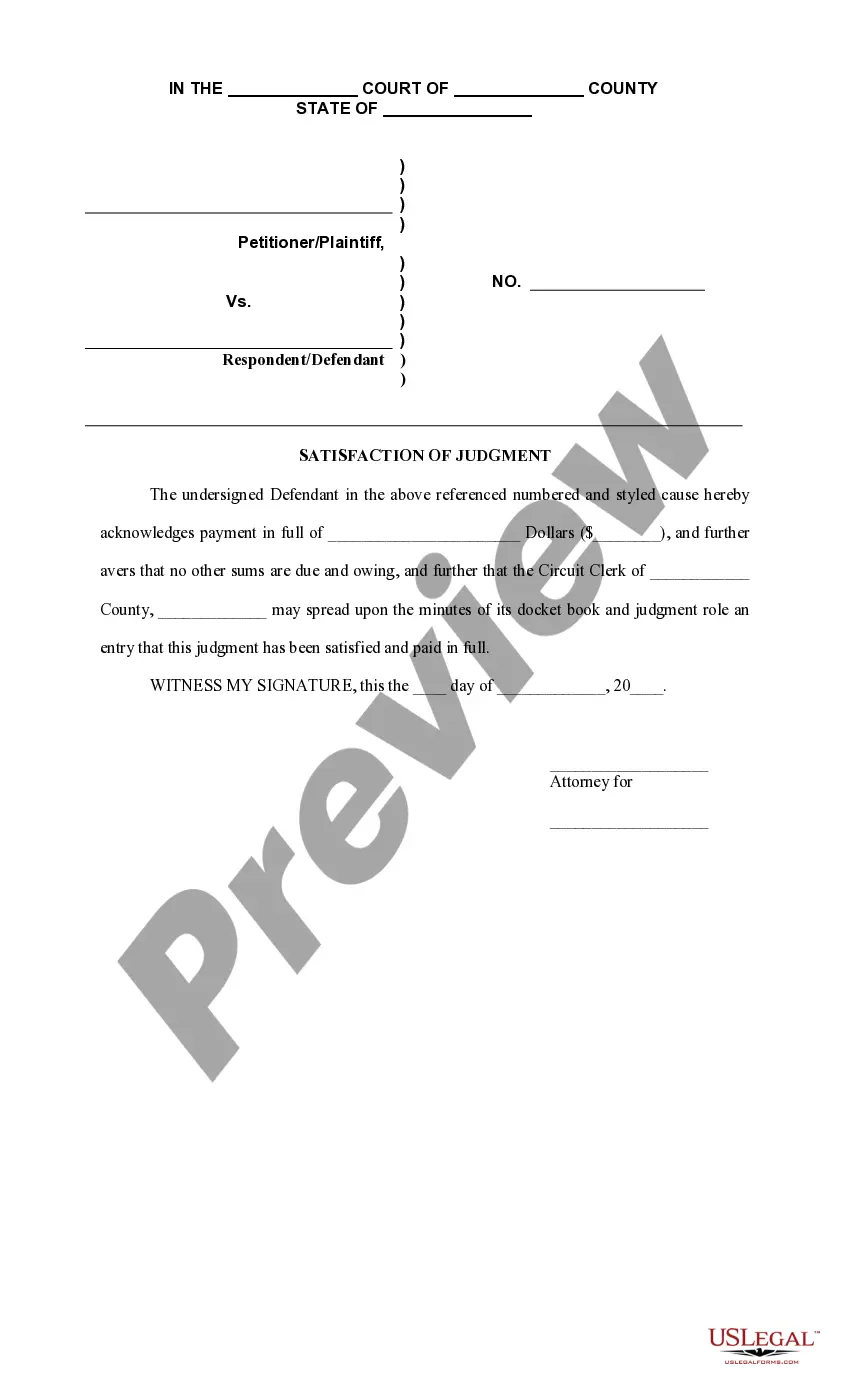
The Indiana Satisfaction of Judgment is a legal document that confirms a judgment debtor has fully satisfied a court judgment against them. This form serves to formally acknowledge the plaintiff's acceptance of payment, thereby releasing the debtor from any further liability to the creditor. Unlike other forms related to debts or judgments, this document specifically declares that all obligations under a specific judgment have been met and cleared.
Main sections of this form
- Case details including court name, county, cause number, and parties involved.
- Statement confirming the acknowledgment of satisfaction of the judgment amount, including interest and legal fees.
- Signature section for the Plaintiff or their attorney.
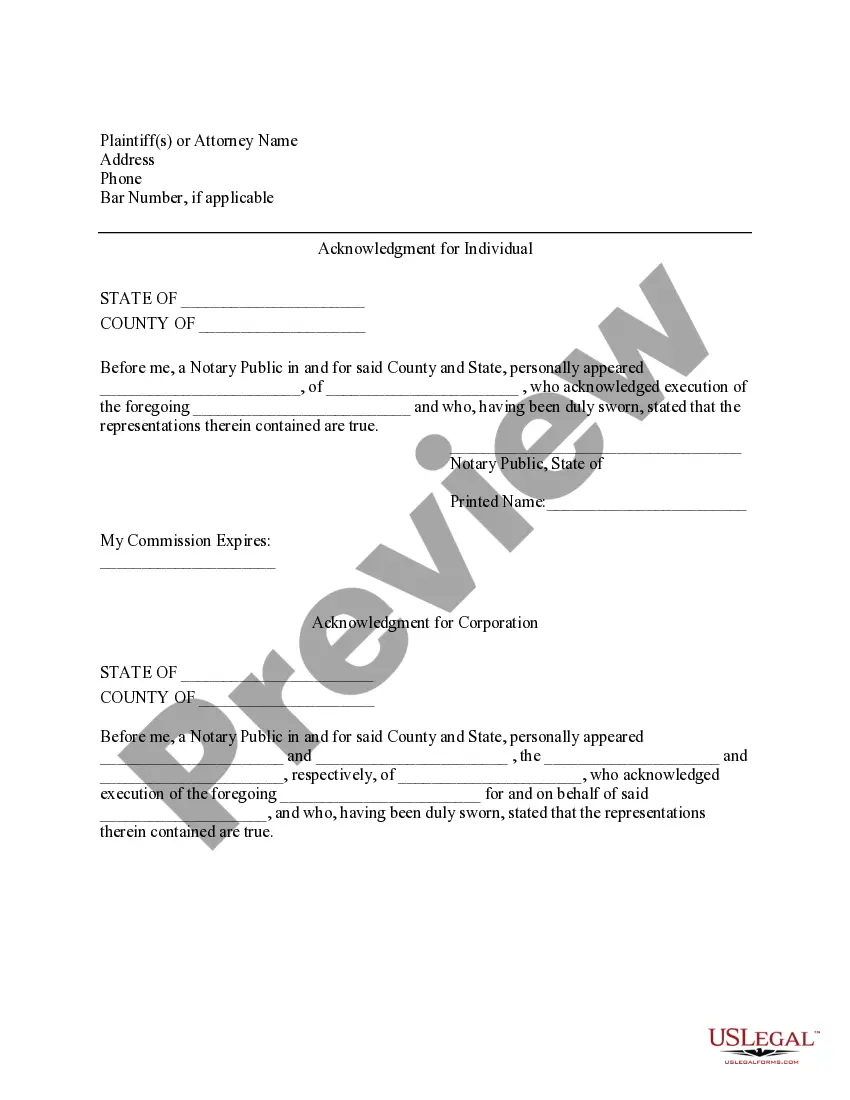
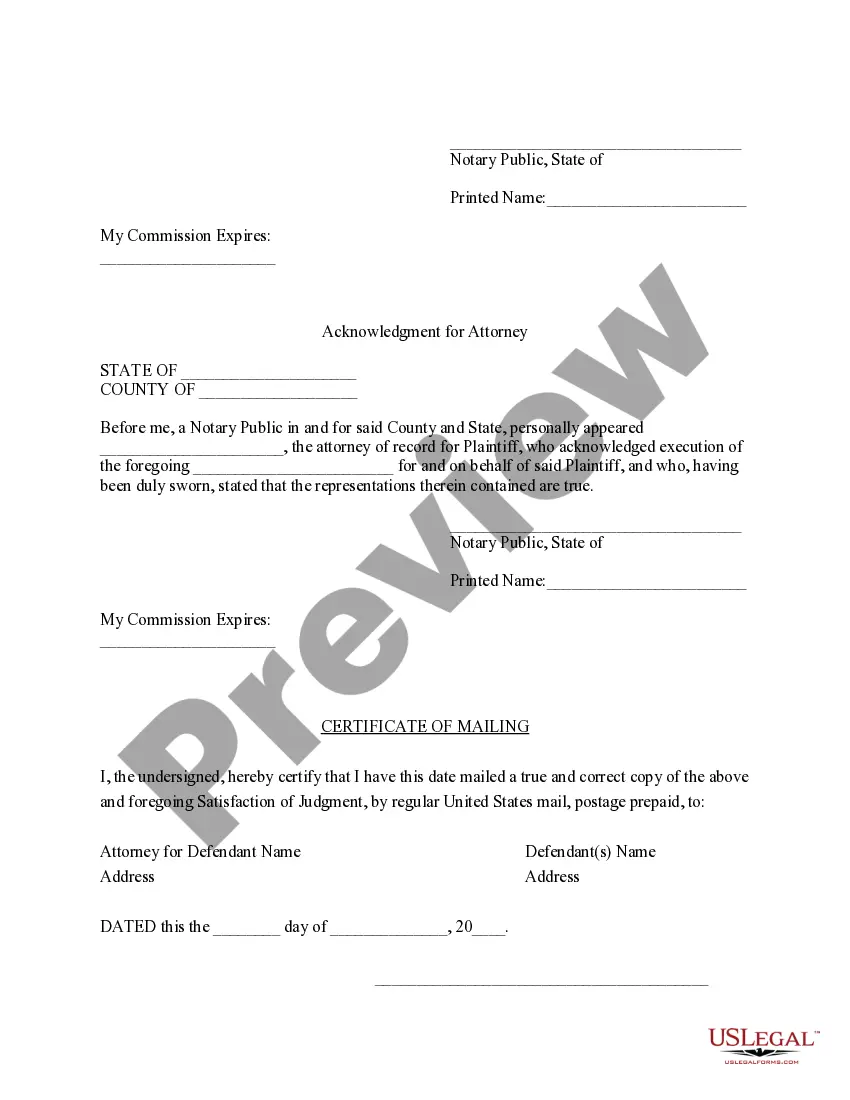
- Notarization requirements depending on whether the signing party is an individual, corporation, or attorney.
- Certificate of mailing to ensure the defendant receives the satisfaction document.



Common use cases
This form should be used when a judgment debtor has paid the judgment obligation fully and the creditor needs to document this fact legally. Scenarios include settling debts related to loans, contract disputes, or other financial obligations where a court judgment was initially awarded. Using this form helps prevent any future claims regarding the same debt, ensuring both parties have a clear record of the judgment's satisfaction.
Who should use this form
This form is intended for:
- Plaintiffs or judgment creditors seeking to confirm a judgment has been satisfied.
- Defendants or judgment debtors who have fulfilled their payment obligations.
- Attorneys representing either side in a court of law.
Steps to complete this form
To complete the Indiana Satisfaction of Judgment form, follow these steps:
- Identify the court, county, and cause number for the original judgment.
- Fill in the names of the plaintiff(s) and defendant(s) involved in the judgment.
- State the amount that has been fully paid to satisfy the judgment.
- Obtain signatures from the plaintiff or their attorney, ensuring the document is notarized as required.
- Send a copy of the signed document to the defendant and retain a copy for your records.
Is notarization required?
Yes, this form must be notarized to be legally valid. The execution of the Satisfaction of Judgment requires acknowledgment by a notary public, confirming the authenticity of the signatures. US Legal Forms offers integrated online notarization, allowing you to complete the process securely via video call at any time.
Get your form ready online
Our built-in tools help you complete, sign, share, and store your documents in one place.
Make edits, fill in missing information, and update formatting in US Legal Forms—just like you would in MS Word.
Download a copy, print it, send it by email, or mail it via USPS—whatever works best for your next step.
Sign and collect signatures with our SignNow integration. Send to multiple recipients, set reminders, and more. Go Premium to unlock E-Sign.
If this form requires notarization, complete it online through a secure video call—no need to meet a notary in person or wait for an appointment.
We protect your documents and personal data by following strict security and privacy standards.

Make edits, fill in missing information, and update formatting in US Legal Forms—just like you would in MS Word.

Download a copy, print it, send it by email, or mail it via USPS—whatever works best for your next step.

Sign and collect signatures with our SignNow integration. Send to multiple recipients, set reminders, and more. Go Premium to unlock E-Sign.

If this form requires notarization, complete it online through a secure video call—no need to meet a notary in person or wait for an appointment.

We protect your documents and personal data by following strict security and privacy standards.
Mistakes to watch out for
- Failing to include the correct court information or cause number.
- Not obtaining a signature from all necessary parties.
- Neglecting to notarize the form when required.
- Not providing a copy of the satisfaction to the defendant.
Benefits of using this form online
- Convenience of downloading the form for immediate use.
- Editability to tailor the form to specific case details easily.
- Reliability of using a document drafted by licensed attorneys to ensure compliance with Indiana law.
Main things to remember
- The Indiana Satisfaction of Judgment confirms the payment of a court-ordered judgment.
- Completing this form is essential for legally documenting that the debtor has fulfilled their obligations.
- This form must be notarized and includes provisions for notifying the other party involved.
Looking for another form?
Form popularity
FAQ
To file a judgment lien in Indiana, you need to submit a specific form to the county recorder where the debtor resides or where the property is located. This lien secures the debt against the debtor’s property, ensuring that you can seek compensation in the future. Learning about the nuances of the Indiana Satisfaction of Judgment process can help you effectively manage your claim.
While it can be challenging, there are strategies to address a judgment. Options may include negotiating a payment plan, contesting the judgment if you believe it is unjust, or seeking legal advice. A solid understanding of the Indiana Satisfaction of Judgment process can empower you to explore your options and find a resolution.
When a judgment is satisfied, it means the debtor has fulfilled their obligation, either by paying the amount owed or through an agreement with the creditor. In Indiana, this process leads to the official release of the judgment, highlighting that the debtor no longer has any legal obligations. Understanding the Indiana Satisfaction of Judgment process can provide clarity and help avoid potential complications.
The Satisfaction of Judgment form should be signed by the judgment creditor when the judgment is paid, and then filed with the court clerk. Don't forget to do this; otherwise, you may have to track down the other party later.
Satisfied Judgments A satisfied judgment is the opposite of an unsatisfied judgment. It means that your debt is either paid or settled. While you may not have completely paid off your debt in full, you can satisfy a judgment by making a new payment plan and paying what you and the lender agreed on.
Judgments are no longer factored into credit scores, though they are still public record and can still impact your ability to qualify for credit or loans.You should pay legitimate judgments and dispute inaccurate judgments to ensure these do not affect your finances unduly.
In order to vacate a judgment in California, You must file a motion with the court asking the judge to vacate or set aside the judgment. Among other things, you must tell the judge why you did not respond to the lawsuit (this can be done by written declaration).
You may ask your judgment creditor to file a satisfaction of judgment form. The length of time gives to the creditor to file the form varies from state to state, but it is usually between 14 and 30 days after your request.
If the judgment creditor does not immediately file an Acknowledgement of Satisfaction of Judgment (EJ-100) when the judgment is satisfied, the judgment debtor may make a formal written demand for the creditor to do so. The judgment creditor has 15 days after receiving the debtor's request to serve the acknowledgement.
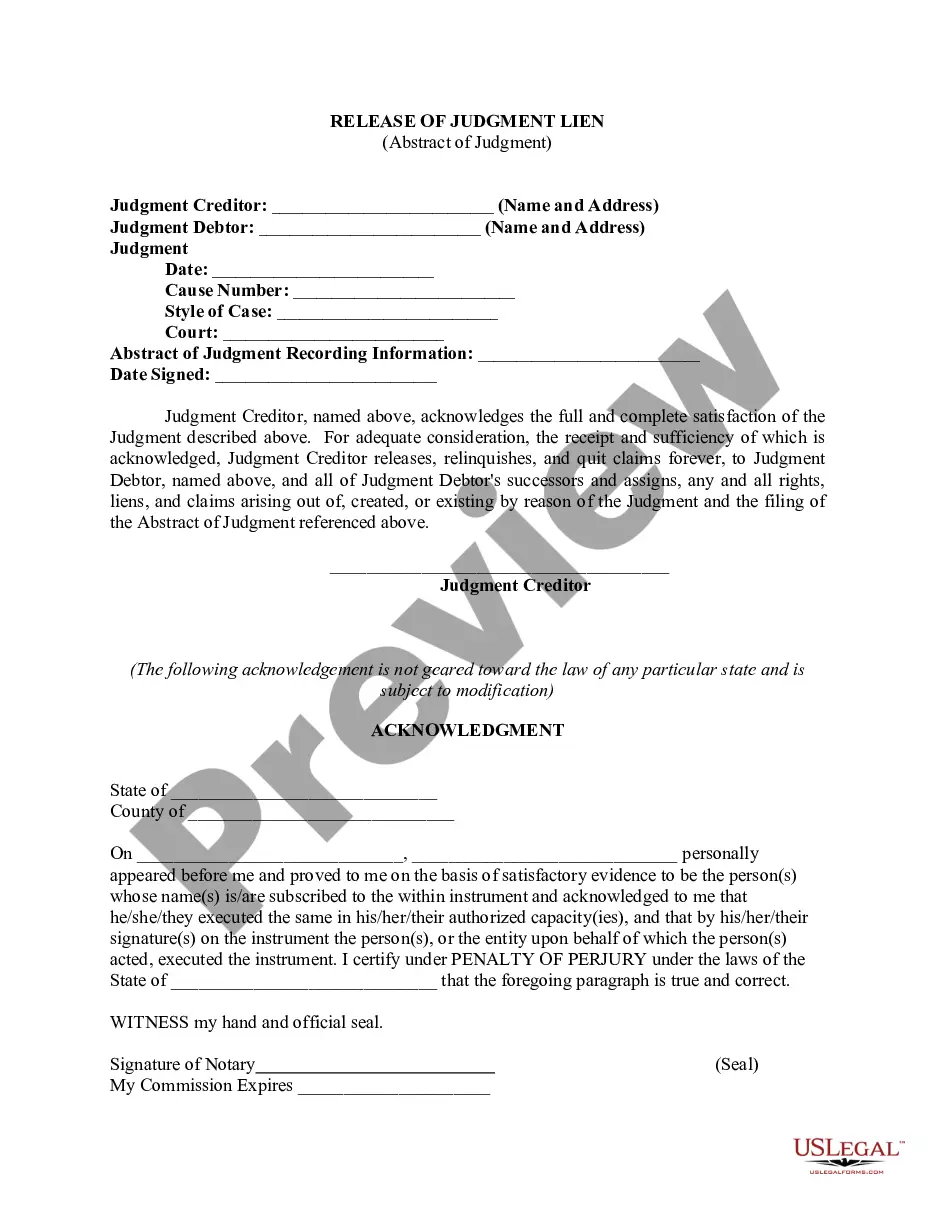
A document signed by the party who is owed money under a court judgment (called the judgment creditor) stating that the full amount due on the judgment has been paid.