Illinois Last Will for a Widow or Widower with no Children
What this document covers
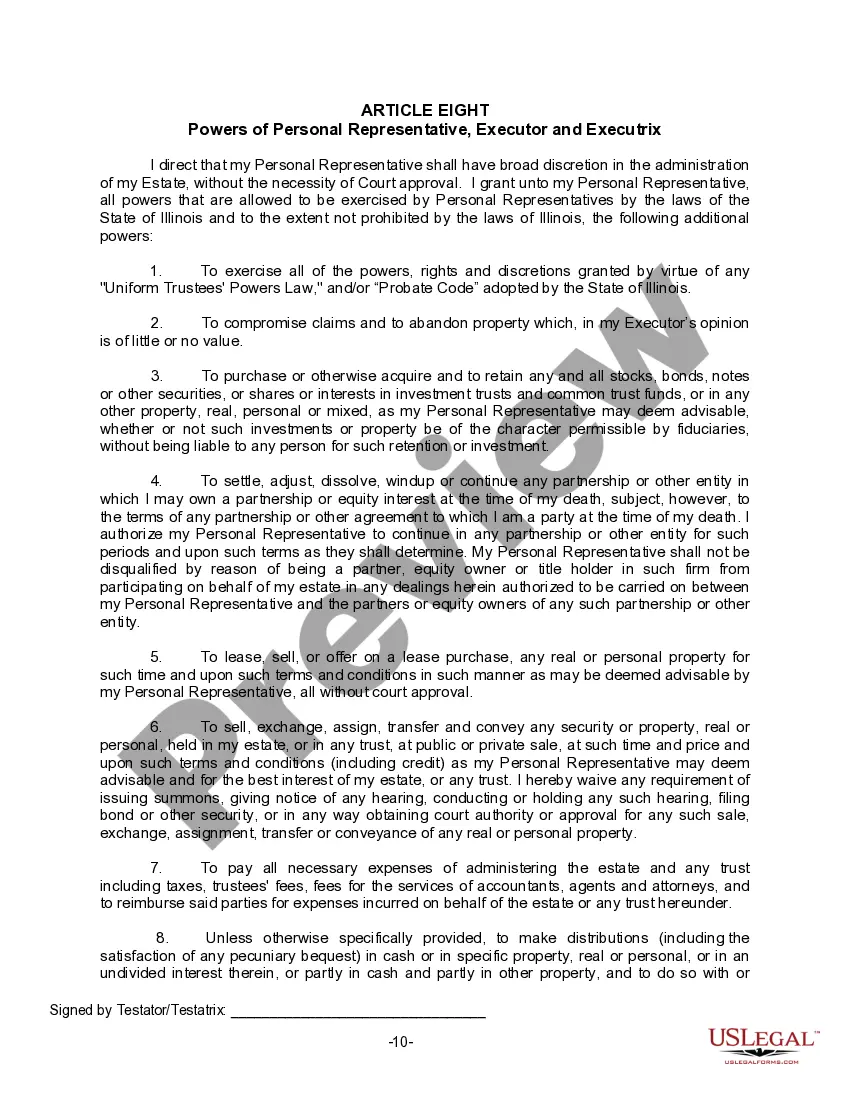
The Last Will for a Widow or Widower with No Children is a legal document that outlines the distribution of a deceased personâs assets in the absence of children. Specifically crafted for individuals who have lost their spouse and are childless, this Will allows users to designate a personal representative or executor, specify heirs for their property, and include other provisions necessary for settling their estate. This form is distinct from other Wills as it caters specifically to the circumstances of a widow or widower without dependents.
Form components explained
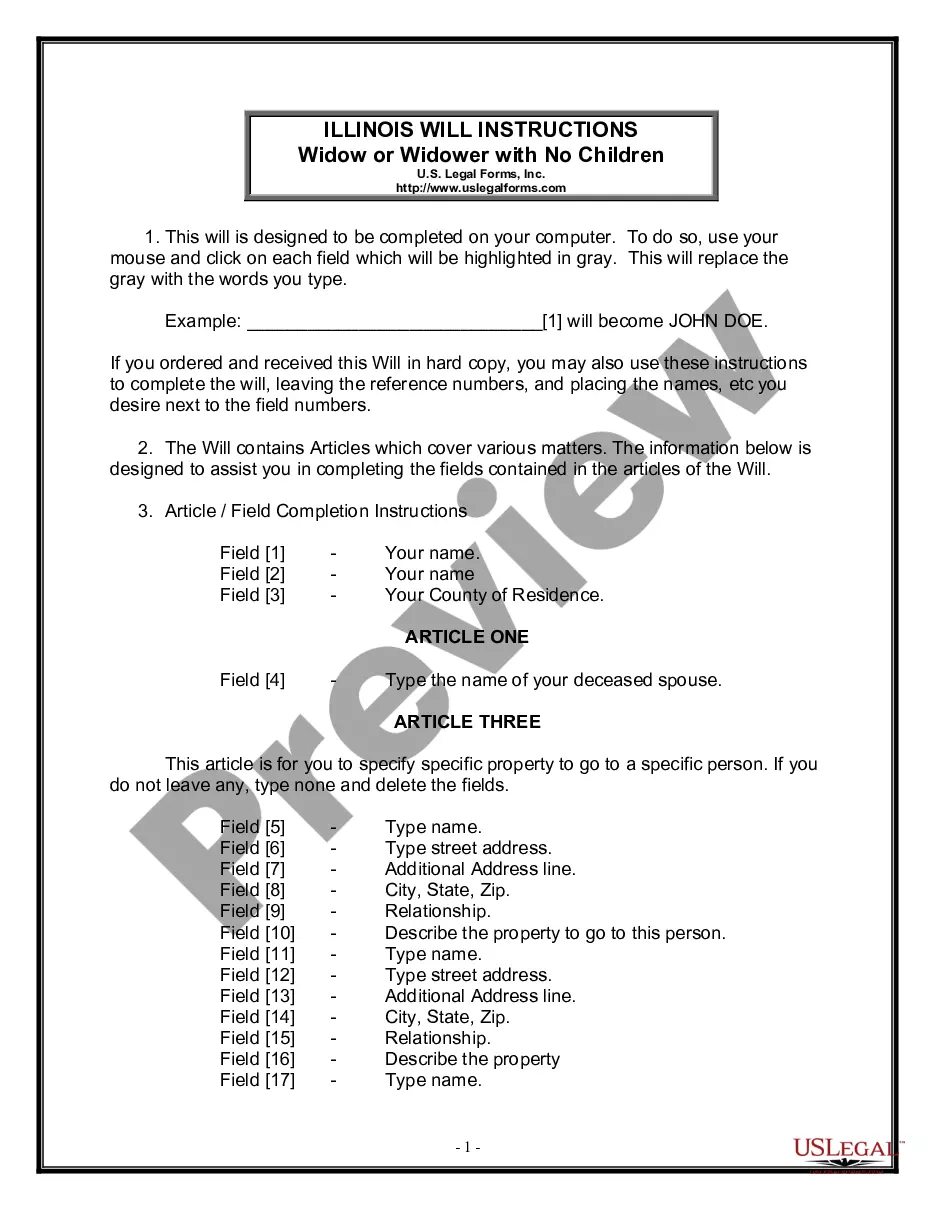
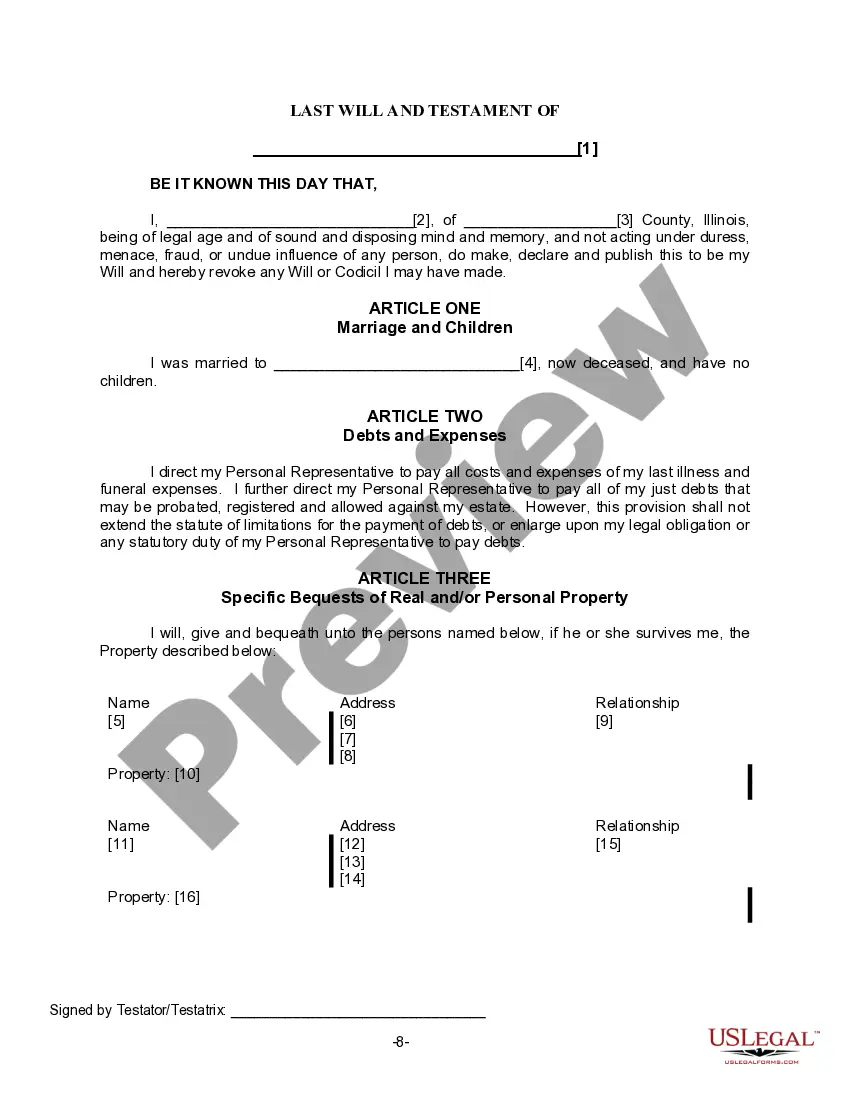
- Personal information of the testator including name and county of residence.
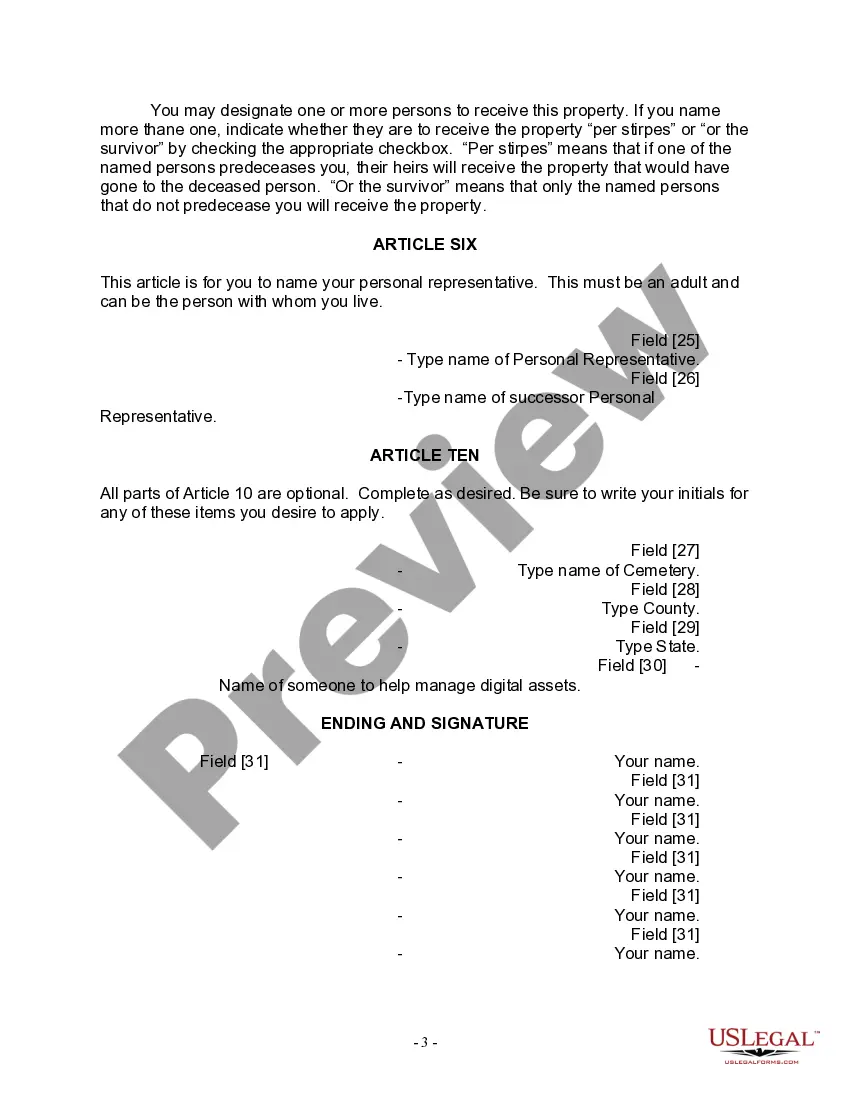
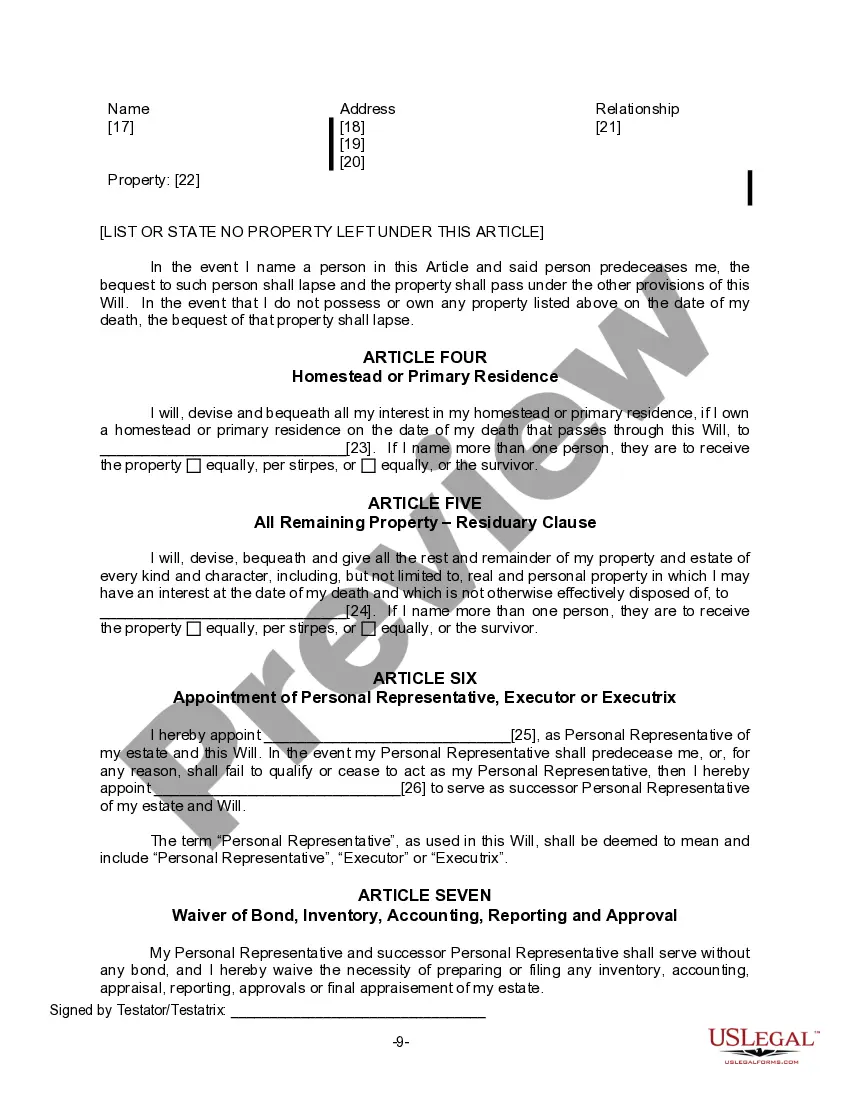
- Designating the personal representative to manage the estate.
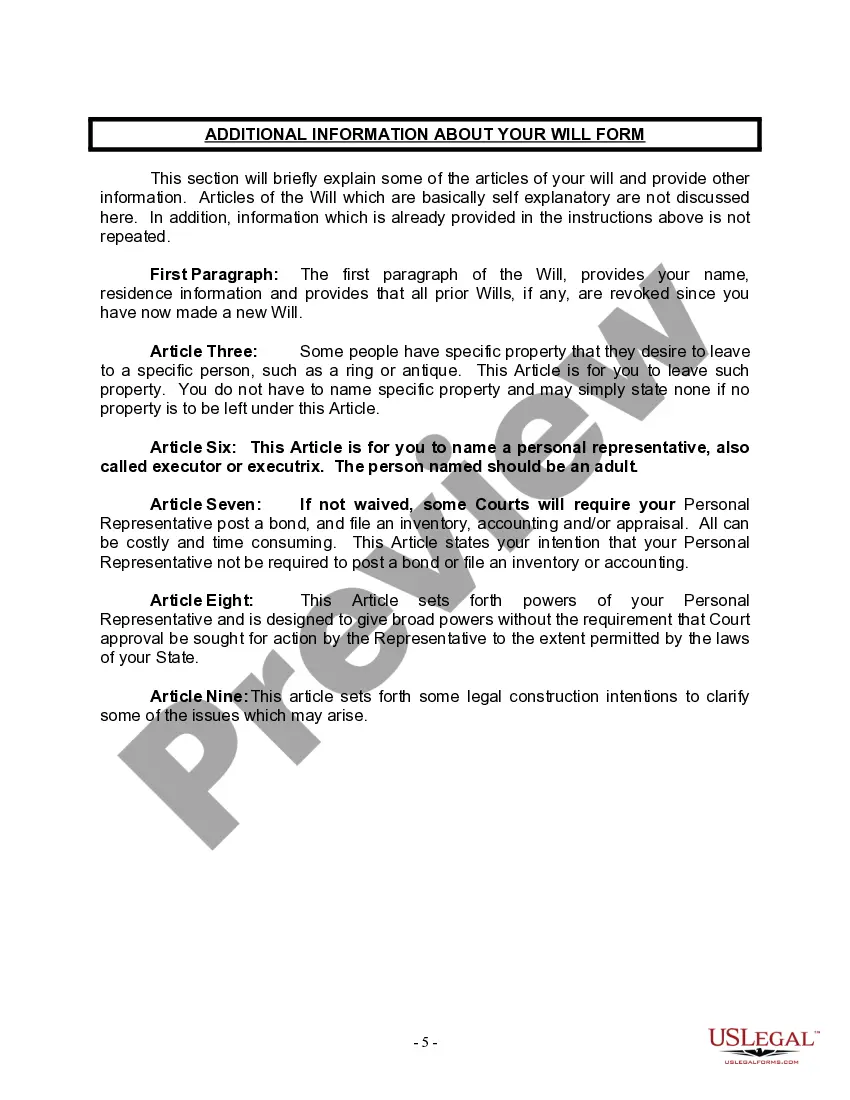
- Provisions for specific property bequests to designated individuals.
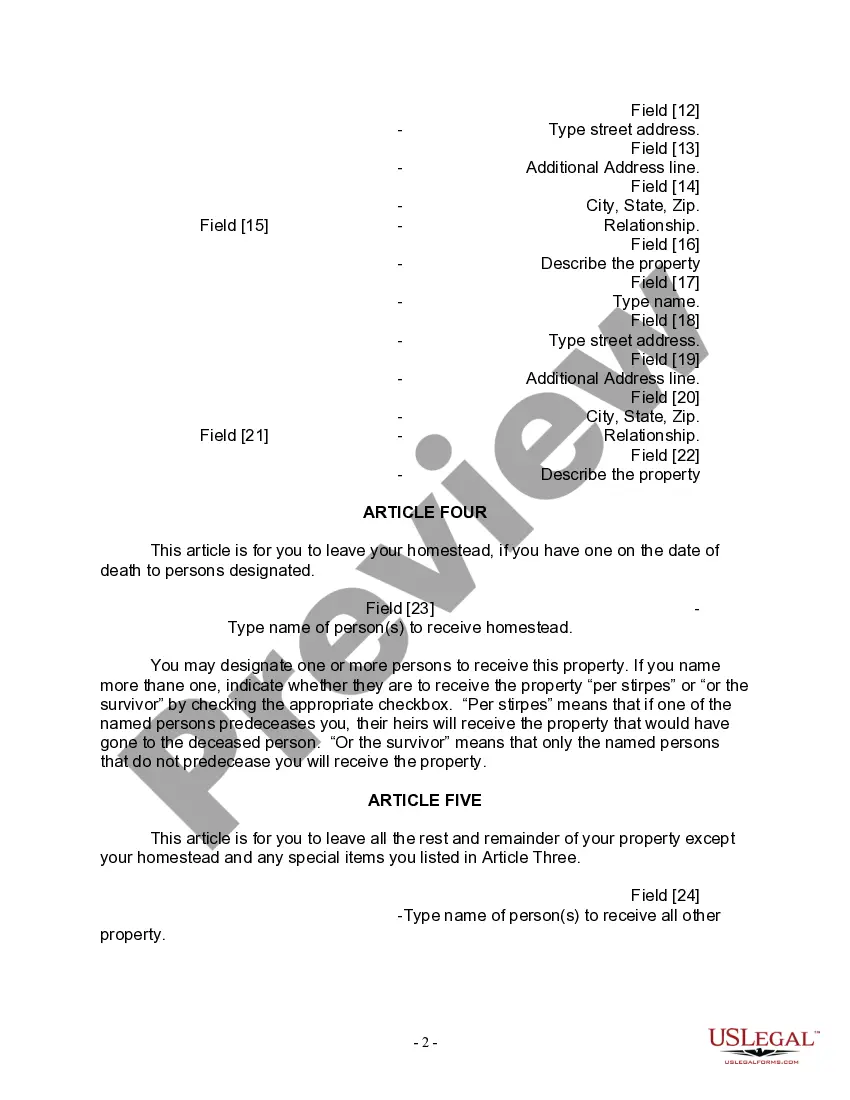
- Instructions regarding the homestead or primary residence.
- Directions for handling all remaining property and estate assets.
- Signature and witness requirements to validate the Will.





Common use cases
This form is essential when a widow or widower wishes to ensure their estate is managed and distributed according to their wishes after their passing. It is particularly relevant for individuals who do not have children and need to allocate their assets â such as property, bank accounts, or other valuables â to relatives, friends, or charitable organizations. Utilizing this Will helps avoid complications related to intestate succession laws that apply when someone dies without a Will.
Who needs this form
- Widows or widowers who have lost their spouse and do not have any children.
- Individuals looking to clearly outline their wishes for asset distribution.
- Those who prefer to name a trusted person as their executor for better estate management.
- Anyone who wants to avoid potential complications after death regarding asset distribution.
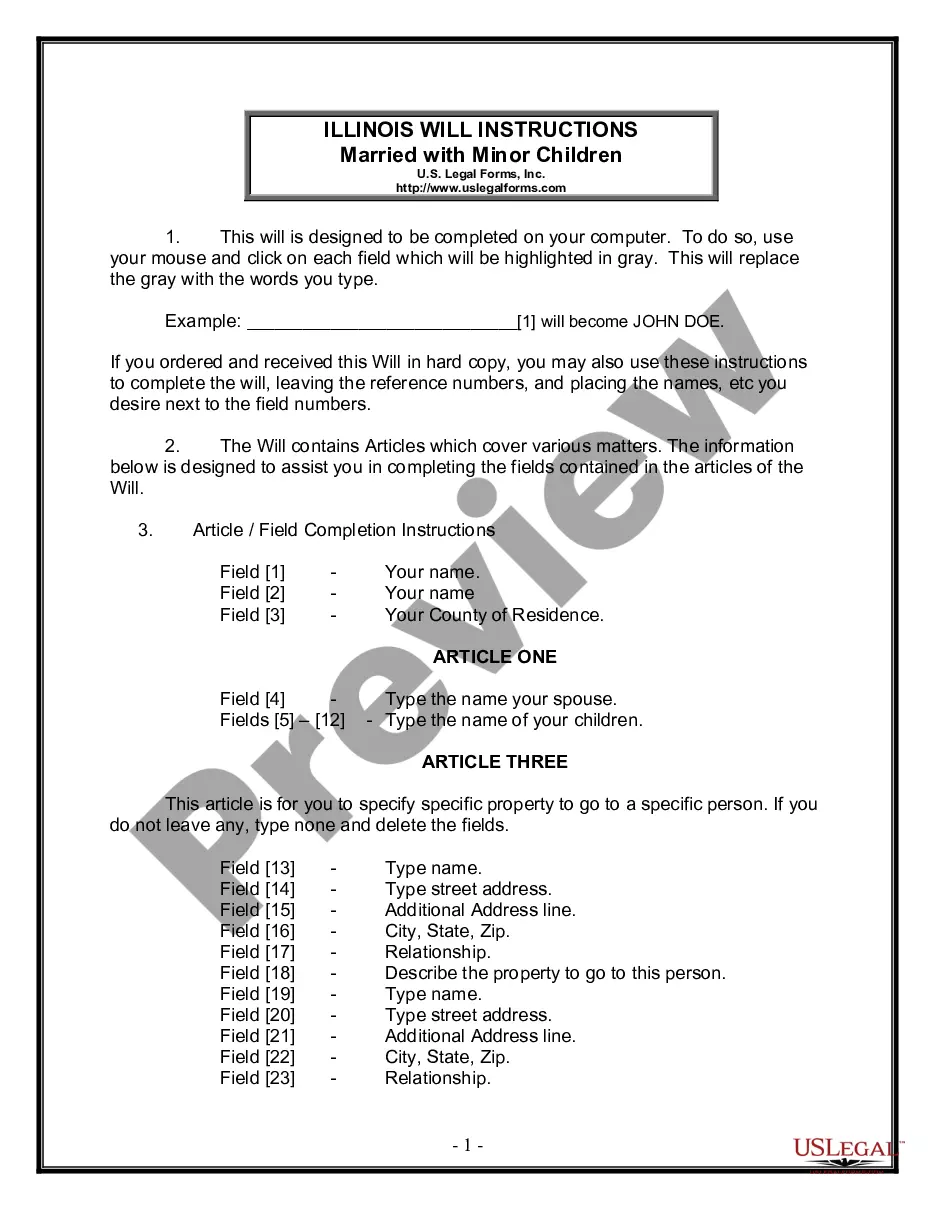
How to complete this form
- Enter your full name and county of residence in the designated fields.
- Identify and write the name of your deceased spouse.
- Designate the personal representative and any successor to manage your estate.
- Specify any specific properties or assets you wish to bequeath to named individuals.
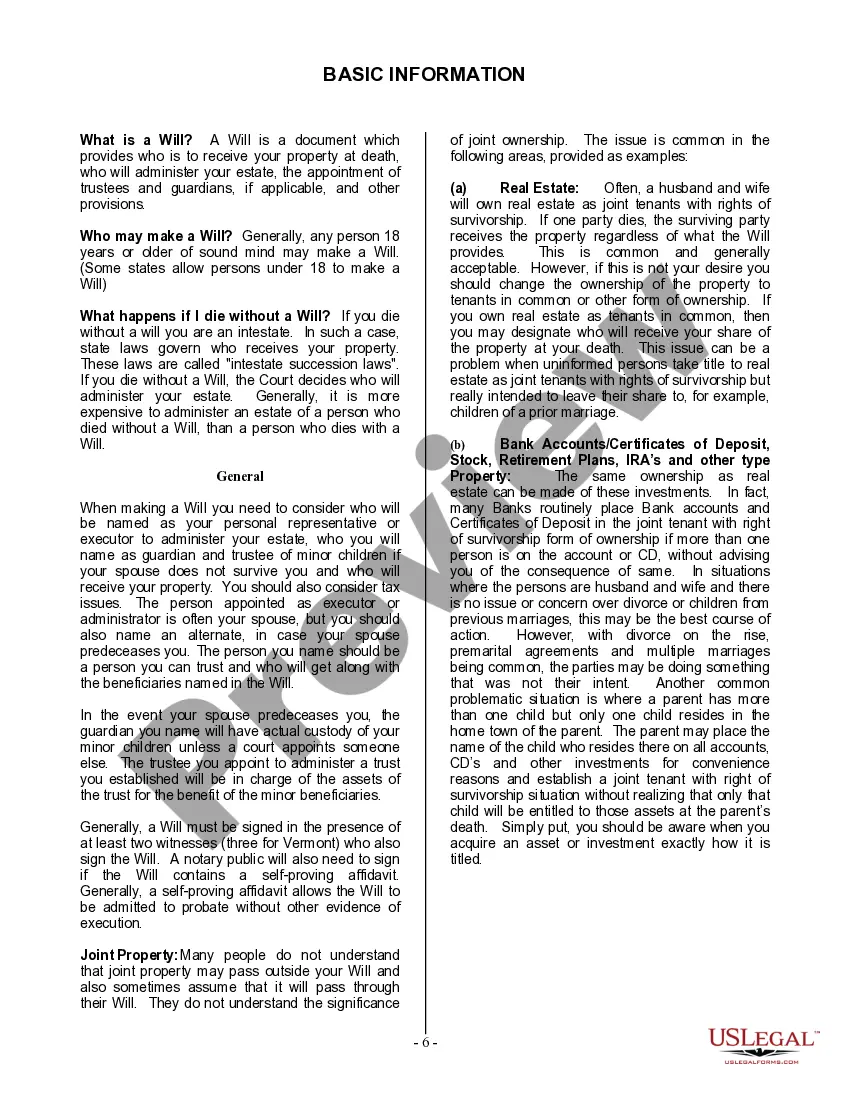
- Sign the document in front of two witnesses, ensuring they are not related to you.
- Consider having the Will notarized to facilitate easier probate later.
Is notarization required?
This form does not typically require notarization unless specifically mandated by local law. However, if your state has adopted a self-proving affidavit statute, having a notary public sign the Will can streamline the probate process.
Get your form ready online
Our built-in tools help you complete, sign, share, and store your documents in one place.
Make edits, fill in missing information, and update formatting in US Legal Forms—just like you would in MS Word.
Download a copy, print it, send it by email, or mail it via USPS—whatever works best for your next step.
Sign and collect signatures with our SignNow integration. Send to multiple recipients, set reminders, and more. Go Premium to unlock E-Sign.
If this form requires notarization, complete it online through a secure video call—no need to meet a notary in person or wait for an appointment.
We protect your documents and personal data by following strict security and privacy standards.

Make edits, fill in missing information, and update formatting in US Legal Forms—just like you would in MS Word.

Download a copy, print it, send it by email, or mail it via USPS—whatever works best for your next step.

Sign and collect signatures with our SignNow integration. Send to multiple recipients, set reminders, and more. Go Premium to unlock E-Sign.

If this form requires notarization, complete it online through a secure video call—no need to meet a notary in person or wait for an appointment.

We protect your documents and personal data by following strict security and privacy standards.
Common mistakes
- Failing to have the Will signed by two witnesses, which can lead to legal challenges.
- Not clearly identifying beneficiaries or properties, creating confusion during probate.
- Neglecting to review and ensure all entries are accurate before signing.
Benefits of using this form online
- Convenience of completing the form from home, at any time.
- Ability to easily edit and update your Will as needed.
- Access to professional legal templates created by licensed attorneys.
Looking for another form?
Form popularity
FAQ
Create the initial document. Start by titling the document Last Will and Testament" and including your full legal name and address. Designate an executor. Appoint a guardian. Name the beneficiaries. Designate the assets. Ask witnesses to sign your will. Store your will in a safe place.
Illinois law requires that upon the death of a Testator his/her Will must be filed with the local Clerk of Court within 30 days of the date of the Testator's death.Once the Executor is able to locate the original Will, he/she can then properly file it with the Clerk of Court of the proper county.
Illinois law states that the will must become public record upon the death of the person. As such, it must be filed with their local county clerk within 30 days of discovery.For instance, your will generally appoints a legal representative, called an executor, to carry out your wishes and oversee the probate process.
In Illinois, to have a valid will it is required that two or more credible witnesses validate or attest the will. This means each witness must watch the testator (person making his or her will) sign or acknowledge the will, determine the testator is of sound mind, and sign the will in front of the testator.
Decide what property to include in your will. Decide who will inherit your property. Choose an executor to handle your estate. Choose a guardian for your children. Choose someone to manage children's property. Make your will. Sign your will in front of witnesses.
Bank accounts.Brokerage or investment accounts.Retirement accounts and pension plans.A life insurance policy.
Write an Introduction. Select an Executor. Identify Your Heirs and Beneficiaries. Nominate a Guardian for Your Minor or Dependent Children. Assess and Divide Your Property. State Your Funeral Wishes (If You Have Any) Sign and Notarize the Document.
No, all Wills do not automatically go through the Probate Court system in Illinois after the death of the Testator (the maker of the Will). To the contrary, a majority of estates in Illinois never need a Probate proceeding to be properly administered.
In Illinois, a will must be filed within thirty (30) days of a person's death. Failure to file a will in your possession is a felony under Illinois law.