Illinois Last Will and Testament for Divorced person not Remarried with Minor Children
What is this form?
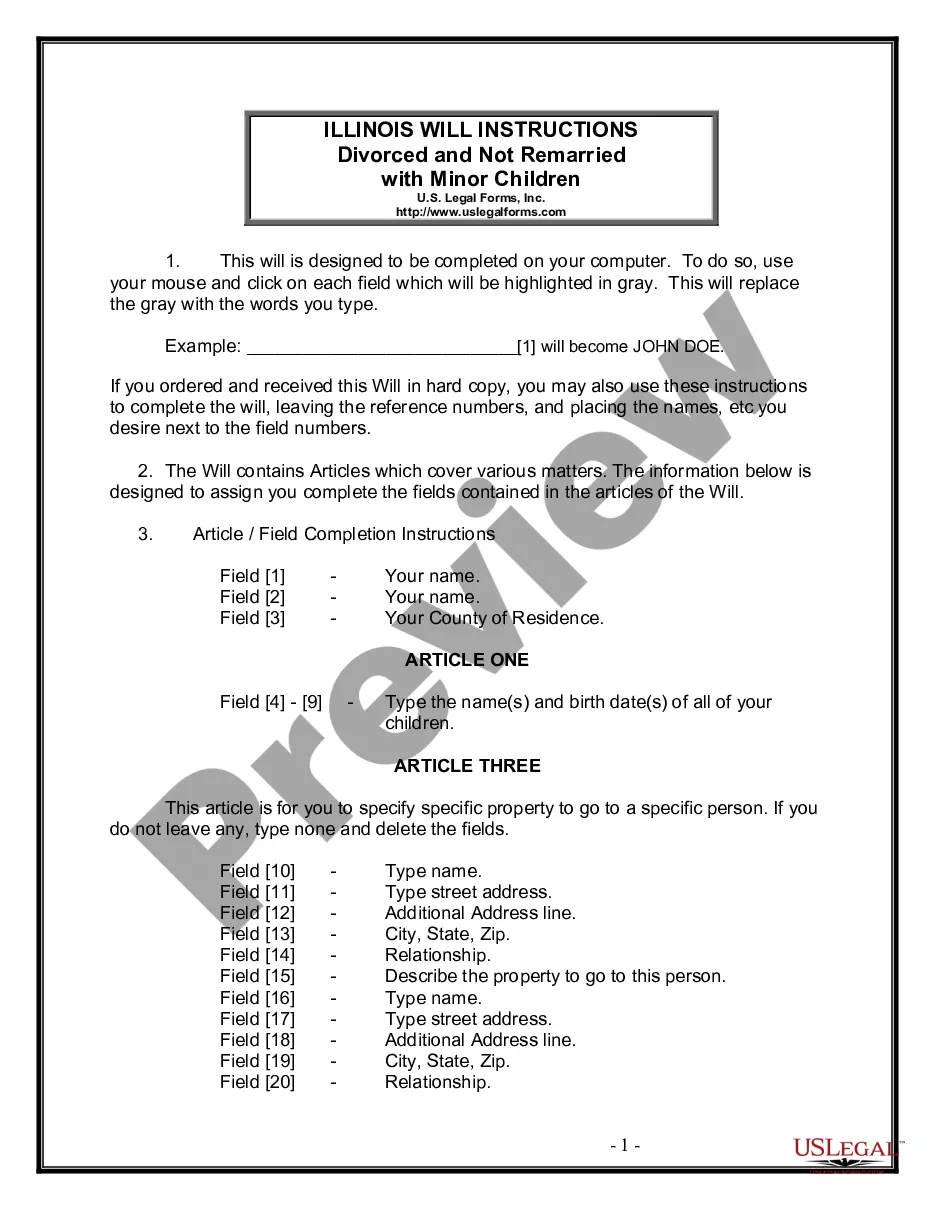
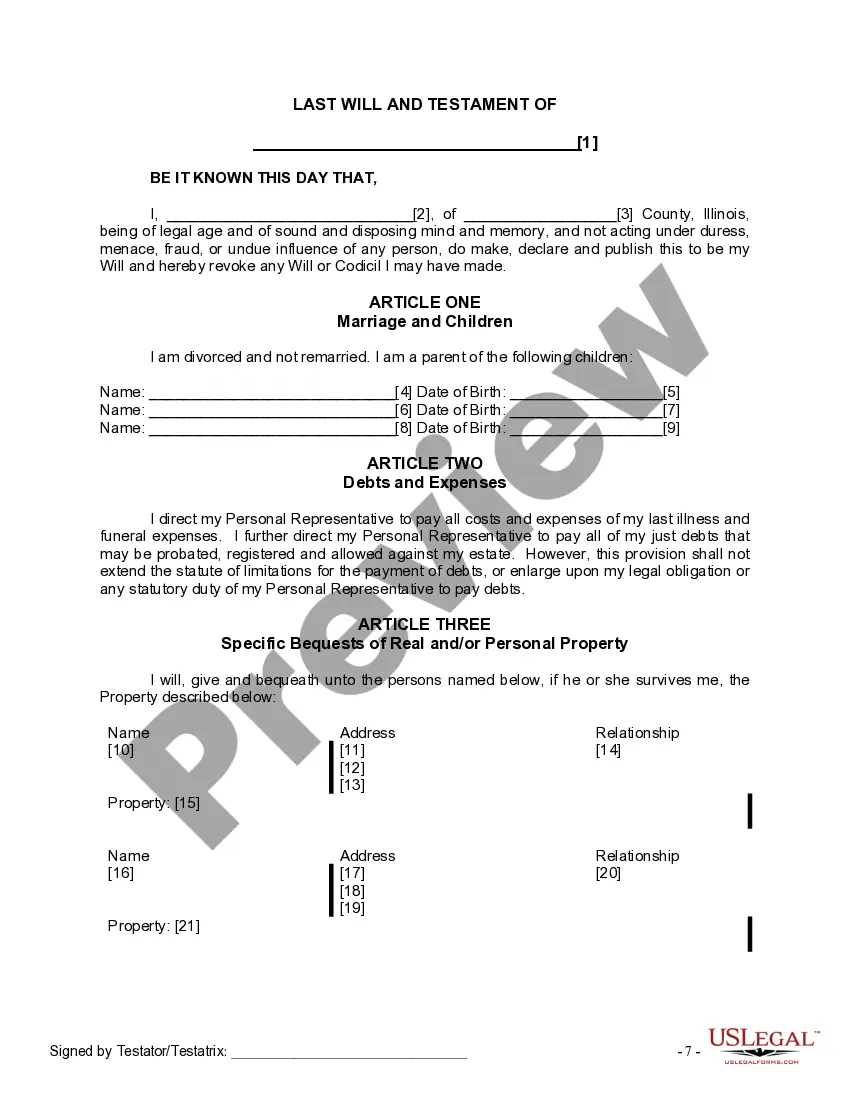
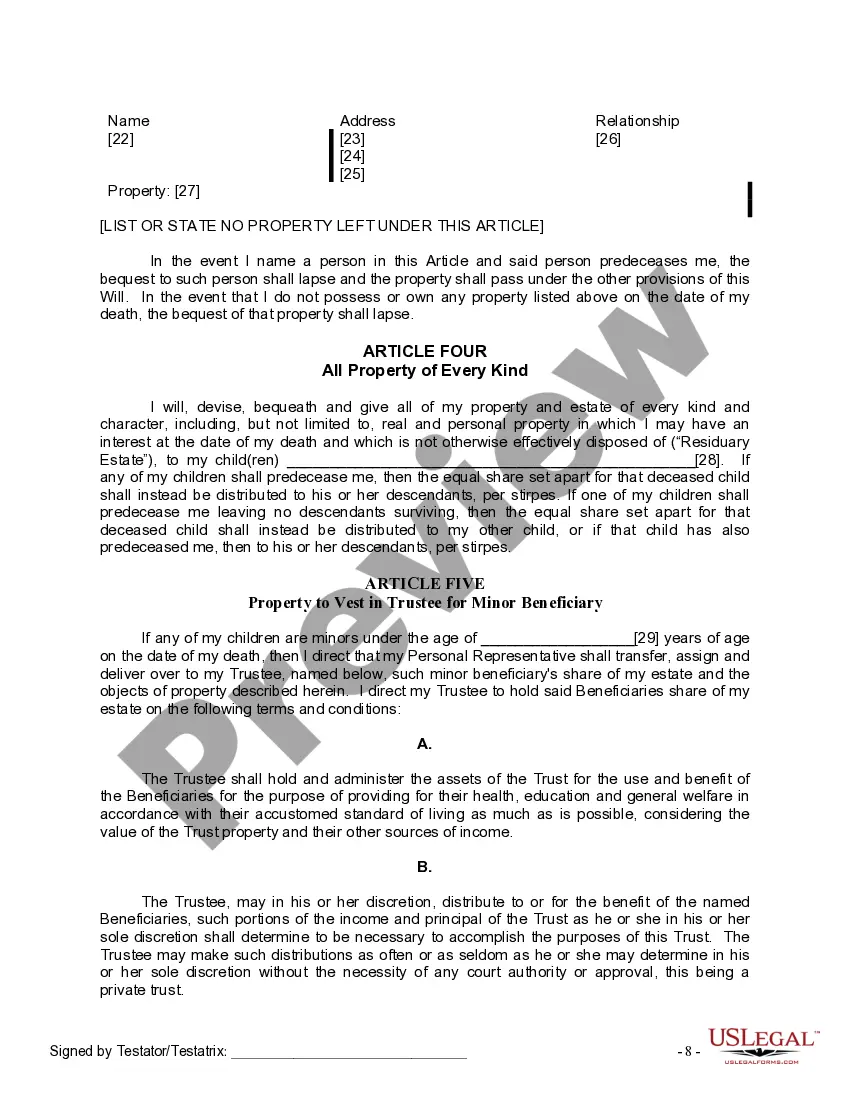
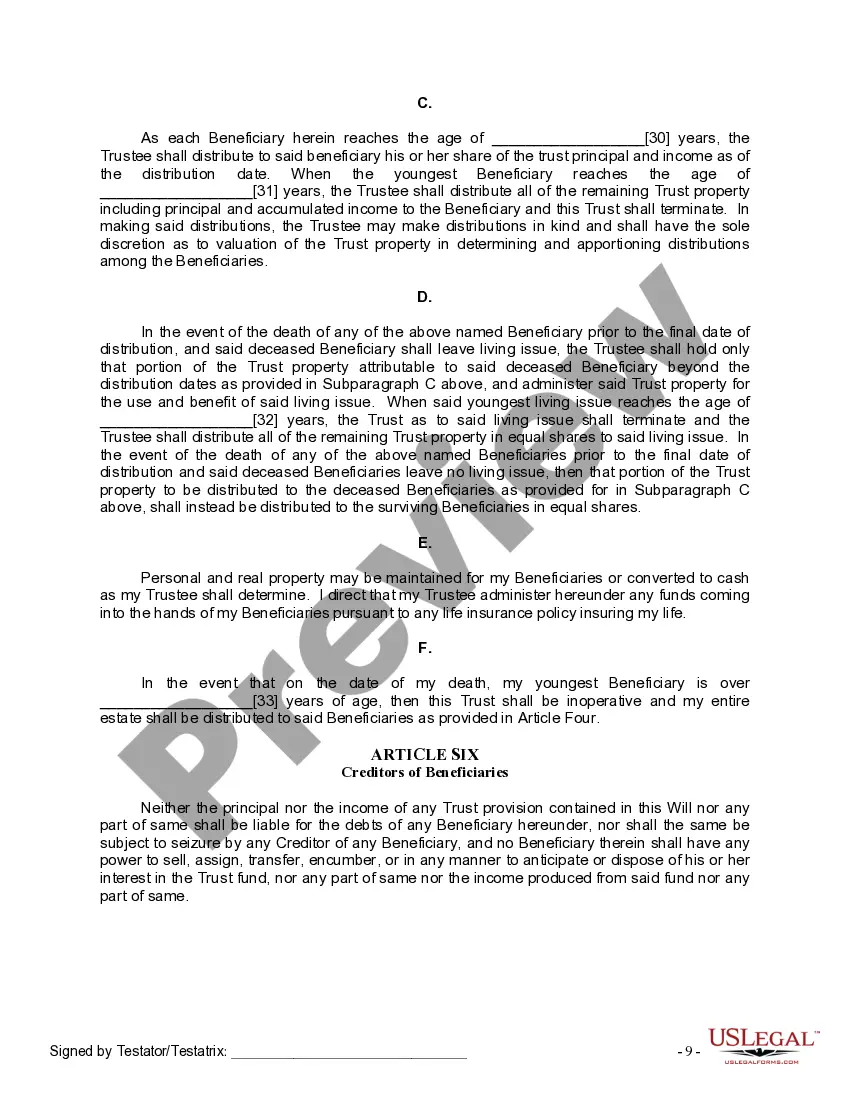
This Last Will and Testament is specifically designed for a divorced person who has not remarried and has minor children. It lays out your wishes regarding the distribution of your property, the appointment of a guardian for your children, and the designation of an executor to manage your estate after your passing. This form is crucial to ensure that your assets are handled according to your preferences, especially in a blended family situation or when you want to provide for your children without leaving anything to an ex-spouse.
Key components of this form
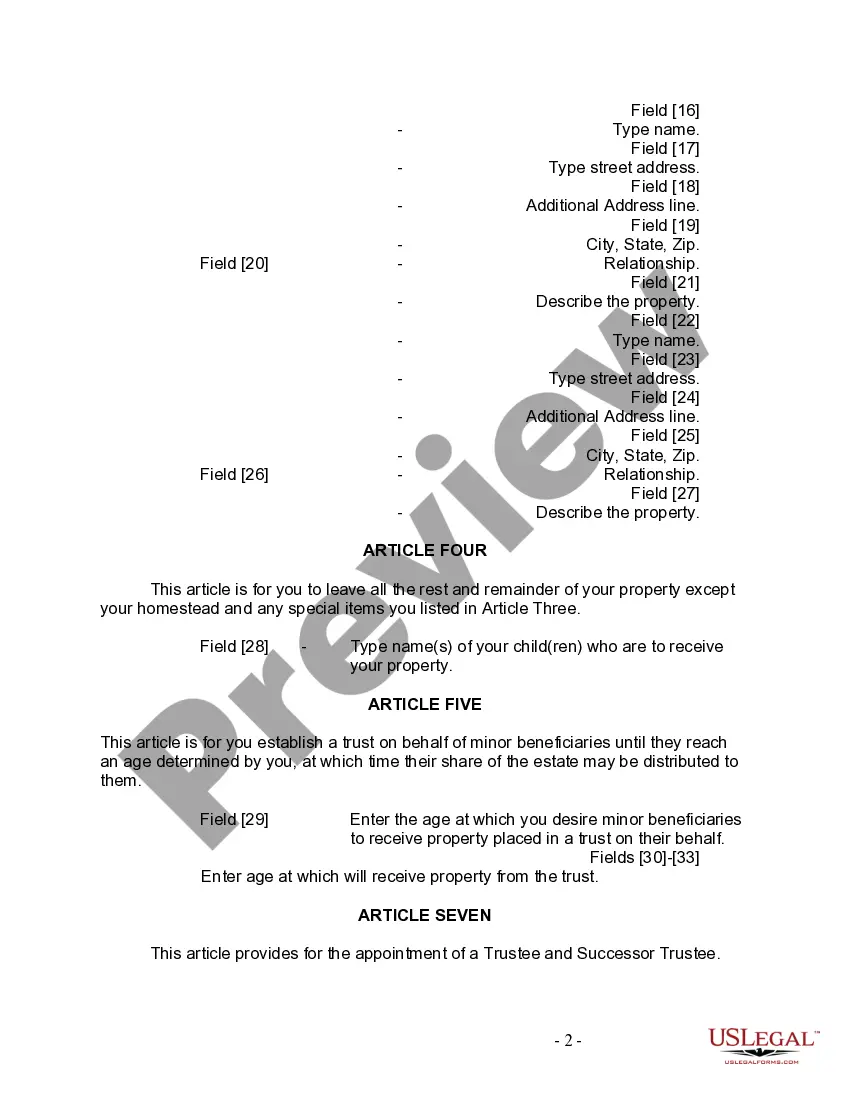
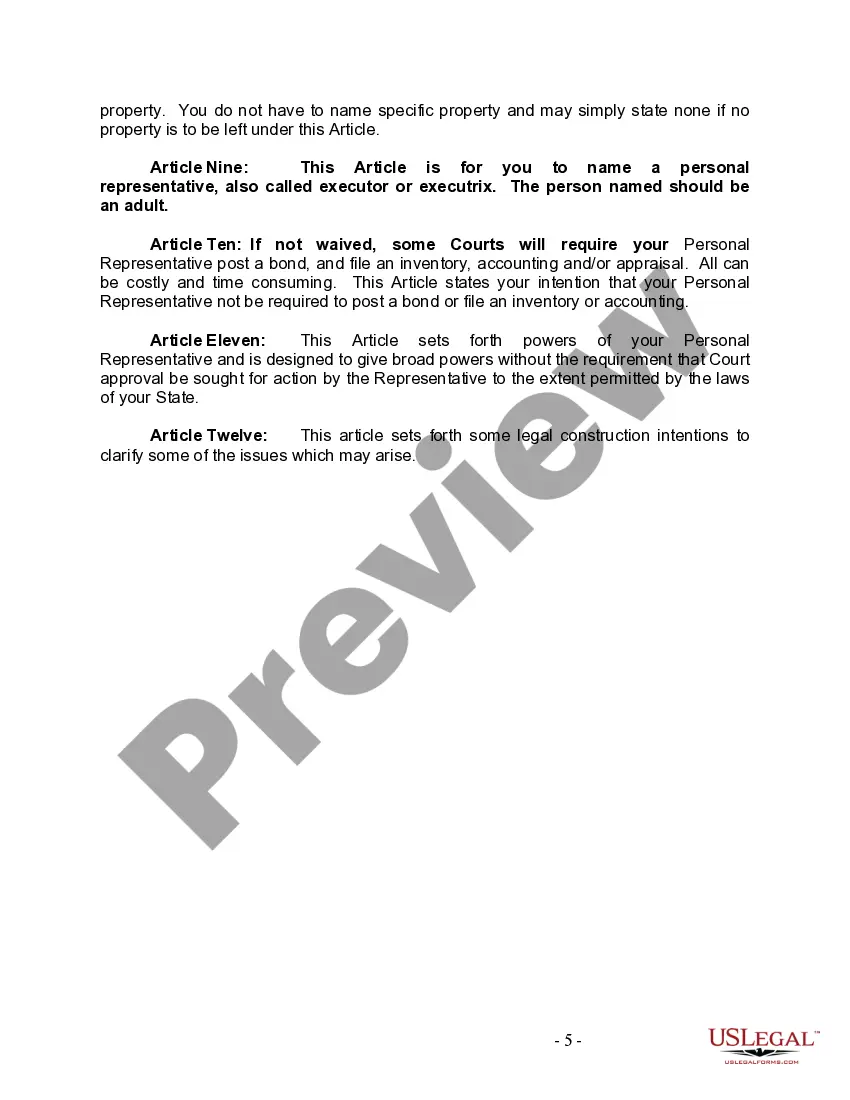
- Articles of Distribution: Specifies how your property will be divided among beneficiaries.
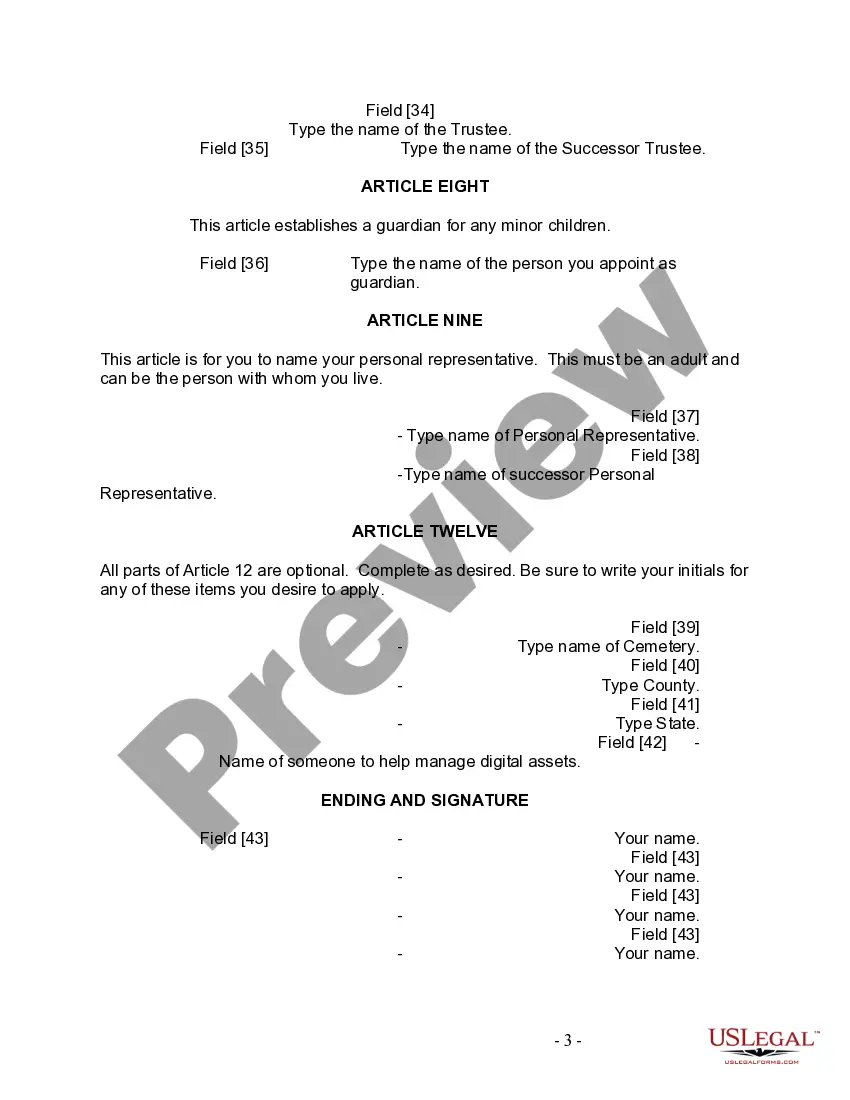
- Guardian Appointment: Designates a guardian for your minor children.
- Trust Provisions: Establishes a trust for minor beneficiaries until they reach a specified age.
- Executor Designation: Names a personal representative to manage your estate.
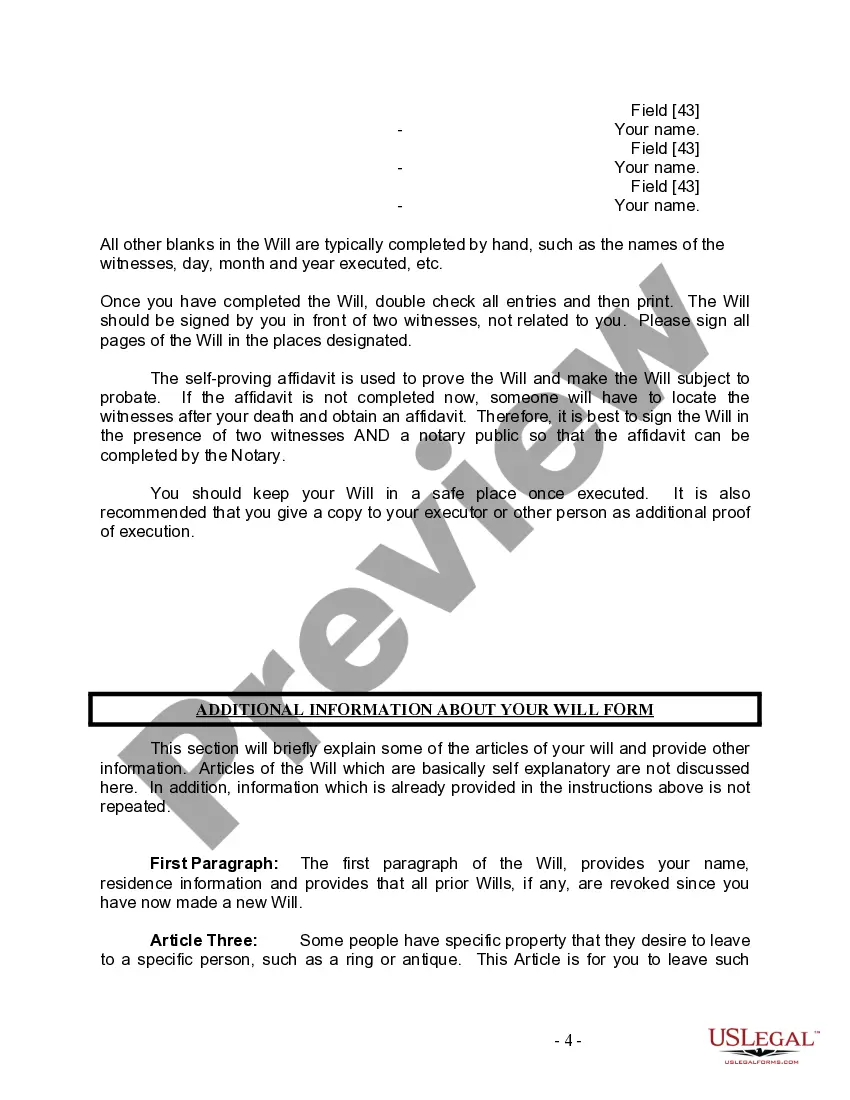
- Self-Proving Affidavit: Includes an affidavit to simplify the probate process, if applicable in your state.




When this form is needed
This form is essential if you are a divorced individual with minor children and wish to detail your wishes for the distribution of your estate. You should consider using this Will if you want to ensure that your children are cared for and provided for after your death, and if you have specific instructions regarding guardianship and asset distribution that differ from state intestacy laws.
Who this form is for
- Divorced individuals who have minor children.
- People who want to specify asset distribution outside of state laws.
- Parents seeking to appoint a guardian for their minor children.
- Individuals looking to create a trust for the financial benefit of their children until they reach a designated age.
Instructions for completing this form
- Identify yourself: Enter your full legal name and county of residence.
- List your children: Provide the names and birthdates of all your minor children.
- Designate specific bequests: Specify any particular property you wish to leave to individuals.
- Appoint trustees and guardians: Choose a trustee for any established trusts and a guardian for your children.
- Sign in front of witnesses: Ensure you sign the document in front of two eligible witnesses, then have it notarized if required.
Does this form need to be notarized?
Yes, this form must be notarized to be legally valid. Notarizing your Will helps ensure that it will be accepted by the court during the probate process. At US Legal Forms, we offer integrated online notarization for your convenience, allowing you to complete this step securely without leaving home.
Get your form ready online
Our built-in tools help you complete, sign, share, and store your documents in one place.
Make edits, fill in missing information, and update formatting in US Legal Forms—just like you would in MS Word.
Download a copy, print it, send it by email, or mail it via USPS—whatever works best for your next step.
Sign and collect signatures with our SignNow integration. Send to multiple recipients, set reminders, and more. Go Premium to unlock E-Sign.
If this form requires notarization, complete it online through a secure video call—no need to meet a notary in person or wait for an appointment.
We protect your documents and personal data by following strict security and privacy standards.

Make edits, fill in missing information, and update formatting in US Legal Forms—just like you would in MS Word.

Download a copy, print it, send it by email, or mail it via USPS—whatever works best for your next step.

Sign and collect signatures with our SignNow integration. Send to multiple recipients, set reminders, and more. Go Premium to unlock E-Sign.

If this form requires notarization, complete it online through a secure video call—no need to meet a notary in person or wait for an appointment.

We protect your documents and personal data by following strict security and privacy standards.
Common mistakes
- Failing to name a guardian for minor children, which can lead to disputes.
- Not signing the Will in the presence of the required number of witnesses.
- Leaving out specific property or beneficiaries, resulting in unintended distributions.
- Neglecting to keep the Will updated after major life changes, such as a divorce or the birth of a child.
Why complete this form online
- Convenience: Complete the form at your own pace from home.
- Editability: Easily modify the document as your circumstances change.
- Reliability: Obtain a legally sound document carefully drafted by licensed attorneys.
Main things to remember
- This will is specifically crafted for divorced individuals with minor children.
- It includes important designations for guardianship and property distribution.
- Ensure that your completed Will is signed correctly to be legally enforceable.
Looking for another form?
Form popularity
FAQ
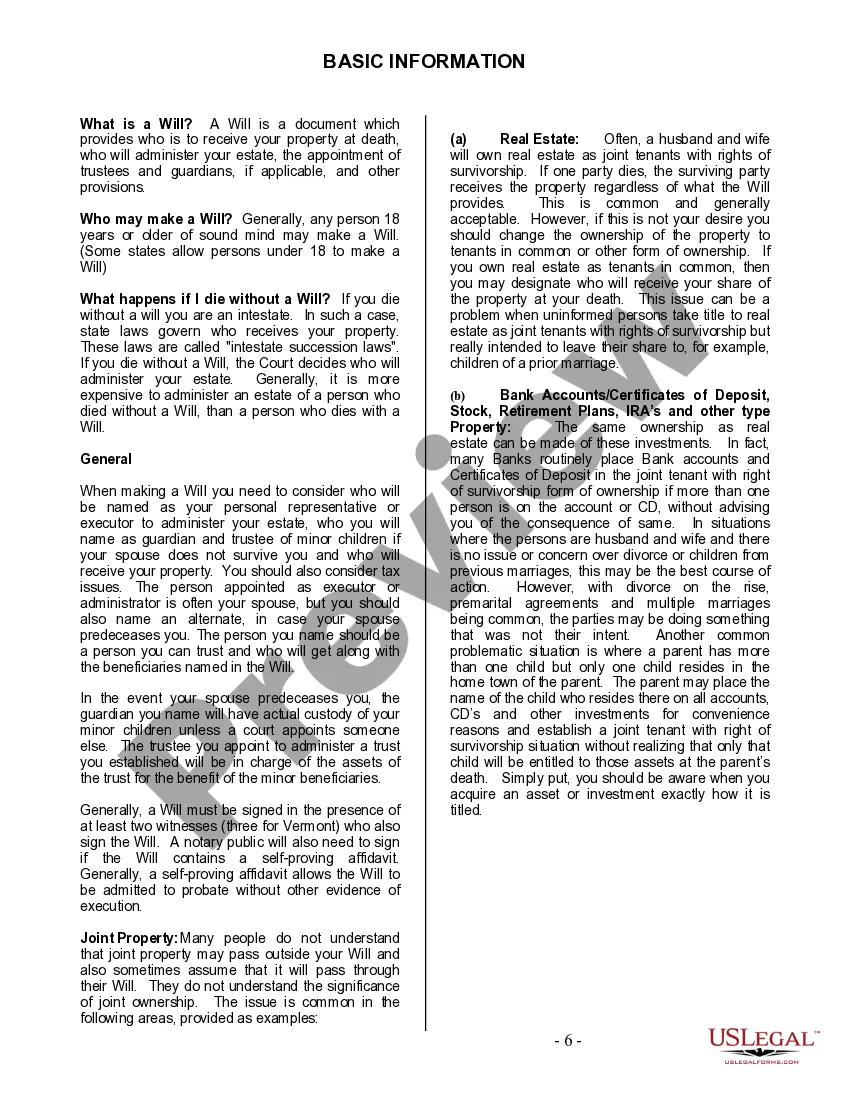
Children can't make wills until they are considered to have capacity to understand what they're signing. When a will goes through probate, it is declared by a court to be valid.To make a will, the will maker must be: at least 18 years old.
Kids under 18 will need someone to take care of them. A legal guardian is named for minor children in the event of the death of both parents. If neither you nor your children's other parent have a will that names a legal guardian, the state will choose one for you.
Decide if you want to get help or use a do-it-yourself software program. Select your beneficiaries. Choose the executor for your will. Pick a guardian for your kids. Be specific about who gets what. Be realistic about who gets what. If there's more you want to say, attach a letter to the will.
Create the initial document. Start by titling the document Last Will and Testament" and including your full legal name and address. Designate an executor. Appoint a guardian. Name the beneficiaries. Designate the assets. Ask witnesses to sign your will. Store your will in a safe place.
Anyone of legal age (18 years old in most states) and sound mind can make a Will. If you have property that you wish to distribute at the time of your death, you should have a Will.