Illinois Uniform Anatomical Gift Act Donation
What this document covers
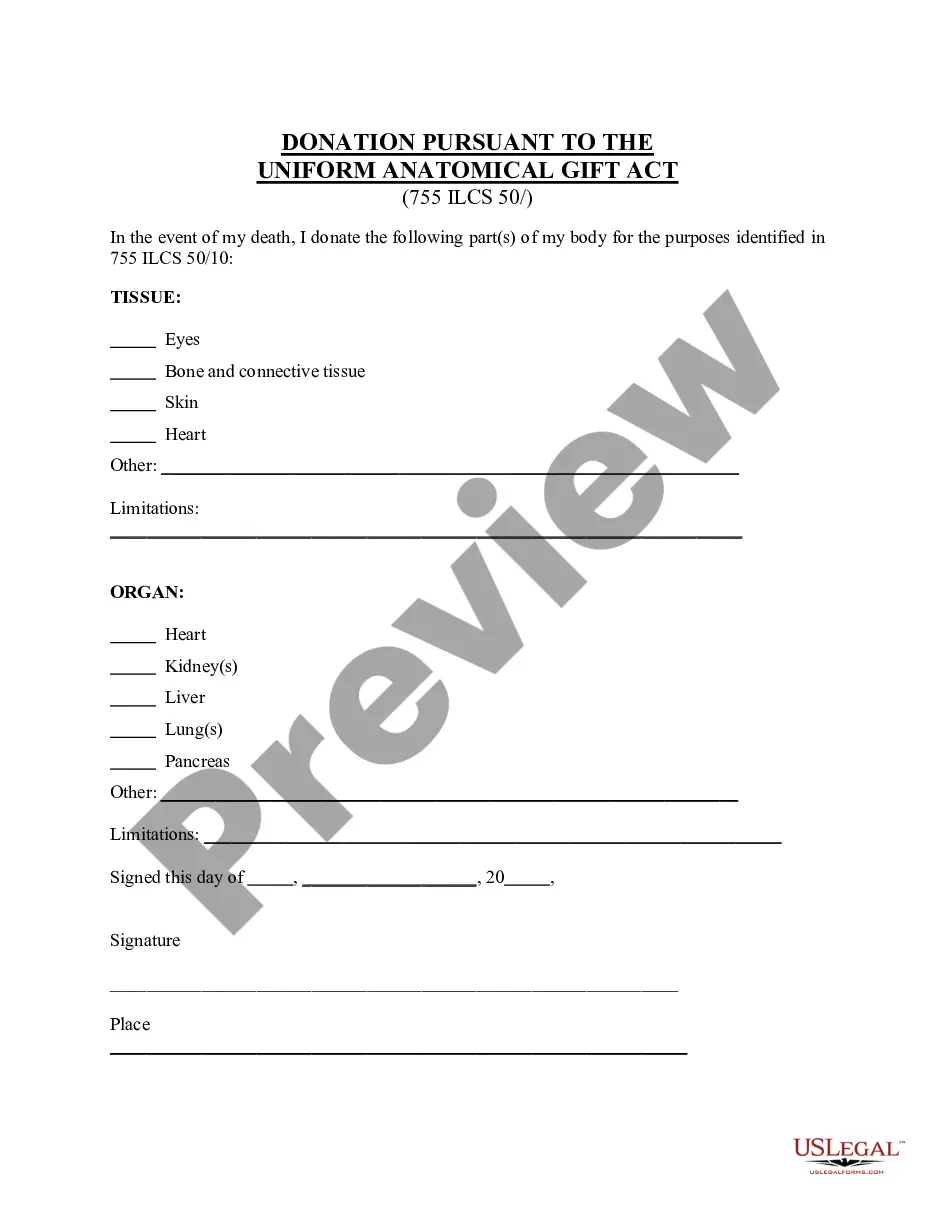
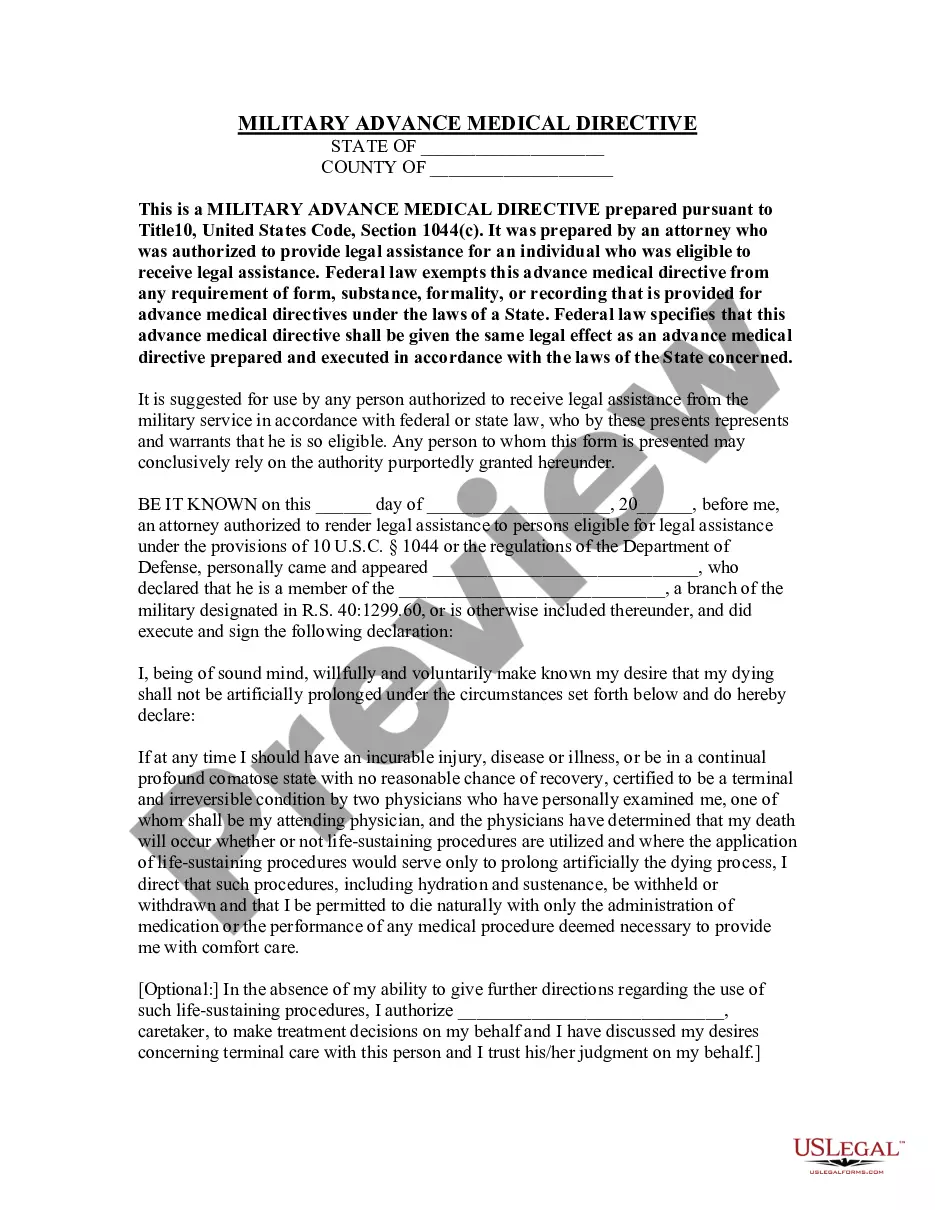
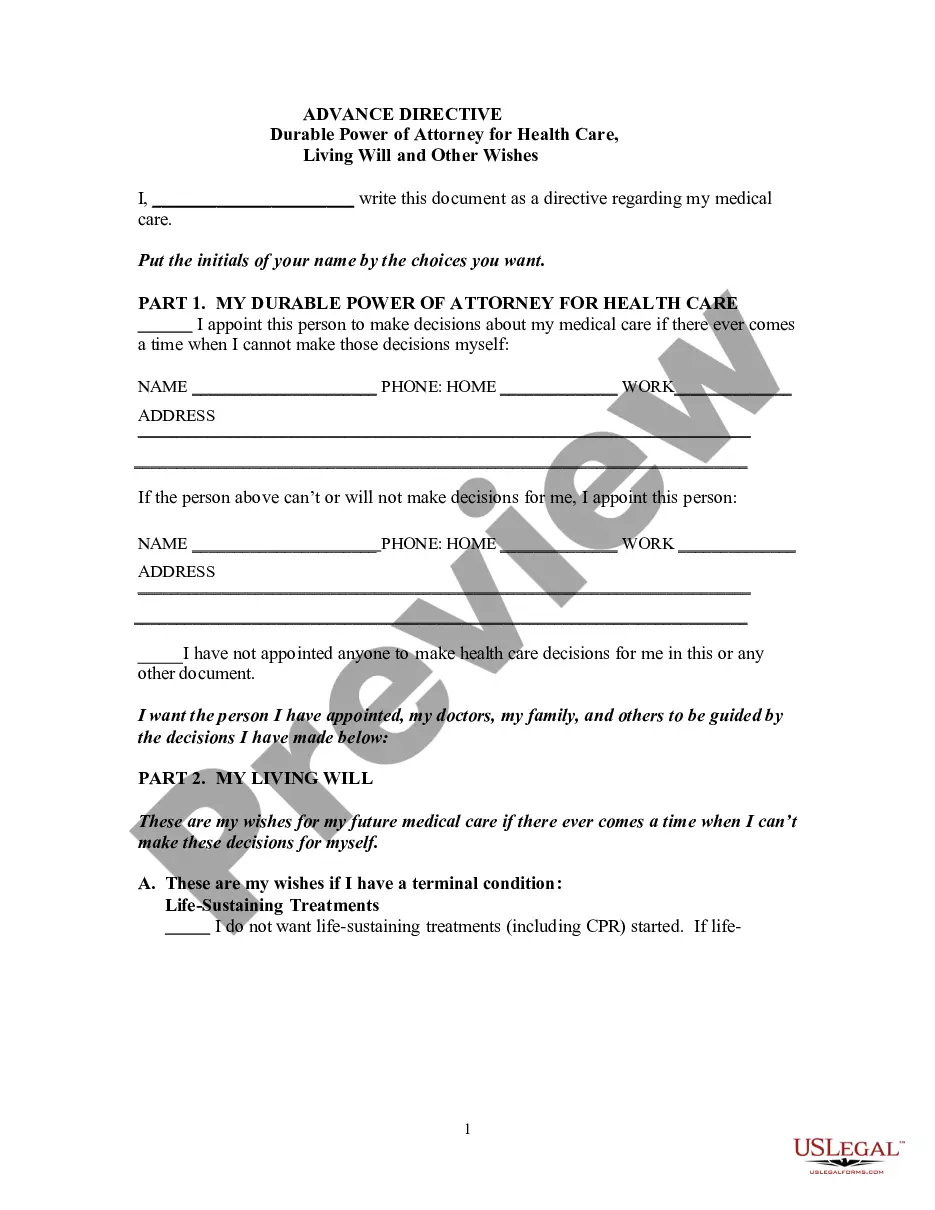
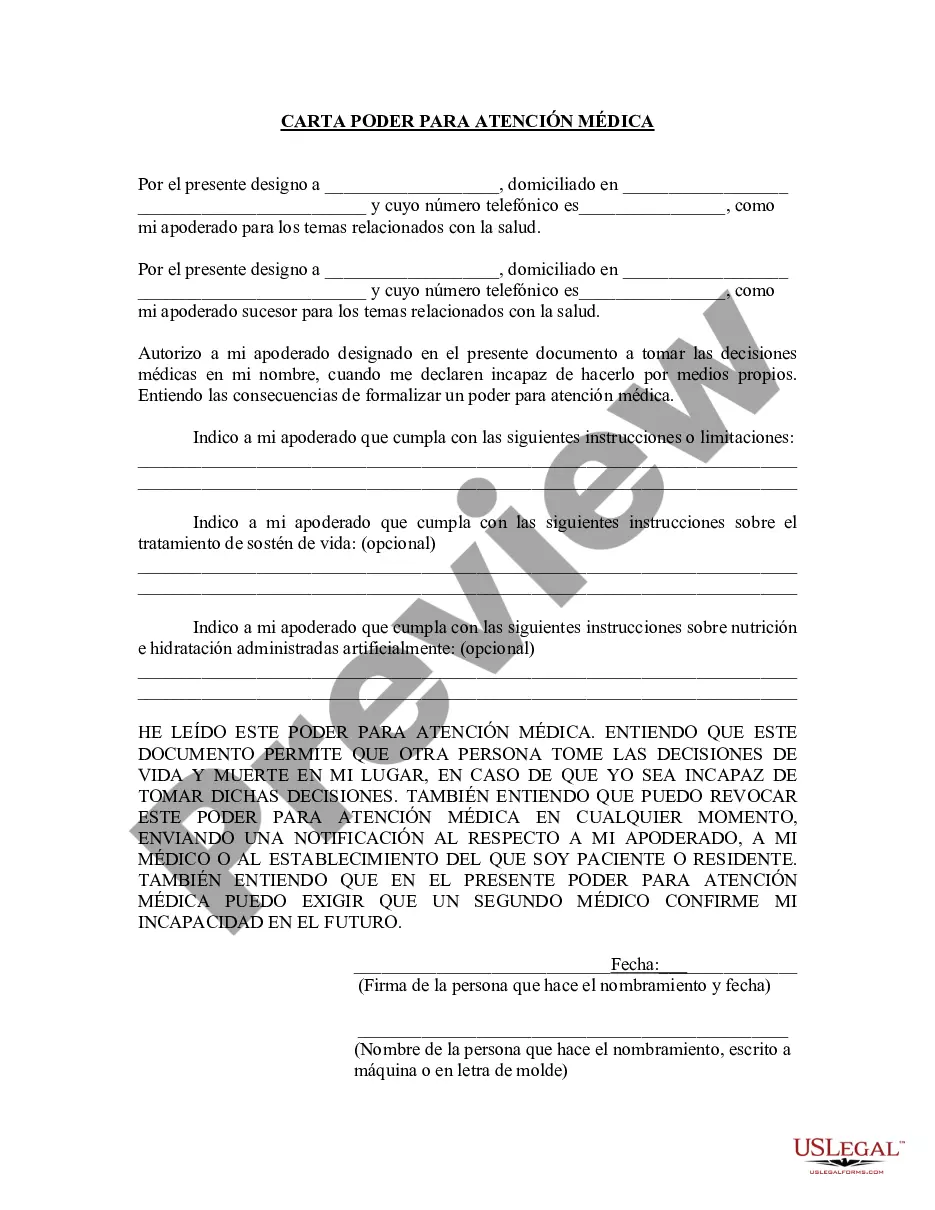
The Uniform Anatomical Gift Act Donation form is a legal document that allows individuals to designate specific body parts and organs they wish to donate upon their death. This form is essential for ensuring that a person's wishes regarding organ donation are respected and can provide clarity in medical situations. Unlike general wills or other legal documents, this form focuses specifically on anatomical gifts solely for organ donation purposes.
Main sections of this form
- Donation declaration: Clearly states the intent to donate specific organs or body parts.
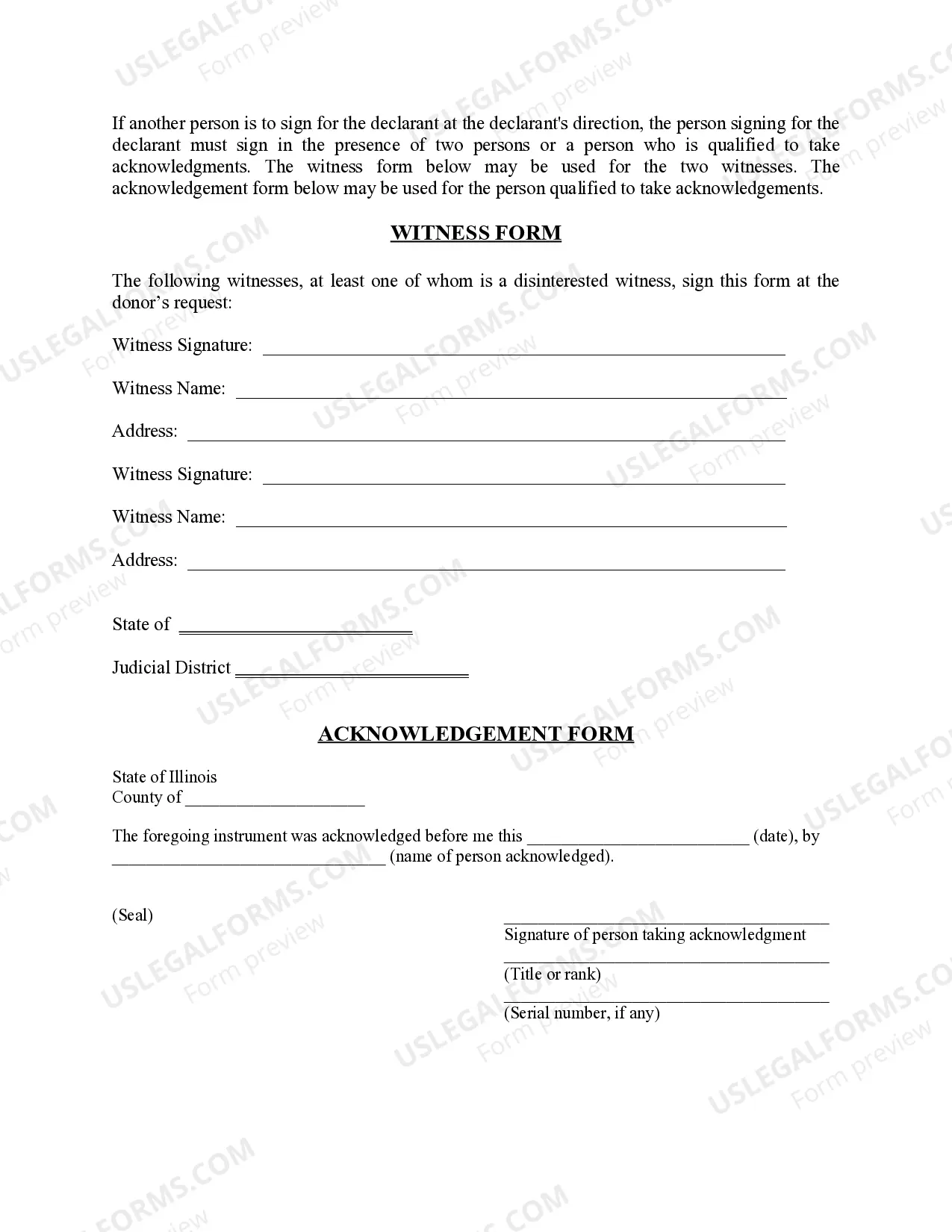
- Witness signatures: Requires the signatures of at least two witnesses, one of whom must be disinterested.
- Notarization requirement: Must be notarized to validate the declaration.
- Signature sections: Includes designated spaces for the donor's signature and witnesses' names and addresses.

When to use this document
This form should be used when an individual wishes to make a legally binding decision regarding organ donation. It is particularly important to complete this form in advance of any medical situation where organ donation may be considered. This ensures that your intentions are known and followed by surviving family members and medical personnel.
Who needs this form
- Individuals who are at least 18 years old and of sound mind.
- People who want to specify their wishes regarding donating organs or body parts upon death.
- Anyone looking to ensure their organ donation preferences are legally recognized and respected.
How to prepare this document
- Identify the donor: Write your full name and contact information in the designated section.
- Specify organs and body parts: Clearly list the organs or body parts you intend to donate.
- Obtain witness signatures: Ensure that at least two witnesses sign the form, following the rules for disinterested witnesses.
- Notarize the document: Have the form notarized to ensure it is legally valid.
- Keep copies: Store the original in a secure place and share copies with family members or your healthcare provider.
Does this document require notarization?
In most cases, this form does not require notarization. However, some jurisdictions or signing circumstances might. US Legal Forms offers online notarization powered by Notarize, accessible 24/7 for a quick, remote process.
Get your form ready online
Our built-in tools help you complete, sign, share, and store your documents in one place.
Make edits, fill in missing information, and update formatting in US Legal Forms—just like you would in MS Word.
Download a copy, print it, send it by email, or mail it via USPS—whatever works best for your next step.
Sign and collect signatures with our SignNow integration. Send to multiple recipients, set reminders, and more. Go Premium to unlock E-Sign.
If this form requires notarization, complete it online through a secure video call—no need to meet a notary in person or wait for an appointment.
We protect your documents and personal data by following strict security and privacy standards.

Make edits, fill in missing information, and update formatting in US Legal Forms—just like you would in MS Word.

Download a copy, print it, send it by email, or mail it via USPS—whatever works best for your next step.

Sign and collect signatures with our SignNow integration. Send to multiple recipients, set reminders, and more. Go Premium to unlock E-Sign.

If this form requires notarization, complete it online through a secure video call—no need to meet a notary in person or wait for an appointment.

We protect your documents and personal data by following strict security and privacy standards.
Mistakes to watch out for
- Neglecting to have the form witnessed by the required number of individuals.
- Failing to notarize the document, which can invalidate the form.
- Not specifying which organs or body parts are to be donated.
- Omitting to inform family members of your decision regarding organ donation.
Quick recap
- The Uniform Anatomical Gift Act Donation form is essential for individuals wishing to donate organs upon death.
- Witnesses and notarization are crucial components for the validity of the form.
- Proper completion and distribution of this form can help ensure your donation wishes are honored.
Looking for another form?
Form popularity
FAQ
Science Care obtains any pending authorizations, death certificate information and medical social history needed to process the donation. Science Care files the death certificate in the county of passing. Your loved ones are responsible for purchasing certified copies of the death certificate directly from the county.
One reason for this is the belief that body donation can be expensive. On the contrary, there are no direct costs for donating your body to science. In fact, it can even save you and your family from paying steep funeral costs.
Any person wishing to donate their body can make prior arrangements with the local medical college, hospital, or an NGO, before death. Individuals may request a consent form from a medical institution or an NGO, who will then give information about policies and procedures followed after the potential donor is deceased.
Body donation procedure A health care representative from the hospital, medical facility or hospice organization where the death occurs should contact Mayo Clinic's donor program coordinator. The coordinator will review acceptance protocol to determine if the donation can be accepted.
The potential donor has an infectious or contagious disease (such as HIV/AIDS, hepatitis B or hepatitis C, or prion diseases). The next of kin objects to the donation of the body. The body is not acceptable for anatomical study (extremely emaciated or extremely obese).
One reason for this is the belief that body donation can be expensive. On the contrary, there are no direct costs for donating your body to science. In fact, it can even save you and your family from paying steep funeral costs.
The Uniform Anatomical Gift Act (UAGA) has been revised in 2006 to permit the use of life support systems at or near death for the purpose of maximizing procurement opportunities of organs medically suitable for transplantation.
Body donation procedure A health care representative from the hospital, medical facility or hospice organization where the death occurs should contact Mayo Clinic's donor program coordinator. The coordinator will review acceptance protocol to determine if the donation can be accepted.
Either download the AGA donation form or contact the AGA at (312) 733-5283 for a copy of the form. Complete the form. Review the educational material. Share the decision to donate with family, loved ones, next of kin and/or estate executor. Carry the donor card.