Illinois Renunciation and Disclaimer of Property received by Intestate Succession
What this document covers
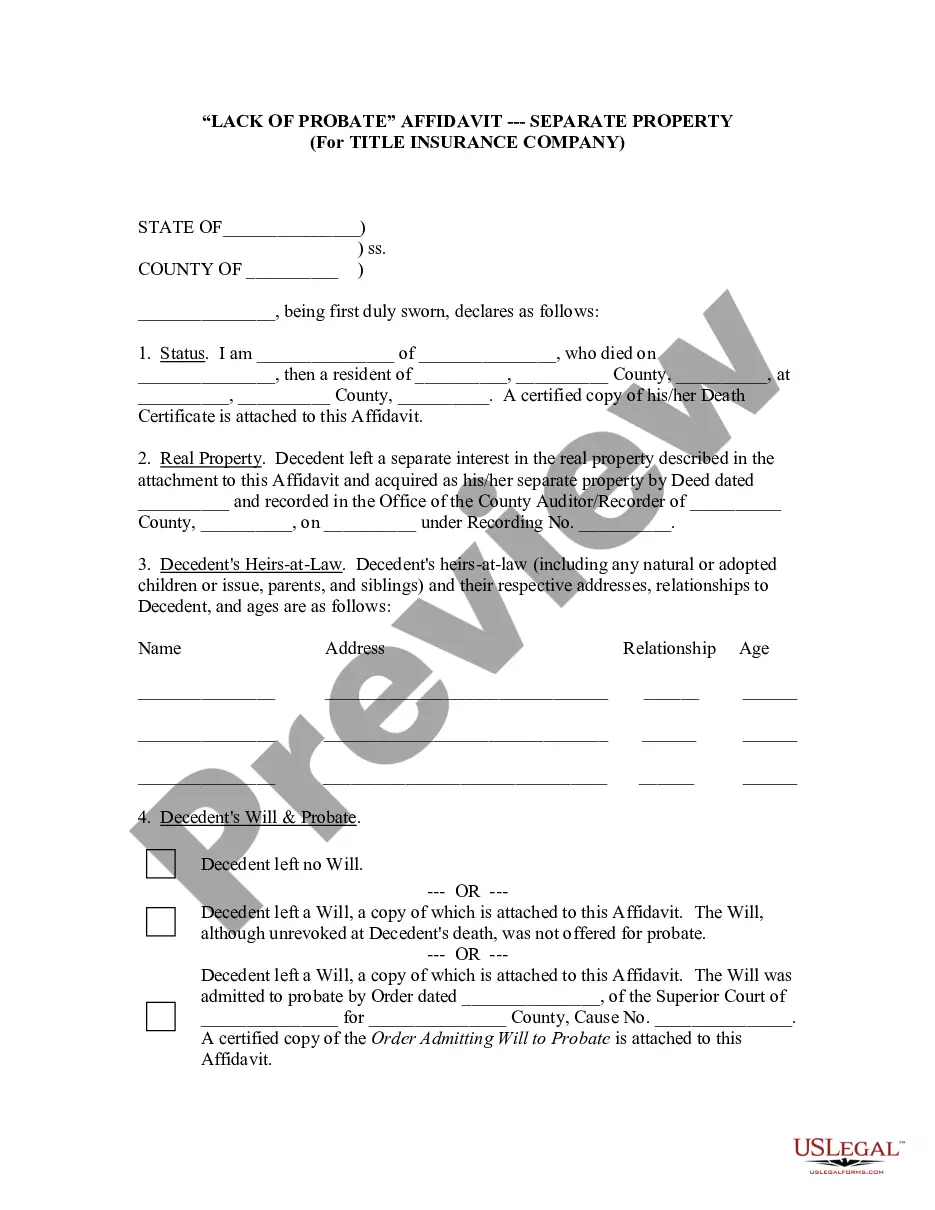
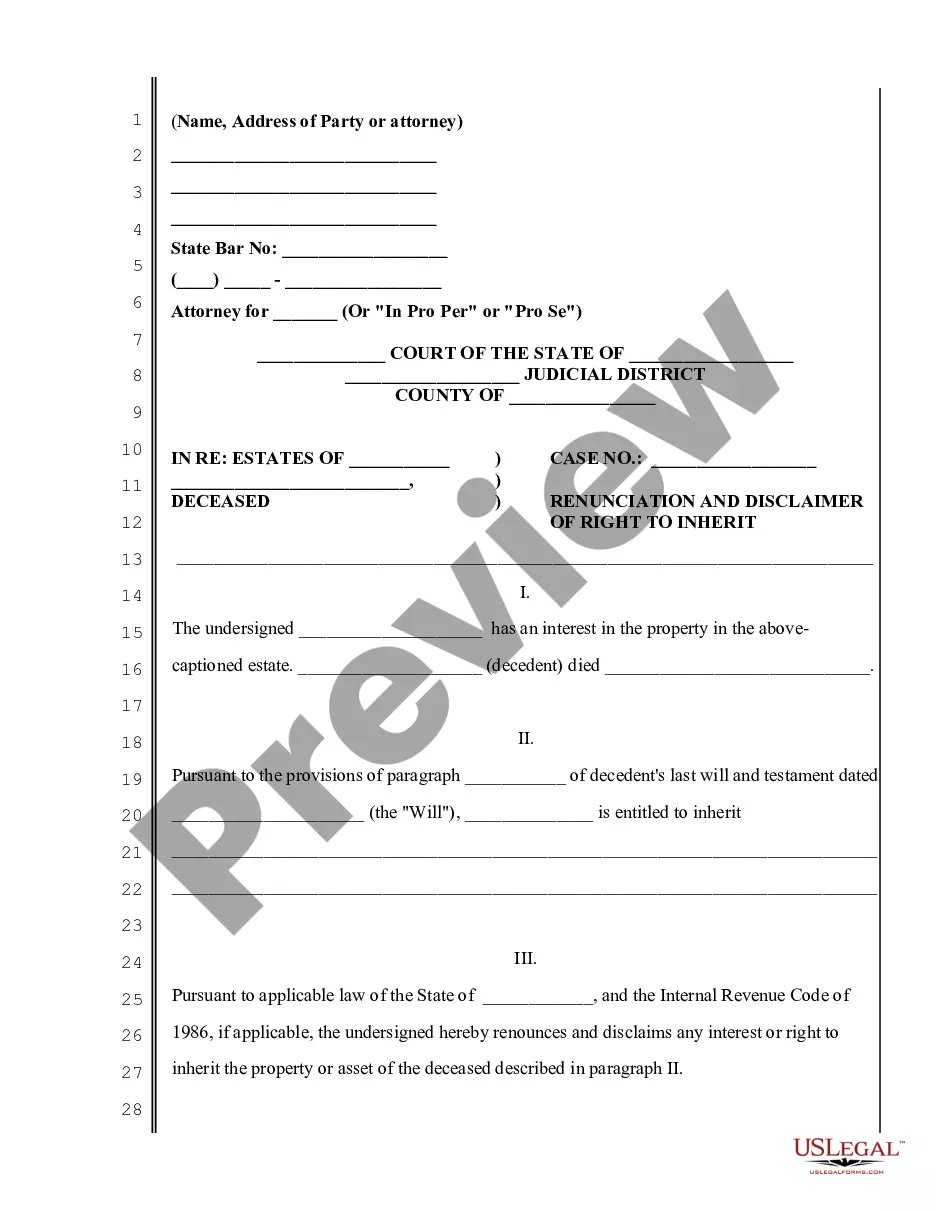
The Illinois Renunciation and Disclaimer of Property received by intestate succession is a legal document that allows a beneficiary to refuse their interest in property inherited through intestate succession, which means the decedent died without a will. This form is specifically designed for use in the State of Illinois and follows the guidelines set by the Illinois Compiled Statutes. By completing this form, the beneficiary can legally disclaim their interest, ensuring that property is allocated according to state laws as if they had predeceased the decedent.
What’s included in this form
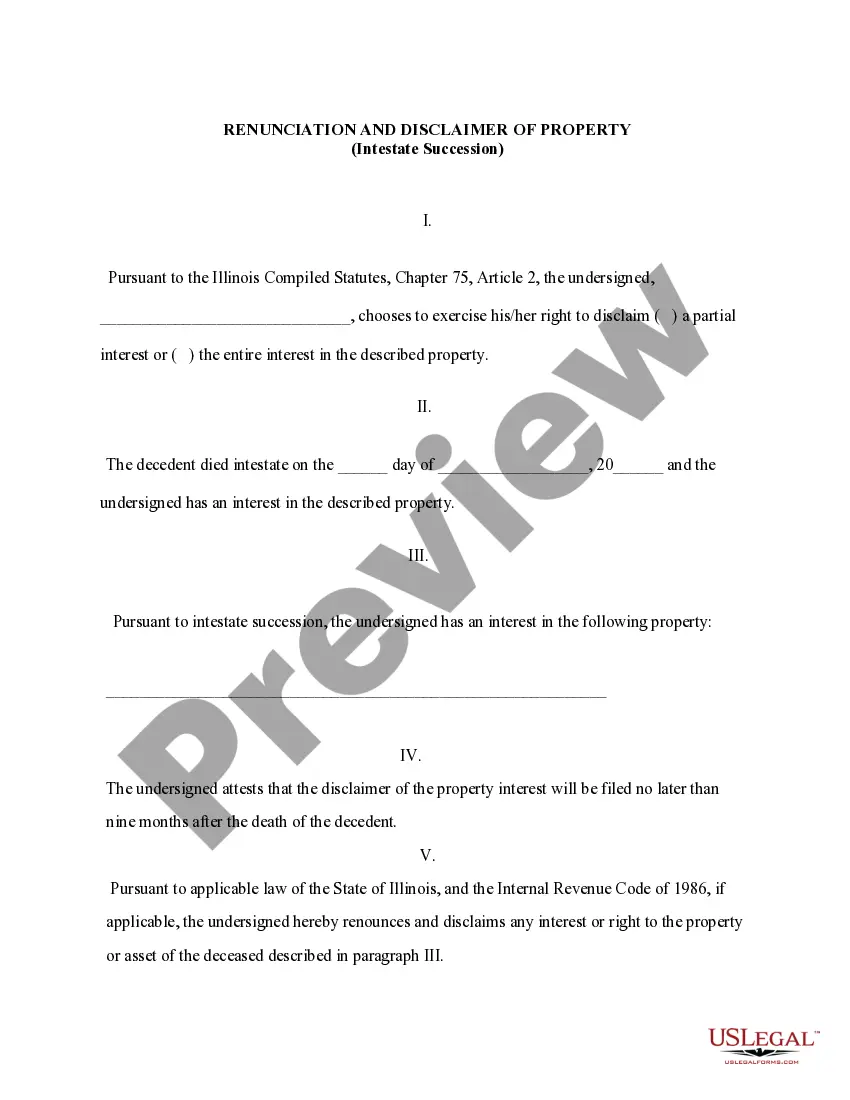
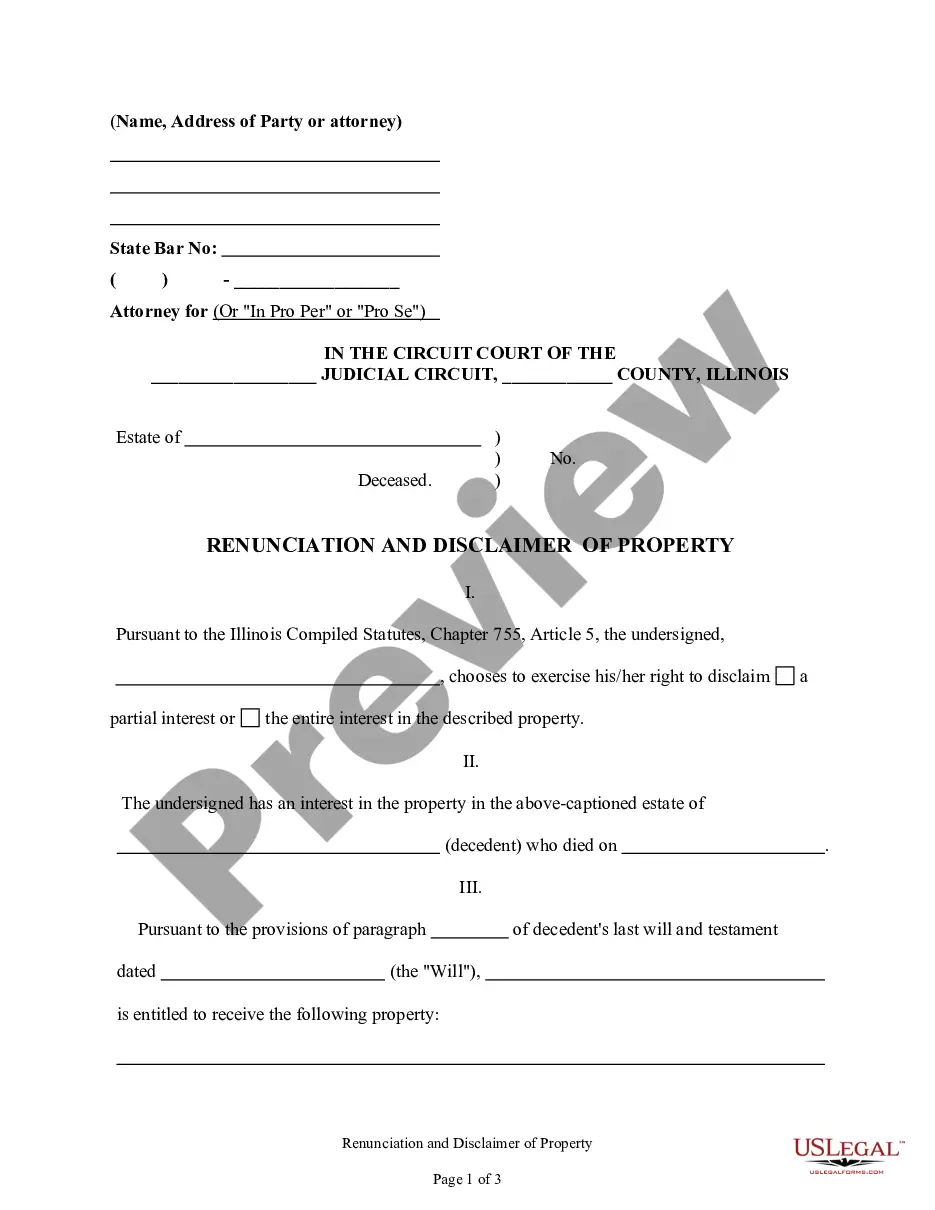
- Identification of the beneficiary and declaration of the intent to disclaim a partial or entire interest in the property.
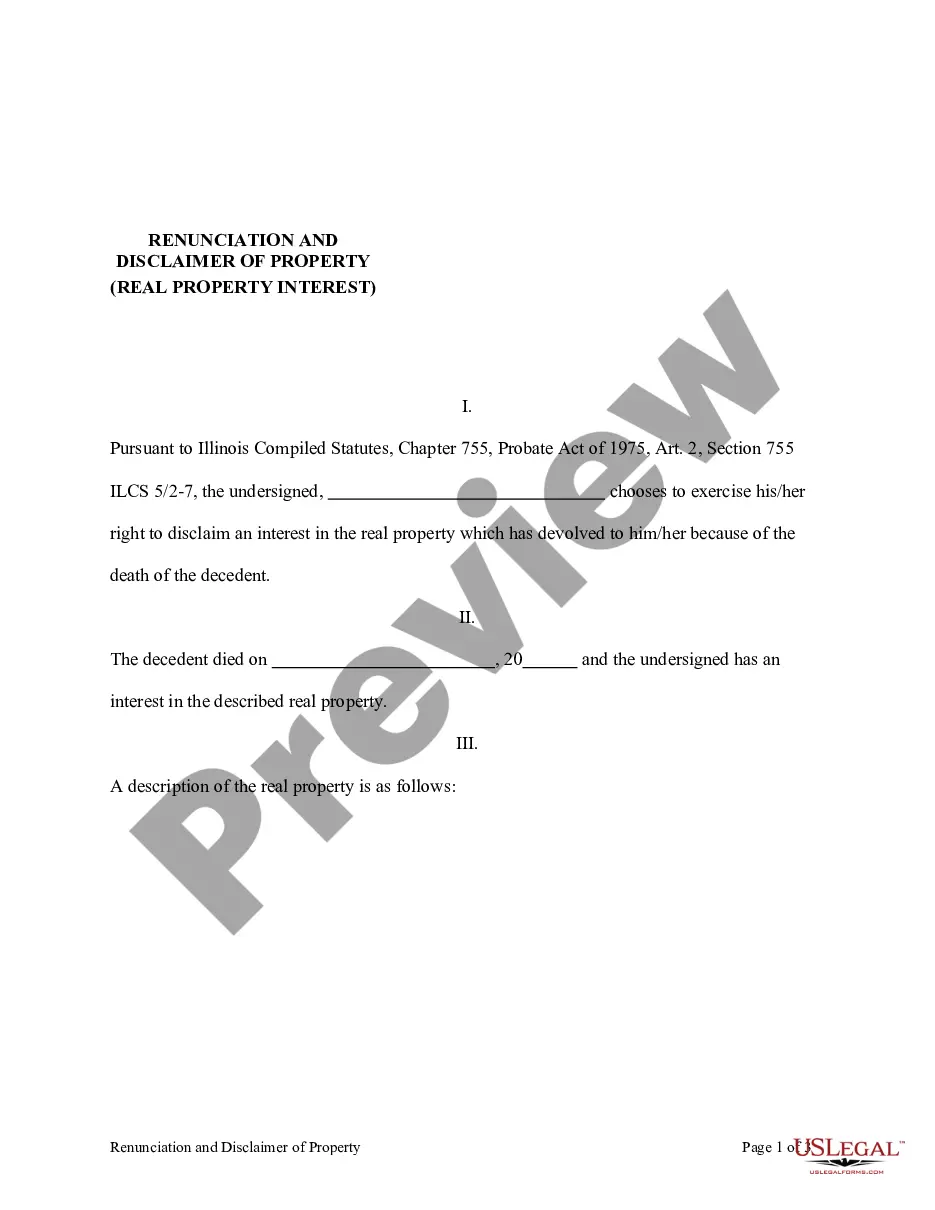
- Details regarding the decedent, including the date of death and the property interest being disclaimed.
- A certification that the disclaimer will be filed within nine months after the decedentâs death.
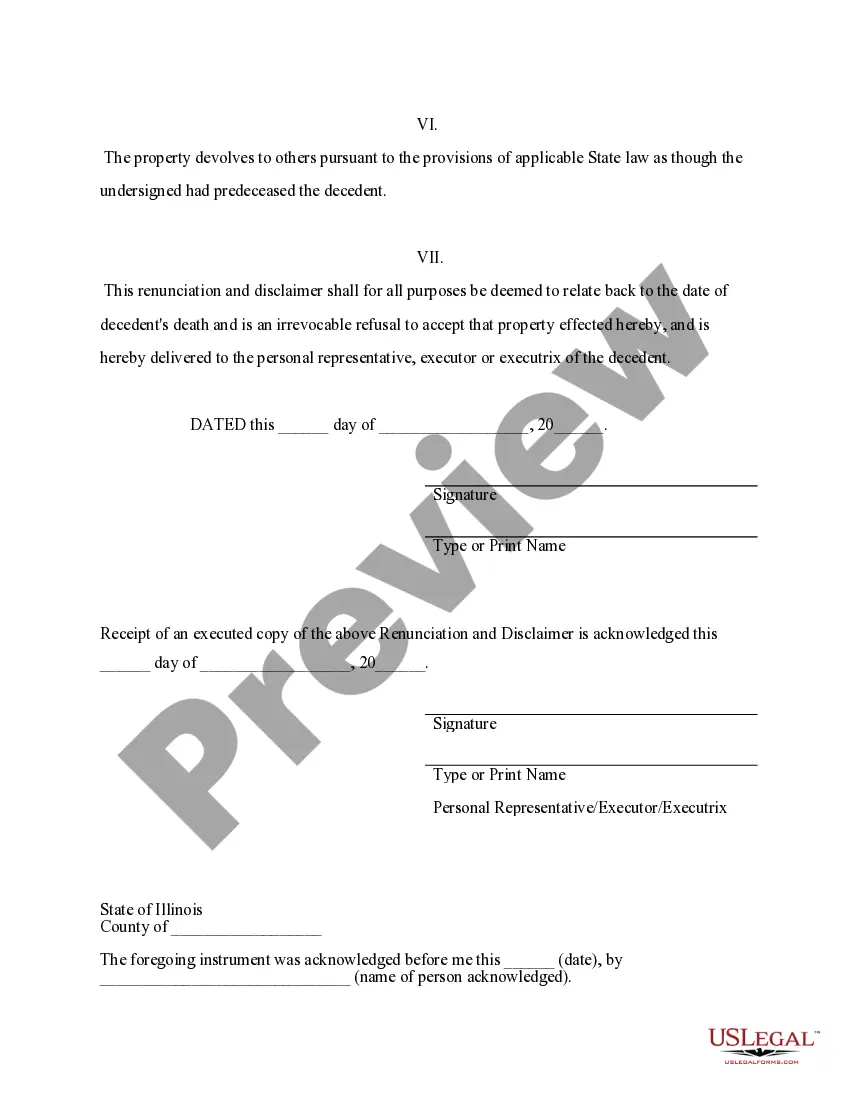
- Legal acknowledgment that the disclaimer relates back to the decedent's date of death, making it irrevocable.
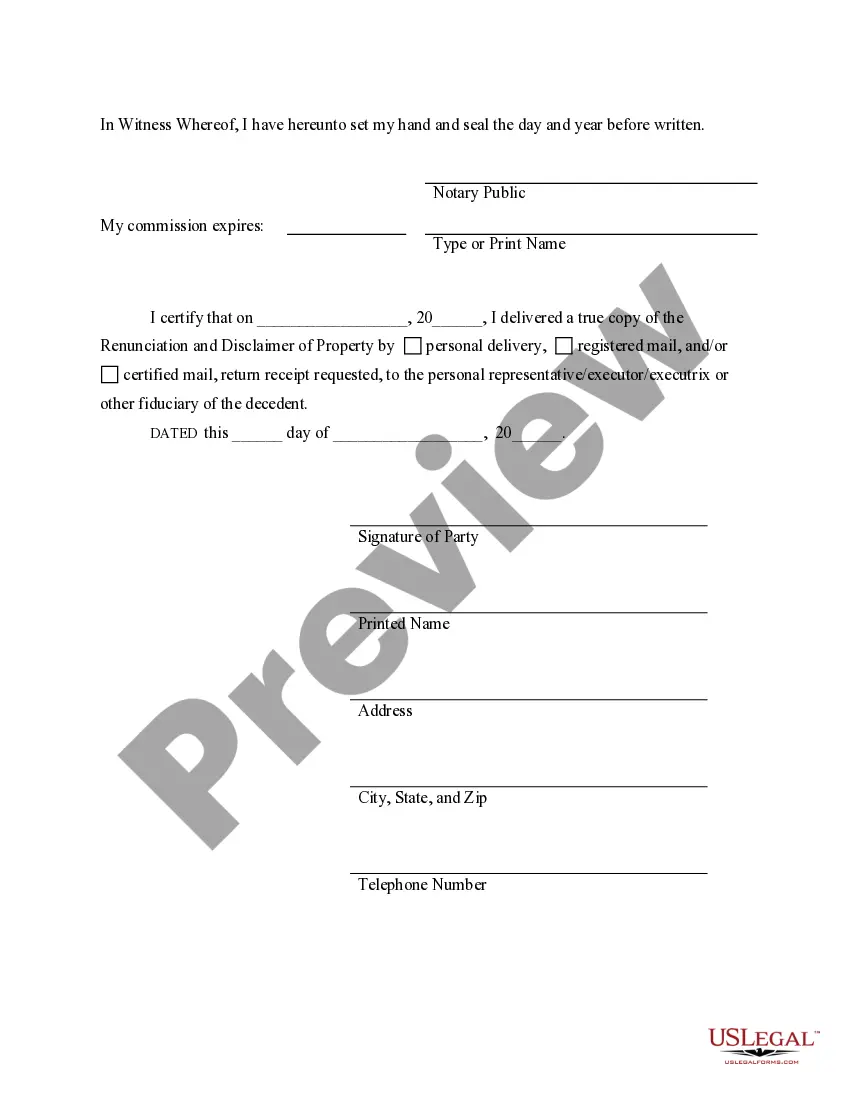
- Instructions for delivery to the personal representative of the decedentâs estate.
When to use this document
This form should be used when a beneficiary inherits property from an intestate estate but chooses not to accept the property. Common scenarios include when the beneficiary feels that the property carries a significant burden, such as debt or maintenance costs, or when they wish for the property to be passed on to other heirs. Completing this form ensures the beneficiary's decision is legally recognized and honored.
Who should use this form
This form is intended for:
- Beneficiaries of an intestate estate who wish to disclaim their inherited property interest.
- Individuals seeking to understand their legal rights regarding property passed on without a will in Illinois.
- Those involved in the administration of an estate where property needs to be disclaimed.
Instructions for completing this form
- Identify yourself as the beneficiary and provide your details in the designated fields.
- State your intent to disclaim either a partial or whole interest in the property.
- Specify the property interest you are renouncing.
- Include the date of death of the decedent and ensure your disclaimer is filed within the nine-month timeframe.
- Sign and date the form, ensuring it is acknowledged per state requirements.
Does this document require notarization?
This form does not typically require notarization unless specified by local law, making it easier to complete without the need for in-person meetings. However, certain jurisdictions might have specific requirements, so it's advisable to verify local regulations.
Get your form ready online
Our built-in tools help you complete, sign, share, and store your documents in one place.
Make edits, fill in missing information, and update formatting in US Legal Forms—just like you would in MS Word.
Download a copy, print it, send it by email, or mail it via USPS—whatever works best for your next step.
Sign and collect signatures with our SignNow integration. Send to multiple recipients, set reminders, and more. Go Premium to unlock E-Sign.
If this form requires notarization, complete it online through a secure video call—no need to meet a notary in person or wait for an appointment.
We protect your documents and personal data by following strict security and privacy standards.
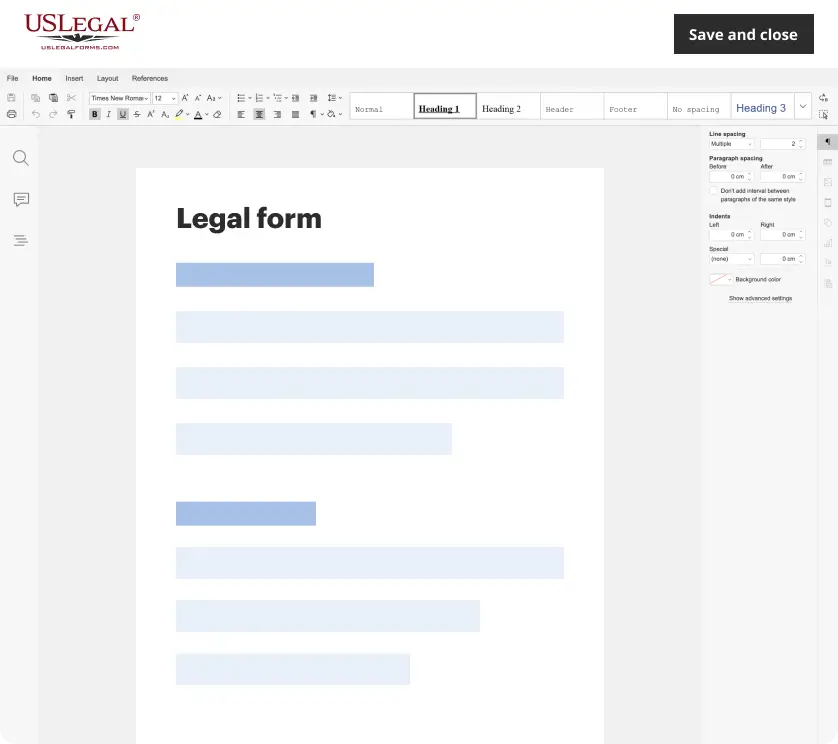
Make edits, fill in missing information, and update formatting in US Legal Forms—just like you would in MS Word.
Download a copy, print it, send it by email, or mail it via USPS—whatever works best for your next step.
Sign and collect signatures with our SignNow integration. Send to multiple recipients, set reminders, and more. Go Premium to unlock E-Sign.

If this form requires notarization, complete it online through a secure video call—no need to meet a notary in person or wait for an appointment.
We protect your documents and personal data by following strict security and privacy standards.
Mistakes to watch out for
- Failing to file the disclaimer within the nine-month deadline.
- Not clearly identifying the property being disclaimed.
- Leaving out necessary signatures or acknowledgments.
- Assuming the form doesnât need to be notarized without checking local requirements.
Benefits of completing this form online
- Convenience of immediate access from anywhere with internet access.
- Editability allows users to fill in the form at their own pace.
- Reliability of using forms drafted by licensed attorneys to meet legal standards.
- Secure downloading ensures that personal information is protected.
Looking for another form?
Form popularity
FAQ
To transfer property after a parent's death without a will in Illinois, you should file for probate based on intestate succession laws. This process will determine the rightful heirs and facilitate property distribution. Engaging with platforms like US Legal Forms can simplify the required steps and provide necessary templates to ensure compliance. Utilizing the Illinois Renunciation and Disclaimer of Property received by Intestate Succession enables you to manage inherited property with clarity.
In most cases, your property is distributed in split shares to your "heirs," which could include your surviving spouse, parents, siblings, aunts and uncles, nieces, nephews, and distant relatives. Generally, when no relatives can be found, the entire estate goes to the state.
The decedent's property is given to the decedent's heirs during a probate court case. Heirs are the beneficiaries of a person who dies without a will. A decedent's relatives also get part of the estate . For example, if there is a spouse and two children, the spouse gets half of the money from the estate.
Generally, only spouses, registered domestic partners, and blood relatives inherit under intestate succession laws; unmarried partners, friends, and charities get nothing.If there are no children, the surviving spouse often receives all the property.
In Illinois, a will must be filed within thirty (30) days of a person's death. Failure to file a will in your possession is a felony under Illinois law.