Illinois Contractor's Notice to Owner about Disclosure of Labor and Materials - Mechanic Liens - Corporation or LLC
Understanding this form
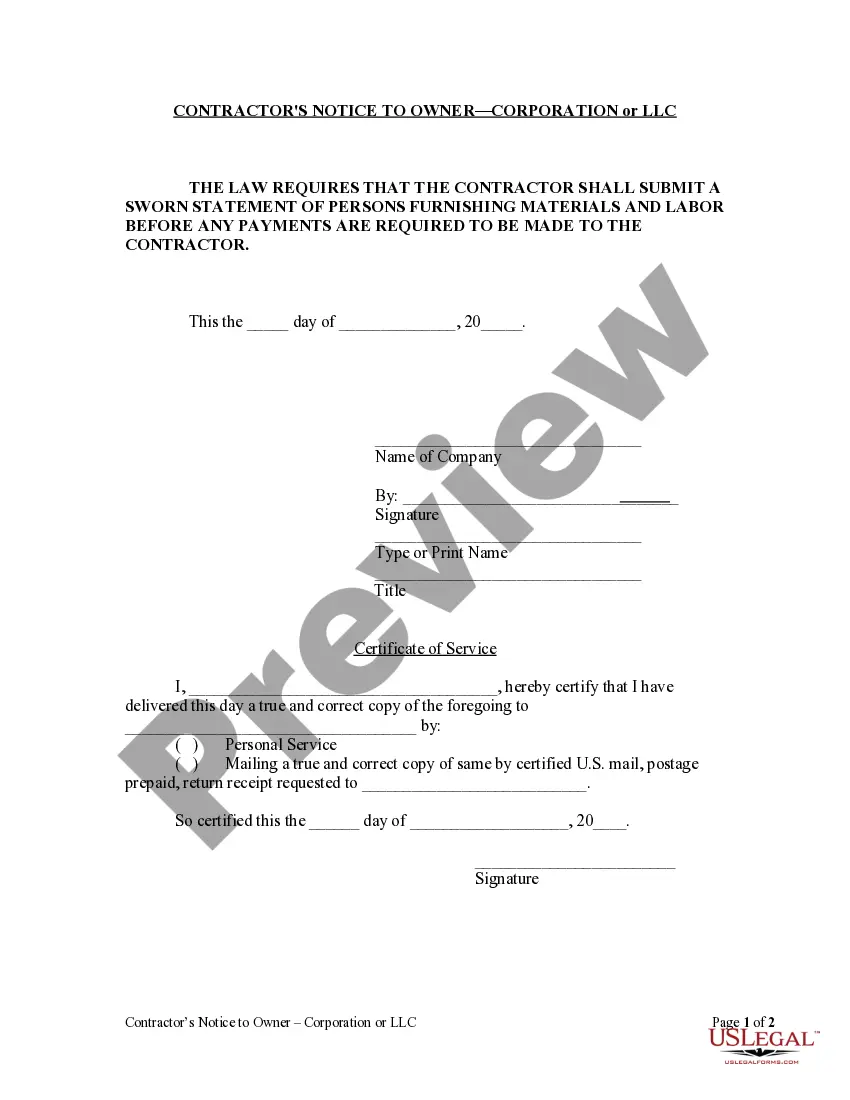
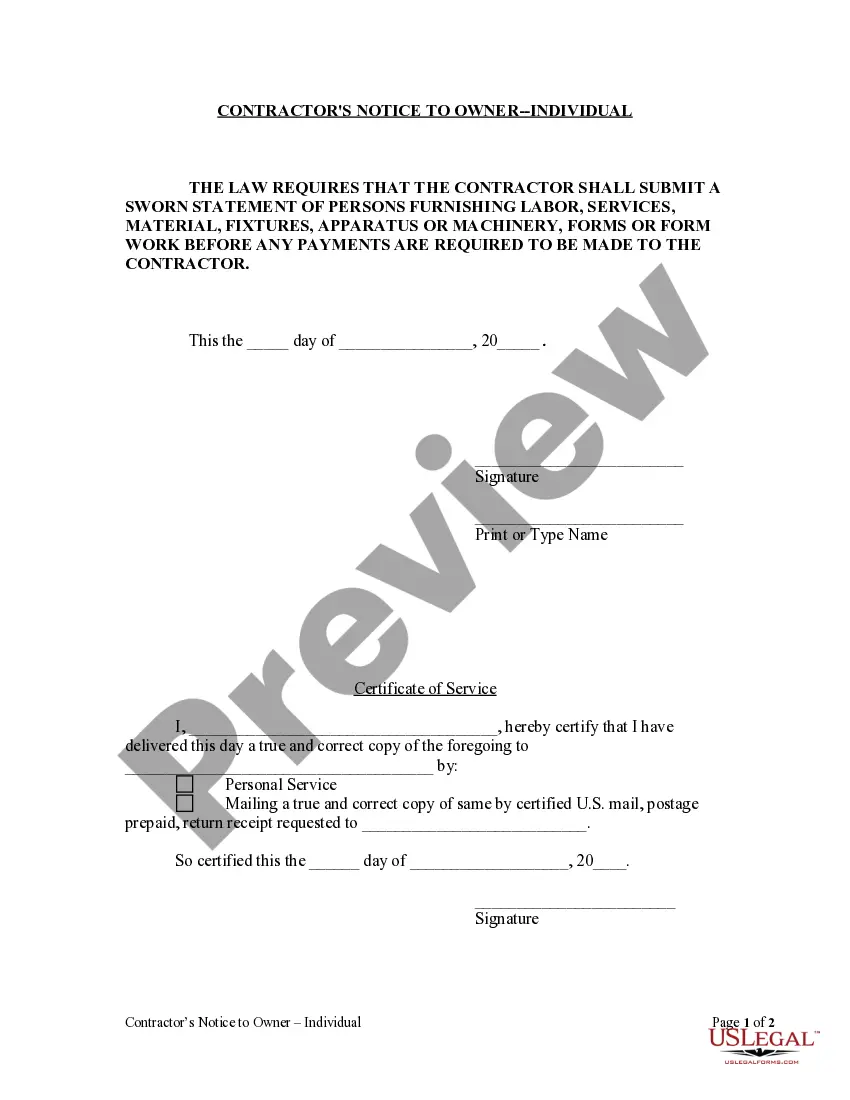
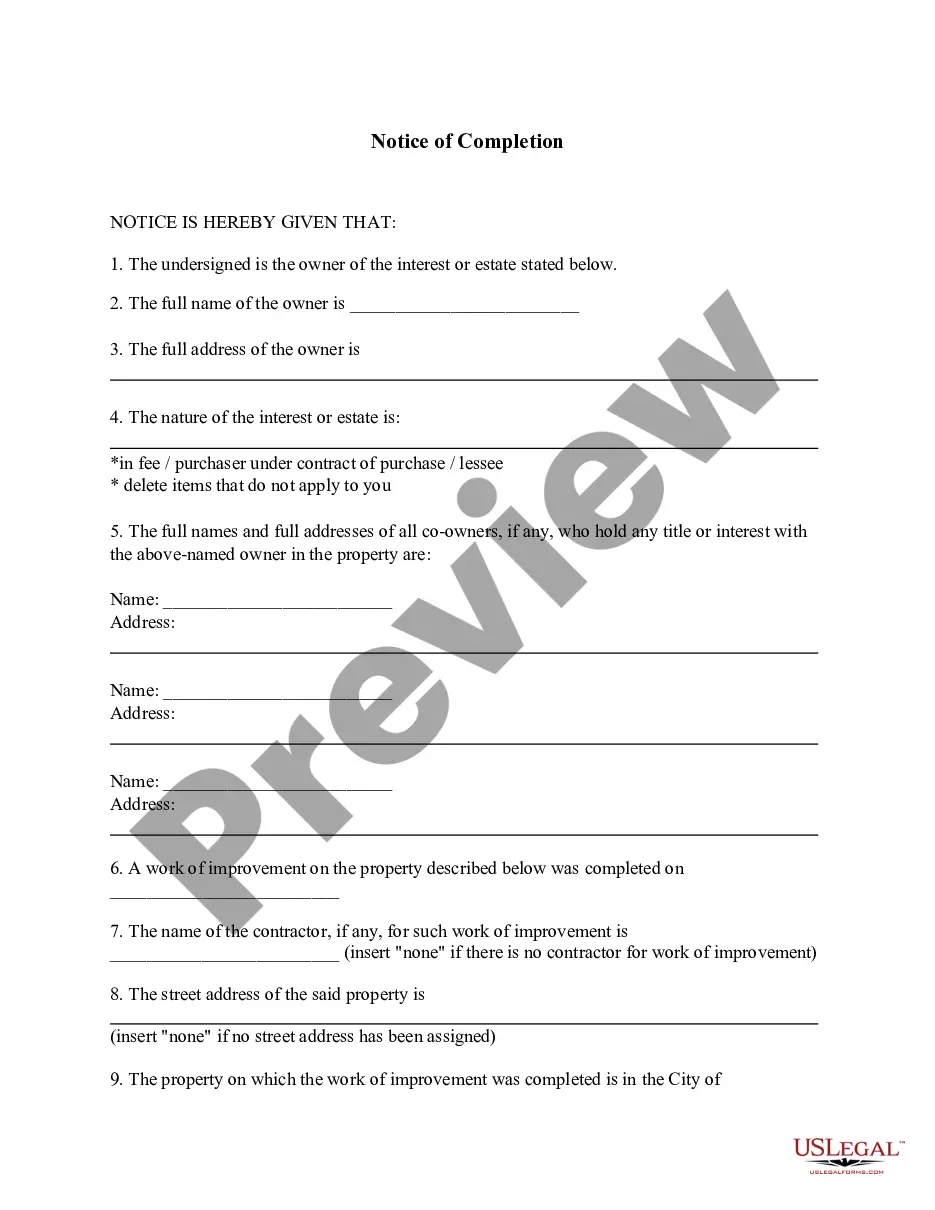
The Contractor's Notice to Owner about Disclosure of Labor and Materials is a legal document that contractors use to provide notice to property owners regarding materials and labor furnished for a construction project. This form is required under Illinois law (770 ILCS 60/) and serves to protect the contractor's right to file a mechanic's lien if necessary. Unlike other construction-related forms, this notice specifically addresses the disclosure of materials and labor before receiving payment.
Main sections of this form
- Date of submission
- Name of the corporation or LLC
- Signature of authorized representative
- Title of the signatory
- Certification of service, including recipient name and method of delivery

Situations where this form applies
This form should be used when a contractor is about to start work on a project or provide materials and wants to formally notify the property owner of the materials and labor involved. It is particularly important before any payment is made, ensuring compliance with state law and safeguarding the contractor's rights.
Who should use this form
- Contractors working on construction projects in Illinois
- Corporations or LLCs providing labor or materials for a property
- Any contractor seeking to protect their right to file a lien against a property
Instructions for completing this form
- Enter the date of submission at the top of the form.
- Fill in the name of the corporation or LLC providing the labor and materials.
- Have an authorized representative sign the form; include their title.
- Complete the Certificate of Service section by listing the recipient's name and selecting the delivery method.
- Ensure the form is dated and signed by the person certifying the delivery.
Does this form need to be notarized?
To make this form legally binding, it must be notarized. Our online notarization service, powered by Notarize, lets you verify and sign documents remotely through an encrypted video session.
Get your form ready online
Our built-in tools help you complete, sign, share, and store your documents in one place.
Make edits, fill in missing information, and update formatting in US Legal Forms—just like you would in MS Word.
Download a copy, print it, send it by email, or mail it via USPS—whatever works best for your next step.
Sign and collect signatures with our SignNow integration. Send to multiple recipients, set reminders, and more. Go Premium to unlock E-Sign.
If this form requires notarization, complete it online through a secure video call—no need to meet a notary in person or wait for an appointment.
We protect your documents and personal data by following strict security and privacy standards.

Make edits, fill in missing information, and update formatting in US Legal Forms—just like you would in MS Word.

Download a copy, print it, send it by email, or mail it via USPS—whatever works best for your next step.

Sign and collect signatures with our SignNow integration. Send to multiple recipients, set reminders, and more. Go Premium to unlock E-Sign.

If this form requires notarization, complete it online through a secure video call—no need to meet a notary in person or wait for an appointment.

We protect your documents and personal data by following strict security and privacy standards.
Avoid these common issues
- Failing to sign the form, rendering it invalid.
- Not providing the correct date of submission.
- Omitting the certification of service, which is crucial for legal compliance.
- Using an incorrect name for the corporation or LLC.
Advantages of online completion
- Convenience of downloading and completing the form at your own pace.
- Editability to customize the form for specific projects or circumstances.
- Access to reliable templates drafted by licensed attorneys.
Legal use & context
- This form serves as a protected legal notice under Illinois law for contractors.
- It helps ensure that property owners are aware of the materials and labor being supplied.
- A properly completed notice strengthens a contractor's rights to payment and mechanics' lien protections.
Main things to remember
- Essential for contractors working in Illinois to ensure compliance with labor and material disclosure laws.
- Serves as a legal safeguard for contractors' rights in payment disputes.
- Must be filled out correctly to be enforceable.
Looking for another form?
Form popularity
FAQ
In Alberta, for example, your lien is valid for 180 days from the date the lien was placed. In Ontario, liens are only valid for 90 days from the date of last on site working.
The deadline for contractors and subcontractors to file their statement of mechanic's lien is four months (not 120 days) from the last date of work (exclusive of warranty work or other work performed free of charge), or from the last date that materials were supplied to the project.
Posting a Bond Asselta says to expect to pay 110 percent of the lien amount. Submit the bond to the court. The lien will then transfer to the bond and clear the property's title. Wait for the contractor claimant to foreclose on the lien in the allotted period to dispute the lien in court.
When a contractor files a mechanics' (construction) lien on your home, the lien makes your home into what's called security for an outstanding debt, which the contractor claims is due and unpaid for services or materials.
Under Illinois law, any mechanics lien should be filed in the County Recorder of Deeds where the property being liened is located. This is crucial as the lien must be filed not only in the correct county but the correct office as well. The fees and specific document formatting vary depending on your county.
In Illinois, a mechanics lien must be filed within 4 months after completion of work to be effective against subsequent property owners. If the lien is filed after 4 months but before 2 years after completion of work, it will still be effective against the original owner.
Negotiate with the contractor who placed the lien (the "lienor" to remove it. Obtain a lien bond to discharge the lien, or. File a lawsuit to vacate the lien.
WHAT MUST I DO BEFORE I FILE MY LIEN? Usually there is at least one notice that you must mail before you can file your lien. These notices are sometimes called notices of intent to file lien. Illinois Document Preparation fee of $165 includes all required notices of intent.
In order to enforce a lien, the contractor, subcontractor or supplier must file a lawsuit. The deadline to file a lawsuit is two years from the last date work was performed or materials were supplied. A recorded lien is valid for these two years, but a failure to sue within that time frame voids the lien.