Illinois Quitclaim Deed - Individual to an Unincorporated Association.
Understanding this form
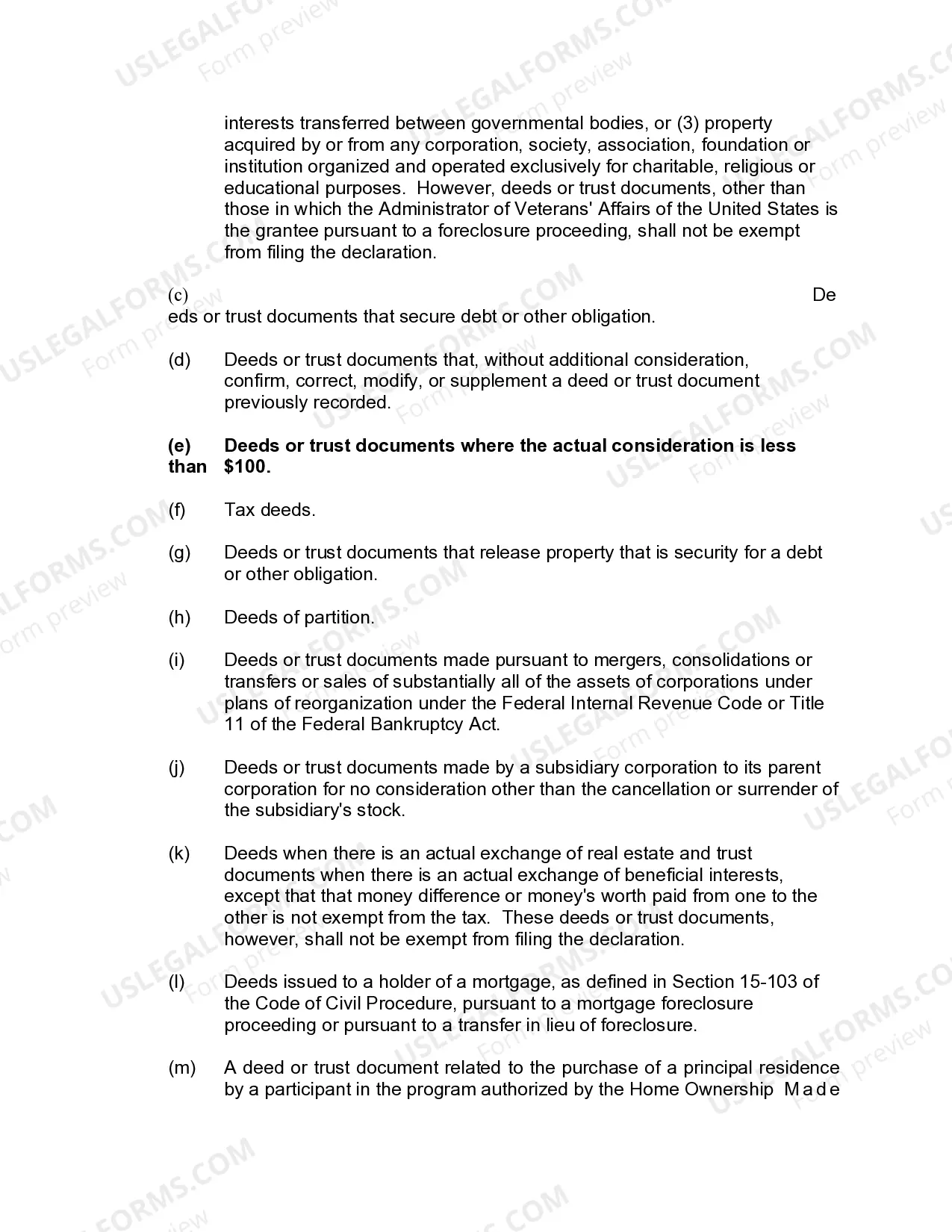
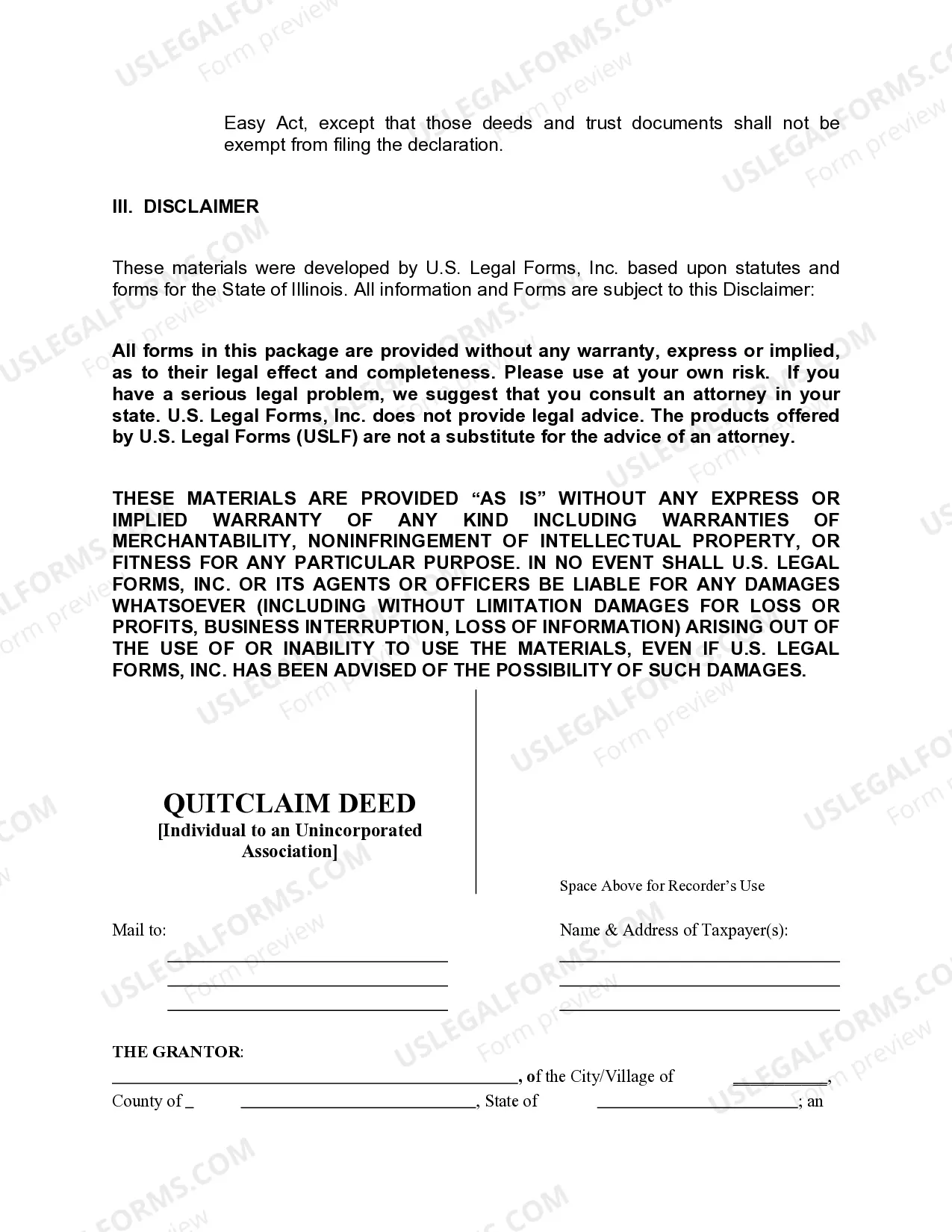
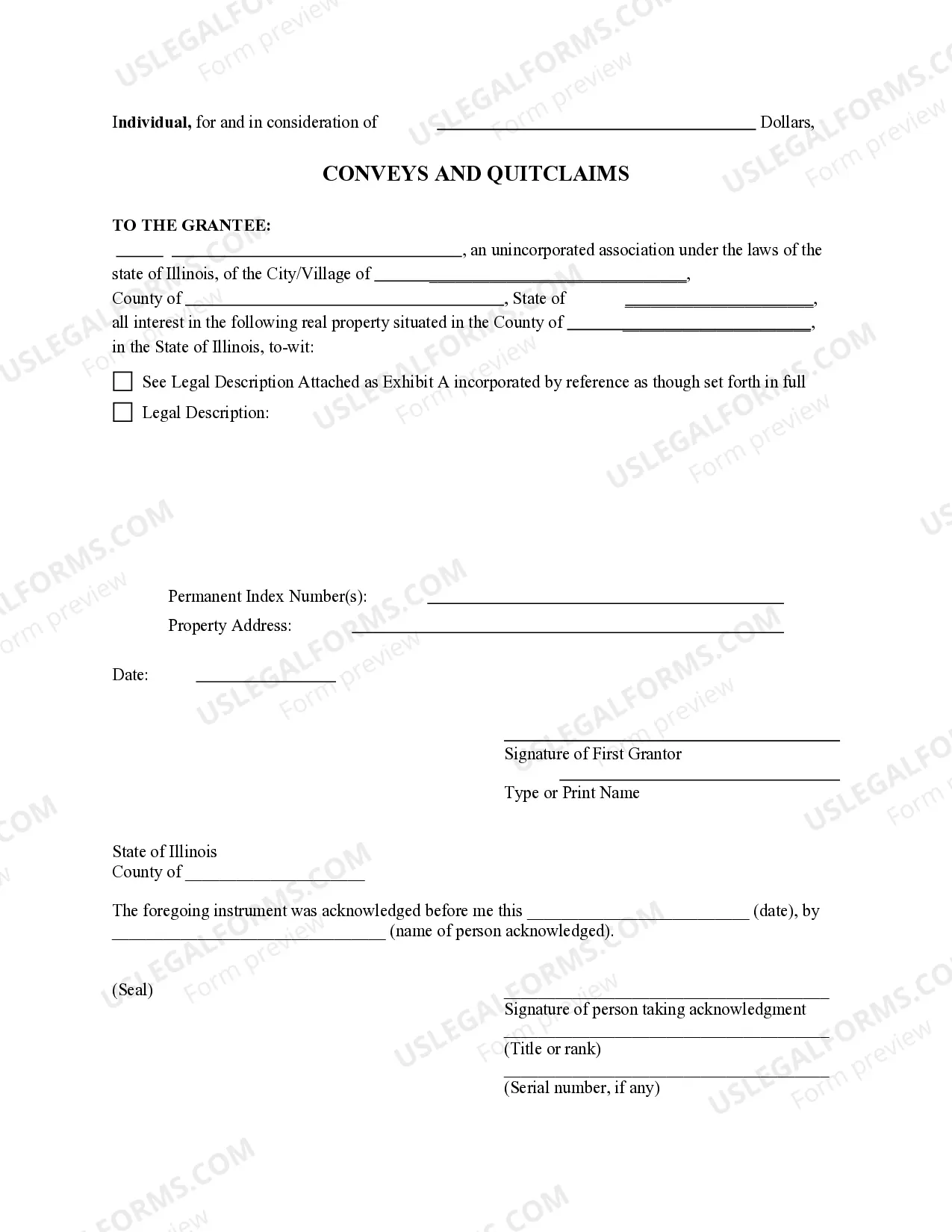
The Quitclaim Deed - Individual to an Unincorporated Association is a legal document used when an individual (the Grantor) transfers ownership of real property to an unincorporated association (the Grantee). This type of deed allows the Grantor to convey whatever interest they have in the property without making any warranties about the title. Unlike warranty deeds, quitclaim deeds are primarily used when the Grantor wants to quickly transfer property, with less concern about the title's history. This form is compliant with state statutory laws, ensuring its validity in the appropriate jurisdiction.
Form components explained
- Grantor and Grantee details: Includes the full names and addresses of both parties involved in the transfer.
- Property description: A detailed description of the property being transferred, including legal descriptions where applicable.
- Consideration: Specifies whether any payment is made for the property transfer.
- Execution date: The date on which the deed is signed by the Grantor.
- Notary section: Space for a notary public to certify the deed's execution.







When to use this form
This form is typically used in situations where an individual wishes to transfer property to an unincorporated association, such as a community group or social club. Common scenarios include donating property for community use, passing property ownership to a family trust, or transferring assets as part of an estate settlement.
Intended users of this form
This form is ideal for:
- Individuals looking to transfer property ownership to unincorporated associations.
- Members of unincorporated associations receiving property as a donation or for organizational use.
- Those involved in estate planning or property management situations.
How to complete this form
- Identify the parties: Fill in the Grantor's (individual) and Grantee's (unincorporated association) names and addresses.
- Specify the property: Provide a detailed description of the property being transferred, including any legal descriptions.
- Enter consideration: State the specifics regarding any payment or verify if the transfer is a gift.
- Sign the deed: The Grantor must sign and date the document where indicated.
- Notarization: If required, have the document notarized to complete the transfer legally.
Does this form need to be notarized?
Notarization is required for this form to take effect. Our online notarization service, powered by Notarize, lets you verify and sign documents remotely through an encrypted video session, available 24/7.
Get your form ready online
Our built-in tools help you complete, sign, share, and store your documents in one place.
Make edits, fill in missing information, and update formatting in US Legal Forms—just like you would in MS Word.
Download a copy, print it, send it by email, or mail it via USPS—whatever works best for your next step.
Sign and collect signatures with our SignNow integration. Send to multiple recipients, set reminders, and more. Go Premium to unlock E-Sign.
If this form requires notarization, complete it online through a secure video call—no need to meet a notary in person or wait for an appointment.
We protect your documents and personal data by following strict security and privacy standards.

Make edits, fill in missing information, and update formatting in US Legal Forms—just like you would in MS Word.

Download a copy, print it, send it by email, or mail it via USPS—whatever works best for your next step.

Sign and collect signatures with our SignNow integration. Send to multiple recipients, set reminders, and more. Go Premium to unlock E-Sign.

If this form requires notarization, complete it online through a secure video call—no need to meet a notary in person or wait for an appointment.

We protect your documents and personal data by following strict security and privacy standards.
Mistakes to watch out for
- Failing to provide a complete property description, which may lead to disputes.
- Not including the date of execution, which can affect the deed's validity.
- Omitting the notarization requirement, if applicable, rendering the deed unenforceable.
Benefits of completing this form online
- Convenience: Easily download and fill out the form at your convenience without needing a physical store visit.
- Editability: Complete the form digitally, allowing for corrections or changes before printing.
- Legal compliance: The form is designed by licensed attorneys to ensure it meets all relevant legal requirements.
Looking for another form?
Form popularity
FAQ
While an Illinois Quitclaim Deed - Individual to an Unincorporated Association is efficient for transferring property, it does have potential issues. One primary concern is that quitclaim deeds do not guarantee clear title, which could lead to disputes or claims against ownership. Additionally, they may not protect against debts or liens attached to the property. It's crucial to understand these considerations before proceeding with a quitclaim deed.
To fill out a quitclaim deed in Illinois, you'll follow specific steps that ensure completeness and accuracy. Start by entering the names of the grantors and the unincorporated association as the grantee. Include the legal description of the property in question, which can usually be found in previous deed documents. After filling it out, have the deed notarized to validate your transfer of ownership.
Yes, you can prepare an Illinois Quitclaim Deed - Individual to an Unincorporated Association yourself. Many online resources and templates, like those available on US Legal Forms, can guide you through the process. By following a straightforward template, you can complete the necessary paperwork without needing a lawyer. Just remember to double-check for accuracy to avoid any complications later.
Filling out an Illinois Quitclaim Deed - Individual to an Unincorporated Association involves several key steps. First, you need your property details, including the legal description and parcel number. Then, list the names of the current owners as grantors and the unincorporated association as the grantee. Finally, make sure to sign and notarize the document before filing it with your local recorder's office for proper record-keeping.
Under California law, a deed that purports to convey title (ownership) or any other interest in real property, such as an easement, is completely void if the conveyancing party's signature on the deed is forged.
An unrecorded quit claim deed is still valid.Failure to record a deed could render transfer or mortgaging of the property impossible and create numerous legal difficulties. The purpose of the recording a quit claim deed is to give notice to the world that there has been a change in ownership.
A Quitclaim Deed must be notarized by a notary public or attorney in order to be valid. What does "Grantee's assigns" mean? Grantee's assigns refers to any person that the Grantee transfers the property to, after having received the property from the Grantor.
If the quitclaim deed requires the signature of all co-owners, the deed is invalid unless all co-owners have signed it and the deed is then delivered to the grantee.If one individual owns real estate and desires to add a co-owner such as a spouse, a quitclaim deed might be used.
Fill out the quit claim deed form, which can be obtained online, or write your own using the form as a guide. The person giving up the interest in the property is the grantor, and the person receiving the interest is the grantee.
It's usually a very straightforward transaction, but it's possible for a quitclaim deed to be challenged. If a quitclaim deed is challenged in court, the issue becomes whether the property was legally transferred and if the grantor had the legal right to transfer the property.