Illinois Warranty Deed from Individual to a Trust
What this document covers
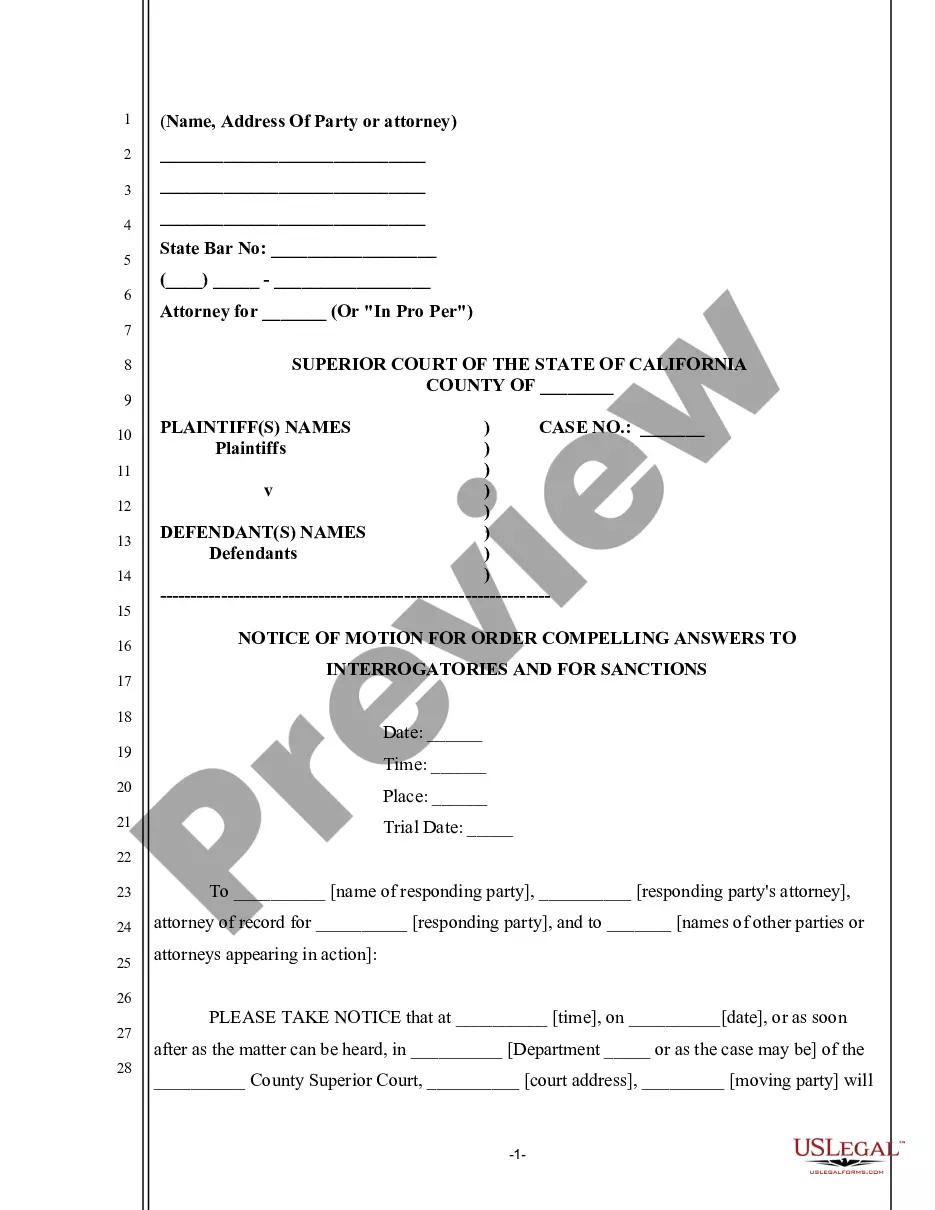
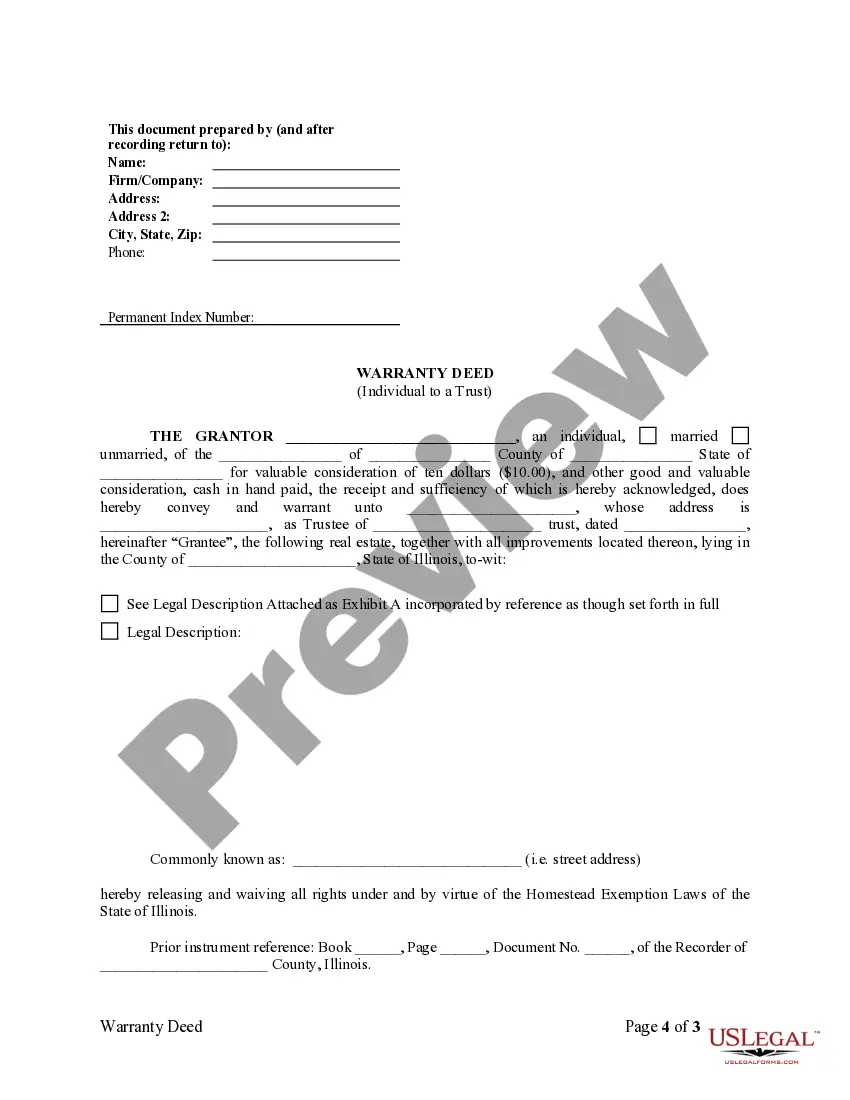
The Warranty Deed from Individual to a Trust is a legal document that allows an individual (the grantor) to transfer ownership of real property to a trust (the grantee). This form includes provisions that warrant the grantor's title to the property and stipulates that certain rights, such as oil, gas, and mineral rights, are reserved. This Warranty Deed is essential for formalizing the transfer of property and ensuring that the trust holds the title properly under applicable state laws.
Form components explained
- Grantor's information, including marital status and address.
- Name and address of the grantee, designated as the Trustee of the trust.
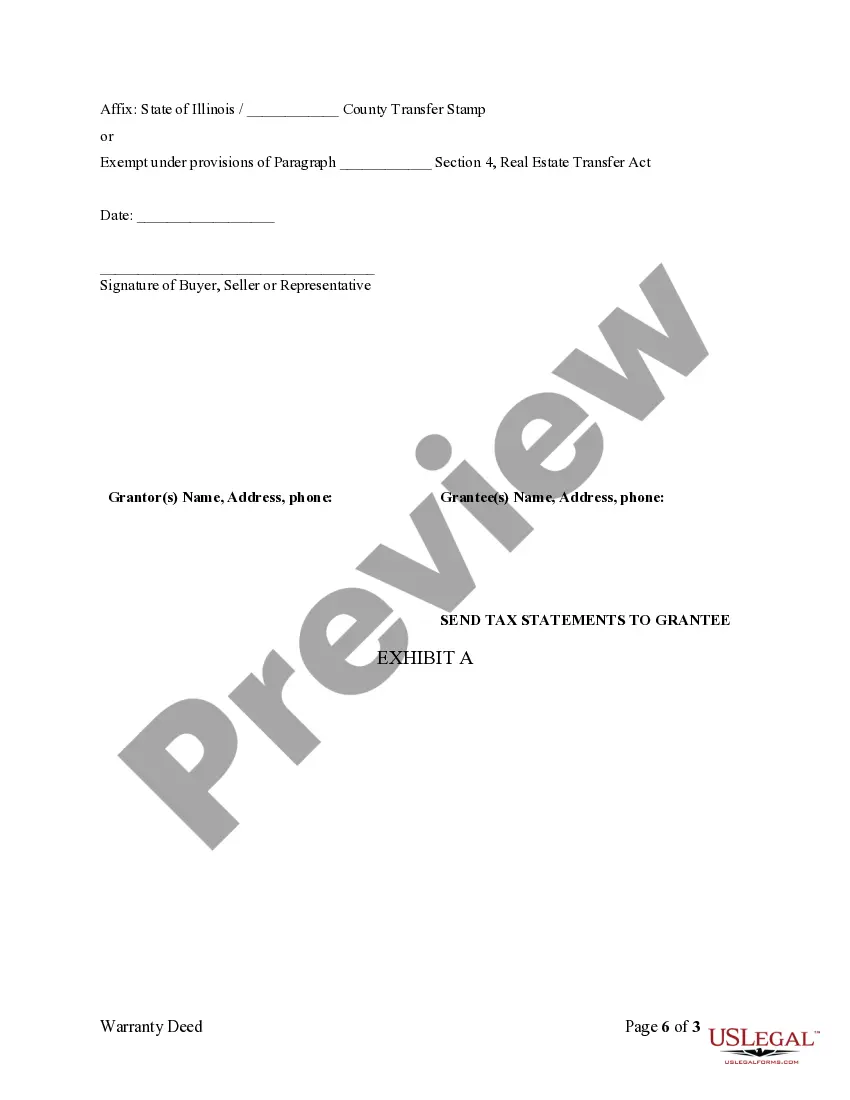
- Description of the property being conveyed.
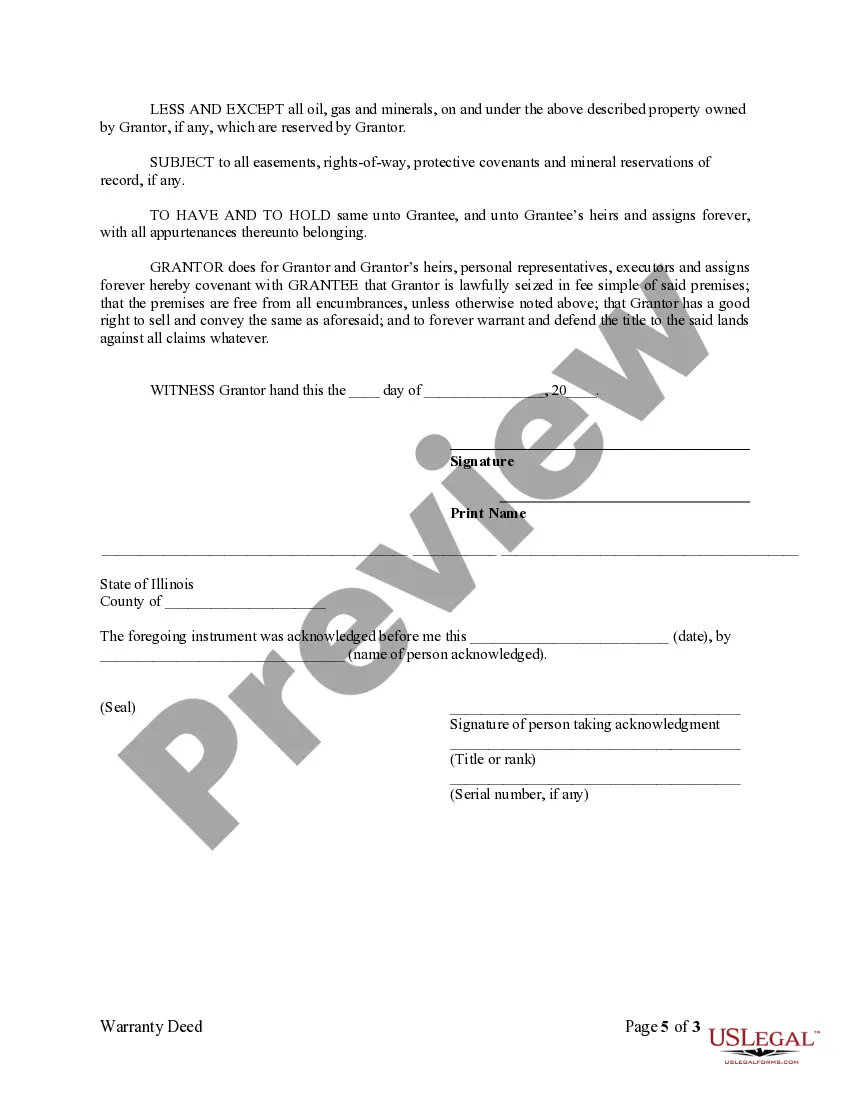
- Reservation of oil, gas, and mineral rights by the grantor.
- Covenants guaranteeing that the grantor has clear title to the property.
- Notary section for legal validation and acknowledgment of signatures.





When this form is needed
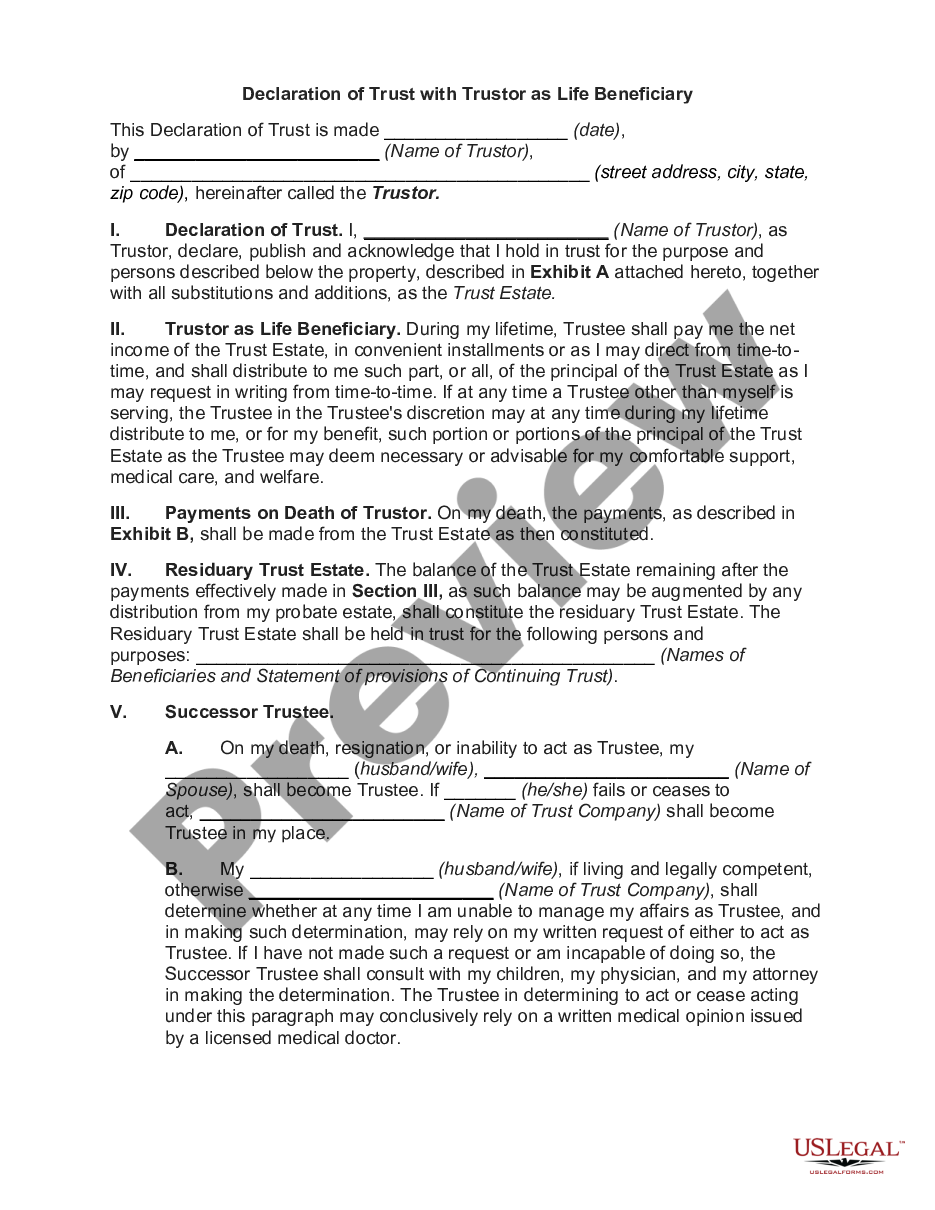
This form should be used when an individual wishes to convey property to a trust. Scenarios include estate planning, where property is transferred to a trust for the benefit of beneficiaries, or when separating personal and business assets. It is crucial when ensuring that the property is managed per the trust's terms and complies with estate laws.
Who this form is for
- Individuals transferring property into a trust.
- Trustees managing trust property on behalf of beneficiaries.
- Individuals involved in estate planning or asset protection strategies.
Instructions for completing this form
- Identify the parties involved: the grantor and the grantee.
- Clearly describe the property being transferred, including its legal description.
- Fill in the address and relevant specifics of the trust.
- Complete all required fields related to the grantor's acknowledgment and consent.
- Obtain the signature of a notary public to validate the document.
Notarization requirements for this form
This form must be notarized to be legally valid. US Legal Forms provides secure online notarization powered by Notarize, allowing you to complete the process through a verified video call.
Get your form ready online
Our built-in tools help you complete, sign, share, and store your documents in one place.
Make edits, fill in missing information, and update formatting in US Legal Forms—just like you would in MS Word.
Download a copy, print it, send it by email, or mail it via USPS—whatever works best for your next step.
Sign and collect signatures with our SignNow integration. Send to multiple recipients, set reminders, and more. Go Premium to unlock E-Sign.
If this form requires notarization, complete it online through a secure video call—no need to meet a notary in person or wait for an appointment.
We protect your documents and personal data by following strict security and privacy standards.

Make edits, fill in missing information, and update formatting in US Legal Forms—just like you would in MS Word.

Download a copy, print it, send it by email, or mail it via USPS—whatever works best for your next step.

Sign and collect signatures with our SignNow integration. Send to multiple recipients, set reminders, and more. Go Premium to unlock E-Sign.

If this form requires notarization, complete it online through a secure video call—no need to meet a notary in person or wait for an appointment.

We protect your documents and personal data by following strict security and privacy standards.
Mistakes to watch out for
- Failing to include a complete legal description of the property.
- Not obtaining notarization, which is essential for the document's validity.
- Leaving out the reservation of rights, such as minerals or gas.
- Incorrectly identifying the grantor or grantee, leading to legal inconsistencies.
Advantages of online completion
- Convenience of filling out the form from any location at any time.
- Editable fields allow for quick adjustments to the document as necessary.
- Access to reliable, attorney-drafted forms assures compliance with state laws.
- Secure storage and easy retrieval of completed forms for future reference.
Main things to remember
- A warranty deed from an individual to a trust is crucial for transferring property securely and legally.
- Completing the form correctly, including notarization, is essential to avoid legal issues.
- This form provides a straightforward method for individuals looking to manage their estate through trusts.
- Thoroughly reviewing the legal description and applicable clauses will safeguard both the grantor and the trust.
Looking for another form?
Form popularity
FAQ
Trustee's deeds convey real estate out of a trust.This type of conveyance is named for the person using the form the trustee who stands in for the beneficiary of the trust and holds title to the property.
Let's start with the definition of a deed: DEED: A written instrument by which one party, the Grantor, conveys the title of ownership in property to another party, the Grantee. A Warranty Deed contains promises, called covenants, that the Grantor makes to the Grantee.
Warranty Deed Vs Deed of Trust. Both a warranty deed and deed of trust are used to transfer the title of a property from one person to another.As you now know, a deed of trust protects the beneficiary (lender). A warranty deed, on the other hand, protects the property owner.
A trustee deed offers no such warranties about the title.
In Illinois, a trustee's deed is used to transfer real property out of a trust.The trustee's deed establishes basic information about the trust, such as the name and date of the trust document. The trustee serves as the grantor in the deed, and transfers the title into the grantee's name.
The mortgage company usually prepares this deed as part of the loan package and delivers it to the title company for you to sign at closing. The title company is commonly the trustee to the deed and holds legal title to the property until the loan gets fully repaid.
A warranty deed protects property owners from future claims that someone else actually owns a portion (or all) of their property, while trustee deeds protect lenders when borrowers default on their mortgage loans.
In the context of a California mortgage transaction, a trust deed also transfer ownership. Only this time, the title is being placed in the hands of a third-party trustee, who holds the property on behalf of the lender and the homeowner-borrower until the mortgage is paid.
Typically, the lender will provide you with a copy of the deed of trust after the closing. The original warranty deeds are often mailed to the grantee after they are recorded. These are your original copies and should be kept in a safe place, such as a fireproof lockbox or a safe deposit box at a financial institution.