Illinois Revocation of Premarital or Prenuptial Agreement
Overview of this form
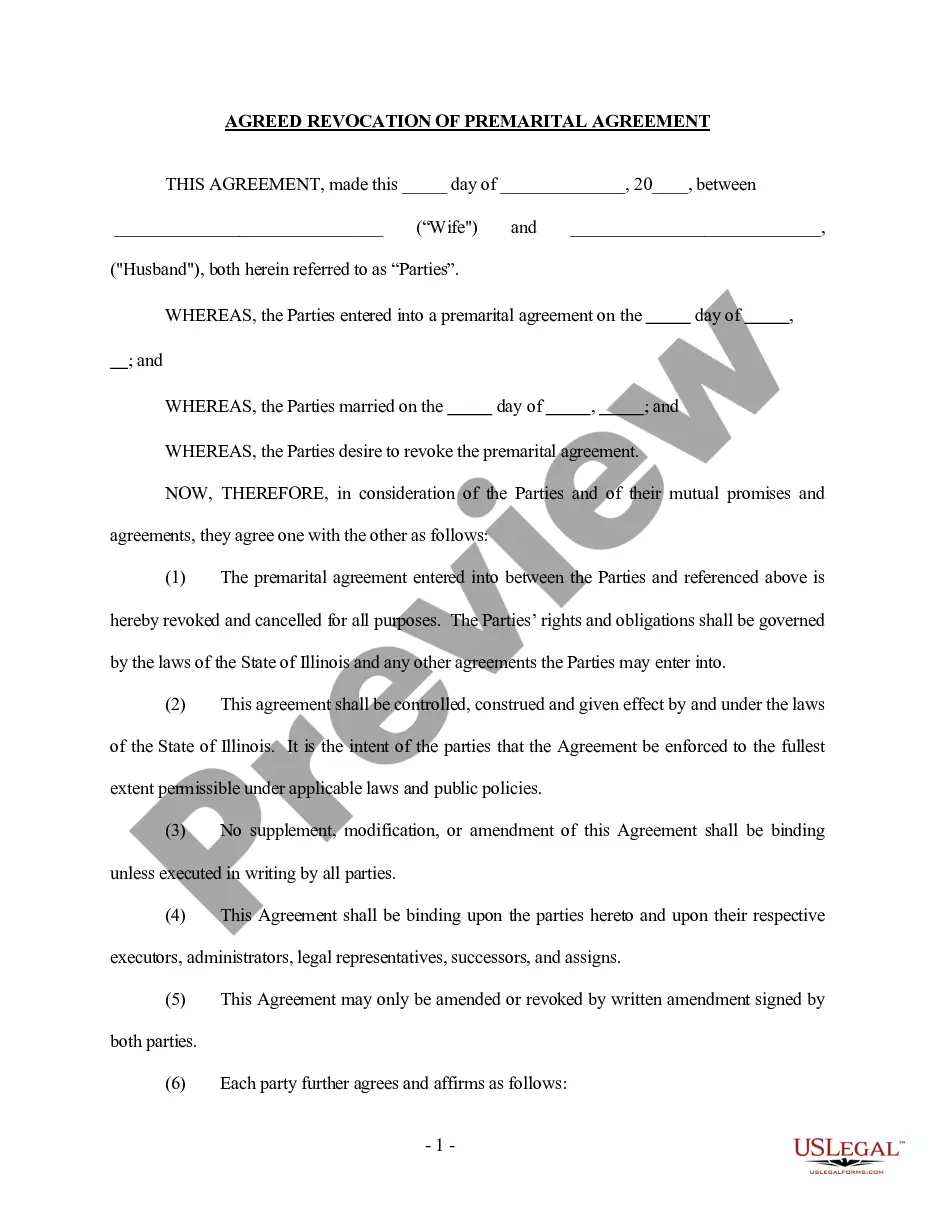
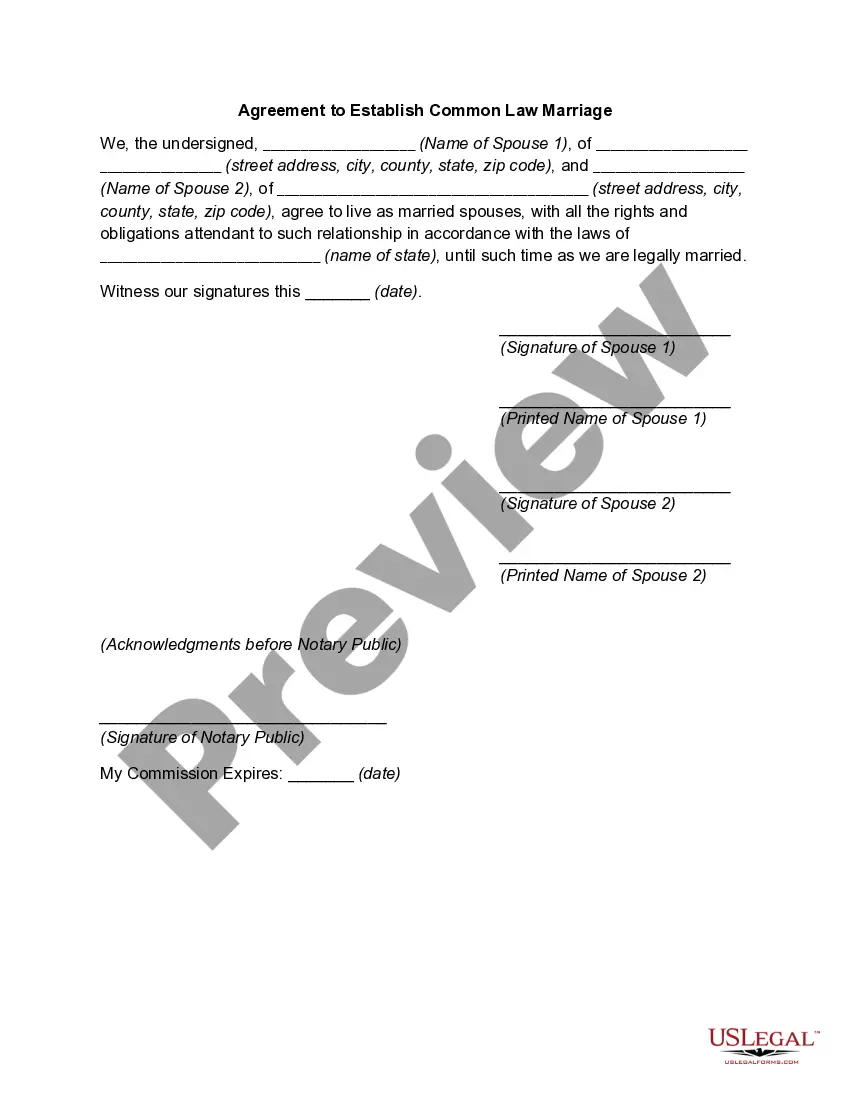
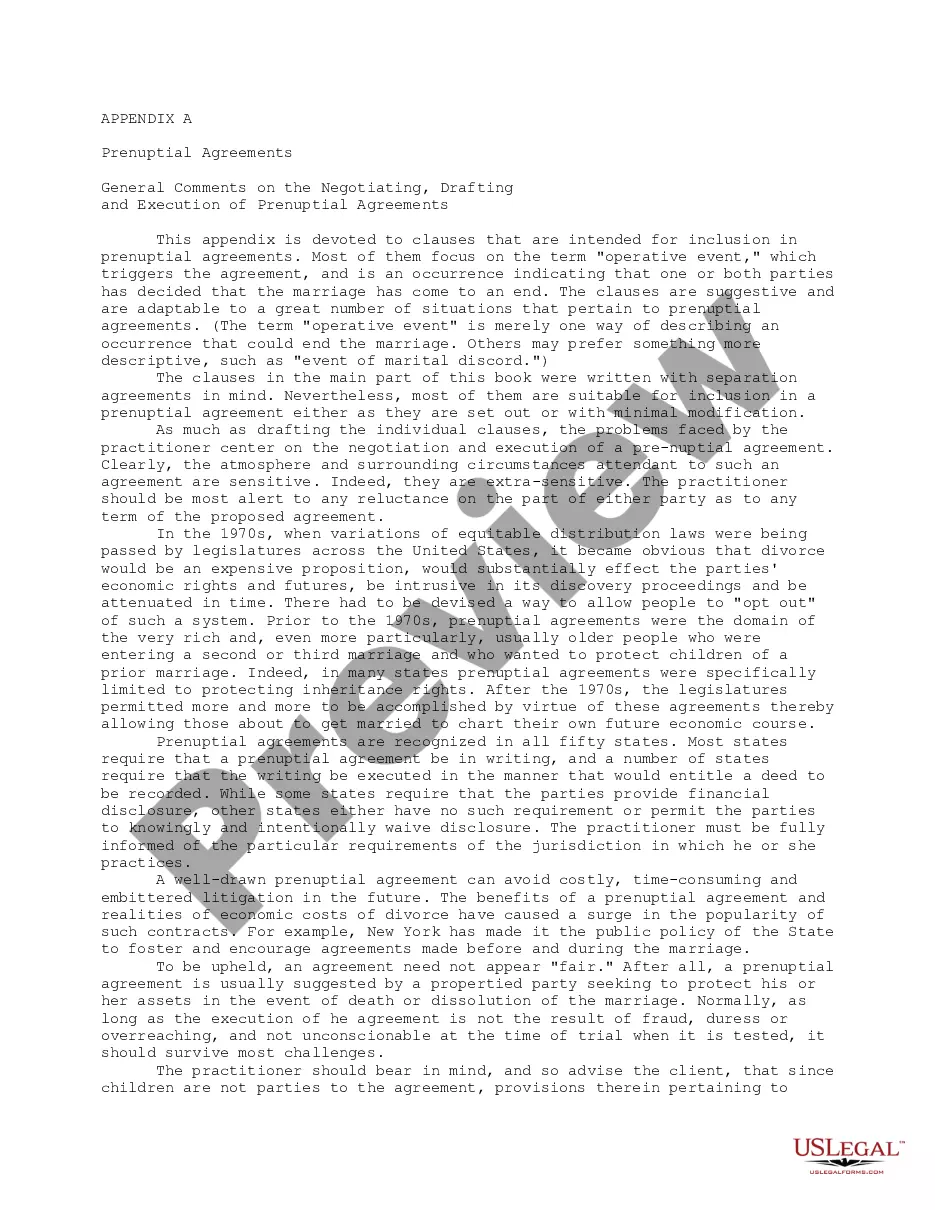
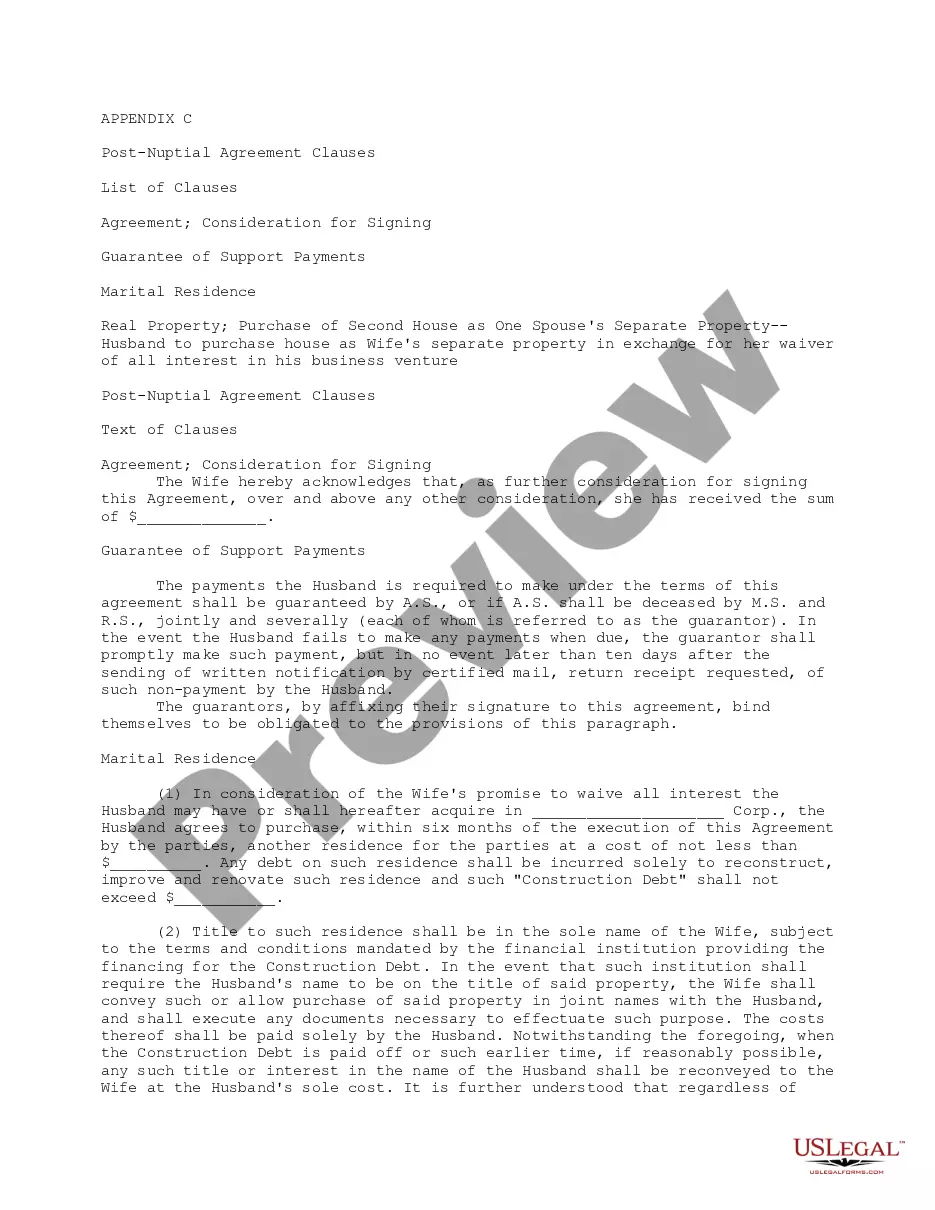
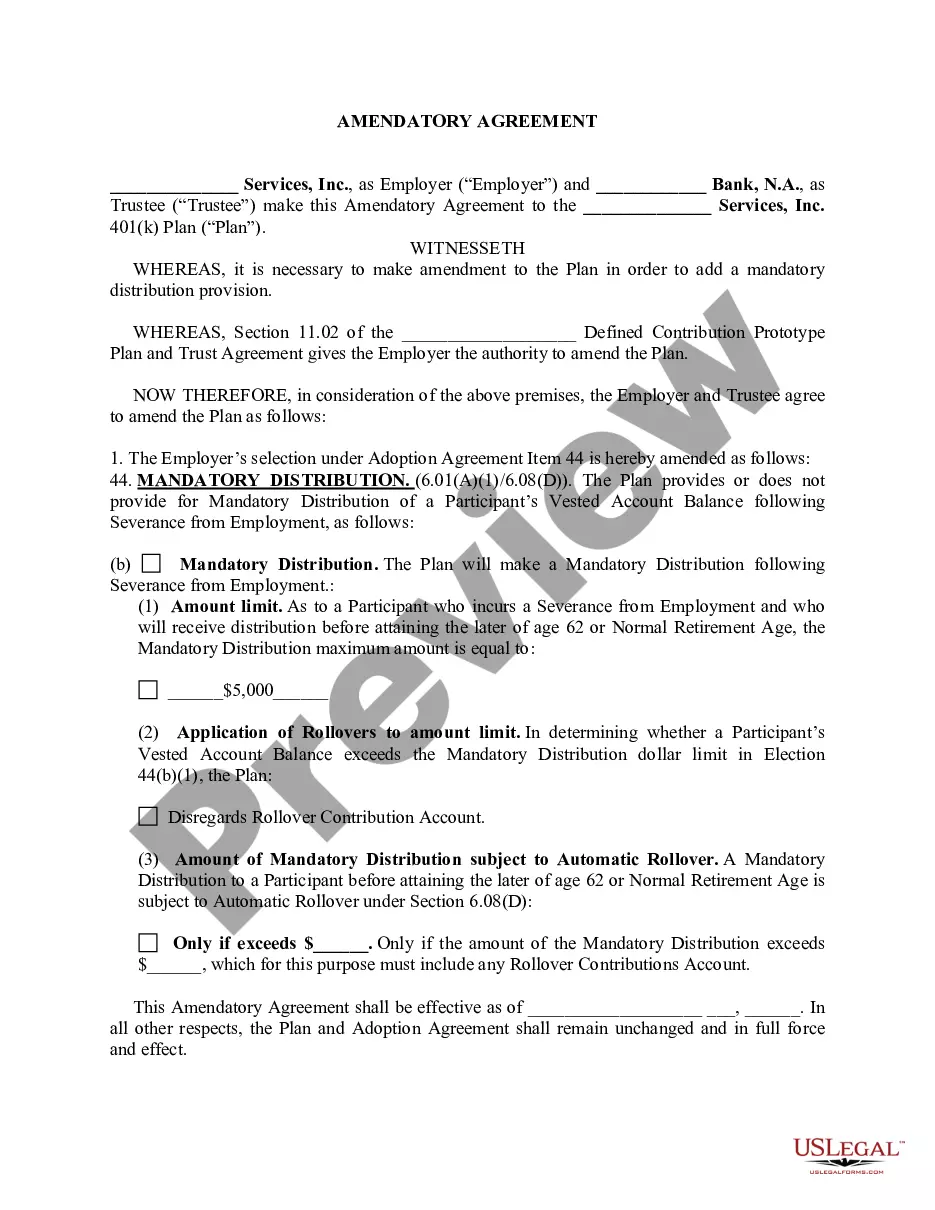
The Revocation of Premarital or Prenuptial Agreement is a legal document that allows a married couple to formally cancel an existing premarital agreement. This form ensures that both parties agree to the revocation, making it binding on them and their respective legal representatives. This form differs from a premarital agreement by nullifying the terms that were previously established, rather than creating new terms.
What’s included in this form
- Parties' names: Identifies the husband and wife involved in the agreement.
- Date of agreement: Specifies when the revocation takes effect.
- Revocation clause: Clearly states that the existing premarital agreement is revoked and canceled.
- Governing law: States that Illinois law will govern the agreement.
- Binding nature: Affirms that the agreement is binding on all parties and their representatives.
- Modification clause: Outlines that any amendments must be in writing and signed by both parties.
Situations where this form applies
This form is needed when a couple wishes to terminate their premarital agreement. Situations may include changes in the couple's circumstances, such as a significant shift in financial situation, personal preferences, or mutual decision to simplify legal relationships. It is crucial to use this form when both parties agree to the revocation and want to ensure that their future rights and obligations are clear and legally enforceable.
Who needs this form
- Married couples who wish to cancel an existing premarital agreement.
- Couples concerned about clarifying their legal relationship moving forward.
- Individuals who are in agreement with their spouse to revoke the original terms of their premarital agreement.
How to prepare this document
- Identify the parties: Enter the names of the husband and wife as specified on the form.
- Enter the date: Fill in the appropriate date for when the revocation is to take effect.
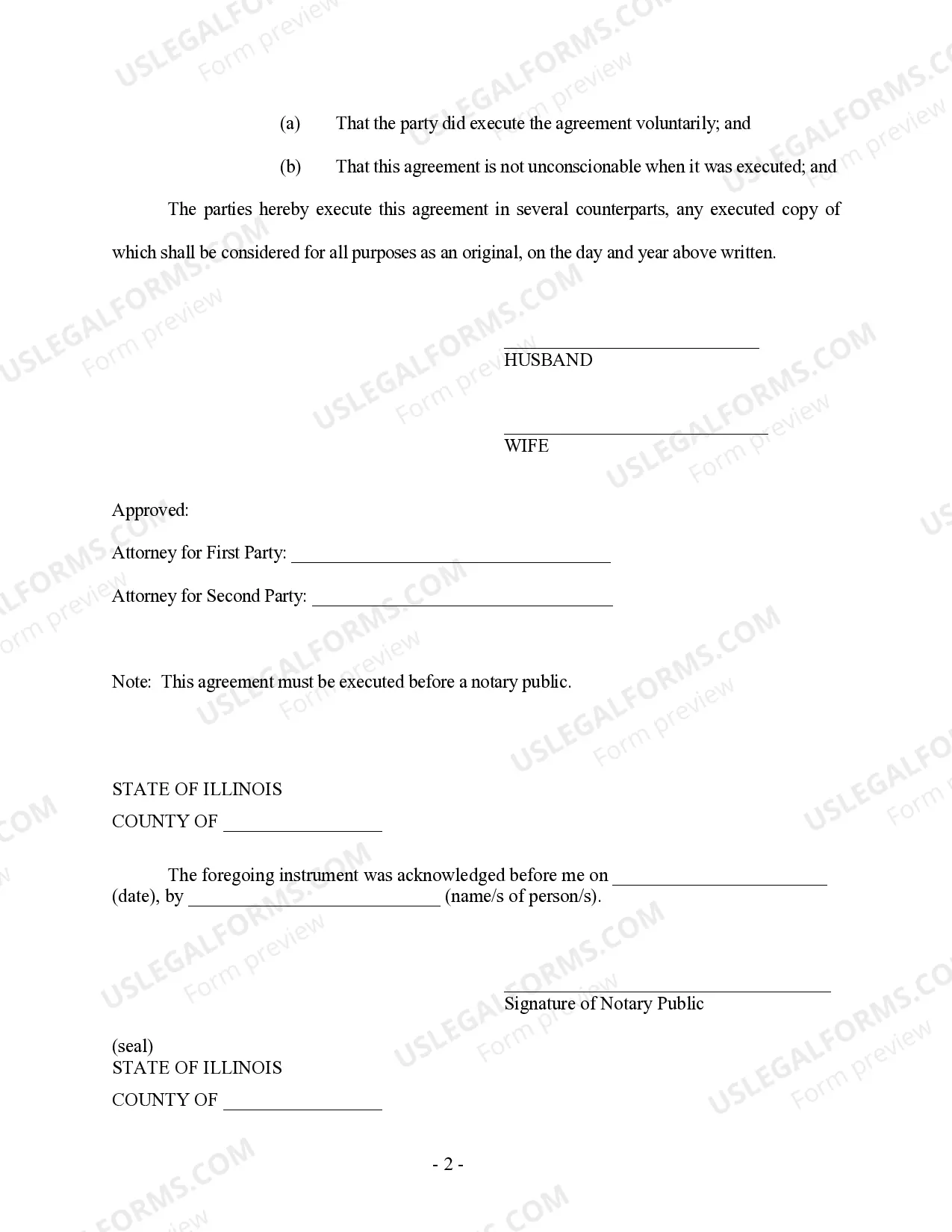
- Sign the agreement: Both parties must sign the form to validate the revocation.
- Confirm the binding nature: Understand that this revocation will be binding on both parties and their legal representatives.
- Review and retain a copy: After signing, each party should keep a copy of the completed form for their records.
Does this document require notarization?
Notarization is not commonly needed for this form. However, certain documents or local rules may make it necessary. Our notarization service, powered by Notarize, allows you to finalize it securely online anytime, day or night.
Get your form ready online
Our built-in tools help you complete, sign, share, and store your documents in one place.
Make edits, fill in missing information, and update formatting in US Legal Forms—just like you would in MS Word.
Download a copy, print it, send it by email, or mail it via USPS—whatever works best for your next step.
Sign and collect signatures with our SignNow integration. Send to multiple recipients, set reminders, and more. Go Premium to unlock E-Sign.
If this form requires notarization, complete it online through a secure video call—no need to meet a notary in person or wait for an appointment.
We protect your documents and personal data by following strict security and privacy standards.

Make edits, fill in missing information, and update formatting in US Legal Forms—just like you would in MS Word.

Download a copy, print it, send it by email, or mail it via USPS—whatever works best for your next step.

Sign and collect signatures with our SignNow integration. Send to multiple recipients, set reminders, and more. Go Premium to unlock E-Sign.

If this form requires notarization, complete it online through a secure video call—no need to meet a notary in person or wait for an appointment.

We protect your documents and personal data by following strict security and privacy standards.
Typical mistakes to avoid
- Not having both parties sign the form, which can invalidate the revocation.
- Failing to enter the date, which may lead to ambiguity about when the revocation takes effect.
- Neglecting to review state-specific laws that may affect the enforceability of the revocation.
Benefits of using this form online
- Convenience: Access the form anytime, from anywhere, and complete it at your own pace.
- Editability: Easily customize the template to fit your specific situation before printing or signing.
- Reliability: The form is drafted by licensed attorneys, ensuring legal accuracy and compliance.
Main things to remember
- The Revocation of Premarital or Prenuptial Agreement allows couples to formally cancel a previos agreement.
- It is essential to ensure both parties understand and agree to the revocation process.
- Properly completing and retaining the signed document is critical for legal clarity and future reference.
Looking for another form?


Form popularity
FAQ
Postnuptial agreements are generally enforceable if the parties of the document adhere to all state laws regarding inheritance, child custody, visitation and monetary support if a divorce does occur.This may also come with a will or other legal document.
Under Illinois law, what makes such an agreement unenforceable? An Illinois premarital or postnuptial agreement is usually enforceable if they are in writing and signed by both parties, but they can become unenforceable if any of the following things are true: Fraud led one of the parties to agree to the prenup.
How much does a prenup cost? Typically, prenups cost around $2,500, but can cost more if you spend a while haggling out various issues.
As referenced in the list above, a prenuptial agreement can prevent the payment of alimony in Illinois. Under Illinois law, fiances are free to include any provisions regarding alimony to which they are both willing to agree.
The three most common grounds for nullifying a prenup are unconscionability, failure to disclose, or duress and coercion. Unconscionability may be present if the agreement is patently unfair to one party.
In Illinois, prenuptial agreements are governed by the Illinois Uniform Premarital Agreement Act (750 ILCS 10/1-10/11).If a couple chooses not to get married, any prenuptial agreement they have made will become void.
A prenup can also be overturned if one or both parties change their mind after initially signing the agreement. They may decide at that time to sign a new agreement suspending the prenup.
Are Prenups Enforceable? Prenuptial agreements, if drawn up and executed correctly, are legally binding and are usually upheld in court.