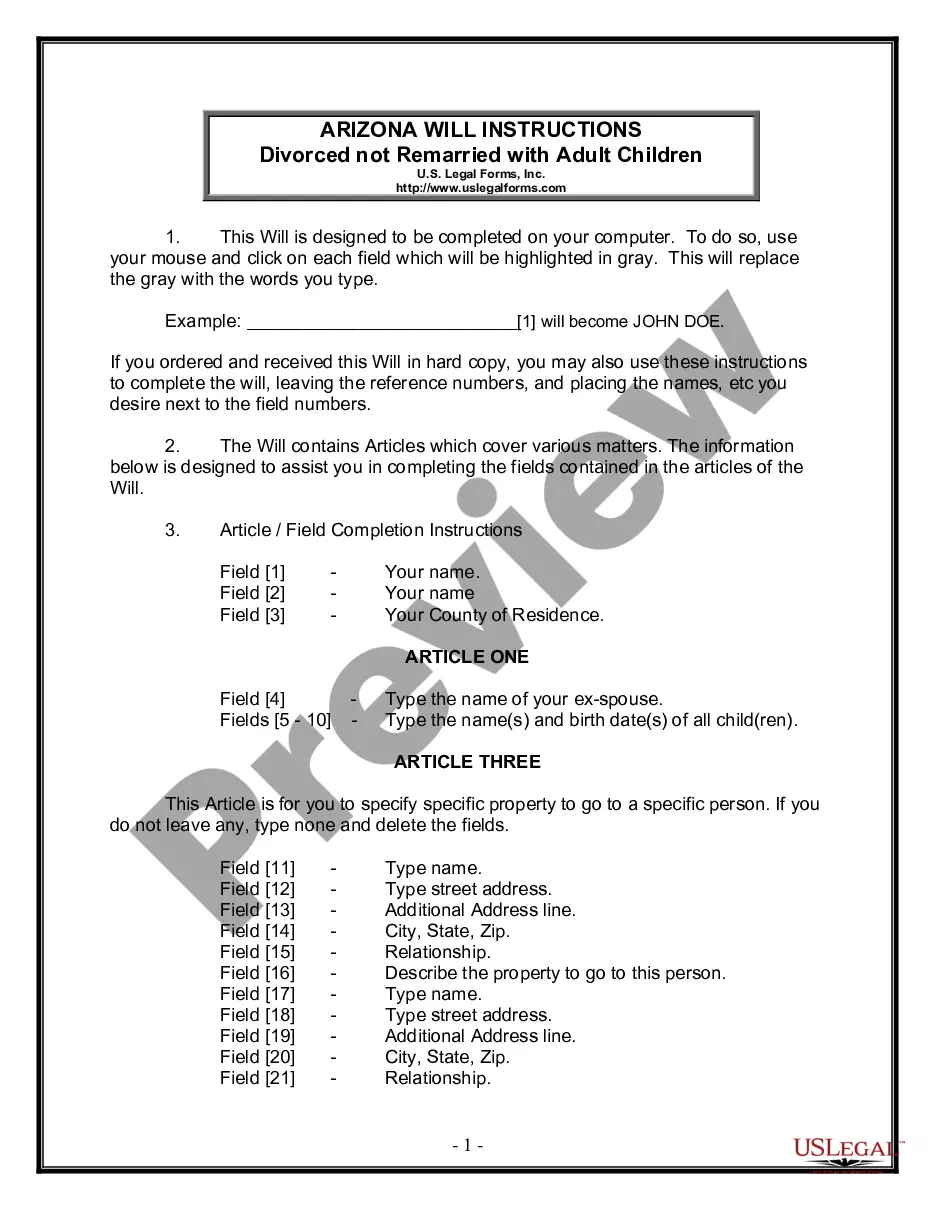
Idaho Last Will and Testament for Married Person with Adult and Minor Children
What is this form?
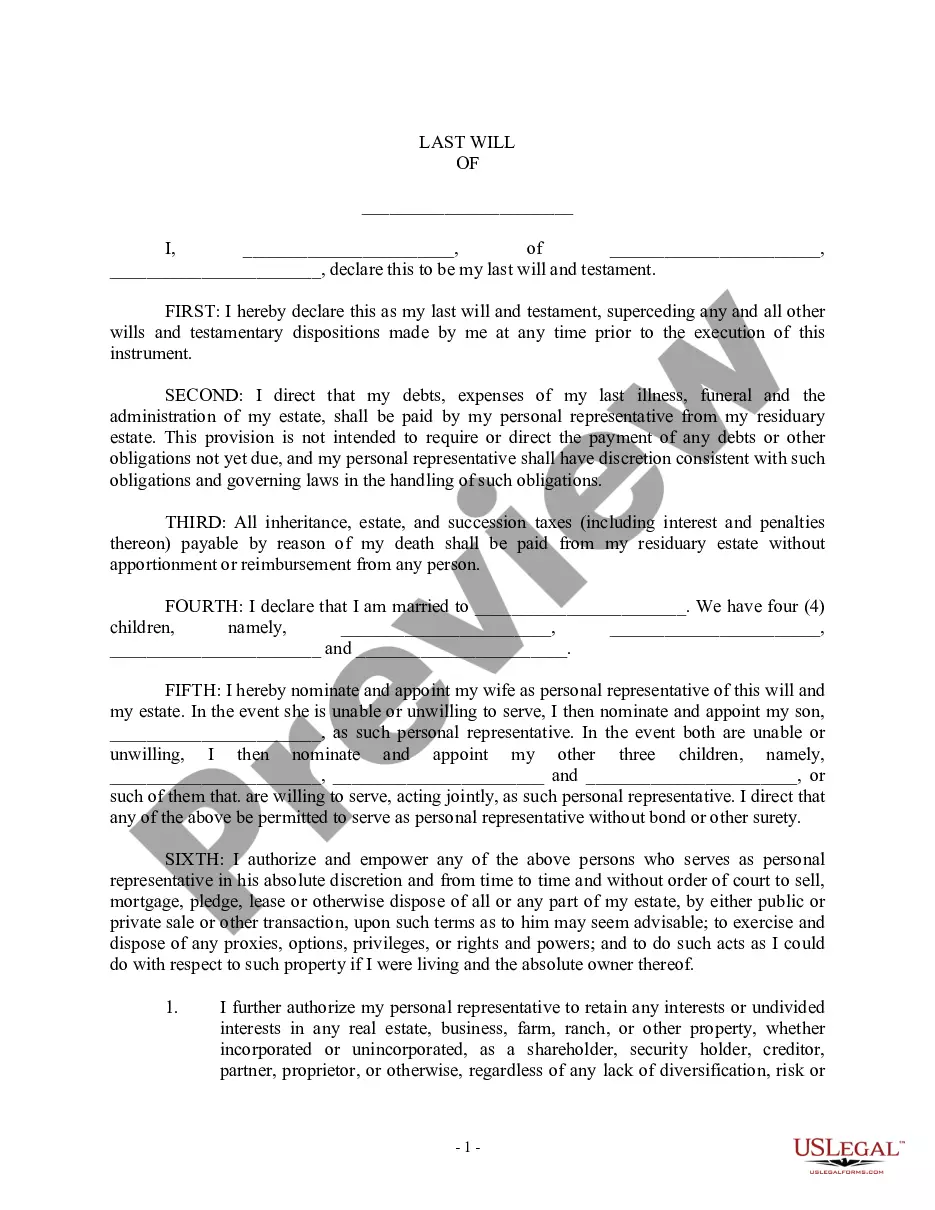
This form is a Last Will and Testament specifically designed for married individuals with both adult and minor children. It outlines the distribution of assets, appointment of a personal representative, and provisions for guardianship and trusts for minor children. Unlike simpler wills, this document includes comprehensive clauses that address the complexities of blended family situations and ensures that both spouses' wishes are reflected in the estate plan.
Main sections of this form
- Appointment of Personal Representative: This section allows you to designate an executor to manage your estate.
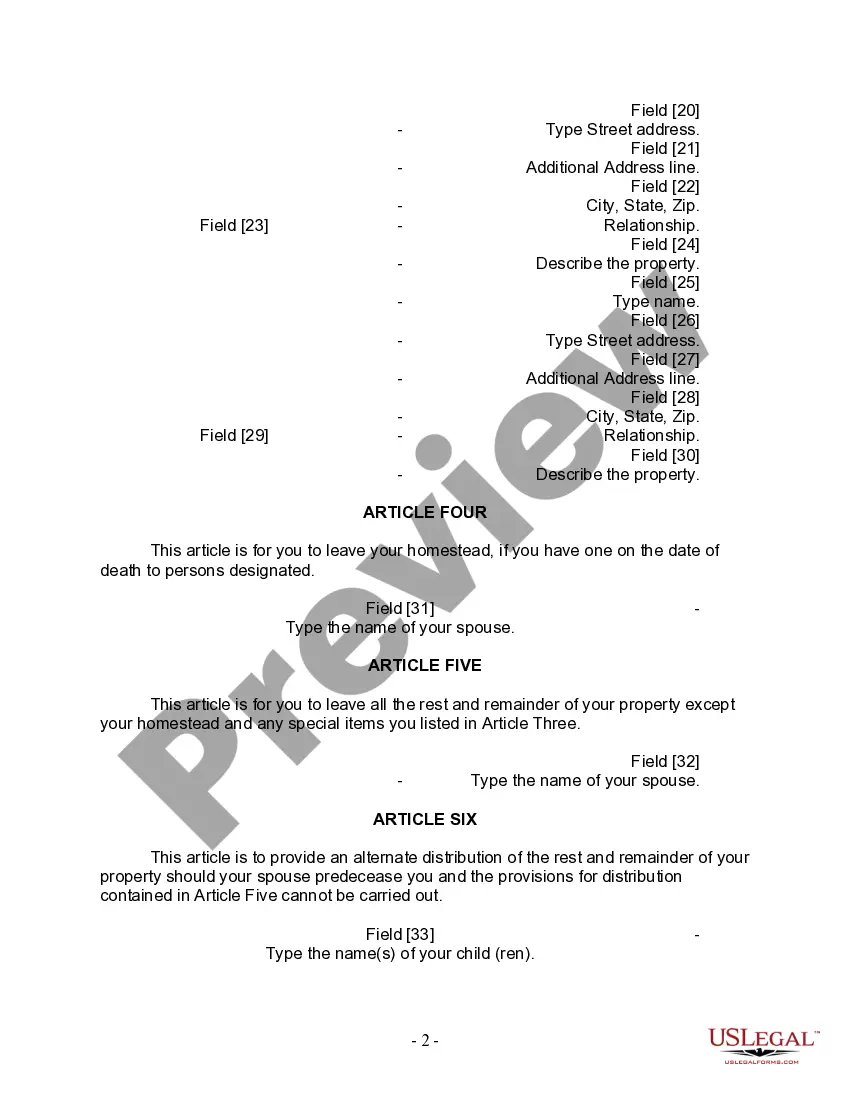
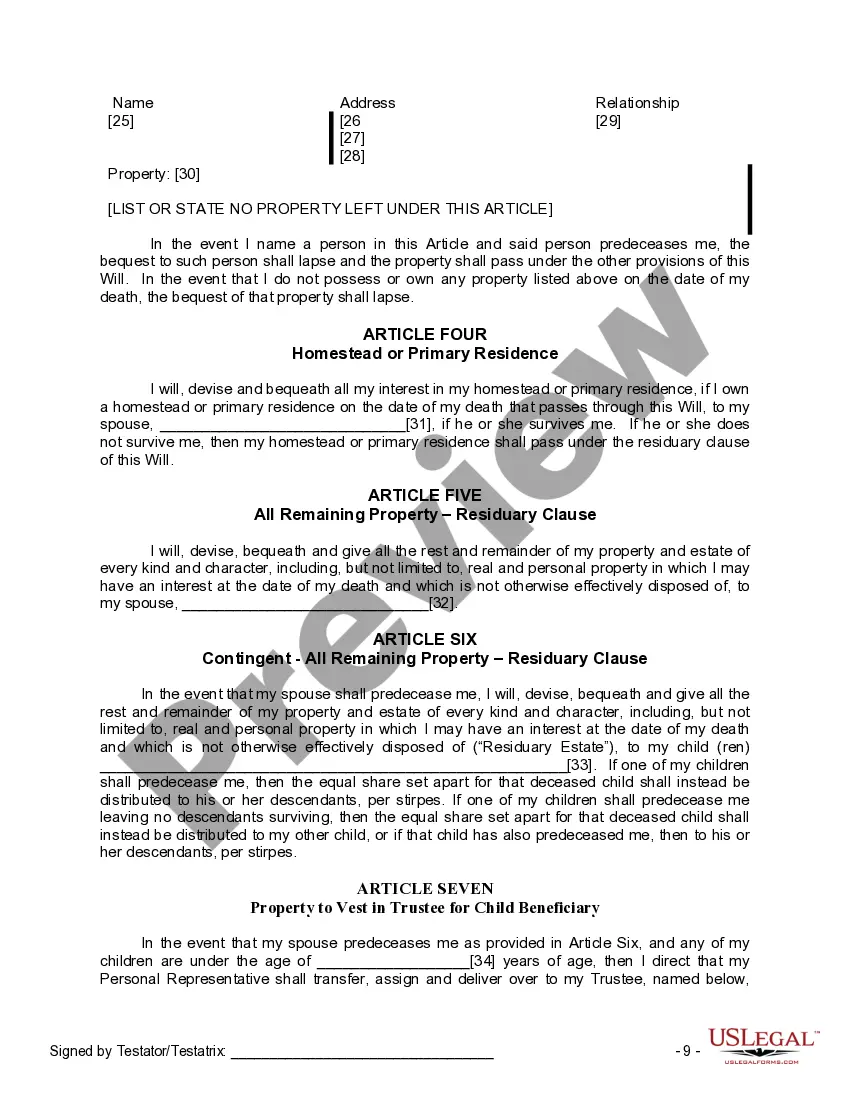
- Distribution of Property: Specifies who receives your assets, including provisions for homestead and specific bequests.
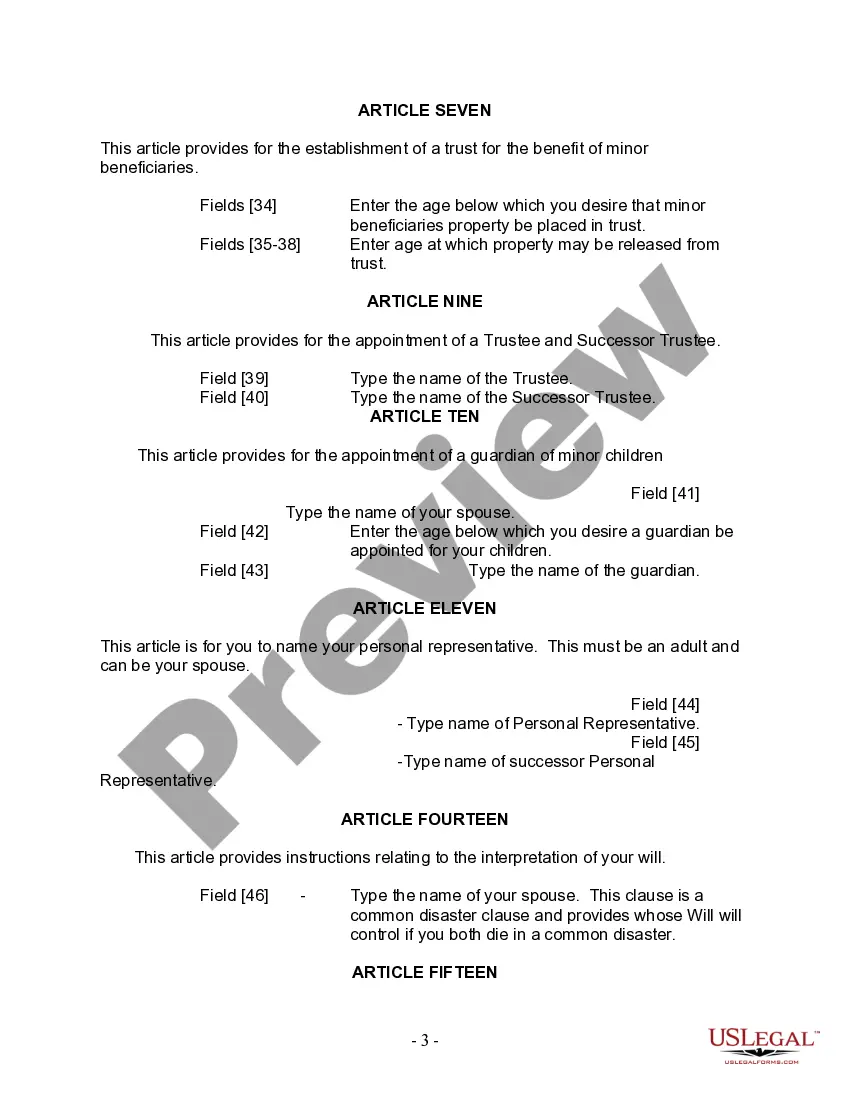
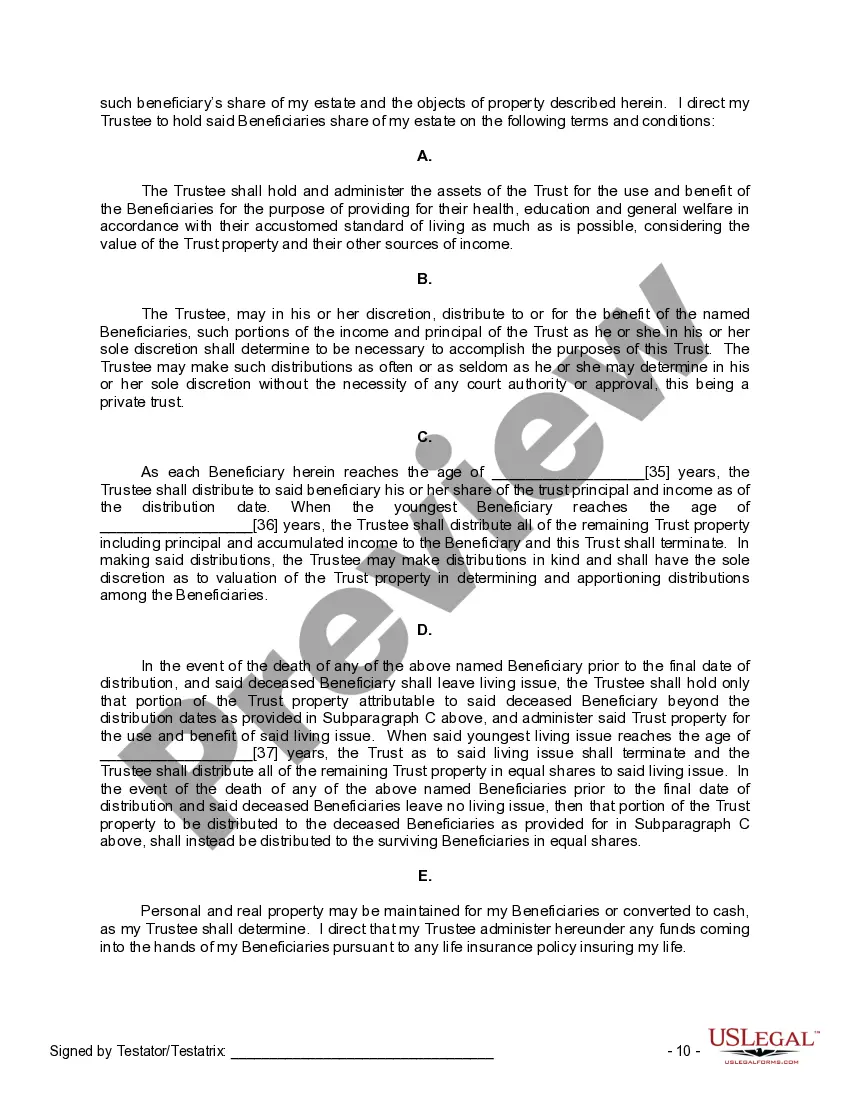
- Trust for Minor Children: Establishes a trust to manage assets for children under a certain age.
- Guardianship Provisions: Appoints a guardian for minor children in the event both parents are unable to care for them.
- Self-Proving Affidavit: This optional clause allows the will to be accepted in probate without witness testimony.




Common use cases
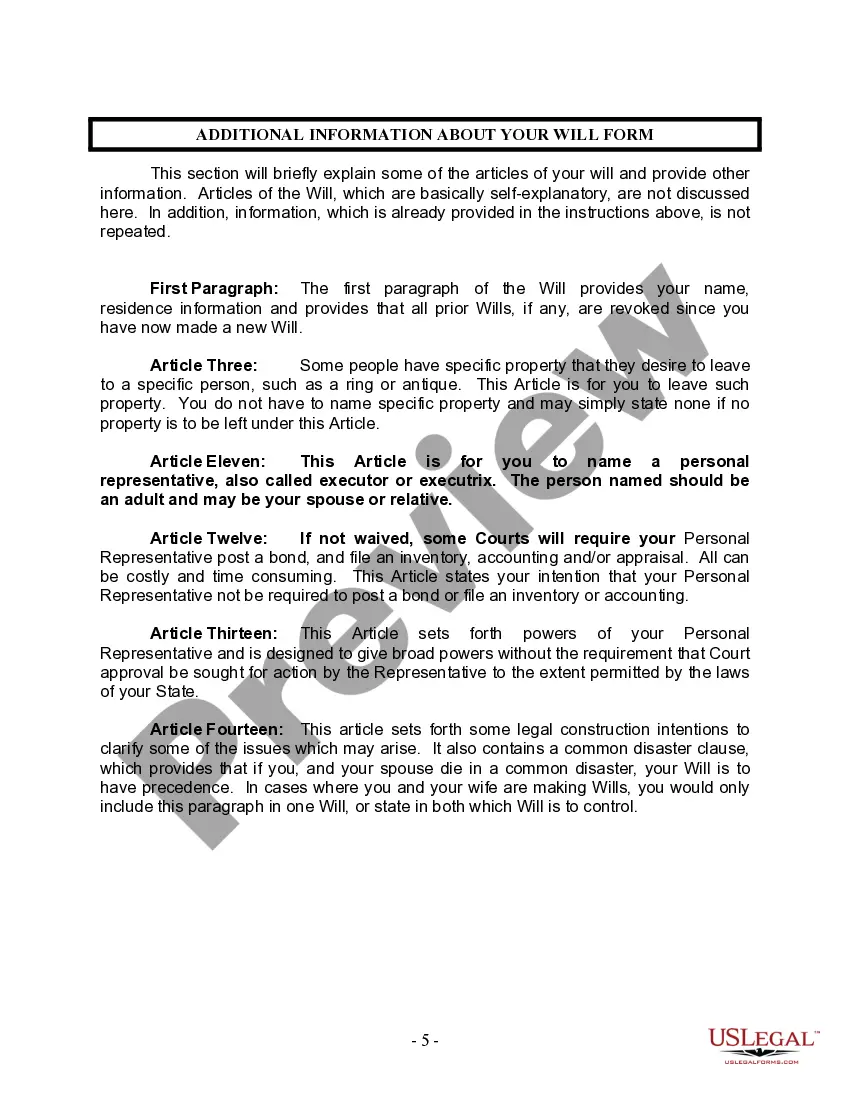
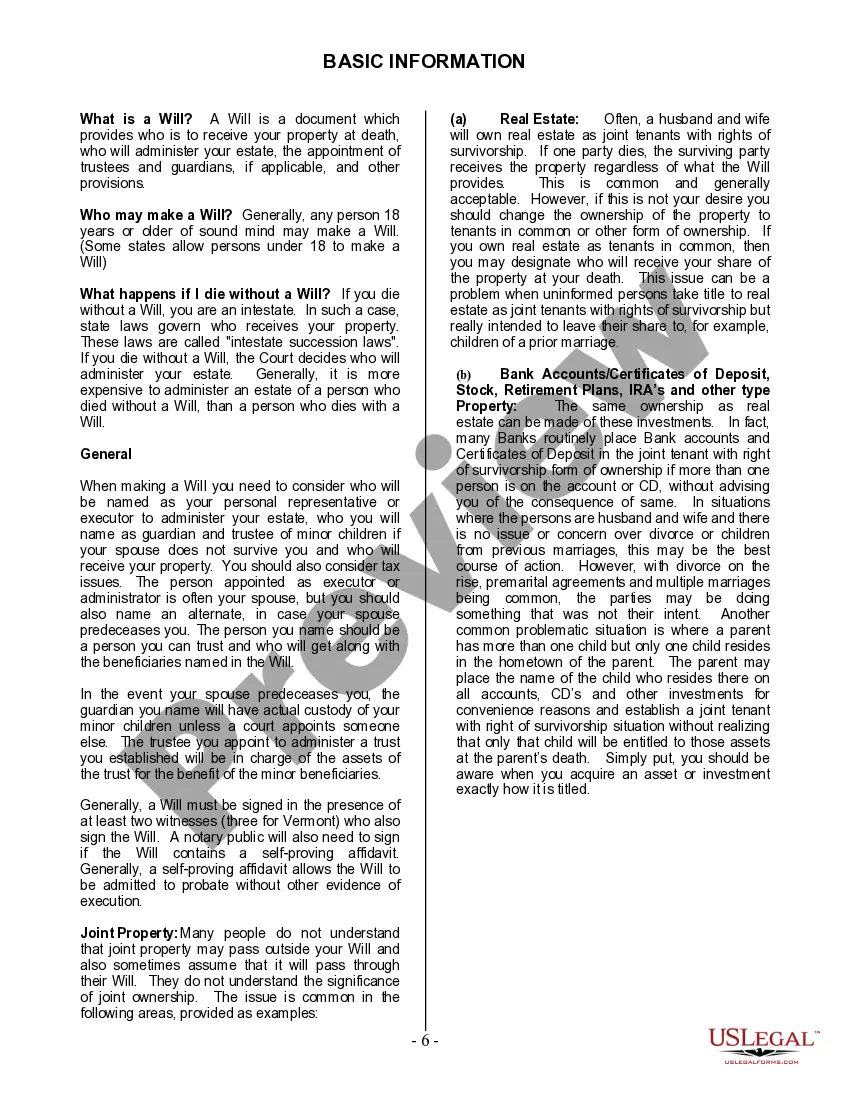
This form is ideal for married individuals who want to ensure their estate is managed according to their wishes after their passing. It is particularly useful in scenarios where there are both adult and minor children, as it provides clear instructions on property distribution and guardianship. Consider using this form if you are looking to secure your children's future and cover specific family dynamics.
Who should use this form
- Married individuals with adult children and minor children
- People who want to ensure specific distributions of assets
- Those looking to appoint a guardian for minor children
- Individuals intending to set up a trust for minor children's assets
Instructions for completing this form
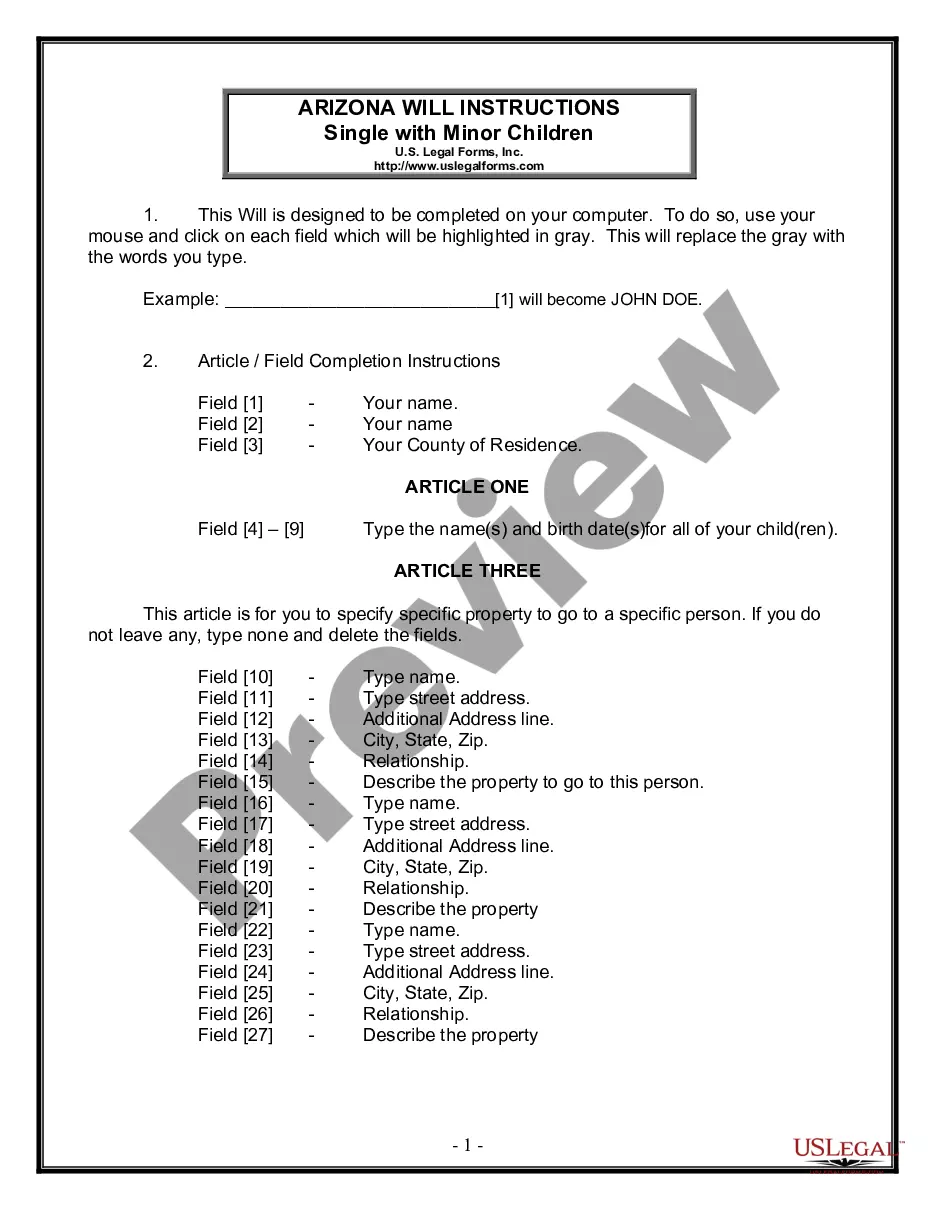
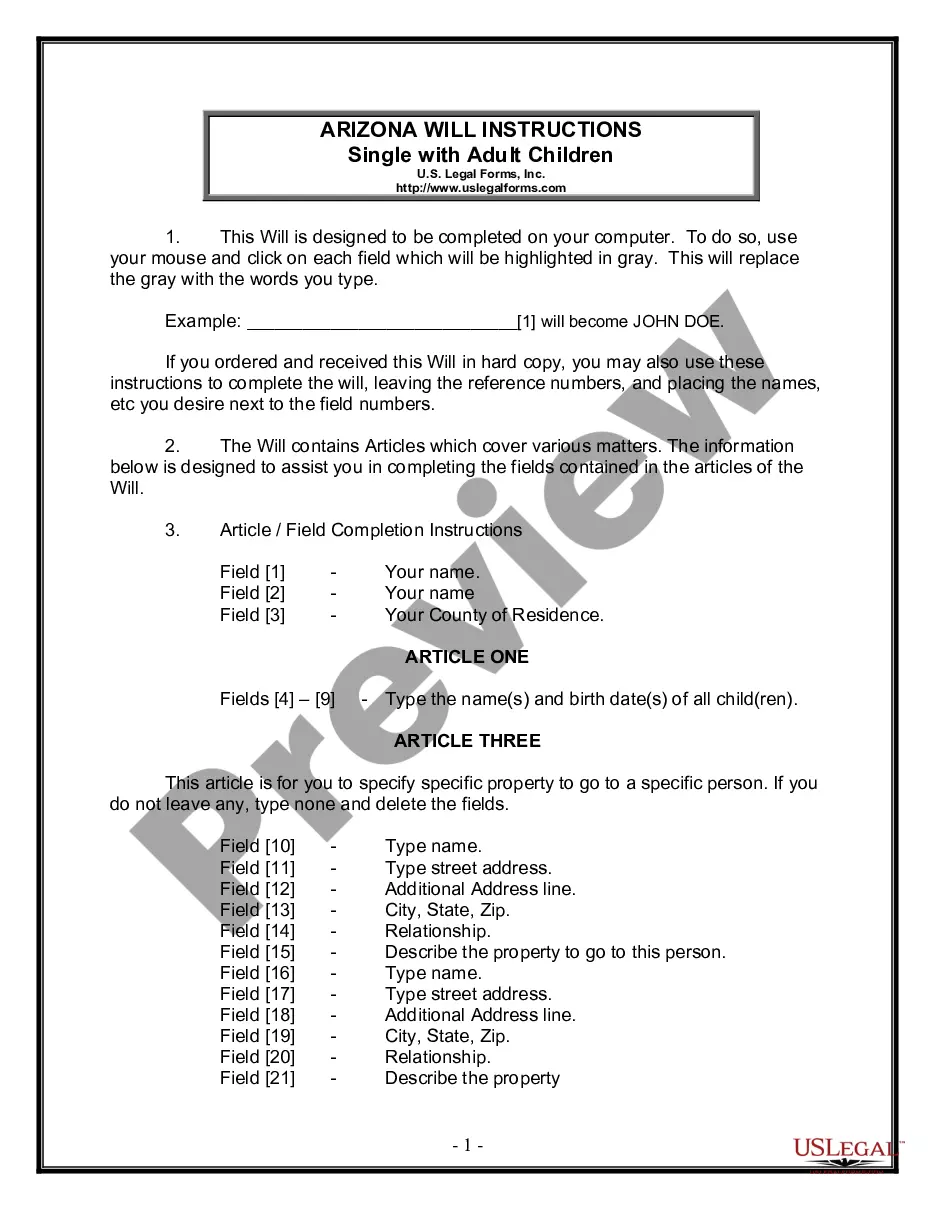
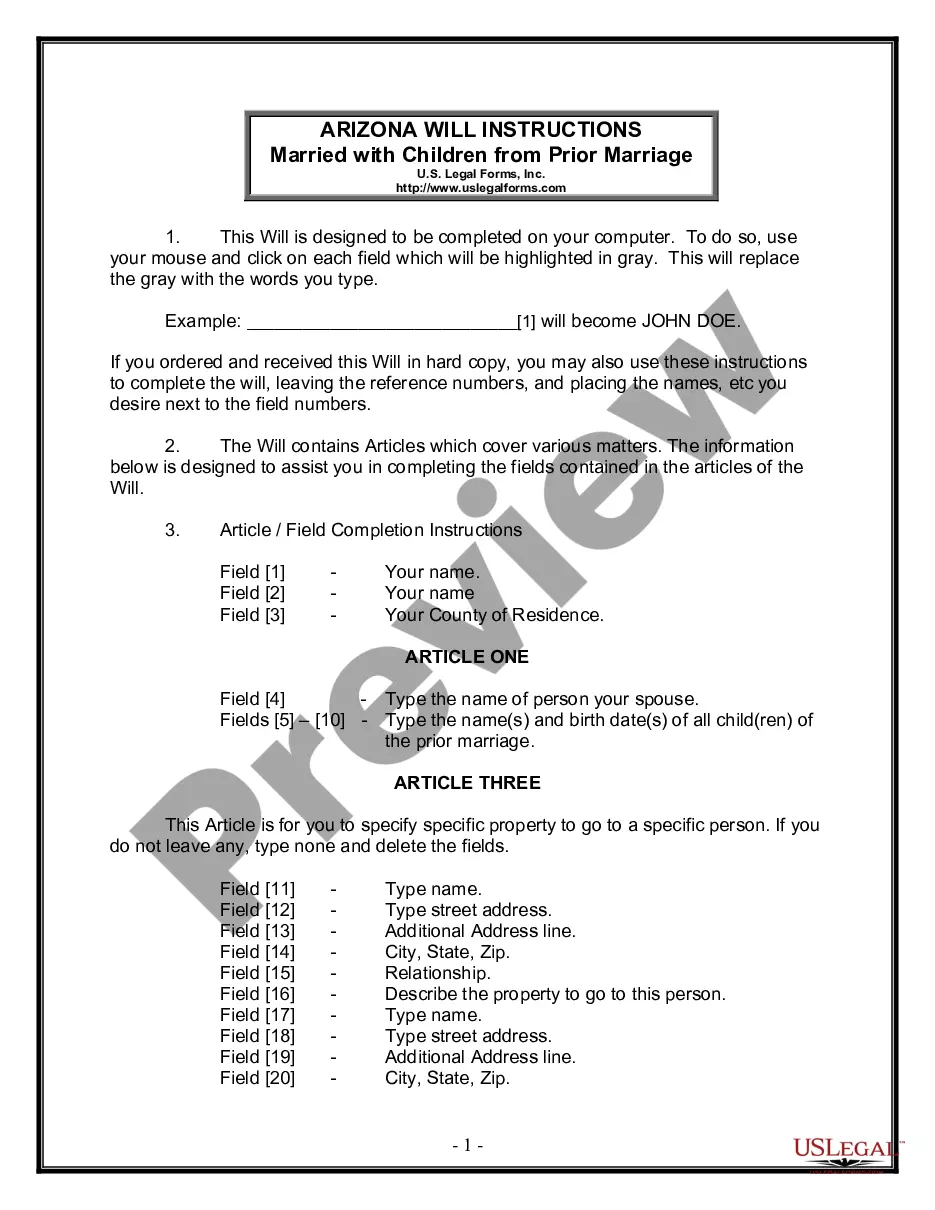
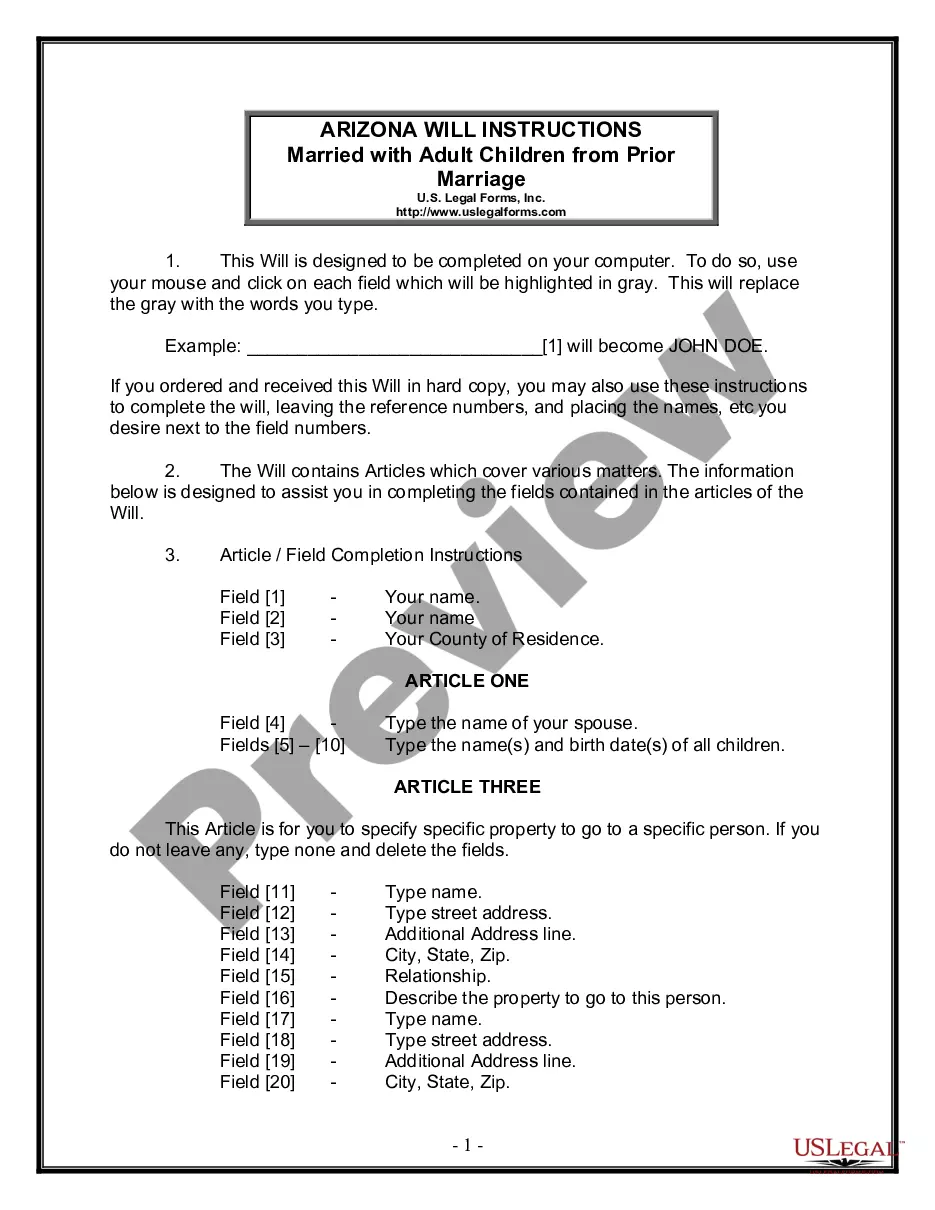
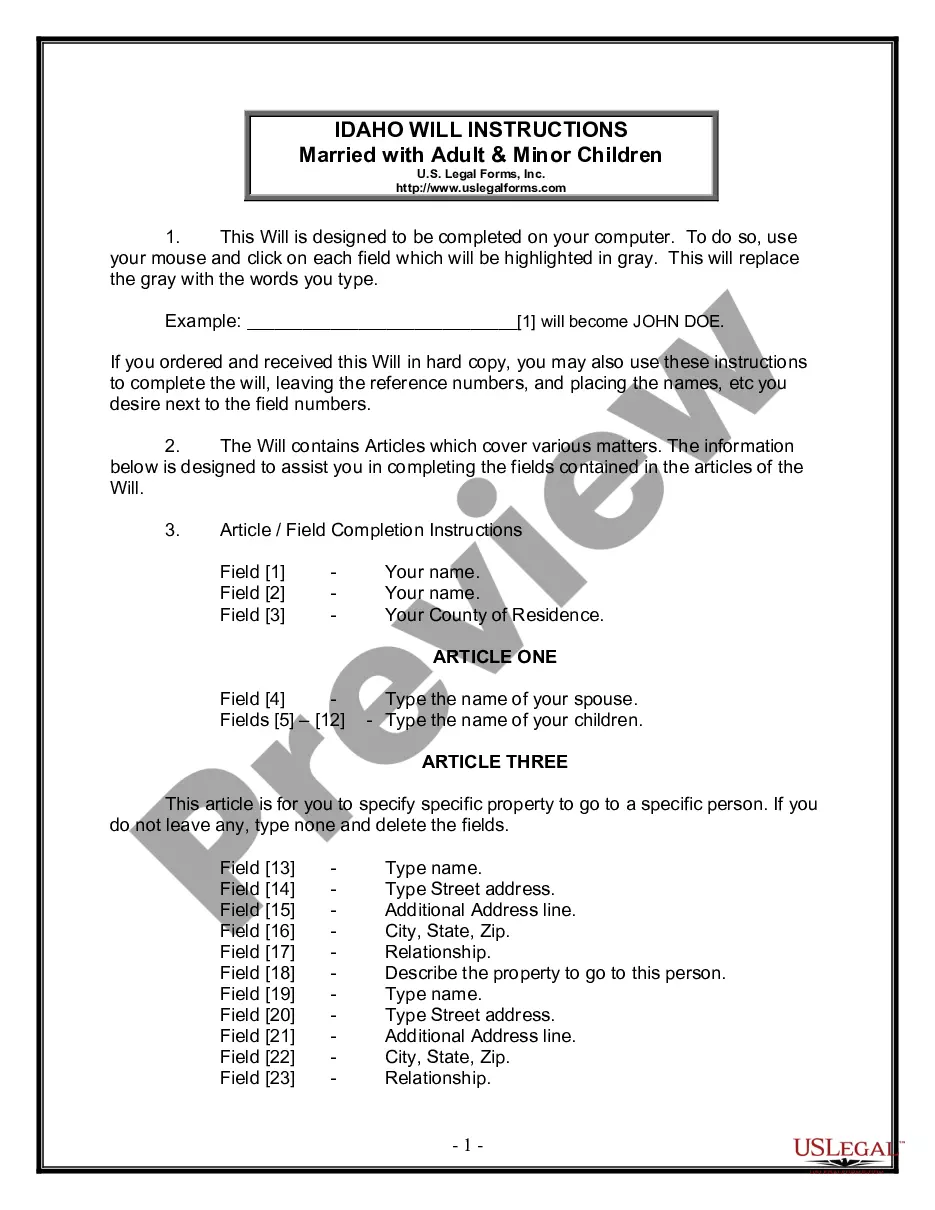
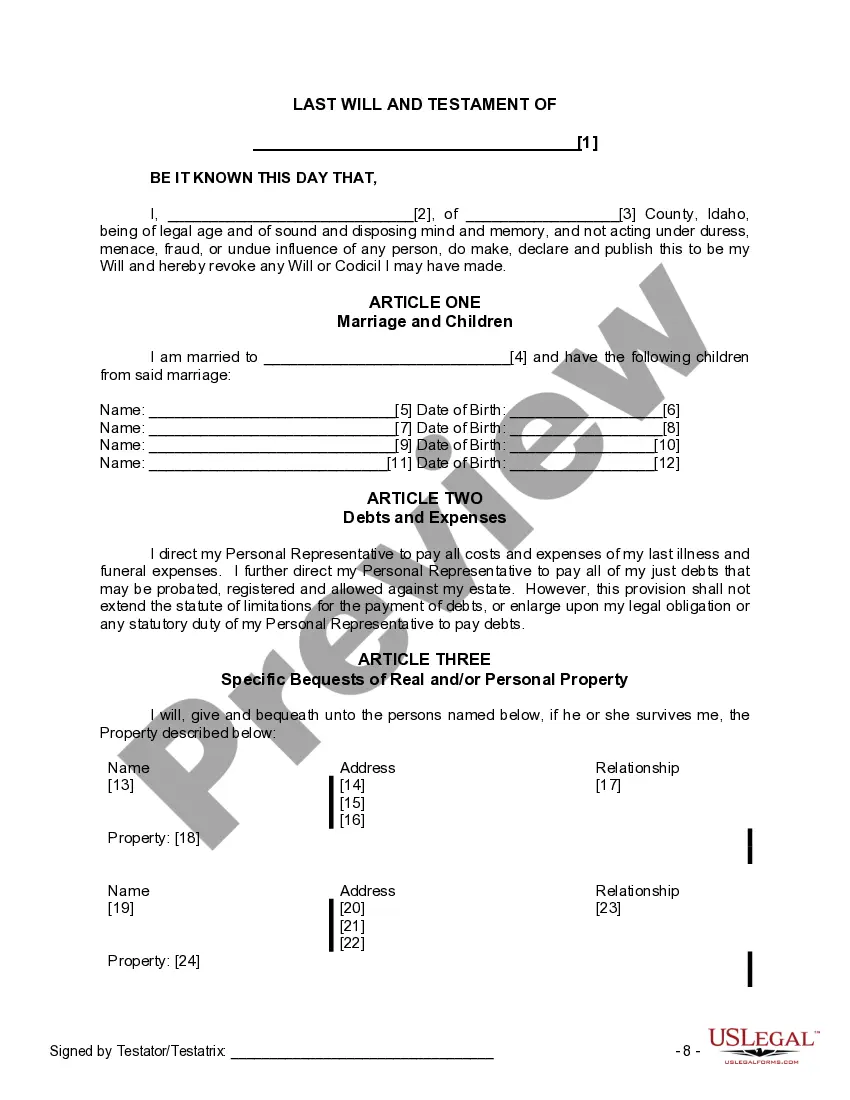
- Enter your personal information, including your name and county of residence.
- List your spouse's name and the names of your children.
- Specify any specific property you wish to bequeath, including details like names, addresses, and relationships.
- Indicate whether you want a trust set up for any minor beneficiaries and specify ages for trust provisions.
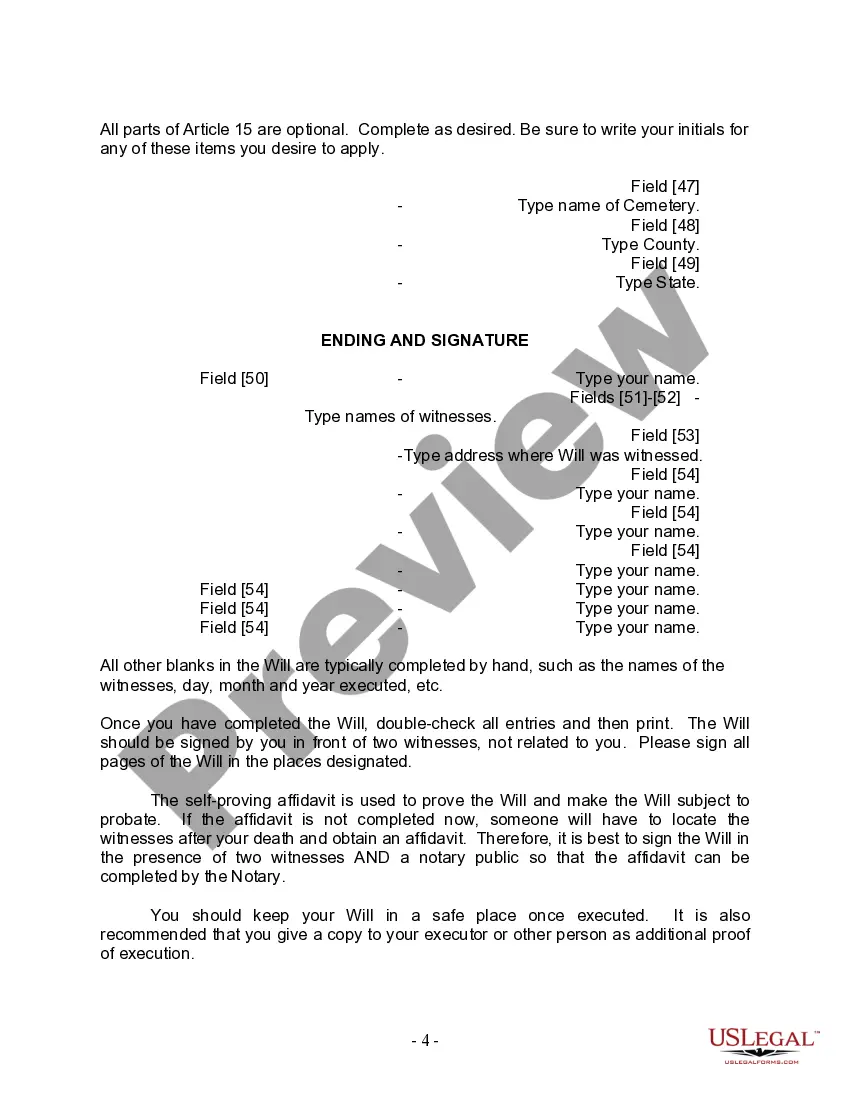
- Sign in front of two witnesses and ensure they also sign the document.
Is notarization required?
Yes, this form must be notarized to be legally valid in Idaho. A notary public is available through US Legal Forms to help you complete the notarization process securely and conveniently.
Get your form ready online
Our built-in tools help you complete, sign, share, and store your documents in one place.
Make edits, fill in missing information, and update formatting in US Legal Forms—just like you would in MS Word.
Download a copy, print it, send it by email, or mail it via USPS—whatever works best for your next step.
Sign and collect signatures with our SignNow integration. Send to multiple recipients, set reminders, and more. Go Premium to unlock E-Sign.
If this form requires notarization, complete it online through a secure video call—no need to meet a notary in person or wait for an appointment.
We protect your documents and personal data by following strict security and privacy standards.

Make edits, fill in missing information, and update formatting in US Legal Forms—just like you would in MS Word.

Download a copy, print it, send it by email, or mail it via USPS—whatever works best for your next step.

Sign and collect signatures with our SignNow integration. Send to multiple recipients, set reminders, and more. Go Premium to unlock E-Sign.

If this form requires notarization, complete it online through a secure video call—no need to meet a notary in person or wait for an appointment.

We protect your documents and personal data by following strict security and privacy standards.
Mistakes to watch out for
- Failing to have the will signed in front of required witnesses.
- Not updating the will after major life changes, like marriage or the birth of children.
- Neglecting to clarify special bequests, leading to confusion among heirs.
Benefits of completing this form online
- Convenience of filling out the form at your own pace.
- Editability allows you to easily make changes before finalizing the document.
- Reliable templates drafted by licensed attorneys ensure legal compliance.
Key takeaways
- Using a last will and testament clarifies your wishes for asset distribution after death.
- Include specific and general provisions to cover all aspects of your estate.
- Ensure proper signing and notarization to uphold the will's validity.
- Regularly review and update the will as your family dynamics or assets change.
Looking for another form?


Form popularity
FAQ
No, in Idaho, you do not need to notarize your will to make it legal. However, Idaho allows you to make your will "self-proving" and you'll need to go to a notary if you want to do that. A self-proving will speeds up probate because the court can accept the will without contacting the witnesses who signed it.
A notarized will does not need to be probated.When a person dies leaving behind a will that is not notarized, the law requires that its validity be ascertained by a notary or by a court. Similarly, any non-notarized modification made to a will must be probated, whether the will is notarized or not.
There are certain types of property that legally cannot be included in a person's will. Depending on state laws, these may include: Any Property that is Co-Owned with Someone Else Through Joint-Tenancy: Married couples typically own the marital home in joint tenancy.Property being held in a living trust.
For a will to be valid, the testator must be of sound mind. Generally, this means that the testator must be an adult, 18 or older, and be conscious and aware of what they are doing. Some states also require that the testator have an understanding of the disposition of the assets in the document.
Wills Law in Idaho: Overview In the state of Idaho, testators must have their wills signed by at least two witnesses who either witnessed the actual signing, or the testator's own acknowledgment of the signing.Valid if signature and material provisions are in handwriting of testator; does not need witnesses.
Must a living will be witnessed or notarized to be valid? No. As a result of changes to Idaho law made by the 2005 legislature, it is no longer necessary to have either a witness to your execution of a Living Will, nor to have your signature notarized.
Idaho law recognizes handwritten wills, referred to as holographic wills. Material provisions of the will and the signature must be in the handwriting of the person making the will.
It must be in writing. Generally, of course, wills are composed on a computer and printed out. The person who made it must have signed and dated it. A will must be signed and dated by the person who made it. Two adult witnesses must have signed it. Witnesses are crucial.
Fraud or Undue Influence A nonfamily caregiver forcing the testator to leave them an inheritance. A family member getting the testator to sign a will by pretending it is just a general legal document that needs a signature.