Idaho Revocation of General Power of Attorney for Care and Custody of Child or Children
Overview of this form
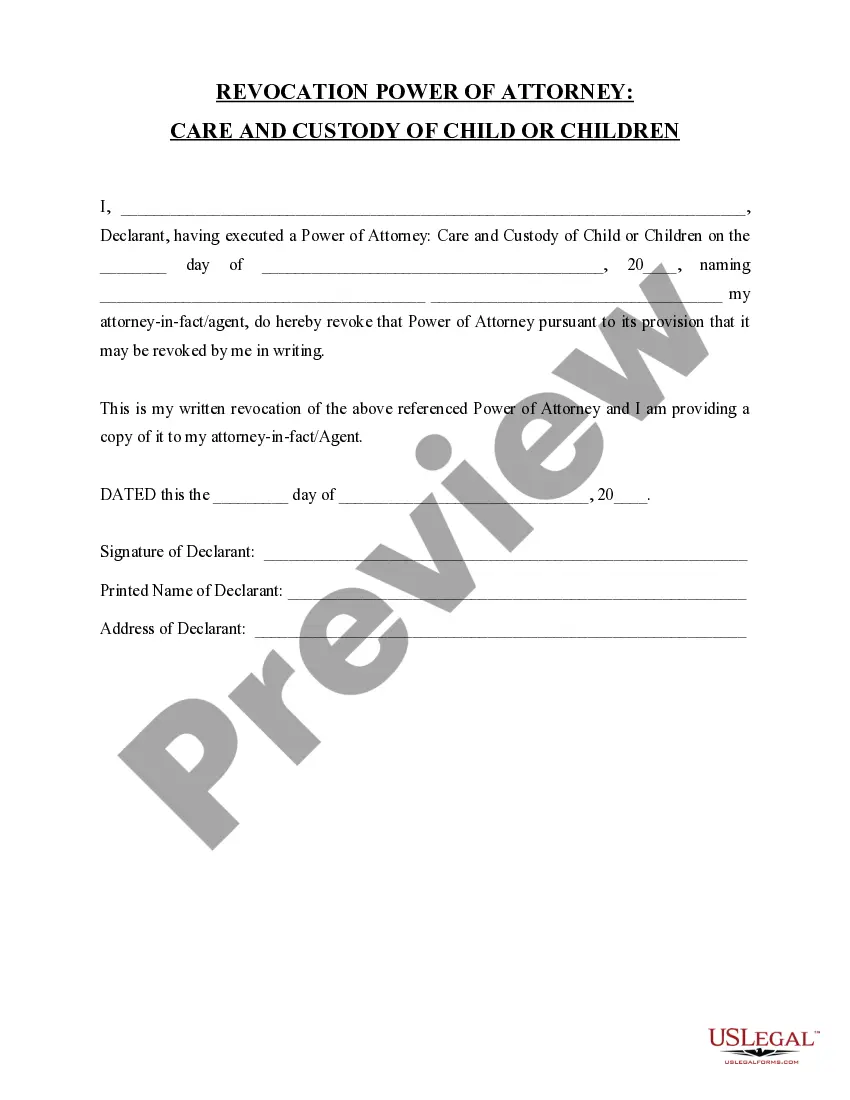
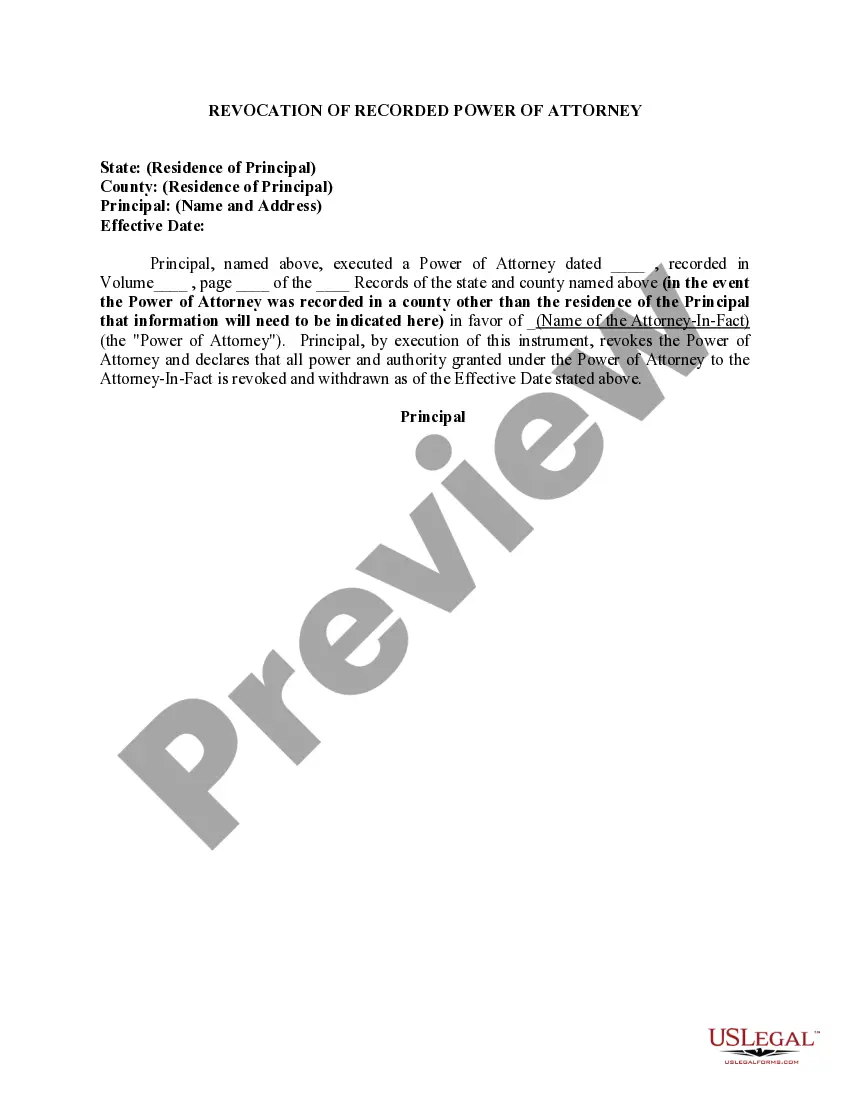
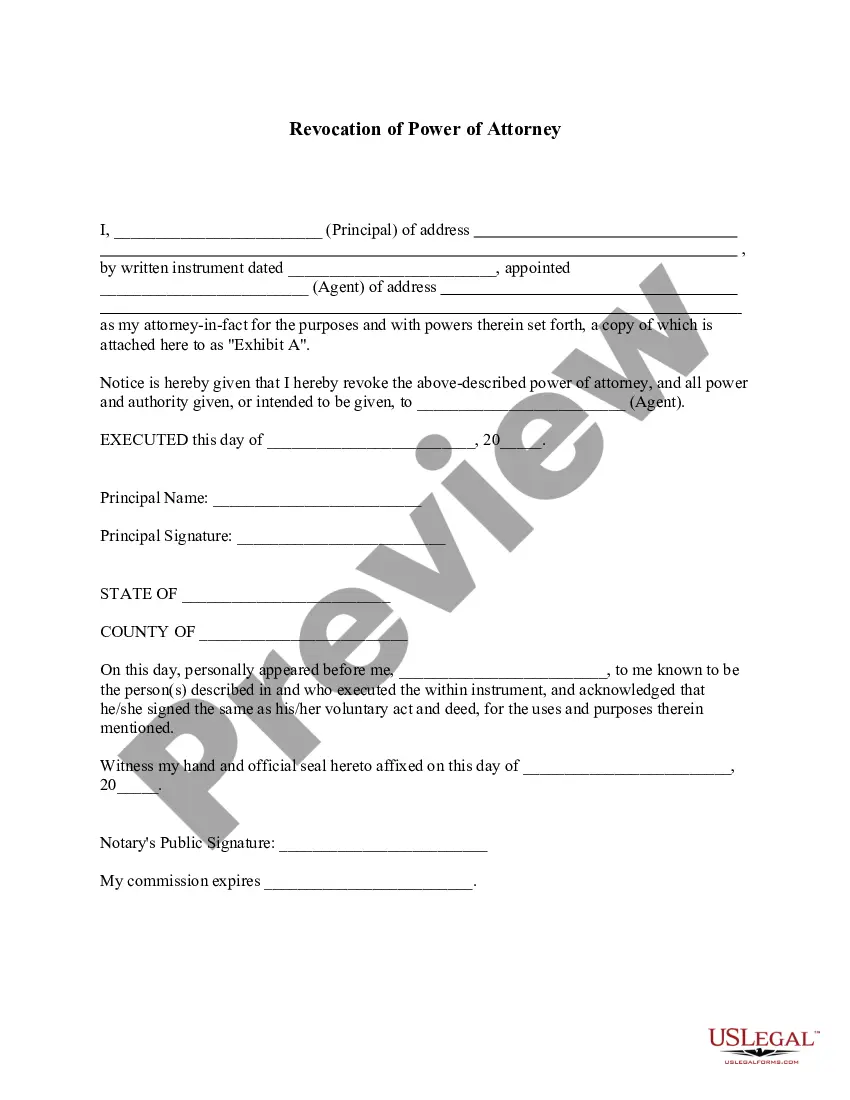
The Revocation of General Power of Attorney for Care and Custody of Child or Children is a legal document that allows a parent or guardian to revoke their previously granted power of attorney pertaining to the care and custody of their child or children. This form is essential for formalizing the decision to end the authority previously given to another party, ensuring that all parties are aware of the change in authority over the child's care. Unlike similar forms, this revocation specifically addresses the termination of power over custody and care issues involving minors.
Key parts of this document
- Declarant's identity: The name of the parent or guardian revoking the power of attorney.
- Date of original power of attorney: The date when the original power of attorney was executed.
- Attorney-in-fact details: The name of the person whose power of attorney is being revoked.
- Signature of Declarant: The declarant must sign the form to validate the revocation.
- Date of revocation: The date when the revocation is executed.
- Declarant's contact information: The address of the declarant for record-keeping.
When to use this document
This form should be used when a parent or legal guardian wishes to terminate a power of attorney that was granted for the care and custody of their child or children. Situations may include changes in family dynamics, such as the recovery of parental rights, the agent's failure to perform responsibilities, or simply a desire to manage custody personally without external authority.
Who this form is for
- Parents or legal guardians who have previously established a power of attorney for childcare.
- Individuals who need to formally revoke an existing power of attorney for custody due to changes in circumstances.
- Those who wish to ensure that custody decisions revert to them alone without ambiguity.
How to prepare this document
- Identify yourself as the Declarant by writing your full name at the top of the document.
- Enter the date when the original power of attorney was executed.
- Provide the name of the individual you appointed as your attorney-in-fact.
- Sign and date the document to officially revoke the authority.
- Enter your address for contact information.
Notarization requirements for this form
This form does not typically require notarization unless specified by local law. However, it is advisable to check state-specific requirements for additional validation needs.
Get your form ready online
Our built-in tools help you complete, sign, share, and store your documents in one place.
Make edits, fill in missing information, and update formatting in US Legal Forms—just like you would in MS Word.
Download a copy, print it, send it by email, or mail it via USPS—whatever works best for your next step.
Sign and collect signatures with our SignNow integration. Send to multiple recipients, set reminders, and more. Go Premium to unlock E-Sign.
If this form requires notarization, complete it online through a secure video call—no need to meet a notary in person or wait for an appointment.
We protect your documents and personal data by following strict security and privacy standards.

Make edits, fill in missing information, and update formatting in US Legal Forms—just like you would in MS Word.

Download a copy, print it, send it by email, or mail it via USPS—whatever works best for your next step.

Sign and collect signatures with our SignNow integration. Send to multiple recipients, set reminders, and more. Go Premium to unlock E-Sign.

If this form requires notarization, complete it online through a secure video call—no need to meet a notary in person or wait for an appointment.

We protect your documents and personal data by following strict security and privacy standards.
Mistakes to watch out for
- Failing to date the revocation document can cause confusion about when the authority was terminated.
- Not providing a copy of the revocation to the attorney-in-fact may lead to misunderstandings.
- Neglecting to sign the form makes it legally invalid.
Benefits of using this form online
- Convenience: Download the form quickly without the need for in-person visits.
- Editability: Customize the form to fit your specific needs and situation.
- Reliability: Use templates drafted by licensed attorneys, ensuring legal compliance.
Looking for another form?

Form popularity
FAQ
To initiate the Idaho Revocation of General Power of Attorney for Care and Custody of Child or Children, you should prepare a revocation document. This document must clearly state your intent to revoke the existing power of attorney and may need to be notarized. After completing the revocation, it is important to notify the former agent and any relevant parties, such as schools or healthcare providers, to avoid any confusion.
In Idaho, the consequences for a first-time misdemeanor can vary. While jail time is possible, many factors influence this outcome, including the severity of the offense and your criminal history. Generally, judges may impose alternative penalties such as fines or community service instead of jail. Understanding your legal options is crucial, especially if it involves the Idaho Revocation of General Power of Attorney for Care and Custody of Child or Children.
A Power of Attorney might be used to allow another person to sign a contract for the Principal. It can be used to give another person the authority to make health care decisions, do financial transactions, or sign legal documents that the Principal cannot do for one reason or another.
The Principal can override either type of POA whenever they want. However, other relatives may be concerned that the Agent (in most cases a close family member like a parent, child, sibling, or spouse) is abusing their rights and responsibilities by neglecting or exploiting their loved one.
In many states, notarization is required by law to make the durable power of attorney valid. But even where law doesn't require it, custom usually does. A durable power of attorney that isn't notarized may not be accepted by people with whom your attorney-in-fact tries to deal.
1. About the Power of Attorney.A Power of Attorney might be used to allow another person to sign a contract for the Principal. It can be used to give another person the authority to make health care decisions, do financial transactions, or sign legal documents that the Principal cannot do for one reason or another.
An agent under a financial power of attorney should not have the right to bar a sibling from seeing their parent. A medical power of attorney may give the agent the right to prevent access to a parent if the agent believes the visit would be detrimental to the parent's health.
In Idaho, a durable power of attorney may not necessarily need to be signed in front of a notary public when executed by the principal. A power of attorney does not need to be recorded unless it is being used in connection with a real estate transaction.
1 attorney answer But no, a power of attorney is not somehow going to constitute or override a custody order, and as a non-parent, he doesn't have any standing to contest custody unless your daughter's been with him (and him alone, not with her mom...
A power of attorney over a child is a document signed and notarized by a parent giving a non- parent authority to make decisions for a minor child.It can be used to authorize the person to obtain medical treatment for a child or sign up a child for an activity or for other significant decisions.