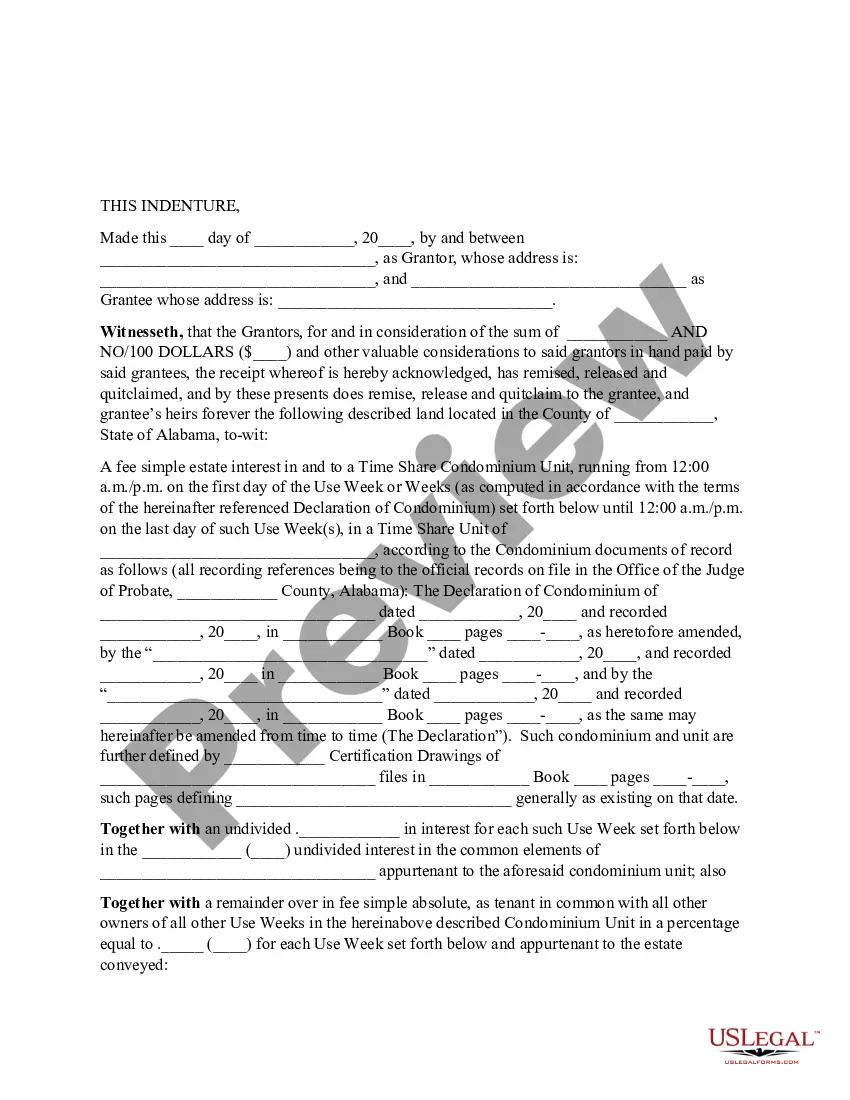
Idaho Office Lease Agreement
What this document covers
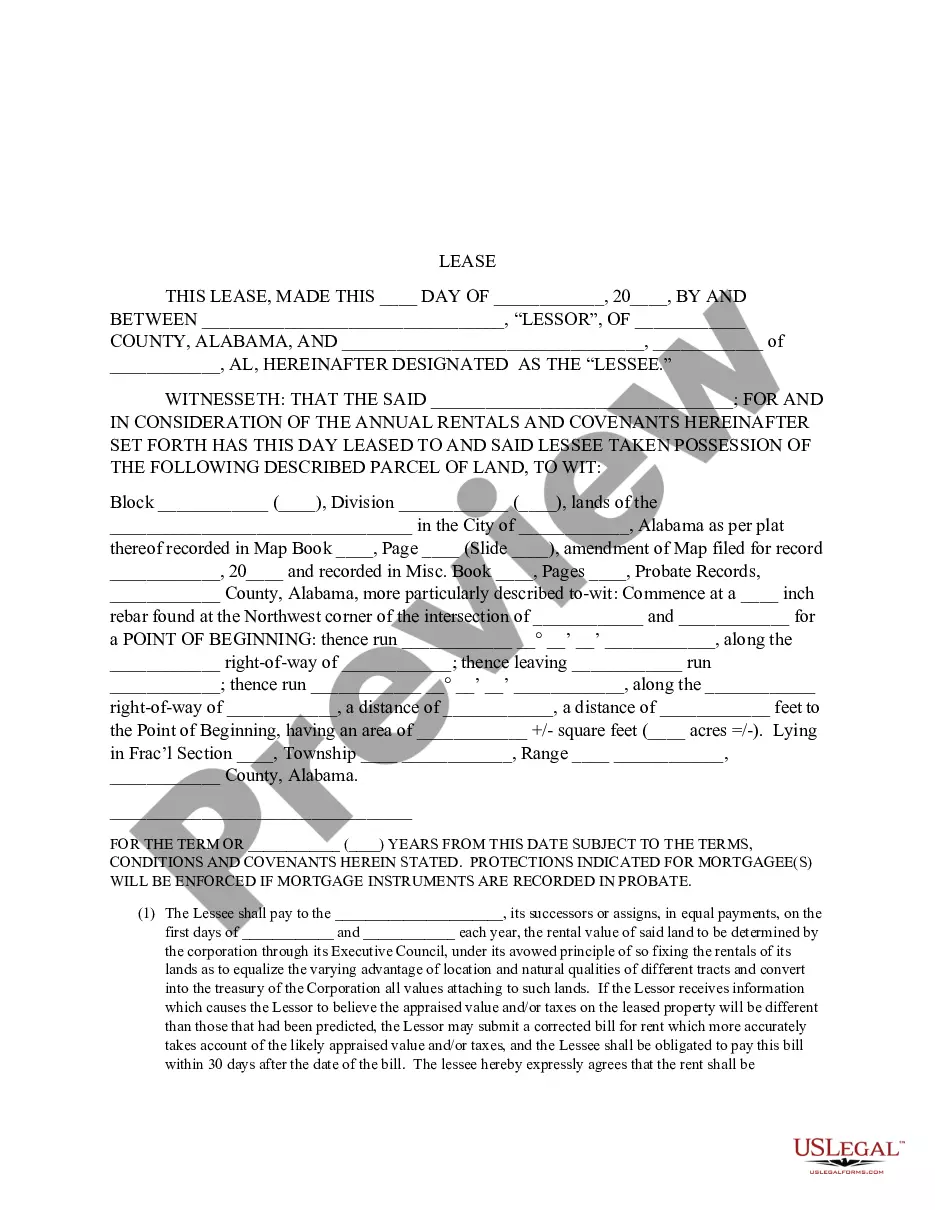
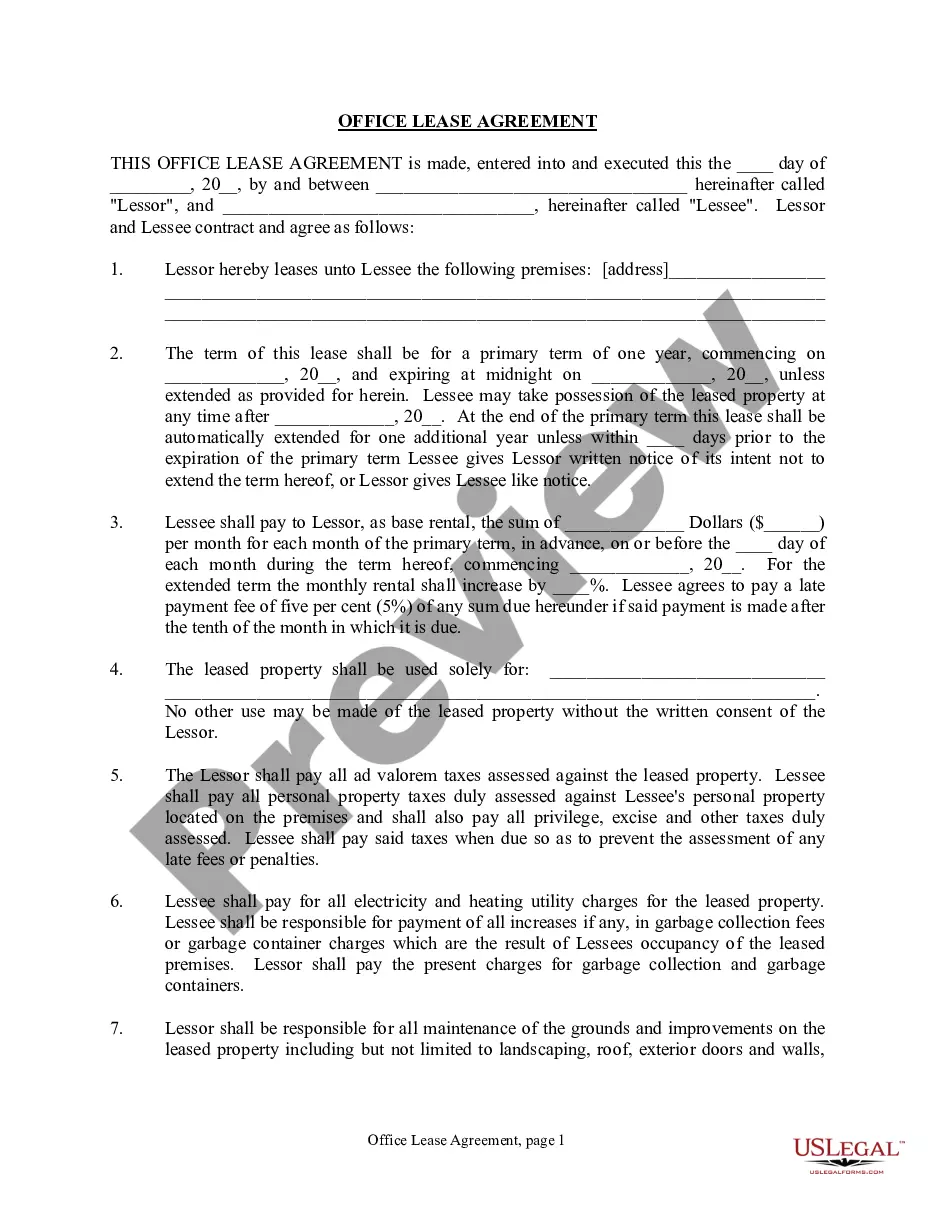
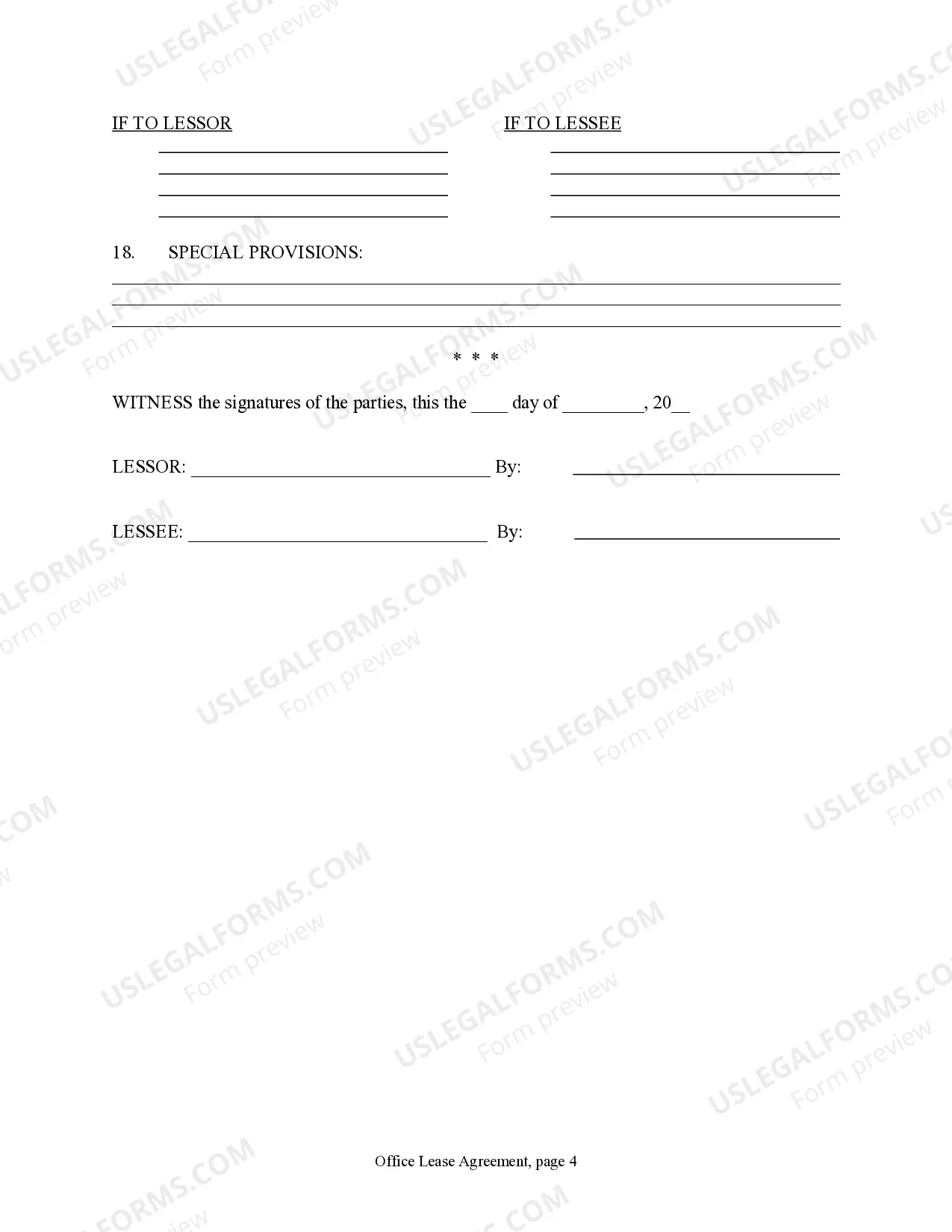
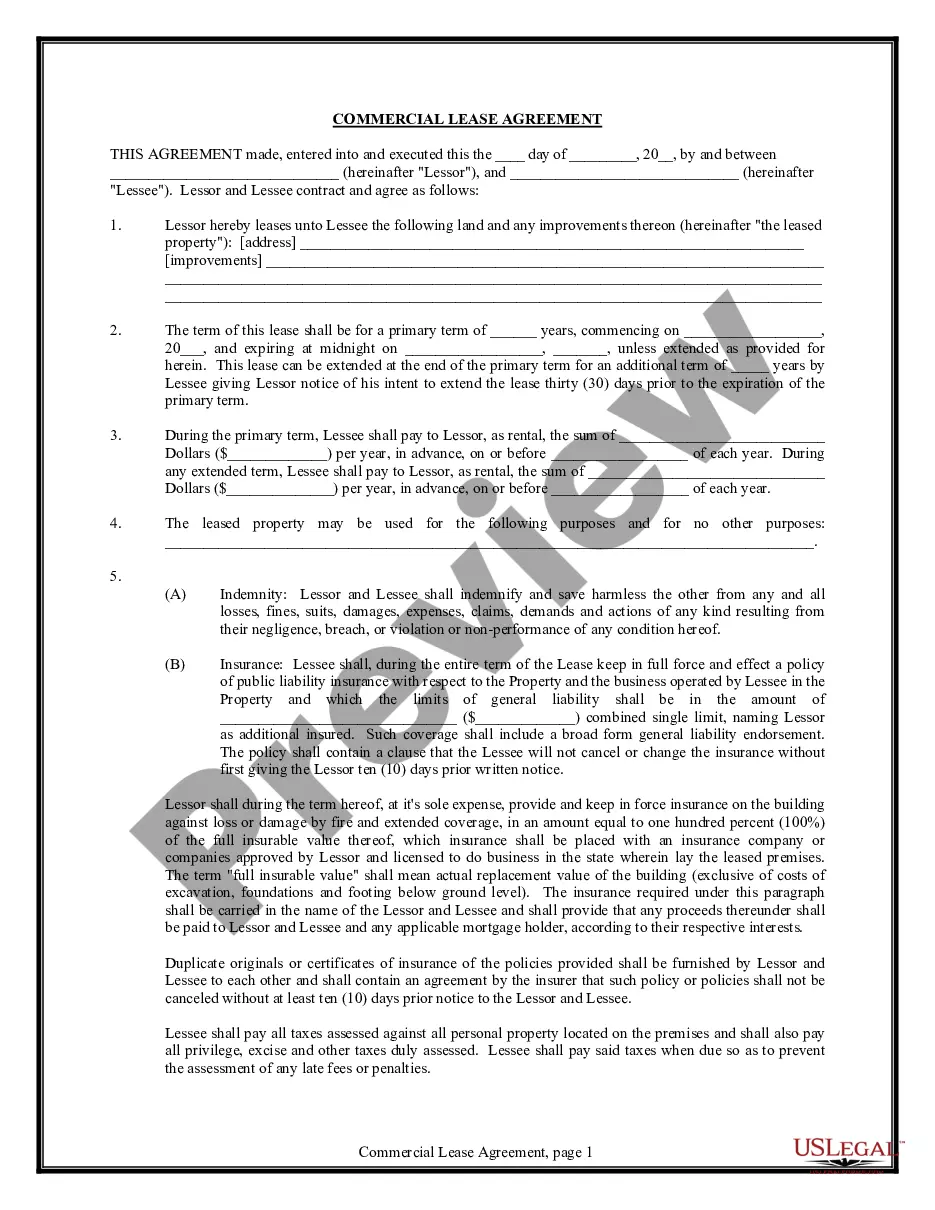
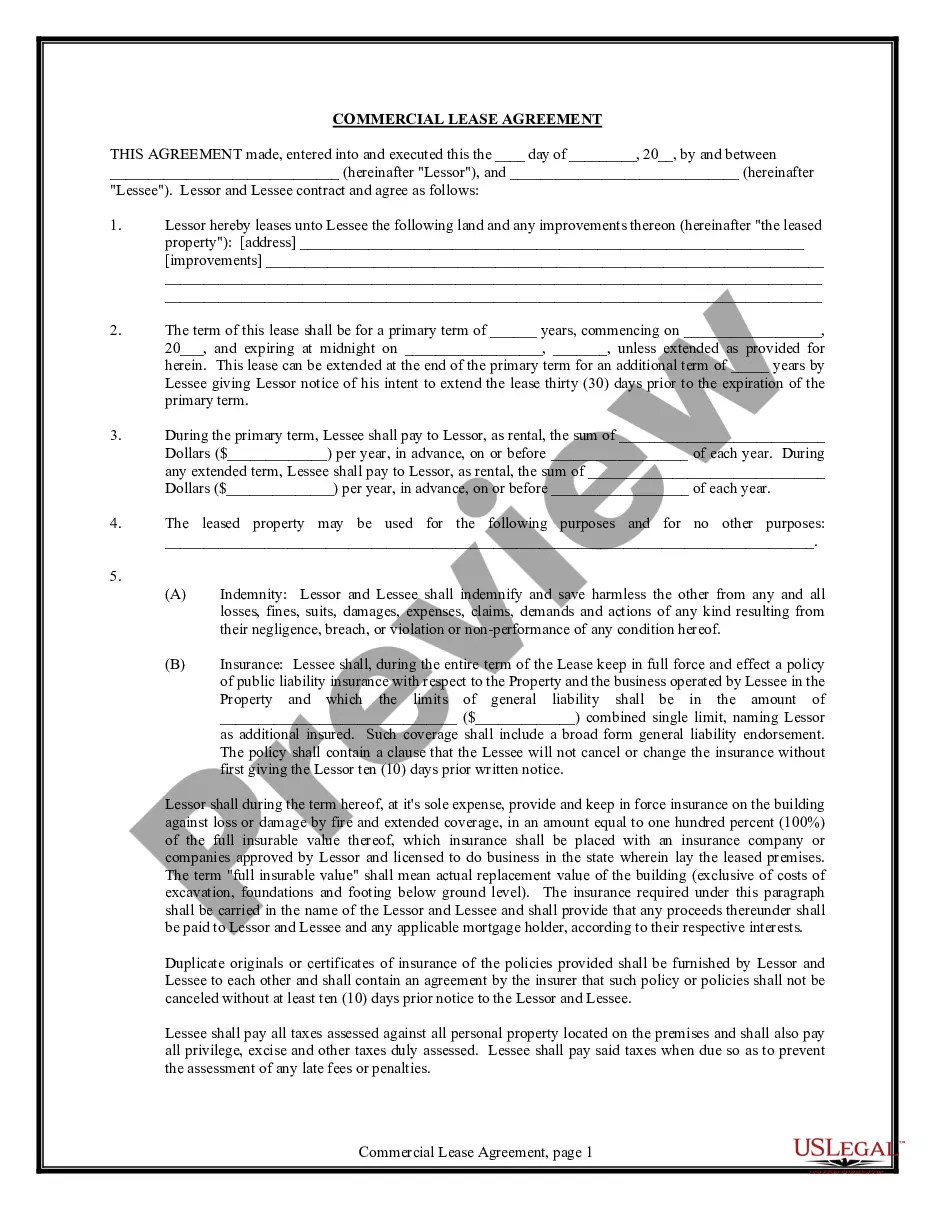
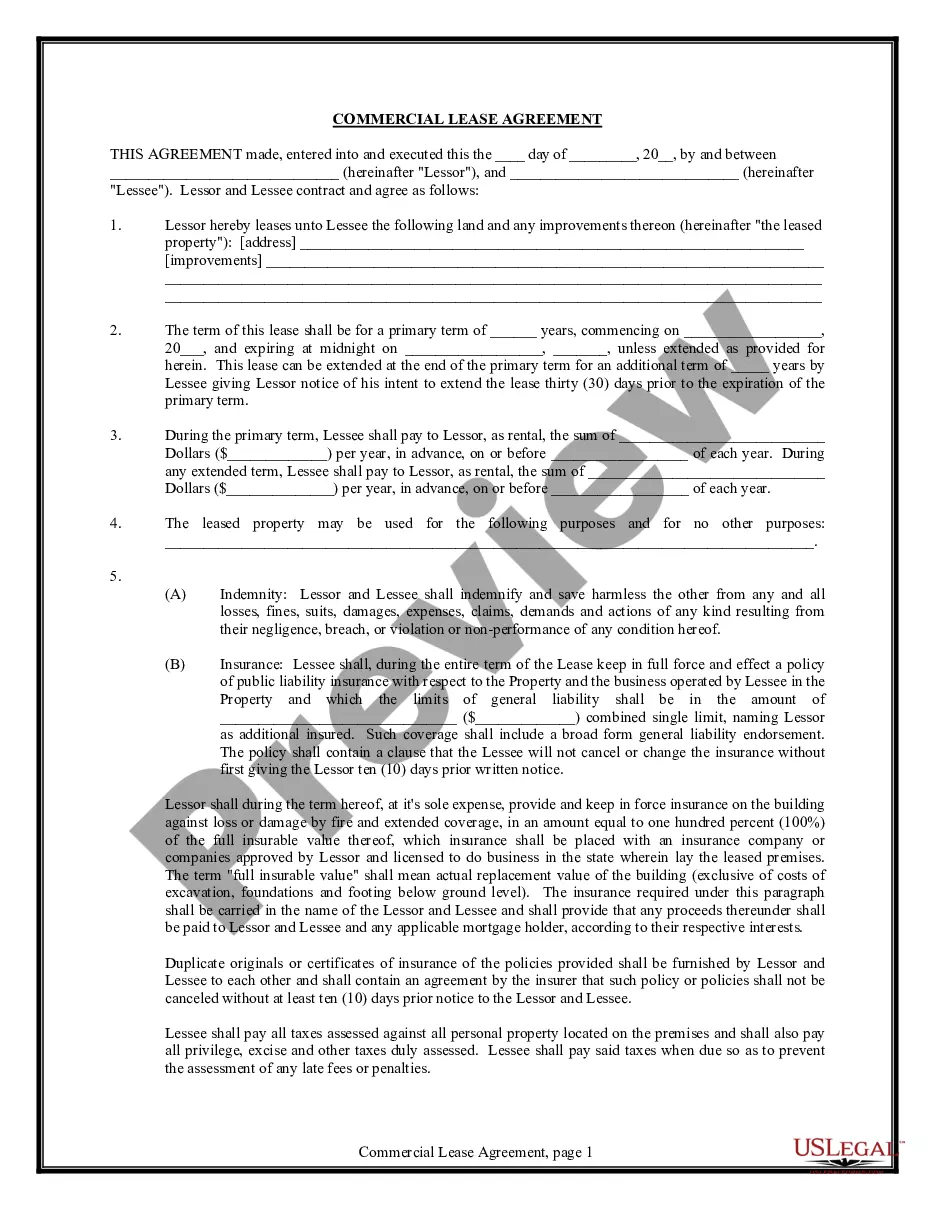
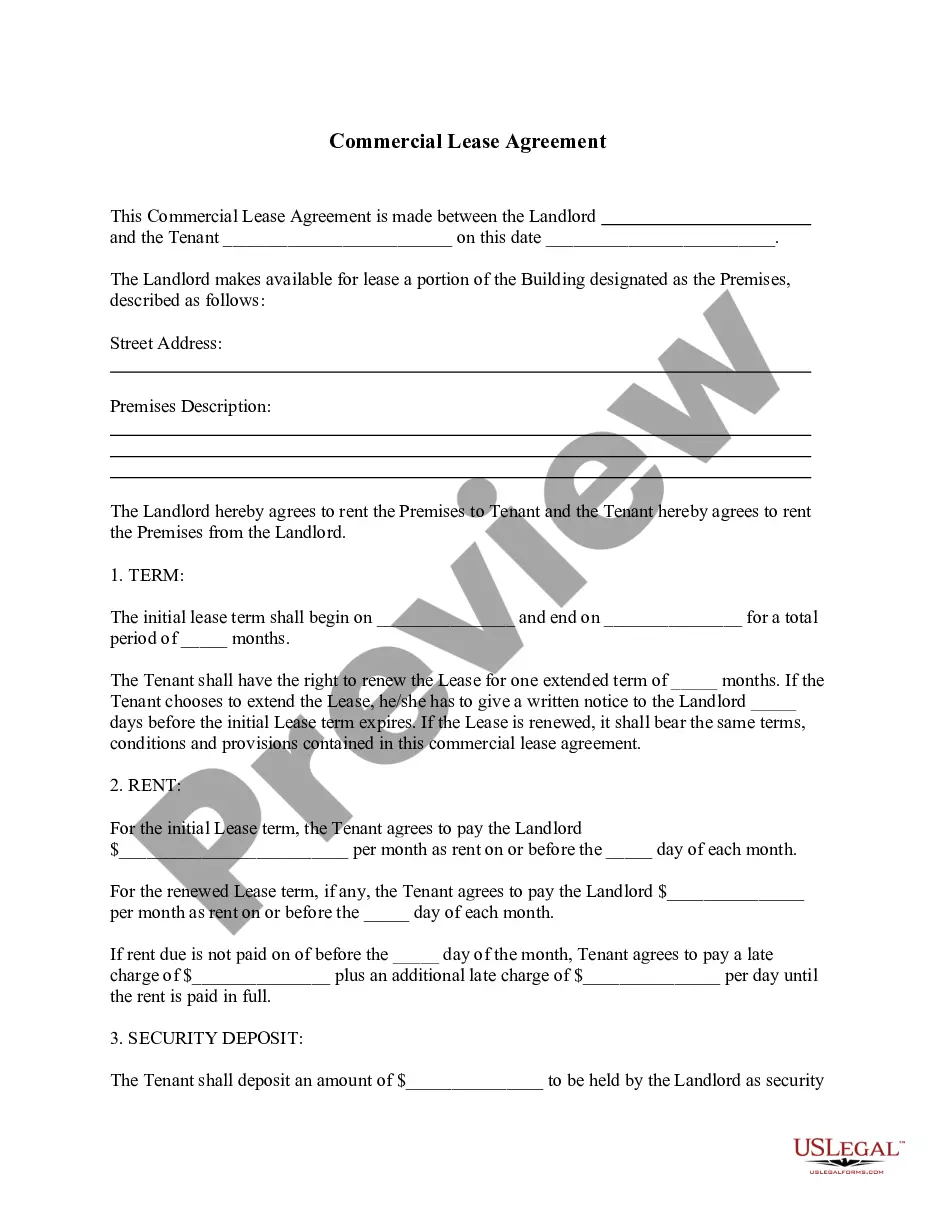
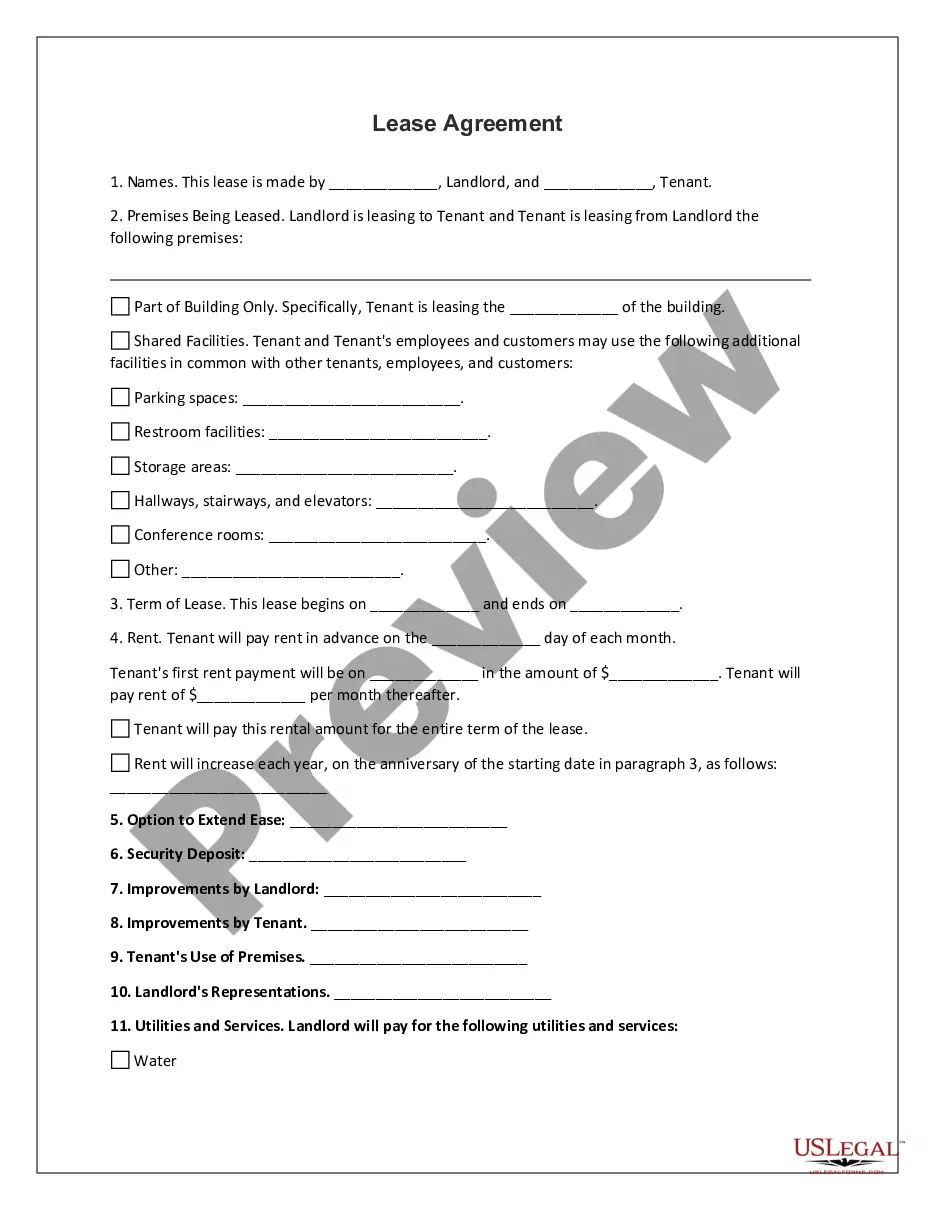
An Office Lease Agreement is a legally binding document that outlines the terms and conditions under which a tenant leases office space from a property owner. This agreement protects the rights of both parties, ensuring compliance with relevant state laws, and providing a clear framework for occupancy, rent payment, maintenance responsibilities, and other critical aspects of the tenant-landlord relationship. Unlike residential leases, this form is tailored specifically for commercial spaces used for business purposes.
Key components of this form
- Parties involved: Identifies the lessor (property owner) and lessee (tenant).
- Lease term: Specifies the duration of the lease agreement, including start and end dates.
- Rent payment: Outlines the base rental amount, payment schedule, and late fees.
- Usage of property: Restricts the use of the leased property to specified purposes.
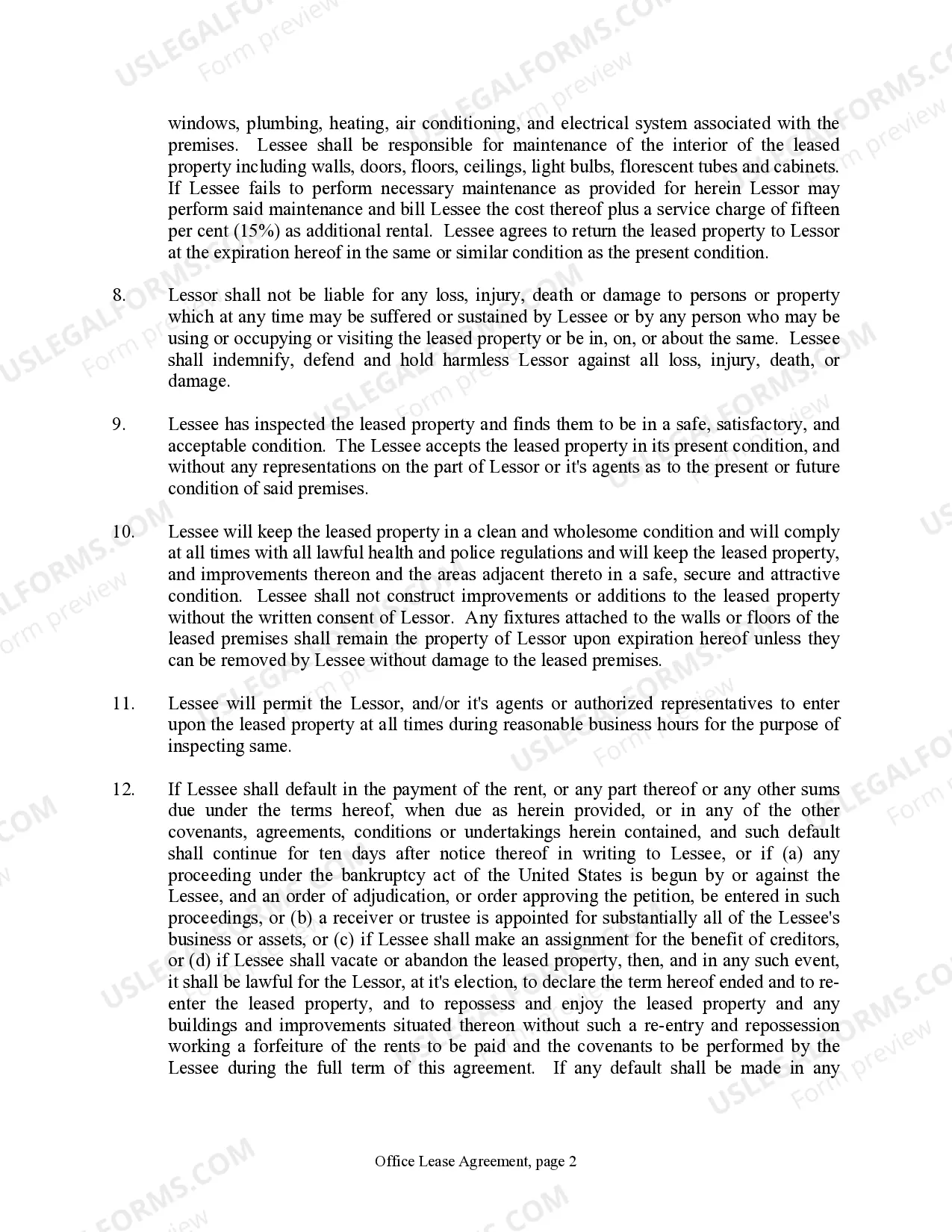
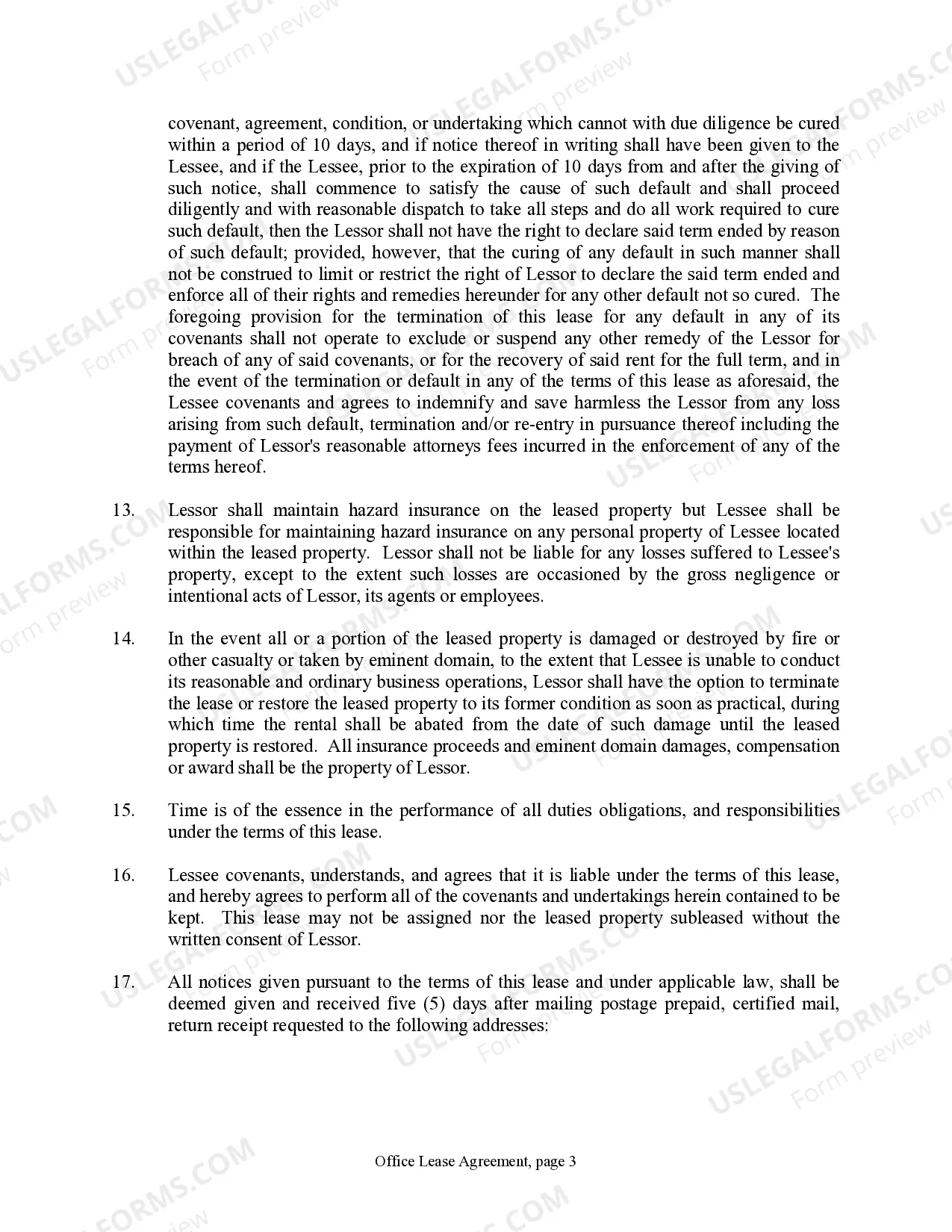
- Maintenance obligations: Clarifies the responsibilities for property maintenance and repairs.
- Indemnification clause: Protects the lessor from liability for damages or injuries occurring on the premises.
When this form is needed
This form should be used when a business seeks to lease office space from a property owner. It is essential when establishing a formal agreement that outlines how the space may be used, maintenance expectations, and financial obligations like rent. This agreement is particularly important in situations involving multiple years of occupancy or when specific terms need to be recorded to protect both partiesâ interests.
Who should use this form
- Business owners looking to establish a lease for office space.
- Property managers or landlords renting out office facilities.
- Legal professionals preparing lease agreements for clients.
Completing this form step by step
- Identify the parties: Fill in the names of the lessor and lessee.
- Specify the property: Enter the full address and description of the leased office space.
- Enter lease dates: Provide the commencement and expiration dates of the lease term.
- Detail rents and fees: Clearly state the monthly rent amount and any late payment fees.
- Outline maintenance responsibilities: Agree on which party will handle specific maintenance tasks.
Does this document require notarization?
This form does not typically require notarization unless specified by local law. Be sure to check your state's regulations or consult with a legal professional regarding notarization requirements for business leases.
Get your form ready online
Our built-in tools help you complete, sign, share, and store your documents in one place.
Make edits, fill in missing information, and update formatting in US Legal Forms—just like you would in MS Word.
Download a copy, print it, send it by email, or mail it via USPS—whatever works best for your next step.
Sign and collect signatures with our SignNow integration. Send to multiple recipients, set reminders, and more. Go Premium to unlock E-Sign.
If this form requires notarization, complete it online through a secure video call—no need to meet a notary in person or wait for an appointment.
We protect your documents and personal data by following strict security and privacy standards.

Make edits, fill in missing information, and update formatting in US Legal Forms—just like you would in MS Word.

Download a copy, print it, send it by email, or mail it via USPS—whatever works best for your next step.

Sign and collect signatures with our SignNow integration. Send to multiple recipients, set reminders, and more. Go Premium to unlock E-Sign.

If this form requires notarization, complete it online through a secure video call—no need to meet a notary in person or wait for an appointment.

We protect your documents and personal data by following strict security and privacy standards.
Typical mistakes to avoid
- Failing to specify detailed terms regarding property use.
- Not including renewal or termination clauses.
- Omitting crucial maintenance obligations for each party.
Benefits of using this form online
- Convenience: Easily download and customize your lease agreement from the comfort of your home or office.
- Accuracy: Legal forms drafted by licensed attorneys ensure compliance with state laws.
- Editability: Quickly update terms to suit specific business needs without the hassle of reformatting.
- The agreement serves as evidence of the lease terms agreed upon by both parties.
- Enforceable in court if either party fails to comply with agreed terms.
- Important to understand local laws that may affect lease agreements, such as zoning regulations.
Quick recap
- This Office Lease Agreement provides a clear framework for leasing office space.
- Clearly defined rights and responsibilities help prevent disputes.
- Always ensure the form complies with state-specific requirements before use.
Looking for another form?
Form popularity
FAQ
The Lease Must be in Writing It does not matter if the lease is handwritten or typed.
The Lease Must be in Writing It does not matter if the lease is handwritten or typed. If the lease is for more than one year, it must be in written form and contain the following terms.
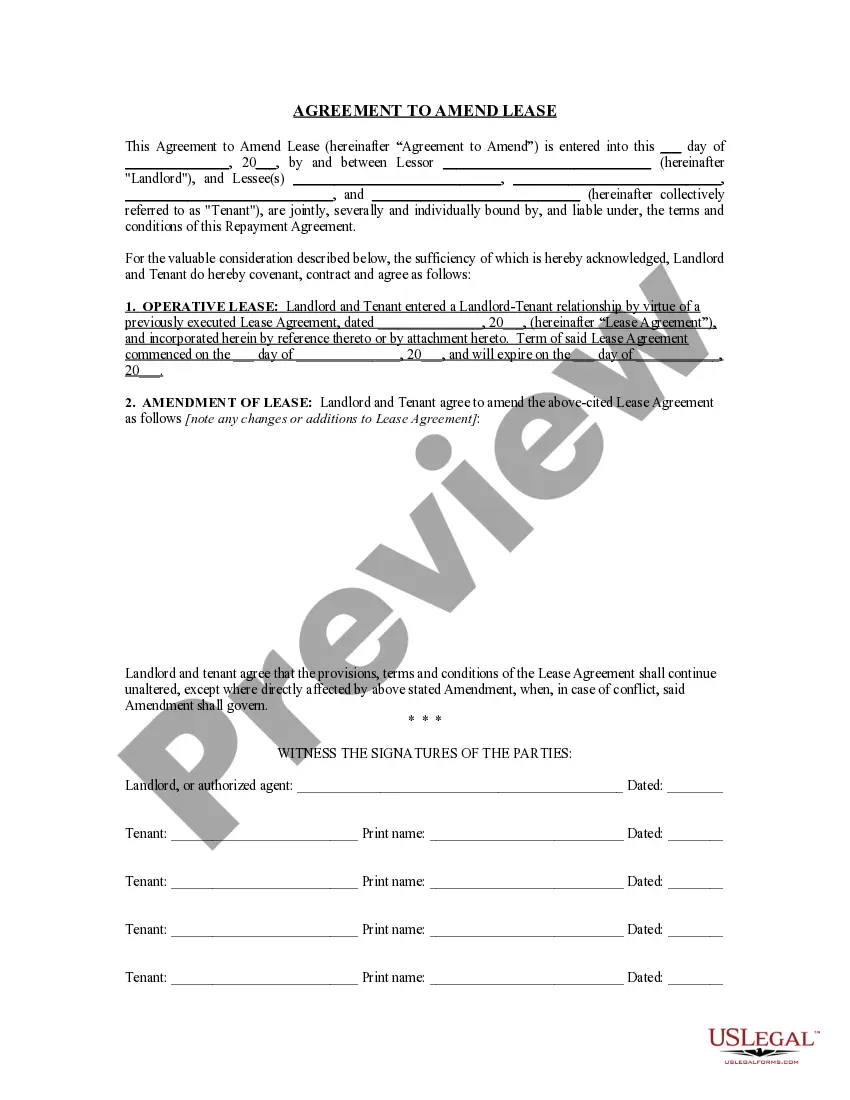
Can the landlord refuse consent to an Assignment? Most leases will say that the Landlord cannot unreasonably withhold consent. According to section 19 (1A) of the Landlord and Tenant Act 1927 the landlord can insert conditions in the lease, which need to be met in the case of an assignment.
Collect each party's information. Include specifics about your property. Consider all of the property's utilities and services. Know the terms of your lease. Set the monthly rent amount and due date. Calculate any additional fees. Determine a payment method. Consider your rights and obligations.
The difference between lease and rent is that a lease generally lasts for 12 months while a rental agreement generally lasts for 30 days.That means the landlord can't raise the rent without your written consent or evict you without cause, and you can't stop paying rent or break the lease without consequence.
In a full-service lease, or gross lease, the tenant pays the base rent, and the landlord pays for the utilities, insurance, taxes and other costs of operating the building.In a net lease, by contrast, the tenants pay a portion of the operating costs of the building.
A written agreement can act as a roadmap for the landlord-tenant relationship, especially if a dispute arises. Also, real estate (land) leases for more than one year must be in writing. If a lease for over one year is not in writing, it will generally not be enforceable in court.
Commercial leases generally fall into one of three major categories based on how the building's operating expenses are passed on to tenants: Gross or full-service lease. You pay a flat monthly rate from which the landlord pays all operating expenses, including utilities, property taxes and maintenance.
The lease becomes legally binding when all parties have signed: the landlord and all tenants living in the unit who are 18 and older. If you're worried about situations where a lease needs to end early, learn about breaking a lease and grounds for eviction.