Idaho Mutual Wills Package of Last Wills and Testaments for Man and Woman living together not Married with Adult Children
What this document covers
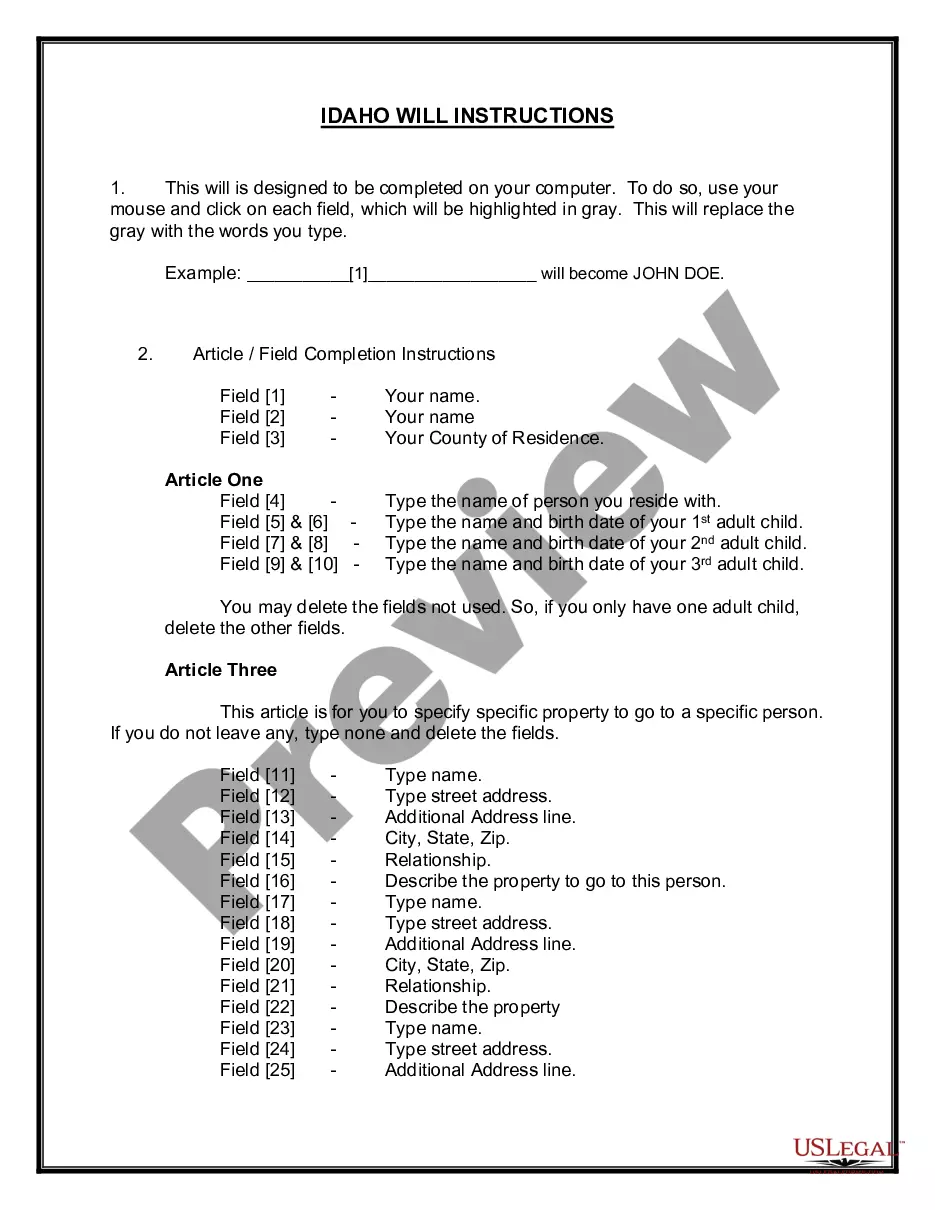
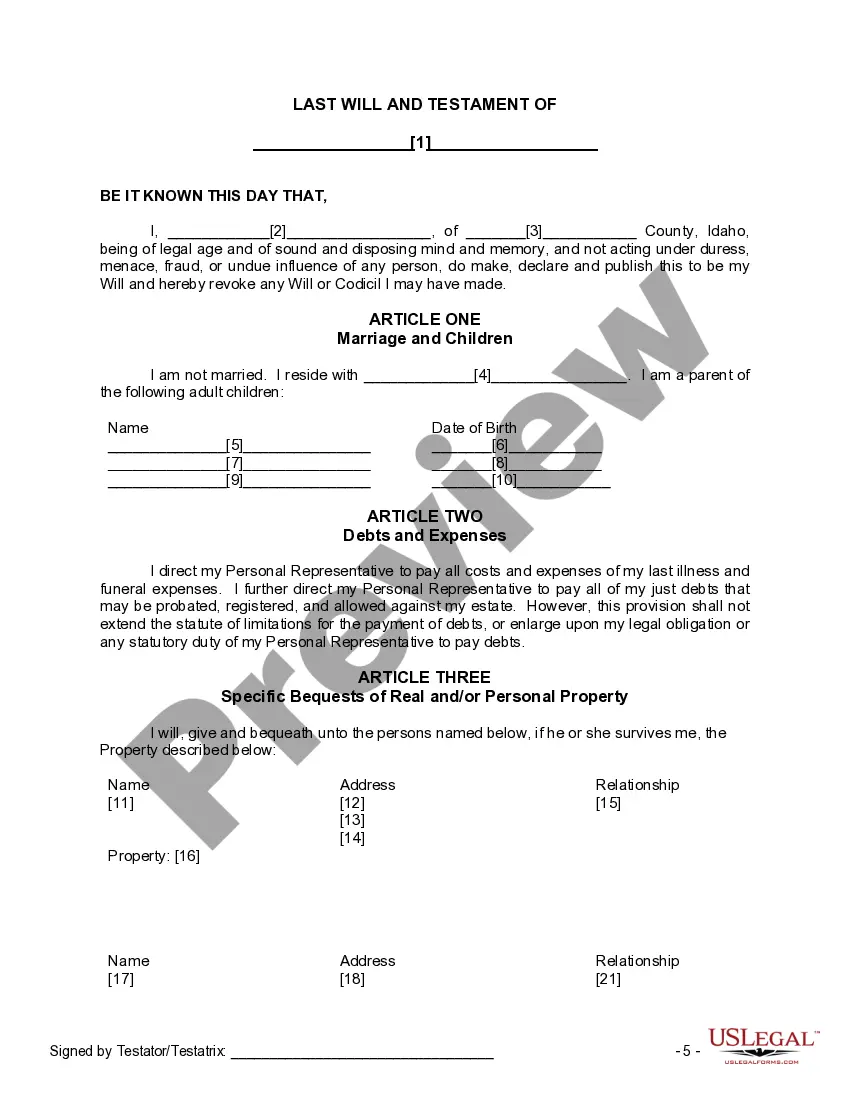
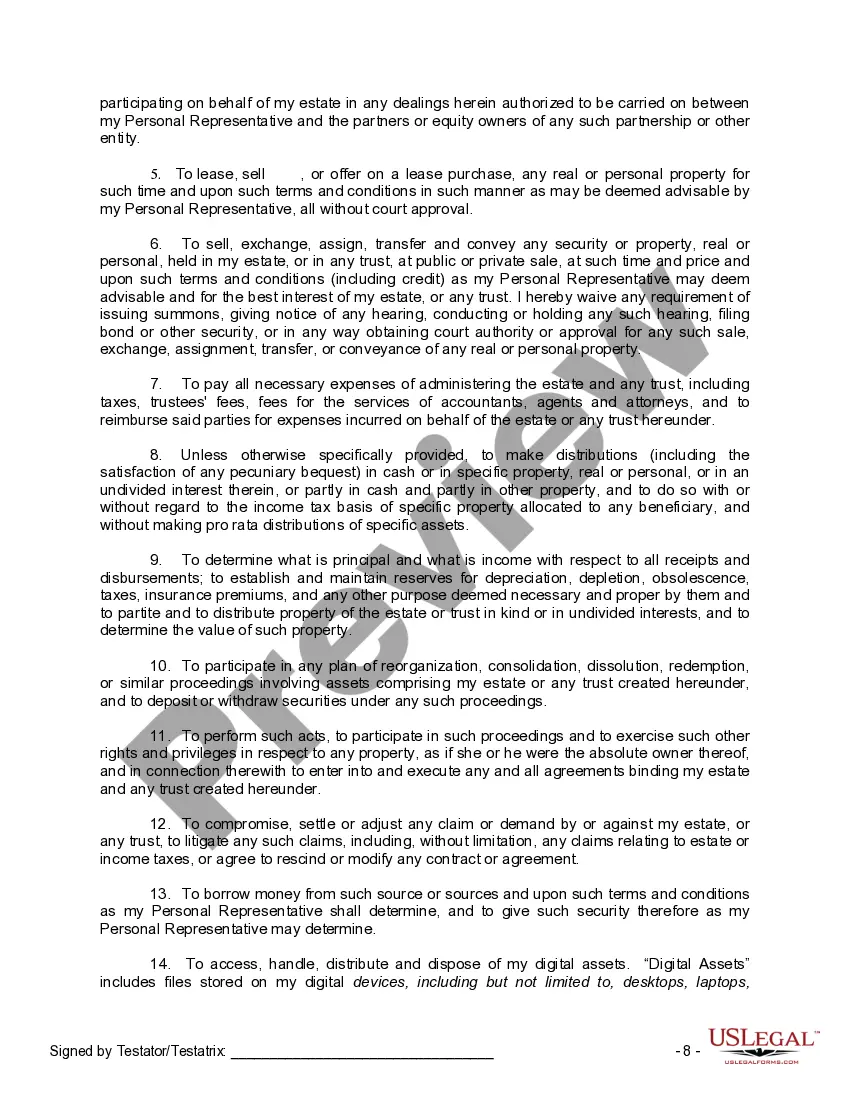
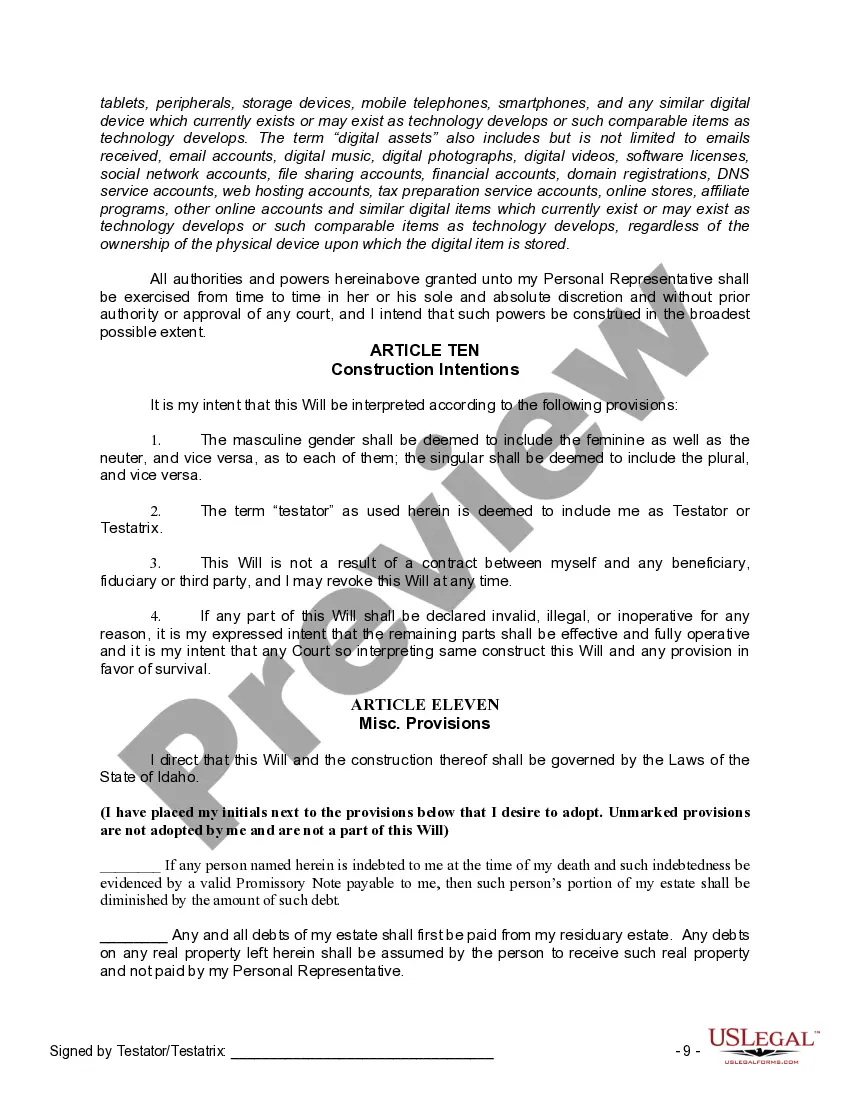
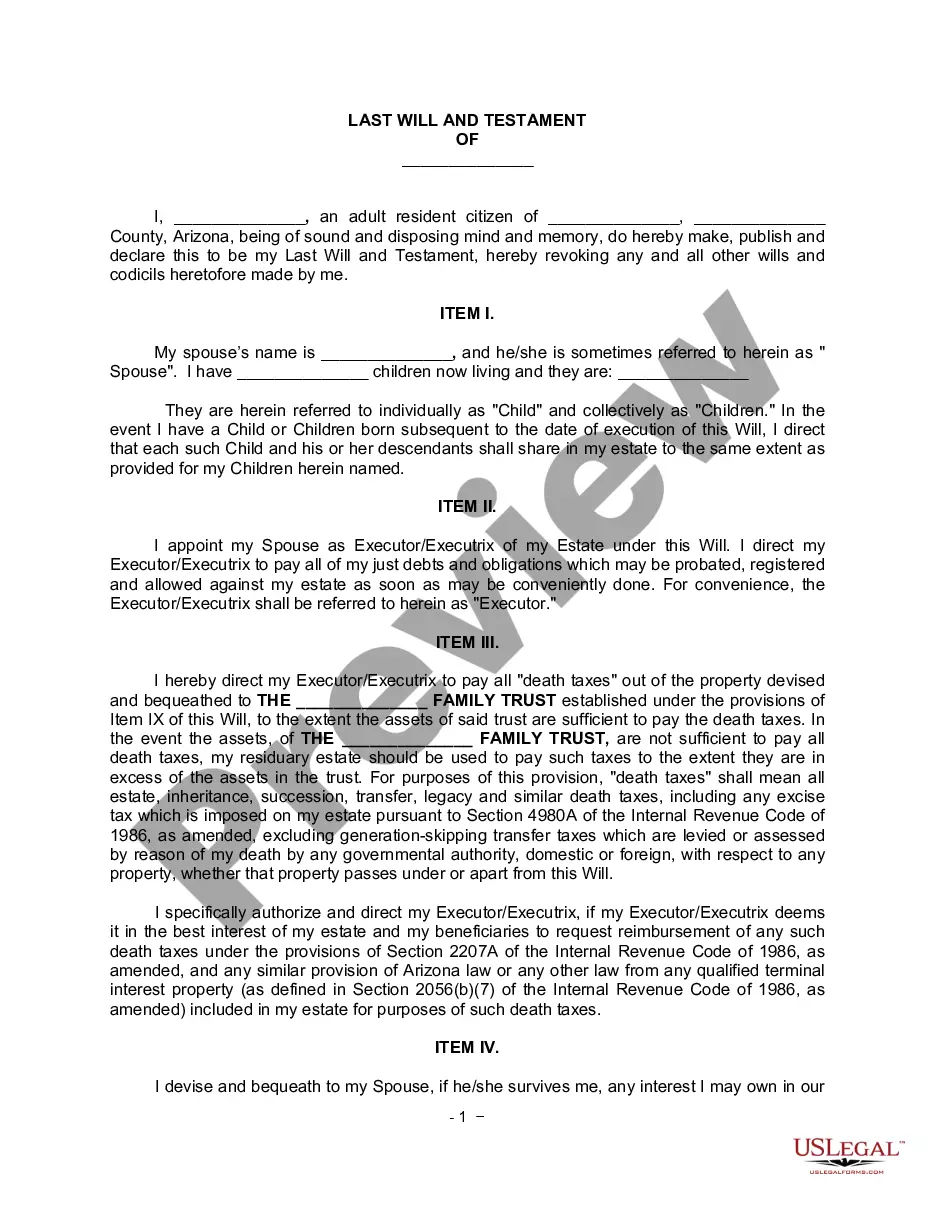
This Mutual Wills Package includes two Last Wills and Testaments designed for a man and woman living together who are not married and have adult children. The purpose of this form is to allow both partners to create mutual wills that leave property to one another while also providing for their children. This form offers specific provisions tailored for individuals in a cohabitating relationship, which sets it apart from standard wills designed for married couples or single individuals.
Form components explained
- Identification of the testators and their residential county.
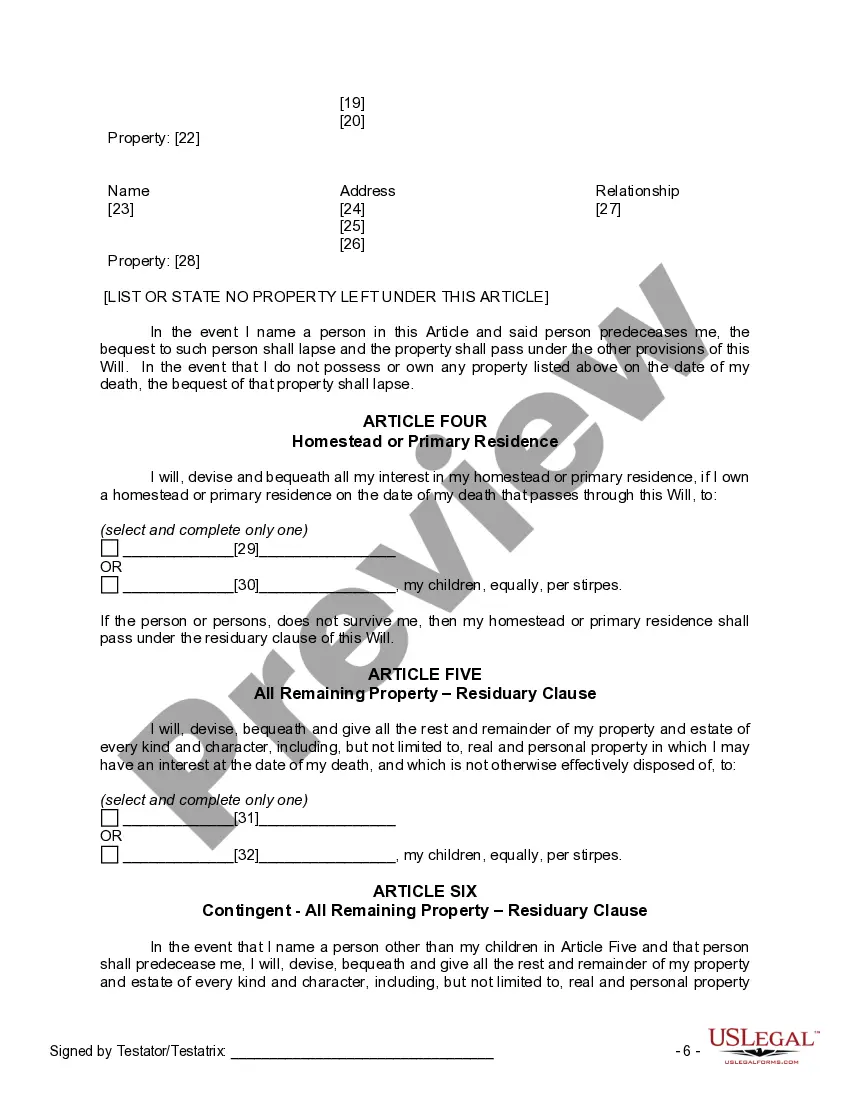
- Designation of mutual beneficiaries, including specific adult children and property allocations.
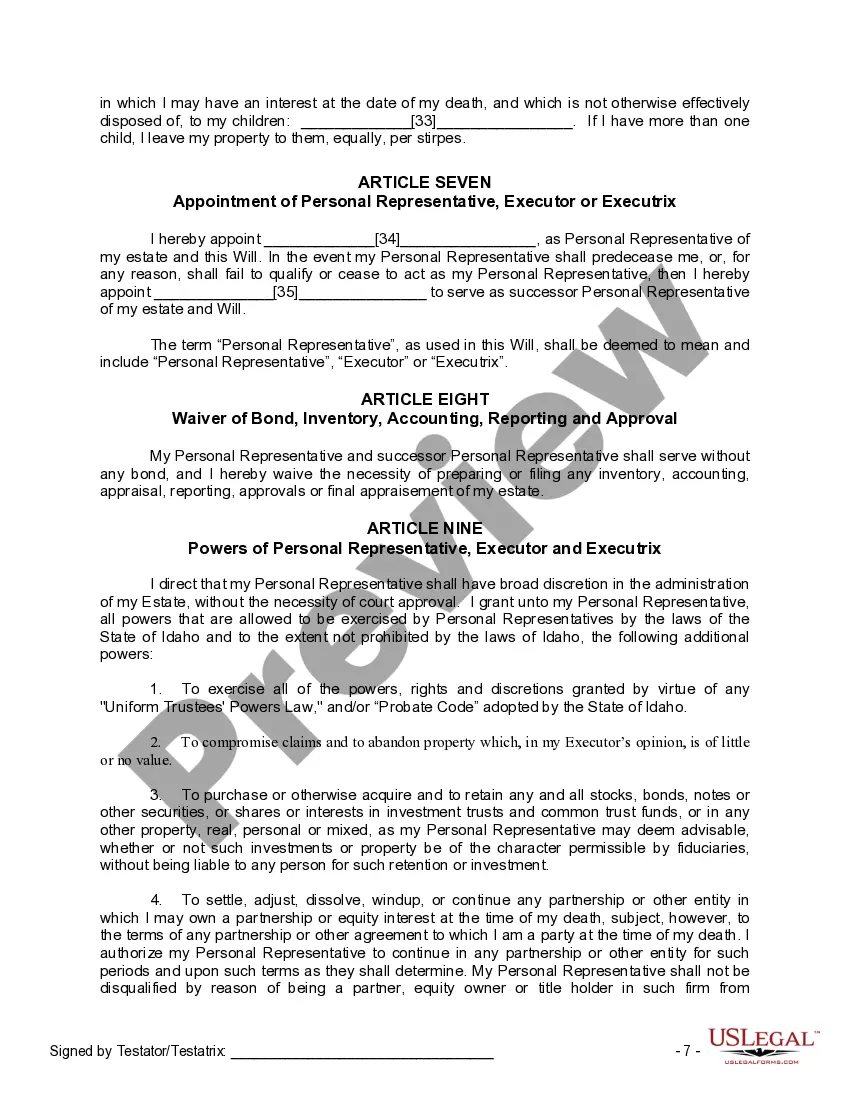
- Provisions for the appointment and powers of a personal representative or executor.
- Clauses addressing the treatment of debts and expenses upon death.
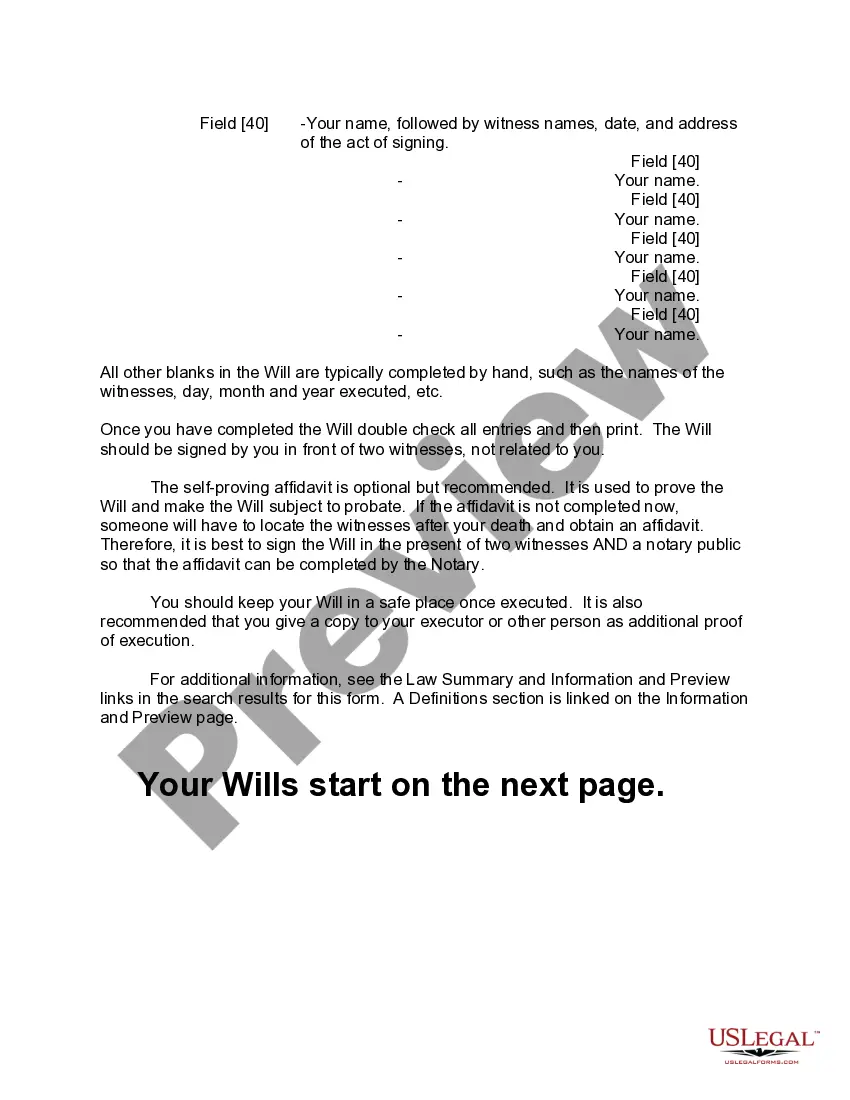
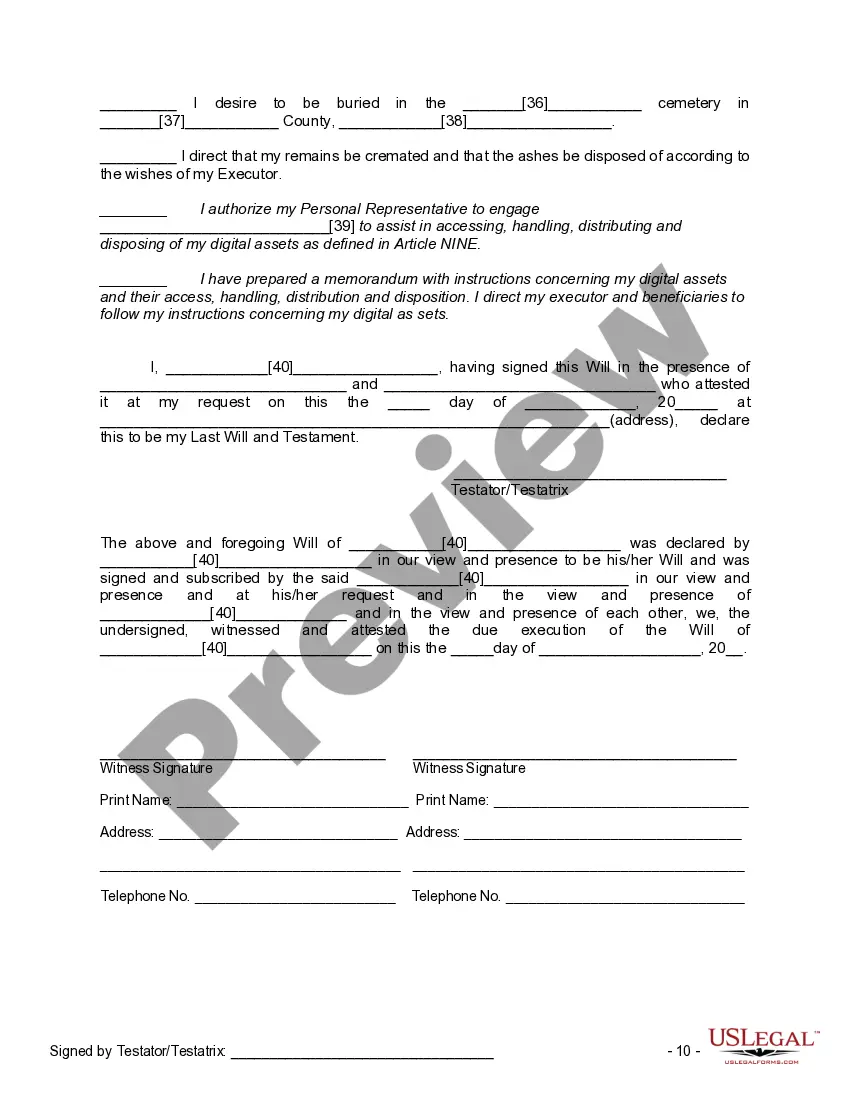
- Instructions for signing and witnessing the wills, including self-proving affidavits where applicable.




When to use this document
This form should be utilized in circumstances where an unmarried couple residing together wishes to establish a legally binding agreement regarding the distribution of their assets upon death. It is especially relevant for couples who want to ensure that their respective properties benefit each other and their adult children, thereby avoiding potential disputes after death.
Who this form is for
- Cohabitating partners who are not married but wish to protect each other's interests.
- Couples with adult children who want to define the distribution of their assets clearly.
- Individuals seeking a straightforward and comprehensible way to create mutual wills.
How to prepare this document
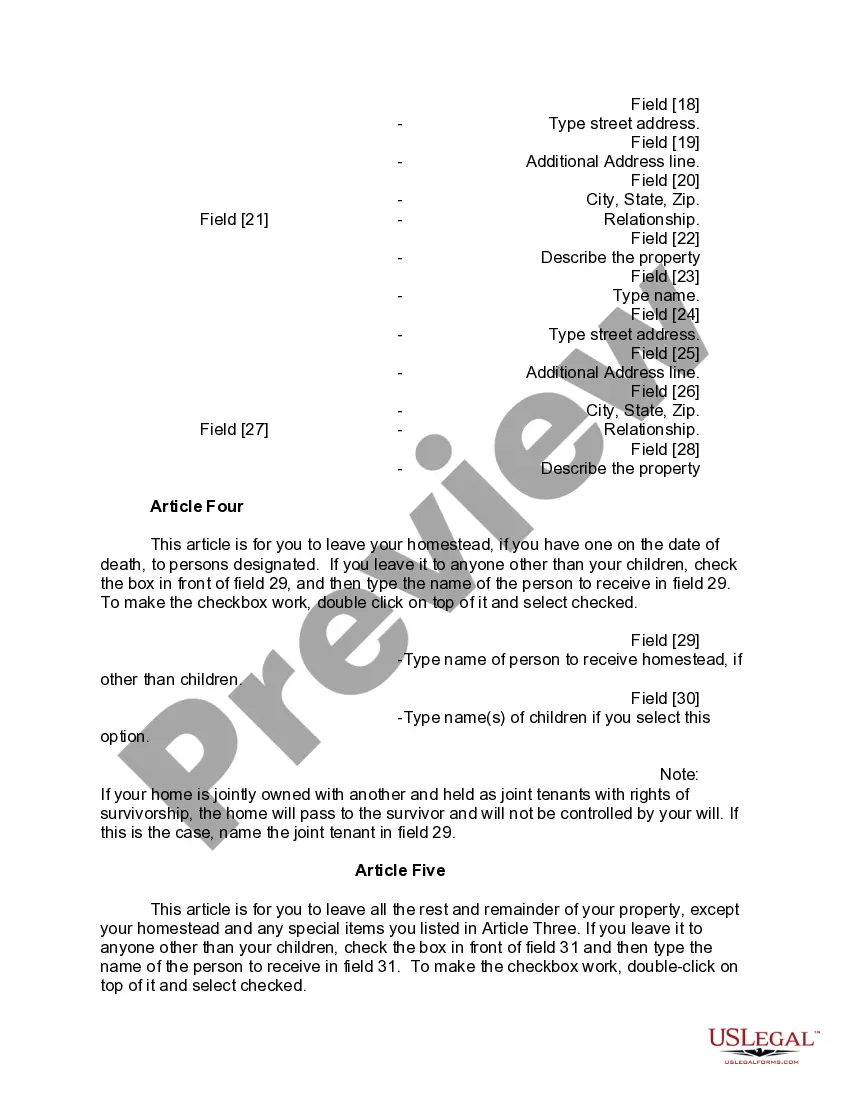
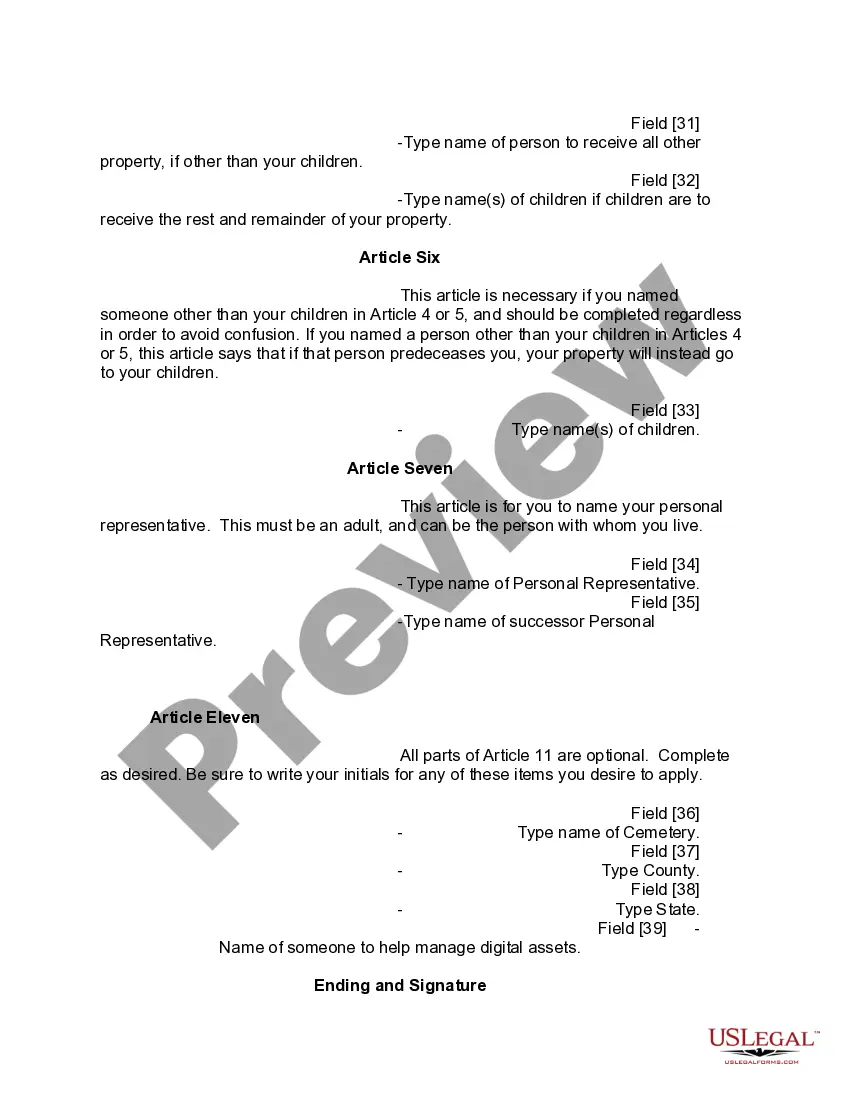
- Begin by filling in your names and county of residence at the top of the form.
- Identify your mutual beneficiary by listing each otherâs names and details of your adult children.
- Specify any specific property bequests you wish to make to chosen beneficiaries.
- Designate your homestead and all remaining property among your children or others as applicable.
- Ensure the completed document is signed in the presence of two witnesses and notarized if required.
Does this form need to be notarized?
Yes, this form must be notarized to be legally valid. The online platform offers integrated notarization services, allowing you to complete this process securely via video call at any time without the need to travel.
Get your form ready online
Our built-in tools help you complete, sign, share, and store your documents in one place.
Make edits, fill in missing information, and update formatting in US Legal Forms—just like you would in MS Word.
Download a copy, print it, send it by email, or mail it via USPS—whatever works best for your next step.
Sign and collect signatures with our SignNow integration. Send to multiple recipients, set reminders, and more. Go Premium to unlock E-Sign.
If this form requires notarization, complete it online through a secure video call—no need to meet a notary in person or wait for an appointment.
We protect your documents and personal data by following strict security and privacy standards.

Make edits, fill in missing information, and update formatting in US Legal Forms—just like you would in MS Word.

Download a copy, print it, send it by email, or mail it via USPS—whatever works best for your next step.

Sign and collect signatures with our SignNow integration. Send to multiple recipients, set reminders, and more. Go Premium to unlock E-Sign.

If this form requires notarization, complete it online through a secure video call—no need to meet a notary in person or wait for an appointment.

We protect your documents and personal data by following strict security and privacy standards.
Typical mistakes to avoid
- Failing to have both wills signed in front of the required witnesses.
- Neglecting to include a notary when necessary for self-proving affidavits.
- Not specifying property details clearly, which can lead to ambiguity.
Why complete this form online
- Convenience of filling out and downloading the form at your own pace.
- Editability allows you to make changes easily before finalizing the document.
- Access to state-specific legal guidance ensures compliance with local laws.
- Mutual wills are enforceable in many jurisdictions but vary by state.
- This form serves as a legal document for asset distribution upon death.
- Certain provisions may be contested, so proper execution is essential.
What to keep in mind
- The Mutual Wills Package is tailored for unmarried couples with adult children.
- Proper execution involves completing the document with personal details and signing in front of witnesses.
- Documentation of mutual intentions is critical for avoiding disputes over asset distribution.
Looking for another form?
Form popularity
FAQ
Here are our top 5 reasons why it is better to have a separate Will for each spouse. When someone dies, their Will becomes locked in since they can no longer express a change to their wishes. This means that if one spouse passes away, the joint Will would become locked and difficult to update for the surviving spouse.
The Supreme Court explained that a joint Will is a Will made by two or more testators contained in a single document, duly executed by each testator, disposing either their separate properties or their joint property.
A joint will is a legal document executed by two (or more) people, which merges their individual wills into a single, combined last will and testament. Like most wills, a joint will lets the will-makers name who will get their property and assets after they die. Joint wills are usually created by married couples.
An adult can make a valid will without notifying their wife or husband. Not telling a spouse would be unusual, but not illegal.
As per the law, the joint assets are owned by both individuals hence both individuals i.e. husband & wife should make a Will either two separate Wills or one single Joint Will.Hence Joint Will is ideal for couple having same wishes for their succession planning.
If each spouse has their own Will, California law allows them to make new Wills after the divorce has been filed and creating the new Will does not violate the Automatic Temporary Restraining Order (ATRO) against changing beneficiaries, selling assets, etc. during a California divorce.
The reality is, however, that both you and your spouse should each have your own will, and it should be planned as soon as possible. Some couples think that they can have one joint will together, but this is not a sound approach.