Idaho Letter from Landlord to Tenant as Notice to remove unauthorized inhabitants
What is this form?
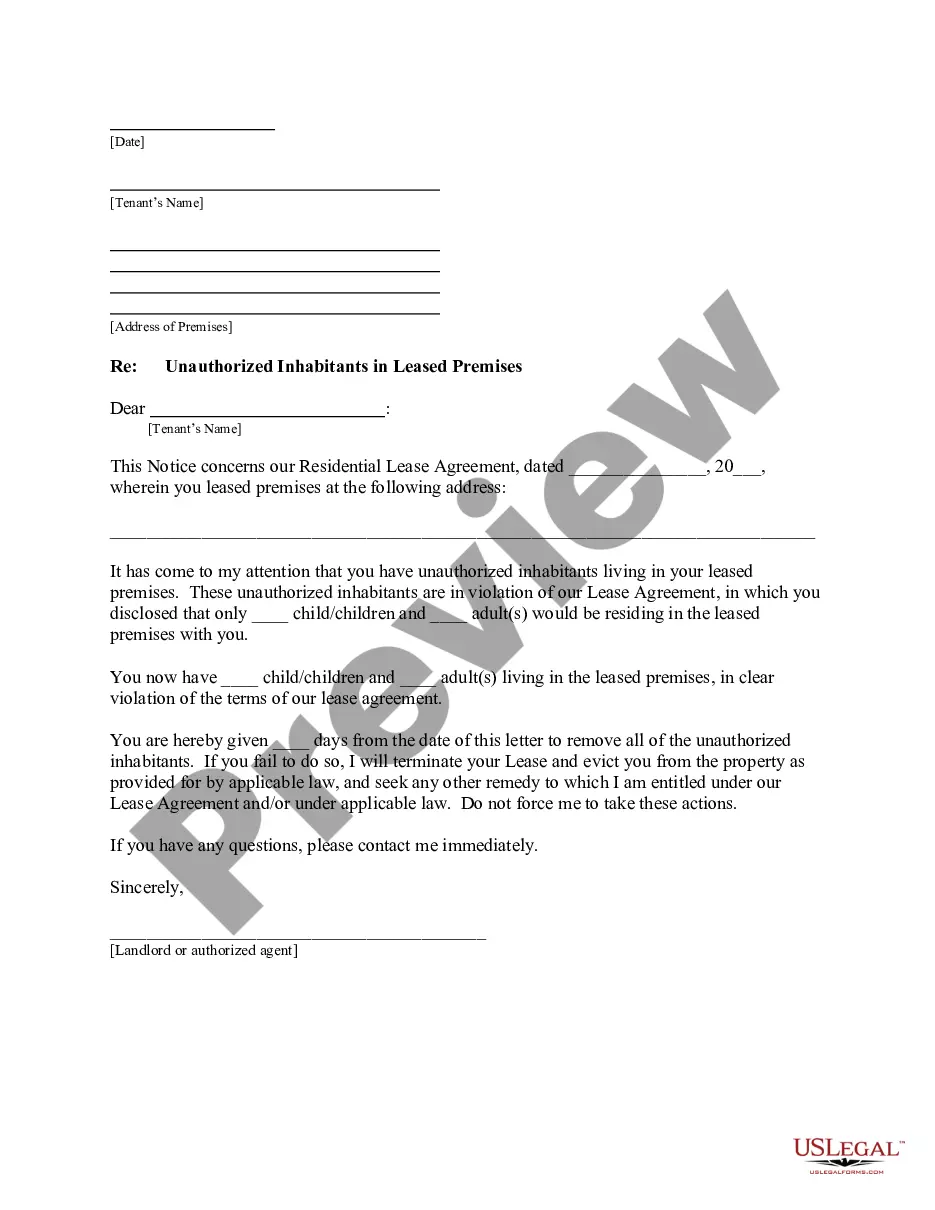
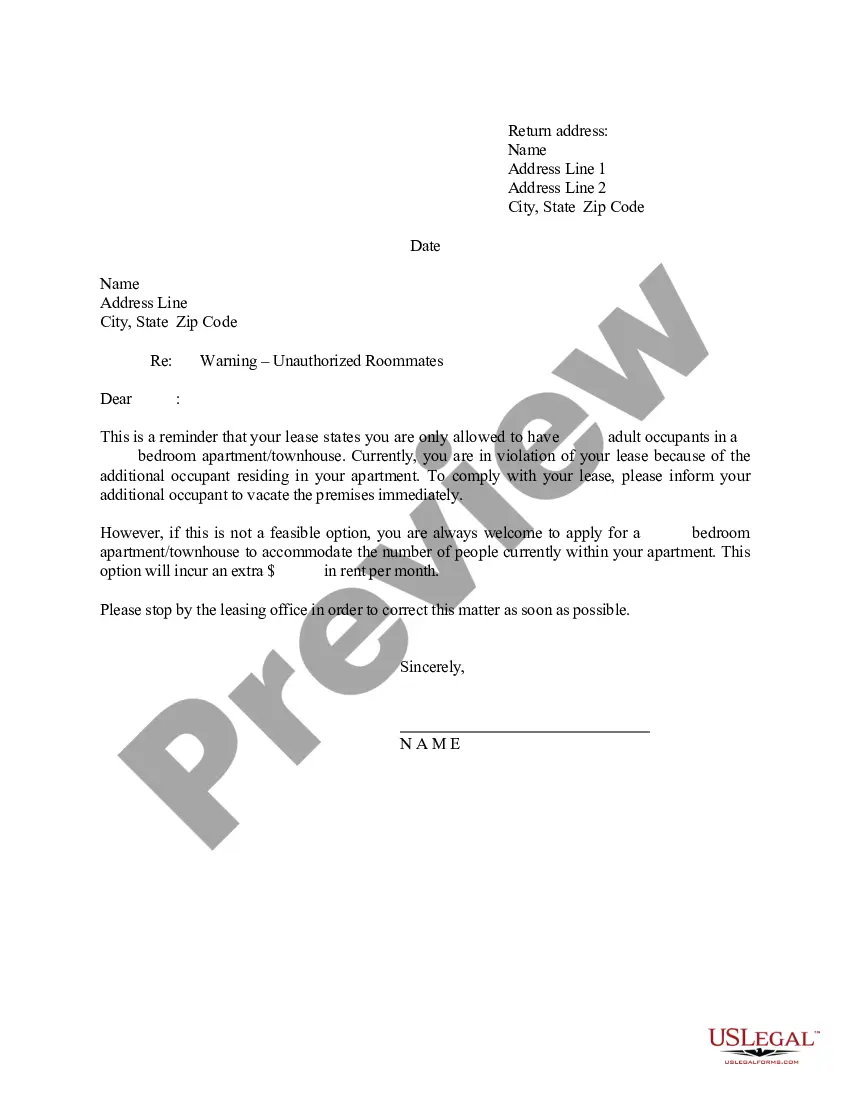
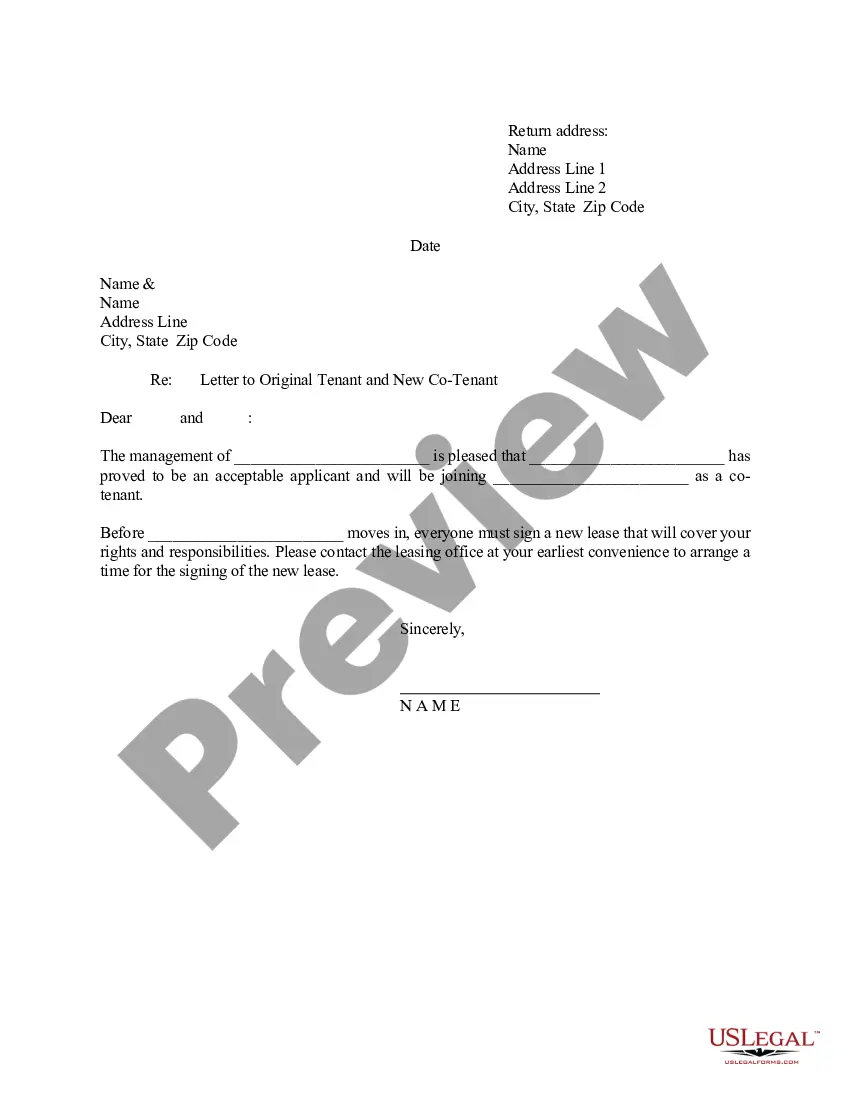
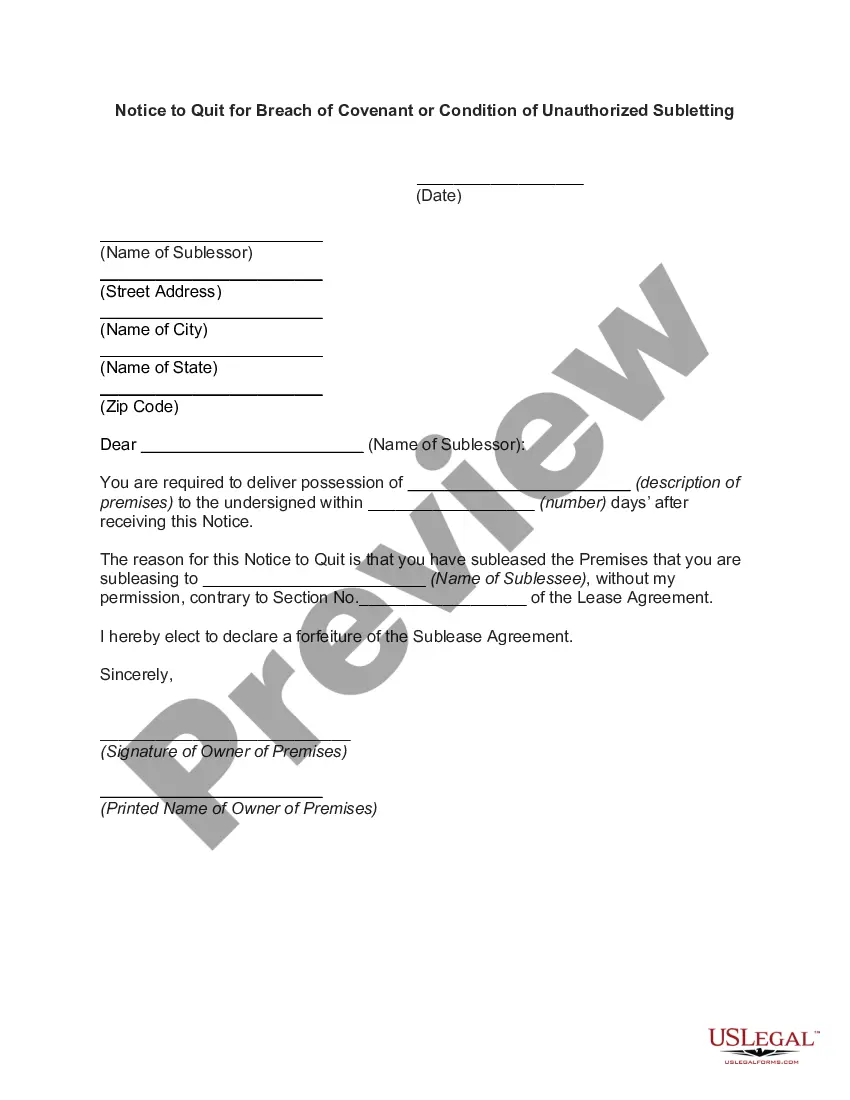
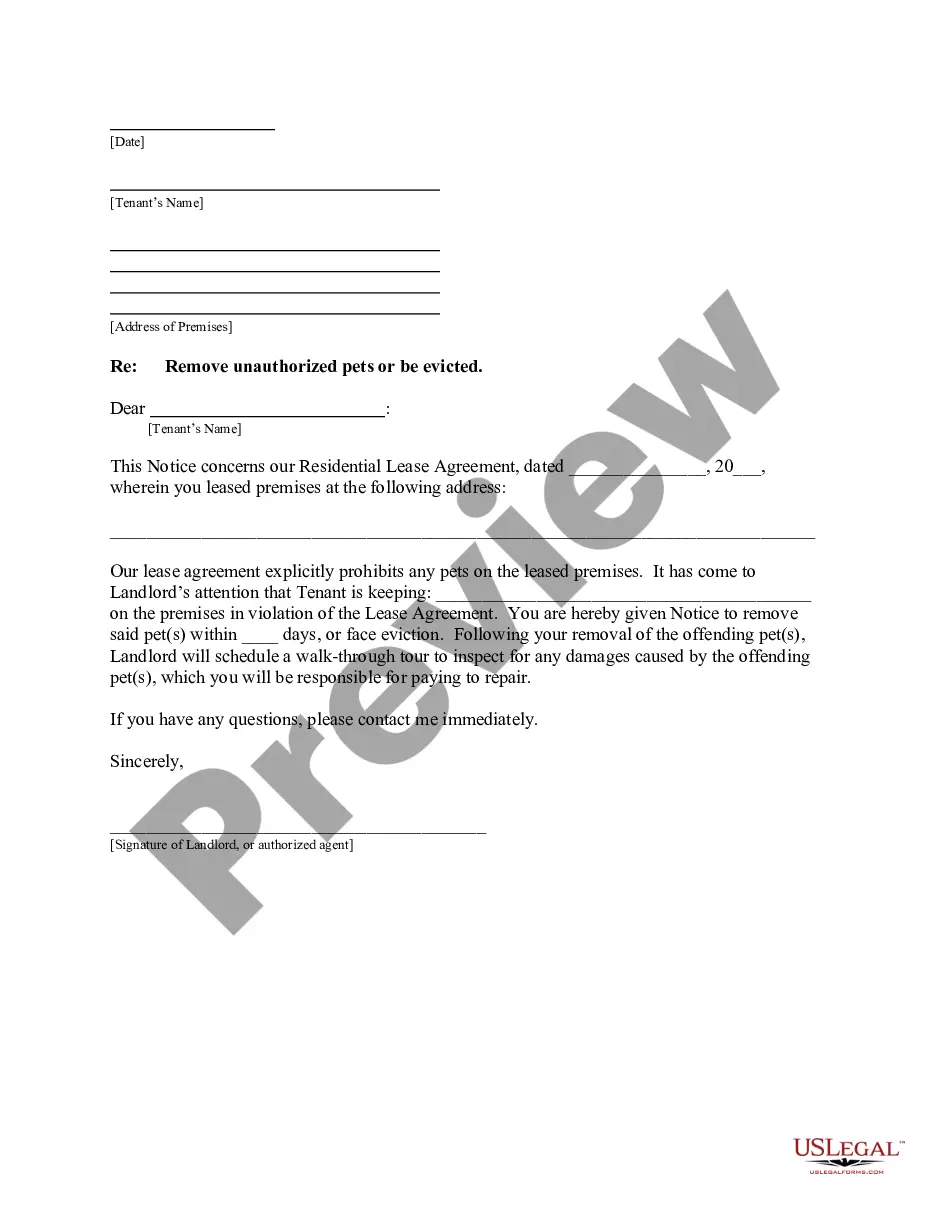
This document is a Letter from Landlord to Tenant as Notice to Remove Unauthorized Inhabitants. It formally requests tenants to evict any individuals living on the leased premises without authorization. This form serves as a warning and is distinct from other eviction notices, as it specifically addresses unauthorized tenants while allowing the primary tenants a chance to rectify the situation before legal action is taken.
Key components of this form
- Date of the original lease agreement.
- Address of the leased premises.
- Identification of unauthorized inhabitants.
- Specified number of days for compliance.
- Consequences of non-compliance, including potential eviction.
- Contact information for the landlord or authorized agent.

When to use this form
This form is used when a landlord discovers unauthorized individuals living in a rental property. It can be issued when tenants have violated the terms of the lease by allowing more residents than initially stated. This proactive step helps address the situation before escalating to eviction proceedings.
Who this form is for
- Landlords who have a signed lease agreement with tenants.
- Property managers overseeing rental properties.
- Anyone responsible for enforcing lease terms.
How to prepare this document
- Identify the date of the original lease agreement.
- Fill in the address of the property.
- List the unauthorized inhabitants and clarify the number of adults and children living in the property.
- Specify the number of days tenants have to remove the unauthorized inhabitants.
- Include your name and signature as the landlord or authorized agent.
Notarization guidance
This form does not typically require notarization unless specified by local law. It is advised to check state regulations to ensure compliance with local requirements.
Get your form ready online
Our built-in tools help you complete, sign, share, and store your documents in one place.
Make edits, fill in missing information, and update formatting in US Legal Forms—just like you would in MS Word.
Download a copy, print it, send it by email, or mail it via USPS—whatever works best for your next step.
Sign and collect signatures with our SignNow integration. Send to multiple recipients, set reminders, and more. Go Premium to unlock E-Sign.
If this form requires notarization, complete it online through a secure video call—no need to meet a notary in person or wait for an appointment.
We protect your documents and personal data by following strict security and privacy standards.

Make edits, fill in missing information, and update formatting in US Legal Forms—just like you would in MS Word.

Download a copy, print it, send it by email, or mail it via USPS—whatever works best for your next step.

Sign and collect signatures with our SignNow integration. Send to multiple recipients, set reminders, and more. Go Premium to unlock E-Sign.

If this form requires notarization, complete it online through a secure video call—no need to meet a notary in person or wait for an appointment.

We protect your documents and personal data by following strict security and privacy standards.
Common mistakes to avoid
- Failing to specify the exact number of unauthorized inhabitants.
- Not including sufficient details about the original lease.
- Omitting the deadline for compliance.
- Not signing the notice, making it invalid.
Why use this form online
- Convenient downloadable access anytime.
- Editable template to fit specific situations.
- Guided structure ensures all necessary information is included.
- Reliability of attorney-drafted templates for legal adherence.
- The letter serves as a formal notification and is critical for maintaining a record of communication with tenants.
- Failure to comply with lease terms can lead to eviction, but proper notice must first be provided.
- This document supports the landlord's case in legal proceedings if necessary.
Key takeaways
- The letter provides a clear request for the removal of unauthorized inhabitants.
- It is important to follow local laws and regulations governing tenant-landlord relationships when using this form.
- Properly completing and delivering this notice can prevent future legal disputes.
Looking for another form?
Form popularity
FAQ
Give these tenants notice to move with the proper waiting period (30 day notice). If the tenants don't want to move, the landlords can file for eviction with the courts. The landlord can prepare documents explaining they acquired the property without plans to keep the tenants or why they must leave.
A few available options are: to notify the relative in writing of your intention to sever your family ties; to obtain a restraining order to restrict his access to you; and to have a city or county official serve your relative with a Notice of No Trespass.
Send a 3-day notice to fix or quit. If the tenant doesn't follow through with a fix, visit your local courthouse and begin a filing for eviction. In some states, you can file to only evict the unauthorized tenant. In others, you'll have the option to evict your tenant as well as the unauthorized occupant.
An eviction notice for a non-compliance is a document given to a tenant when they have violated a portion of their lease except for rent (if it is for late rent, use the Notice to Pay or Quit Form).
The date that the tenant warning letter was written. The name and the basic personal information of the tenant. The name of the landlord or the owner of the property. The reason why a tenant warning letter has been written.
Gather documents relating to your home and the person you wish to evict. Give written notice to the family member, informing him or her that you wish them to leave. Wait out the notice period.
There is no written agreement When your roommate has month-to-month tenancy, California state law says that you can evict them by serving 30 or 60 days' notice without any reasoning.
This notice will inform the tenant that the tenant has three days to either pay rent or move out of the rental unit. If the tenant does not comply with the notice within three days, then the landlord can go to court and file an eviction lawsuit (unlawful detainer suit) against the tenant.
Gather documents relating to your home and the person you wish to evict. Give written notice to the family member, informing him or her that you wish them to leave. Wait out the notice period.