Idaho Letter from Tenant to Landlord about Insufficient notice of rent increase
About this form
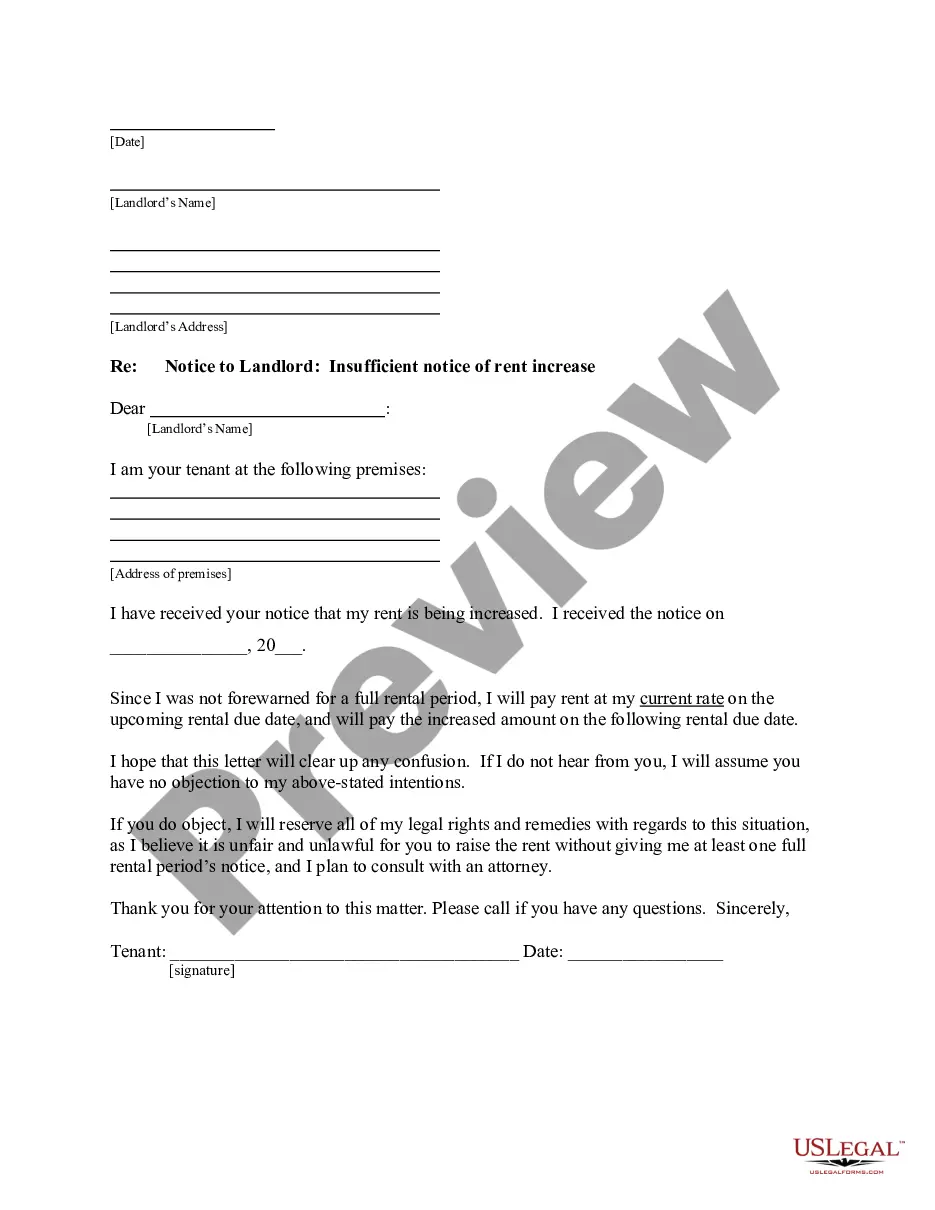
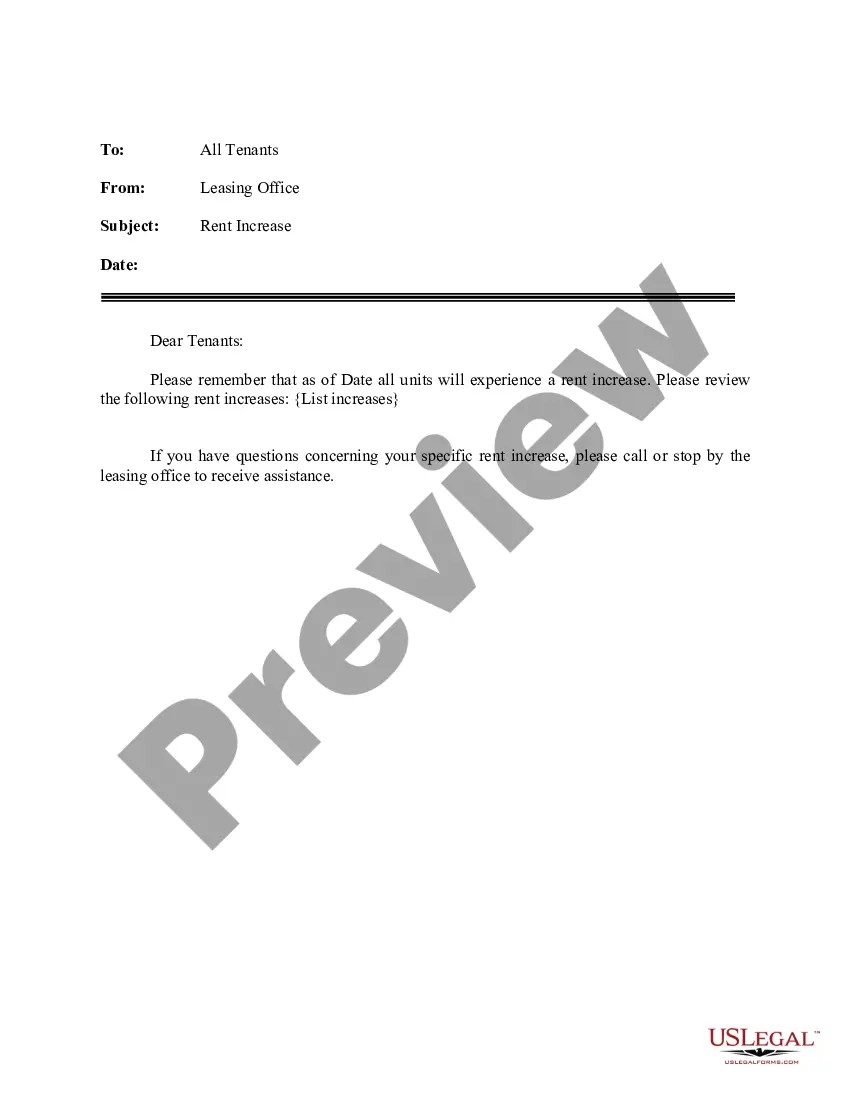
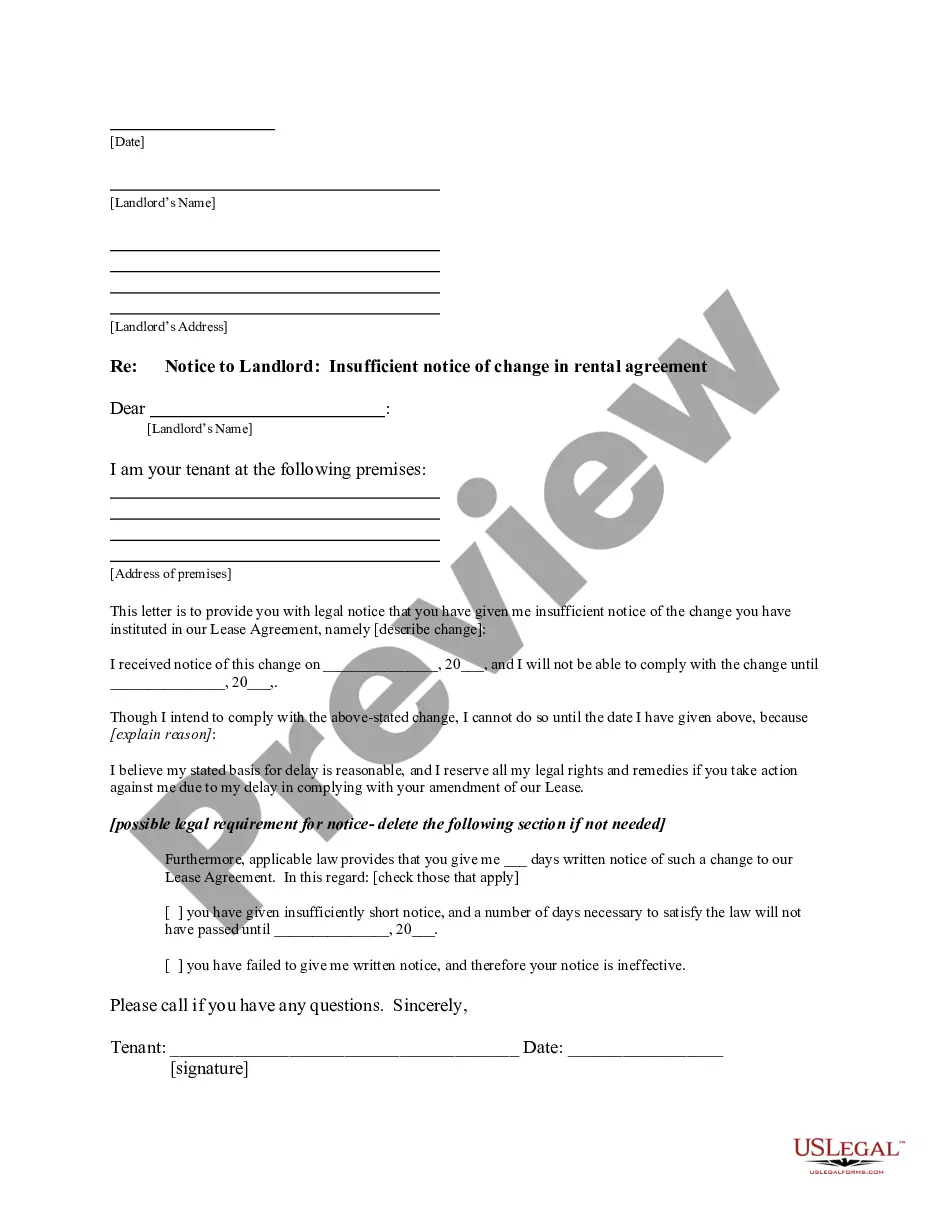
This form is a letter from a tenant to a landlord regarding insufficient notice of a rent increase. The purpose of this letter is to inform the landlord that the tenant did not receive adequate notice for the increase in rent for a month-to-month lease. This differs from other communications as it specifically addresses legal requirements regarding notification periods for rent adjustments.
What’s included in this form
- Identification of the tenant and landlord
- A statement indicating insufficient notice of a rent increase
- Intended payment strategy during the disputed period
- Reservation of legal rights in case of objection
- Confirmation of no objection if no response is received
- Signature line for the tenant

Common use cases
This form should be used when a tenant receives a rent increase notice that does not comply with the legal requirement for notice periods. It can be particularly useful in situations where the tenant intends to continue paying their current rent until the proper notice period has elapsed.
Intended users of this form
This form is intended for:
- Tenants who have received a rent increase notice with insufficient notice
- Individuals living in month-to-month rental agreements
- Anyone who wants to ensure their legal rights regarding rent increases are protected
How to complete this form
- Identify the parties: Clearly write the names of both the tenant and the landlord.
- State the issue: Detail the insufficient notice received regarding the rent increase.
- Outline payment intentions: Specify that you will continue paying the current rent amount until the next rental due date.
- Reserve legal rights: Indicate your intention to consult with an attorney if the landlord objects.
- Sign and date the letter: Ensure the tenant signs and dates the document for it to be valid.
Does this document require notarization?
In most cases, this form does not require notarization. However, some jurisdictions or signing circumstances might. US Legal Forms offers online notarization powered by Notarize, accessible 24/7 for a quick, remote process.
Get your form ready online
Our built-in tools help you complete, sign, share, and store your documents in one place.
Make edits, fill in missing information, and update formatting in US Legal Forms—just like you would in MS Word.
Download a copy, print it, send it by email, or mail it via USPS—whatever works best for your next step.
Sign and collect signatures with our SignNow integration. Send to multiple recipients, set reminders, and more. Go Premium to unlock E-Sign.
If this form requires notarization, complete it online through a secure video call—no need to meet a notary in person or wait for an appointment.
We protect your documents and personal data by following strict security and privacy standards.

Make edits, fill in missing information, and update formatting in US Legal Forms—just like you would in MS Word.

Download a copy, print it, send it by email, or mail it via USPS—whatever works best for your next step.

Sign and collect signatures with our SignNow integration. Send to multiple recipients, set reminders, and more. Go Premium to unlock E-Sign.

If this form requires notarization, complete it online through a secure video call—no need to meet a notary in person or wait for an appointment.

We protect your documents and personal data by following strict security and privacy standards.
Common mistakes
- Not clearly stating the issue with the rent increase notice.
- Failing to sign and date the letter.
- Using unclear language that may confuse the landlord.
Benefits of completing this form online
- Convenient access to the form anytime and anywhere.
- Editability allows you to customize the letter to fit your specific situation.
- Reliability, as forms are drafted by licensed attorneys to ensure compliance with legal standards.
Summary of main points
- This letter protects your rights as a tenant regarding insufficient notice of a rent increase.
- Clear communication is crucial to avoid misunderstandings with your landlord.
- Consulting with an attorney can provide you with additional legal safeguards if needed.
Looking for another form?
Form popularity
FAQ
The average rent increase per year is, give or take, somewhere between 3% and 5%. For a monthly rent payment of $1,500, for example, we're talking between $45 and $75 more per month.
There are no limits on the number of times or the amount a landlord can increase the rent unless there is a provision in the lease. A tenant can move rather than pay the increase. Idaho Code Section 55-307.
Essentially, this means your landlord can only raise rents if they're in line with the current market. The AST often has a section suggesting how much rents could increase by. The percentage is typically between 0.5 and 5%, with market rents expected to be somewhere in that bracket after a 12-month AST comes to an end.
Tenant's name. Property address. Landlord name and contact information. Date the letter is written. Date the rent increase will take effect. Amount of rent increase. Current cost of rent.
Idaho does not currently enforce any kind of rent control so landlords are able to charge whatever they want in rental prices. Rental increases. Idaho landlords are not limited in how much they can raise rental prices but they must give tenants at least 15 days' advance notice before doing so.
In most states, a landlord must give tenants notice at least 30 days before they'll enforce a rent increase. However, in other states like California, the notice can increase to 60 days' notice if the increase is more than 10% of the current rent rate.
In most states, a landlord must give tenants notice at least 30 days before they'll enforce a rent increase. However, in other states like California, the notice can increase to 60 days' notice if the increase is more than 10% of the current rent rate.
Remember you're a business. Do your research. Raise the rent all at once or incrementally. Don't negotiate or ask tenants what they think a fair rent increase would be. Be courteous and firm. Find a template you like. Send a formal letter by certified mail. Give the tenant notice.