Missouri Paternity Law and Procedure Handbook
What is this form?
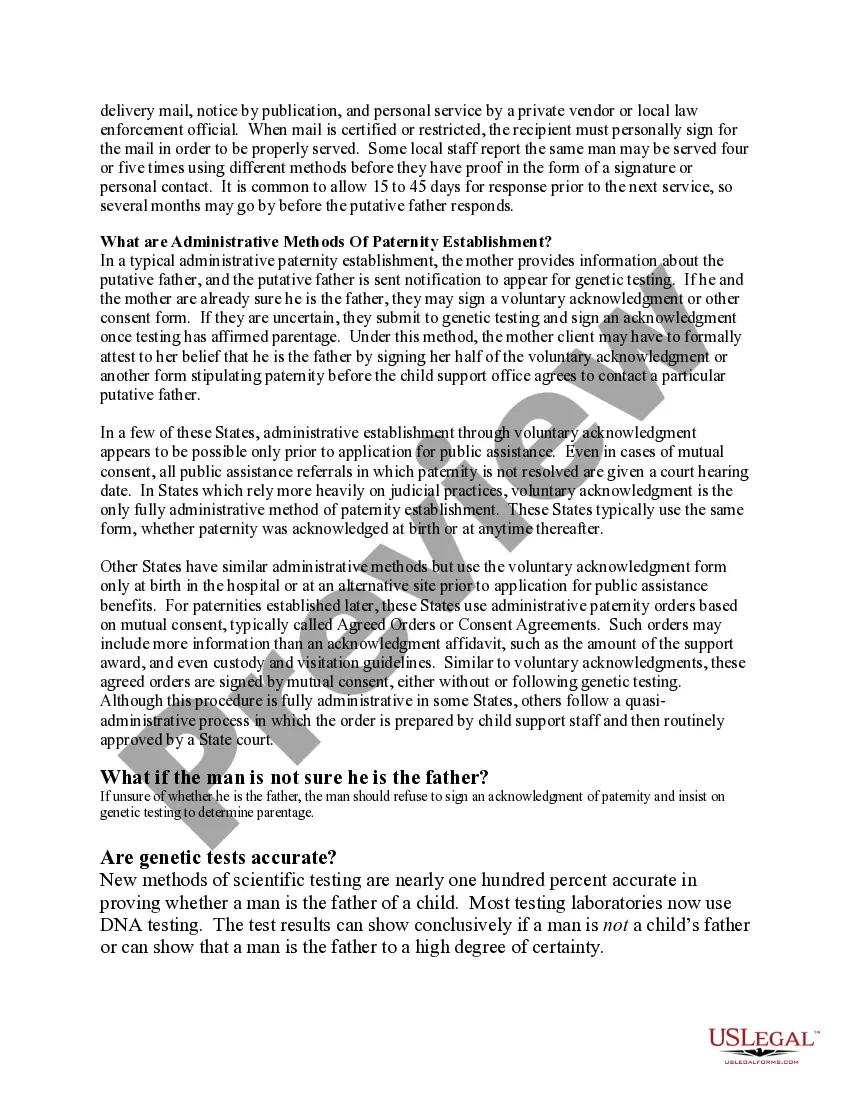
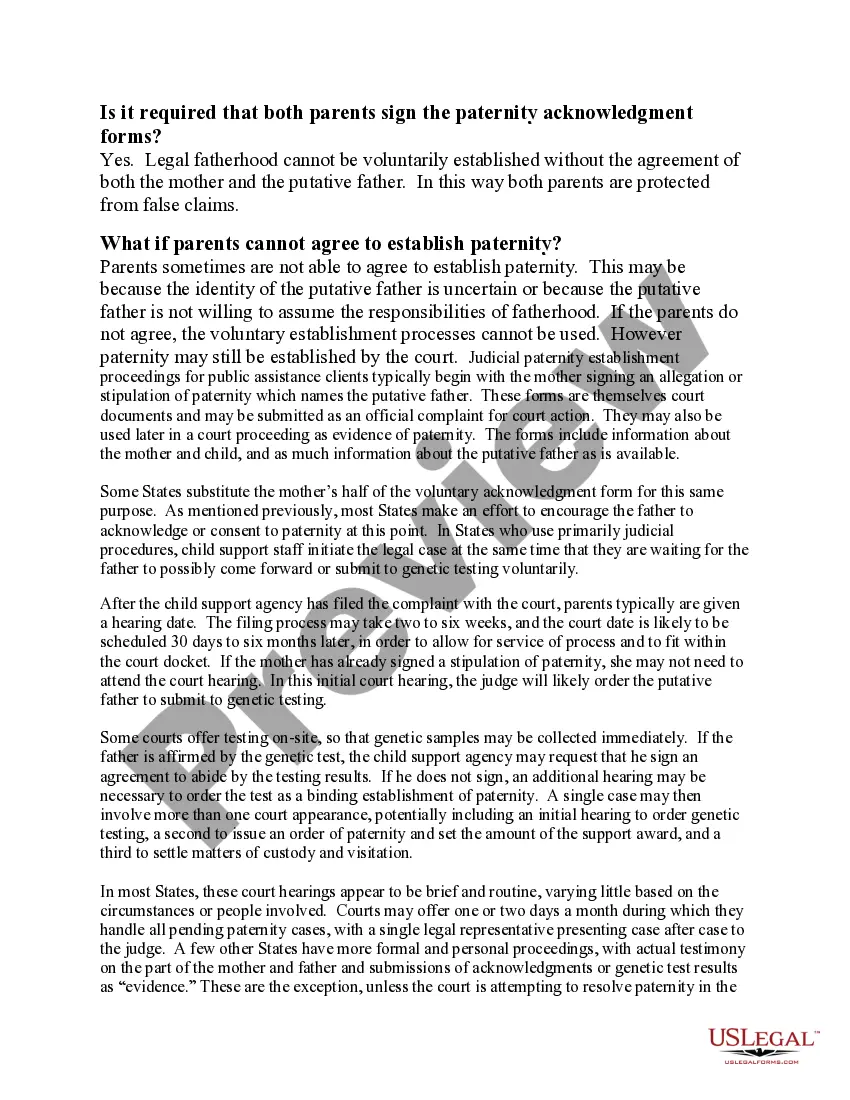
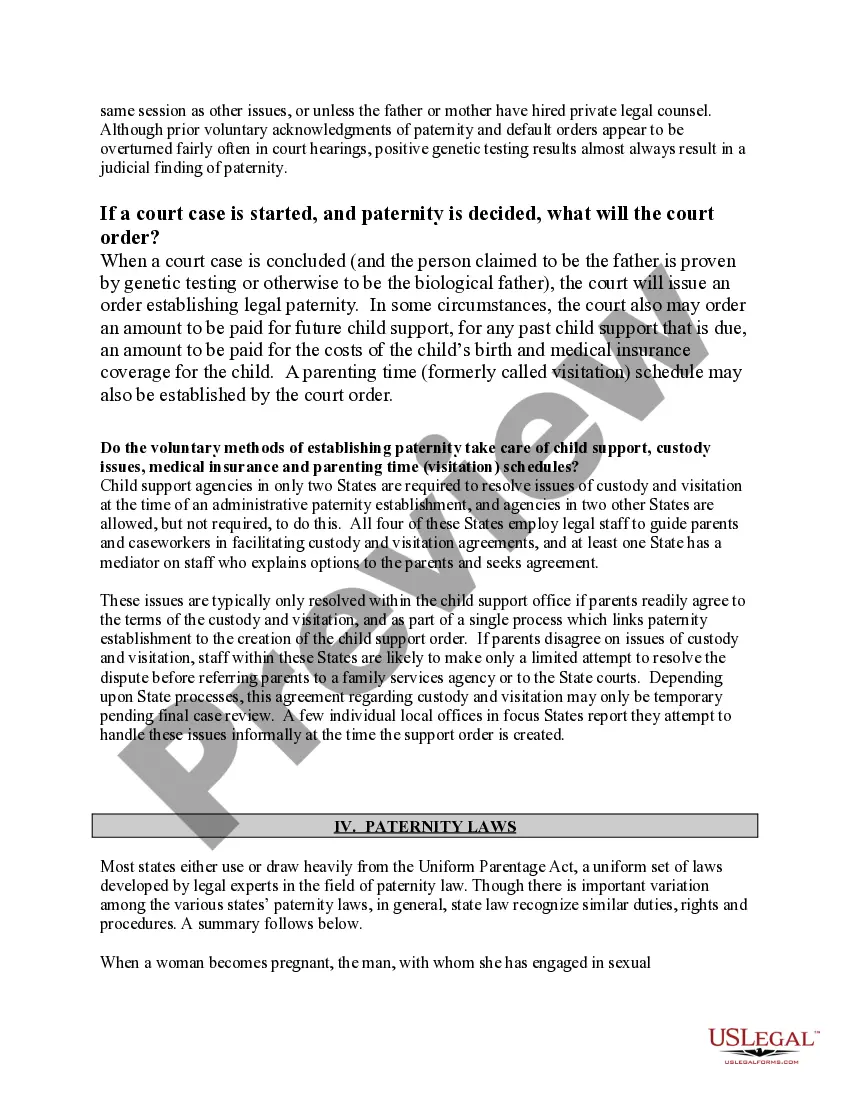
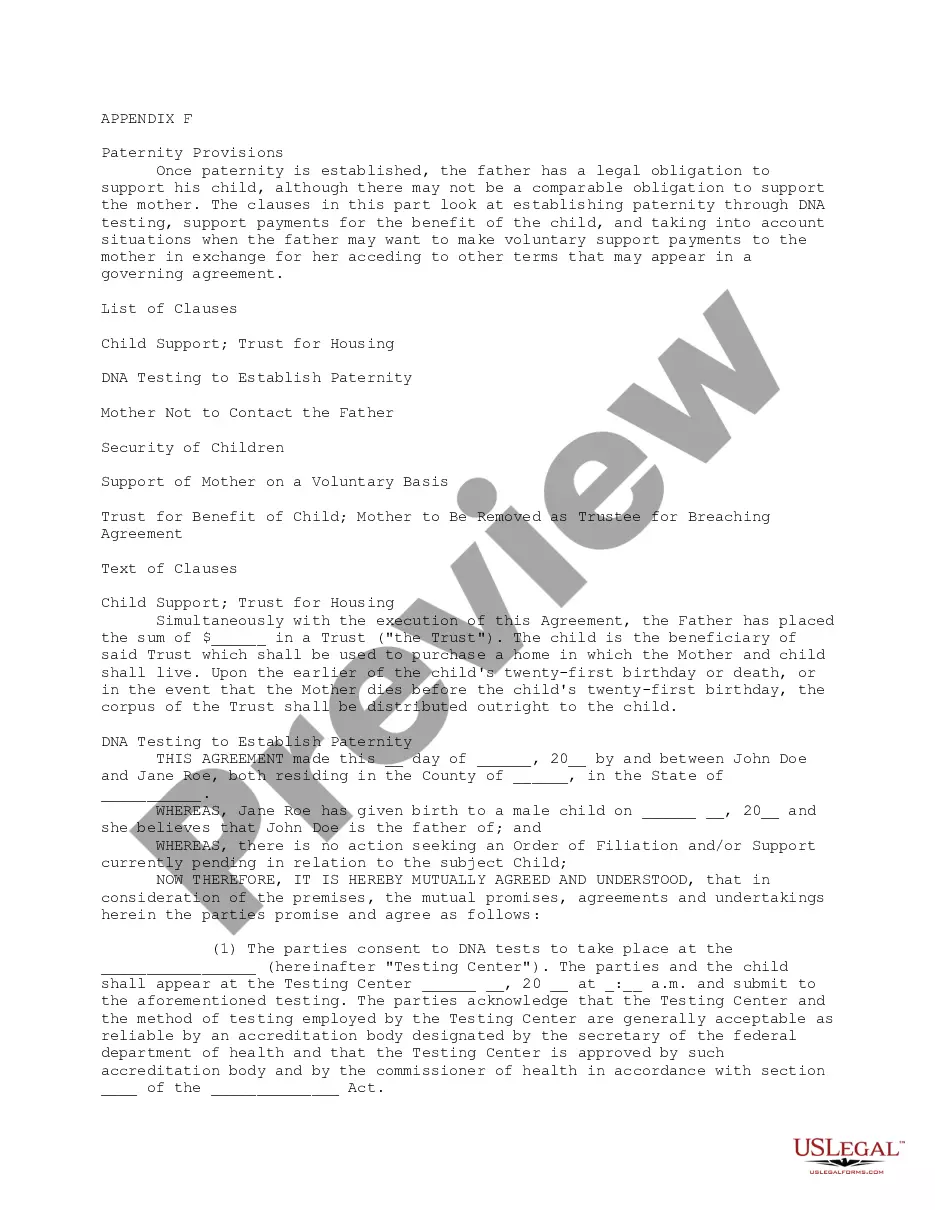
The Paternity Law and Procedure Handbook is a comprehensive guide that outlines the laws and procedures regarding paternity establishment in the United States. This resource specifically addresses the challenges unmarried parents face and provides clear, state-specific information to help establish paternity, whether through voluntary acknowledgment or court action. Unlike other legal forms that only provide templates, this handbook includes an overview of relevant laws, procedures, and resources for support, making it an essential tool for those seeking to clarify parental rights and responsibilities.
Main sections of this form
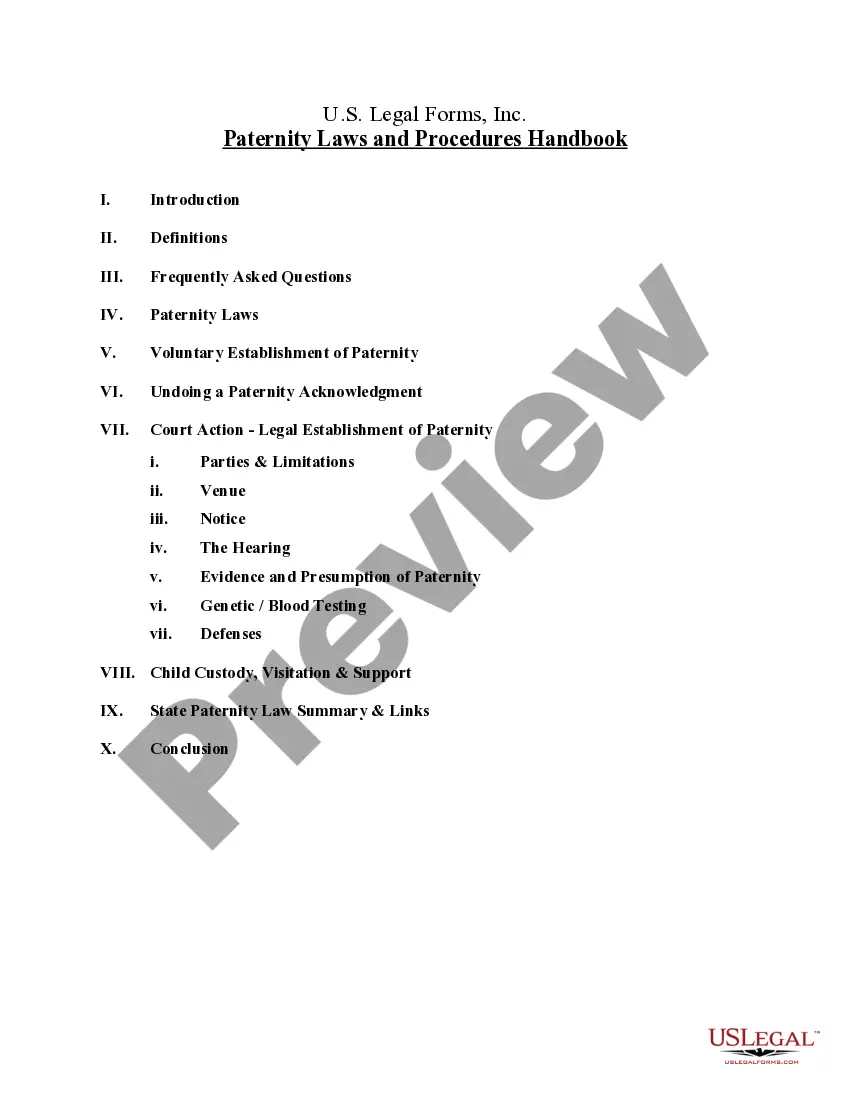
- Introduction to paternity laws and obligations.
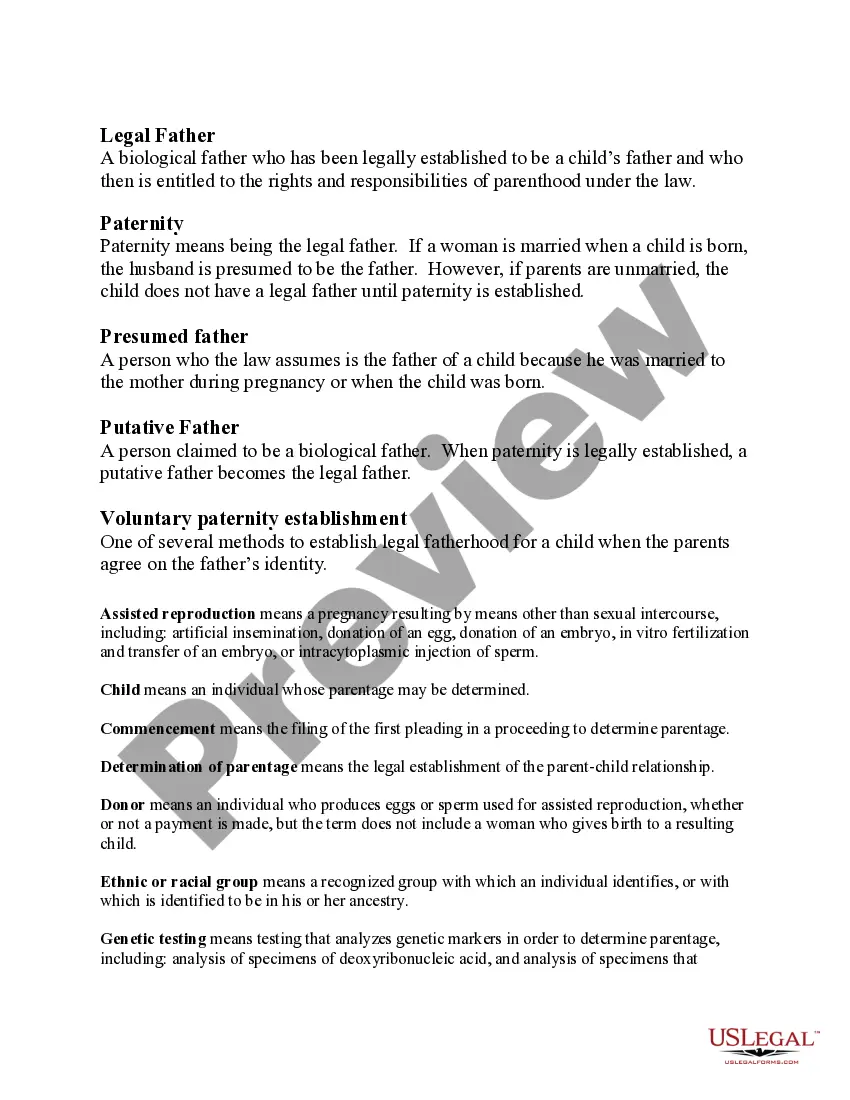
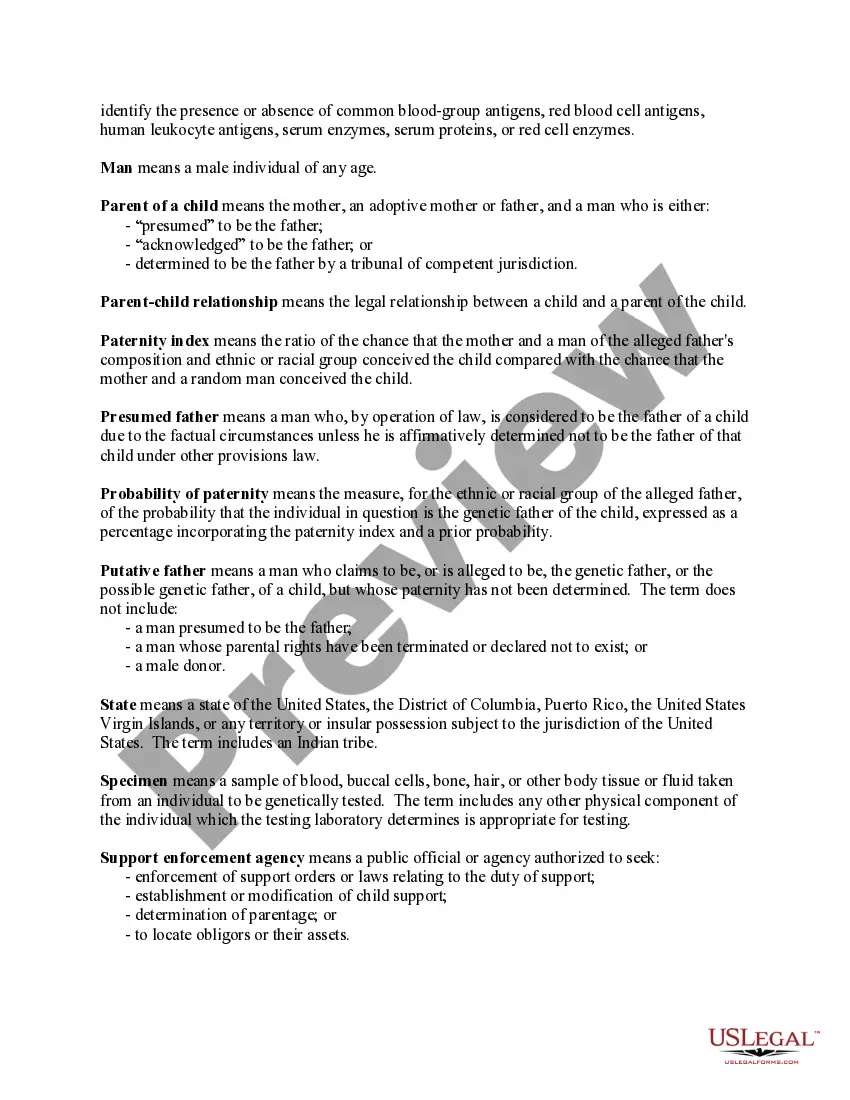
- Definitions of key terms related to paternity.
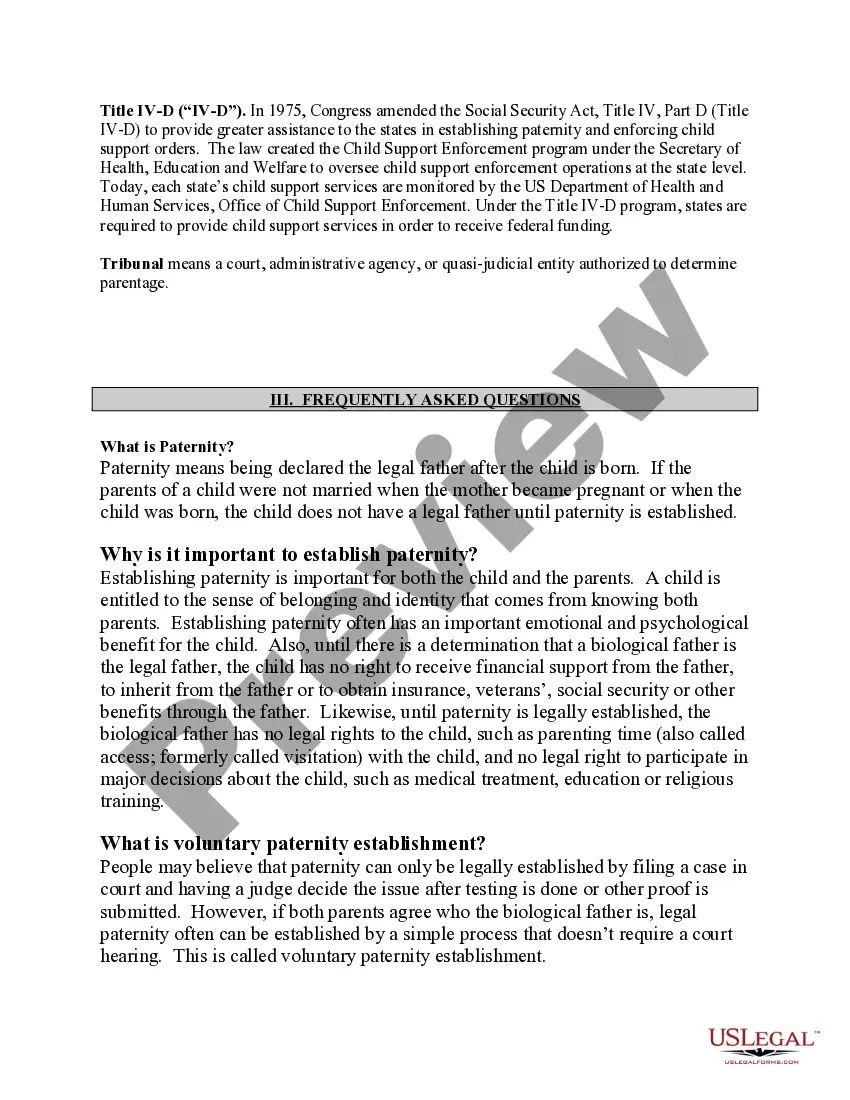
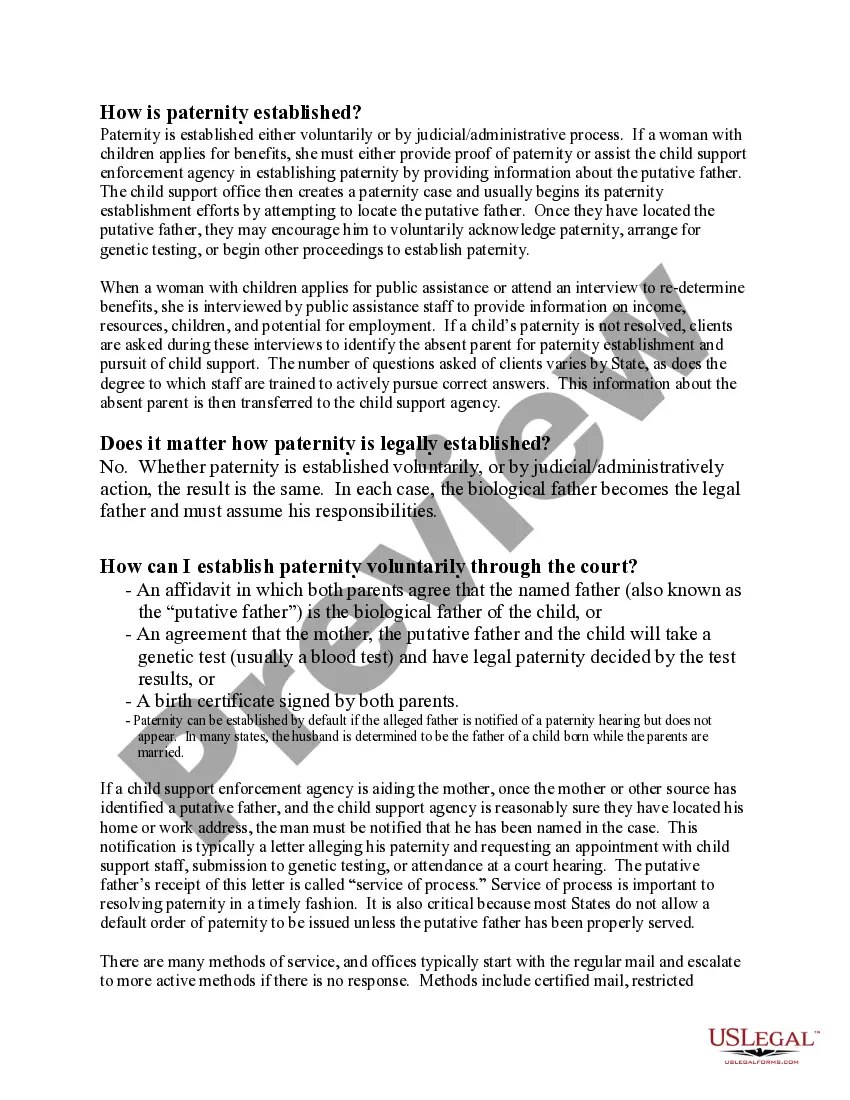
- Information on voluntary establishment of paternity.
- Legal actions for paternity establishment and how to initiate them.
- Guidance on child custody, visitation, and support related issues.
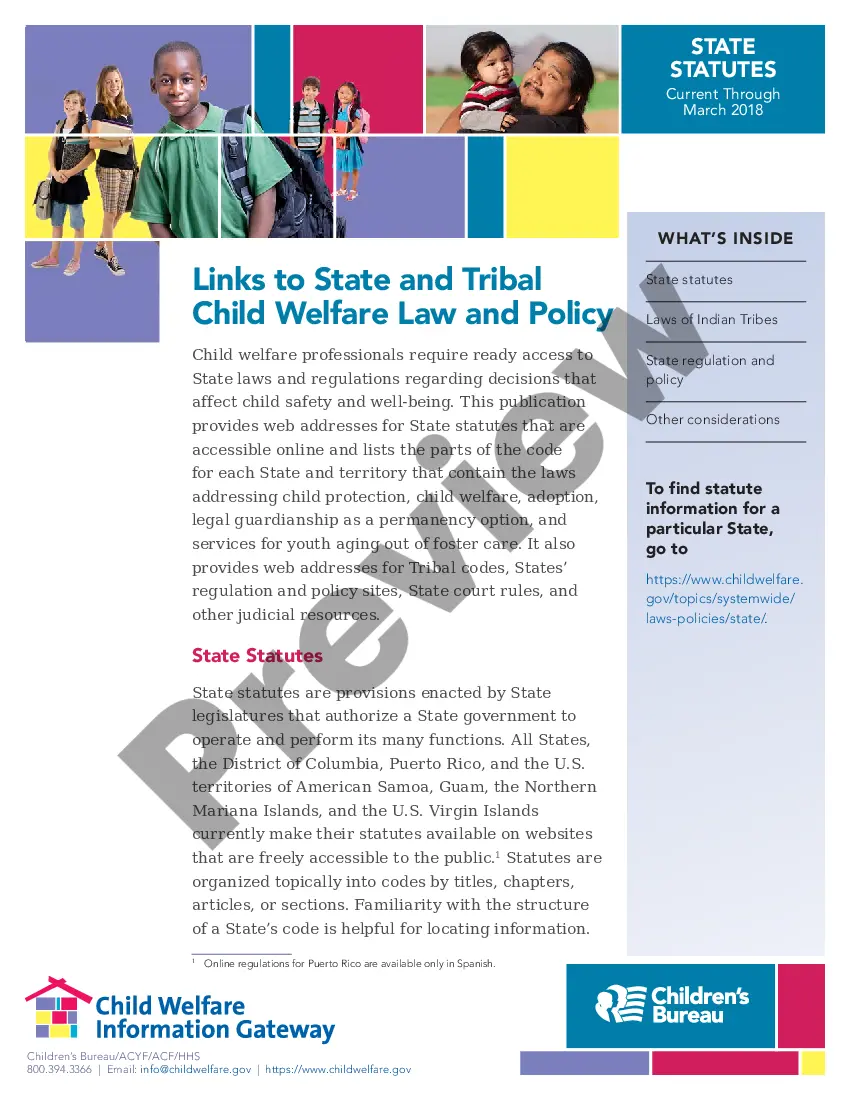
- State-specific summaries of paternity laws.

When to use this document
This handbook should be utilized by individuals who need to establish paternity for a child born to unmarried parents. It is particularly useful in cases where the biological father is hesitant to acknowledge paternity or when the mother requires legal recognition to pursue child support and benefits for the child. Additionally, this handbook serves as a resource for understanding the legal process involved in establishing paternity through either voluntary means or court intervention.
Who needs this form
- Unmarried parents wishing to establish paternity.
- Biological fathers seeking to formalize their parental rights.
- Mothers needing legal recognition of paternity for child support.
- Legal professionals requiring a comprehensive guide on paternity laws.
- Social service providers assisting families with paternity issues.
Instructions for completing this form
- Read the introduction to familiarize yourself with the paternity laws in your state.
- Define the parties involved, including the mother, child, and putative father.
- Gather necessary documentation, including any existing acknowledgments of paternity.
- Decide whether to pursue voluntary establishment or court action.
- Complete the appropriate forms as outlined in the handbook for your chosen method.
Is notarization required?
This form does not typically require notarization unless specified by local law. Always check local jurisdictional requirements for any additional certification that may be necessary.
Get your form ready online
Our built-in tools help you complete, sign, share, and store your documents in one place.
Make edits, fill in missing information, and update formatting in US Legal Forms—just like you would in MS Word.
Download a copy, print it, send it by email, or mail it via USPS—whatever works best for your next step.
Sign and collect signatures with our SignNow integration. Send to multiple recipients, set reminders, and more. Go Premium to unlock E-Sign.
If this form requires notarization, complete it online through a secure video call—no need to meet a notary in person or wait for an appointment.
We protect your documents and personal data by following strict security and privacy standards.

Make edits, fill in missing information, and update formatting in US Legal Forms—just like you would in MS Word.

Download a copy, print it, send it by email, or mail it via USPS—whatever works best for your next step.

Sign and collect signatures with our SignNow integration. Send to multiple recipients, set reminders, and more. Go Premium to unlock E-Sign.

If this form requires notarization, complete it online through a secure video call—no need to meet a notary in person or wait for an appointment.

We protect your documents and personal data by following strict security and privacy standards.
Typical mistakes to avoid
- Neglecting to gather all necessary documents before starting the process.
- Failing to follow specific state guidelines for voluntary acknowledgment.
- Ignoring deadlines for legal actions or challenges to paternity acknowledgments.
- Not seeking legal advice when faced with complex paternity issues.
Benefits of completing this form online
- Convenience of accessing critical information from anywhere, anytime.
- Ability to customize the handbook based on your specific state laws.
- Access to up-to-date legal resources and references for paternity issues.
- Streamlined processes for both voluntary and court-related paternity actions.
Legal use & context
- The handbook serves as an informational resource and not a legal document.
- Users should consult with an attorney for specific legal advice pertaining to paternity matters.
- Understanding the content and legal implications of paternity is crucial for all stakeholders.
Main things to remember
- The Paternity Law and Procedure Handbook is essential for understanding how to establish paternity.
- It provides clarity on both voluntary and court processes for paternity establishment.
- State-specific information is available to help navigate local laws and requirements.
- Consulting legal resources or professionals can aid in avoiding common pitfalls.
Definitions you should know
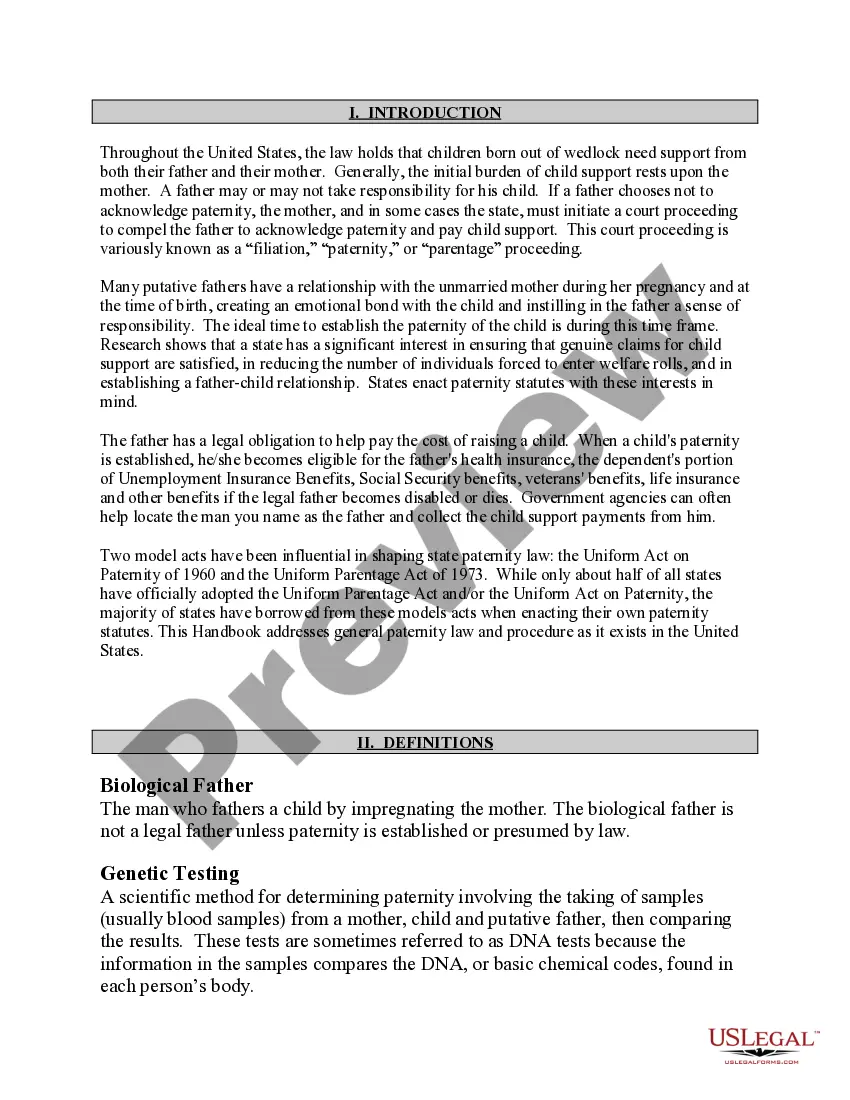
- Biological Father: The man who impregnates the mother; he is not a legal father until paternity is established.
- Legal Father: A biological father who has been recognized by law as the childâs father.
- Paternity: The legal acknowledgment of a man as the father of a child.
- Putative Father: A man who is alleged to be the father of a child.
Looking for another form?

Form popularity
FAQ
Establishing paternity in Missouri can be done through various methods, including signing an affidavit of paternity or obtaining a court order for genetic testing. If both parents agree, signing the affidavit is a straightforward way to establish paternity. For more complex situations, the Missouri Paternity Law and Procedure Handbook provides comprehensive guidance to help you understand your options and secure your parental rights effectively.
You can request a court-ordered paternity test in Missouri by filing a petition with the family court in your jurisdiction. This process does not require a lawyer, but understanding the legal requirements is essential. The Missouri Paternity Law and Procedure Handbook can help you navigate the paperwork and procedures efficiently, ensuring you follow the necessary steps for your case.
To obtain an affidavit of acknowledgement of paternity in Missouri, you can visit your local vital records office or the Department of Health and Senior Services. These offices provide the necessary forms and guidance for completing the affidavit. Additionally, the Missouri Paternity Law and Procedure Handbook offers detailed instructions on this process, ensuring you understand your rights and responsibilities as a parent.
In Missouri, a mother can refuse to take a paternity test, but this refusal can have legal consequences. If a father requests the test through the court, the court may compel compliance. Understanding these dynamics is critical, and the Missouri Paternity Law and Procedure Handbook provides valuable information on navigating such situations.
The duration for a paternity petition to be resolved in Missouri can vary, typically ranging from a few months to a year. Factors affecting this timeline include court schedules and the complexity of the case. Consulting the Missouri Paternity Law and Procedure Handbook can offer insights into what to expect during this process.
If a father is listed on the birth certificate in Missouri, he has legal rights to his child, including custody and visitation. This recognition is important under the Missouri Paternity Law and Procedure Handbook, as it can affect decisions about child support and parental responsibilities. However, establishing paternity can provide further legal protections and rights.
To file for paternity in Missouri, you should prepare a petition that includes your details, the child’s information, and the basis for your claim. The Missouri Paternity Law and Procedure Handbook can help you navigate this process, ensuring all necessary forms are correctly filled out. After submission, the court will review your case and schedule a hearing.
Filling out an affidavit of admission of paternity involves providing basic information about yourself, the child, and the mother. The Missouri Paternity Law and Procedure Handbook outlines the specific details required, ensuring you include accurate information. Once completed and signed, this document can be submitted to the court to establish paternity.
To file for paternity in Missouri, you need to complete and submit a petition to the family court in your jurisdiction. The Missouri Paternity Law and Procedure Handbook provides guidance on the necessary forms and documentation. After filing, the court will schedule a hearing to determine paternity based on the evidence presented.
In Missouri, an unmarried father has certain rights, but they must establish paternity first. This means he can seek legal recognition of his fatherhood through the Missouri Paternity Law and Procedure Handbook. Once paternity is established, he gains rights to custody, visitation, and decision-making regarding the child's welfare.