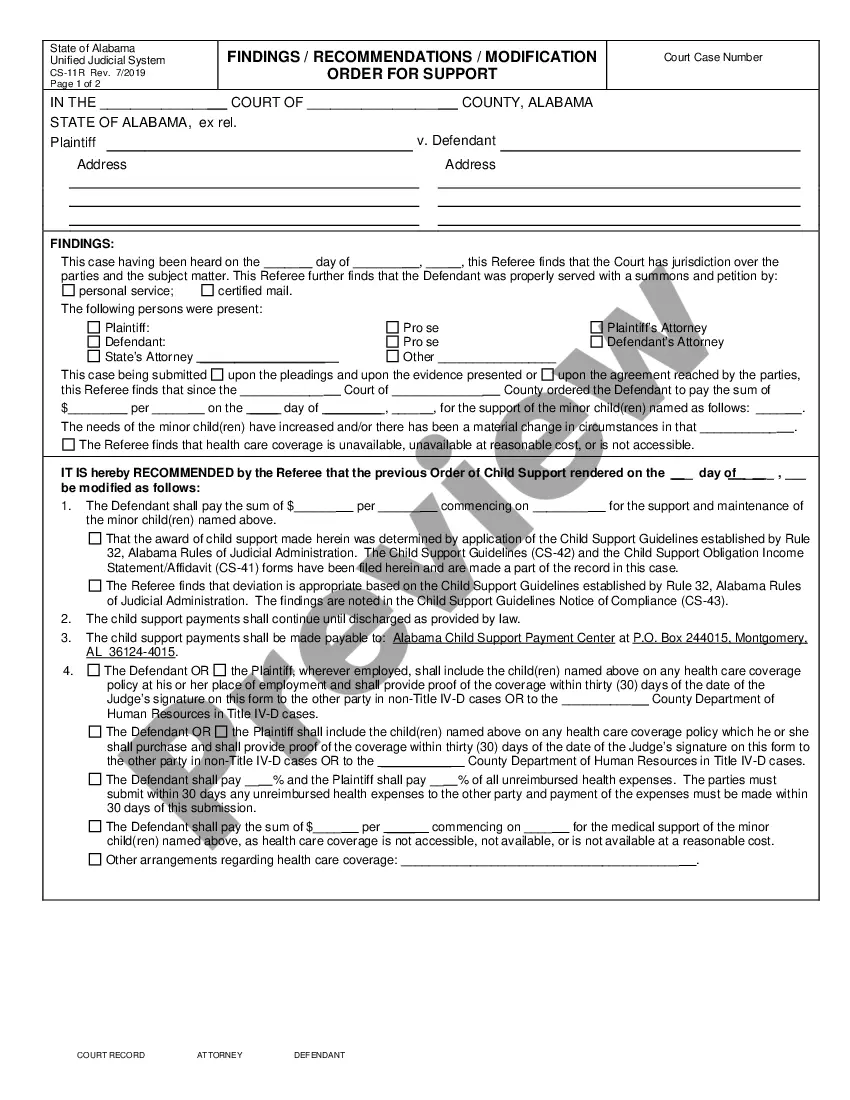
Idaho Letter from Landlord to Tenant as Notice to Tenant of Tenant's Disturbance of Neighbors' Peaceful Enjoyment to Remedy or Lease Terminates
Overview of this form
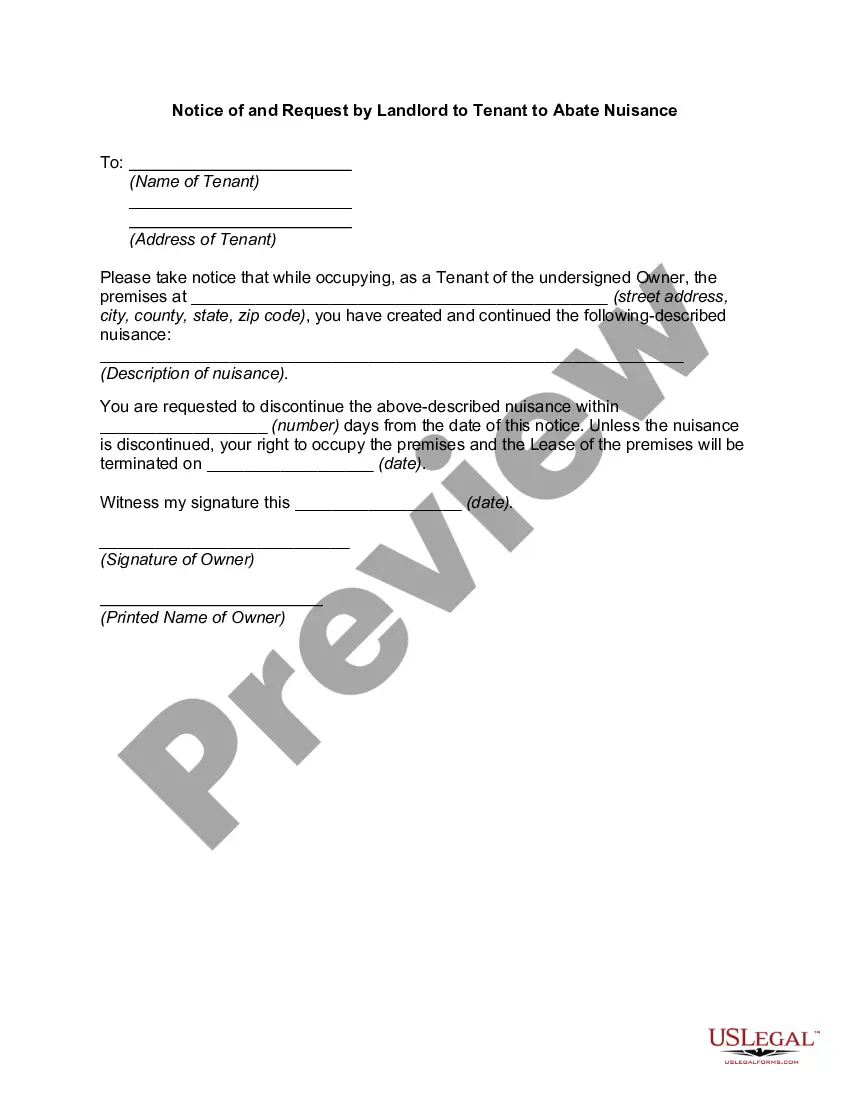
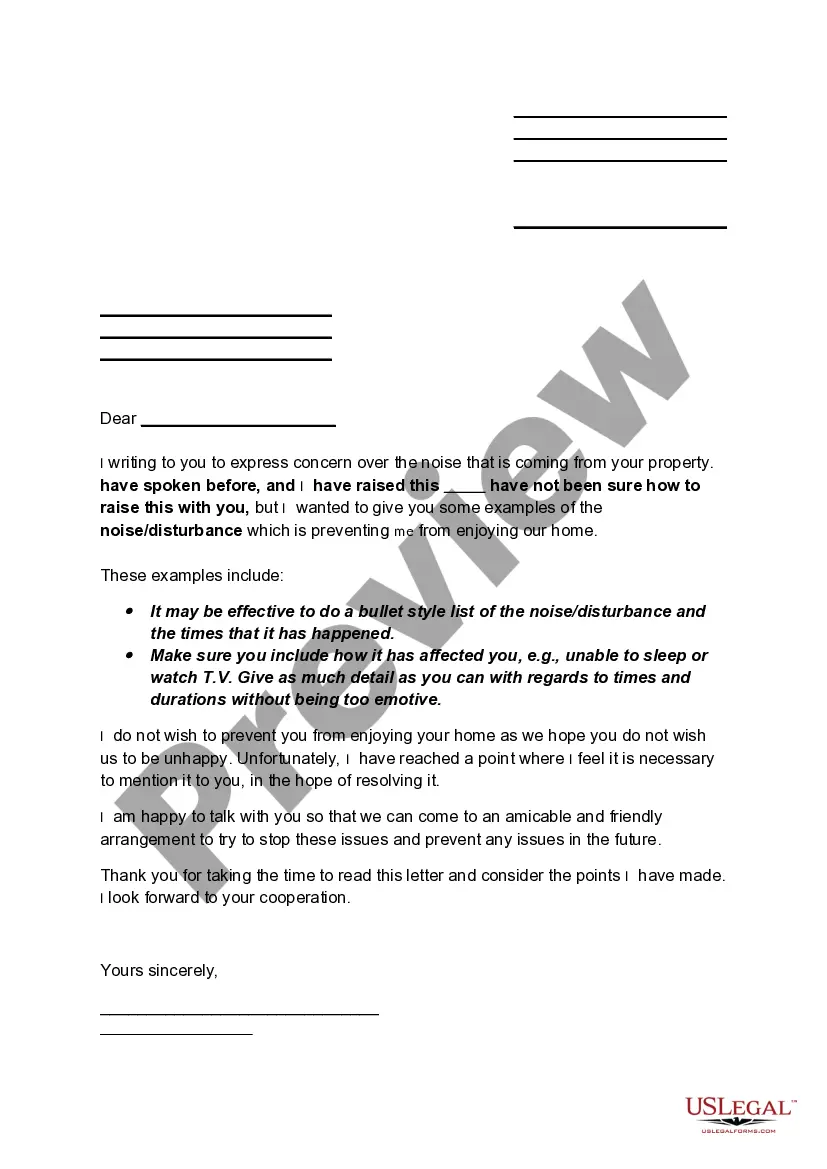
This form is a notice from a landlord to tenant regarding disturbances caused by the tenant, their family members, or guests. It officially advises the tenant of their failure to maintain the quiet enjoyment expected by neighbors, as outlined in the lease. This Letter from Landlord to Tenant as Notice to Tenant of Tenant's Disturbance of Neighbors' Peaceful Enjoyment to Remedy or Lease Terminates is an essential document that sets a formal record of grievances, allowing the landlord to seek remedy or take further action if needed.
Main sections of this form
- Identification of the landlord and tenant.
- Details outlining the specific disturbances caused by the tenant.
- Reference to the lease terms regarding quiet enjoyment.
- Instruction for the tenant to remedy the situation.
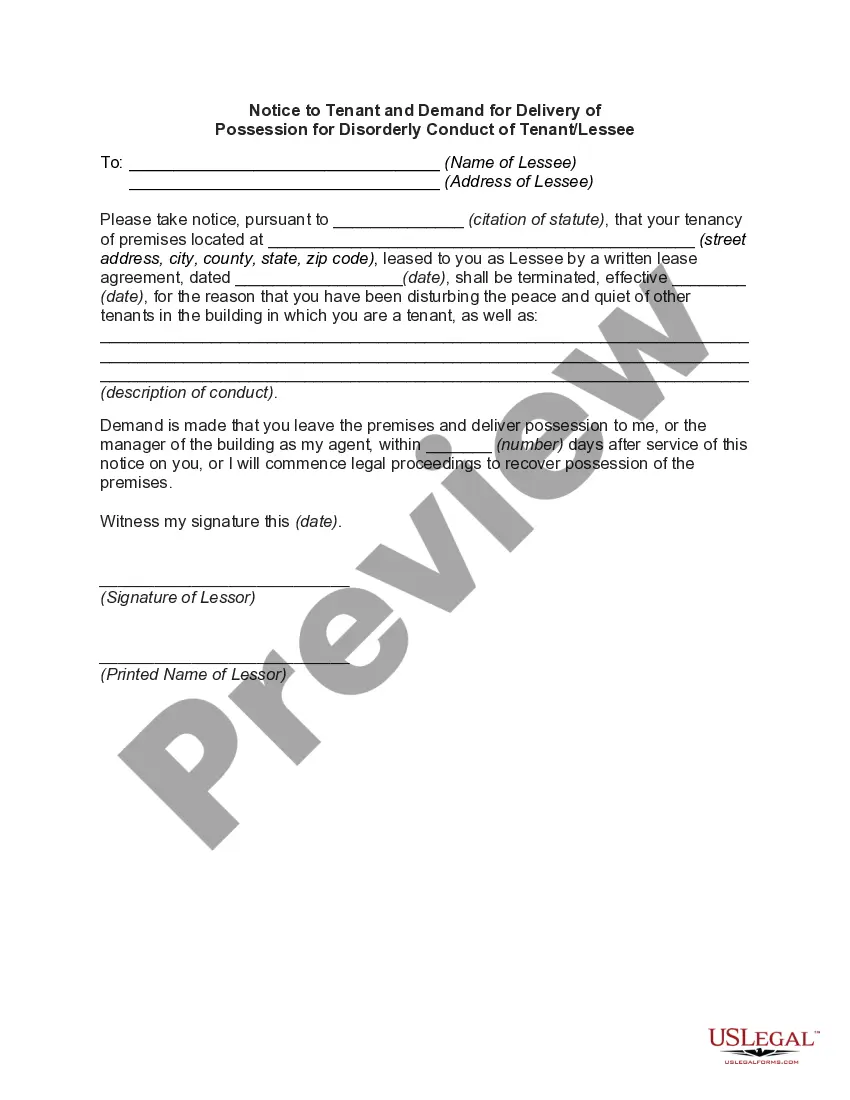
- Notification of potential lease termination if the issue is not resolved.


Situations where this form applies
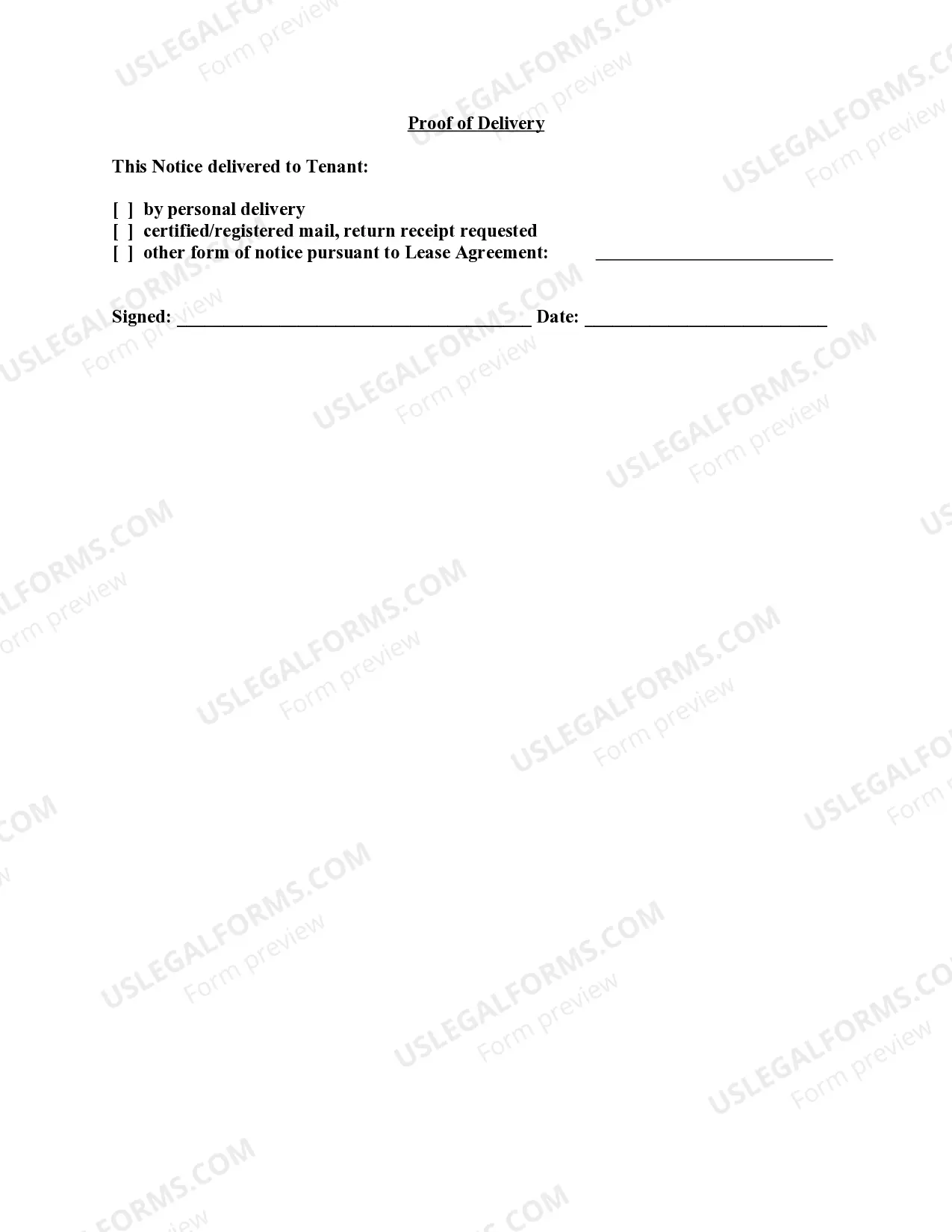
This form should be used when a landlord needs to formally notify a tenant about disturbances impacting the peaceful enjoyment of neighboring residences. It is commonly utilized in situations where tenants may be hosting loud gatherings, playing loud music, or any behavior that significantly disrupts the living conditions of others. By issuing this notice, the landlord addresses the issue and documents the complaint, which may be necessary for any future lease issues or legal proceedings.
Who can use this document
- Landlords who have tenants that are violating lease terms related to noise or disturbances.
- Property managers acting on behalf of landlords needing to address tenant behavior.
- Tenants in multi-family dwellings experiencing interference from neighbors and need to understand their rights.
How to complete this form
- Identify the landlord and tenant by entering their names and addresses.
- Clearly describe the specific disturbances caused by the tenant.
- Reference relevant clauses from the lease agreement related to quiet enjoyment.
- Provide instructions for the tenant to remedy the disturbance or face lease termination.
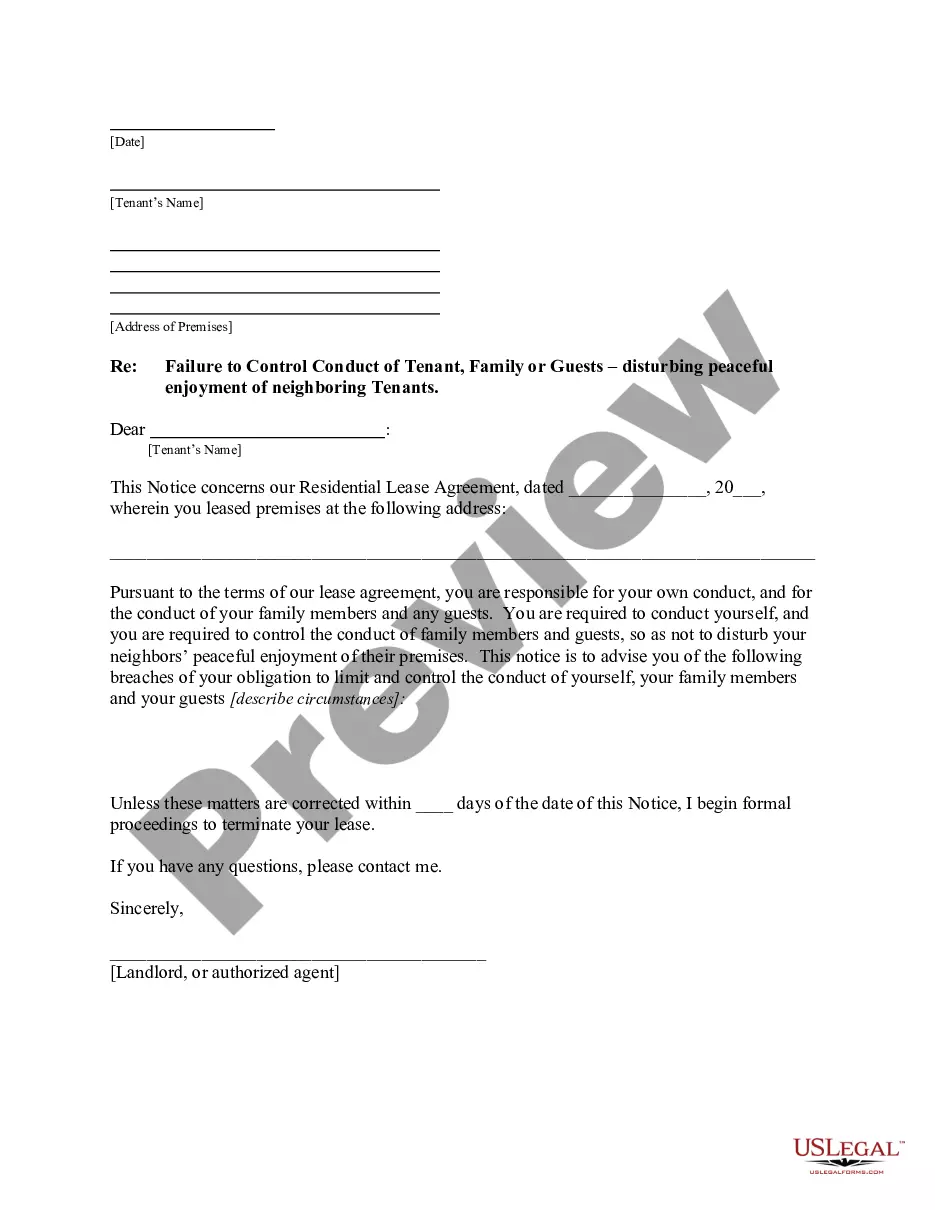
- Sign and date the notice, ensuring you retain proof of delivery.
Does this form need to be notarized?
This form usually doesn’t need to be notarized. However, local laws or specific transactions may require it. Our online notarization service, powered by Notarize, lets you complete it remotely through a secure video session, available 24/7.
Get your form ready online
Our built-in tools help you complete, sign, share, and store your documents in one place.
Make edits, fill in missing information, and update formatting in US Legal Forms—just like you would in MS Word.
Download a copy, print it, send it by email, or mail it via USPS—whatever works best for your next step.
Sign and collect signatures with our SignNow integration. Send to multiple recipients, set reminders, and more. Go Premium to unlock E-Sign.
If this form requires notarization, complete it online through a secure video call—no need to meet a notary in person or wait for an appointment.
We protect your documents and personal data by following strict security and privacy standards.

Make edits, fill in missing information, and update formatting in US Legal Forms—just like you would in MS Word.

Download a copy, print it, send it by email, or mail it via USPS—whatever works best for your next step.

Sign and collect signatures with our SignNow integration. Send to multiple recipients, set reminders, and more. Go Premium to unlock E-Sign.

If this form requires notarization, complete it online through a secure video call—no need to meet a notary in person or wait for an appointment.

We protect your documents and personal data by following strict security and privacy standards.
Mistakes to watch out for
- Failing to provide a clear description of the disturbance.
- Not referencing the specific lease terms violated.
- Omitting a delivery method for proof of receipt.
Benefits of using this form online
- Convenient access to legally vetted templates tailored for various situations.
- Editable formats that allow for customization according to specific issues.
- Reliability, ensuring that the language used meets legal standards and terminology.
Legal use & context
- The notice serves as formal documentation of the tenant's disturbances.
- Can be used as evidence in potential lease termination proceedings.
- Helps establish a record of communication regarding tenant behavior.
Summary of main points
- The form is essential for formally notifying tenants of disturbances.
- It serves as a record that can be crucial for potential lease disputes.
- Clear instructions help ensure tenants understand their obligations and the consequences of non-compliance.
Looking for another form?
Form popularity
FAQ
A termination of tenancy is different than an eviction. A termination is the landlord ending the rental agreement and asking the tenant to vacate the rental unit. An eviction is the actual court process and lawsuit to have a tenant removed from the property if they fail to leave.
In some circumstances, a tenant can break a fixed-term agreement early without penalty. A tenant can give 14 days' written notice to end an agreement early without penalty if: they have accepted an offer of social housing (e.g. from DCJ Housing)
What date would you like to move in? Do you have pets? How long have you lived in your current home? Why are you moving? How many people will be living in the unit? How many people living with you smoke? What is your monthly income? Have you ever been convicted of a relevant crime?
This includes keeping the property clean, safe and habitable. The landlord must adhere to all building codes, perform necessary repairs, maintain common areas, keep all vital services, such as plumbing, electricity, and heat, in good working order, must provide proper trash receptacles and must supply running water.
Give the landlord/agent a written termination notice and vacate move out and return the keys according to your notice, and/or. apply to the NSW Civil & Administrative Tribunal (NCAT) for a termination order.
Lapse of time When the prescribed time of the lease expires, the lease is terminated. Specified event When there is a condition on time of lease depending upon a happening of an event. Interest Lessor's interest to lease the property may cease, hence resulting in the termination of the lease.
Unconditional quit notices require the tenant to vacate the premises without giving them any chance to pay the rent owing or correct their bad behavior. Many states will only permit the use of unconditional quit notices in certain, specific situations, such as: Being late with the rent more than once.
Introductory Letter with Essential Information (such as Emergency Numbers and House Rules) PAT Report (Portable Appliance Test) Current Gas Check. Guide to Utilities. How to Rent Leaflet (Government Document) E.P.C. Copy of Tenancy Agreement.
A Covenant that promises that the grantee or tenant of an estate in real property will be able to possess the premises in peace, without disturbance by hostile claimants. Quiet enjoyment is a right to the undisturbed use and enjoyment of real property by a tenant or landowner.