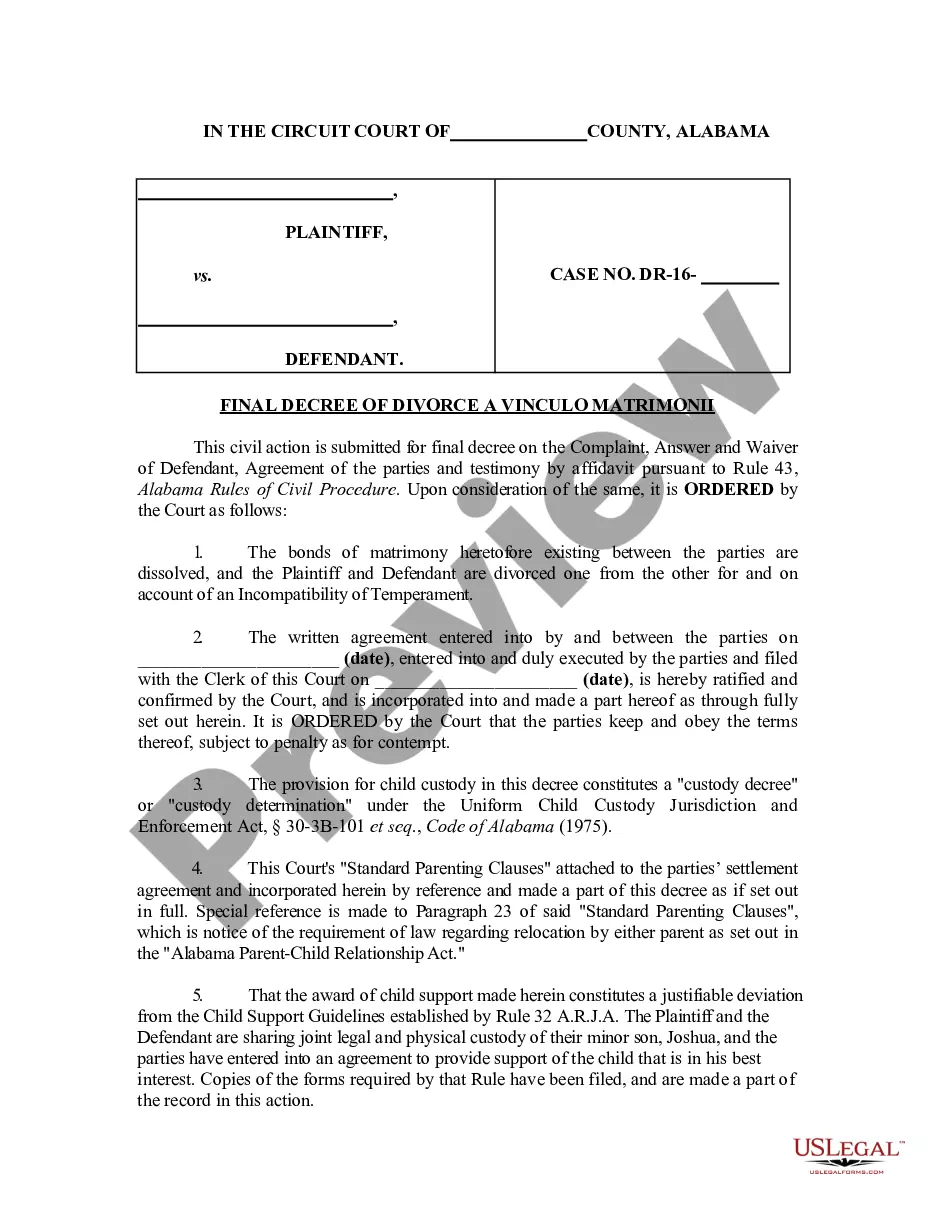
Idaho Quitclaim Deed from Individual to Individual
What is this form?
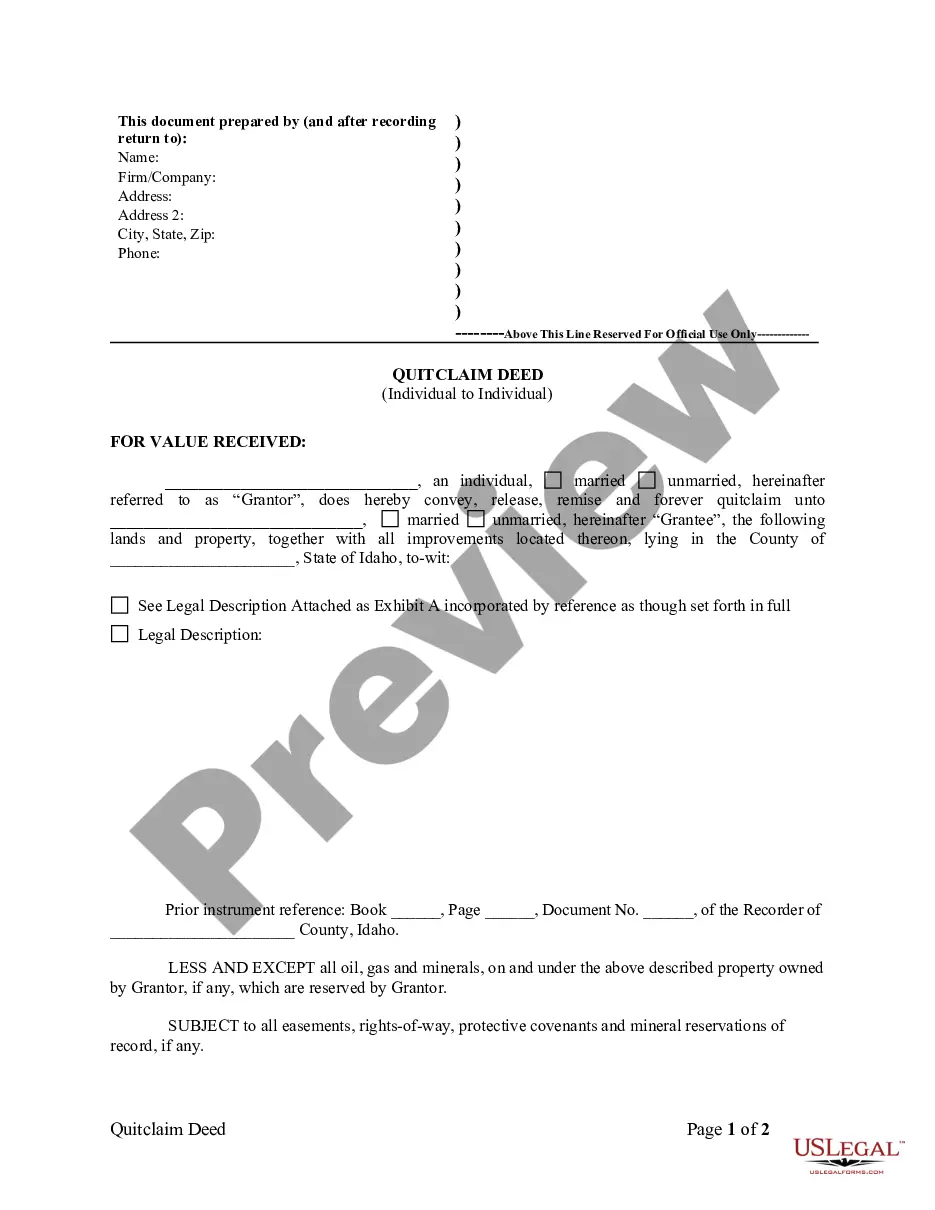
The Quitclaim Deed from Individual to Individual is a legal document used to transfer ownership of real property from one individual (the Grantor) to another individual (the Grantee). This deed provides the Grantee with whatever interest the Grantor has in the property, without any guarantee or warranty. Unlike a Warranty Deed, a Quitclaim Deed does not assure that the title is free from defects or encumbrances, making it essential for specific situations where the parties are familiar with each other and the property's condition.
Key components of this form
- Identity of the Grantor and Grantee with their names and addresses.
- Detailed legal description of the property being transferred.
- Statement of the rights being conveyed, including any reservations (e.g., oil, gas, and minerals).
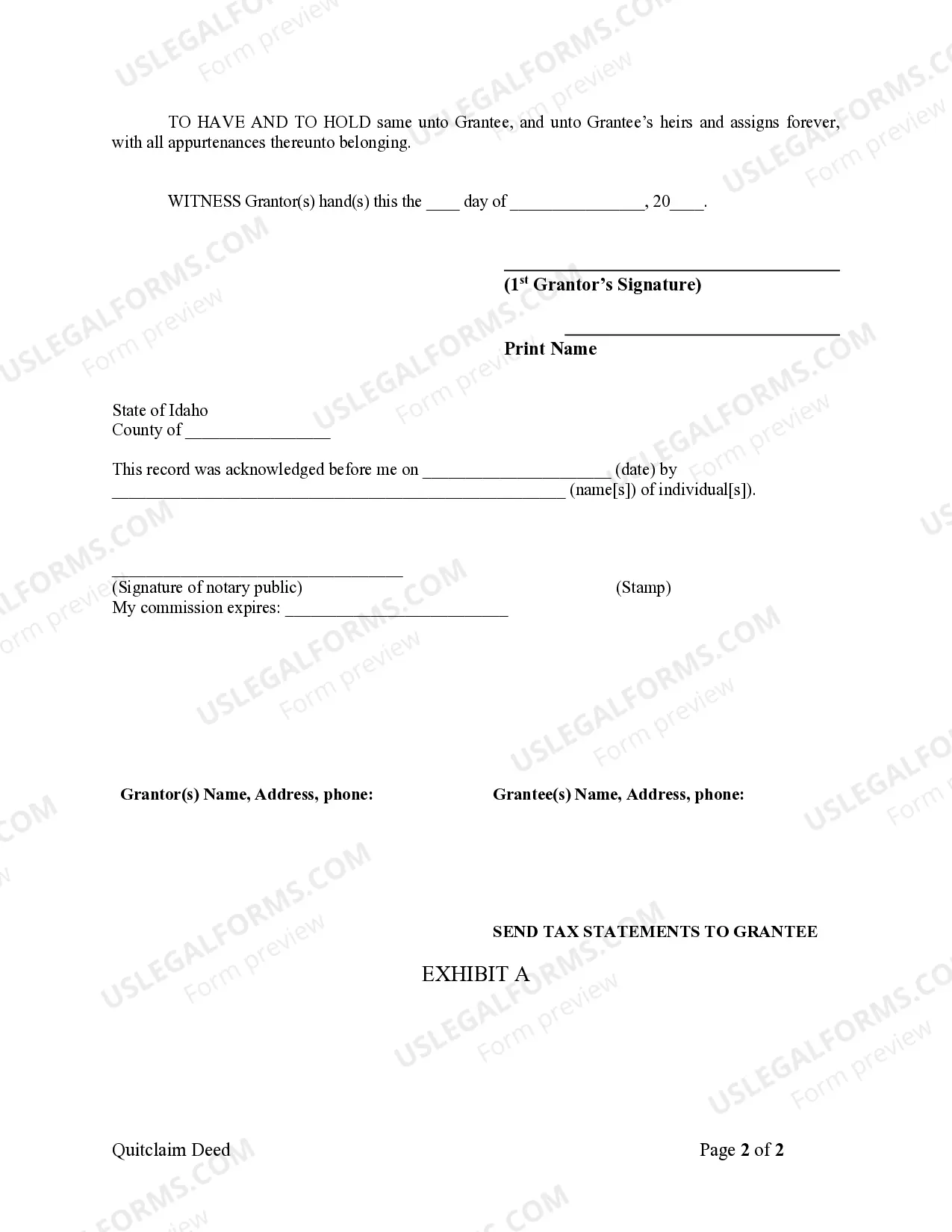
- Notary acknowledgment to validate the signing of the deed.





When to use this form
This Quitclaim Deed is commonly used in situations where property is being transferred between family members, during divorce settlements, or when clearing up title issues when the Grantor does not hold a full ownership interest. It is also appropriate when the parties know each other well and trust the terms of the transfer.
Who this form is for
- Individuals transferring property ownership to another individual.
- Family members involved in property transfers, such as during inheritance or gift situations.
- Parties settling disputes regarding property interests.
How to complete this form
- Identify the Grantor and Grantee by entering their names and addresses.
- Provide a clear legal description of the property being transferred.
- Include any reservations, such as oil, gas, and mineral rights, if applicable.
- Sign the deed in the presence of a notary public.
- Ensure that the notary public completes their portion of the form to validate the deed.
Does this form need to be notarized?
This form must be notarized to be legally valid. US Legal Forms provides secure online notarization powered by Notarize, allowing you to complete the process through a verified video call.
Get your form ready online
Our built-in tools help you complete, sign, share, and store your documents in one place.
Make edits, fill in missing information, and update formatting in US Legal Forms—just like you would in MS Word.
Download a copy, print it, send it by email, or mail it via USPS—whatever works best for your next step.
Sign and collect signatures with our SignNow integration. Send to multiple recipients, set reminders, and more. Go Premium to unlock E-Sign.
If this form requires notarization, complete it online through a secure video call—no need to meet a notary in person or wait for an appointment.
We protect your documents and personal data by following strict security and privacy standards.

Make edits, fill in missing information, and update formatting in US Legal Forms—just like you would in MS Word.

Download a copy, print it, send it by email, or mail it via USPS—whatever works best for your next step.

Sign and collect signatures with our SignNow integration. Send to multiple recipients, set reminders, and more. Go Premium to unlock E-Sign.

If this form requires notarization, complete it online through a secure video call—no need to meet a notary in person or wait for an appointment.

We protect your documents and personal data by following strict security and privacy standards.
Common mistakes
- Failing to provide a complete legal description of the property.
- Not having the deed notarized, which may invalidate its legality.
- Leaving out necessary reservations or caveats concerning the property.
- Using incorrect names or addresses for either party.
Benefits of completing this form online
- Convenience of completing the form from home without the need for in-person meetings.
- Editability allows for easy adjustments before finalizing the document.
- Access to templates prepared by licensed attorneys, ensuring legal compliance.
What to keep in mind
- A Quitclaim Deed transfers property ownership without warranties.
- It is best used among individuals who trust each other.
- Notarization is required to ensure the document's legal validity.
- Filling out the form accurately is crucial to avoid future disputes.
Looking for another form?
Form popularity
FAQ
The Idaho Quitclaim Deed From Individual To Individual is a real estate form that transfers whatever interest the Grantor has in a property to the Grantee, with no title warranties. It’s commonly used for transfers between familiar parties, such as family gifts or divorce- or settlement-related transfers, or when the Grantor does not hold full ownership.
Common mistakes include missing or incorrect grantor and grantee names and addresses, omitting the property's legal description, failing to specify rights or reservations, and skipping the notary acknowledgment. Ensuring all key components—identities, legal description, rights and reservations, and notarization—are completed helps ensure validity.
A corrective deed is often used to fix errors in a prior deed. For the Idaho Quitclaim Deed From Individual To Individual, if mistakes are discovered after filing, you may need to record a corrective deed or a new deed to reflect the intended ownership.
Yes, a quit claim deed can be prepared and signed without an attorney, and this template is designed for self-help transfers. However, for complex title issues or uncertain ownership, consult a licensed attorney to avoid mistakes or future disputes.
A quit claim deed can be void if it is not properly executed, delivered, or notarized, or if the grantor does not own the interest they claim to transfer. Misidentification of parties or an inaccurate property description can also render it invalid.
This deed transfers the grantor’s interest without any warranties about title; the grantee receives only what the grantor owns, if anything. A warranty deed, by contrast, includes title assurances that the property is free of defects and encumbrances, offering greater protection for the grantee.