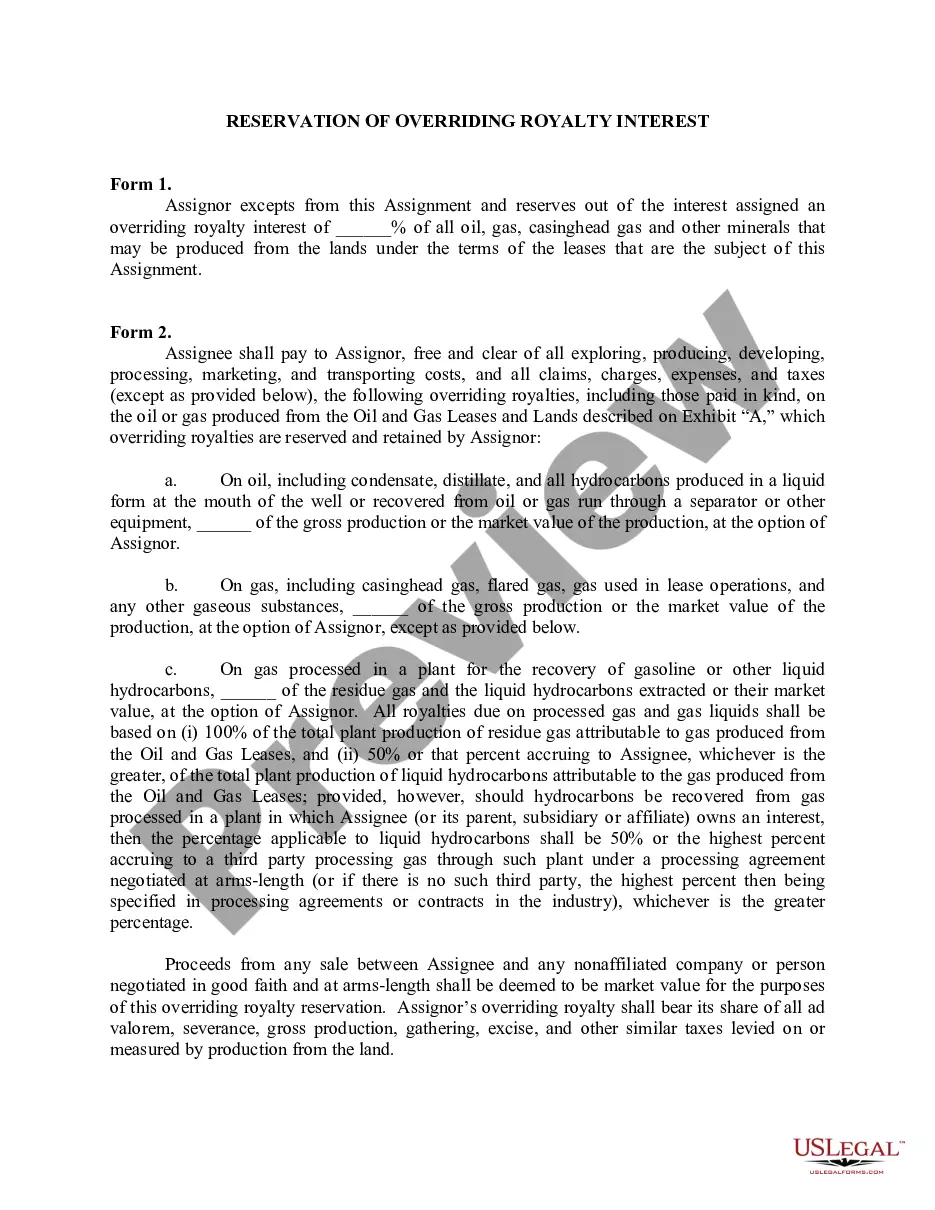
Hawaii Notice of Lease for Recording
Overview of this form
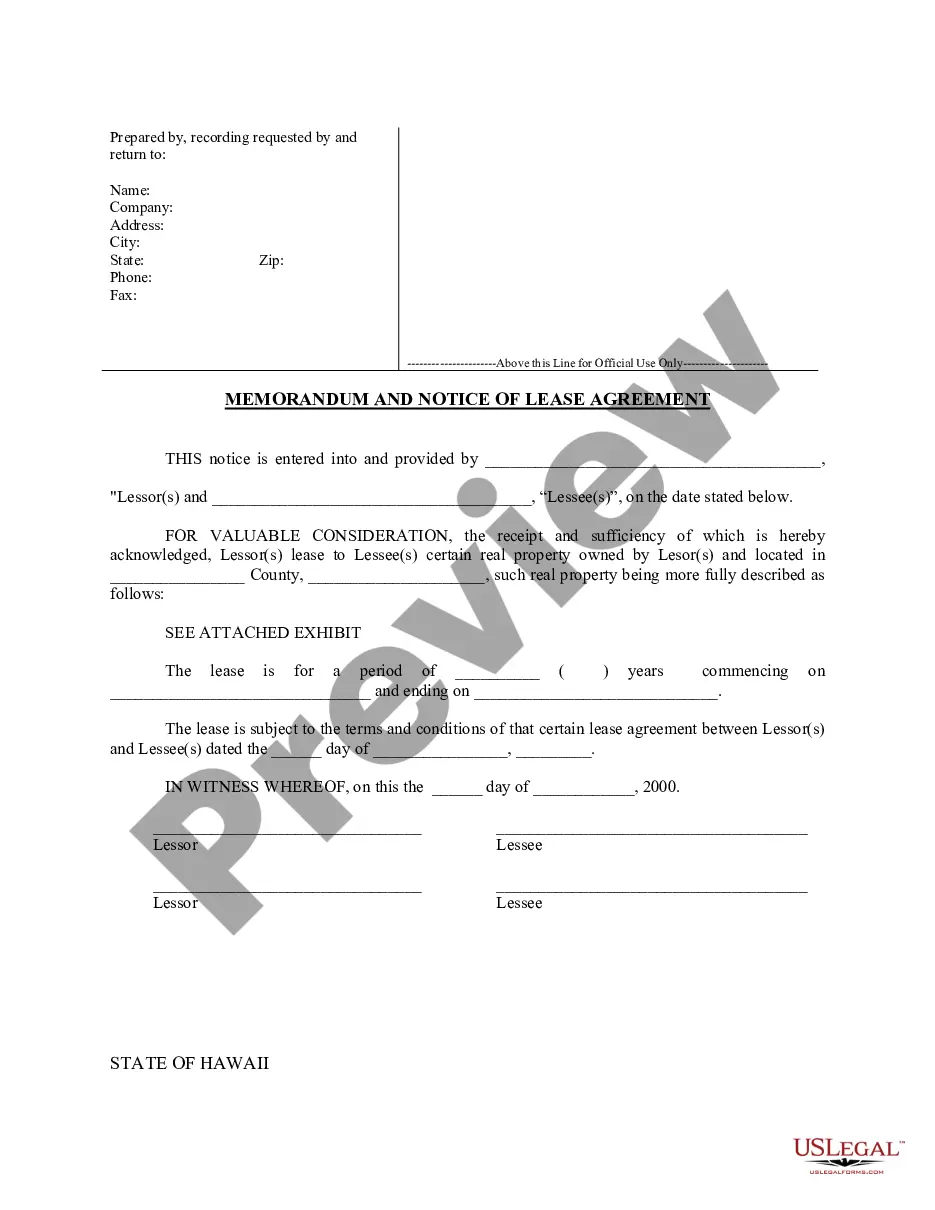
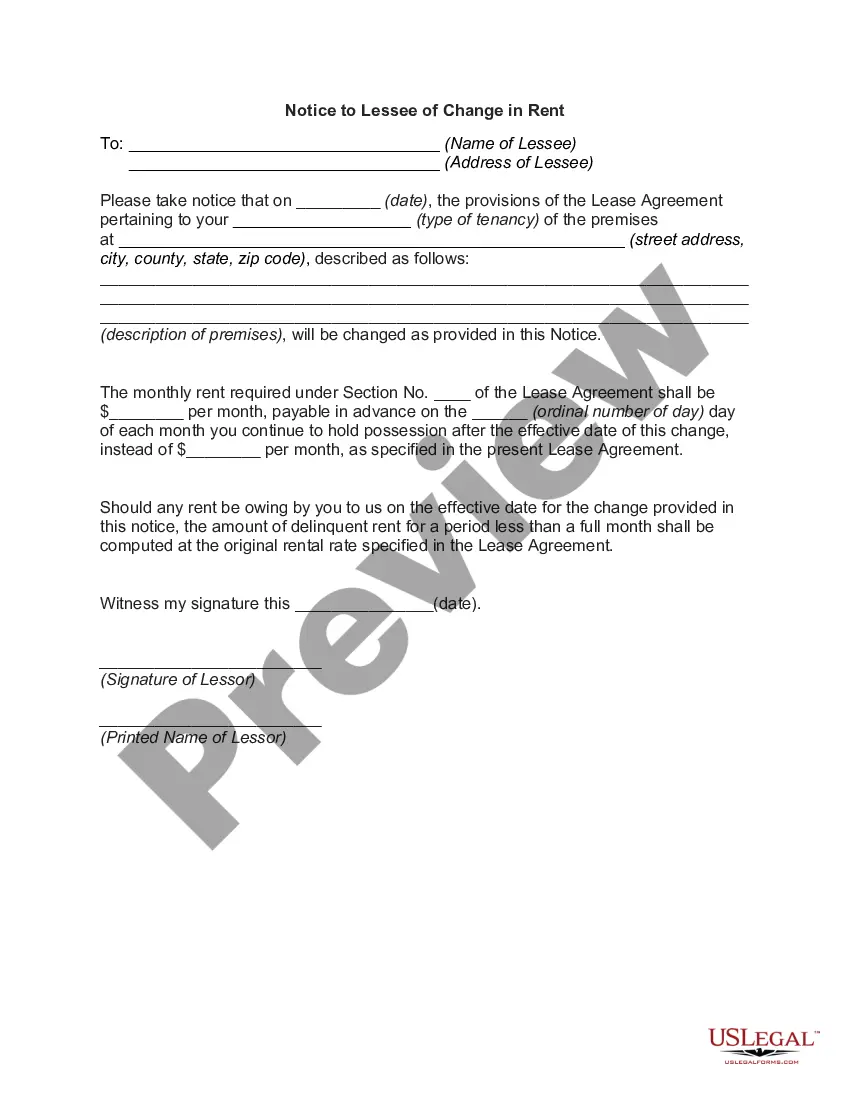
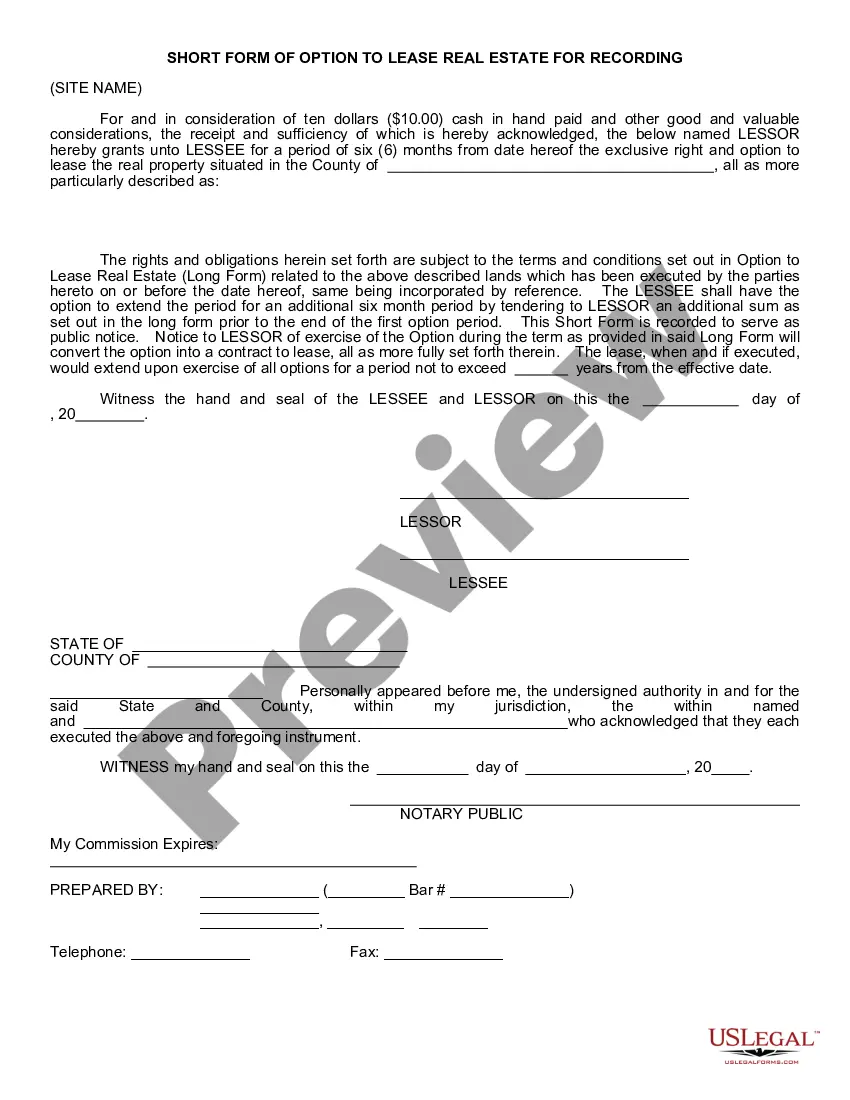
The Notice of Lease for Recording is a legal document used to provide official notice that a lease exists on a specific parcel of real estate. Unlike recording an entire lease agreement, this form summarizes the key aspects of the lease, making it a more efficient option for property owners and lessees. By recording this notice, parties can ensure that their lease is recognized in public records, which is important for establishing rights related to the leased property.
Main sections of this form
- Prepared by and return to address for recording purposes
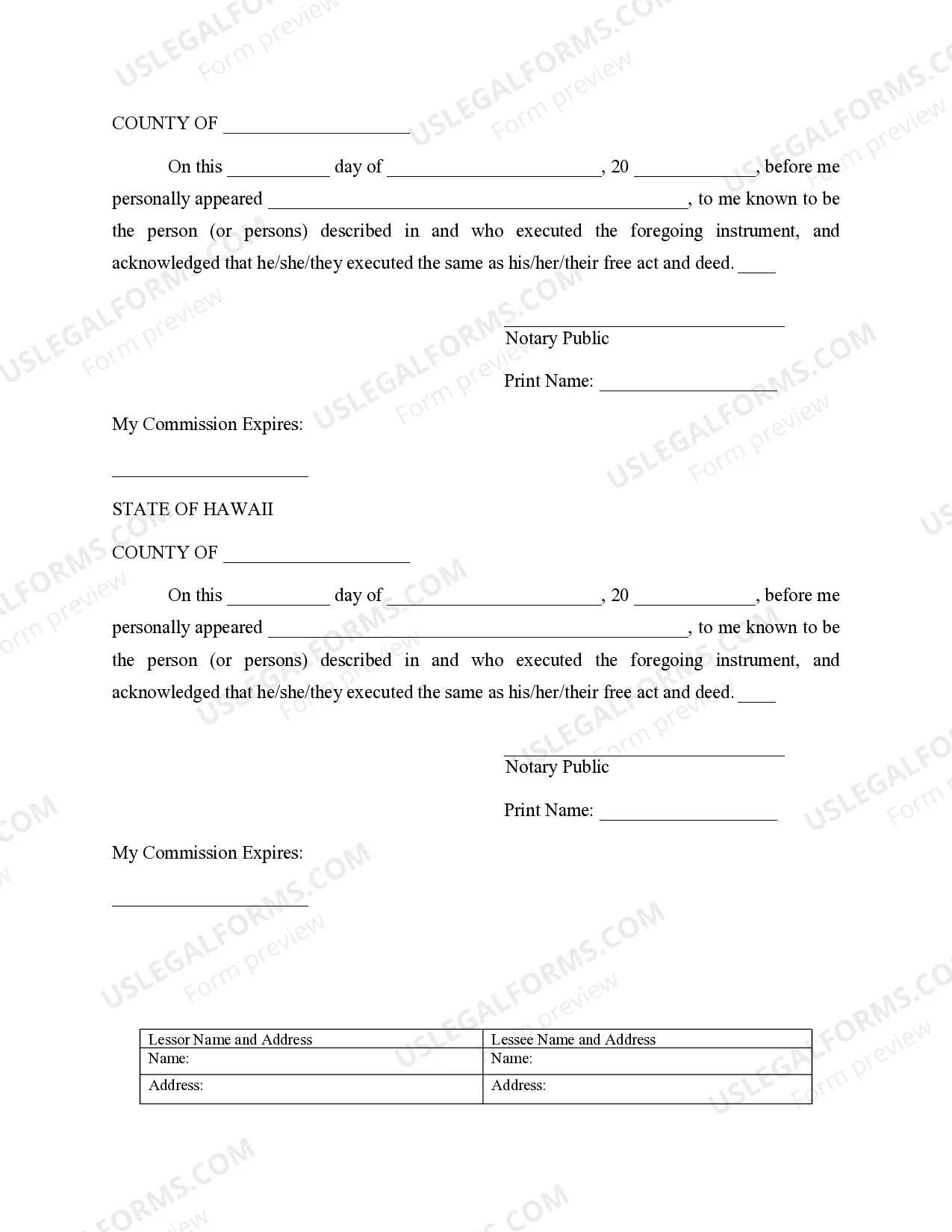
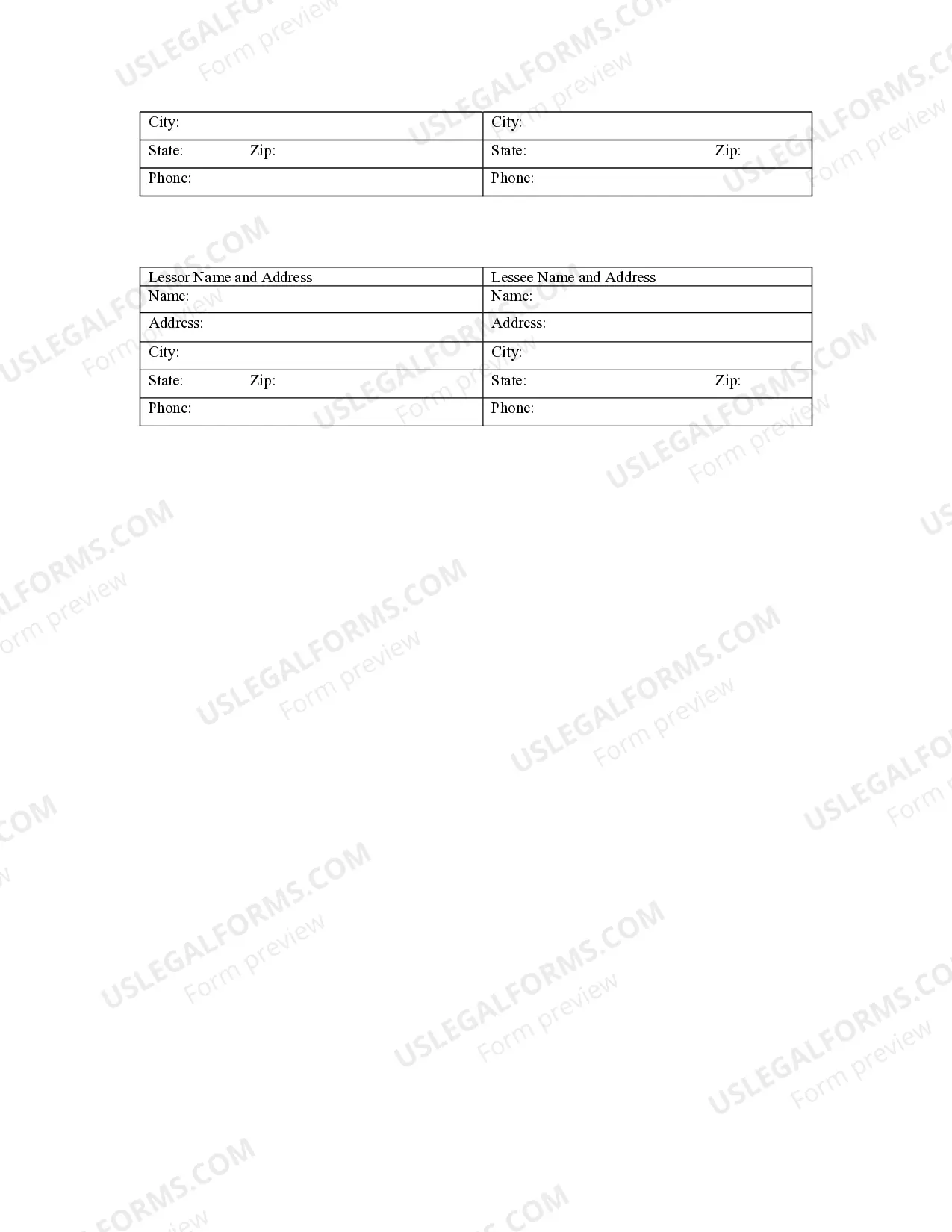
- Names and contact details of the lessor and lessee
- Description of the real property being leased
- Lease duration and important dates
- Signature lines for the lessor and lessee
- Notary acknowledgment section

When to use this form
This form is necessary when a property owner wishes to officially document their lease agreement without needing to record the full lease. It is particularly useful for notifying potential buyers, lenders, or other interested parties of existing lease agreements, ensuring clarity on property rights and obligations.
Who should use this form
This form is intended for:
- Property owners or lessors looking to formalize their lease agreements
- Lessee or tenants who need to confirm their lease status in public records
- Real estate professionals managing leasing transactions
Completing this form step by step
- Identify the parties involved by entering the names and addresses of the lessor and lessee.
- Specify the property by providing a detailed description and county of location.
- Enter the duration of the lease, including start and end dates.
- Include the date of the original lease agreement being referenced.
- Ensure all parties sign the document, and have it notarized if required.
Notarization guidance
Notarization is required for this form to take effect. Our online notarization service, powered by Notarize, lets you verify and sign documents remotely through an encrypted video session, available 24/7.
Get your form ready online
Our built-in tools help you complete, sign, share, and store your documents in one place.
Make edits, fill in missing information, and update formatting in US Legal Forms—just like you would in MS Word.
Download a copy, print it, send it by email, or mail it via USPS—whatever works best for your next step.
Sign and collect signatures with our SignNow integration. Send to multiple recipients, set reminders, and more. Go Premium to unlock E-Sign.
If this form requires notarization, complete it online through a secure video call—no need to meet a notary in person or wait for an appointment.
We protect your documents and personal data by following strict security and privacy standards.

Make edits, fill in missing information, and update formatting in US Legal Forms—just like you would in MS Word.

Download a copy, print it, send it by email, or mail it via USPS—whatever works best for your next step.

Sign and collect signatures with our SignNow integration. Send to multiple recipients, set reminders, and more. Go Premium to unlock E-Sign.

If this form requires notarization, complete it online through a secure video call—no need to meet a notary in person or wait for an appointment.

We protect your documents and personal data by following strict security and privacy standards.
Avoid these common issues
- Not providing complete or accurate property descriptions.
- Failing to include necessary signatures from all parties.
- Overlooking the requirement for notarization, if applicable.
- Leaving out the effective dates of the lease.
Why complete this form online
- Immediate access to a legally vetted document.
- Convenience of filling out and downloading from anywhere.
- Editability allows users to customize the form to their specific needs.
- Reliability of using professionally drafted templates.
Main things to remember
- The Notice of Lease for Recording provides essential information regarding lease agreements.
- Properly recording this notice helps protect the rights of both lessors and lessees.
- Always ensure the form is completed accurately and notarized.
Looking for another form?
Form popularity
FAQ
You can confirm if your deed is recorded by checking the public records at the Bureau of Conveyances in Hawaii. It is advisable to obtain a confirmed copy of the recorded deed, which will indicate the filing date. For peace of mind, utilizing the Hawaii Notice of Lease for Recording ensures that your documents are complete and reduces the chances of errors during the process.
In Hawaii, recording a deed often takes about one to three days, depending on the county's workload. While most transactions are processed quickly, delays can occur if the documents require additional review. Using the Hawaii Notice of Lease for Recording can help make this process more efficient.
Recording times for deeds can vary but usually take a few days in Hawaii. Factors that may affect this timeframe include county workload and processing efficiency. To avoid delays, it's beneficial to properly fill out the Hawaii Notice of Lease for Recording, ensuring all necessary details are correct.
Transferring ownership of a property in Hawaii typically involves preparing a new deed that reflects the change of ownership. After the deed is executed, it must be recorded at the Bureau of Conveyances. For a smooth transfer experience, using the Hawaii Notice of Lease for Recording can clarify terms and protect the parties involved.
To check if there is a lien on a property in Hawaii, you can access the public records maintained by the Bureau of Conveyances. You may need to conduct a title search or request information from local county offices. Utilizing forms related to the Hawaii Notice of Lease for Recording can also help provide additional context about existing liens.
Generally, a deed can be recorded in Hawaii within a few days after submission. Processing times may vary based on the county and the volume of documents being handled by the recorder's office. To ensure your deed is successfully recorded, consider using the Hawaii Notice of Lease for Recording, which streamlines the process.
The race notice statute in Hawaii requires that a person must record a property transaction to protect their interest. This means that the first party to record their lease or deed has priority over others, even if they acquire it later. Using the Hawaii Notice of Lease for Recording helps ensure your rights are protected by providing a formal public record of your lease.
The Land Court system in Hawaii specializes in recording land titles and ensuring accurate ownership listings. In contrast, the regular system focuses on broader property transactions. If you are using a Hawaii Notice of Lease for Recording, understanding which system applies is essential, as it affects how your lease is recorded and enforced. Utilizing platforms like US Legal Forms can simplify the process, ensuring your notice is correctly filed in the appropriate system.
The key difference lies in their requirements for establishing priority among competing claims. A notice statute, like Hawaii's, allows you to protect your lease by simply recording it, while a race statute emphasizes who records first. This makes a Hawaii Notice of Lease for Recording particularly important in Hawaii, as it provides clear documentation of lease agreements. Understanding these differences can help you navigate your legal responsibilities effectively.
Race-notice states require that, to protect a lease or ownership interest, you must record it in public records while also being the first to do so. This means that a Hawaii Notice of Lease for Recording is essential to secure your rights over other potential claimants. States like California and New York follow this race-notice system. Being aware of these distinctions can help you make informed decisions when managing your lease.