Hawaii Notice of Breach of Written Lease for Violating Specific Provisions of Lease with No Right to Cure for Residential Property from Landlord to Tenant
What this document covers
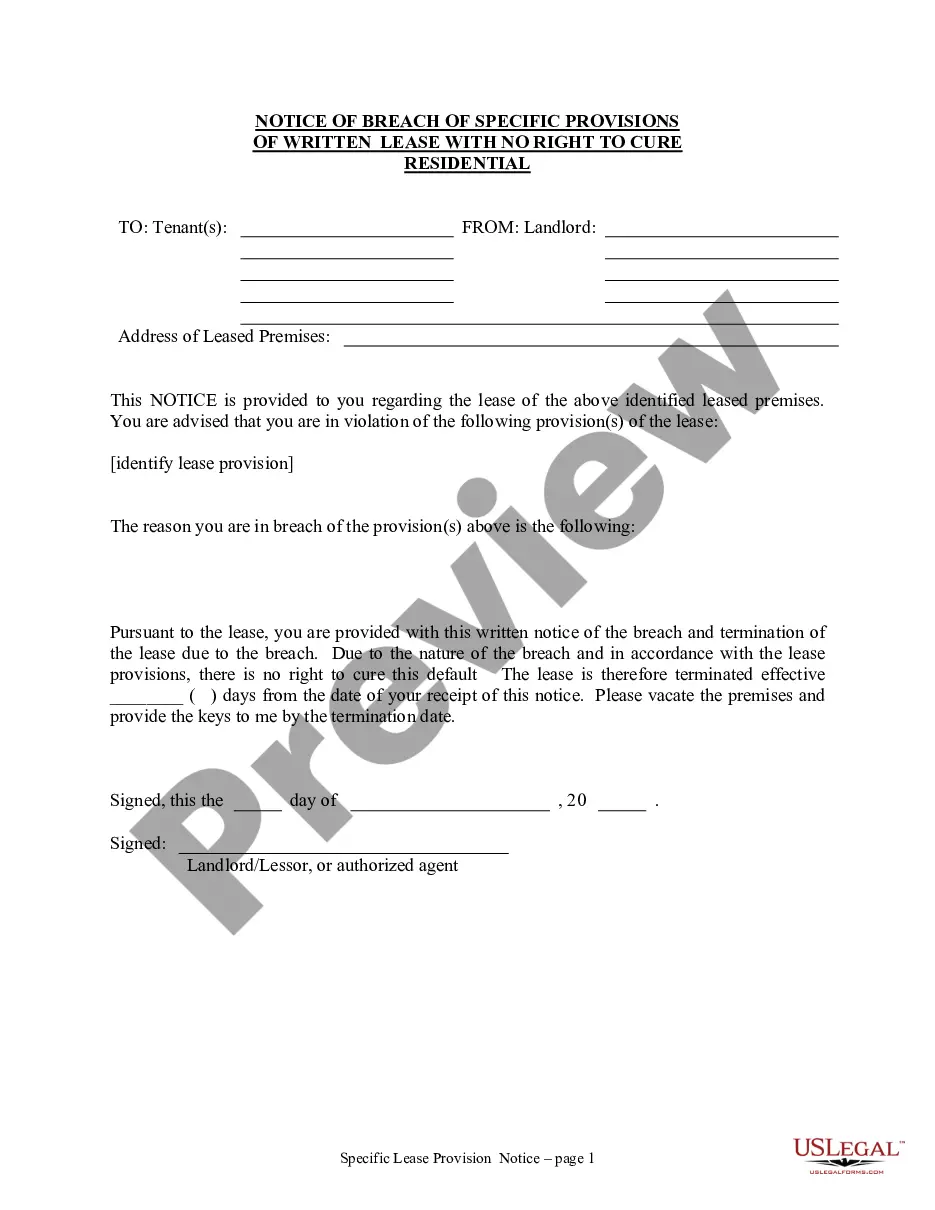
The Notice of Breach of Written Lease for Violating Specific Provisions of Lease with No Right to Cure for Residential Property is a formal document used by landlords to notify tenants of a specific lease violation that cannot be corrected. This form differs from general eviction notices because it specifically addresses uncurable breaches according to the lease terms or statutory law, ensuring that the landlord is following the proper legal protocol to terminate the lease agreement.
Form components explained
- Identification of the landlord and tenant, including their addresses.
- Details of the leased property involved in the breach.
- Specific lease provision violated by the tenant.
- Reason for the breach, clearly outlined.
- Notification of the termination date of the lease due to the breach.
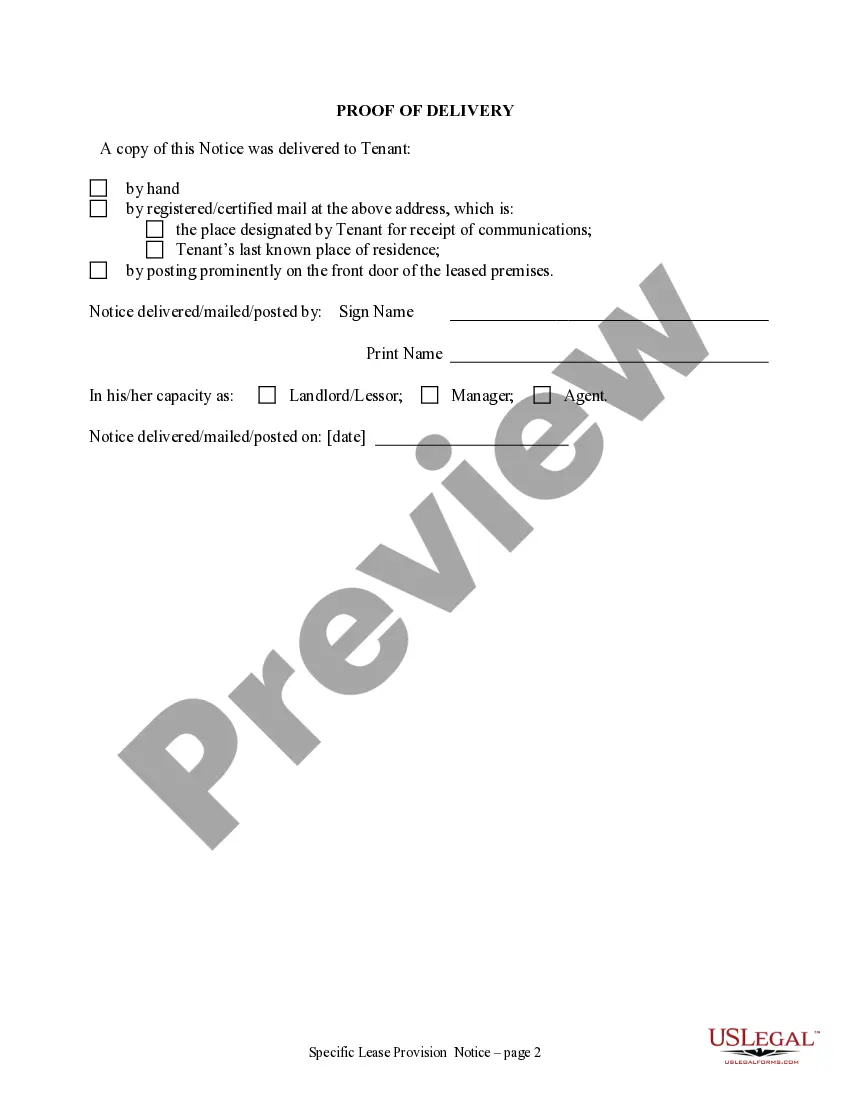
- Proof of delivery method and confirmation of receipt.



Situations where this form applies
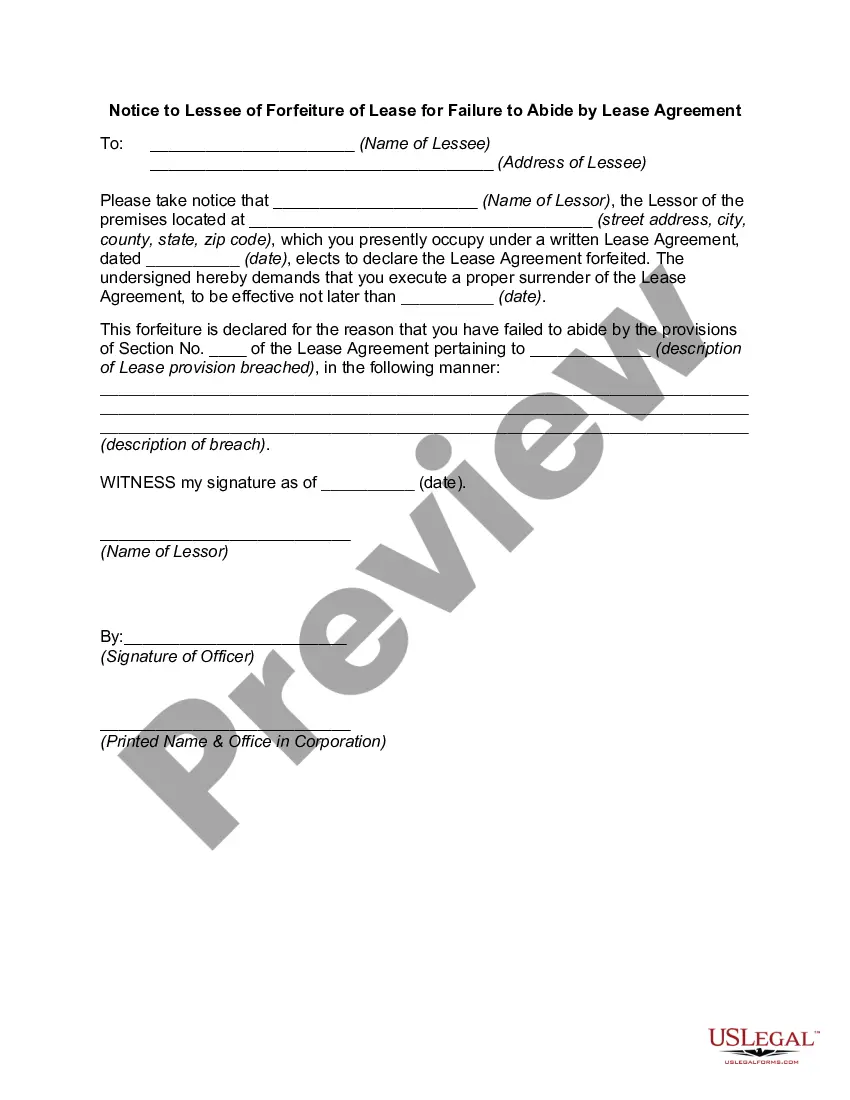
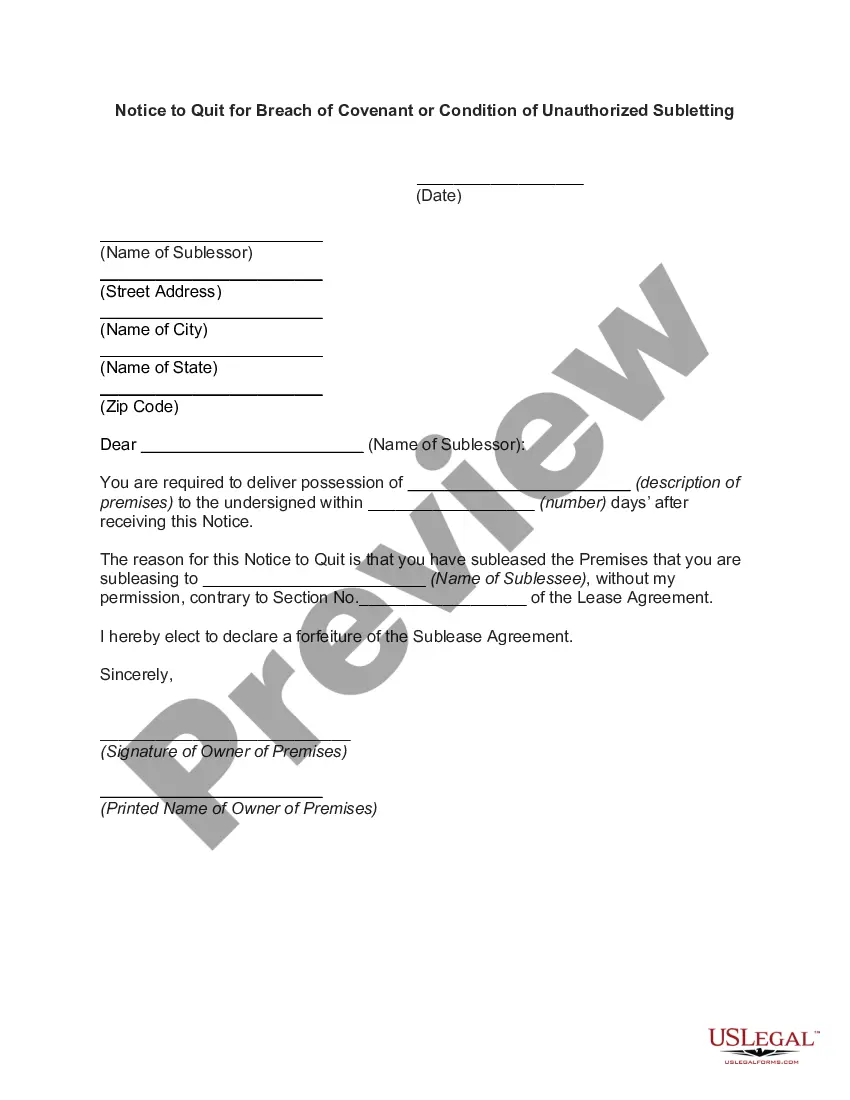
This form should be used when a tenant has violated specific provisions of a written lease without the option to cure the violation. Common scenarios include situations where tenants have committed serious lease infractions, such as illegal subletting, unapproved alterations to the property, or engaging in illegal activities. In these cases, landlords must follow established procedures to terminate the tenancy legally.
Intended users of this form
This form is appropriate for:
- Landlords seeking to terminate a residential lease due to a breach.
- Property managers acting on behalf of landlords in residential properties.
- Tenants receiving notice of lease violations where the terms specify no right to cure.
How to prepare this document
- Identify and enter the names of the landlord and tenant along with their addresses.
- Specify the address of the leased property and the provisions being violated.
- Clearly outline the reason for the lease violation.
- State the termination date, which is usually a specified number of days from the receipt of this notice.
- Ensure that the document is delivered properly, as indicated in the proof of delivery section.
Notarization requirements for this form
This form usually doesn’t need to be notarized. However, local laws or specific transactions may require it. Our online notarization service, powered by Notarize, lets you complete it remotely through a secure video session, available 24/7.
Get your form ready online
Our built-in tools help you complete, sign, share, and store your documents in one place.
Make edits, fill in missing information, and update formatting in US Legal Forms—just like you would in MS Word.
Download a copy, print it, send it by email, or mail it via USPS—whatever works best for your next step.
Sign and collect signatures with our SignNow integration. Send to multiple recipients, set reminders, and more. Go Premium to unlock E-Sign.
If this form requires notarization, complete it online through a secure video call—no need to meet a notary in person or wait for an appointment.
We protect your documents and personal data by following strict security and privacy standards.
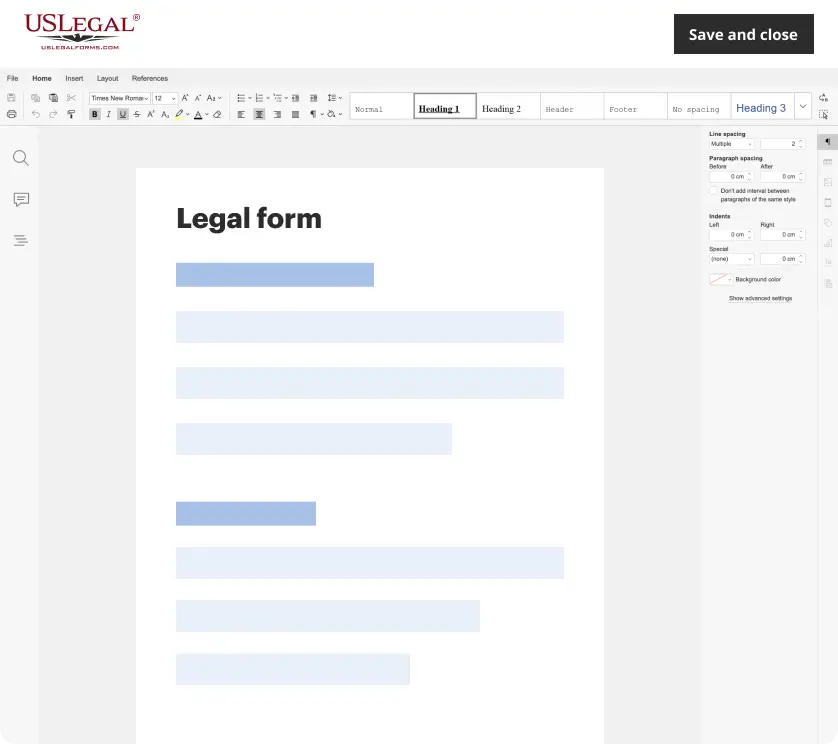
Make edits, fill in missing information, and update formatting in US Legal Forms—just like you would in MS Word.
Download a copy, print it, send it by email, or mail it via USPS—whatever works best for your next step.
Sign and collect signatures with our SignNow integration. Send to multiple recipients, set reminders, and more. Go Premium to unlock E-Sign.
If this form requires notarization, complete it online through a secure video call—no need to meet a notary in person or wait for an appointment.
We protect your documents and personal data by following strict security and privacy standards.
Avoid these common issues
- Failing to specify the exact lease provision that was violated.
- Not providing a clear reason for the breach.
- Incorrectly calculating the termination period.
- Neglecting to properly deliver the notice or failing to document how it was delivered.
Why use this form online
- Convenience of accessing and downloading the form anytime.
- Editability allows landlords to personalize the document for specific situations.
- Reliability, knowing that the form is drafted by licensed attorneys and compliant with legal standards.
Looking for another form?
Form popularity
FAQ
If your landlord violates your lease, it can lead to several consequences, including legal actions or claims for damages. Tenants should keep meticulous records of any lease violations and communicate with their landlord about these issues. If no resolution occurs, tenants may consider sending a formal notice. A Hawaii Notice of Breach of Written Lease for Violating Specific Provisions of Lease with No Right to Cure for Residential Property from Landlord to Tenant serves as an important legal tool in these situations.
Dealing with a disrespectful landlord requires a strategic approach that prioritizes communication and documentation. Start by addressing the issues directly with your landlord while keeping a record of all interactions. If conversations do not yield any improvement, consider exploring formal channels. Utilizing tools such as the Hawaii Notice of Breach of Written Lease for Violating Specific Provisions of Lease with No Right to Cure for Residential Property from Landlord to Tenant can help protect your rights.
Yes, tenants can sue a landlord who does not adhere to the terms of the lease agreement. This legal action may arise from situations like failing to make necessary repairs or not respecting the tenant's privacy rights. However, before pursuing legal action, it’s advisable to follow proper communication channels and document all interactions. Utilizing a Hawaii Notice of Breach of Written Lease for Violating Specific Provisions of Lease with No Right to Cure for Residential Property from Landlord to Tenant may be beneficial in resolving disputes.
A breach of a lease agreement occurs when one party fails to uphold their obligations as outlined in the lease. This can include non-payment of rent, failure to maintain the property, or unlawful eviction attempts by the landlord. When a breach happens, it damages the trust between the tenant and landlord, often leading to disputes. Tenants should understand their rights and may need to issue a Hawaii Notice of Breach of Written Lease for Violating Specific Provisions of Lease with No Right to Cure for Residential Property from Landlord to Tenant.
Landlord harassment in Hawaii specifically targets landlord actions that violate a tenant's rights. This includes unauthorized entries, failure to provide essential services, or retaliatory actions against tenants for asserting their rights. Tenants have protections under Hawaii law regarding fair treatment from their landlords. If you find yourself in such a situation, documenting your experiences can be the first step towards addressing the issue.
In Hawaii, harassment may involve any conduct that can be deemed threatening or intimidating, affecting a person’s ability to feel safe in their home. This includes unnecessary and repeated contact, invasive actions, and verbal abuse. For tenants, recognizing these behaviors as harassment is crucial for their mental well-being. If you face harassment, you might consider legal options like the Hawaii Notice of Breach of Written Lease for Violating Specific Provisions of Lease with No Right to Cure for Residential Property from Landlord to Tenant.
Landlord harassment in Hawaii refers to any actions taken by a landlord that create an intimidating or hostile living environment for tenants. This behavior can include aggressive communication, frequently entering the rental property without notice, or refusing necessary repairs. It undermines the tenant's right to enjoy their home peacefully. It's important to understand that if you experience such harassment, documenting the incidents can help in resolving the issue effectively.
Yes, you should respond to a lease violation to protect your rights and avoid further complications. Ignoring a Hawaii Notice of Breach of Written Lease for Violating Specific Provisions of Lease with No Right to Cure for Residential Property from Landlord to Tenant can lead to eviction or legal actions. By addressing the violation promptly, you demonstrate your willingness to comply and resolve issues amicably. Utilizing resources like uslegalforms can provide you with the tools and information needed to craft a proper response.
A breach of lease occurs when either the landlord or tenant fails to uphold the terms specified in the lease agreement. Common examples include non-payment of rent, unauthorized pets, or property damage. In the context of a Hawaii Notice of Breach of Written Lease for Violating Specific Provisions of Lease with No Right to Cure for Residential Property from Landlord to Tenant, understanding your rights and obligations can clarify any disputes. Always keep lines of communication open to mitigate potential issues.
Responding to a lease violation begins with understanding the terms outlined in your lease agreement. If you receive a Hawaii Notice of Breach of Written Lease for Violating Specific Provisions of Lease with No Right to Cure for Residential Property from Landlord to Tenant, it's important to review the notice carefully. You should gather any evidence that supports your case and consider reaching out to the landlord to discuss the issue. This proactive approach can help you resolve misunderstandings before they escalate.