Hawaii Letter from Landlord to Tenant that Sublease granted - Rent Paid by Subtenant, Old Tenant Released from Liability for Rent
About this form
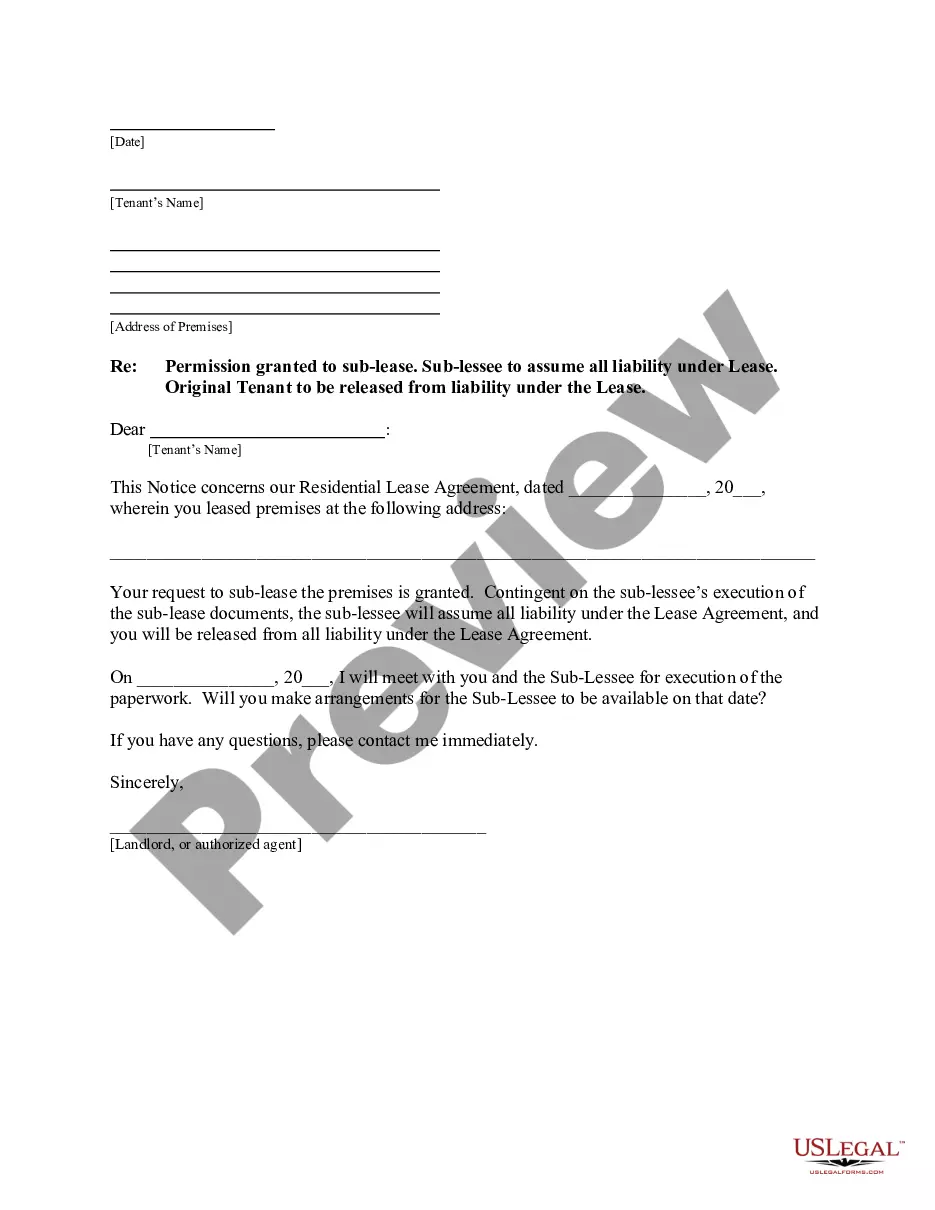
The Letter from Landlord to Tenant that Sublease Granted is a formal document in which a landlord notifies the tenant that their request to sublease the rental property has been approved. This letter outlines important details, including that the subtenant will be responsible for paying rent and that the original tenant will be released from liability for any unpaid rent or damages. This form is distinct from other lease agreements as it specifically addresses subleasing circumstances and confirms the transfer of rental obligations to a subtenant.
Form components explained
- Approval of the tenant's request to sublease the property.
- Statement that rent will be paid by the subtenant.
- Release of the original tenant from liability under the lease agreement.
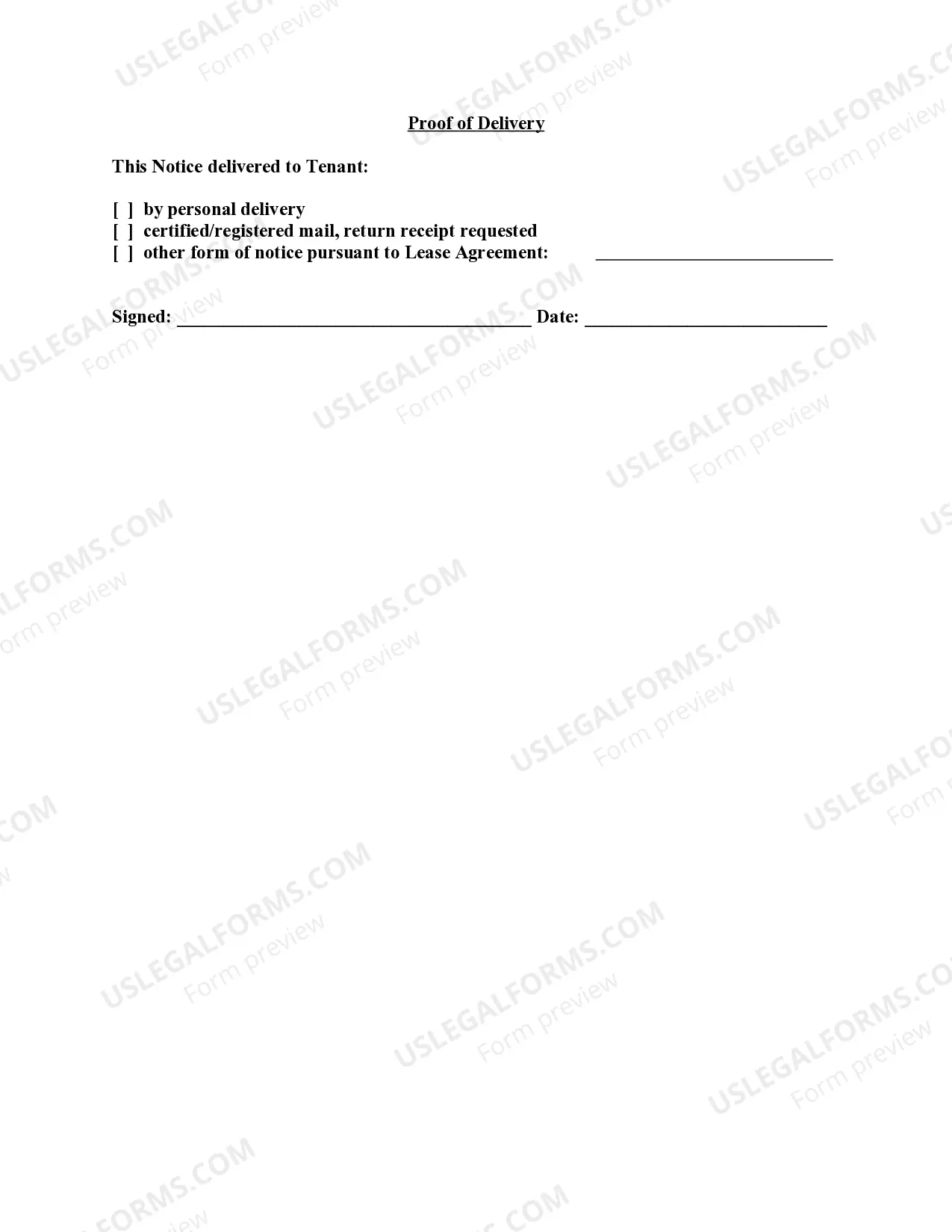
- Meeting arrangement for signing sublease documents.
- Contact information for any questions.

When to use this form
This form should be used when a tenant wishes to sublease their apartment to another party and has received approval from the landlord. It is necessary to confirm that the subtenant is responsible for rent payments and to formally release the original tenant from all rental obligations. Use this letter to ensure that all parties are clear on their responsibilities and to avoid misunderstandings about liability and payment.
Who can use this document
This letter is suitable for:
- Landlords who have consented to a tenant's request for subleasing.
- Tenants seeking to sublease their rented property.
- Subtenants who need documentation regarding their rental obligations.
How to prepare this document
- Start by entering the date of the letter.
- Clearly state the tenant's name and address, as well as details of the subtenant.
- Confirm the approval of the sublease and the condition that the subtenant will pay rent.
- Include a date to meet for signing the necessary sublease documents.
- Make sure to sign the letter as the landlord or authorized agent.
Notarization requirements for this form
Notarization is generally not required for this form. However, certain states or situations might demand it. You can complete notarization online through US Legal Forms, powered by Notarize, using a verified video call available anytime.
Get your form ready online
Our built-in tools help you complete, sign, share, and store your documents in one place.
Make edits, fill in missing information, and update formatting in US Legal Forms—just like you would in MS Word.
Download a copy, print it, send it by email, or mail it via USPS—whatever works best for your next step.
Sign and collect signatures with our SignNow integration. Send to multiple recipients, set reminders, and more. Go Premium to unlock E-Sign.
If this form requires notarization, complete it online through a secure video call—no need to meet a notary in person or wait for an appointment.
We protect your documents and personal data by following strict security and privacy standards.

Make edits, fill in missing information, and update formatting in US Legal Forms—just like you would in MS Word.

Download a copy, print it, send it by email, or mail it via USPS—whatever works best for your next step.

Sign and collect signatures with our SignNow integration. Send to multiple recipients, set reminders, and more. Go Premium to unlock E-Sign.

If this form requires notarization, complete it online through a secure video call—no need to meet a notary in person or wait for an appointment.

We protect your documents and personal data by following strict security and privacy standards.
Mistakes to watch out for
- Failing to specify that the subtenant is responsible for paying rent.
- Not obtaining the landlord's signature or agreement before subleasing.
- Neglecting to set a meeting date for signing necessary documents.
Benefits of completing this form online
- Convenient access to a legally vetted template anytime.
- Edit the form easily to suit personal circumstances.
- Reliable content that conforms to legal standards.
Legal use & context
- This form legally establishes the agreement for subleasing upon the landlord's acceptance.
- It can protect against disputes regarding unpaid rent by clarifying the roles of all parties.
- Ensures that the original tenant can transfer responsibilities to the subtenant.
What to keep in mind
- This letter confirms the landlord's approval of a tenant's sublease request.
- It outlines the subtenant's responsibility for rent and releases the original tenant from obligations.
- Ensure all parties are clear on their roles to avoid conflicts.
Looking for another form?

Form popularity
FAQ
When you need to remind your tenant that rent is due, a polite approach works best. You can say something like, 'This is a friendly reminder that your rent payment for the month is due soon.' Being direct yet courteous helps maintain a good relationship. Remember, clarity is key when discussing matters related to rent.
Why Is Subletting Not Allowed At Some Properties? The most common reason for not allowing subletting at a property is the increased risk of financial loss, property damage, or misleading tenants. Adding more tenants or switching tenants through a sublease during a tenancy adds work and risk for the landlord.
If a court finds you guilty of the first offence of unlawful subletting, you can be fined in the magistrates' court.At the magistrates' court, you can get up to six months in prison or a fine, or both. At the Crown Court the maximum penalty is imprisonment for two years or a fine, or both.
In short, subletting allows a new renter to take over the lease directly with the landlord, while subleasing involves renting all or part of the space to another renter through the original renter.
A sublease is a legally binding contract made between a tenant and a new tenant (also known as a subtenant or a sublessee).Usually, the first tenant must get consent from the landlord before he/she is allowed to sublease the premises.
A Residential Sublease is a legally binding contract made between the original tenant of a rental property (sublandlord) and a new tenant (also known as a subtenant or a sublessee). The sublease gives the subtenant the right to share or to take over the rented premises from the original tenant.
The master lease may limit your rights to sue even if your sublease says you can sue the tenant listed in the master lease.This is usually a good thing for both subtenant and landlord as long as it does not state that you totally forfeit your rights to sue if an agreement cannot be reached.
Sublease. When a tenant transfers less than the remaining term or less than the tenant's entire estate, thus leaving the original tenant with a reversionary interest in the lease, the transfer is a sublease.
Subletting a rental is permitted in California if the landlord doesn't expressly prohibit it in the lease agreement.Tenants can legally sublease their unit unless the landlord specifically says they can't in the leaseand even then, depending on where they live, they may have some leeway.
California isn't the most tenant-friendly state when it comes to subletting. According to California law you must receive written consent from your landlord prior to subletting, and if your lease says no subletting, then that really means no subletting.