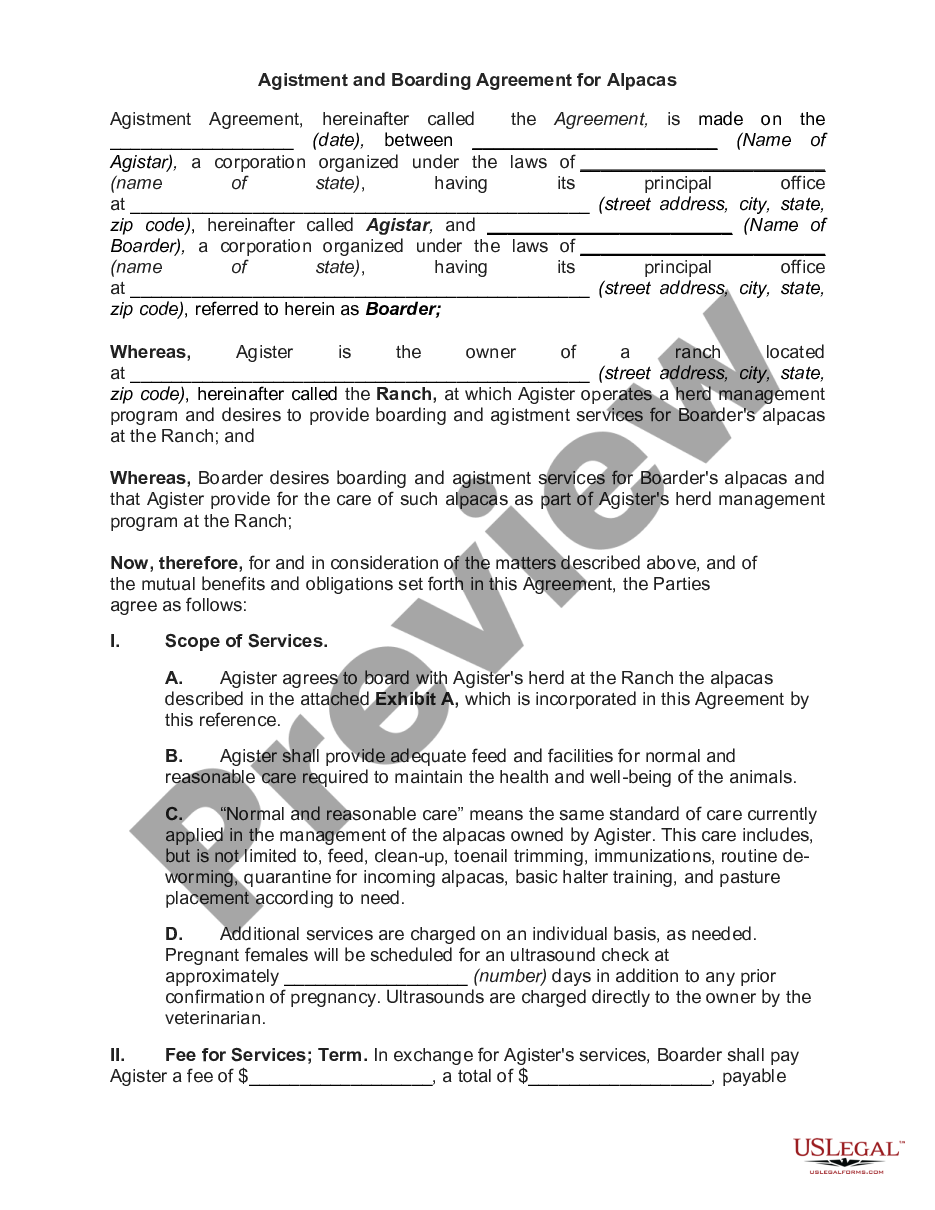
Georgia Agreement for Delayed or Partial Rent Payments
What this document covers
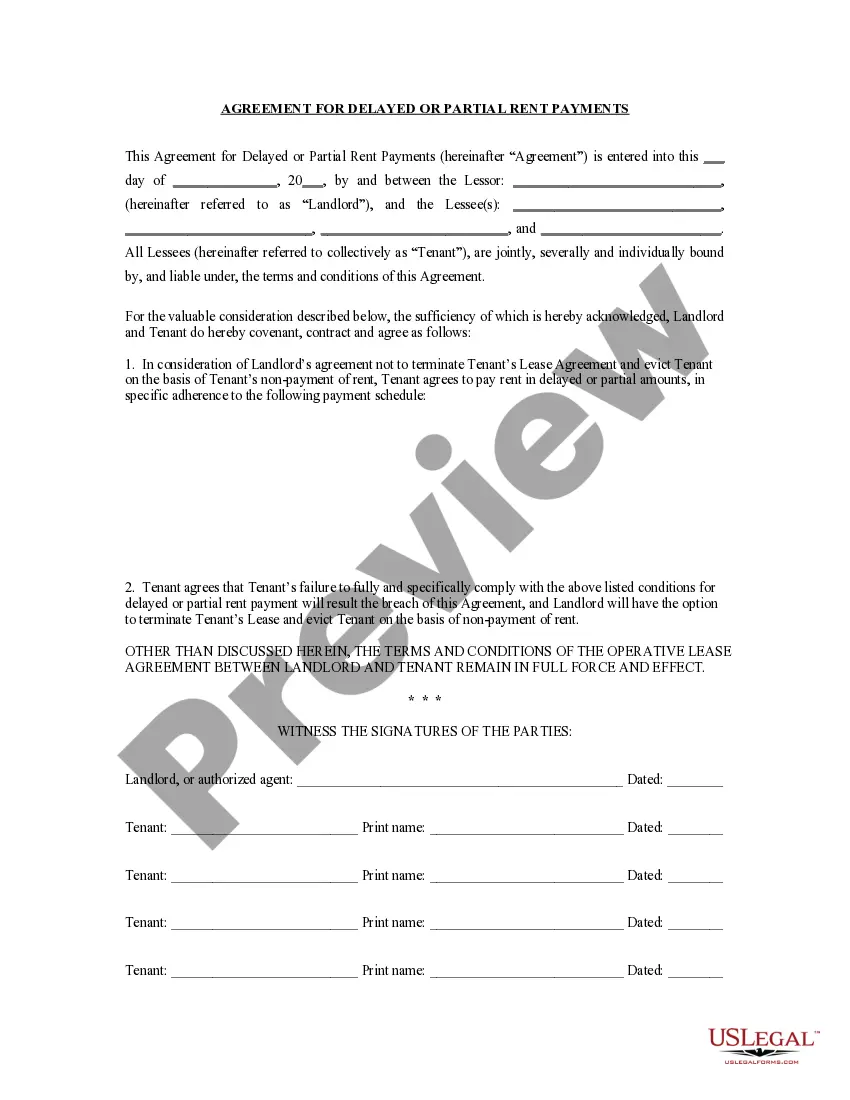
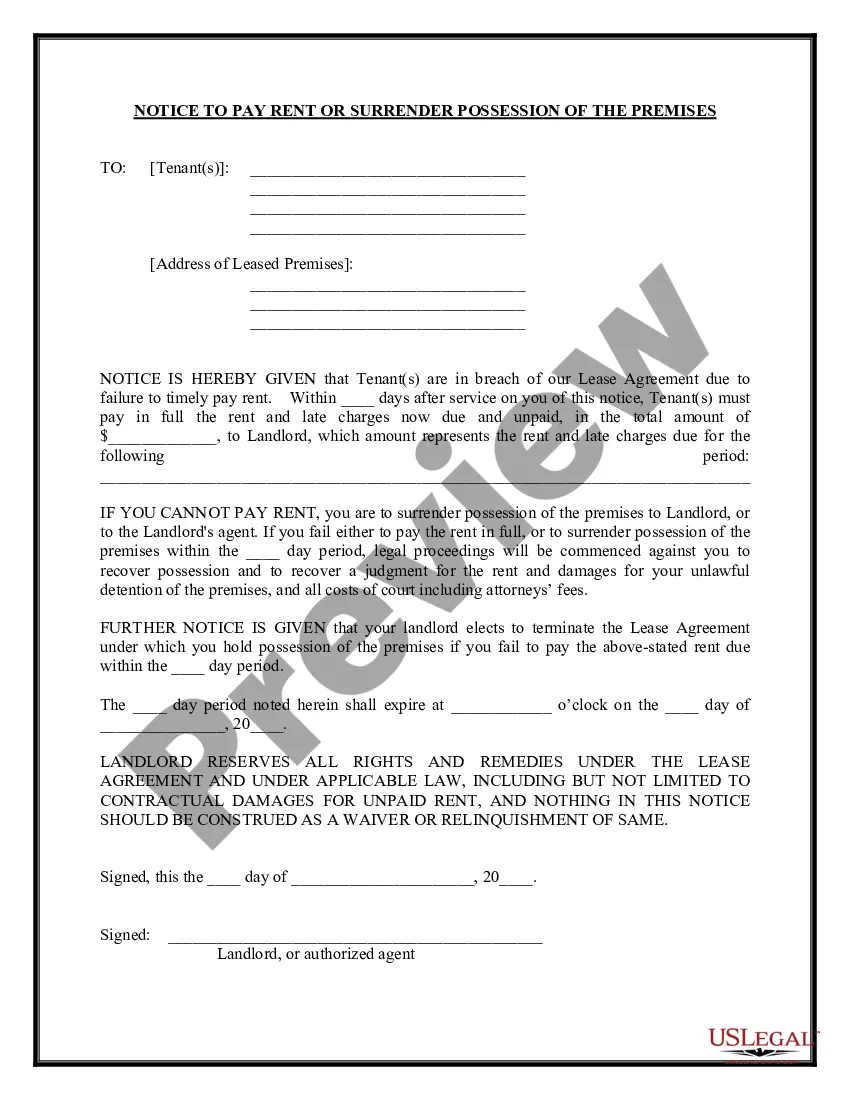
The Agreement for Delayed or Partial Rent Payments is a legal document that outlines the terms between a landlord and tenant regarding the delayed or partial payment of rent. This agreement specifies the conditions under which the tenant can pay rent late or in portions without facing eviction. It is designed to protect the tenant's rights while ensuring that the landlord receives the agreed payments in a timely manner. This form differs from typical rental agreements as it focuses specifically on payment modifications rather than lease conditions.
Key components of this form
- Identification of the landlord and tenant(s).
- Specific dates for the payment schedule.
- Terms regarding the acknowledgment of the original lease agreement.
- Signatures of all parties involved, making the agreement legally binding.
- Clauses addressing consequences if payments are not made as agreed.
Common use cases
This form is useful in situations where a tenant is experiencing financial difficulties and cannot pay rent in full on the due date. It allows both parties to agree on an alternative payment plan while maintaining the lease agreement. Using this form can help avoid potential eviction proceedings and provide a clear understanding of payment expectations.
Who this form is for
This form is intended for:
- Landlords who wish to accommodate tenants facing temporary financial challenges.
- Tenants who need to negotiate reduced or delayed rent payments.
- Property managers managing multiple rental agreements who require a standardized approach to payment modifications.
How to prepare this document
- Identify the parties: Fill in the names of the landlord and tenant(s).
- Specify the payment schedule: Enter the dates and amounts for the delayed or partial payments.
- Review any existing lease terms: Confirm that the original lease agreement remains in effect.
- Add signatures: Ensure all parties sign and date the form to validate the agreement.
- Keep copies: Make sure to retain a copy of the signed agreement for both the landlord and the tenant for future reference.
Is notarization required?
This form usually doesn’t need to be notarized. However, local laws or specific transactions may require it. Our online notarization service, powered by Notarize, lets you complete it remotely through a secure video session, available 24/7.
Get your form ready online
Our built-in tools help you complete, sign, share, and store your documents in one place.
Make edits, fill in missing information, and update formatting in US Legal Forms—just like you would in MS Word.
Download a copy, print it, send it by email, or mail it via USPS—whatever works best for your next step.
Sign and collect signatures with our SignNow integration. Send to multiple recipients, set reminders, and more. Go Premium to unlock E-Sign.
If this form requires notarization, complete it online through a secure video call—no need to meet a notary in person or wait for an appointment.
We protect your documents and personal data by following strict security and privacy standards.

Make edits, fill in missing information, and update formatting in US Legal Forms—just like you would in MS Word.

Download a copy, print it, send it by email, or mail it via USPS—whatever works best for your next step.

Sign and collect signatures with our SignNow integration. Send to multiple recipients, set reminders, and more. Go Premium to unlock E-Sign.

If this form requires notarization, complete it online through a secure video call—no need to meet a notary in person or wait for an appointment.

We protect your documents and personal data by following strict security and privacy standards.
Typical mistakes to avoid
- Failing to specify exact payment dates and amounts.
- Not including all tenant names if there are multiple lessees.
- Neglecting to sign the agreement, which can lead to disputes about its validity.
- Overlooking the consequences of missed payments as outlined in the agreement.
Benefits of using this form online
- Convenient access to legal documents from anywhere and at any time.
- Editable forms allow for customization to fit specific agreement needs.
- Instant download capability makes it easy to use right away.
- Prepared by licensed attorneys to ensure accuracy and legal compliance.
Looking for another form?
Form popularity
FAQ
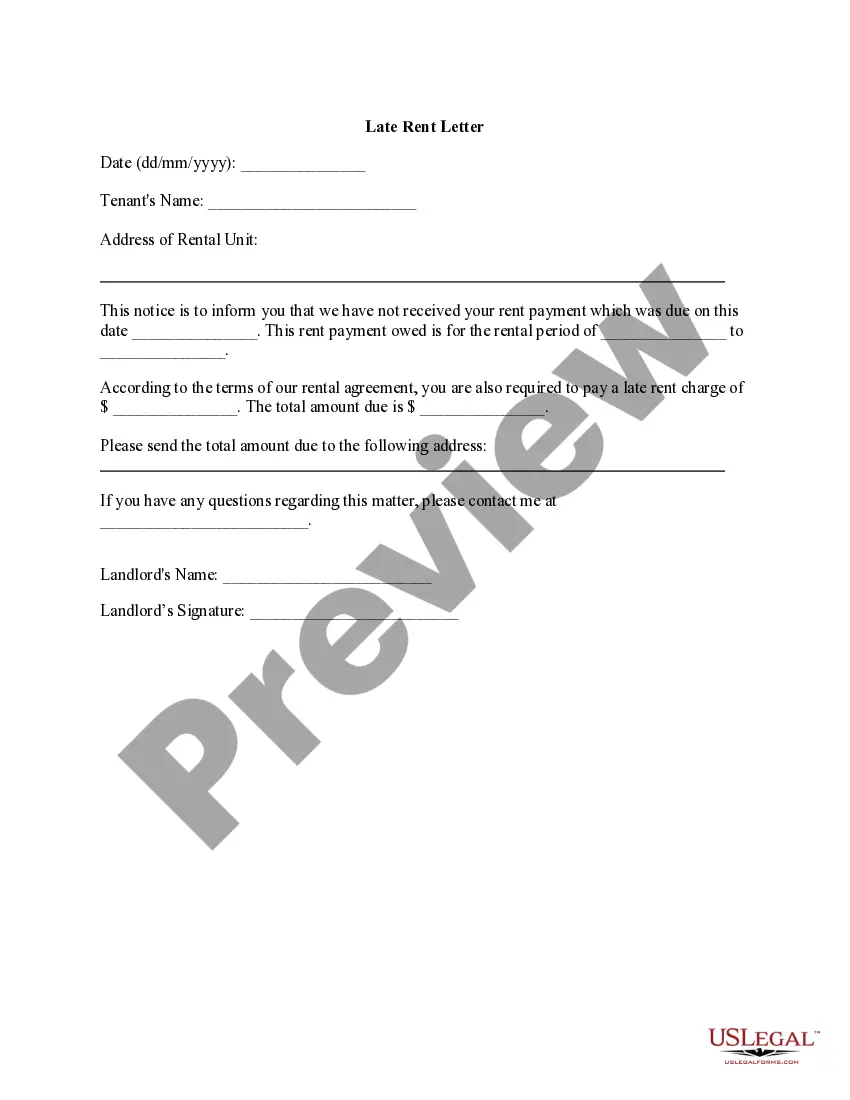
While there isn't a formal limit to how late you can be on rent in Georgia, the consequences begin as soon as you miss a payment. Landlords can initiate eviction procedures immediately after a missed payment. To mitigate potential eviction, the Georgia Agreement for Delayed or Partial Rent Payments offers a structured way to handle your financial obligations. By creating clear communication and setting new payment terms, you can potentially avoid legal action.
In Georgia, there is no official grace period for late rent payments, meaning a landlord can begin eviction proceedings as soon as rent is overdue. However, waiting longer can lead to legal actions. To manage your late payments responsibly, consider using the Georgia Agreement for Delayed or Partial Rent Payments. This agreement can help establish a timeline for paying what you owe and streamline communication with your landlord.
The eviction process in Georgia typically takes about three to four weeks after a landlord files for eviction due to non-payment of rent. After filing, the landlord must serve you with a notice and then attend a court hearing. If the court rules in favor of the landlord, you may lose your residence quickly. To prevent this, using the Georgia Agreement for Delayed or Partial Rent Payments allows you to communicate and possibly settle your payment issues before reaching that stage.
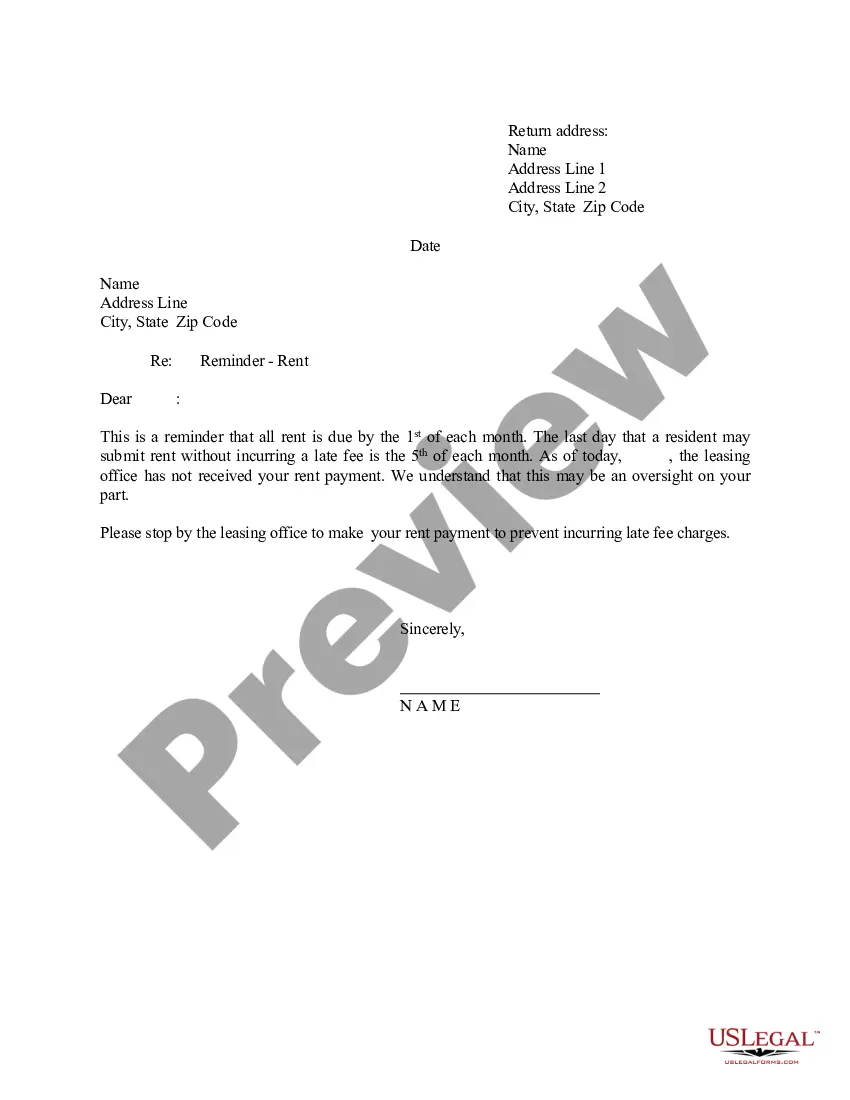
Writing a letter for late rent payment should be straightforward and polite. Start with a clear subject line and state your circumstances honestly. Mention your understanding of the Georgia Agreement for Delayed or Partial Rent Payments if applicable, and propose your plan moving forward. A well-structured letter can demonstrate responsibility and willingness to resolve the issue, building trust with your landlord.
Negotiating late rent payments involves clear communication with your landlord. Start by reaching out promptly to explain your situation and propose a realistic plan. Utilizing the Georgia Agreement for Delayed or Partial Rent Payments can help formalize the arrangement and ensure both parties are on the same page. Remember, being proactive in these discussions can lead to a more favorable outcome.
In Georgia, accepting partial payment does not automatically waive a landlord's right to evict a tenant. If a landlord accepts a partial rent payment, it could indicate an understanding or negotiation, but full rent is still due. Utilizing the Georgia Agreement for Delayed or Partial Rent Payments can be beneficial in this situation, as it can formalize any agreements made regarding partial payments.
Recent changes in Georgia law address tenant rights and obligations, focusing on eviction processes and tenant protections. These laws highlight the importance of written agreements, such as the Georgia Agreement for Delayed or Partial Rent Payments, which allows tenants the chance to avoid immediate eviction and negotiate new payment terms with landlords.
In Georgia, a landlord can initiate eviction proceedings if the tenant is more than one month behind on rent. However, the legal process includes several steps, allowing tenants some time to resolve their outstanding debts. Understanding the Georgia Agreement for Delayed or Partial Rent Payments can help you negotiate even if you are falling behind, providing options to manage your rent more effectively.
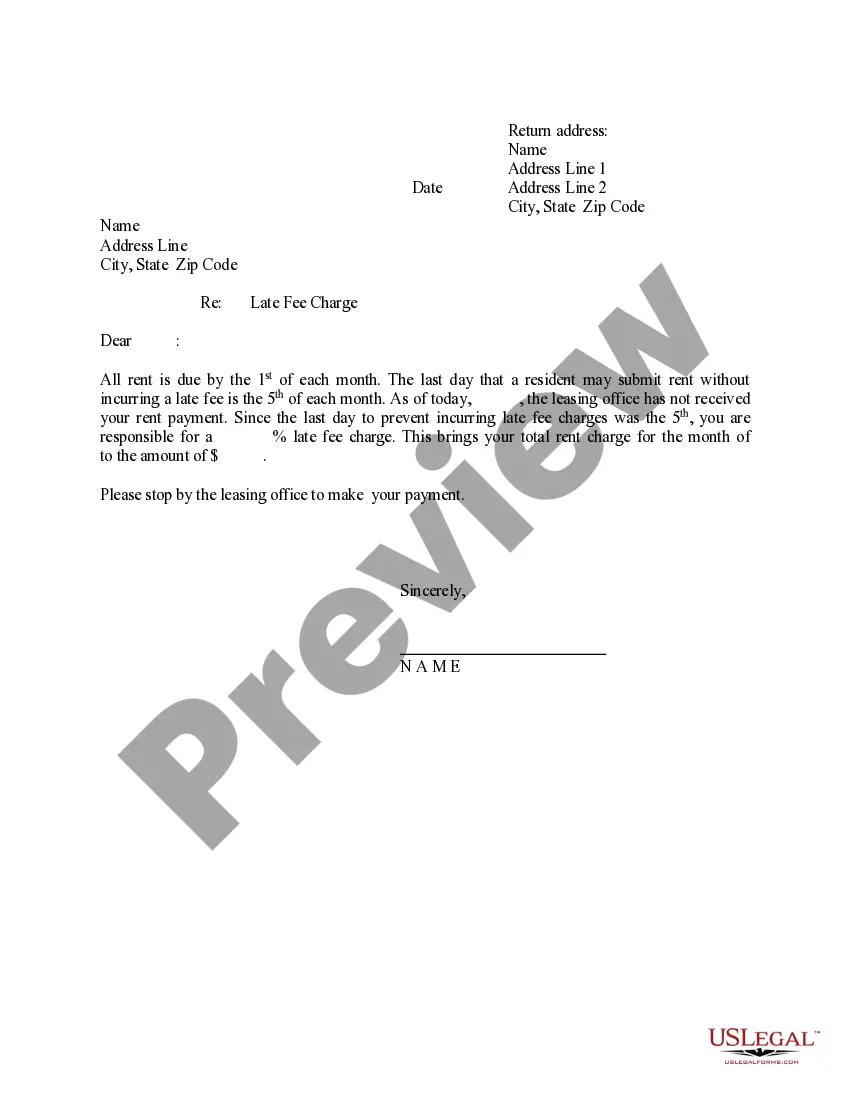
In Georgia, landlords typically allow a grace period of five days for rent payments. After this period, rent is considered late, and late fees may apply according to the rental agreement. If you find yourself needing extra time, consider using the Georgia Agreement for Delayed or Partial Rent Payments to negotiate a better solution with your landlord.