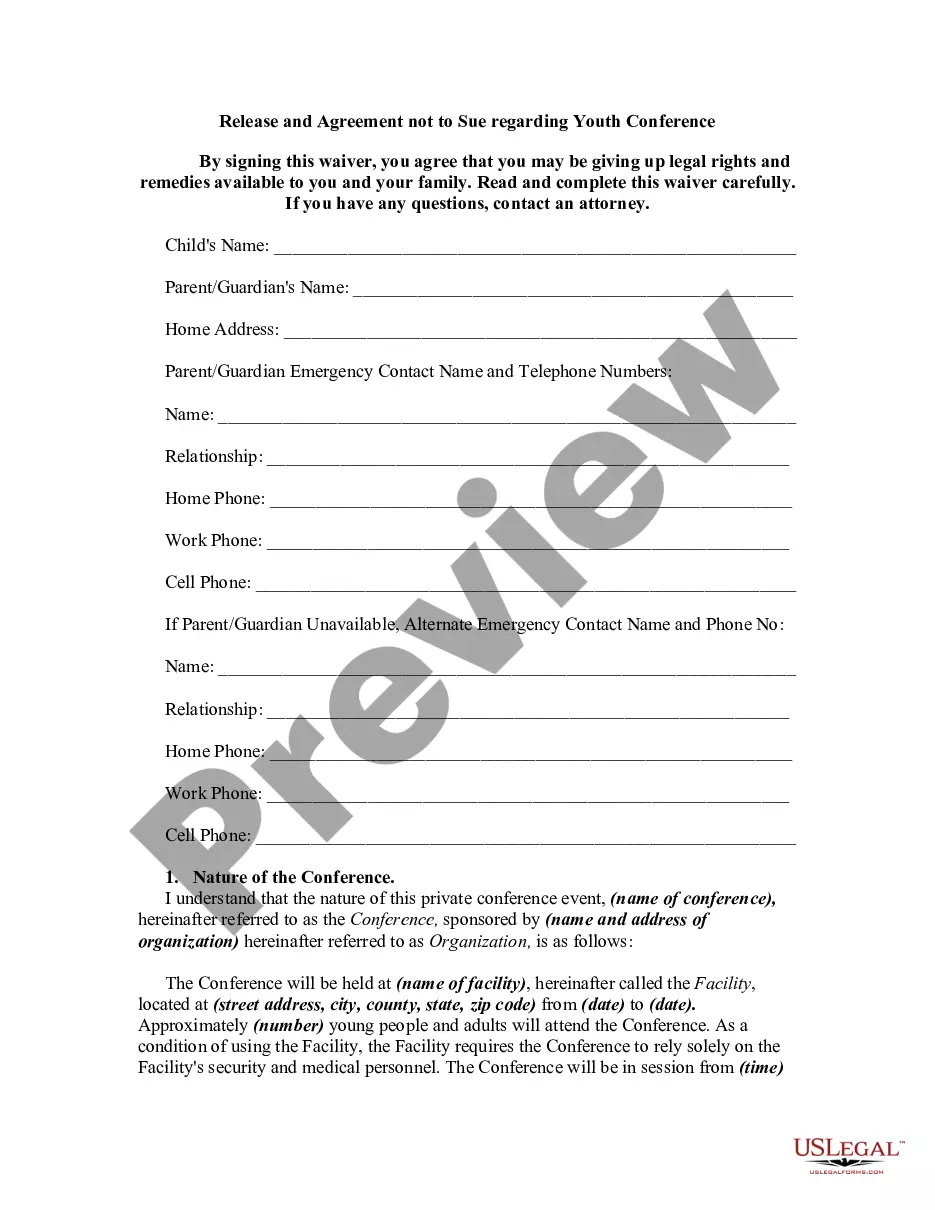
Florida Living Trust for Individual Who is Single, Divorced or Widow or Widower with No Children
About this form
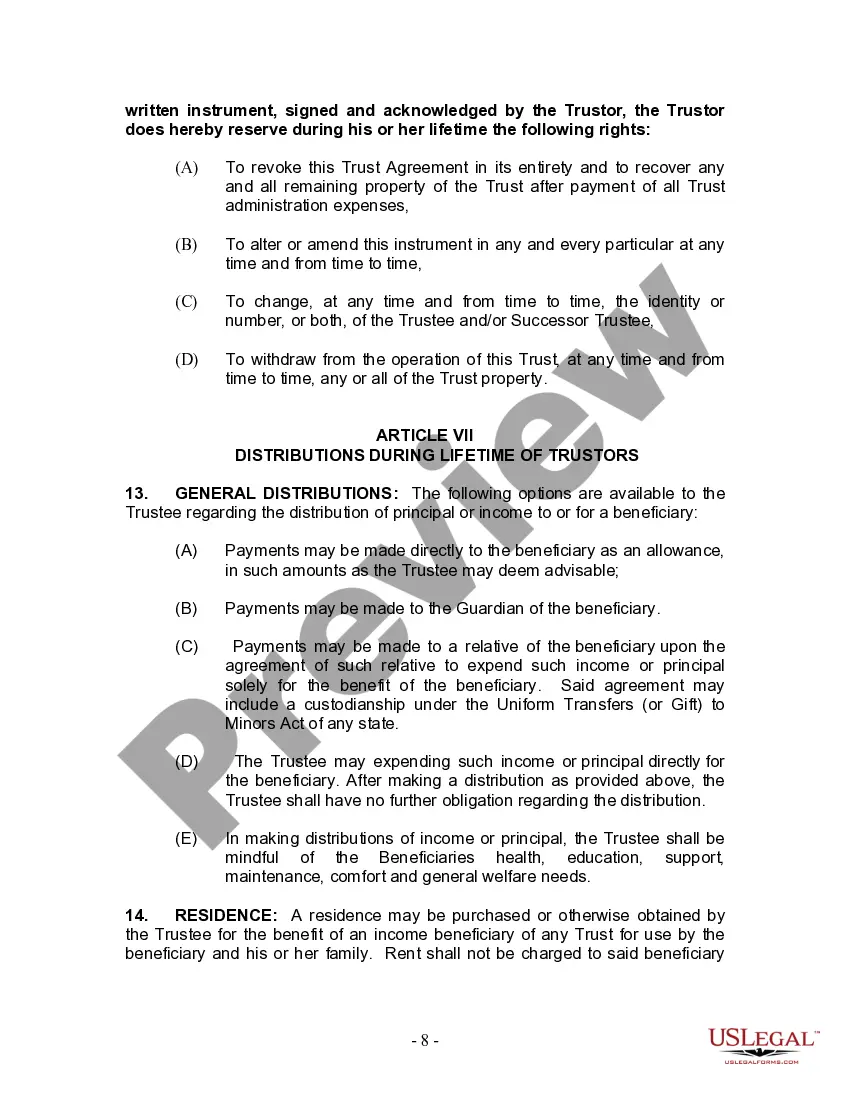
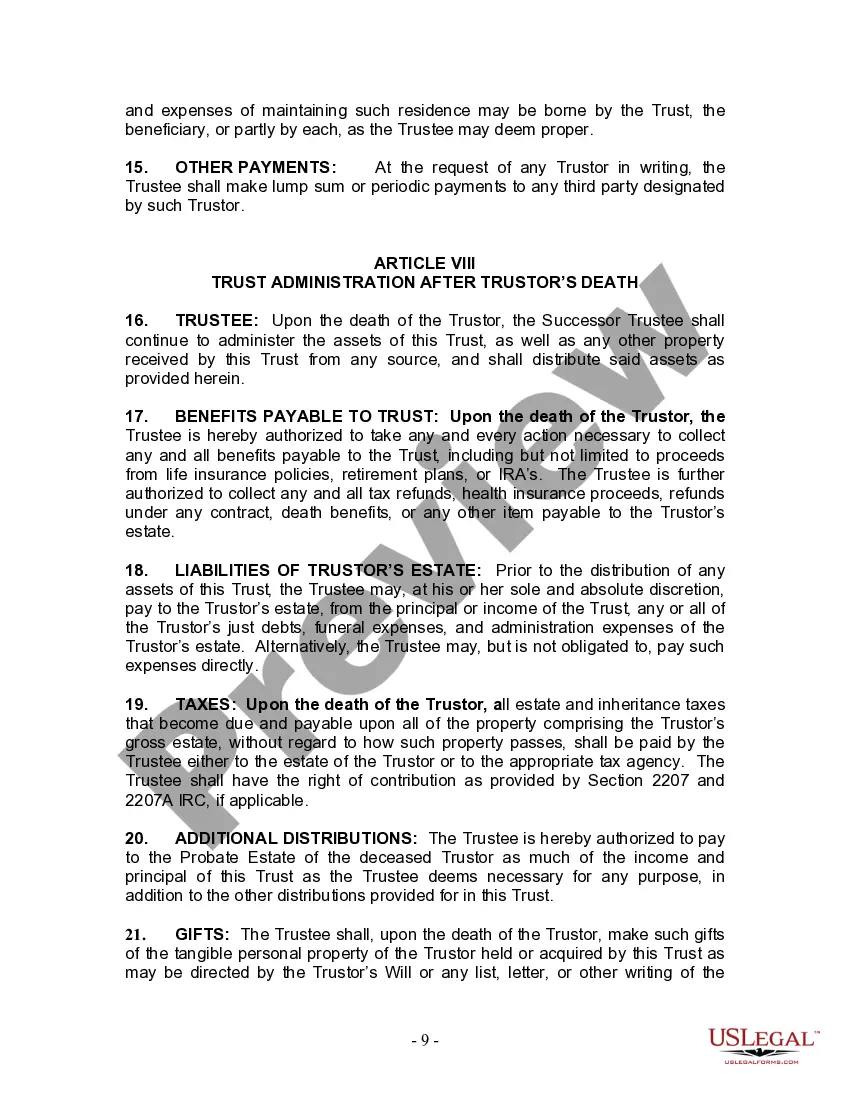
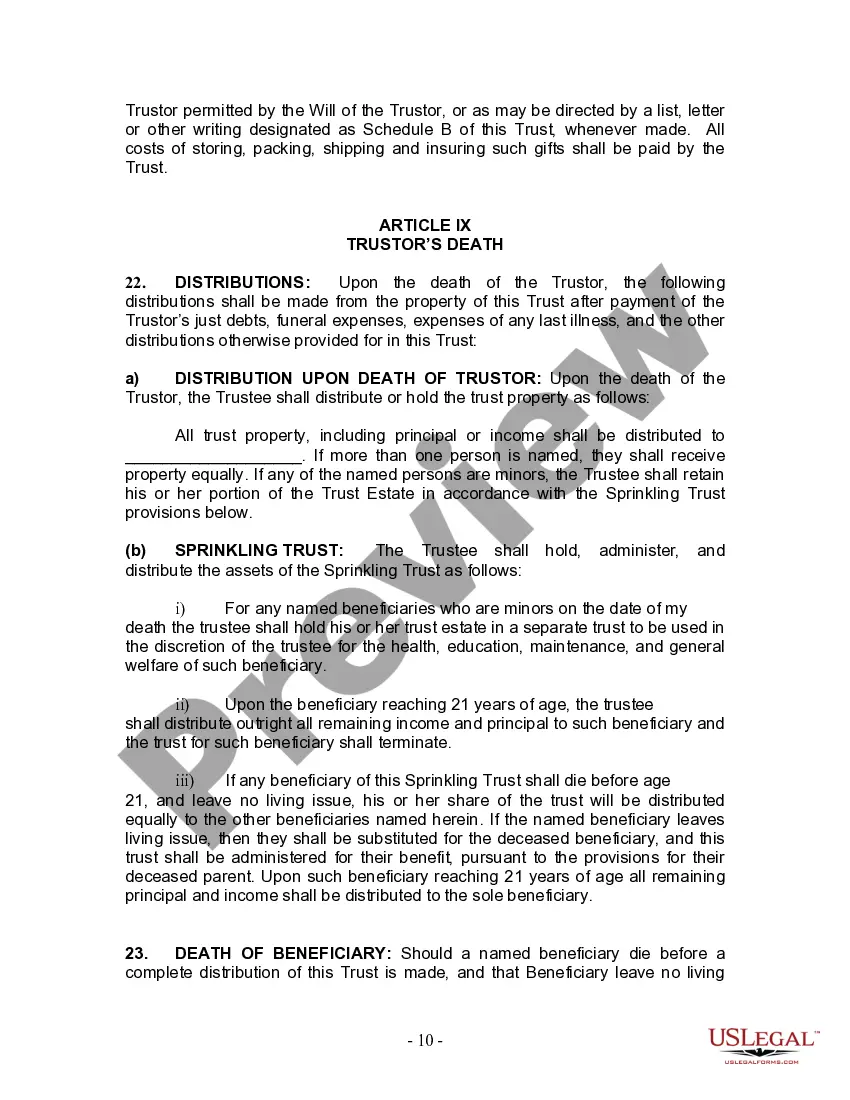
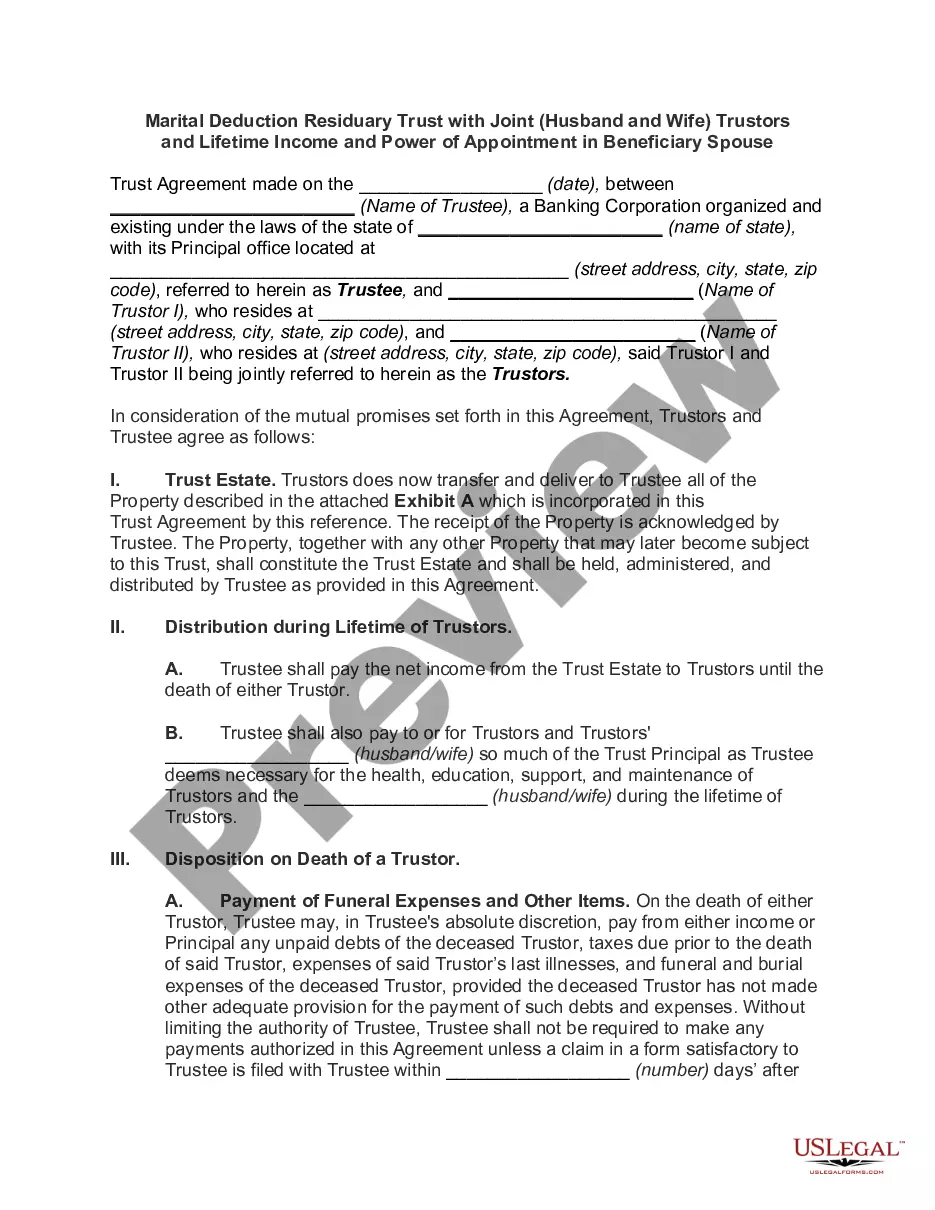
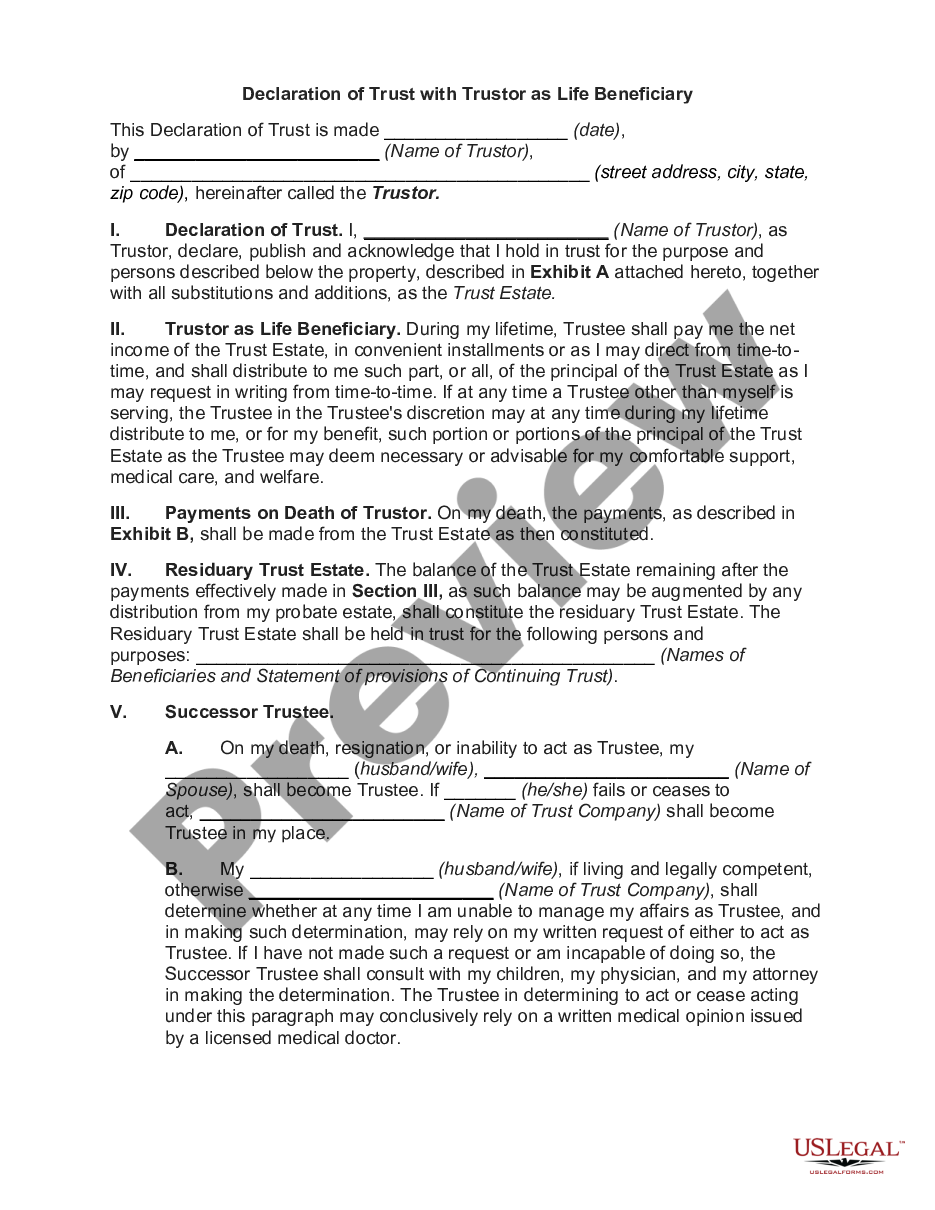
This Living Trust for Individual Who is Single, Divorced or Widow(er) with No Children is a legal document that allows a single person, including individuals who are divorced or widowed without children, to place their assets in a trust during their lifetime. This form serves the purpose of estate planning, allowing the creator to manage their assets while avoiding the probate process after their death. The trust creator can act as their own trustee, maintaining control of their affairs while ensuring that their wishes are honored upon their passing.
Form components explained
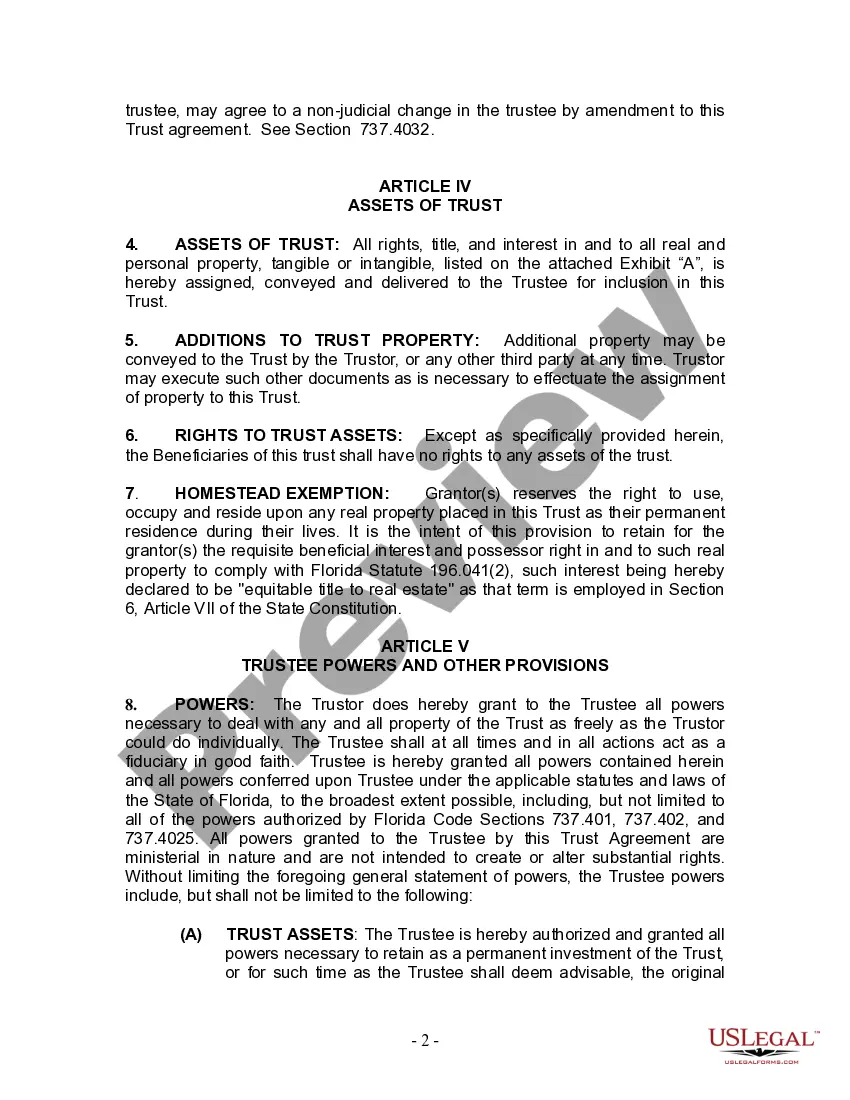
- Name of trust section for customizing the trust title.
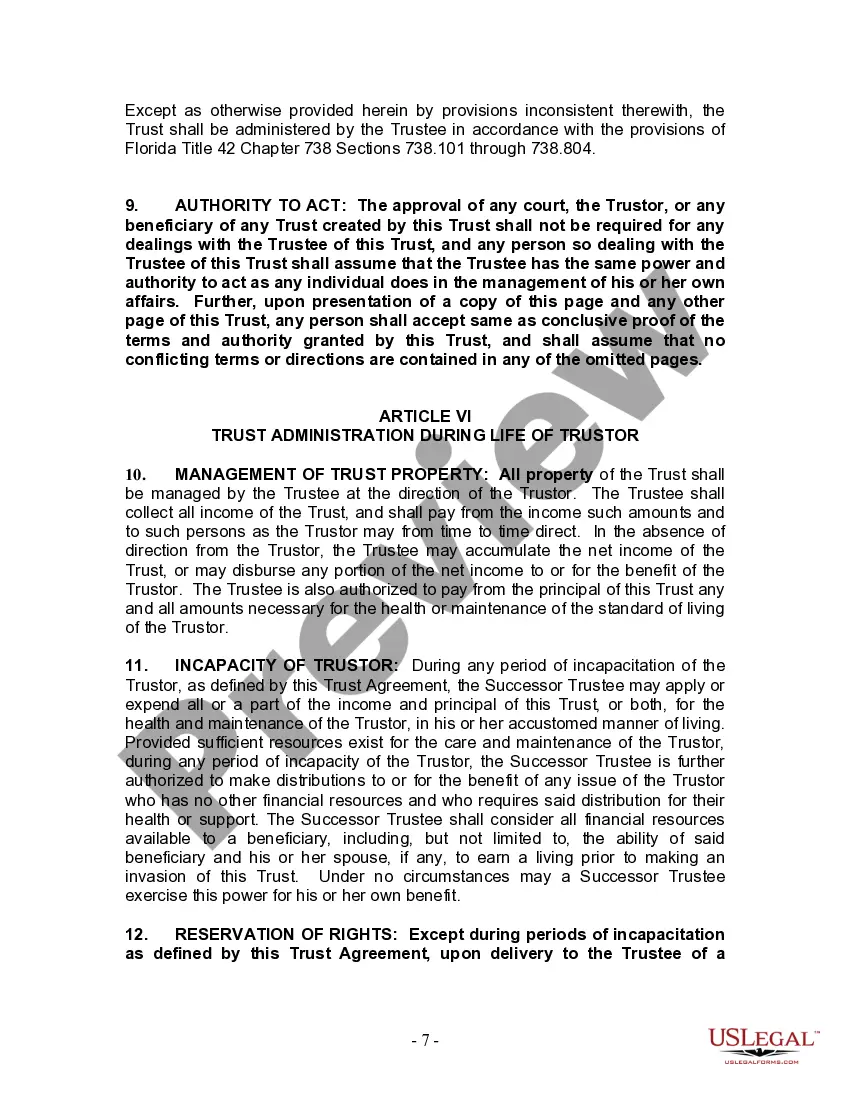
- Identification of the Trustor and designated beneficiaries.
- Appointment of a trustee and successor trustee provisions.
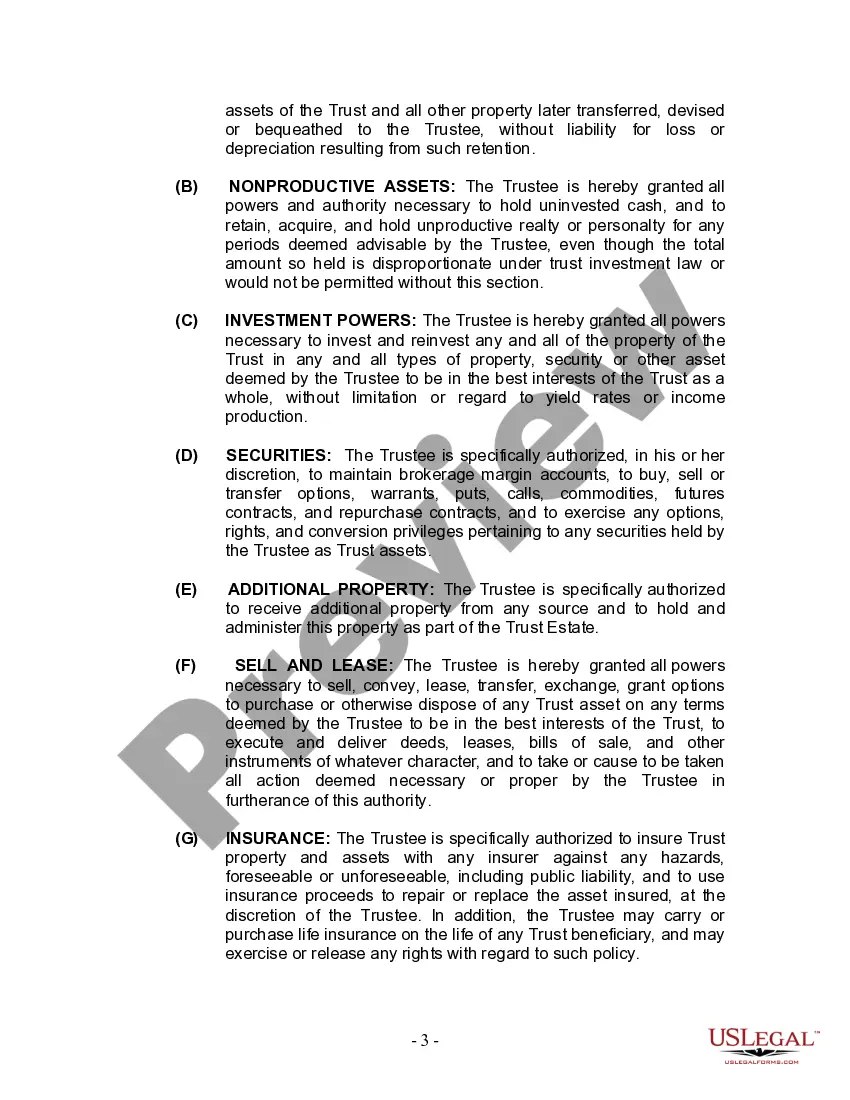
- Details regarding trust assets and the process for adding additional property.
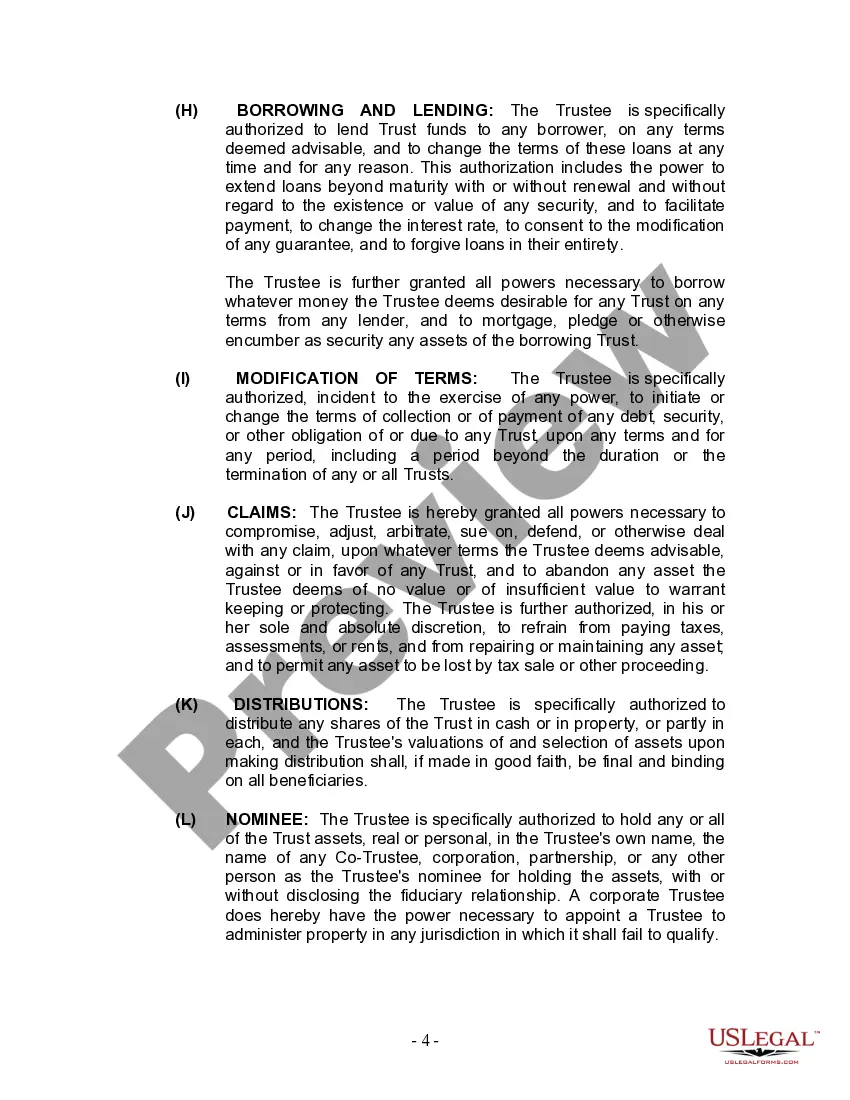
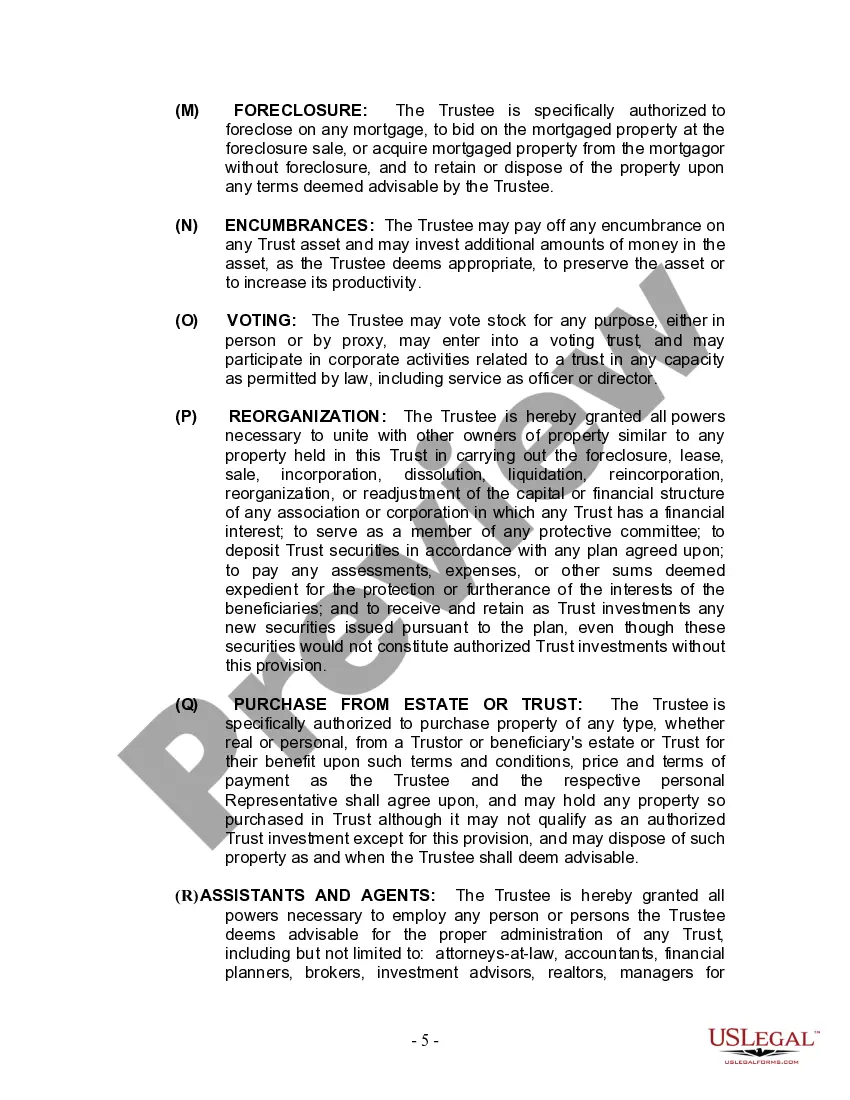
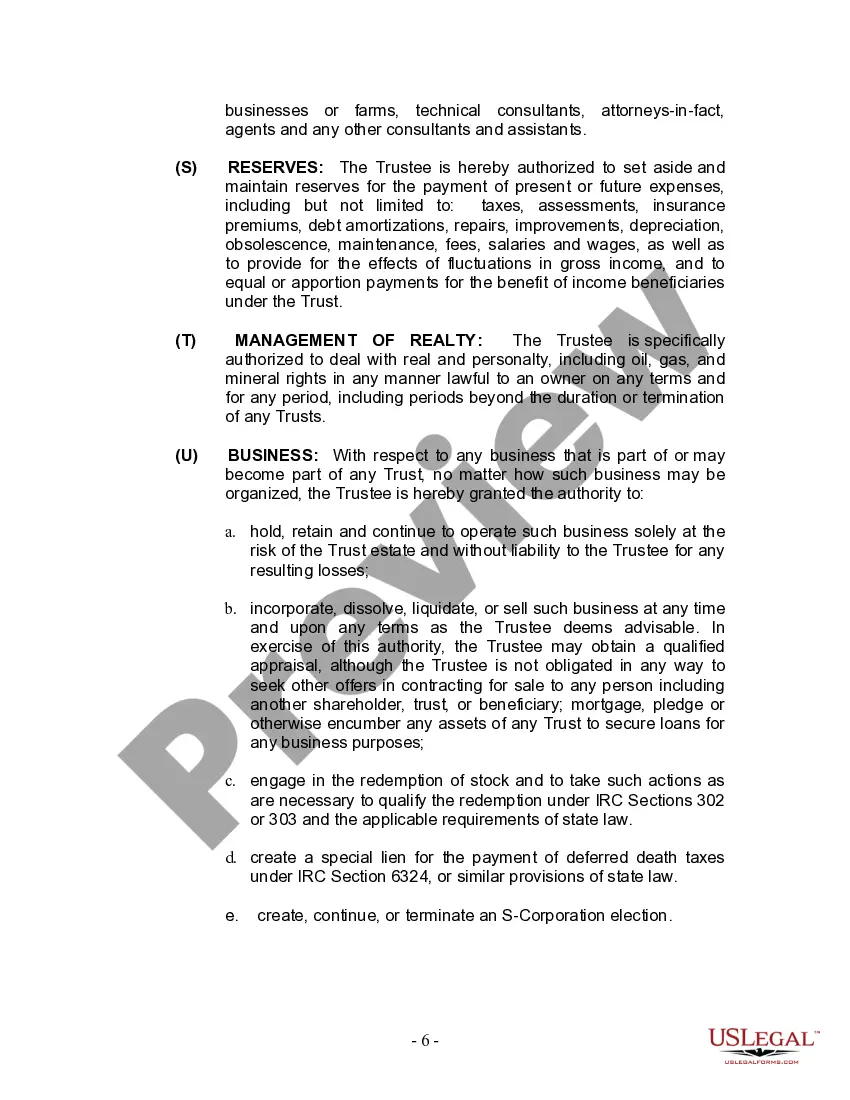
- Trustee powers including management and administration of trust assets.
- Distribution instructions upon the Trustor's death.



When to use this form
This form is useful in situations where an individual who is single, divorced, or a widow/widower wishes to manage their assets through a living trust. It is appropriate for those without children who wish to outline how their assets will be handled and distributed after their death without going through the probate process.
Who this form is for
- Single individuals seeking to plan their estate.
- Divorced persons wanting to secure their assets for specific beneficiaries.
- Widows or widowers with no children looking for a straightforward way to manage their estate after passing.
- Any person wanting to avoid probate and ensure their wishes are followed regarding their property.
Completing this form step by step
- Identify the Trustor (you) and complete personal information, including your address.
- Choose a name for your trust and fill it in at the designated section.
- Designate the trustee and successor trustee, typically yourself and someone you trust.
- List all assets to be included in the trust in the assets section.
- Specify how assets should be managed and distributed upon your death in the distribution section.
- Sign the document and have it witnessed and notarized if necessary.
Is notarization required?
Yes, this form must be notarized to be legally valid. US Legal Forms offers integrated online notarization services that are available 24/7, allowing you to securely complete this process via a video call without the need to travel.
Get your form ready online
Our built-in tools help you complete, sign, share, and store your documents in one place.
Make edits, fill in missing information, and update formatting in US Legal Forms—just like you would in MS Word.
Download a copy, print it, send it by email, or mail it via USPS—whatever works best for your next step.
Sign and collect signatures with our SignNow integration. Send to multiple recipients, set reminders, and more. Go Premium to unlock E-Sign.
If this form requires notarization, complete it online through a secure video call—no need to meet a notary in person or wait for an appointment.
We protect your documents and personal data by following strict security and privacy standards.

Make edits, fill in missing information, and update formatting in US Legal Forms—just like you would in MS Word.

Download a copy, print it, send it by email, or mail it via USPS—whatever works best for your next step.

Sign and collect signatures with our SignNow integration. Send to multiple recipients, set reminders, and more. Go Premium to unlock E-Sign.

If this form requires notarization, complete it online through a secure video call—no need to meet a notary in person or wait for an appointment.

We protect your documents and personal data by following strict security and privacy standards.
Mistakes to watch out for
- Failing to list all relevant assets in the trust.
- Not updating the trust after major life changes like divorce or the death of a beneficiary.
- Forgetting to sign the document or obtain the required witnesses and notarization.
- Not clearly defining the powers of the trustee, leading to potential disputes later.
Why complete this form online
- Convenience of downloading and completing the form from home.
- Editable document allows for quick updates as circumstances change.
- Access to legal language created by licensed attorneys ensures reliability.
- Cost-effective compared to hiring a lawyer for custom trust documents.
Key takeaways
- This living trust is suitable for single, divorced, or widowed individuals without children.
- The form helps avoid probate, simplifying the distribution of assets after death.
- Complete the form carefully to ensure your estate plan reflects your wishes.
- Notarization is required for legal validity; online notarization is available.
Looking for another form?
Form popularity
FAQ
When one spouse passes away, a Florida Living Trust for Individual Who is Single, Divorced or Widow or Widower with No Children can streamline the transfer of assets. Instead of going through probate, the trust allows for a direct transfer of property to the surviving spouse or designated beneficiaries. Additionally, this type of living trust helps manage the deceased spouse's assets according to their wishes. Overall, it provides peace of mind and ensures that your loved ones receive their inheritances without lengthy legal processes.
Individuals who are single, divorced, or widowed without children can greatly benefit from a Florida Living Trust for Individual Who is Single, Divorced or Widow or Widower with No Children. This type of trust helps ensure your assets are managed according to your wishes after your passing. It also simplifies the estate process, providing clarity and reducing potential stress for your loved ones. If you seek an efficient solution to secure your legacy, consider utilizing the uslegalforms platform to create your living trust with ease.
Yes, you can prepare your own living trust in Florida. However, it is essential to understand the specific legal requirements involved. A Florida Living Trust for Individual Who is Single, Divorced or Widow or Widower with No Children requires careful consideration to ensure it meets state laws. Using resources like uslegalforms can simplify the process, providing you with templates and guidance to set up your trust properly.
One of the biggest mistakes parents make when establishing a trust fund is not being specific about their wishes. They often overlook detailing how their assets should be handled, especially when it comes to distributions. This lack of clarity can lead to disputes among heirs. For individuals navigating this process, especially for a Florida Living Trust for Individual Who is Single, Divorced or Widow or Widower with No Children, clear guidelines can prevent confusion and ensure your intentions are met.
Like a will, a living trust can be altered whenever you wish.After one spouse dies, the surviving spouse is free to amend the terms of the trust document that deal with his or her property, but can't change the parts that determine what happens to the deceased spouse's trust property.
Next of kin in Florida is defined in Florida's guardianship code section 744.102 as: those persons who would be heirs at law of the ward or alleged incapacitated person if the person were deceased and includes the lineal descendants of the ward or alleged incapacitated person.
The exact cost will depend on the attorney's fees, but you could end up paying more than $1,000. Before choosing an attorney to work with, make sure you understand the fees they'll charge and also note whether the attorney specializes in trusts.
INTESTATE SHARE Under Florida Statutes Section 732.102, if a person dies without a valid will (intestate), the surviving spouse is entitled to receive: 1. the entire probate estate if: a. the decedent has no descendants or b. all descendants are also descendants of the surviving spouse; 2.
What happens in this type of trust is that the trust is a joint revocable trust when both spouses are alive. When one of the spouses dies, the trust will then split into two trusts automatically. Each trust will have half the assets of the trust along with the separate property of the spouse.
Generally, no. Most living or revocable trusts become irrevocable upon the death of the trust's maker or makers. This means that the trust cannot be altered in any way once the successor trustee takes over management of it.