Florida Guaranty Attachment to Lease for Guarantor or Cosigner
What this document covers
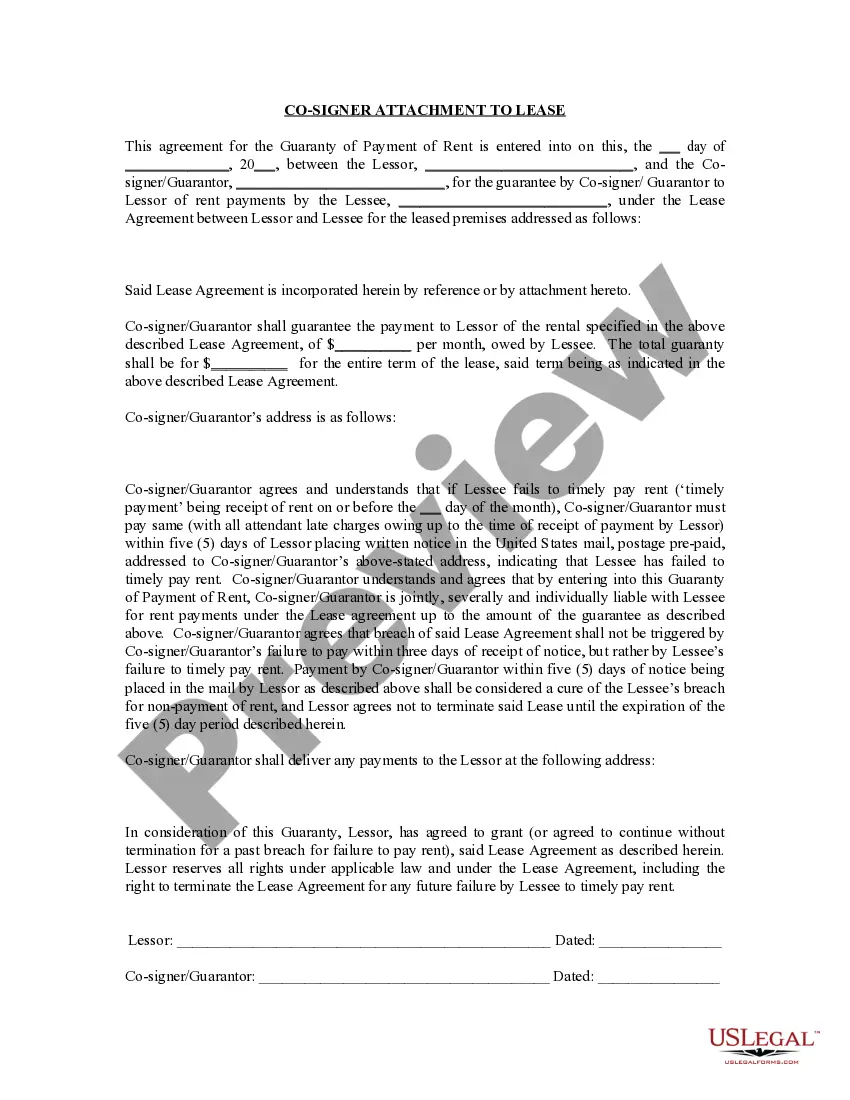
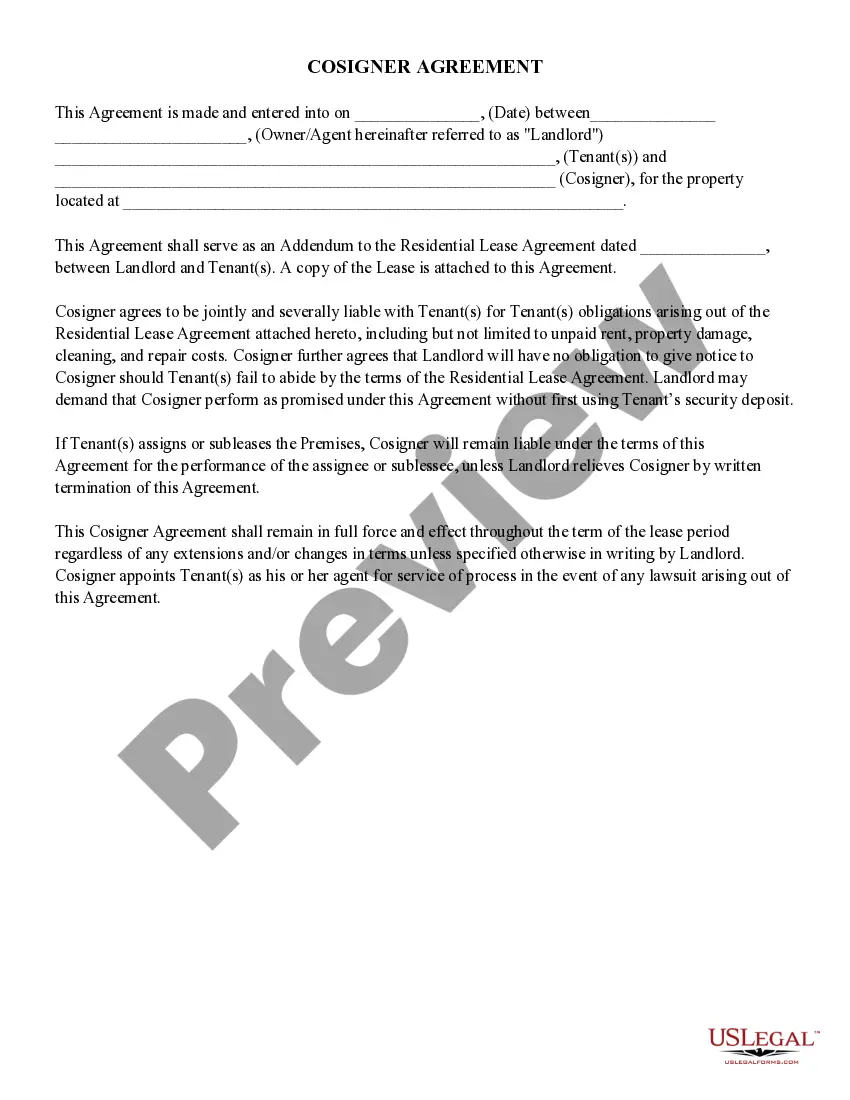
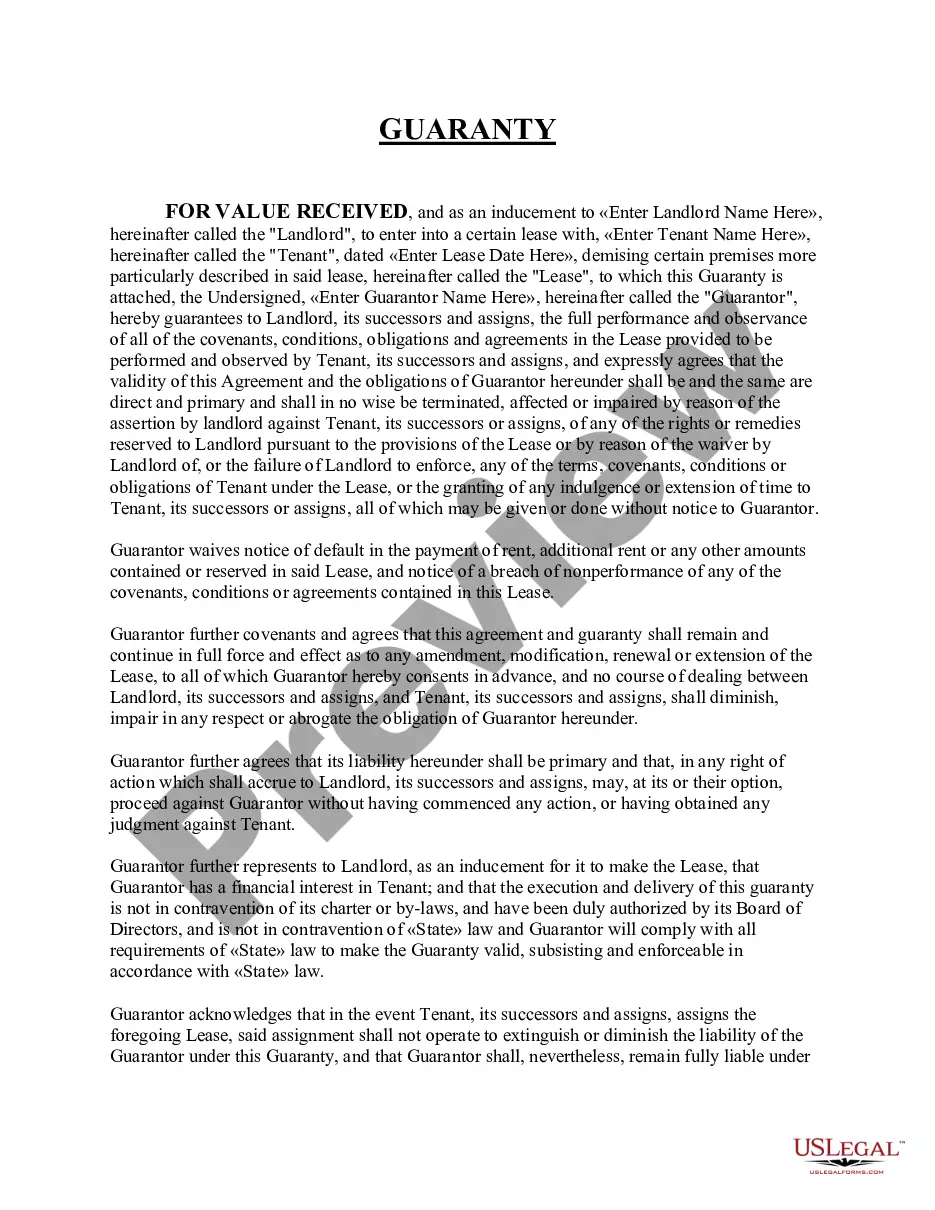
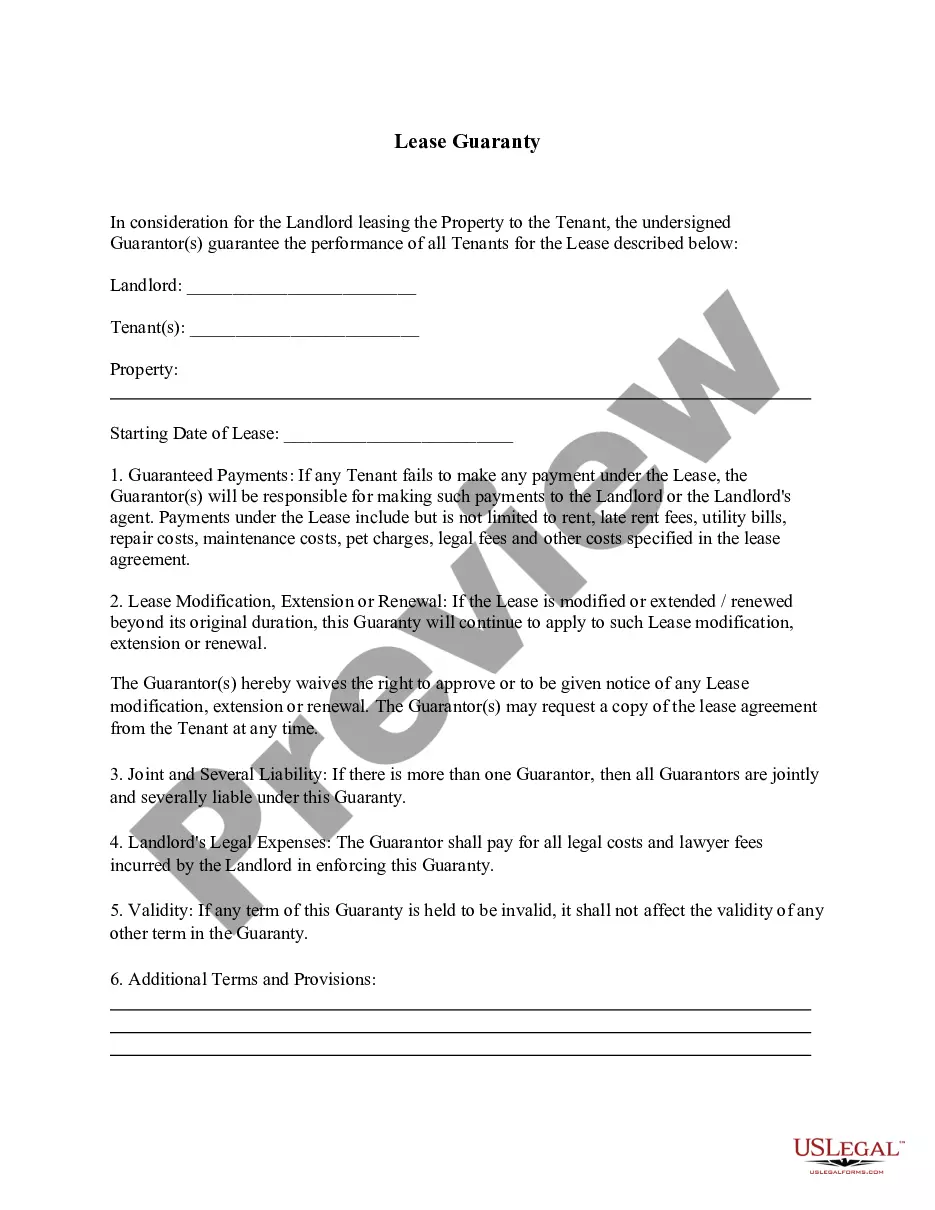
The Guaranty Attachment to Lease for Guarantor or Cosigner is a legal document allowing a third party to co-sign a lease agreement. This form ensures that the co-signer agrees to guarantee the payment of rent, protecting the landlord if the tenant fails to pay. Its primary purpose is to provide security to the lessor by ensuring that there is an additional party responsible for fulfilling the lease obligations.
Key parts of this document
- Co-signer/Guarantor's Name and Address: Identifies the individual taking on the guarantor role.
- Lessor's Name: Specifies the landlord or property manager involved in the lease.
- Signature and Date: Both parties must sign and date the document to make it legally binding.
Situations where this form applies
This form should be used when a tenant requires a guarantor or co-signer to secure a lease agreement, typically due to insufficient credit history or lack of income. It is important in situations where landlords seek additional assurance that the rent will be paid in full and on time.
Who needs this form
This form is intended for:
- Tenants who do not meet the leasing requirements on their own and need a co-signer to secure a lease.
- Individuals willing to act as guarantors for friends or family to help them secure housing.
- Landlords who require an additional party to ensure the payment of rent.
How to complete this form
- Identify the co-signer/guarantor: Provide the full name and address of the individual co-signing the lease.
- Specify the lessor: Include the name of the landlord or property management company.
- Enter the date: Fill in the date when the agreement is being signed.
- Signatures: Ensure that both the co-signer/guarantor and the lessor sign and date the document.
Notarization guidance
Notarization is not commonly needed for this form. However, certain documents or local rules may make it necessary. Our notarization service, powered by Notarize, allows you to finalize it securely online anytime, day or night.
Get your form ready online
Our built-in tools help you complete, sign, share, and store your documents in one place.
Make edits, fill in missing information, and update formatting in US Legal Forms—just like you would in MS Word.
Download a copy, print it, send it by email, or mail it via USPS—whatever works best for your next step.
Sign and collect signatures with our SignNow integration. Send to multiple recipients, set reminders, and more. Go Premium to unlock E-Sign.
If this form requires notarization, complete it online through a secure video call—no need to meet a notary in person or wait for an appointment.
We protect your documents and personal data by following strict security and privacy standards.

Make edits, fill in missing information, and update formatting in US Legal Forms—just like you would in MS Word.

Download a copy, print it, send it by email, or mail it via USPS—whatever works best for your next step.

Sign and collect signatures with our SignNow integration. Send to multiple recipients, set reminders, and more. Go Premium to unlock E-Sign.

If this form requires notarization, complete it online through a secure video call—no need to meet a notary in person or wait for an appointment.

We protect your documents and personal data by following strict security and privacy standards.
Common mistakes to avoid
- Not providing accurate information for the co-signer/guarantor.
- Failing to sign and date the document, rendering it unenforceable.
- Using outdated or incorrect lease agreements as a reference when drafting the guaranty.
Benefits of using this form online
- Convenience: Easily download and fill out the form at your own pace.
- Editability: Make necessary changes before finalizing the document.
- Reliability: Access forms drafted by licensed attorneys to ensure compliance with legal standards.
Legal use & context
- This form serves as an enforceable contract that protects landlords and provides a framework for payment obligations.
- Local laws govern the enforceability of guarantor agreements, so understanding state-specific regulations is crucial.
Key takeaways
- This Guaranty Attachment to Lease offers a way for third parties to support tenants in securing rental properties.
- Completing the form accurately and signing it is essential for legal enforcement.
- Understanding state laws is critical to ensure compliance and effectiveness of the form.
Looking for another form?
Form popularity
FAQ
The Florida Guaranty Attachment to Lease for Guarantor or Cosigner is a lease addendum that makes a guarantor legally responsible for the tenant’s rent and other lease obligations if the tenant defaults. Its primary purpose is to provide security to the landlord by ensuring an additional party is responsible for fulfilling the lease obligations; it should be used when a guarantor is needed.
In practice, landlords often require a guarantor or co-signer when the tenant does not meet standard leasing criteria on their own. The Florida Guaranty Attachment to Lease for Guarantor or Cosigner then binds the guarantor to the lease by listing their name and address, and requiring the guarantor’s signature and date to make the obligation enforceable.
Yes. A guarantor can be added to an existing lease by using the Guaranty Attachment as an addendum. The attachment must be signed and dated by the guarantor and the landlord to be binding, and it should name the guarantor, the lessor, and identify the lease to which it attaches.
Tenants who do not meet typical leasing requirements on their own may need a guarantor. The form is designed for individuals willing to act as guarantors to help secure housing, and for landlords who require an additional party to help ensure rent is paid.
The form blocks do not list explicit disqualifications for guarantors. Eligibility is typically determined by the landlord’s leasing criteria and applicable Florida law. The document simply provides space for the guarantor’s name and address and requires a signature and date to bind the guarantor to the lease.
This attachment is tied to a specific lease, identifying the lessor and guarantor and requiring the guarantor’s signature and date to bind them to that lease. A standalone guaranty, by contrast, is a separate contract not attached to a particular lease and may cover different terms or timeframes.