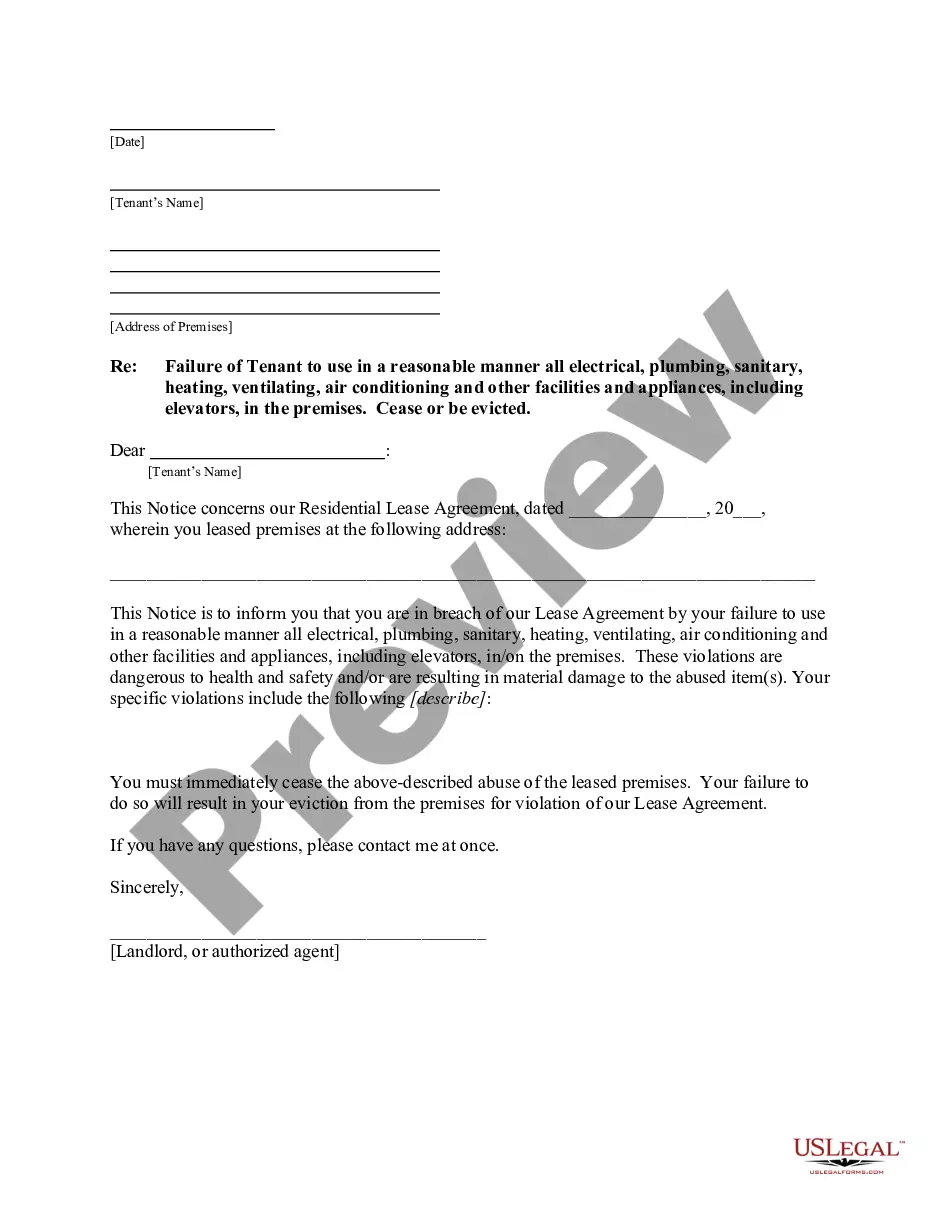
Florida Letter from Landlord to Tenant for Failure to use electrical, plumbing, sanitary, heating, ventilating, air conditioning and other facilities in a reasonable manner
About this form
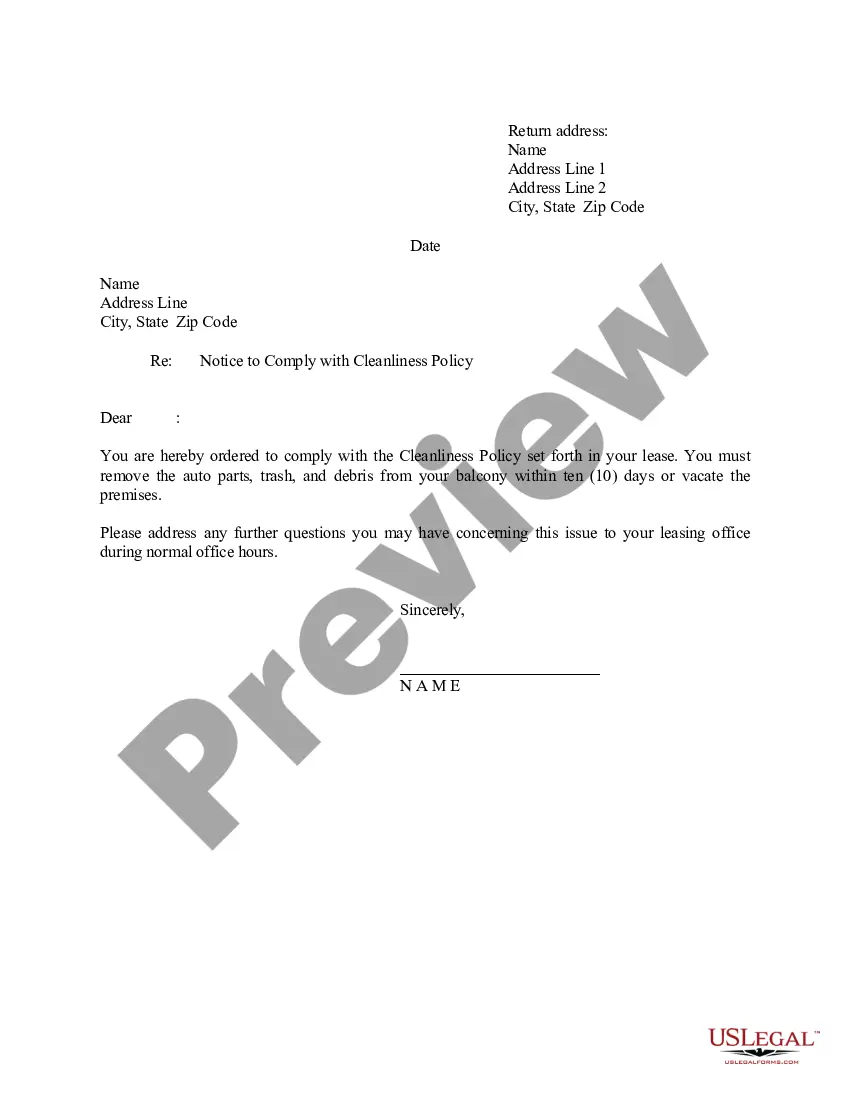
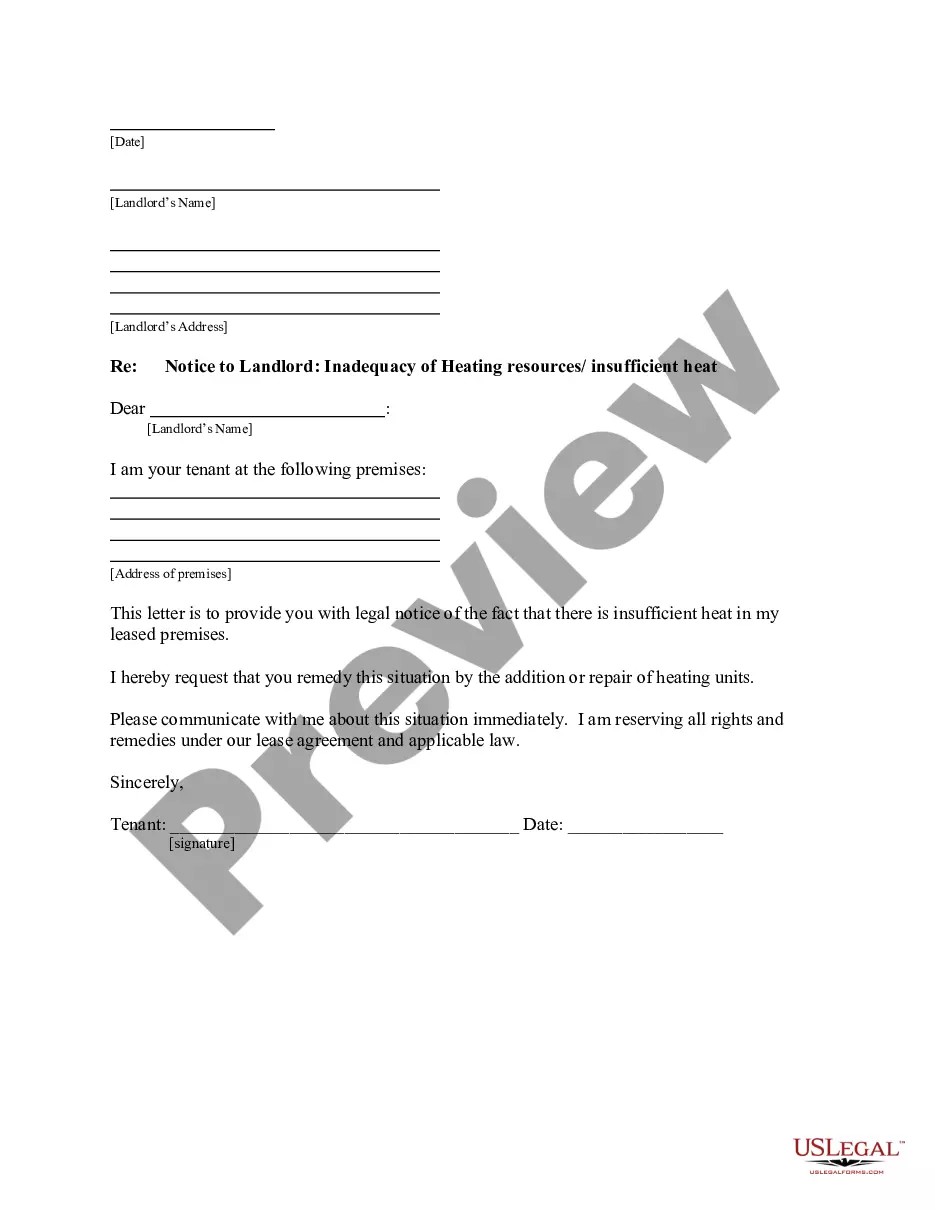
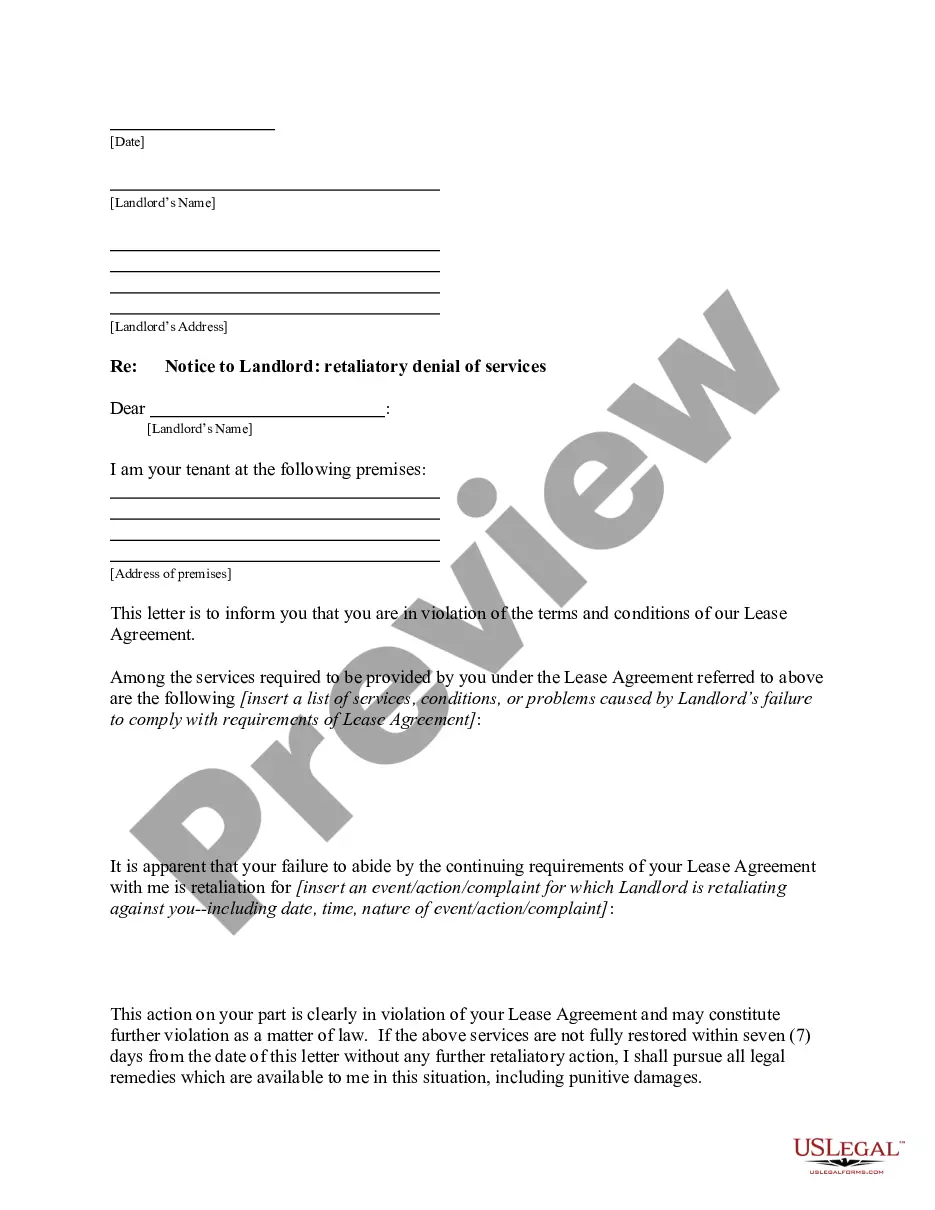
This form is a Letter from Landlord to Tenant regarding the improper use of essential facilities. It serves as a formal notice to the tenant for failing to comply with the lease terms related to the use of electrical, plumbing, and other facilities. This document helps landlords address misuse by notifying tenants that such behavior may lead to eviction if not corrected. Unlike eviction notices, this letter aims to rectify tenant behavior before further legal steps are taken.
Main sections of this form
- Identification of the landlord and tenant
- Description of the facility misuse
- Consequences of continued misuse, including possible eviction
- Instructions for the tenant to resolve issues
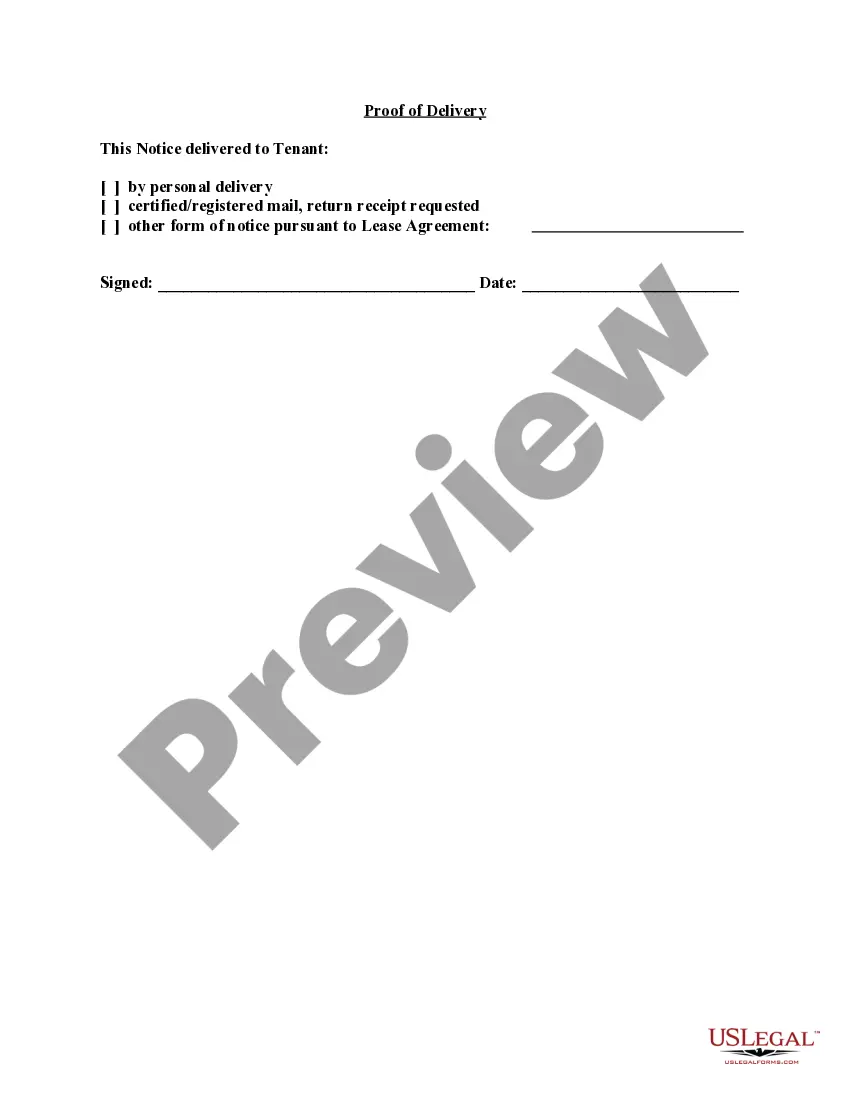
- Proof of delivery options for the notice



When to use this form
This form should be used when a landlord observes or receives reports of a tenant not using electrical, plumbing, heating, ventilating, or air conditioning systems appropriately as specified in the lease agreement. It is particularly applicable if the misuse poses risks to the property or other tenants. This letter serves as a first formal step before considering eviction or further legal actions.
Who this form is for
- Landlords managing residential or commercial properties
- Property managers acting on behalf of property owners
- Landlords who need to formally address tenant conduct
How to complete this form
- Clearly identify the parties involved: the landlord and the tenant.
- Describe the specific misuse of facilities in detail.
- Indicate the potential consequences if the behavior continues.
- Provide any necessary contact information for resolving issues.
- Choose the method of delivery for the notice and document it.
Notarization guidance
Notarization is not commonly needed for this form. However, certain documents or local rules may make it necessary. Our notarization service, powered by Notarize, allows you to finalize it securely online anytime, day or night.
Get your form ready online
Our built-in tools help you complete, sign, share, and store your documents in one place.
Make edits, fill in missing information, and update formatting in US Legal Forms—just like you would in MS Word.
Download a copy, print it, send it by email, or mail it via USPS—whatever works best for your next step.
Sign and collect signatures with our SignNow integration. Send to multiple recipients, set reminders, and more. Go Premium to unlock E-Sign.
If this form requires notarization, complete it online through a secure video call—no need to meet a notary in person or wait for an appointment.
We protect your documents and personal data by following strict security and privacy standards.
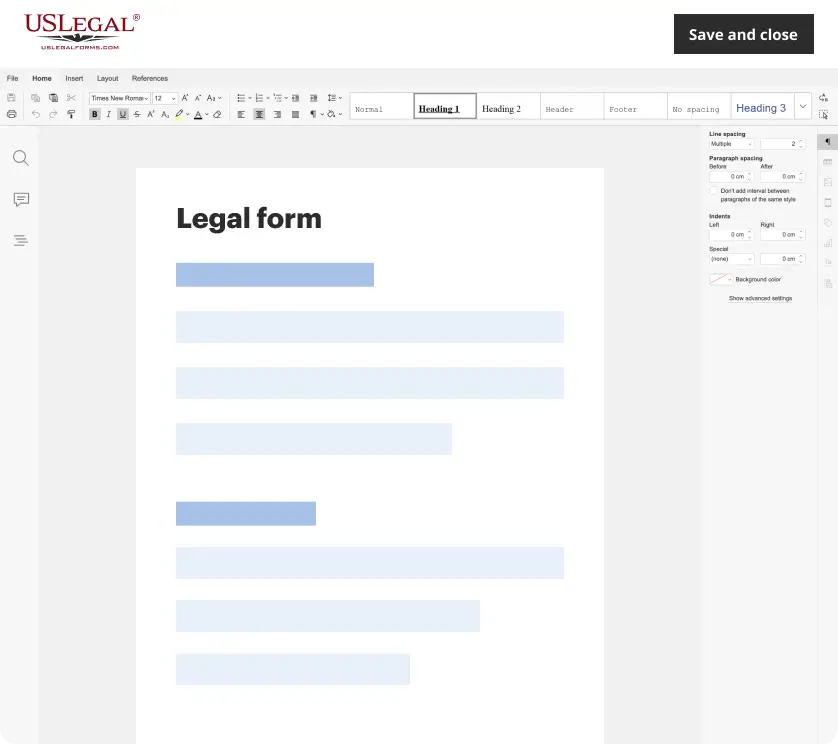
Make edits, fill in missing information, and update formatting in US Legal Forms—just like you would in MS Word.
Download a copy, print it, send it by email, or mail it via USPS—whatever works best for your next step.
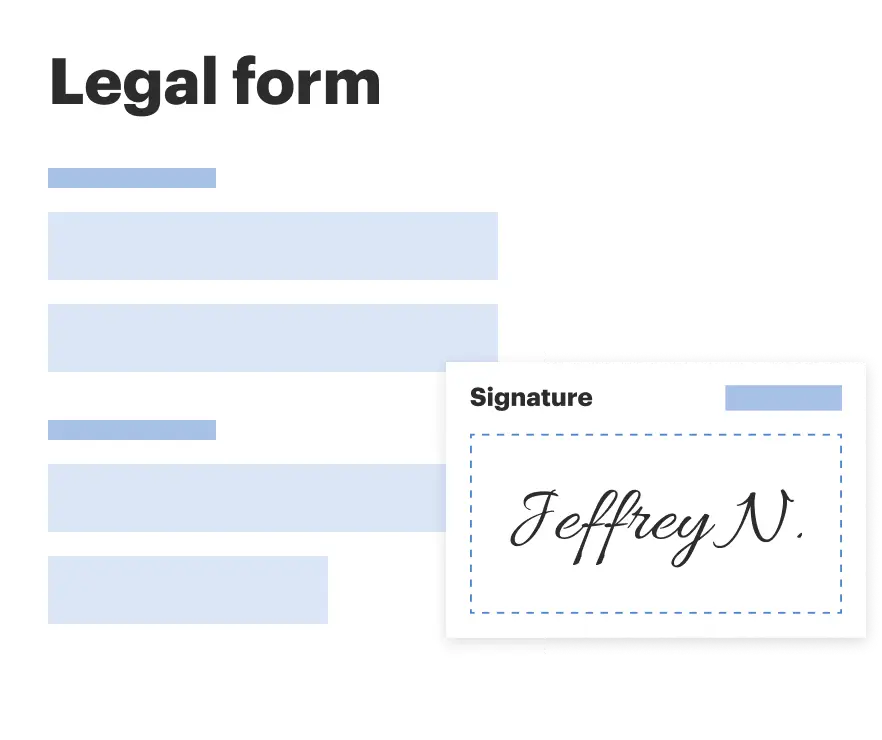
Sign and collect signatures with our SignNow integration. Send to multiple recipients, set reminders, and more. Go Premium to unlock E-Sign.
If this form requires notarization, complete it online through a secure video call—no need to meet a notary in person or wait for an appointment.
We protect your documents and personal data by following strict security and privacy standards.
Common mistakes to avoid
- Failing to specify the timeline for corrective action.
- Not providing clear details about the misuse of facilities.
- Omitting proof of delivery information, which is important for legal records.
Why complete this form online
- Convenience of accessing and downloading legal forms from home.
- Editable templates to fit specific needs and situations.
- Reliable forms drafted by licensed attorneys with legal insights.
Looking for another form?
Form popularity
FAQ
Uninhabitable living situations in Virginia often mirror those in Florida, including significant plumbing failures and lack of essential services. If tenants experience severe issues that prevent safe living, they may seek remedies from their landlords, including using a formal notice. Although this FAQ focuses primarily on Florida, using a Florida Letter from Landlord to Tenant for Failure to use electrical, plumbing, sanitary, heating, ventilating, air conditioning and other facilities in a reasonable manner can still provide insights useful in Virginia contexts.
Generally, the landlord is responsible for plumbing repairs in a rental property unless an agreement states otherwise. Landlords must ensure that all plumbing systems function correctly and meet health standards. If you encounter a plumbing issue, don’t hesitate to express your concerns through a Florida Letter from Landlord to Tenant for Failure to use electrical, plumbing, sanitary, heating, ventilating, air conditioning and other facilities in a reasonable manner.
Uninhabitable living situations in Florida can include severe plumbing issues, lack of heating or cooling systems, or pest infestations. If a tenant cannot safely use the electrical, plumbing, sanitary, heating, ventilating, air conditioning, or other facilities, the home may be deemed uninhabitable. In such cases, you might need a Florida Letter from Landlord to Tenant for Failure to use electrical, plumbing, sanitary, heating, ventilating, air conditioning and other facilities in a reasonable manner to address the situation.
In most scenarios, renters are not responsible for burst pipes unless neglect or misuse contributed to the issue. Landlords typically bear the responsibility for plumbing repairs, including burst pipes, as part of their obligation to maintain the property. If you face this issue, a Florida Letter from Landlord to Tenant for Failure to use electrical, plumbing, sanitary, heating, ventilating, air conditioning and other facilities in a reasonable manner may be your best recourse.
The 83.53 law in Florida outlines the rights and responsibilities of tenants and landlords regarding the maintenance of rental properties. Under this law, landlords must ensure that electrical, plumbing, sanitary, heating, ventilating, air conditioning, and other facilities are kept in a reasonable condition. Failure to uphold these standards may lead to a Florida Letter from Landlord to Tenant for Failure to use electrical, plumbing, sanitary, heating, ventilating, air conditioning and other facilities in a reasonable manner.
Being without air conditioning in Florida can lead to discomfort quite quickly, especially in summer. Although there isn’t a specific legal timeframe defining how long tenants may stay without AC, prolonged issues could justify actions like rent reductions or other remedies. It is essential to document your situation and communicate effectively with your landlord, potentially using a Florida Letter from Landlord to Tenant for Failure to use electrical, plumbing, sanitary, heating, ventilating, air conditioning and other facilities in a reasonable manner to assert your rights.
In Florida, landlords generally have a reasonable amount of time to repair an air conditioning unit after receiving notice of the issue. Typically, this period ranges from a few days to a week, depending on the severity of the problem. Tenants may want to refer to state laws or their lease agreements for specific timelines and should consider sending a Florida Letter from Landlord to Tenant for Failure to use electrical, plumbing, sanitary, heating, ventilating, air conditioning and other facilities in a reasonable manner if repairs are delayed.
Yes, in Florida, a lack of air conditioning can be deemed an emergency, especially during the hot summer months. Tenants may have legal grounds to seek immediate repairs if their unit becomes uninhabitable due to excessive heat. In such cases, it is advisable to communicate concerns through a Florida Letter from Landlord to Tenant for Failure to use electrical, plumbing, sanitary, heating, ventilating, air conditioning and other facilities in a reasonable manner, ensuring the matter is formally documented.
In Florida, a rental can be considered uninhabitable if it lacks essential services such as electricity, plumbing, heating, or air conditioning. Additionally, if the property has significant structural issues or health hazards, it fails to meet livable conditions. Consequently, tenants may need to send a Florida Letter from Landlord to Tenant for Failure to use electrical, plumbing, sanitary, heating, ventilating, air conditioning and other facilities in a reasonable manner to address these concerns effectively.
To write a complaint letter about unprofessional behavior, start with a brief introduction that outlines your experience. Be specific about the unprofessional conduct you witnessed, particularly in light of the Florida Letter from Landlord to Tenant for Failure to use electrical, plumbing, sanitary, heating, ventilating, air conditioning and other facilities in a reasonable manner. Detail how their actions have affected you, and express your hope for improvement. Consider using resources from uslegalforms to assist in structuring your letter.