Delaware Residential or Rental Lease Extension Agreement
What this document covers
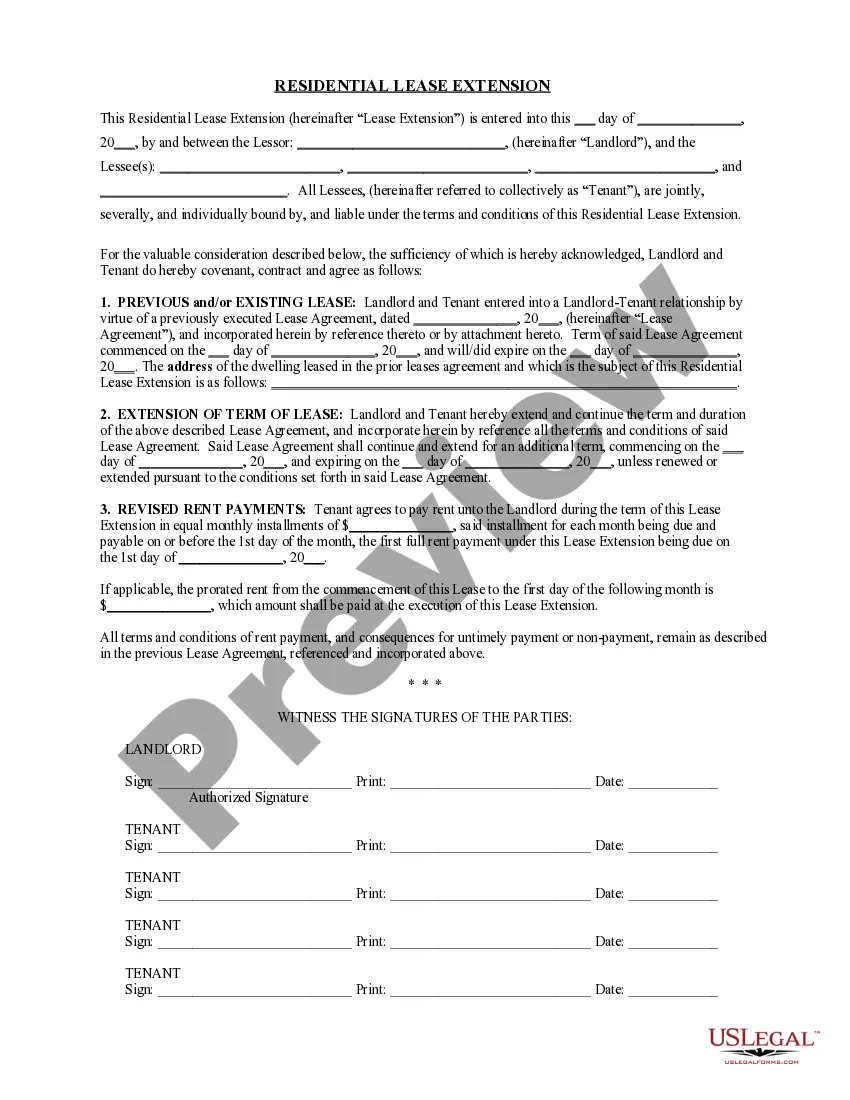
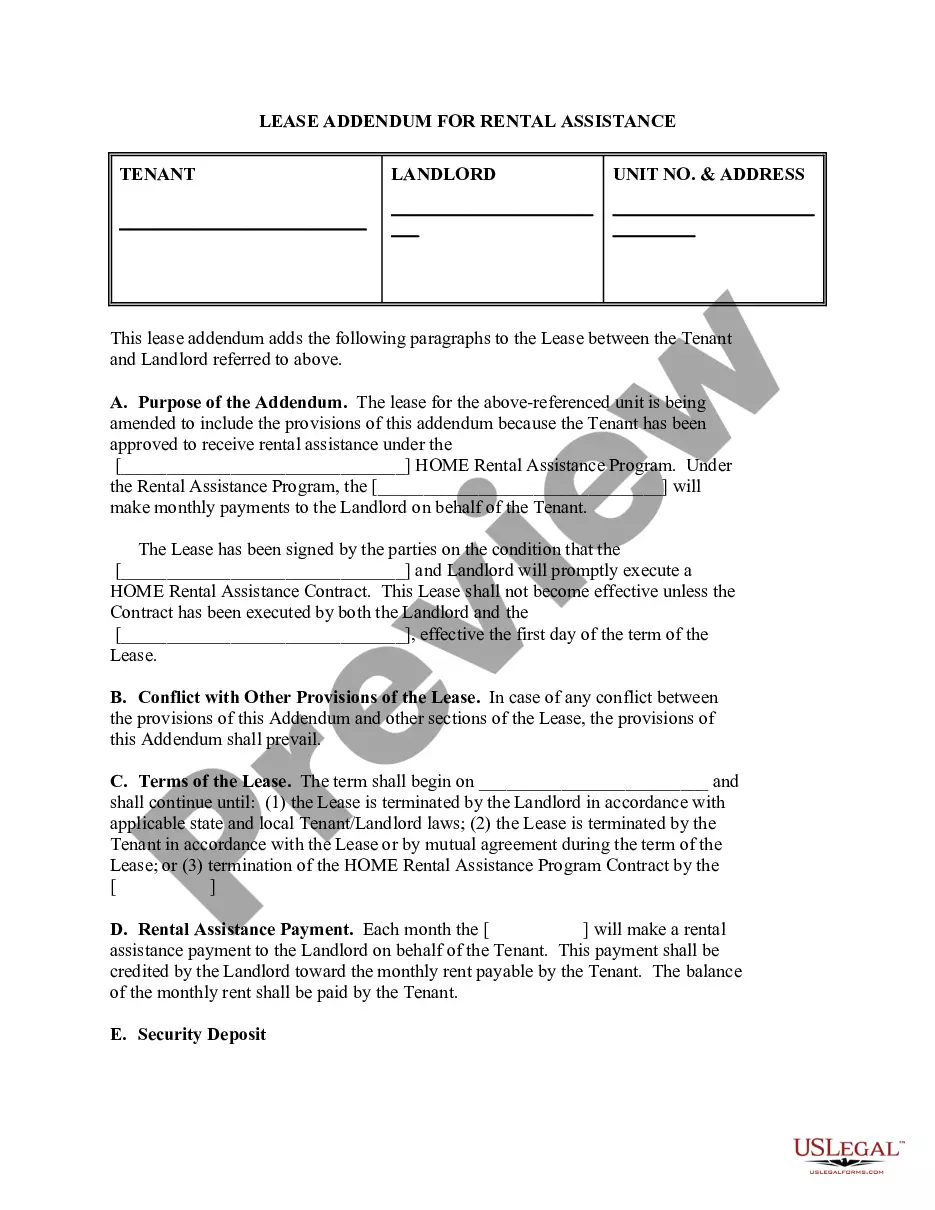
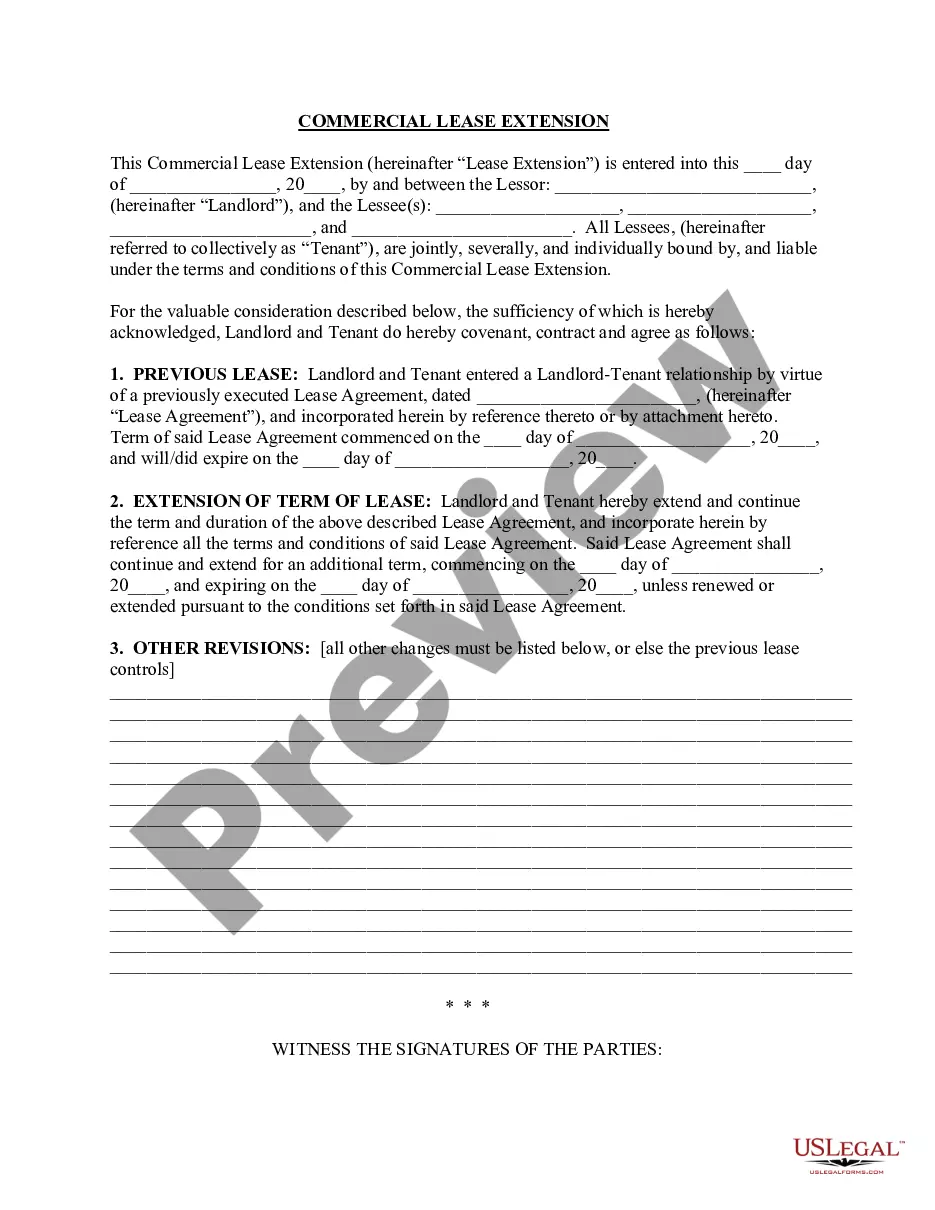
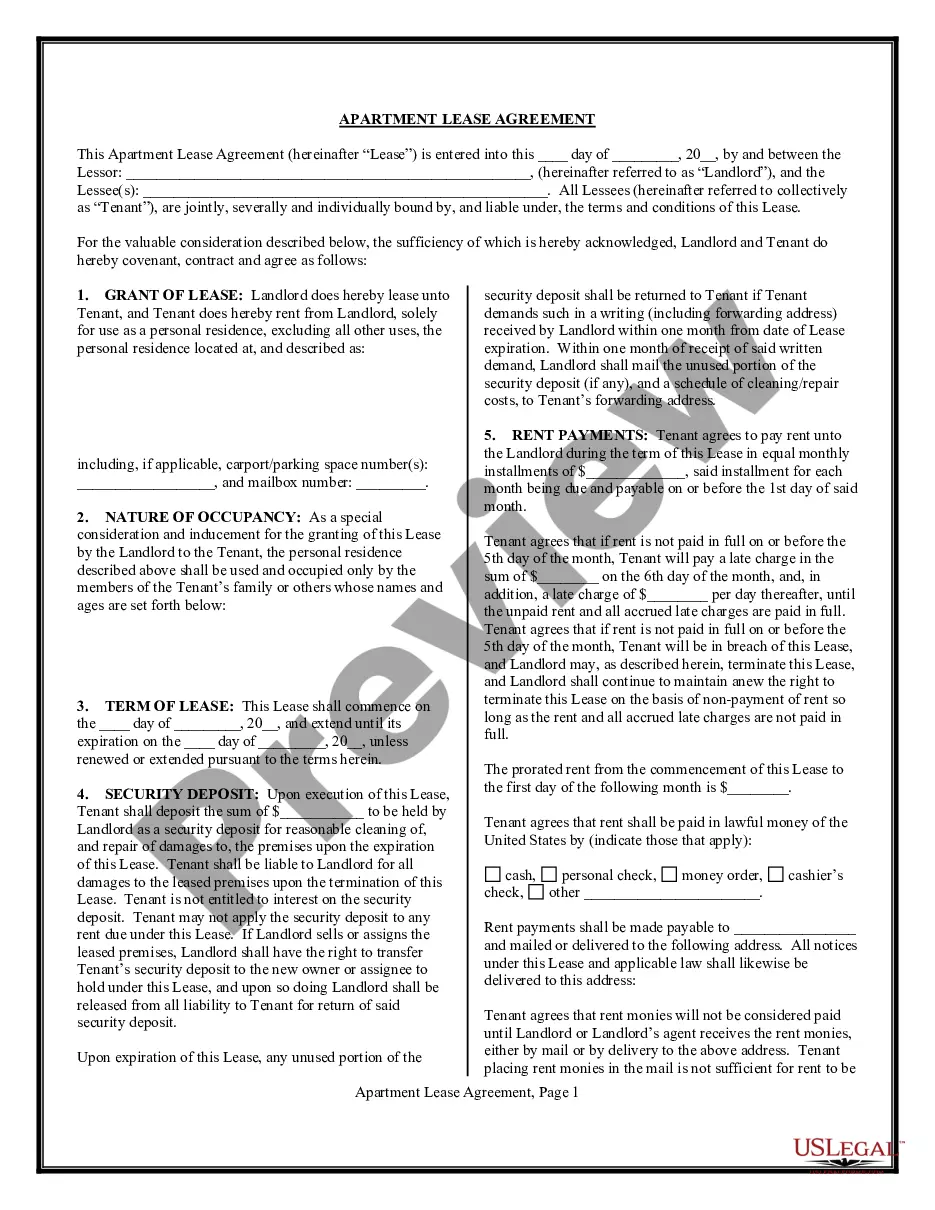
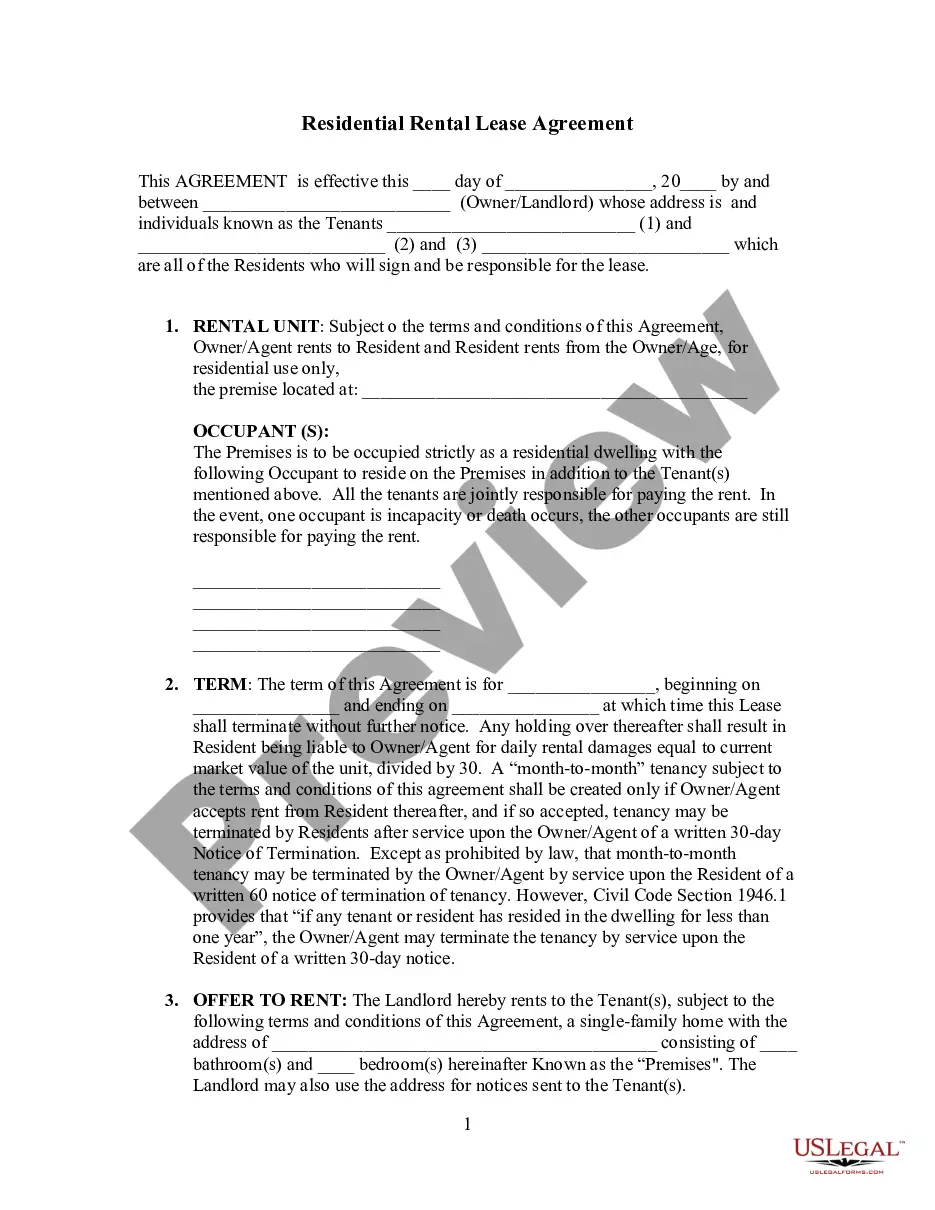
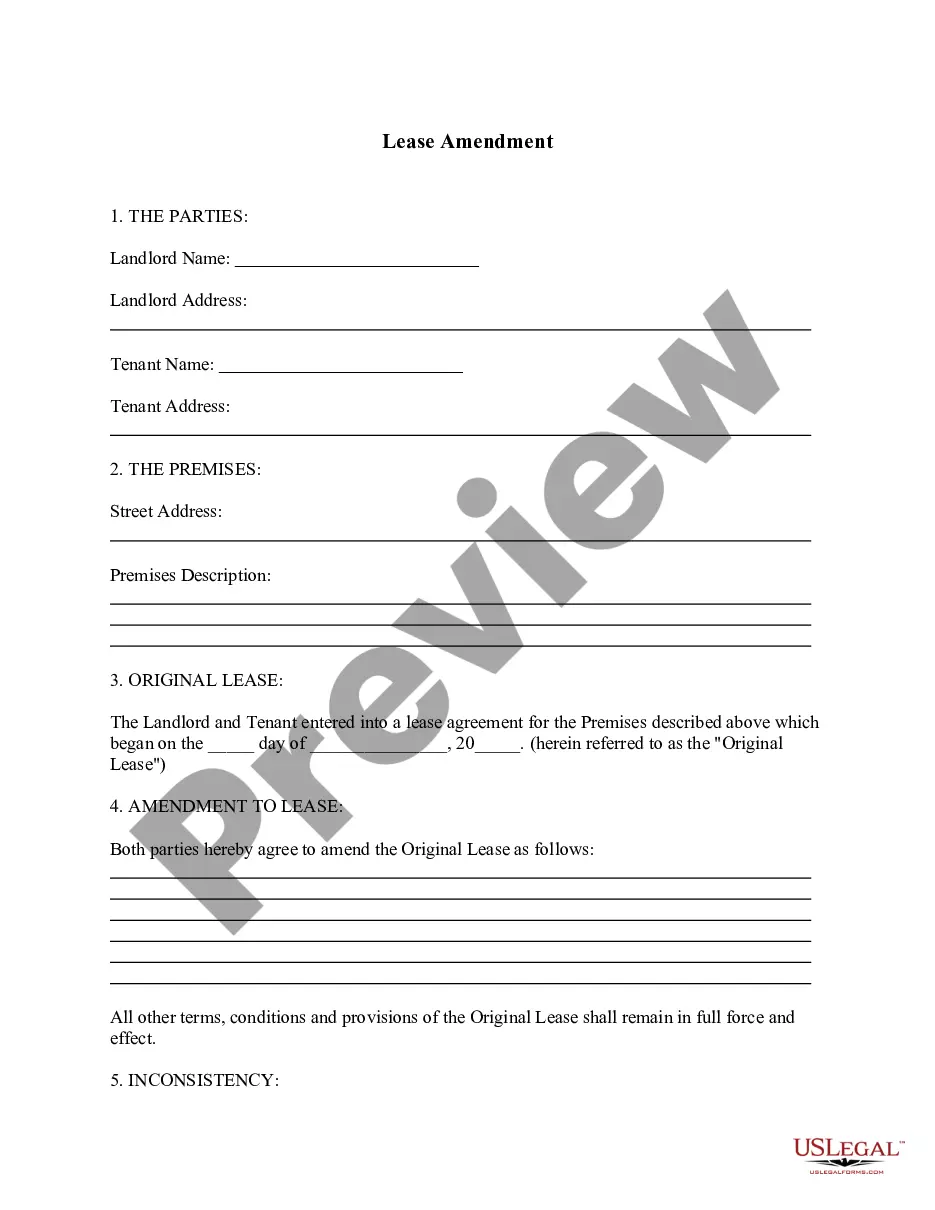
The Residential or Rental Lease Extension Agreement is a legal document used by landlords and tenants to extend an existing residential lease. This form allows both parties to continue their tenancy without the need to draft a new lease, ensuring that existing terms remain intact while potentially updating specific details like rent payments. This extension is particularly useful when a tenant desires to stay in their rental property beyond the original lease period without renegotiating an entirely new agreement.
Key parts of this document
- Details of the original lease agreement, including its start and end dates.
- The extended term of the lease, specifying new start and end dates.
- Revised rent payment amounts, if applicable.
- Joint and several liability of all tenants involved.
- Signature lines for all parties involved, including the landlord and tenants.
When to use this form
This form is typically used when a tenant wishes to stay in their rented property after the original lease has expired. It is applicable in situations where both the landlord and tenant have mutually agreed to continue the lease under the same conditions or with minor modifications, such as changes in rent or lease duration. Common scenarios include tenants wanting to extend their stay during times of uncertainty, when housing options are limited, or during seasonal rentals.
Who needs this form
- Landlords who wish to keep reliable tenants while maintaining lease terms.
- Tenants seeking to extend their rental agreement without entering a new lease.
- Individuals involved in joint tenancy who want to ensure their shared responsibilities are legally documented.
Steps to complete this form
- Identify the parties involved by filling in the names of the landlord and tenants.
- Specify the original lease agreement dates, including the start and expiration dates.
- Enter the new term of the lease extension with the start and end dates.
- Fill in the revised rent payment amount and payment due dates.
- Ensure all parties sign and date the agreement to finalize the lease extension.
Does this document require notarization?
This form does not typically require notarization to be legally valid. However, some jurisdictions or document types may still require it. US Legal Forms provides secure online notarization powered by Notarize, available 24/7 for added convenience.
Get your form ready online
Our built-in tools help you complete, sign, share, and store your documents in one place.
Make edits, fill in missing information, and update formatting in US Legal Forms—just like you would in MS Word.
Download a copy, print it, send it by email, or mail it via USPS—whatever works best for your next step.
Sign and collect signatures with our SignNow integration. Send to multiple recipients, set reminders, and more. Go Premium to unlock E-Sign.
If this form requires notarization, complete it online through a secure video call—no need to meet a notary in person or wait for an appointment.
We protect your documents and personal data by following strict security and privacy standards.

Make edits, fill in missing information, and update formatting in US Legal Forms—just like you would in MS Word.

Download a copy, print it, send it by email, or mail it via USPS—whatever works best for your next step.

Sign and collect signatures with our SignNow integration. Send to multiple recipients, set reminders, and more. Go Premium to unlock E-Sign.

If this form requires notarization, complete it online through a secure video call—no need to meet a notary in person or wait for an appointment.

We protect your documents and personal data by following strict security and privacy standards.
Common mistakes to avoid
- Failing to include all tenant names, which can lead to disputes.
- Not specifying new rent payment terms, creating confusion over payment amounts.
- Leaving out signatures of all parties, making the agreement unenforceable.
- Not checking local regulations that could affect the lease extension.
Why use this form online
- Immediate access to a professionally drafted lease extension template.
- Convenience of completing the form from anywhere, anytime.
- Editable format allows for modifications to fit specific needs.
- Ensures legal compliance by using state-specific language where applicable.
Looking for another form?
Form popularity
FAQ
Ideally, you should consider extending your lease around 30 to 60 days before it expires. This gives you ample time to negotiate terms with your landlord or find other housing if necessary. The Delaware Residential or Rental Lease Extension Agreement can streamline the process, ensuring all parties understand the renewed terms and conditions.
To ask a landlord for a lease extension, start by scheduling a time to discuss your plans face-to-face or via a phone call. Be transparent about your desire to maintain the residence, and inquire if they would agree to extend the lease. You may also mention the Delaware Residential or Rental Lease Extension Agreement as a practical solution to formalize the arrangement.
You should inform your landlord of your desire to extend your lease with clear communication. Sending a polite request detailing your wish to continue your tenancy can ease the conversation. Including the specifics of how long you want the extension under the Delaware Residential or Rental Lease Extension Agreement adds clarity to your request.
To extend your lease agreement, first, confirm with your landlord or property manager if they are open to an extension. You can then draft a written request that includes your preferred new term length. The Delaware Residential or Rental Lease Extension Agreement can serve as a helpful template in this process, ensuring all necessary details are covered.
To inform your landlord about your intention to renew your lease, start by reviewing your current lease agreement. It's important to understand any terms regarding lease renewals. Then, communicate your desire to renew by sending a formal letter or email, mentioning the relevant details and the date you wish to extend under the Delaware Residential or Rental Lease Extension Agreement.
The extension option on a lease allows tenants to continue renting the property beyond the initial lease term, typically under the same conditions. This option provides tenants with security if they wish to remain in their current residence. It's essential to thoroughly understand the terms of the Delaware Residential or Rental Lease Extension Agreement to take full advantage of this option.
To inform your landlord of your desire to extend the lease, communicate your intentions clearly and in writing, following any specified notice period outlined in your lease. It's best to express your interest several weeks before the lease expires. Utilizing a Delaware Residential or Rental Lease Extension Agreement can help formalize this request and ensure proper documentation.
'Option to extend' refers to a clause that allows the tenant to extend their lease term under predetermined conditions. This option provides flexibility and can be beneficial for both parties involved. By understanding your rights through a Delaware Residential or Rental Lease Extension Agreement, you can make informed decisions about extending your lease.
In Delaware, landlords must provide a minimum of 60 days written notice to tenants when they intend to terminate a lease for non-renewal. This notice period allows tenants time to find alternative housing. Familiarizing yourself with a Delaware Residential or Rental Lease Extension Agreement can help clarify the terms related to notice and tenant rights.
The expansion option in a lease agreement refers to a clause that gives tenants the right to increase their rented space or lease additional units within the property. This option can be particularly beneficial for growing businesses or families needing more space. Understanding the Delaware Residential or Rental Lease Extension Agreement can help navigate these provisions effectively.